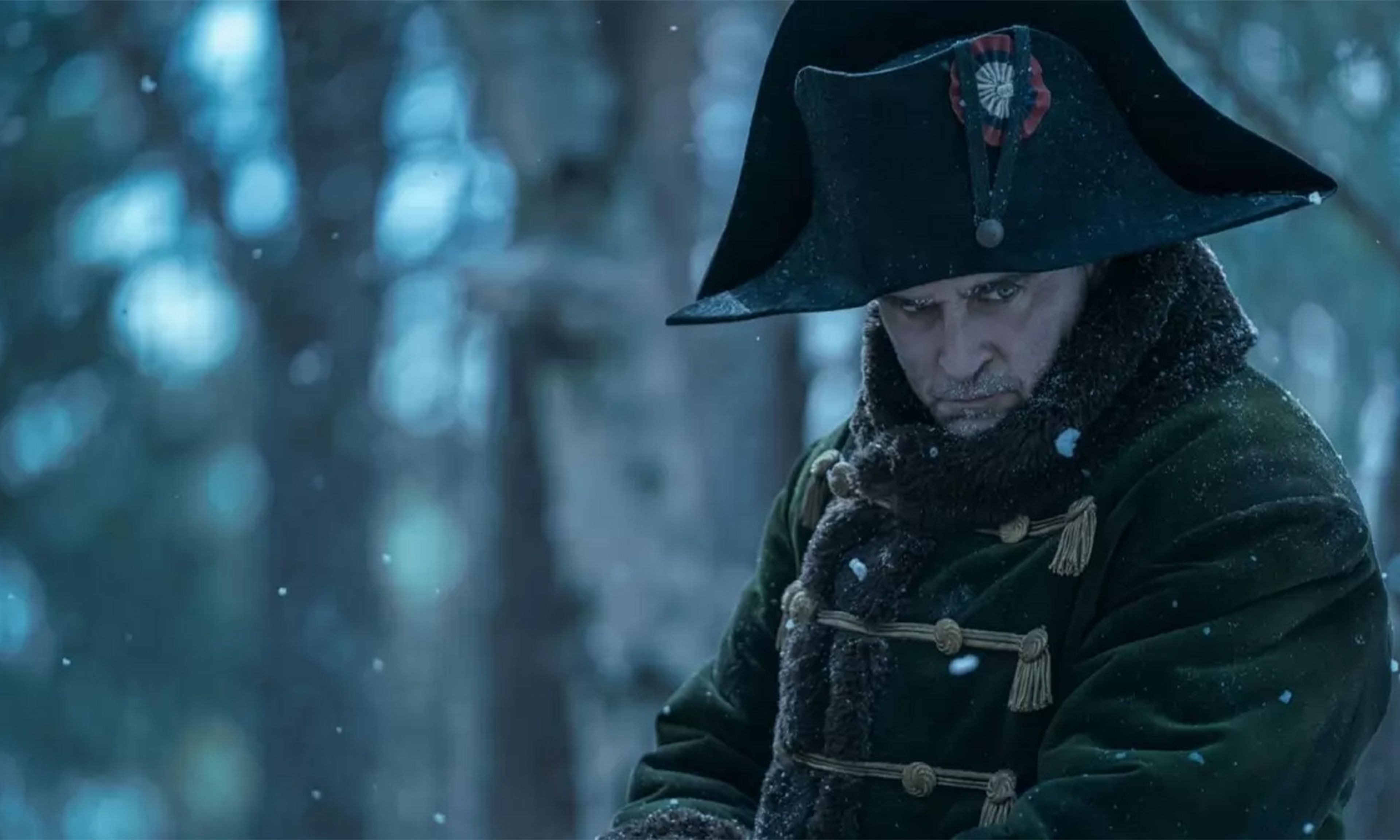
I watched the trailer for Ridley Scott’s Napoleon this summer in an Airbnb in Paris, with my seven-year-old son crowded up against me, clutching the Playmobil Bonaparte he’d selected at the Louvre gift shop. It was an exciting three minutes for the seven-year-old Napoleon fan who lives inside of every man — there’s the 18th Brumaire! there’s Austerlitz! there’s Waterloo! — shadowed by puzzlement at the close-ups of Scott’s choice to play the man himself and the question even those brief shots of Joaquin Phoenix raised: Why is he playing Napoleon like . . . the Joker?
Now we have the movie, and also the answer: Because that’s the kind of Napoleon that Ridley Scott wanted to portray.
Across two hours and 40 minutes of cinema, with a four-hour cut promised (or threatened, maybe?) on streaming soon enough, Scott portrays the Corsican who conquered Europe as an epic weirdo, a mumbler, an introvert, a political cipher, and a growling sex pest. This is a Bonaparte who seems half sedated for his battles and really comes alive only in his various assaults upon the body of his beloved Joséphine, played by Vanessa Kirby with a mature sex appeal that at least explains Napoleon’s besottedness.
Taken on their own, the scenes between the emperor and his consort seem intended to evoke the comical or absurdist elements in wigs-and-tights movies like Amadeus or Barry Lyndon (which Stanley Kubrick made when funding for his own Napoleon film fell through). This intention might have worked if Scott’s movie were trying to portray the complexity of greatness by depicting a conqueror who showed one face to his lover and another to his rivals or his soldiers — charismatic in the streets, embarrassing and lovelorn in the sheets. But Phoenix’s Napoleon is the same man in every setting and at every stage of his career: a middle-aged creep impersonating a man of extraordinary vigor. Imagine an Amadeus in which you heard at most a few notes of Mozart’s music and some sort of modern hackwork was substituted for The Magic Flute, and you have the flavor of this movie, which gives us a Great Man of History with no charisma whatsoever.
At times Napoleon reminded me of the recent cinema of Robert Eggers, which has aimed at historical fictions that seem as though they were made by the actual inhabitants of the past. Thus Eggers’s 17th-century New England horror movie The Witch aspires to be the sort of horror movie the Puritans themselves might have made, and likewise The Northman tries to be a Viking movie made as if by and for the actual Vikings. You could regard Scott’s movie, if you were being extremely generous, as an attempt to do the same for the Napoleonic era — making a movie about the emperor of the French that could have been shot by actual Napoleonic-era people. But the people in question would have been English caricaturists: This is the Napoleon movie — call it “Boney” — that Pitt the Younger might have commissioned.
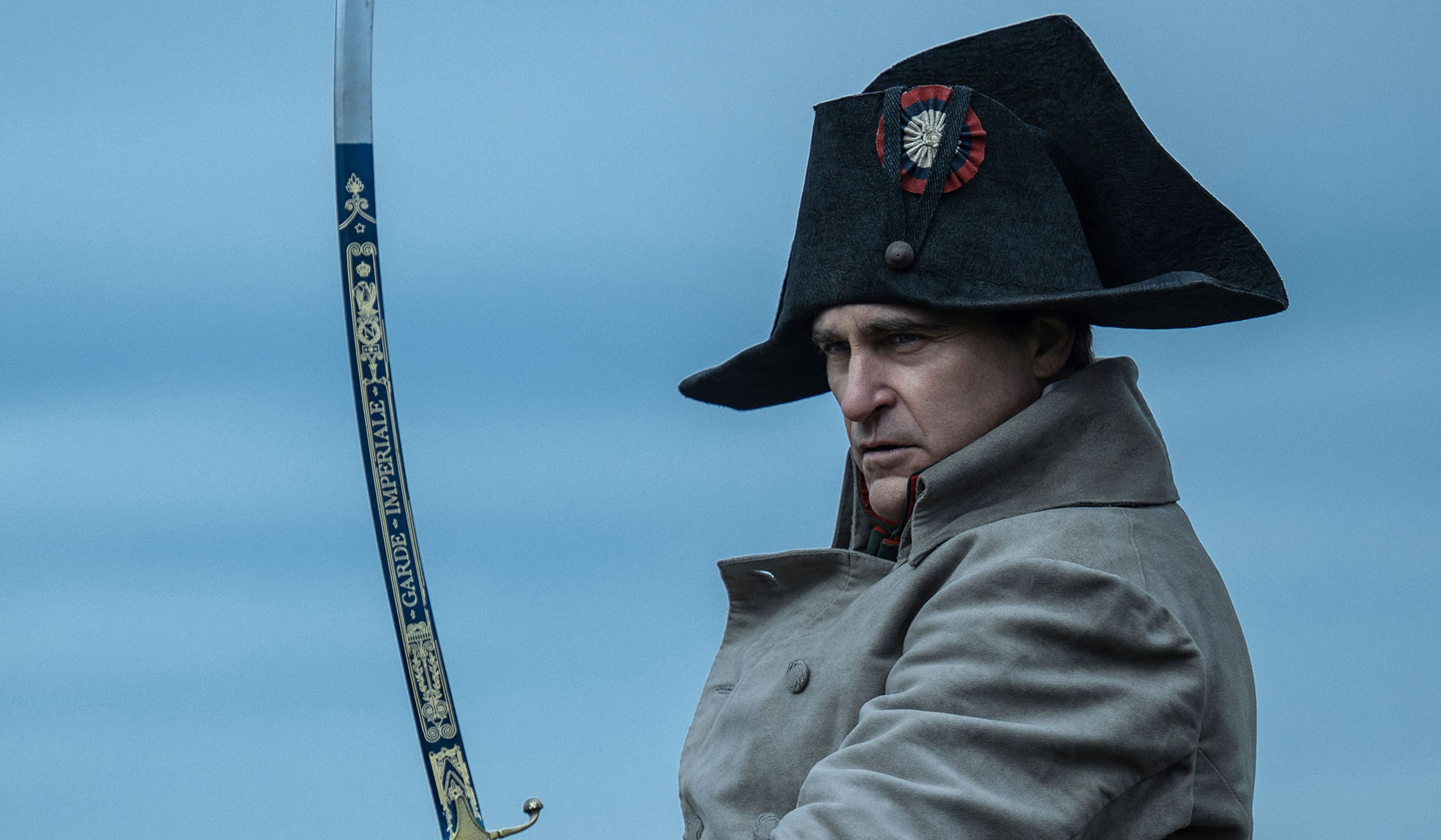
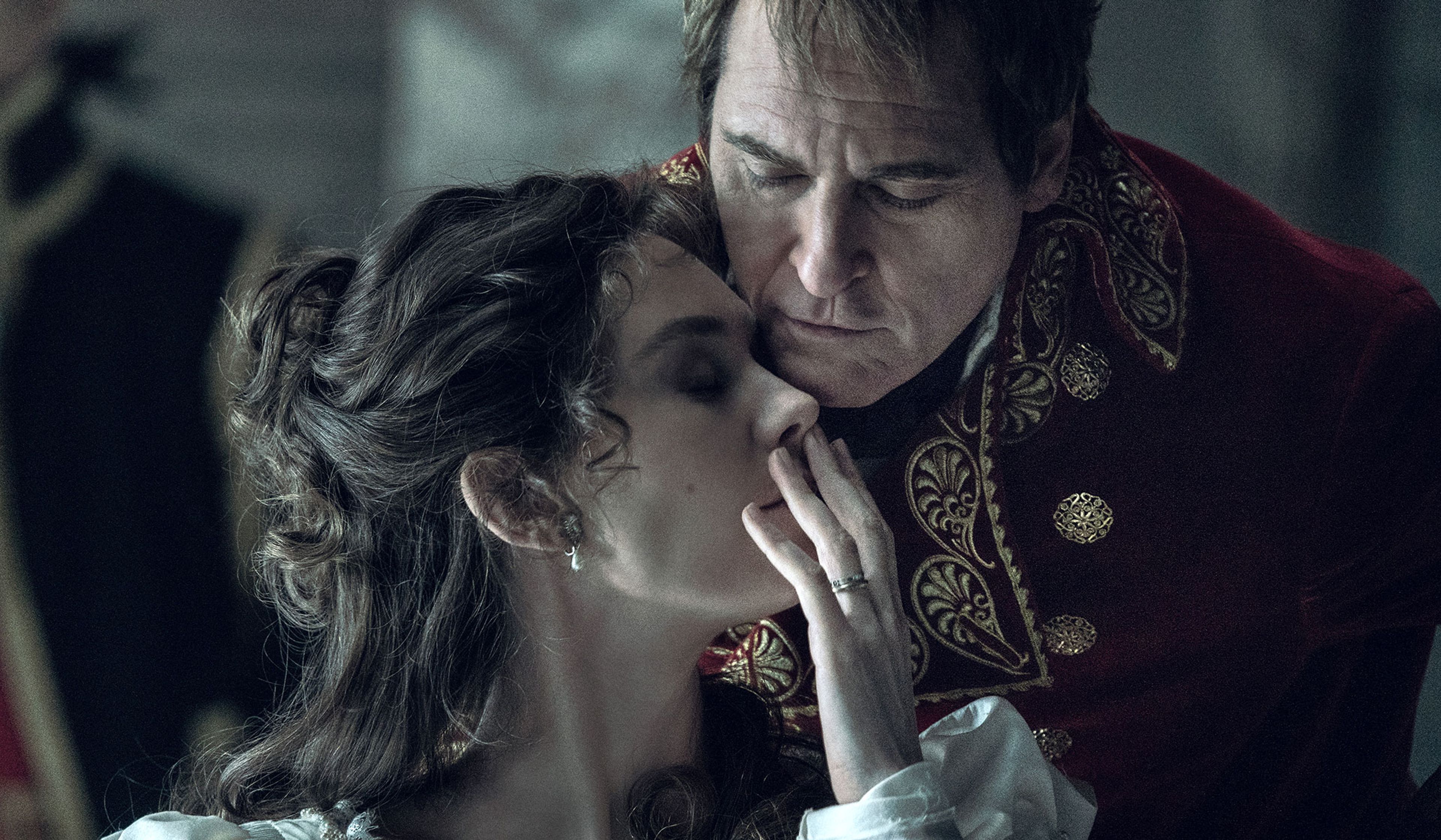
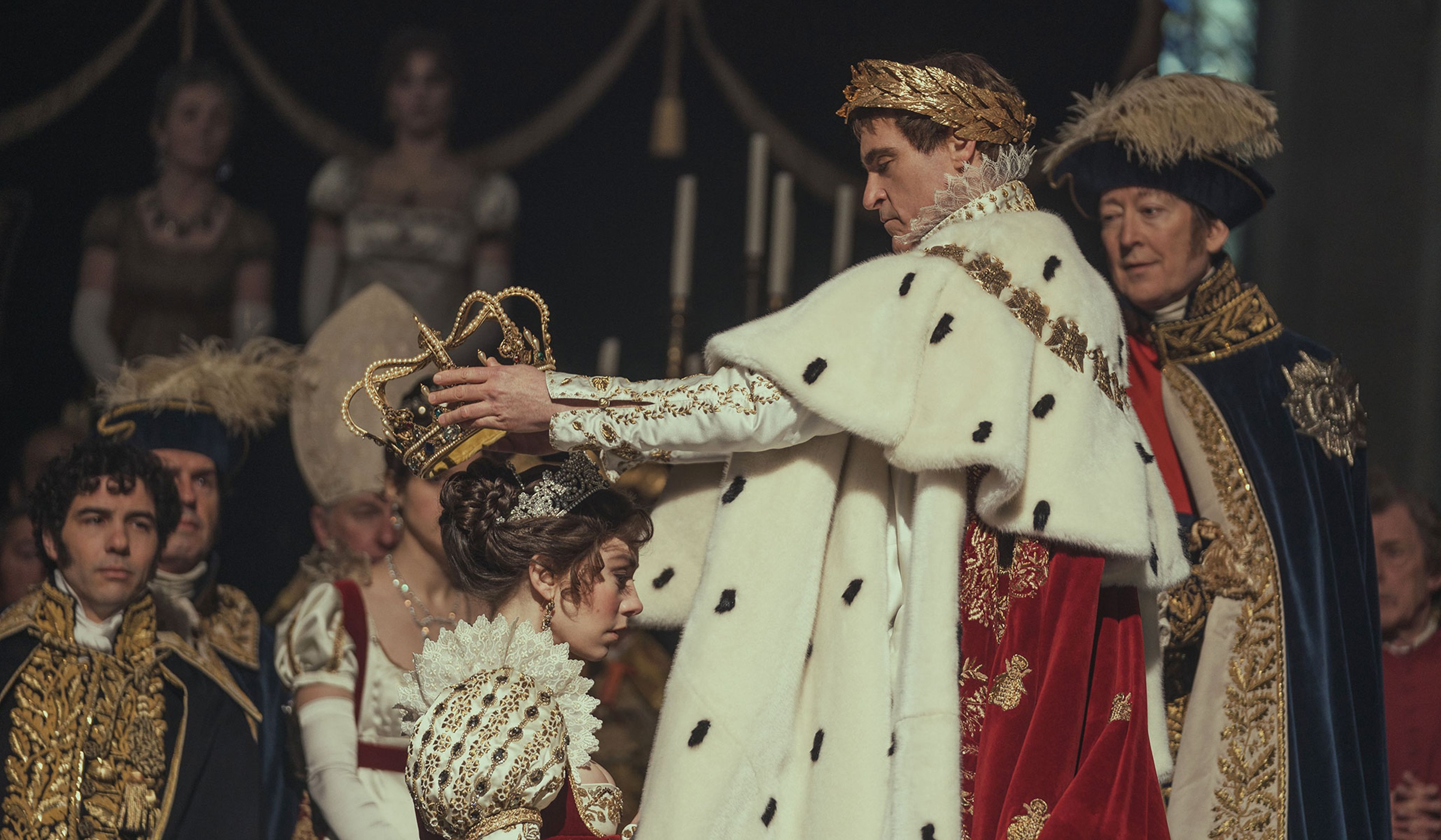
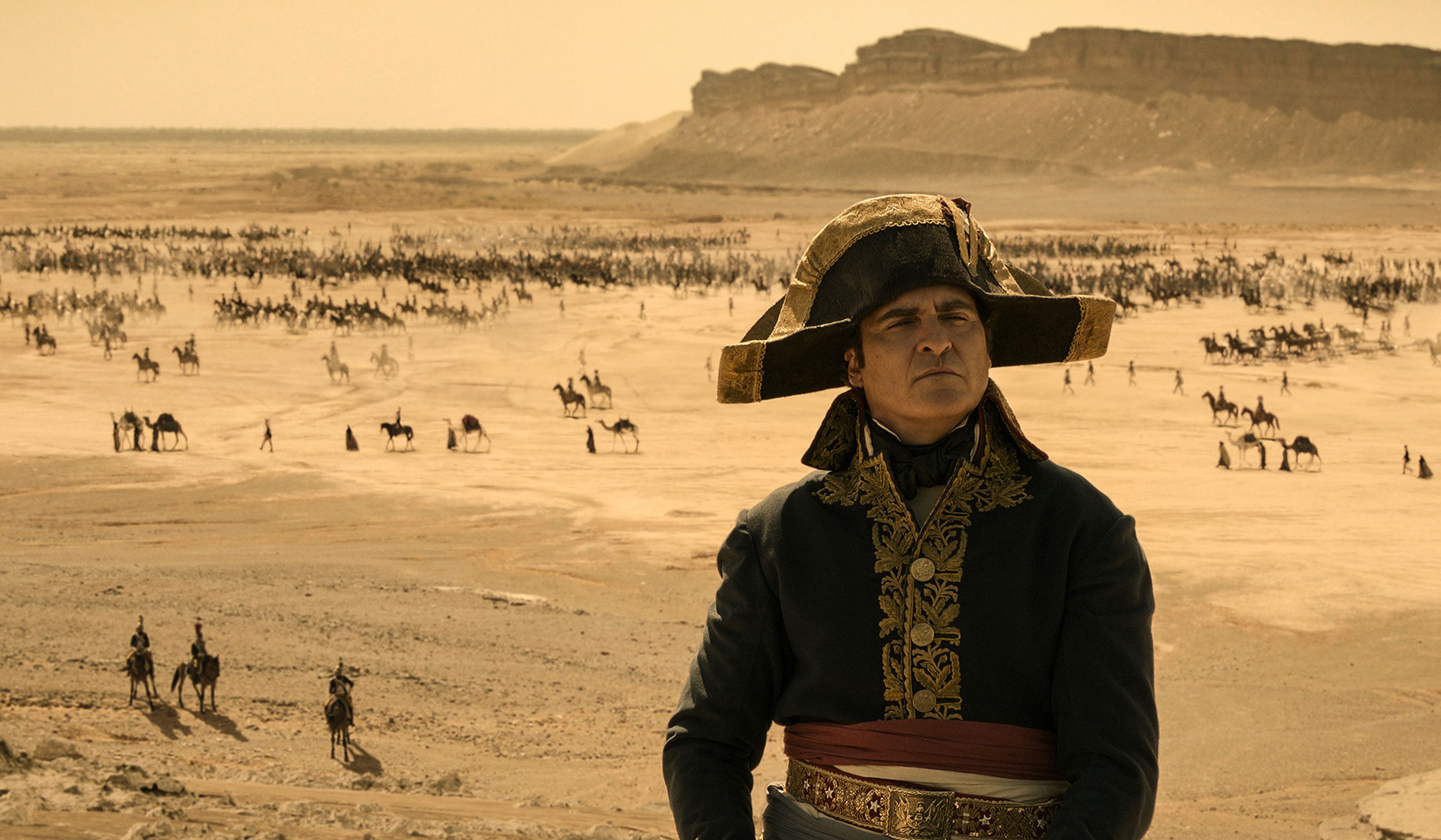
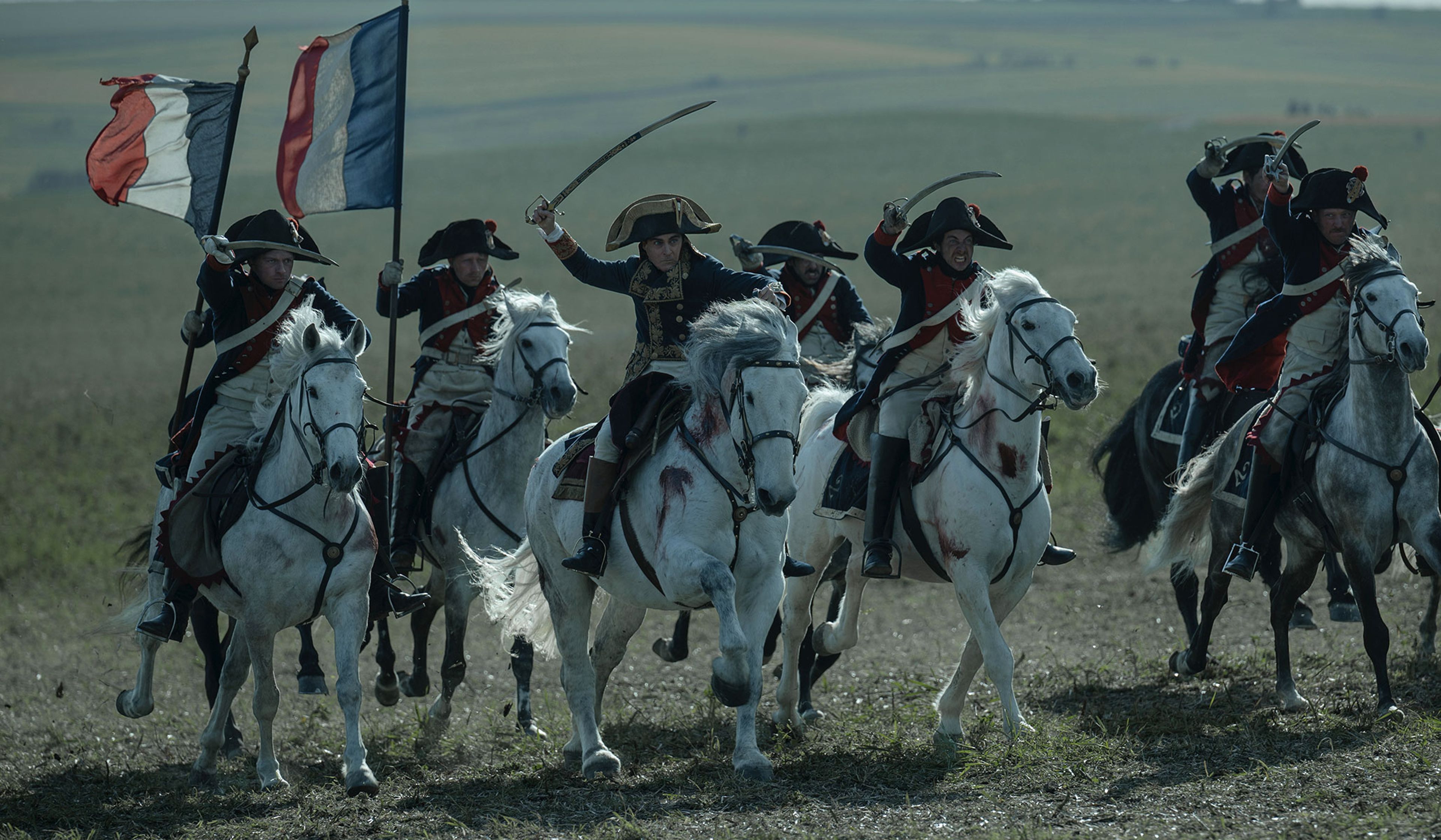
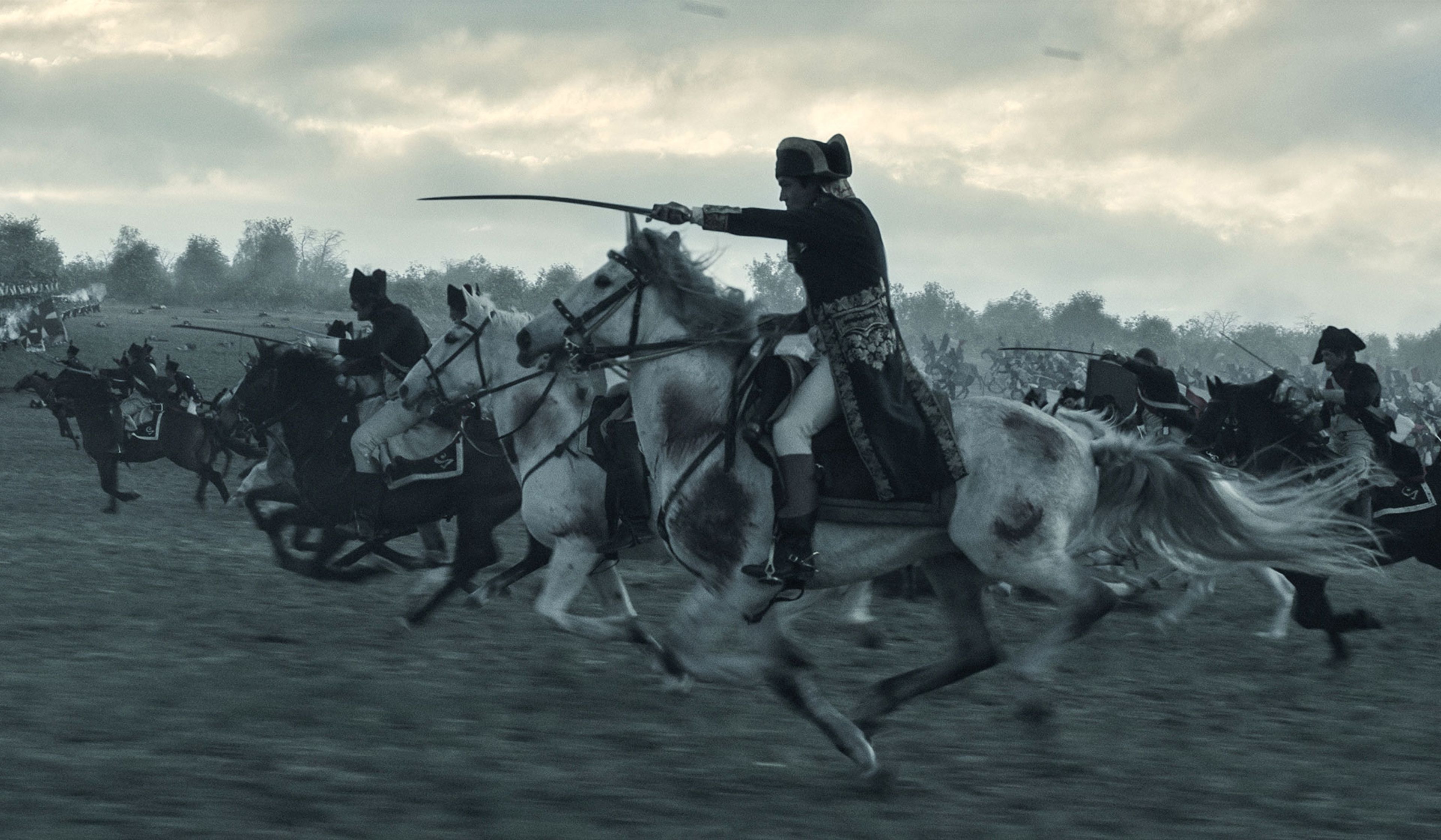
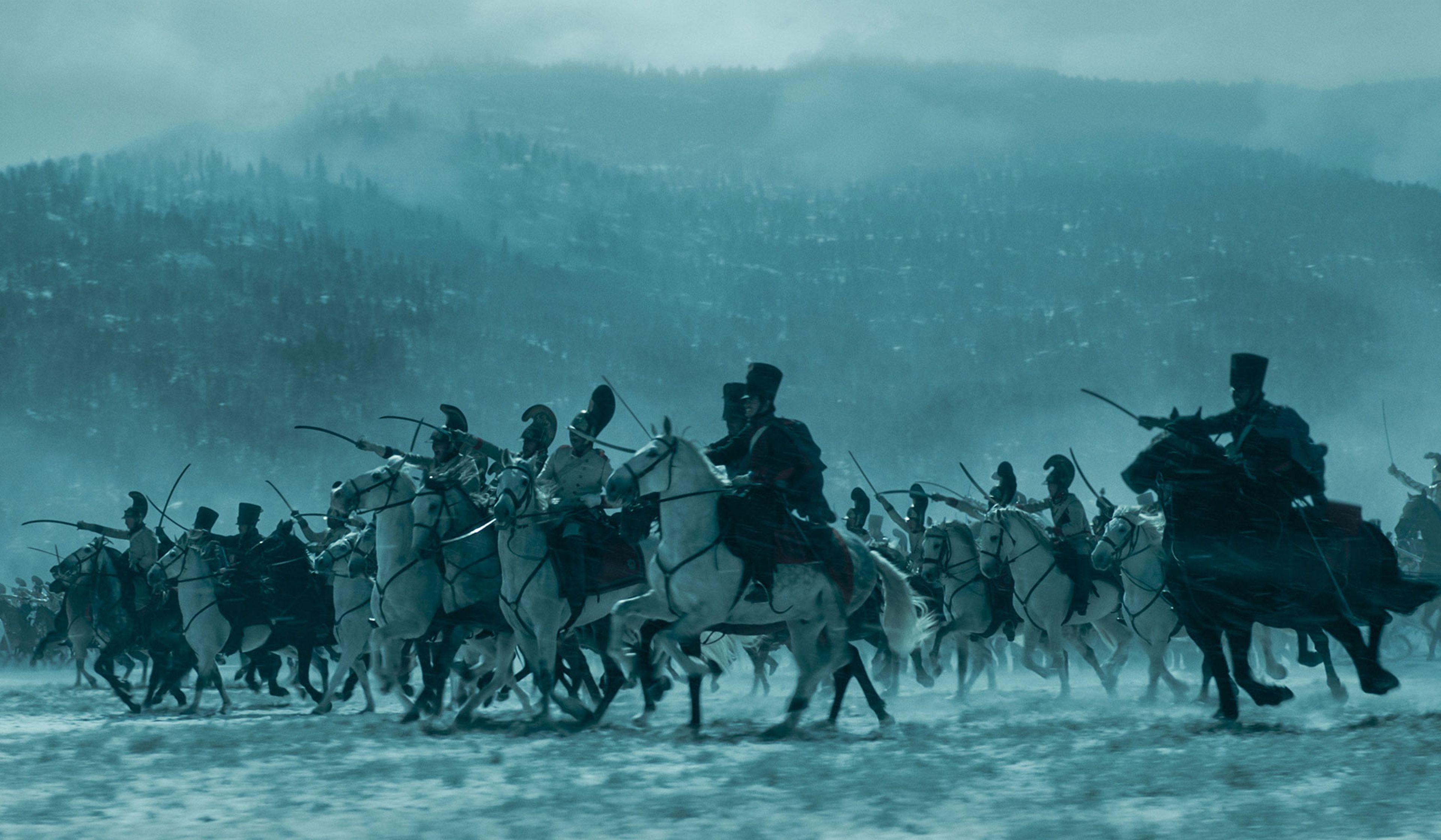
Joaquin Phoenix in Napoleon
Apple TV+
Since Scott himself is English, some critics have described Napoleon as a deliberate Anglo joke upon the French, a last salvo in the ancient propaganda wars. And whether it’s Phoenix’s emperor spluttering at an English emissary, “You think you’re so great because you have boats!” or the Duke of Wellington showing up to put the boot in at the end, there is definitely evidence to support this interpretation.
But Scott has now made so many sprawling, impressive, and fundamentally unsuccessful historical epics that we need to place Napoleon in that context as well. It’s the consummation of his striking, career-long effort to keep the big-budget epic alive, a project that’s been fatally undermined in every case save Gladiator by the fact that the director himself doesn’t seem to really like the past.
Or at the very least he struggles to acknowledge genuine greatness in his historical subjects, or put himself fully into the mind-set of people who might have gone on a crusade, or followed Yahweh out of Egypt, or pledged their lives and sacred honor to Napoleon. Apart from Gladiator, his best historical movies are The Duellists and The Last Duel, both character studies in which an anti-romantic perspective makes dramatic sense. But that attitude just doesn’t work well with stories about great men and grand ambitions; even if you want to deconstruct Napoleon, you need to give us some sense of why he inspired so much devotion, why his myth took shape in the first place.
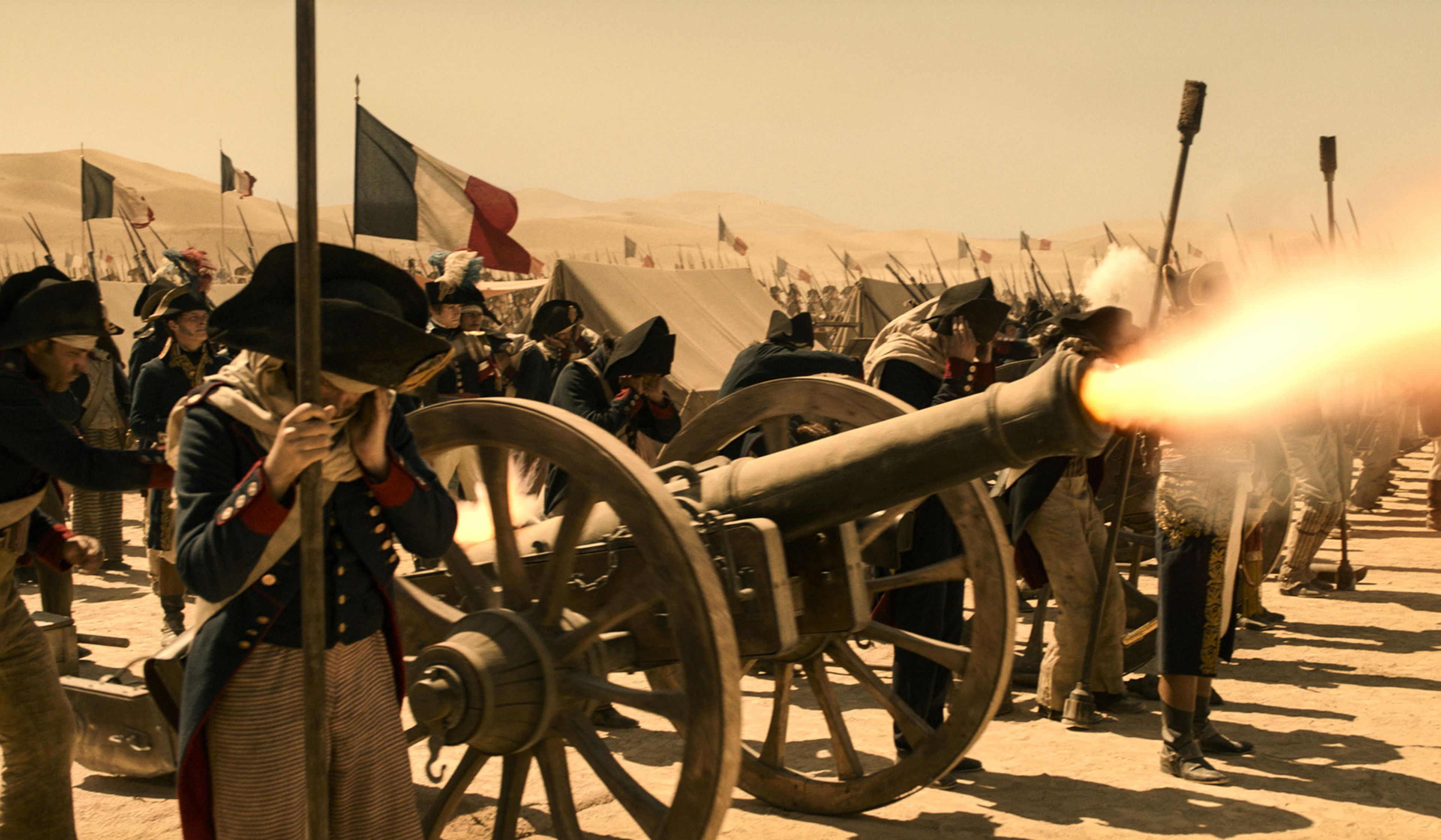
So why does Scott keep returning to the epic? Because he is a visualist above all, a man of glittering images and grand vistas, and there’s nothing like a battlefield for that kind of cinematic work. He has those vistas in Napoleon, whose battles are invigorating even with a low-energy Bonaparte in charge. I will probably show the Waterloo sequence to my son once it’s available on TV — after giving him a stern paternal lecture on all its historical inaccuracies, of course. For the rest, though, historical cinema awaits a successor to Sir Ridley who loves the past for its dreams and ideas and aspirations, not just for its spectacles.












Comments