Artistic Liberties
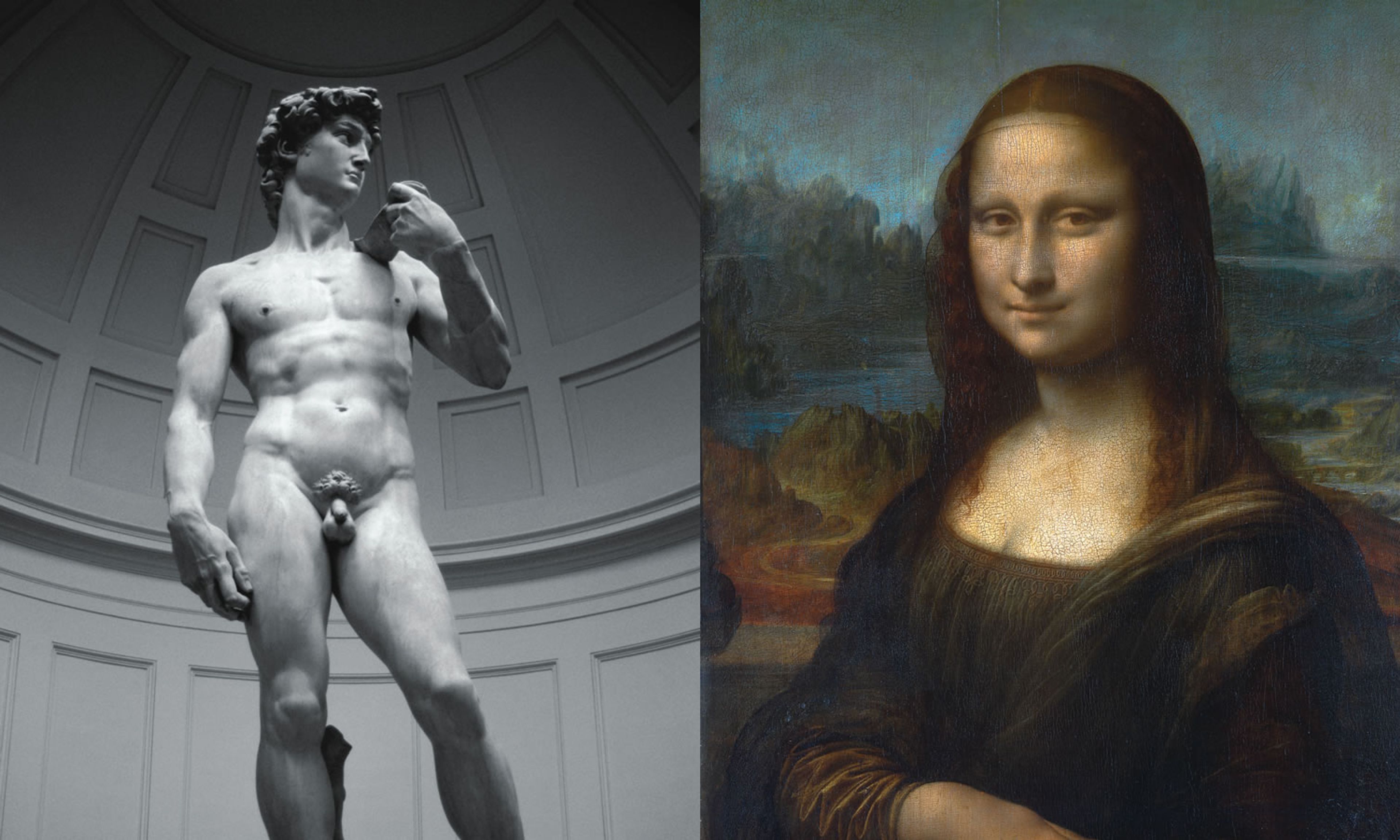
Hats off to Victoria Coates for her reminder of one of the most glorious times and places in the history of Western civilization (“When David Met Lisa,” December 27). The celebrations of the year 1503 and of the beginnings of the cult of the artist present a fascinating and penetrating look at the attitudes toward both art and artists.
I understand that the article could not be a comprehensive art-history treatise. Nonetheless, if I were to find fault with Coates’s argument, it would be with her suggestion that there is a straight line from Michelangelo and Leonardo to Duchamp. There is a line, but is it straight? Many, many artists came between the Renaissance and the 20th century, and many of them made incremental and divergent changes to our understanding of art and artists. Certainly, without Michelangelo and Leonardo, Duchamp might not have made his Fountain. But to gloss over the contributions of Caravaggio, Rembrandt, Turner, Manet, Henri, Picasso — and so many others — leaves us with a narrow and barren view. The most important work of scholars is to help us to understand the complexity of history. Understanding the dynamics of culture and the artists of any given time leads us to understand who we are and how to see and pursue the beautiful and, perhaps, inspires us to work for a better future. Coates’s fine article could have benefited from the acknowledgment of this complexity without having to detail it comprehensively.
Barbara Bushey
Art Department
Hillsdale College
Victoria Coates responds: My thanks to Professor Bushey for her thoughtful response to “When David Met Lisa.” I strongly concur that there is much more to what I think of as the aftershocks of this story — in fact, it could be a chapter of its own, about how Michelangelo and Leonardo’s contemporaries absorbed what they had done and successive generations of Western artists responded in turn. But within the space constraints of my article, for me, the critical point was to establish that even if Duchamp’s art is not to our taste, the impulse behind it was directly inspired by the events of 1503 (something Duchamp made explicit in his use of the Mona Lisa itself for the 1919 L.H.O.O.Q.). And while the line from 1503 to 1917 is long, I would argue that it is fairly straight, as all those in it were fully conscious of the origins of their developing sense of artistic identity, from Raphael and Cellini to Bernini to Rembrandt to Velázquez to Watteau to Reynolds to the rising tide that was the 19th century that led to Duchamp — who would be very pleased to know that more than a century after his audacious act, he was still provoking controversy.











Comments