Every so often, someone really opinionated comes along to push his way to the front of the crowd, and A. N. Wilson is a fine example. Any number of serious publications carry articles by him bemoaning some aspect of the present, whether political, social, or aesthetic, of which he disapproves, and savaging whoever he thinks is to blame for it. Indignation and ridicule gush out of him. He reminds me of Wyndham Lewis, an old monster from between the wars who made a nuisance of himself by sounding off about everything all the time. Never mind the clamor, such chaps seem to suffer from graphomania, or the compulsion to write, indulging themselves with such know-all pretension that the reader ceases to care whether they are right or wrong.
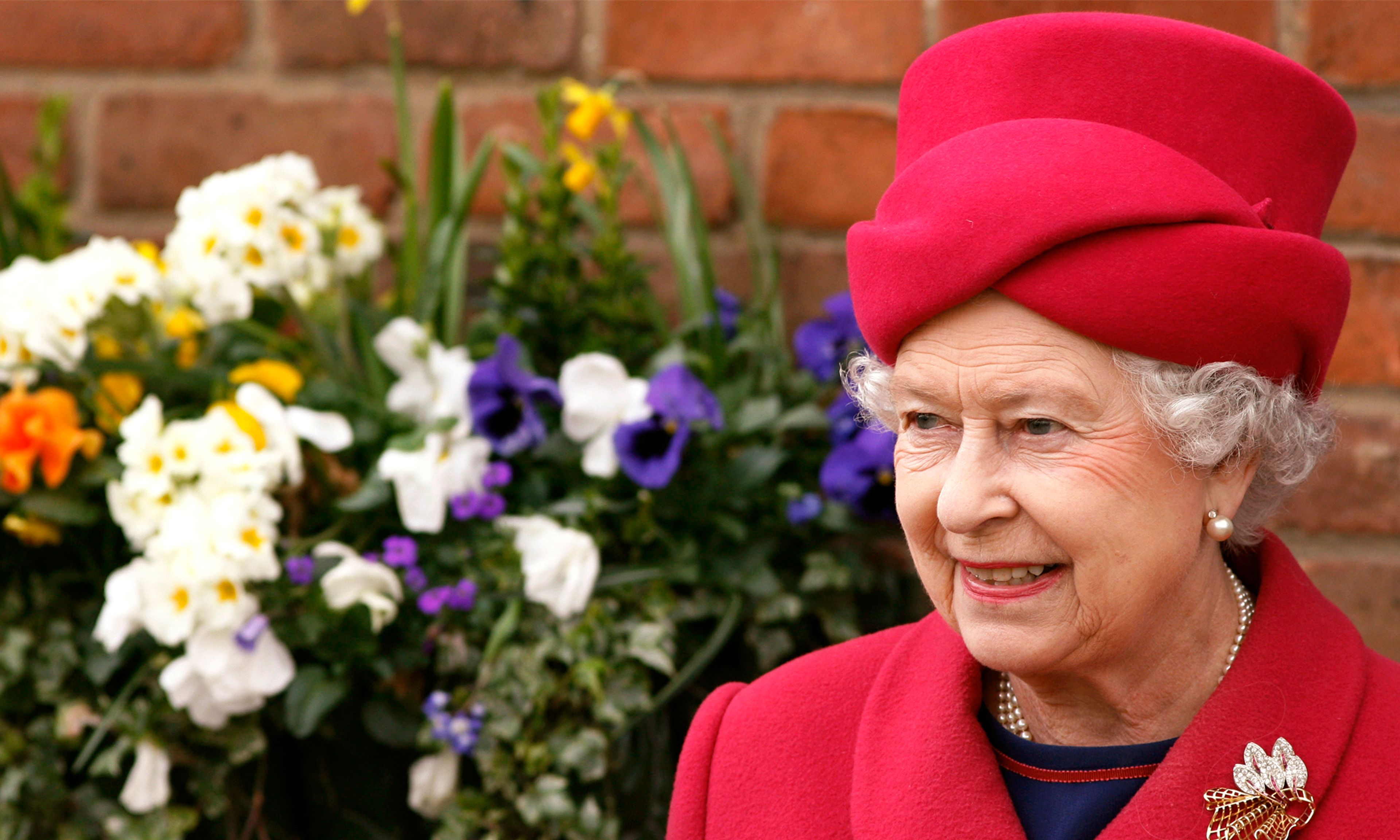
Our Times contends that in the course of Wilson’s lifetime, which happens to coincide more or less exactly with the reign of Queen Elizabeth, Britain “effectively stopped being British.” Constitutional monarch that she is, the Queen could not have prevented the slippery slide, but Wilson still manages to criticize her for not putting on the brakes. The myths that once persuaded the British to think of Britain as great have been devalued, and there is no longer a common culture or anything like it. The country has unraveled, come adrift from its moorings, mislaid its identity. Bluntly he says that the England of his mother and his father no longer exists.
Since the 1960s, the Bright Young People have been spreading what might be called the cocktail-party line that Britain is over and done with, on its way to being a failed state, fit only for satire and mockery. Acclaimed stage and television shows, and in particular a magazine by the name of Private Eye, have cultivated this special kind of intellectual masochism. Its star performer was Auberon Waugh, whose style was to jeer at everyone for his or her faults, which as often as not were fictitious, the product of his fantasy. The purpose of such malice was obscure. Nominally conservative, he undermined everything he claimed to be standing for. Wilson, also nominally conservative, finds that Private Eye has been “an effective force for good in Britain,” and that Waugh (now dead) was the most brilliant journalist of his generation. Imitating these models, he is in the fashionable swim, far less original than he might suppose.
Perhaps inconsistencies, contradictions, and even fantasies are bound to underlie an attention-seeking enterprise of this kind. Wilson complains about the loss of deference, for instance, saying that without it “much of the business of public life becomes impossible.” Elsewhere, however, he takes back this statement on the grounds that “deference was always tinged with irony in Britain,” and in any case whenever he mentions anyone in public life he himself makes sure to be so snide or outright rude that nobody can detect any deference in him. In Britain, he further complains, “everything reduces itself to triviality,” while this book of his is a vast encyclopedia of trivia often culled from dubious or biased sources. Similarly, he says the times have an “ineluctable tendency” to turn events into farce and worthy dramatis personae into clowns — but that sort of reduction exactly sums up the whole Waugh-Wilson approach. Most curiously, someone who trumpets the myths and culture of former greatness describes that past and the present as “equally awful.” Houses and bathrooms used to be in short supply; divorce was difficult and homosexuality an imprisonable offense; olive oil was sold in tiny phials at the chemist and table wine turned the teeth black. The England of his parents, it turns out, was not worth having.
But how have things come to today’s horrible pass? Contemporary history interests Wilson only to the extent that he can extract matter for editorializing out of it. Of course, the country sacrificed its position in the world by withstanding Nazi Germany; the presumption must be that war with Hitler was wrong since the collapse of British power followed from it and the economy has been unstable ever since. The Cold War, in Wilson’s view, was waged between two superpowers equivalent in their lack of belief in themselves, and so it is to be seen as a confrontation between the KGB and Coca-Cola. (He concedes that socialism — by which he means Communism — did much harm.) Wilson skips just as lightly over other imponderable factors draining Britain of its identity, for instance mass immigration, multiculturalism, and, not least, the panicky insistence on joining the Common Market only to discover afterwards that this meant handing over major areas of policy to foreigners, and thus surrendering the hard-won centuries of self-government in Westminster.
A writer without a clear sight of facts and happenings, or perhaps unable to make sense of them, soon summons up irony and paradox, those twin mystifiers and helpmates of the axe-grinder. I gave up counting all Wilson’s paradoxes and ironies. In a rather similar device that makes for suggestive imprecision, he uses the adjective “mysterious” time and again to cover what he cannot otherwise explain, for instance the nature of Queen Elizabeth, the sense of England derived from the plays of Alan Bennett, the Big Bang that supposedly revitalized financial practice, the character of Lady Archer and on the next page the financial dealings of her husband, and so on.
Gossip is Wilson’s natural medium, and it suits his talent for invective. Everyone and anyone who has been in the public eye is fit for a character sketch that puts the worst possible complexion on him and his doings. Churchill still throws an immense shadow over post-war Britain, and so of course must be a prime target for debunking. By the time he was voted back into office after the war, the country, in Wilson’s words, was “flyblown and stinking.” As though to substantiate those adjectives, a couple of paragraphs later there is a reference, taken from the prime minister’s medical adviser, to “Churchill’s big, white, fat bottom.” Here was “a drooling old reactionary, always half tight.” Wilson rests his case by digging up a quotation from his mentor Auberon Waugh, who, typically, once wrote in Private Eye: “I have always maintained that Churchill should have been hanged at the end of the last war — whether for specific war crimes . . . or merely to herald a return to the civilised standards of peace.”
The passage about Anthony Eden opens with remarks that he is known to have varnished his fingernails and was “easily the best-looking individual, of either sex,” to have occupied the office of prime minister in this century. Is this some innuendo about his sexuality or a sneer about Margaret Thatcher’s looks? Wilson goes on to generalize in his customary manner that many regard Eden as the most disastrous recent prime minister, “though there is so much competition for the role that attempts to draw up an order of prime ministerial incompetence [in this period] would be invidious.” Eden’s successor, Harold Macmillan, had hooded eyes, a mustache, “irregular and discoloured teeth”; he was a man so out of touch that he fainted in a train on learning of his wife’s infidelity. In his era, the artifices by which public life had hitherto been carried on were stripped away, again “mysteriously” — yet another instance of how gossip comes to displace information or analysis. It’s child’s play to laugh at such prime ministers as Sir Alec Douglas-Home, Edward Heath, the “bonehead” James Callaghan, and even the “interesting” Margaret Thatcher (accused of dominating her entire cabinet by means of a foul temper), but his summation of Harold Wilson (no relation) is up to the standards of cruelty set by Auberon Waugh: “It was hard to imagine into what comforting retreat he could crawl, without the help of alcohol and the semi-merciful humiliations of early dementia.”
Of course it is true that there has been much to deplore in these times, like the defection to Moscow of Kim Philby and other upper-class traitors, or the wretched story of the Prince of Wales and Lady Diana Spencer. Among Wilson’s special villains are “town planners, spivs [British small-time criminals of the post-war era], bad architects, businessmen and politicians who believed in Growth,” but Prime Minister Blair’s destructiveness far outstrips the damage done by such as them. Blair undid the United Kingdom by granting devolution to Scotland and Wales, he handed Northern Ireland over to the gunmen who had been terrorizing the province, and he destroyed the old House of Lords. It is possible that these are steps in a decline that is irreversible, in which case England really will cease to be its historic self, instead becoming an undistinguished offshore part of the European Union, as Blair evidently intended.
There has also been much to satirize, for instance the legal proceedings surrounding publication of D. H. Lawrence’s pretty silly novel Lady Chatterley’s Lover; the affair with a good-time girl that led to the downfall of Jack Profumo, until then secretary of state for war; the phenomenon of the Beatles, whose success induced in them “a risible degree of self-importance”; and, above all, the spectacle of bishops and archbishops heedlessly junking the fabric of Christianity. Wilson makes the valid point that the artistic masters of his parents’ time were Edward Elgar, William Nicholson, Henry James, and Joseph Conrad (the last two foreign-born, but let that pass), only to be replaced now respectively by Harrison Birtwistle, Gilbert and George, Ian McEwan, and Martin Amis.
Perhaps the old truth that there is an awful lot of ruin in a country no longer applies. Should the England of Wilson’s parents really and truly cease to exist, then one small contributing factor among many others far more significant will be that they have had a son determined to stamp everything around him with the hysteria and aggression of his personality.












Comments