At this time last year, I was griping about Hollywood’s habit of releasing all of its most self-consciously Oscar-worthy efforts in a wild, desperate year-end pack. When it was decreed, soon after, that there would be not five but ten best-picture nominations for 2009, I braced myself for an even more frenzied Oscar rush: twice as many Holocaust epics, twice as many adaptations of Oprah-endorsed books and Broadway plays, twice as many glossy indictments of suburbia, twice as many movies directed by Clint Eastwood.
It didn’t work out that way. The season’s better films — A Serious Man, Where the Wild Things Are, Fantastic Mr. Fox, and Up in the Air — were spaced out, decorously, across the autumn. The crowd of Christmastime contenders was thinner and weaker than in years past, and the most transparently Oscar-driven pictures — Invictus, Nine, The Lovely Bones — seemed to evaporate in the frosty air, dismissed by critics and ignored by filmgoers. The holiday box office was dominated instead by movies that would have been at home in the meretricious, crowdpleasing months of summer: Avatar, Sherlock Holmes, It’s Complicated, and Alvin and the Chipmunks: The Squeakquel.
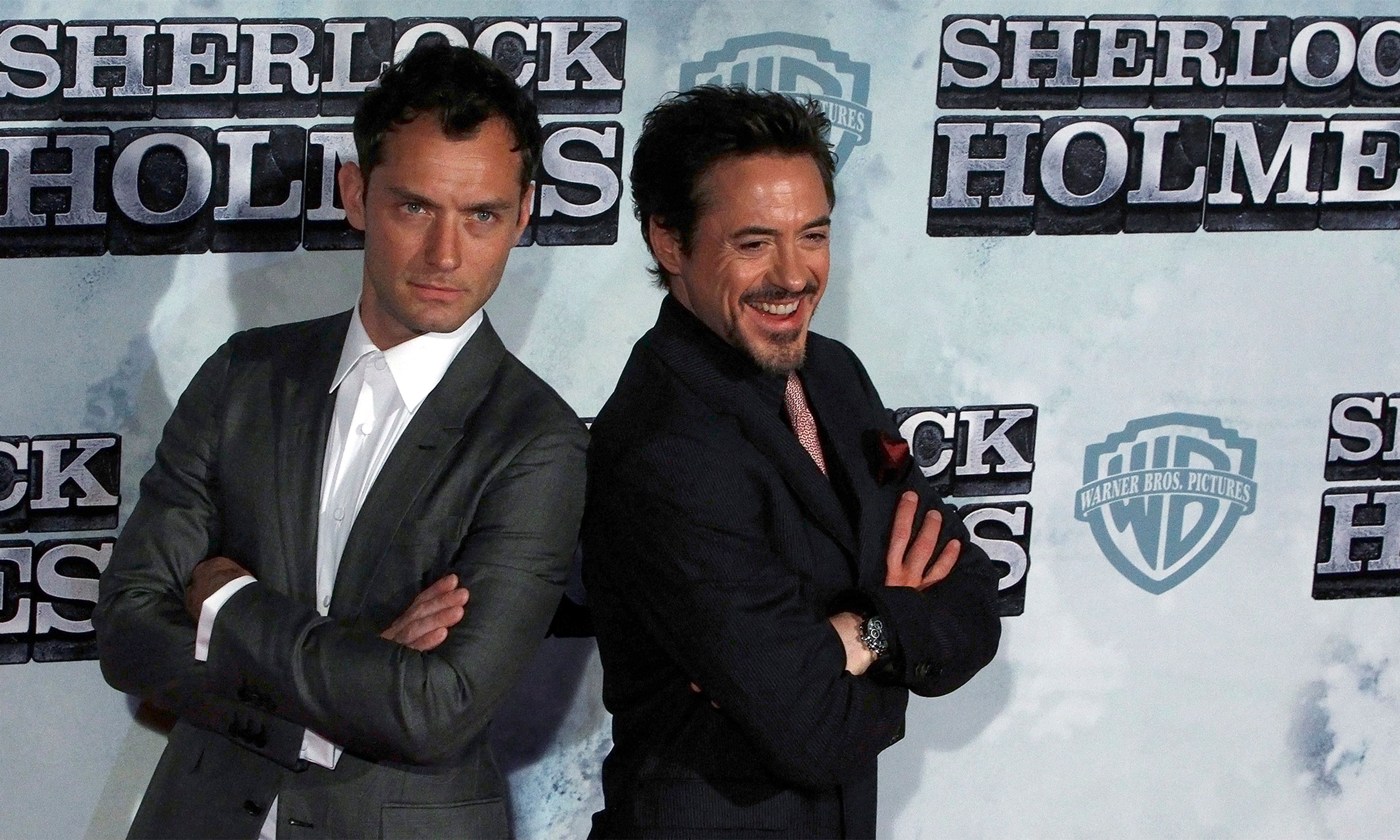
The Squeakquel, I’m afraid, will pass unreviewed in these pages, but I did join the hordes who watched Guy Ritchie and Robert Downey Jr. reinterpret Arthur Conan Doyle’s Great Detective as a kind of late-Victorian Jason Bourne, and the throngs who turned out to see how Meryl Streep’s divorcée would cope with the complications of being romanced by her lusty ex-husband. Neither movie is much good, but both are worth seeing as vehicles for actors who have unexpectedly arrived in the prime of their careers: Downey in Sherlock Holmes . . . and Alec Baldwin in It’s Complicated.
Careers are twisty things. Twenty years ago, it was hard to imagine that the Alec Baldwin who had just starred in The Hunt for Red October would hit his stride as a fat and fiftysomething supporting actor, swiping estrogen-soaked dramedies out from under Meryl Streep. And it was even harder to imagine Downey, then carving out a niche as his generation’s bright young thespian with a massive drug problem, would hit his peak in his mid-forties, as the thinking person’s action star.
Yet here we are. Both men fell a long way down in the Nineties: Downey because of the drugs, of course, and Baldwin because of terrible career choices and a tabloid marriage to Kim Basinger. But both emerged from these disasters freer, in some sense, than most Hollywood celebrities ever seem to be, without the white-knuckle grip on their careers and public reputations that makes so many big names such a drag to watch.
Downey was freed to really enjoy stardom: He’s like a teenage boy who went to sleep and woke up an action hero, and his recent blockbuster parts — first as Iron Man, and now as Holmes — have been buoyed by an infectious, pinch-me-I’m-dreaming kind of joy. And Baldwin was freed to give up on it: to take supporting parts, to find his best role on a sitcom (as Jack Donaghy on 30 Rock), to be wide-bellied and middle-aged and make it work for him.
The crowds at It’s Complicated are there for Streep, of course, but her performance is as smug and mailed-in as Nancy Meyers’s paint-by-numbers script. It’s Baldwin, as the hirsute, heavyset ex-husband, who went for the younger woman and now regrets it, who keeps the movie from disappearing completely down the rabbit hole of post-menopausal fantasy. It’s Complicated makes sport of him at every opportunity — he’s heavy, he’s henpecked, he can’t get his second wife pregnant, he misses the domestic world he walked away from years ago. But even mocked and humiliated, he steals the movie. He’s the bear in the garden, a testosterone-laden housebreaker in Meyers’s soft-focus Bobo dreamworld of fine foods, fresh-cut flowers, and marble countertops. He’s contained, but not controlled. He gives away his dignity, but keeps his virility intact.
In Sherlock Holmes, Downey is working with a better part, but even more preposterous material. Ritchie has a fine Watson in Jude Law (who should bury his beauty in mustachioed supporting roles more often), and I didn’t mind the movie’s slam-bang style: Conan Doyle’s Holmes was more prone to fisticuffs than readers are likely to remember, and more apt to mix it up with London’s seedier elements. (It was his brother Mycroft, all genius, girth, and sloth, who did his deducing from the drawing room.)
But if you’re going to make a movie about a master detective, you have to give him a mystery worth detecting. Instead, Ritchie and his screenwriters serve up a ridiculous farrago of lousy Hollywood forays into Victoriana (Wild Wild West, From Hell, The League of Extraordinary Gentlemen), complete, alas, with a quasi-supernatural villain who wants to Take Over the World. Nothing could be more predictable — or less Holmesian.
But focus on Downey’s avid performance rather than the plot, and you’ll find yourself drawn in, entertained, and satisfied. Indeed, once the villain is undone and the closing credits roll, you may even find yourself looking forward to the inevitable sequel.
I know I am — so long as they hire Alec Baldwin to play Mycroft.












Comments