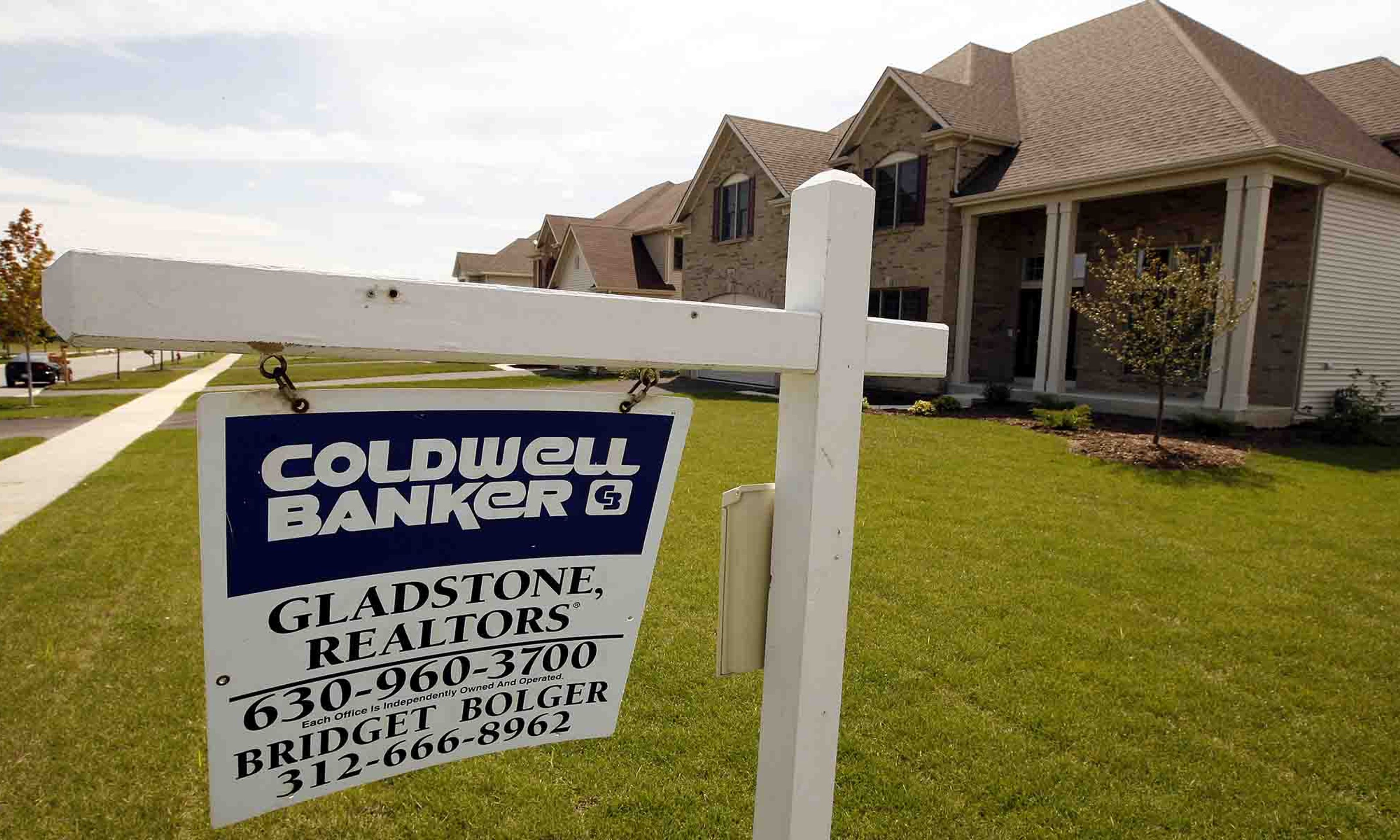
There are two main dangers proceeding from the Obama administration’s attempts to intervene in the mortgage market as a way to prop up housing prices: The first is that the program won’t work, and the second is that it will. If the program fails, it will, like the stimulus and any number of this administration’s remarkably naïve economic initiatives, simply represent the frittering away of another mile-high mound of money on political flimflam that does little to benefit most Americans and nothing to address the fundamental problems plaguing our economy. If it works, it will represent a victory for the nefarious forces of C.R.I.B. — the Committee to Re-Inflate the Bubble — setting the economy up for a vicious second round of financial crisis with its roots in the housing market.
The good news is that, when it comes to reshaping the U.S. mortgage market, the Obama administration’s top guns are bringing to bear all of the brisk, rough-’n’-ready entrepreneurial know-how they picked up in their previous careers as university professors, nonprofit activists, and holders of political sinecures. Obama may crack insensitive about Special Olympians, but his crack team of mortgage commandos is moving with the sort of speed that makes you want to organize a telethon for them. Their poster child is Michael Barr, the assistant Treasury secretary who added greatly to the nation’s mirth in the waning days of 2009 by telling a McClatchy reporter that, when it comes to mortgage modifications, “I think that if you go back and look at what we said we would do in February, we are on track to meet the president’s goals.”
That’s the economic equivalent Secretary Napolitano’s “the system worked.” How far from the truth is it? The Obama administration’s HAMP initiative — that’s Home Affordable Modification Program — is supposed to renegotiate some 4 million mortgages over the course of three years. At the end of the first year, it’s about 1 percent of the way there. So we’re “on track to meet the president’s goals” around the time Chelsea Clinton’s grandkids start making their first runs at the White House. The $75 billion HAMP has, so far, managed to help renegotiate about 10,000 mortgages, meaning that it’s operating at about the same pace as Zambia’s national toilet-installation campaign, which boasts of plumbing about 10,000 households and schools a year.
But what Zambia is putting in the septic tank, Obama is putting on the government’s financial books, and that is the real point of HAMP. It’s part of the stealth bailout, the ongoing, largely unremarked-upon campaign to supplement TARP and the other direct bailouts with a host of underhanded and sub rosa pieces of financial indirection designed to transfer yet more risk and outright losses from the big financial institutions to the taxpayers. And out in front, no surprise, are the Toxic Twins themselves, Fannie Mae and Freddie Mac.
If you weren’t eyes-deep in the mirth and eggnog on Christmas Eve, you might have heard the disturbing news that the Obama administration has decided to commit not millions, not billions, not trillions, but theoretically infinite sums of money to backstopping Fannie and Freddie, the two most irresponsible players in the housing market, the entities that did more than any bank, hedge fund, or Wall Street greedhead to distort and pillage the real-estate market. The U.S. government originally capped its support of Fannie and Freddie at $200 billion each, but, on Christmas Eve, the elfin Tim Geithner went the full Papá Noel, announcing unlimited support for these two eternal entrants on the naughty list. That these two book-cooking, political-crony-rewarding bubble-pumpers have a limitless claim on the public fisc would be scandal enough if it were merely a side effect of Obama’s mortgage plan. But it is the plan.
The Federal Reserve has been buying up Chernobyl-grade mortgage-backed securities since the onset of the financial crisis. About half of the Fed’s balance sheet right now consists of mortgage-backed securities, and it’s going to be aggressively purchasing them for the next couple of months. And then, if all goes according to plan, it’s going to stop in March, reaching its point of satiety at around $1.25 trillion in MBSs. The Obama administration is worried that, without Fed purchases to inflate the MBS market, it will collapse, possibly igniting a new round of financial crisis — and surely putting to ridicule the administration’s fanciful claims that it has billions of dollars of “savings” in the form of “leftover” TARP money to spend on a new round of wheel-greasing stimulus projects. Under the previous terms of Treasury’s Fannie/Freddie takeover, a $400 billion cap limited the Toxic Twins’ ability to dig themselves deeper into the MBS market.
And that was by design: Treasury demanded that Fannie and Freddie begin reducing their portfolios, selling off securities and mortgages, as part of the bacon-saving deal. But now, with unlimited taxpayer backing for Fannie and Freddie, Geithner’s Treasury is reversing itself, loosening those earlier requirements. Rather than forcing Fannie and Freddie to sell off mortgages and securities, the Obama administration now proposes to let them start buying them again — fattening the very beasts that mauled the economy in the first place. Two greed-driven, politically connected institutions with trillions of dollars in dodgy mortgages and securities, with unlimited backing from the U.S. taxpayer — what could possibly go wrong?
What this means is that the Fed’s role in propping up the MBS market — and, by extension, housing prices — is going to be supplanted by Fannie and Freddie. Say what you will about the Fed, which has been caught with its pinstripes down on plenty of occasions, it remains one of the more responsible actors in the U.S. economic-policy game. Fannie and Freddie are arguably the least responsible, the Bozo and Cookie of the housing game. So why would the Obama administration want to put its eggs in their tattered basket?
The day before Geithner announced his Christmas gift to Fannie and Freddie, Bloomberg News reported, in what may have been an attempt at wry humor: “Purchases of new homes in the U.S. unexpectedly fell last month, indicating a recovery from the worst housing slump since the Great Depression will be slow to develop.” Unexpected? With unemployment at 10 percent and the entire apparatus of the federal government working to keep home prices from plunging down to the level they need to reach to become attractive to buyers in these troubled times, the decline was anything but unexpected.
How bad was it? “Purchases dropped 11 percent to an annual pace of 355,000, lower than the lowest estimate of economists surveyed by Bloomberg News, figures from the Commerce Department showed today in Washington. The median sales price decreased 1.9 percent from November 2008.” And that does not even capture the depth of the housing-market gloom: According to the Federal Housing Finance Agency, about one-third of those “sales” weren’t really sales in the common sense of that word: They were foreclosures. The housing market is, if not quite dead, about half dead, and about one-third of the extant activity is foreclosures, exactly what the Obama administration says it wants to stop.
As the cynics will have guessed, this probably isn’t about the families having to move out of their underwater, overleveraged, suburban McMansions and into cheaper accommodations or, horrors, an apartment in some unfashionable quarter of town. None of that campaign-commercial goo really applies at the nitty-gritty level: Families that make $100,000 a year cannot afford $600,000 mortgages and, even if the Obama administration manages to work feats of magic and get those mortgages down to $500,000 or $400,000 — a snowball-in-hell probability — they can’t afford those, either. A family making $100,000 a year can afford, at most, a $300,000 mortgage. And families making $100,000 a year right now have other things on their mind: mainly, whether they’ll be making $100,000 next year, or $50,000. Keeping prices high and keeping overextended families in their homes are mutually exclusive goals, but the Obama administration does not bend to economic realities.
So if it’s not about Bud and Sis and the picket-fence gang, what’s the deal? As Karl Denninger, a trader and relentless critic of the bailouts, points out, Citibank owns about $15 billion in second mortgages and home-equity loans in California alone. “A very significant percentage of the homes in that state are worth less than the first mortgage balance,” he writes. “As such, should the people who own those homes stop paying, a huge percentage of the $14.6 billion that Citibank holds in second liens in California will be worth exactly nothing.” Wells Fargo has nearly $50 billion in similar exposure in California and Florida, where the housing numbers are even more grim, by an order of magnitude, than the national average. There’s plenty of that slime to go around, and the commercial real-estate market is, some fear, on the brink of doing in 2010 what residential real estate did in 2008–09.
The Obama administration has been aggressive in claiming credit for the period of relative stability that has followed the Bush administration’s interventions in the markets. If those days of comparative calm turn out to be short-lived, Obama does not want to be the one that ton of political bricks comes down on.
That infinite line of credit for Fannie and Freddie? Expires in 2012.








Comments