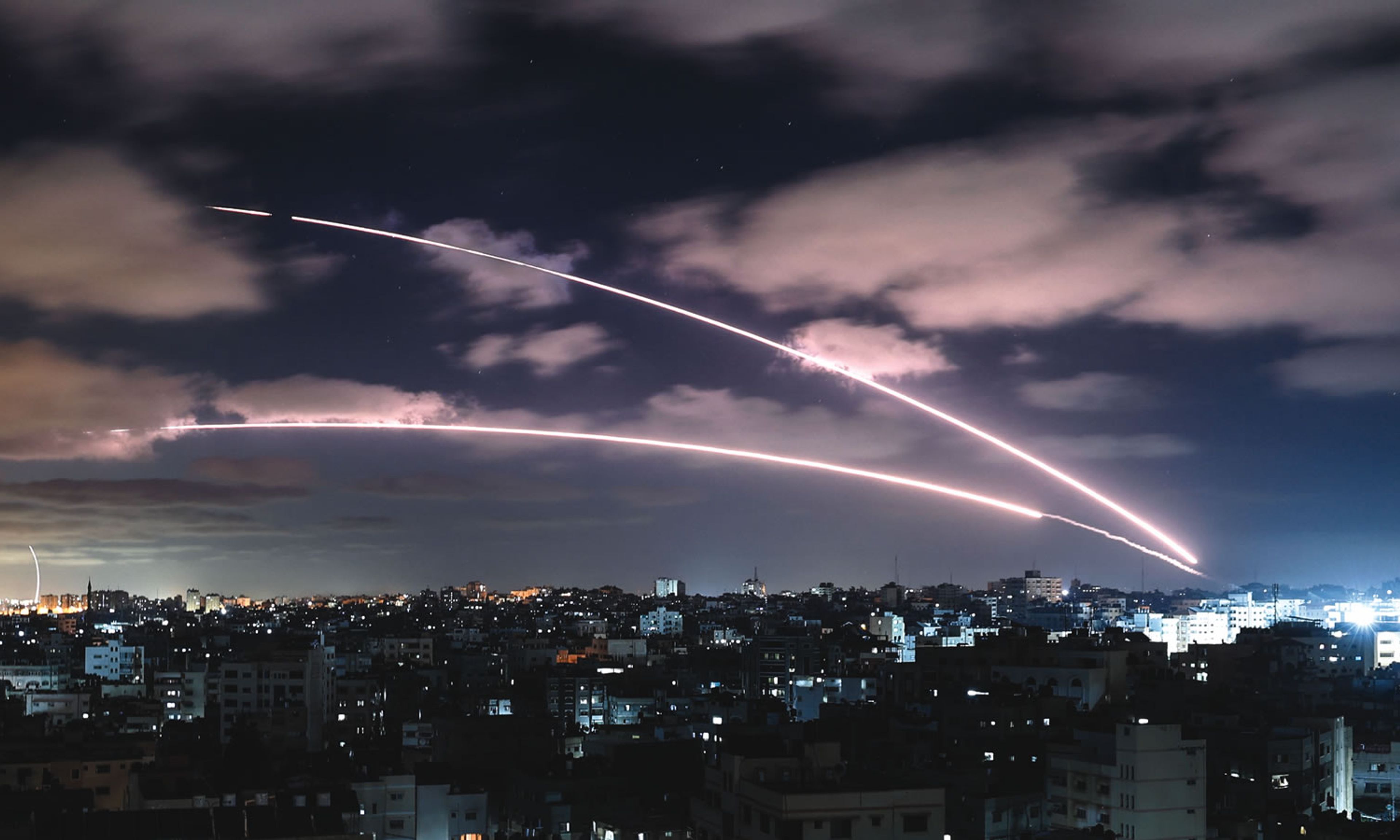
American Declarations, Israeli Independence
Mario Loyola is, of course, right (“Israel Has Every Right to Destroy Hamas,” June 14). He’s right that Israel has the moral right to destroy Hamas in Gaza. He’s right that Israel might see that as a strategic and prudential necessity, though the resultant reoccupation of the Strip complicates that objective. He’s right about the imminent threat Hamas poses, which would render a preventive war just and legal. And he’s right about the legitimacy of disproportionate force to achieve strategic objectives in such a conflict, which is the bedrock upon which deterrence theory is built.
Where Loyola may be wrong is America’s capacity to exercise a veto over Israel’s pursuit of what it regards as its national interests. He writes that the last eleven-day conflict ended when “Israel caved” to U.S. pressure to accept a truce, and that Washington should “end its reflexive policy of imposing cease-fires on Israel.” That might have been the case in the past, but it seems less so now. American pressure to this effect took extraordinarily subtle forms, a handful of which Jerusalem appeared to disregard.
If anything, the United States is jealously stewarding its once prohibitive influence over Jerusalem, which has been on the wane for decades as a result of our own actions. The Obama administration’s pursuit of a nuclear deal with Iran that included ceding vast new authority to the region’s Shiite militias under Iranian control accelerated a thaw between Israel and the Middle East’s Sunni states, culminating in the Abraham Accords. Israel’s new regional partners provide it with more latitude. Breaking the Hamas government wouldn’t destroy Hamas — it would scatter it in Gaza and augment its already surging popularity in the West Bank. Those are Israel’s strategic considerations — not necessarily America’s.
American foreign-policy-makers should be proper custodians of America’s interests. Among them, the preservation of strong ties with the Israeli government as it explores the freedom of action our new diplomatic realities afford it. Loyola is right that the U.S. would be wise to avoid making demands of Jerusalem that it sees as contrary to its immediate tactical and strategic interests. It’s less clear, however, that Israel is all that beholden to American demands anymore.
Noah Rothman Associate Editor Commentary
Mario Loyola responds: Noah Rothman is right that Israel is no longer as beholden to the U.S. government as it once was. But Israel’s range of options in the face of missile terrorism remains severely constrained by its great desire to preserve legitimacy in the eyes of other democracies and of the U.S. government in particular. That’s why the diplomatic and even academic debate over Israel’s actions matters. Another major conflict with Hamas (and Hezbollah) over missile terrorism is easily predictable, and so is the diplomatic debate over how far Israel should be allowed to go in response. The U.S. government should not wait until the shooting starts to engage in that debate. It should force that debate as soon as possible, by adopting a declaratory policy that it will give Israel all the time, resources, and diplomatic cover it needs to inflict upon those who practice missile terrorism a defeat from which they will never recover. The more explicit and categorical the U.S. is in communicating its support for Israel in advance, the more Hamas and Hezbollah will think twice before attacking Israel.











Comments