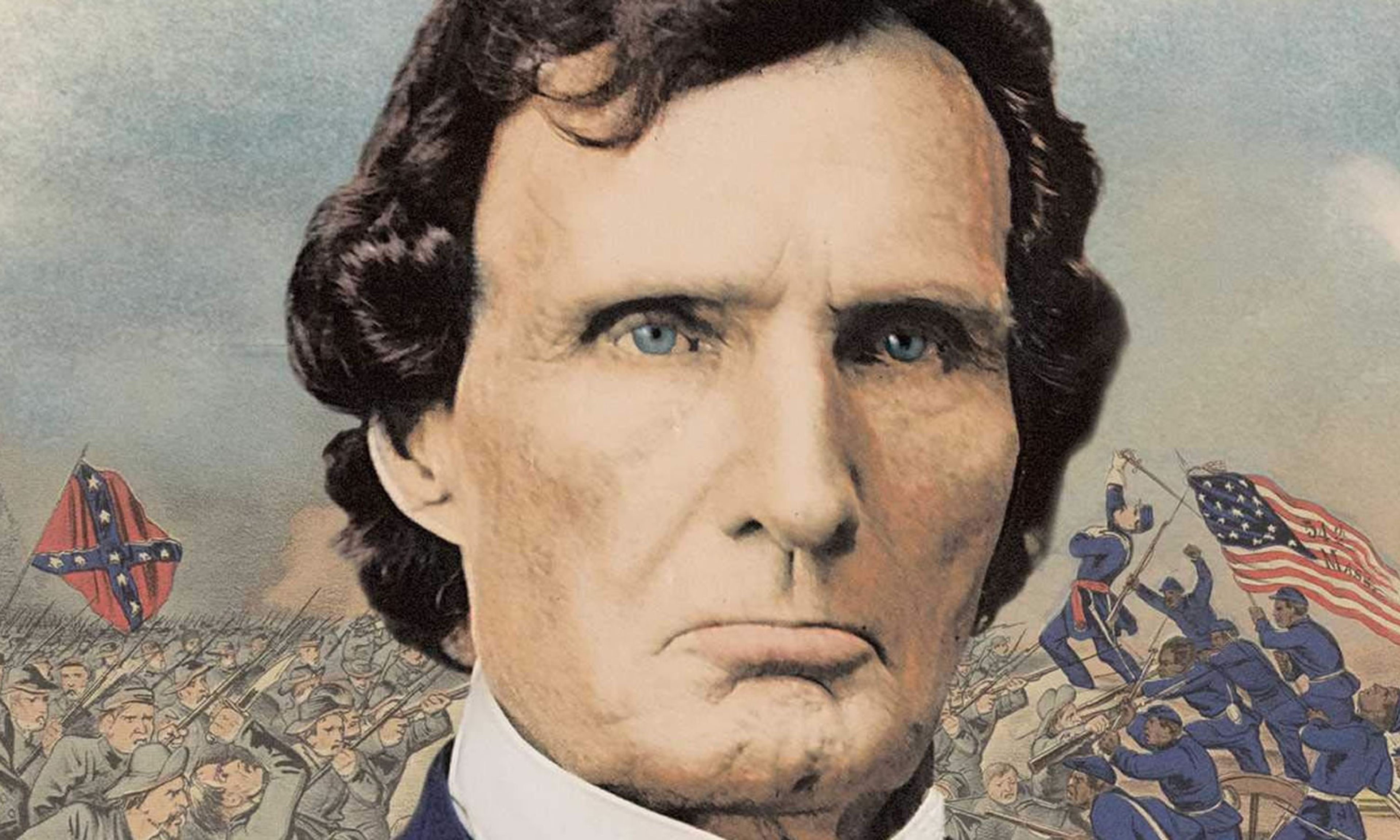
Historian Bruce Levine sets out to tell the story of the “zigs and zags” in the career path of 19th-century Pennsylvania congressman and civil-rights advocate Thaddeus Stevens; along the way he shows how our political system managed to advance human freedom. Levine deftly weaves political, social, and intellectual history into eleven brief chapters on the life of a politician who was at the cutting edge of arguments over slavery and equality.
Born with a club foot in 1792 in Danville, Vt., and named for Thaddeus Kosciuszko, the Polish general and hero of the American Revolution, Stevens embodies one version of an American archetype — the committed idealist who acts on, and refuses to compromise, his principles. He knew that slavery was wrong. That knowledge set him on a crooked path through the political and legal fights of the early republic, as coalitions and courts tried to fulfill the promises made by the Founders. The rebellion undertaken by the defenders of slavery sharpened his arguments, while the terrorism committed against blacks in the South after the Civil War convinced him of the need for an ongoing dedication to principles outlined in the Declaration of Independence and put into practice by the Constitution.
Not every son of Vermont grew up to be an ardent opponent of slavery. As Levine points out, Stephen Douglas also spent his youth in the Green Mountain State. But faith, education, and temperament grounded young Thaddeus Stevens in traditions of equality. His Baptist faith emphasized individual agency and autonomy. Its underlying Calvinist Puritanism informed his understanding of the fallibility of man. The schools he attended taught the classics of the Western tradition. When he was at Dartmouth College, the Federalist-leaning faculty helped him negotiate a blending of Puritan theology with Enlightenment philosophy. In Stevens’s case, believing in the goodness of human freedom led to an understanding of the evil of human bondage.
Stevens acted on his principles early in his career. Upon his graduation from Dartmouth, he moved to southern Pennsylvania in the hopes of finding a teaching job. But once settled, he studied law, became a lawyer, and was soon a prominent and successful citizen of his adopted state. He invested in real estate and in a local ironworks (later famously looted and demolished out of spite during the Civil War in a raid by Jubal Early). Then, after serving on a borough council for nearly a decade, he won election to the Pennsylvania House of Representatives. When the people of his district wanted to repeal the law that had created the public-school system, Stevens disagreed — and lost his seat. As a delegate to the convention to revise the Pennsylvania constitution, he witnessed how the rising tide of Democratic majoritarian rule stripped unpopular minorities of their rights. The new constitution disenfranchised black property owners while extending voting rights to “white freemen.” Stevens opposed the measure and lost that fight too. He then refused to be a signatory to the revised Pennsylvania constitution.
Each of these battles forced a clarification of his views on equality. Today, we tend to think of the opponents of slavery as “the good guys” and forget the distinctions made by the people who lived in the past. The terms “abolition,” “equality,” and “anti-slavery” had many meanings and distinctions. One could favor the abolition of slavery and be a racist who wanted slavery abolished in order to send all former slaves and their descendants to Africa. One could favor political equality and wish to preserve social inequality. One could oppose the expansion of slavery and support its preservation where it already existed. In fits and starts, through argument and debate, Stevens became an advocate for political and legal equality for all Americans.
America’s western expansion forced slavery debates into the open, and by the end of the 1850s all previous partisan arrangements had been completely reordered. Stevens, first elected to Congress in 1848, had negotiated the various political realignments of the previous decades as a Whig who occasionally made common cause with Anti-Masons, the Liberty Party, the Free Soil Party, and some northern Democrats. But none of these parties seemed to have an adequate answer for the problem of slavery. With the enactment of the Kansas-Nebraska Act in 1854, many Northerners found themselves contemplating what Stevens had struggled with for decades: No political party represented their beliefs. Within a year, Northerners created the Republican Party, and Stevens joined it.
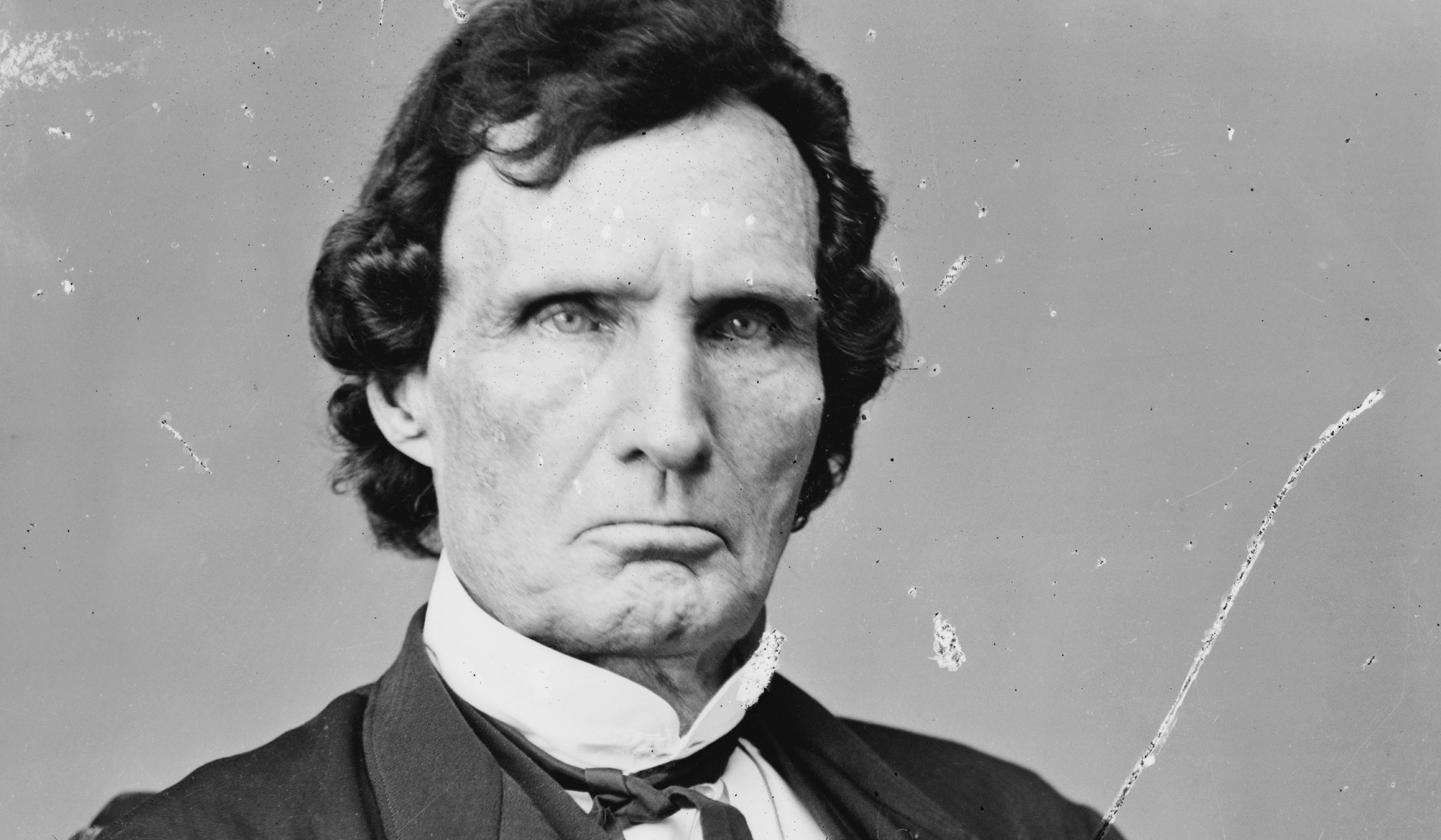
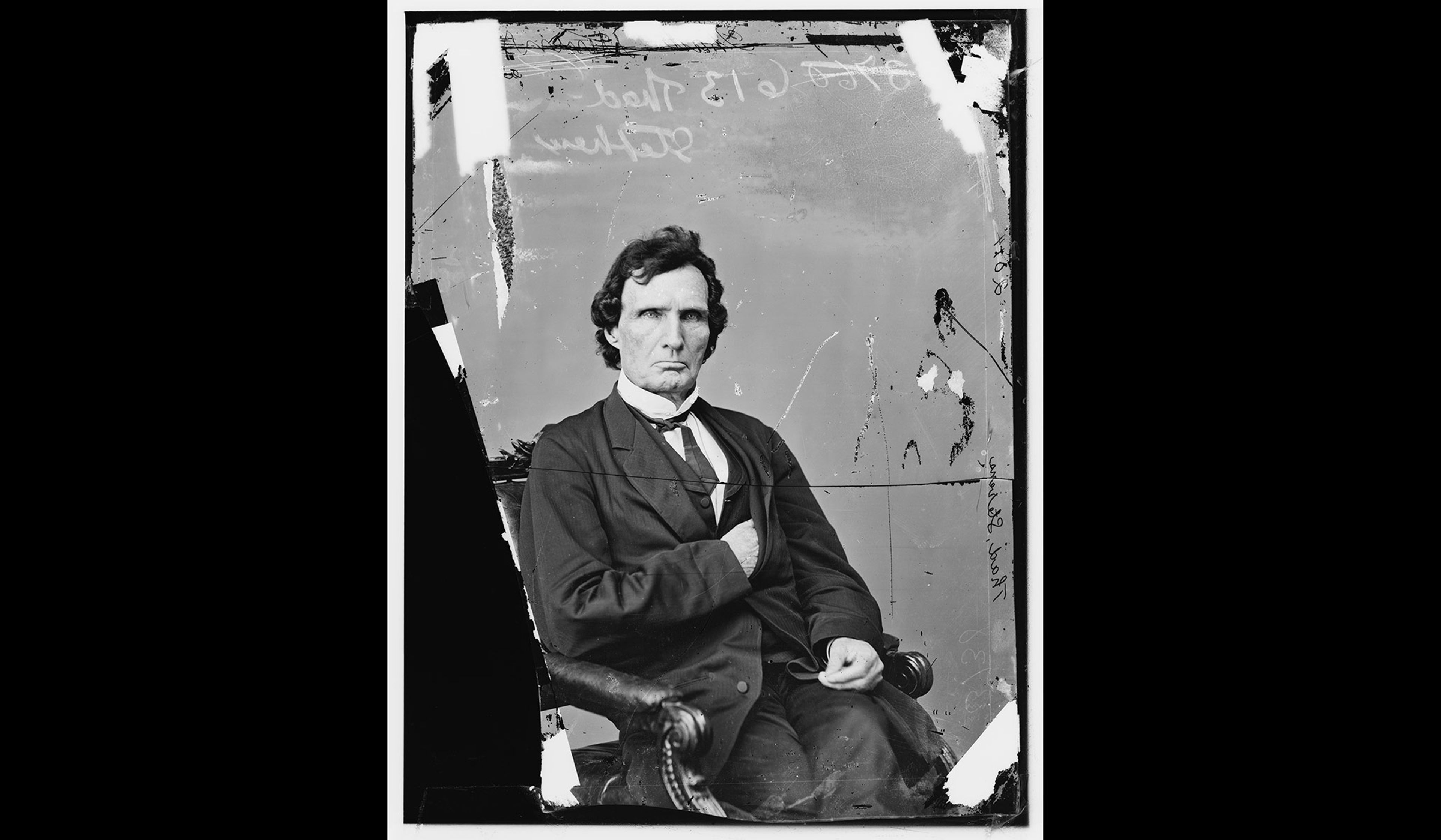
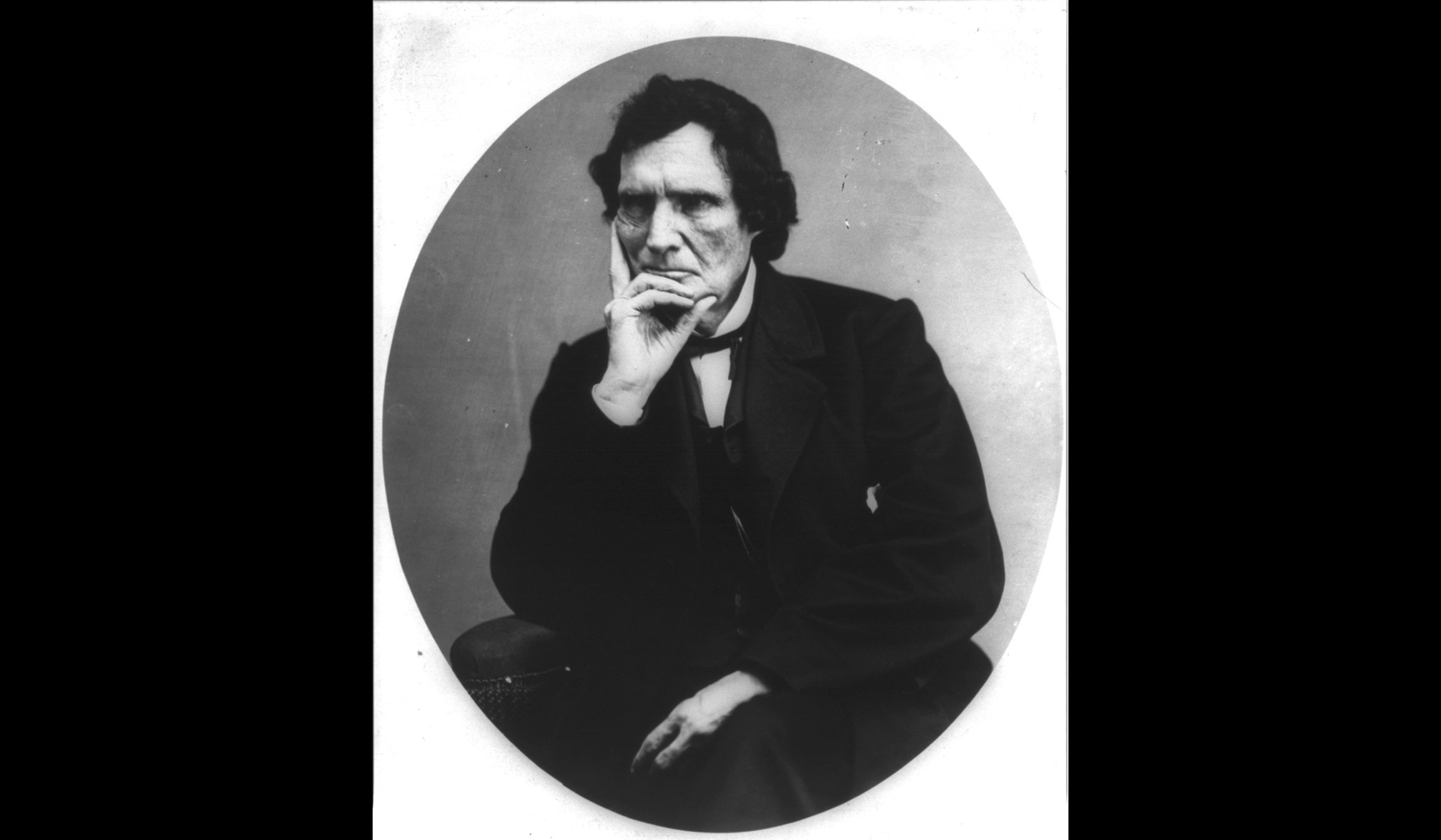
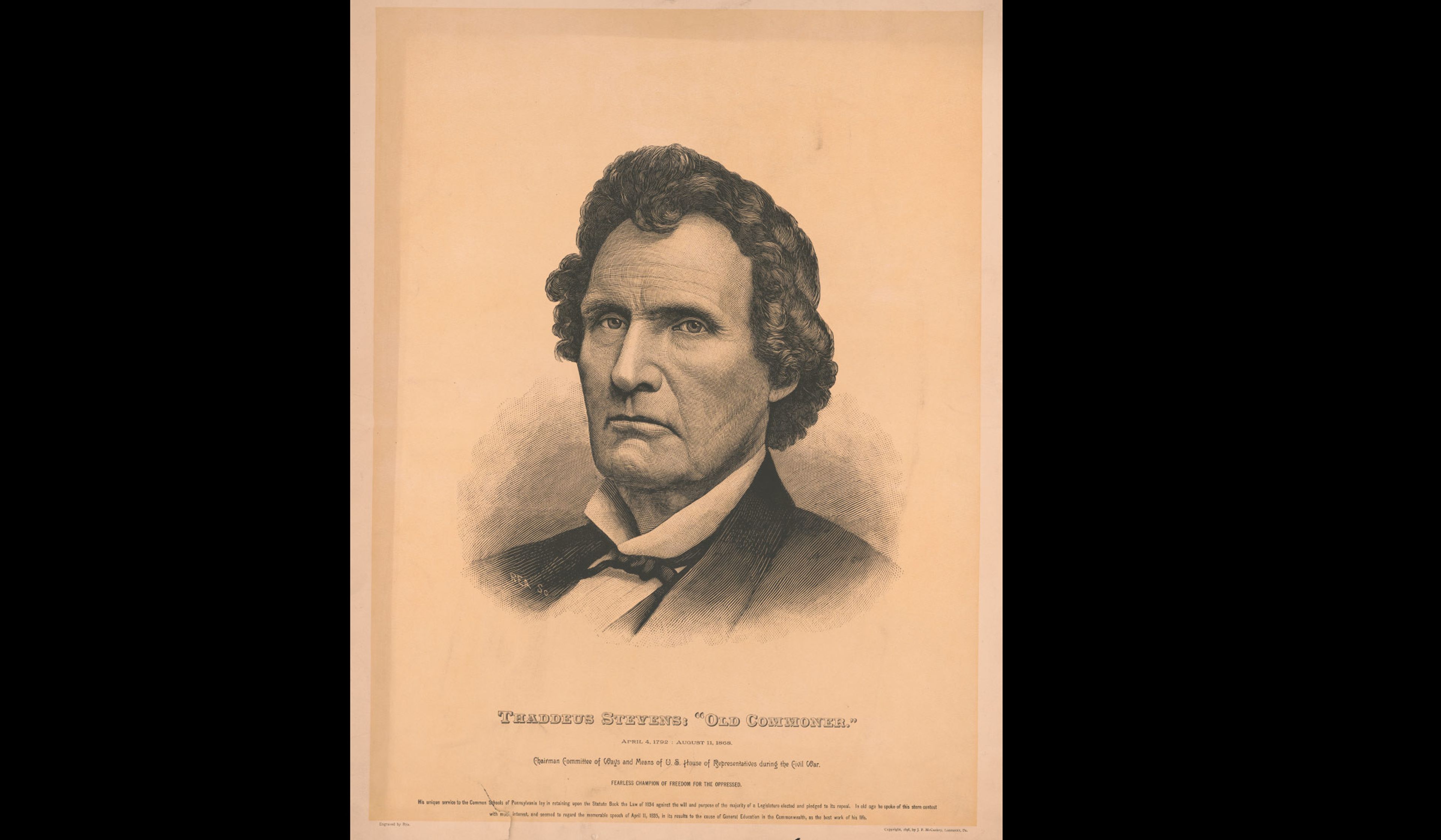
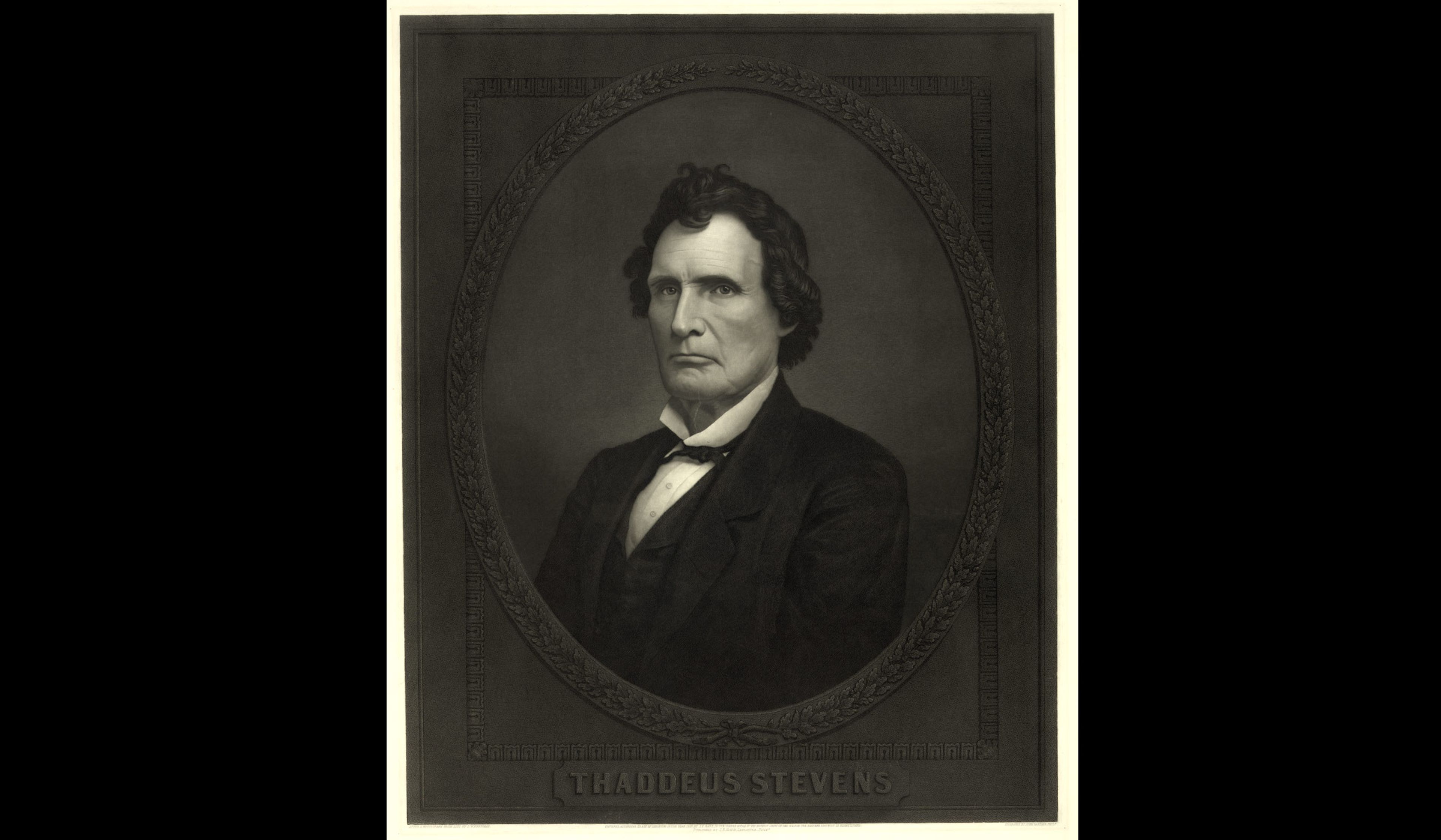
Detail of Hon. Thaddeus Stevens of Penn., c. 1860-1875.
Brady-Handy Photograph Collection/Library of Congress
Democrats had originally organized themselves around the idea of majoritarianism and a symbol — Andrew Jackson. To Stevens, Democrats were simply advocating special privileges for the disparate groups in their coalition. He believed the jockeying would turn classes against one another and make people forget about their mutually dependent needs. Still worse, populist demagogues such as Jackson and his imitators were ready to sacrifice the rule of law and the protection of minority rights to achieve the results desired by their supporters. Whigs had organized themselves around opposition to Democrats, but this new party, the Republicans, would be built on an entirely different basis. Instead of merely opposing Democrats, Republicans defined themselves by the pluralistic ideals that they held in common and slavery threatened: individual liberty, economic opportunity, and the preservation of representative government. Stevens soon became known as one of the leaders of the party’s “radical” faction, and he was temperamentally suited for the role.
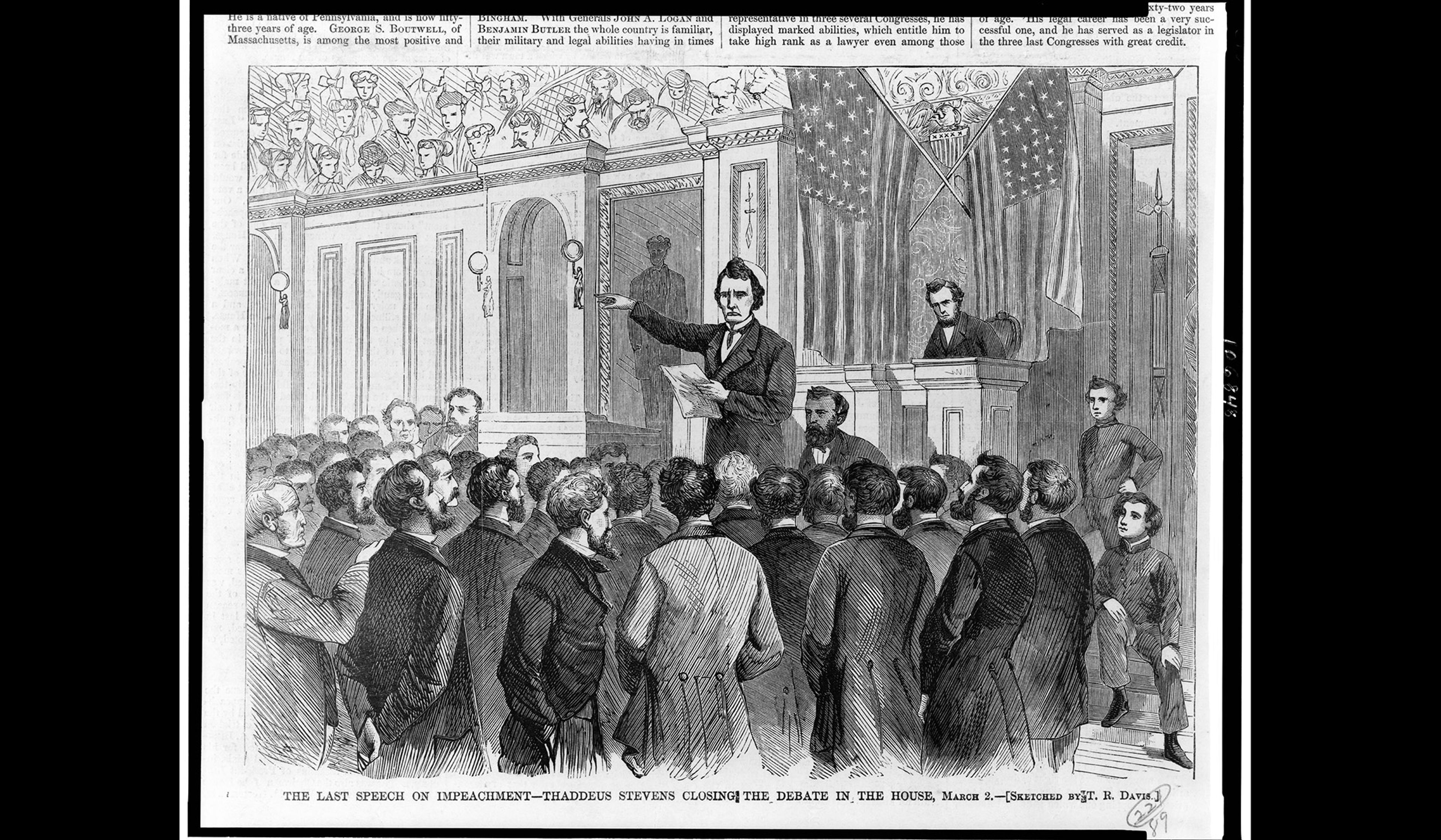
The outbreak of war put Stevens at the forefront of national policy. Once rebels attacked the United States in protest of Lincoln’s election and in defense of slavery, certain political realities became apparent. Rebel politicians resigned their offices. They claimed to be a part of a new government in another place, called the “Confederacy.” These actions allowed Republicans to pass critical wartime legislation with little opposition from Democrats. And as always, Stevens seemed to delight in provoking his political opponents. He still did the diligent work of his office, keeping the war effort funded as the chairman of the powerful Ways and Means Committee. But his most important role during these years was in linking the destruction of slavery to the war effort.
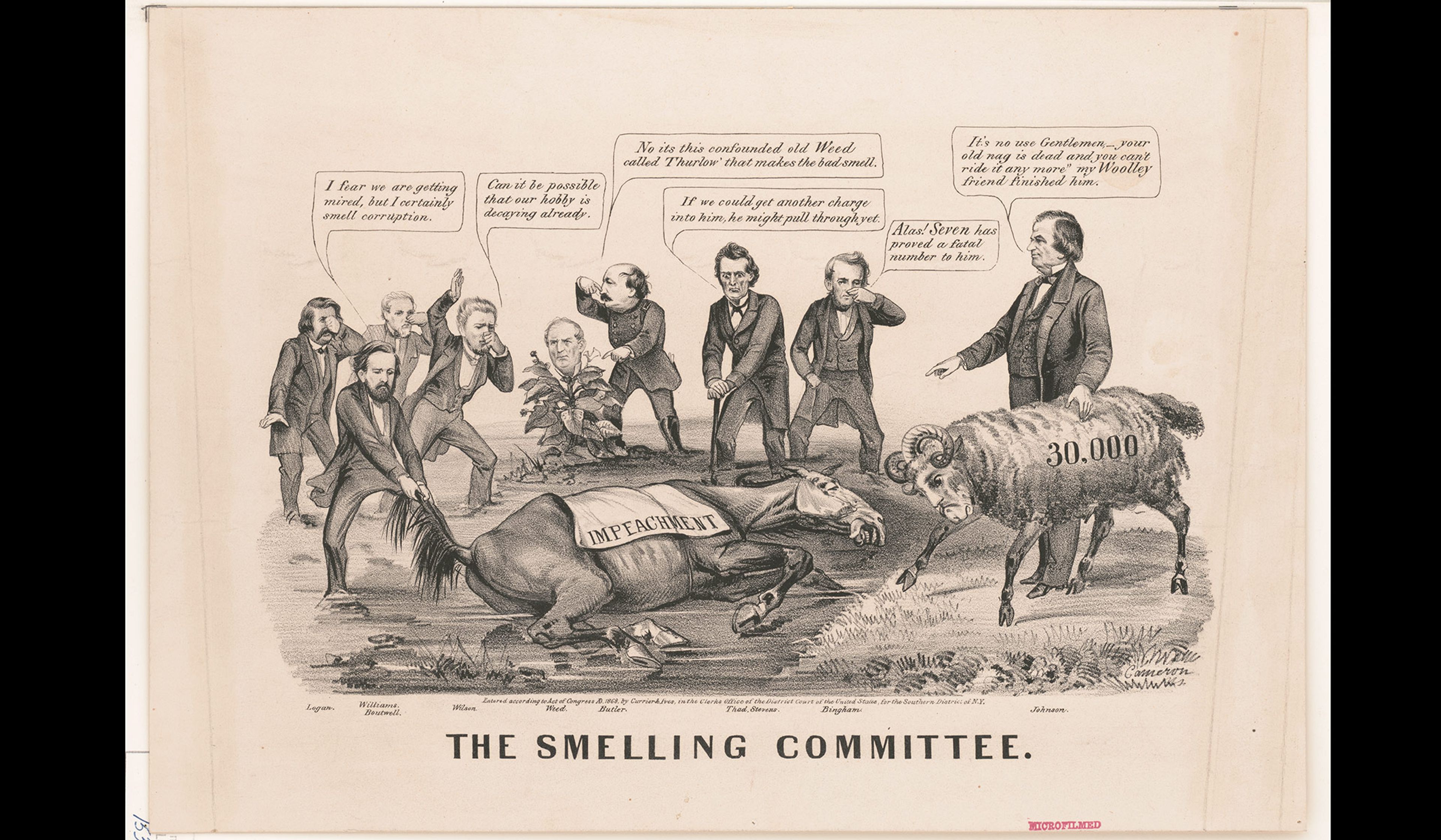
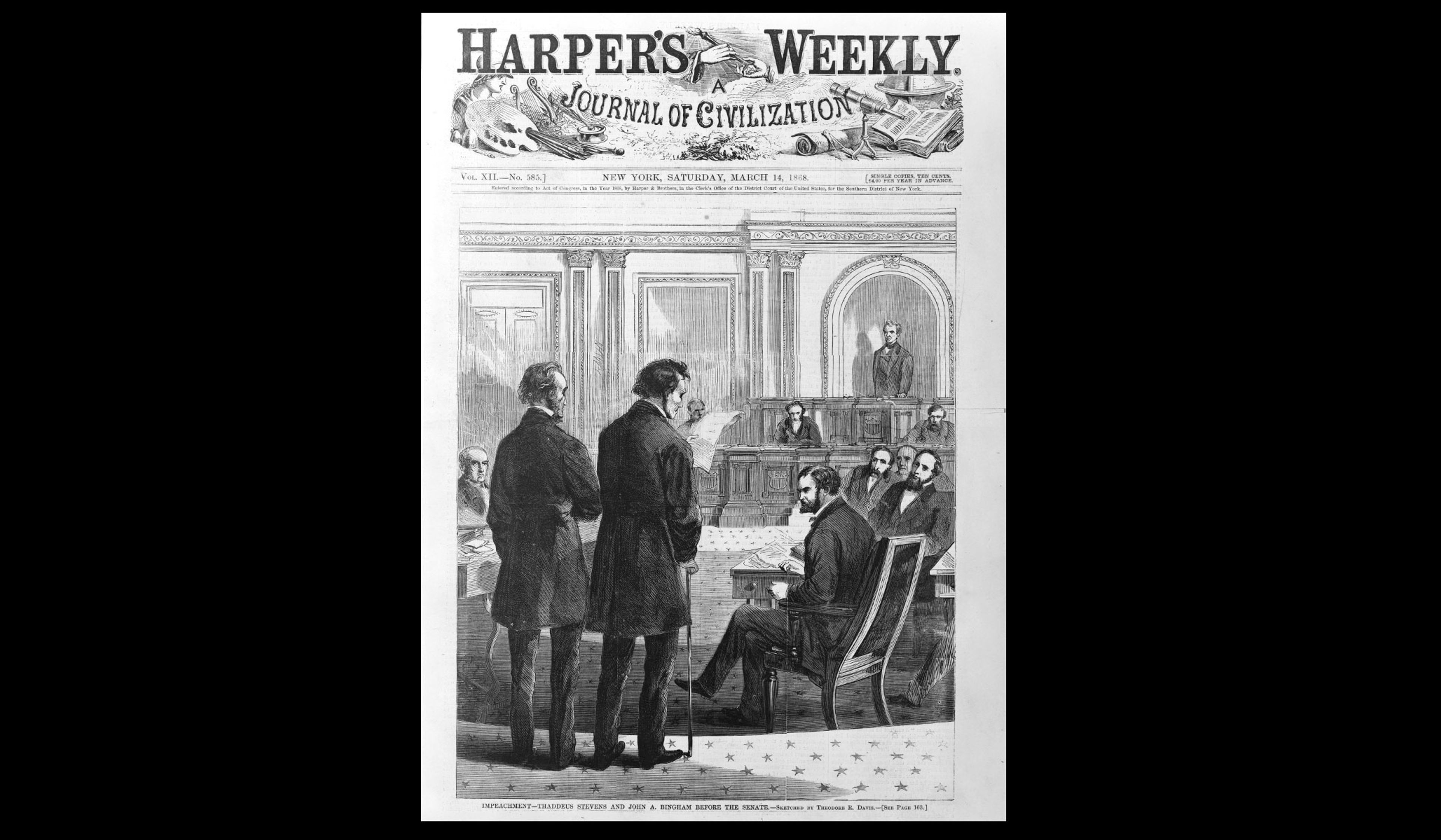
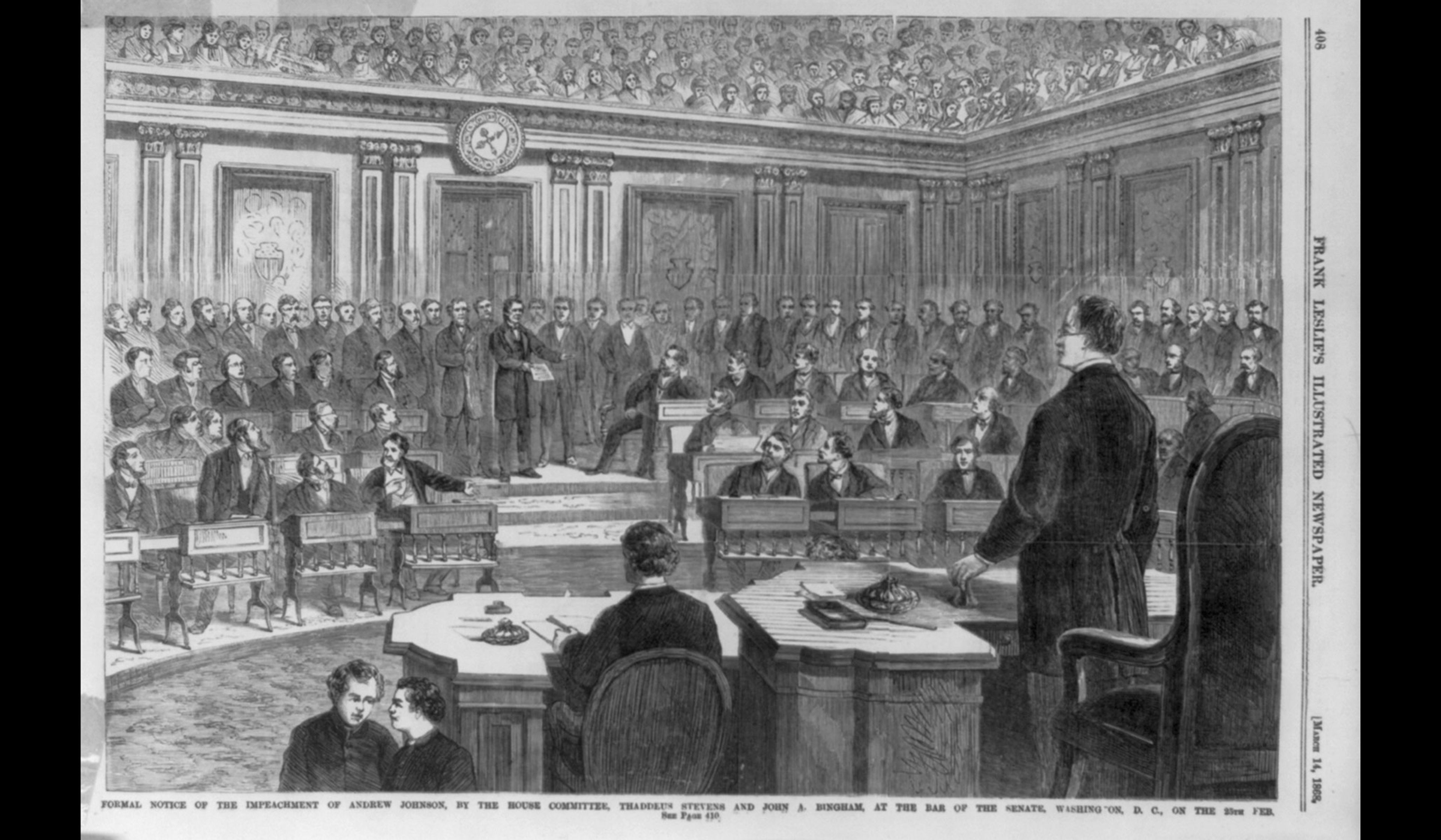
Stevens remained at the center of every significant debate in American politics during and after the war. He pushed first for emancipation, then the integration of the military, then abolition. He sought protections for freed slaves, including protections for voting and property rights. He opposed Andrew Johnson and supported Johnson’s impeachment, along with major civil-rights legislation — in addition to the passage of the 13th, 14th, and 15th Amendments to the Constitution. Involvement in any one of these issues would be fertile ground for study. It is a credit to Bruce Levine that he keeps Stevens at the center of the story while giving the reader a fine introduction to all of these complex subjects.
In his time, contemporaries called Thaddeus Stevens a “radical,” but his purposes were only as radical as our founding, and thus we may now accurately call him an American conservative. In Federalist No. 1, Alexander Hamilton reminded us that there is one great question in all of human history: Can human beings govern themselves? For tens of thousands of years, life for most people was organized around surviving amid the threat of violence. Incentivizing peace, creating wealth, alleviating poverty, and protecting the weak are all radical undertakings of the relatively recent past. The conservative preservation of our system is an ongoing radical undertaking.
Critics of classical liberalism and the American experiment will always look at our long struggle for equality and ask why more was not done — and done sooner. Why couldn’t the people of the past see the truth and act more quickly? As Thaddeus Stevens understood, freedom requires ongoing and never-ending work. And as Calvin Coolidge reminded us, we will never be finished in our work defending freedom because no advance can be made beyond our founding principles.
Bruce Levine manages the difficult trick of being both a best-selling author and a solid academic historian. His books are readable and good history. Along with Sean Wilentz, James Oakes, Brooks Simpson, and many others, Levine is helping us to understand 19th-century America as Americans of the time knew it, instead of as Lost Cause advocates and racist progressives reimagined it in the years after the Civil War. There are big lessons based on this recent good work that we need to pass on to Americans now and in the future. Slavery was incompatible with freedom. Our founders knew it. Thaddeus Stevens knew it, too. Levine’s book reminds us of the difficult work done in our behalf by Americans in the past. Learning and sharing their stories is a small gesture of gratitude we can perform in service to a debt we can never repay.












Comments