Oslo
People can be very impressive, whether they want to be or not. Life throws terrible challenges at them, and they rise to meet them. I have met many such people at the Oslo Freedom Forum, the annual human-rights gathering here in Norway’s capital.
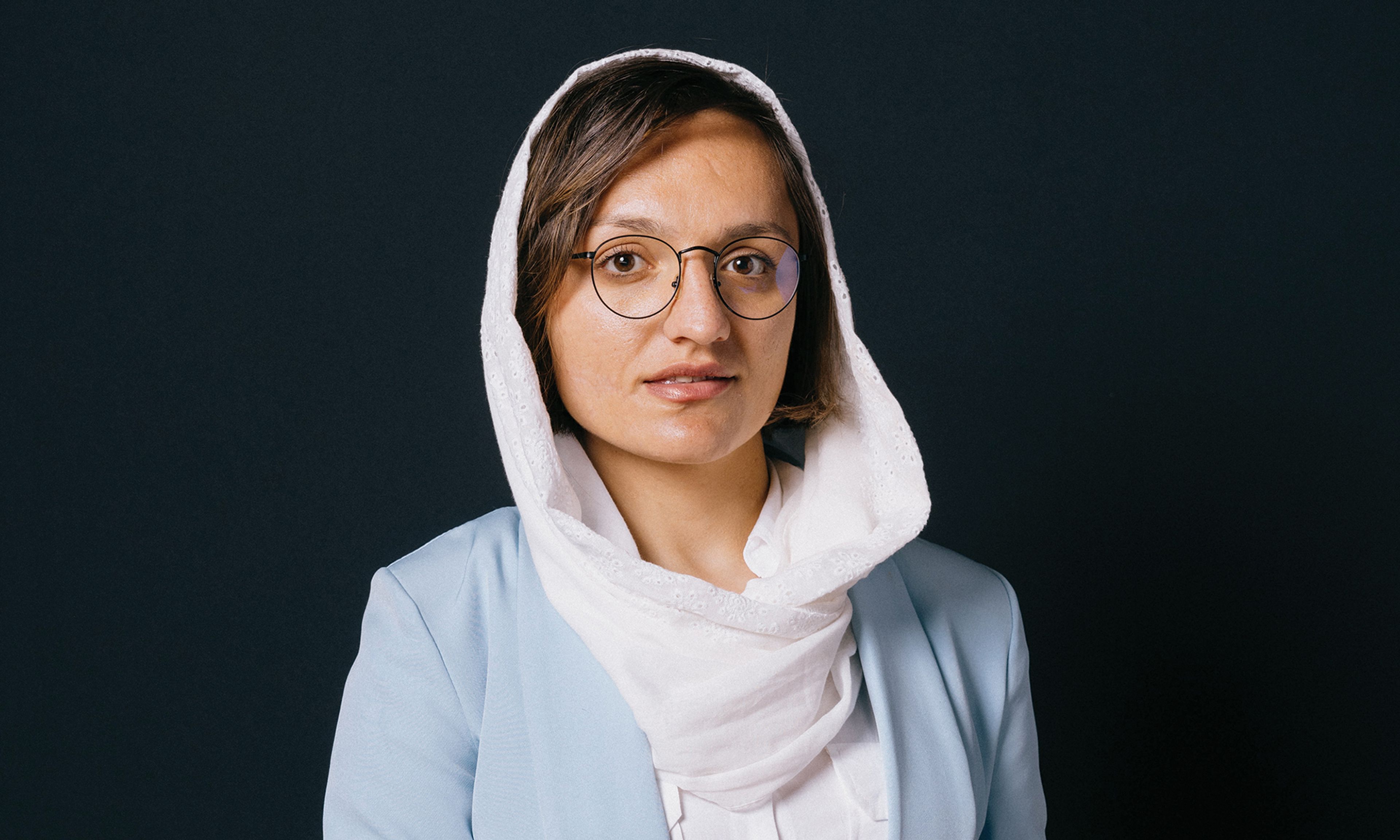
One of them is Zarifa Ghafari, who, at 27, has seen more drama than most people should in several lifetimes. She was the youngest mayor in Afghanistan, at 24. And one of the few female mayors. She has dodged death so many times, she can’t help but laugh, and wonder.
She was born in Kabul in 1994. She had just turned seven when the Americans invaded and the Taliban fell. She remembers dead bodies in the streets — and body parts. “It was terrible,” she says, with a shudder.
She loved going to school. Absolutely loved it. She was at the top of her classes. But there was a cost, to going to school. Four times, she was injured in terror attacks. Her father, an Afghan-army officer, forbade her to keep going to school (understandably). She went anyway, behind his back.
At 16, she went off to India, for college. That period was not without its mishaps. After a car in which she was traveling was hit by a truck, she was in a coma for a month.
Once back in Afghanistan, she wanted to contribute to national life, and in particular to women’s rights. She and a friend — now her fiancé — started a radio station. In 2018, she was appointed mayor of Maidan Shahr, a town in central Afghanistan. The political process, elective and appointive, was complicated. In any event, it is moot now.
After her appointment, Zarifa could not take up her post for nine months, because of threats. A female mayor, and one so young? When she did take office, she faced mobs. She also survived three assassination attempts.
A woman she employed in her home arranged for a gas explosion. Zarifa almost burned to death. An investigation later showed that the woman had been paid by Zarifa’s political opponents. Zarifa took no legal action against her, however. The woman had a family to support. She also ruled out revenge, of any kind. “I believe the only way to stop hate, war, and terror in the world is to reduce the level of revenge,” she says.
Zarifa bears many scars — physical ones. It seems to me she bears them with a cheerful defiance, almost an obliviousness.
In March 2020, she was named an International Woman of Courage by the U.S. State Department. In Washington, she gave a speech in the presence of Mike Pompeo, the secretary of state, and Melania Trump, the first lady.
Not long after she returned to Afghanistan, her car was sprayed with bullets. Once more she survived. She would survive again when an RPG, a rocket-propelled grenade, was aimed at her.
On November 5, 2020, her father, Abdul Wasi Ghafari, did not survive. While he was helping a neighbor fix a water pipe, he was shot by a Taliban fighter, in the back of the head. To his daughter, it is significant that her father’s killer did not face him — man to man. “My dad was so brave,” she says.
She recounts the details of that day, November 5, in excruciating, tearful, and moving detail. “Within minutes,” she says, “responsibility shifted to me.” She was the eldest child, daughter though she was. She would be responsible for her mother and her siblings. She remembered all that her father had ever told her, including, “Don’t be afraid, my girl. Go like a lion.”
I ask, “When did you know the Americans would leave?” “From the moment they started negotiating with the Taliban,” she says. She pleaded with Secretary Pompeo and Mrs. Trump: “Make sure your deals with the Taliban do not erase our gains.” She did the same with the new secretary of state, Antony Blinken, when he came to Kabul.
The Taliban retook power on August 15, 2021. Zarifa was determined not to leave the country. But she was also determined to save her family. And she was sure that she herself would be killed. To recount the departure of Zarifa, and her siblings, and her mother, and her fiancé, Bashir, from Kabul would require an article unto itself, full of heart-stopping twists. Suffice it to say, they made it to Istanbul, and then to Germany, where they received asylum.
Time after time, Bashir has helped Zarifa, critically. I say, “He’s a prince.” Zarifa smiles and laughs and says, “That’s why he’s getting the queen!” She continues, “He’s a real man, and I am blessed to have him.” There are “millions of women like me in my country,” she says. They just need a platform. But “we don’t have millions of men” like Bashir.
Jewher Ilham, like Zarifa Ghafari, is 27. She was born and raised in Beijing, and duly speaks Mandarin with a Beijing accent. She is a Uyghur, however. Her father is Ilham Tohti, an economist, and a spokesman for Uyghur rights. In addition to working as a professor of economics, he worked to foster dialogue between Uyghurs and the Han Chinese. He was harassed and arrested many times for his troubles.
In 2012, he was invited to spend a year at Indiana University. His daughter was a freshman in college. Her first semester was just ending. Tohti wanted her to go with him to Indiana, for two weeks, over her winter break. She balked. She wanted to spend the break with her new college friends, but he prevailed on her to go.
They left for the airport on February 2, 2013. They checked their bags and got their boarding passes. But Tohti was detained. Jewher seems to remember every detail, every second, of that day. The authorities were not going to let him board. They would let her board, however.
Her father asked her, “Do you want to go?” Jewher responded, in essence, “Are you kidding?” She hadn’t wanted to go in the first place. She certainly did not want to go without her father. But he said to her, “I’d rather you swept the streets in America than stayed here, where they treat us so badly.” He hugged her and pushed her forward. “Don’t cry,” he said. “We would not want them to think that Uyghur girls were weak.”
For the 14 hours of the flight, she cried. She stared at the empty seat next to her. She was bewildered. She ate nothing, but did drink some water.
The plane landed in Chicago, which was confusing. She knew the name “Indiana.” She spoke very little English. Immigration officials were going to send her back. They asked whether she wanted to make a phone call. She took out her phone, a Nokia 8610. It did not work in America. Besides, whom could she have called?
Next to her phone, however, was a wrinkled piece of paper. It had a name on it: “Elliot Sperling.” Jewher’s father must have put the piece of paper in her pocket, when he was hugging her and pushing her forward. This was his contact at Indiana University: Elliot Sperling, the chairman of the Department of Central Eurasian Studies. The immigration officials in Chicago called him.
He became Jewher’s mentor.
She is an all-American woman, in many respects. She begins sentences with “So,” as young people do. She will say “gonna,” instead of “going to.” She is a delight, with an obvious relish for life. But she carries a burden: that of campaigning for her father and other Uyghurs. She lives in Washington, working as a spokesman for the Coalition to End Forced Labour in the Uyghur Region.
Where is her father? In September 2014, he was sentenced to life in prison, on the charge of “separatism.” Subsequently, he has been disappeared. Jewher does not know where he is or whether he is alive. She loves him very much, no matter what.
It is love, too, that impels Areej al-Sadhan. Her brother, Abdulrahman, is a political prisoner in Saudi Arabia. The Sadhan siblings — two sisters and a brother — grew up between the United States and Saudi Arabia. Abdulrahman graduated from Notre Dame de Namur University, in Belmont, Calif., in 2013. He then went to Saudi Arabia, to work. He thought it was a time of change in Saudi Arabia, with extra opportunities for the young.
He has always been a compassionate, caring sort, says his sister Areej, and he got a job with the Red Crescent (as the Red Cross is known in Muslim-majority countries). He expressed himself on Twitter, anonymously. Young Saudis do this: They vent their opinions and frustrations through anonymous social-media accounts. Abdulrahman al-Sadhan is in favor of freedom, democracy, and human rights. This makes him a critic of the Saudi government.
In early 2018, the government learned true identities behind thousands of Twitter accounts. Evidently, the government had paid, or bribed, ex-Twitter employees to reveal the information.
On March 12, 2018, Saudi agents seized Abdulrahman at his office at the Red Crescent. He was then disappeared. His family did not hear from him for two years. But the family received reports from other prisoners’ relatives, and from witnesses. (About those witnesses, Areej prefers not to be specific, for their protection.)
Saudi authorities were torturing Abdulrahman, of course — that’s what they do. They were torturing him with the usual repertoire: electric shocks, sleep deprivation, beatings, suspension by feet. They also smashed his hand to bits, saying, “Is this the one you tweet with?”
At first, the Sadhan family was quiet, preferring to make inquiries through official channels. Then an informed source said to Areej, “They may torture him to death.” She had trouble believing it. In October 2018, however, there was news from Istanbul: Saudi agents had murdered Jamal Khashoggi, the journalist and dissident, at the consulate there. They tortured him, murdered him, and sliced up his body with a bone saw. Areej reasoned, If they could do that to a prominent figure, they can do whatever they want with an ordinary person.
She swung into action. “Where is my brother?” she tweeted. She became an “activist by accident,” she says. She works at considerable risk to herself. She gets death threats, rape threats, general threats. Once, here in Oslo, in 2019, she was stalked by a man as she went to the airport. “Where are you going?” he said to her, in English. When she moved faster, he said it again, in Saudi-accented Arabic. Norwegian officials believe he was affiliated with the Saudi embassy here.
In a sham and secret trial in April 2021, Abdulrahman was sentenced to 20 years in prison, to be followed by a 20-year travel ban. “All for satirical tweets,” says Areej. Her brother would be 77 at the end of the travel ban. The Saudi government is loath for people to be free to give their testimonies.
Areej al-Sadhan works a regular job, a “day job,” in the tech industry. When she gets home, she becomes her brother’s advocate, doing everything she can for him. She has risen to the challenge, and such people are astounding, and astoundingly admirable, even if they would rather live the regular, non-heroic lives that most people are privileged, in a way, to live.










Comments