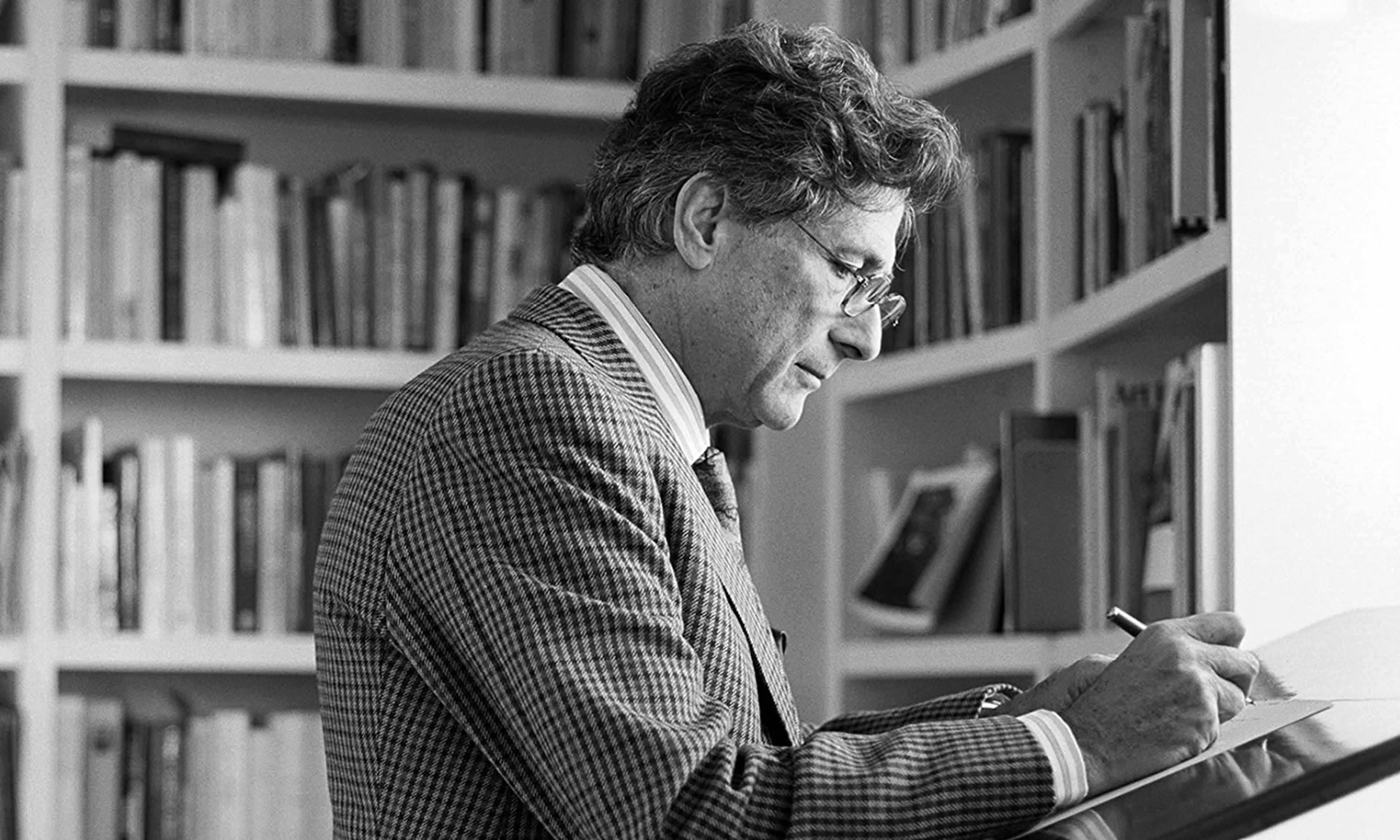
At the time of Edward Said’s death in 2003, after a long battle with leukemia, “he was probably the best-known intellectual in the world,” noted one commentator. He was an extraordinarily influential literary critic and theorist at Columbia University, but also a prominent spokesman for the Palestine Liberation Organization and the Palestinian National Council, not only as a translator for Yasser Arafat but as a policy-maker. A Palestinian American, he was a go-between for the U.S. State Department and the Palestinians in the late 1970s and early 1980s, under both the Carter and the Reagan administration. During the Middle Eastern crises of his adult lifetime, he became one of the most prominent expert commentators on Middle Eastern affairs both in writing and in television interviews, in the United States and abroad, and especially in the Arabic-speaking world. He was also a fine pianist, wrote about music, and toward the end of his life teamed up with the Argentine-Israeli pianist and conductor Daniel Barenboim in musical ventures, including concert-discussions and joint projects enlisting young Israeli, Palestinian, and other Arab musicians.
Said’s book Orientalism (1978), a groundbreaking, paradigm-shifting work of literary and cultural history, criticism, and theory, has become vastly influential and has been called the seminal work in “postcolonial studies,” an academic field that is now prominent in Western universities. In Orientalism, he argued, cogently, that from the late 18th century until just after World War II, Western scholars of the near “Orient” — the Middle East and India — invented a way of looking at these cultures that, though often very learned, disguised even in its intellectual depths a profoundly ethnocentric and imperialist mentality, fundamentally dehumanizing their subjects and making them available to vast, dismissive generalizations and imperial control as incompetent, inferior, “lesser breeds without the Law” (Kipling, “Recessional,” 1897). The British and the French were the chief culprits here, but Said attempted to show that the Americans were the inheritors of this imperial-colonial legacy after World War II. He extended his critique to the whole “non-metropolitan” Western world — especially Africa and Asia, but also Ireland and South America — in the attempt to show that expansive, instrumental, “scientistic” Western power-knowledge helped European nations to dominate and devour the rest of the world in a fundamentally unjust and harmful way.
Perhaps the particular intellectual-interpretative achievement for which Said is now most famous, or notorious, is that he shifted, more than any other individual, American and British (and world) attitudes toward Israel. The view that prevailed from 1948 well into the 1980s was that little Israel was a noble David that made the vacant Palestinian desert bloom and then slew the Goliath of vengeful, jealous, united Arab states in wars from 1948 and 1967 on. Said advanced the opposite view, that Israel was another example of Western imperialism, a military, Western-financed Goliath opposed by the poor and displaced Palestinian David whose lands had been so ruthlessly seized and occupied. The heroic immigrant-survivors of the European Holocaust were converted into the arrogantly “advanced” Western imperialists whose reconquest of “eretz Yisrael” required the expulsion or elimination of the modern Canaanites, the Palestinians. For good or ill, this changed view is a monumental achievement of historical and imaginative reinterpretation.
The fundamental point of Orientalism, after all consideration of mistakes in fact, omission, or emphasis, should be granted: Ethnocentrism has been an unjust, enslaving, sinful horror across human history, from ancient Egyptians, Jews, and Canaanites to the evening’s news from almost any part of the globe you care to mention. In the period from Napoleon onward, it inspired Western explorers, merchants, soldiers, and settlers with contempt for “primitive” native peoples.
Said argued that even when British or French “Orientalists” were highly educated and were no longer Christians, they had a contempt for “subaltern” religions, nations, races, and languages, a contempt even deeper when married to the Western secular religion of collective progress, technological superiority, and Darwinian racial pride. He writes that according to a “variety of Darwinism sanctioned by Darwin himself, the modern Orientals were degraded remnants of a former greatness.” His anatomy of Ernest Renan, the great non-Christian French Orientalist, is devastatingly effective in showing Renan’s messianic scientism and corresponding contempt for the Semitic — Arabic and Jewish — languages and peoples to whom he devoted his scholarly life.
As Timothy Brennan’s fine study of his life and thought makes clear, Said’s personal odyssey made him particularly aware of these psychological, ethnic, and geographical dynamics. Born in 1935 in Jerusalem under the British Mandate, he was the only son of a wealthy, bilingual (Arabic and English), Palestinian, Protestant family who lived in Jerusalem, Cairo, and, in the summers, Lebanon. During World War I, his father absconded from the Ottoman Empire, of which Palestine was then a part, to join the American Expeditionary Force fighting in Europe under General Pershing. One of his rewards was American citizenship.
Edward Said was educated at first in British schools in Jerusalem and Cairo, with an American passport and a serious Protestant background; then at Mount Hermon School in Massachusetts, at Princeton, and at Harvard. His dissertation, on Joseph Conrad, was published as a book in 1966, and Conrad would remain perhaps his chief touchstone throughout his life. Although late in life he called Conrad his “favorite writer,” he was ambivalent about him, ultimately considering him a sophisticated imperialist and arguing against V. S. Naipaul, Conor Cruise O’Brien, and other defenders of the relevance of Conrad’s vision of things. Said apparently never gave any credit at all to G. K. Chesterton (1874–1936), the influential English Christian anti-imperialist, who was a contemporary of Conrad and Kipling, and whose writings influenced Gandhi.
According to Brennan, one of the strongest early influences on Said was his family relation Charles Malik, the great Lebanese-Christian philosopher who was a chief figure in the formulation of the United Nations Universal Declaration of Human Rights. In the post–World War II period, Malik was an influential intellectual and diplomatic figure at the U.N., in Europe and America, and in the Middle East. If there is one relationship described in Brennan’s book about which one would like to know more, it is this one. A brilliant figure who had studied in Germany with Heidegger and in the U.S. with Alfred North Whitehead, Malik was the key figure in probably the most important university in the Arabic world, the American University of Beirut. Initially Said was overawed by this impressive figure and sat at his feet, but Brennan’s biography shows that he came to resent Malik’s strong, pro-Western, Christian anti-communism, and his suspicion and fear of Islam as Muslims were rapidly outnumbering Christians in Lebanon and Syria.
Said’s Christianity made him an uncomfortable figure in the various worlds in which he lived and worked, and it was a matter of serious interest to him at least through his college years. It was ironic that he should become a famous defender of Islam against negative Western oversimplifications of it when he himself was no Muslim, not even a theist, and that he should defend a universalistic human-rights point of view that was pioneered by Christians such as Malik, Jacques Maritain, and President Jimmy Carter, of whom Said was harshly critical. Given the dismal history of the postcolonial states that took the place of the European empires after World War II, and the histories of communist regimes in Eastern Europe, Russia, China, Southeast Asia, Ethiopia, and Cuba, it is regrettable that Said succumbed to the elaborate French critical mystification and neophilia anatomized by Mark Lilla in The Reckless Mind and by Roger Scruton, whom Said once debated. Having deserted his own Christian upbringing and grown to resent the theological Malik, he increasingly yielded to hard-edged Marxist thought forms and histrionic, acrobatic French verbal arabesques. Yet a pervasively Muslim Middle East had — has — no use for the atheistic marxisant constructs of Gramsci or Adorno, or for the verbose, sophistical French Nietzscheans.
Said had a lifelong interest in Jonathan Swift, a great Christian natural-law moralist, whose Gulliver’s Travels is still the greatest systematic imaginative denunciation of imperialism and ethnocentrism in English. But eschewing traditional metaphysics and the Christian natural-law tradition, Said in neither of his two substantial essays on Swift confronts the Tory satirist’s scathing moral depiction and denunciation of monarchy, aristocracy, ethnocentrism, and imperialism. And so Said’s deracinated (his word) and not ignoble life ends up providing us with yet another chapter of the twisting-and-turning “drama of atheist humanism” about which Henri de Lubac wrote so brilliantly. De Lubac wrote under the Nazi-Vichy regime in France, of which he was a courageous opponent. He showed that the atheistic legacy of Feuerbach, Marx, Comte, and Nietzsche bequeathed to its modern disciples a polluted legacy of haughty moralism, low behavior, and endless self-contradiction. But the orthodox ethical tradition of the clergymen Swift and de Lubac ultimately had no place in Edward Said’s mind.











Comments