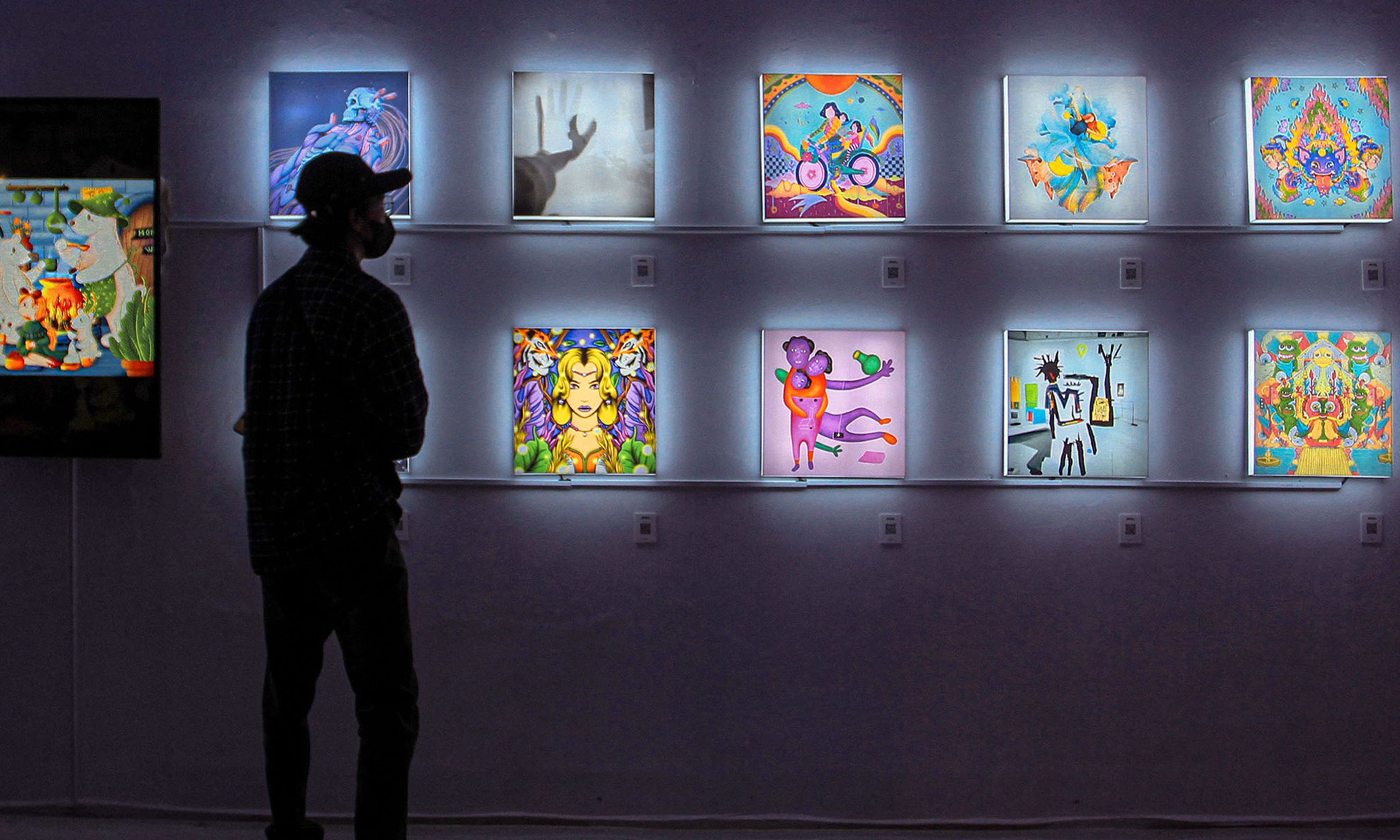
You’ve heard no doubt of NFTs and cryptocurrency. Bitcoins. The blockchain. Where is this blockchain? you might ask. Can I drive there and say to the blockchain teller, “I would like all my bitcoins, please. Put them in this bag”? And then I walk down the street with my hand in my pocket, jingling my bitcoins? No.
I’m not entirely unfamiliar with the NFT crypto-block chain-coins, or whatever you call it. I put some money in Etherium, a cryptocurrency with a long, solid reputation. It has lost 65 percent of its value. How odd: Something literally named “ether” turned out to be insubstantial. I suppose my investments in Lintcoin and Dustcash are also down.
As for NFTs, well, you have to love the news stories that explain NFTs by telling you the term stands for “Non-Fungible Tokens.” That’s helpful. It’s like saying, “Many people are rightly confused about GRBs, and we’re here to help! They are Gorble Regurgitate Buttons.” Thanks, I feel like a real insider now.
Let me help. Imagine a token. Now imagine a fungible token. Now imagine one that can’t be. Hope that helps.
There are two reasons the term pops up in the news these days: (a) People are pouring lots of money into the NFT art domain, and (b) the quality of that art is remarkably bad. The art itself is not the NFT. The NFT is the thing that proves you own the art. Put it this way: You don’t own the Mona Lisa, but you own the only map in the world that shows you where the Mona Lisa exists.
Bad art, easily duplicated, with ownership defined in ways that contradict all our expectations about possession? you ask. Where do I sign up for this?
But is it art? Yes, of course. It is, however, bad art. Lots of things can be art; I’m fairly forgiving when it comes to applying that term, but whether something is good is a matter of different factors, both subjective and objective. Let us take a brief survey of art criticism to place NFTs in the proper context, starting at the beginning.
Artwork: Neolithic painting of a hand.
Critic: “The artist, we assume, filled his mouth with paint, blew it on his palm, and placed it against the rock. It is a way of saying, ‘I am here, I exist’ — yet the hand is defined by its absence, by the space that surrounds it. The duality of existence, its state of being and nonbeing jostling for attention, is revealed in a stark and brazen way. The totality of all human art to come is summed up in this simple image.”
Artist response: (Clubs critic over the head with a bone, takes his sandwich.)
Artwork: Roman mosaics.
Critic: “Recent excavations in the British town of Southestershire (pronounced ‘S’th’s’t’shr’) revealed a stunning floor mosaic from the Roman occupation. It appears to show the god Stenchius, with his customary upturned nose and expression of disgust. Scholars hypothesize that Stenchius was a god in charge of the reversal of fate, and was placed in homes as a reminder that one’s status in life may be subject to abrupt reversals. He was often paired with Relievius, shown with an expression of sudden satisfaction, as though he had been holding something back but was now free to find release. The two are often found together, so excavation is continuing on the mosaic.”
Artist: “Actually, these show where the bathrooms are.”
Artwork: Medieval church altarpiece.
Critic: “The so-called Dark Ages had a wealth of subtle stylistic innovations, as seen here in this triptych by the Master of Lower Antwerp — so called because the artist’s name is lost to history. Note how the Gothic tracery seems to mimic the foliage, as though reminding us of the ineffable relationship between the divine and the natural.”
Artist: “Never did get paid for that one. Then I died of the ineffable relationship between a bad tooth and blood poisoning.”
Artwork: Renaissance painting of a biblical tableau.
Critic: “Here we see the humanism of the era suffusing every individual in the picture, with the newfound interest in technology indicated by the device John the Baptist gestures towards — we believe it to be a mechanical calendar of some sort. The anachronistic elements aside, the work almost glows with an intense conviction of belief.”
Artist: “I used my landlord for John the Baptist’s face. That mechanical thing? I just made that up. Caravaggio thought it was an astrolabe, and Giovanni said no, he was a fool to think so, and Caravaggio goes and stabs him. But to be honest he was stabbing everyone that spring.”
Artwork: Modern-art photo of a sculpture of a can of soup.
Critic: “It’s a brilliant work of recontextualizing the mundane, and it asks the question, Which is the artwork — the sculpture, the object itself, or the photo? There is no good answer. There can be no final answer.”
Artist: “For $17 million, I’ll tell you.”
Artwork: NFT — a randomly generated series of attributes, like sunglasses or unicorn horns, applied to a template of an unhappy monkey rendered in garish hues. There are 9,999 of them, and each costs $217.
Critic: (Speechless.)
Artist: (Blows nose with $100 bill.) “You don’t understand. The NFT serves as a token that allows the holder to enter a metaverse space, where they can interact with other members of the Indifferent Ape Astronaut Guild and generate slurp juice to mint new Apes.”
In other words, my friends: For the first time, there’s nothing a critic can say that’s more ridiculous than the artist’s own words.
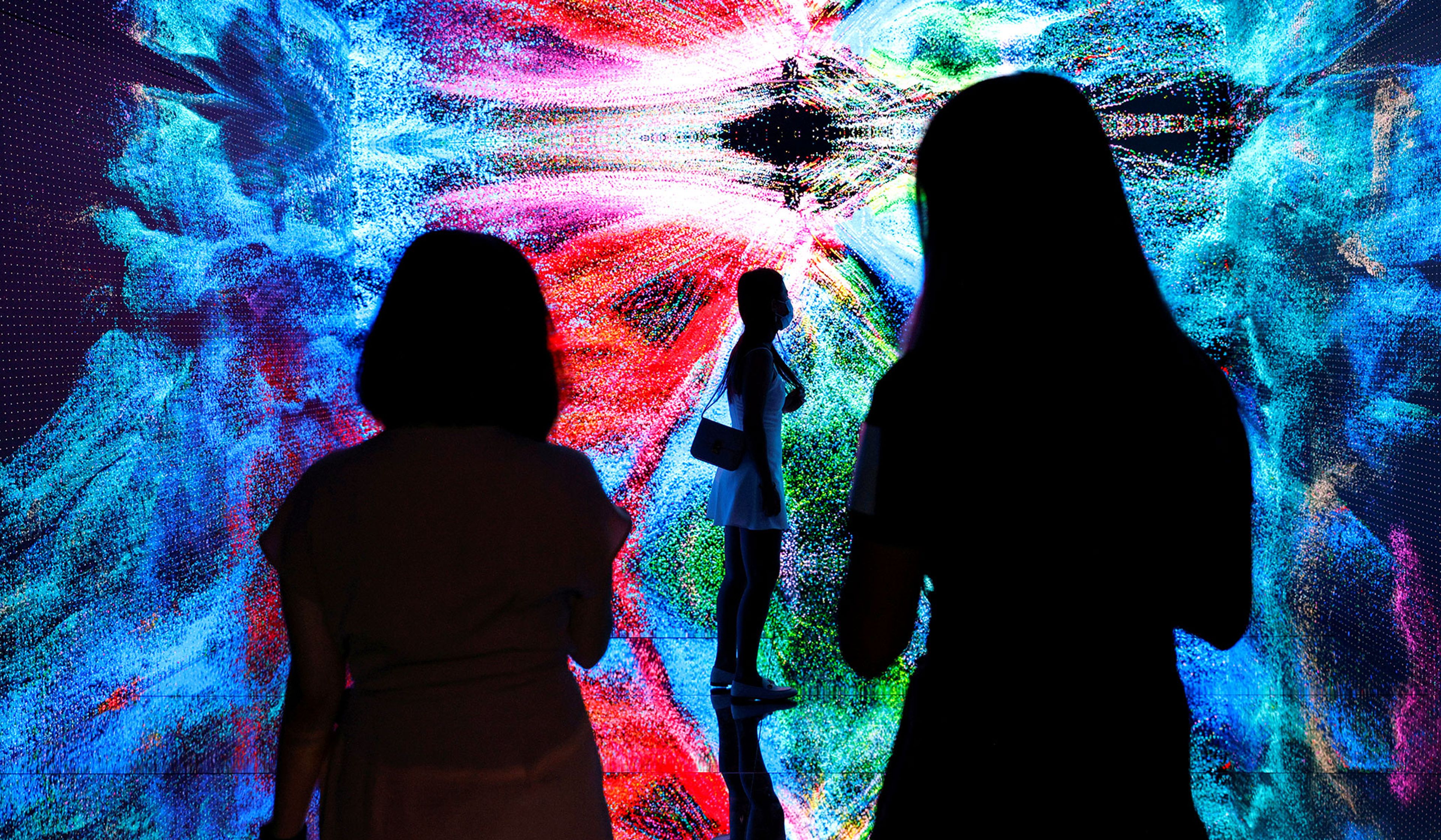
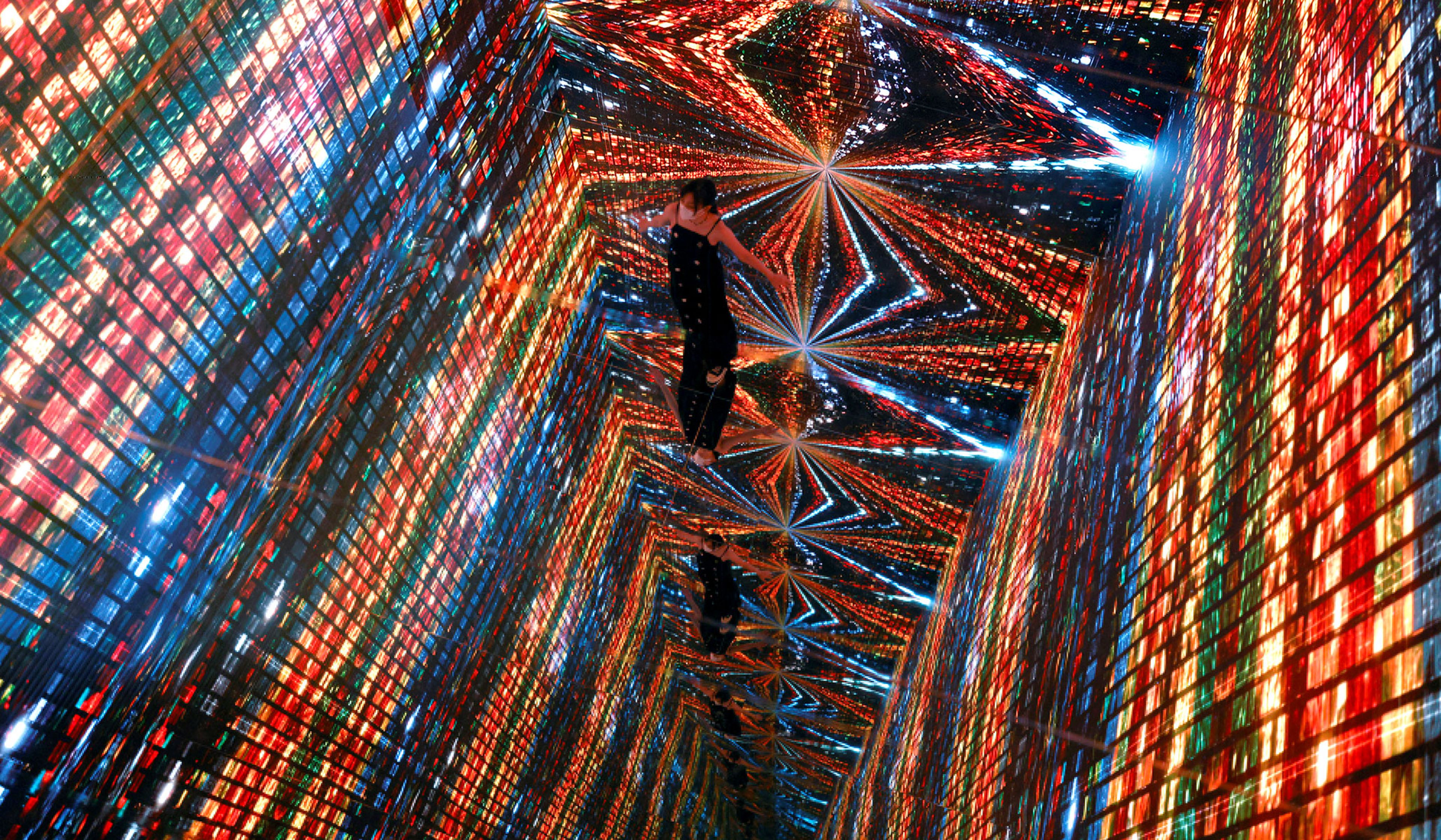
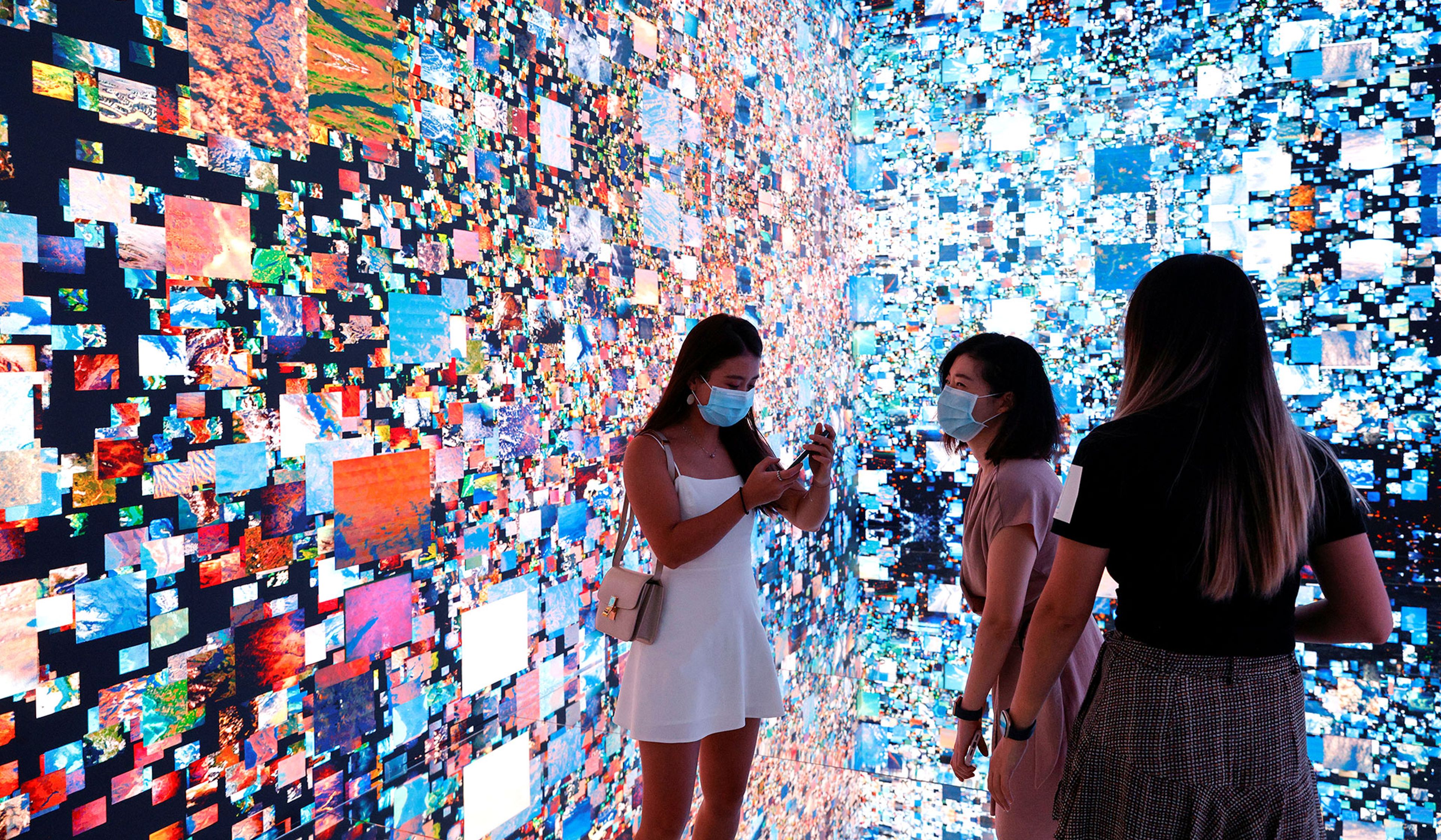
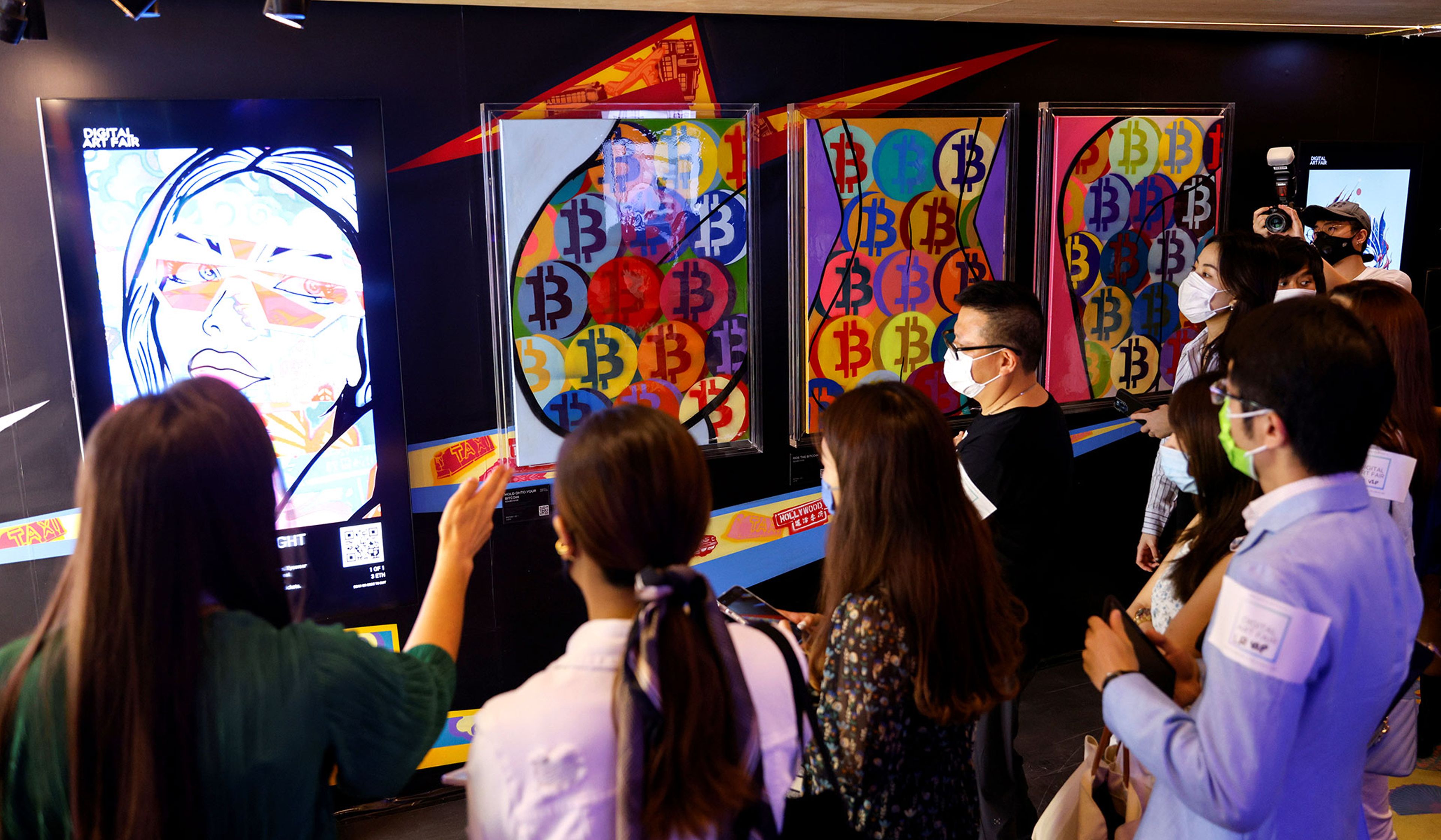
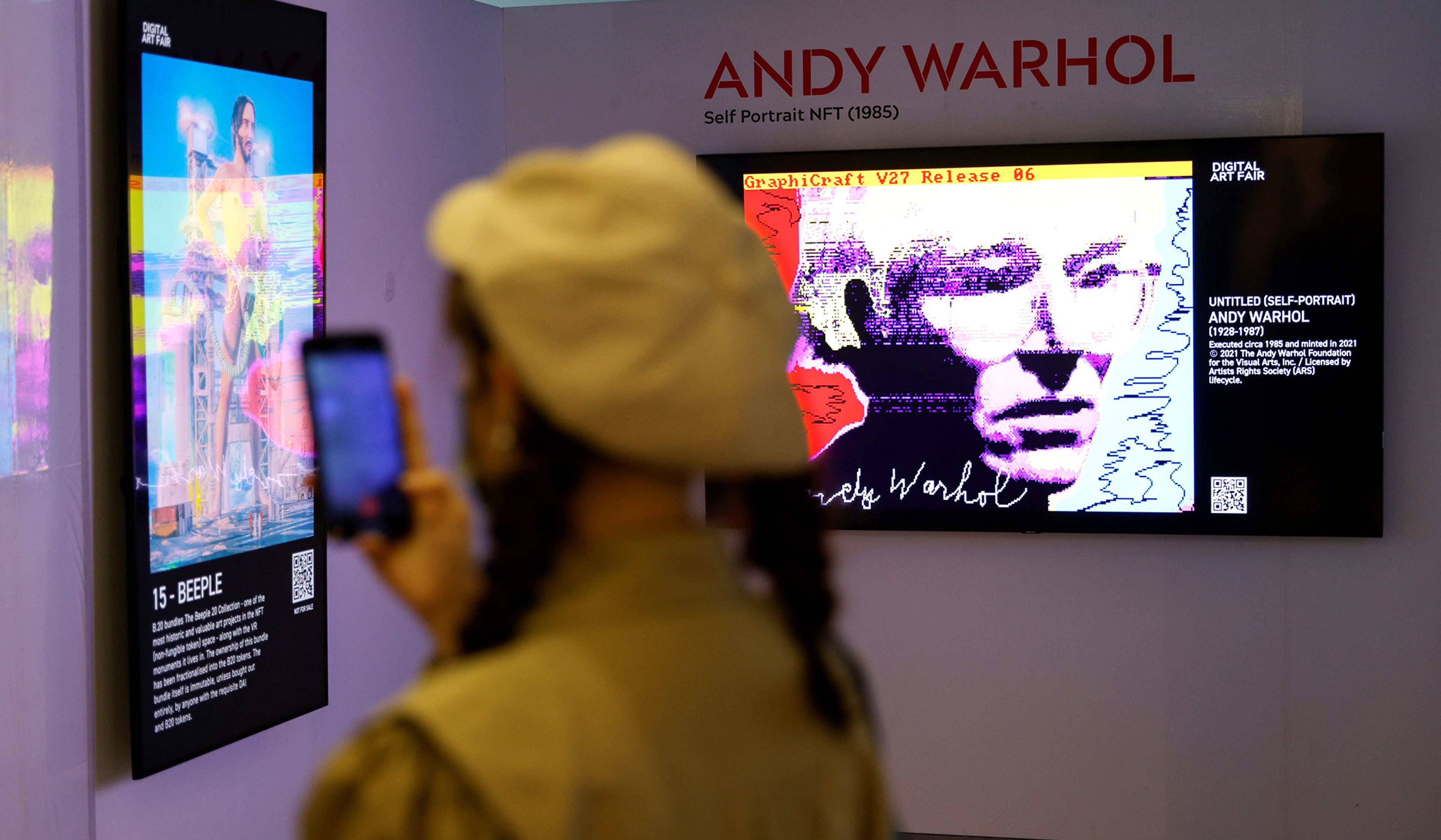
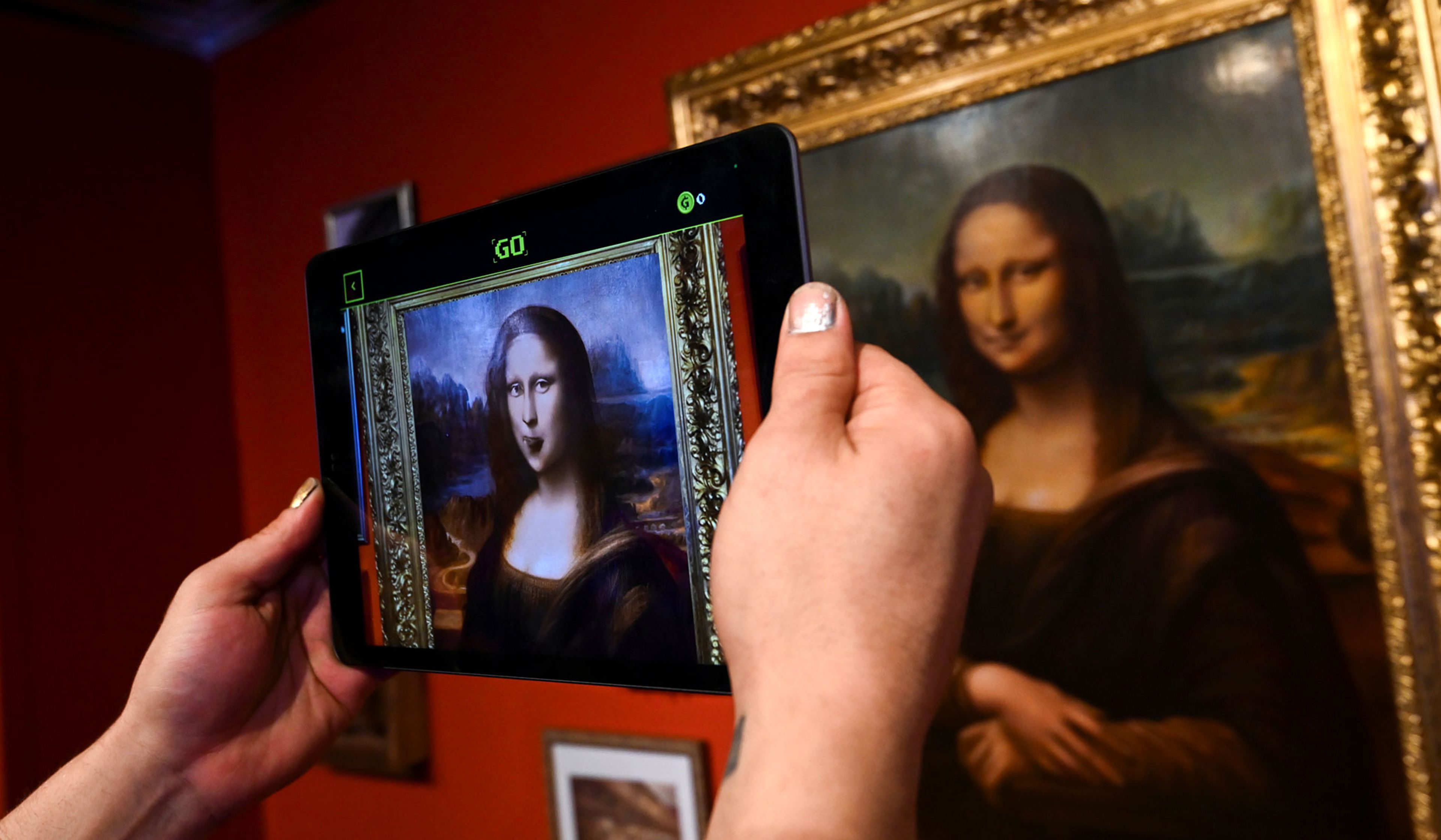
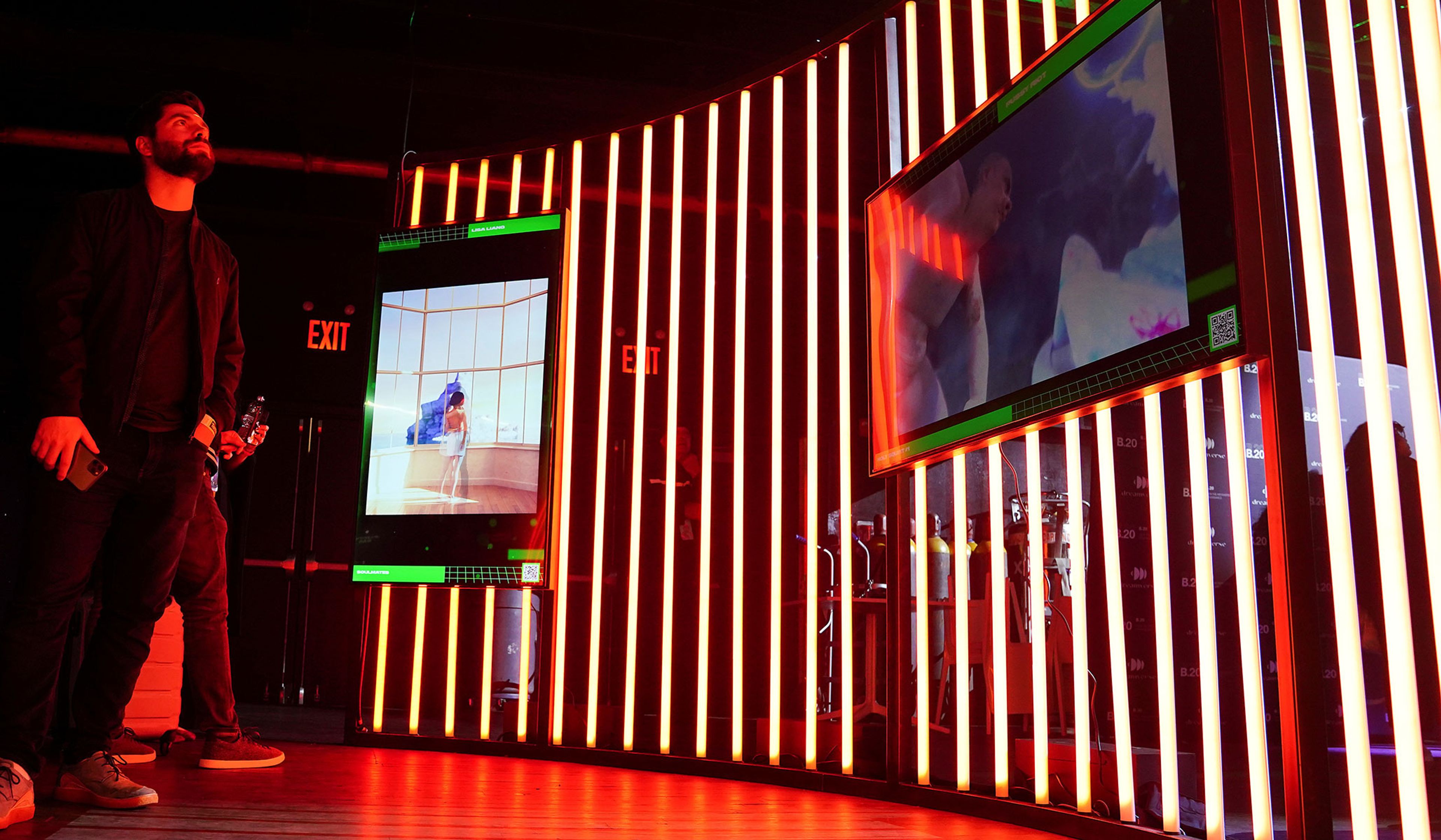
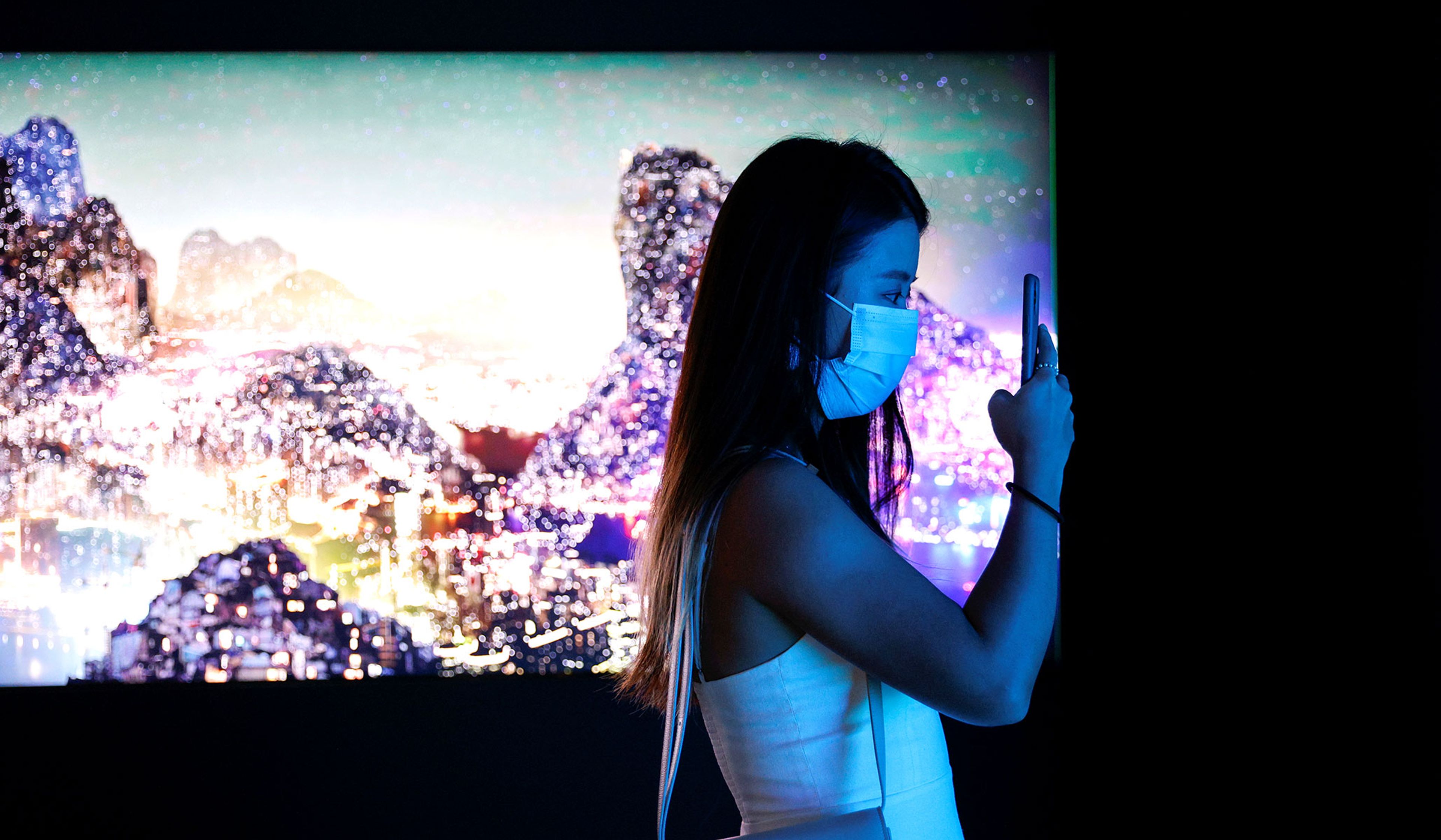
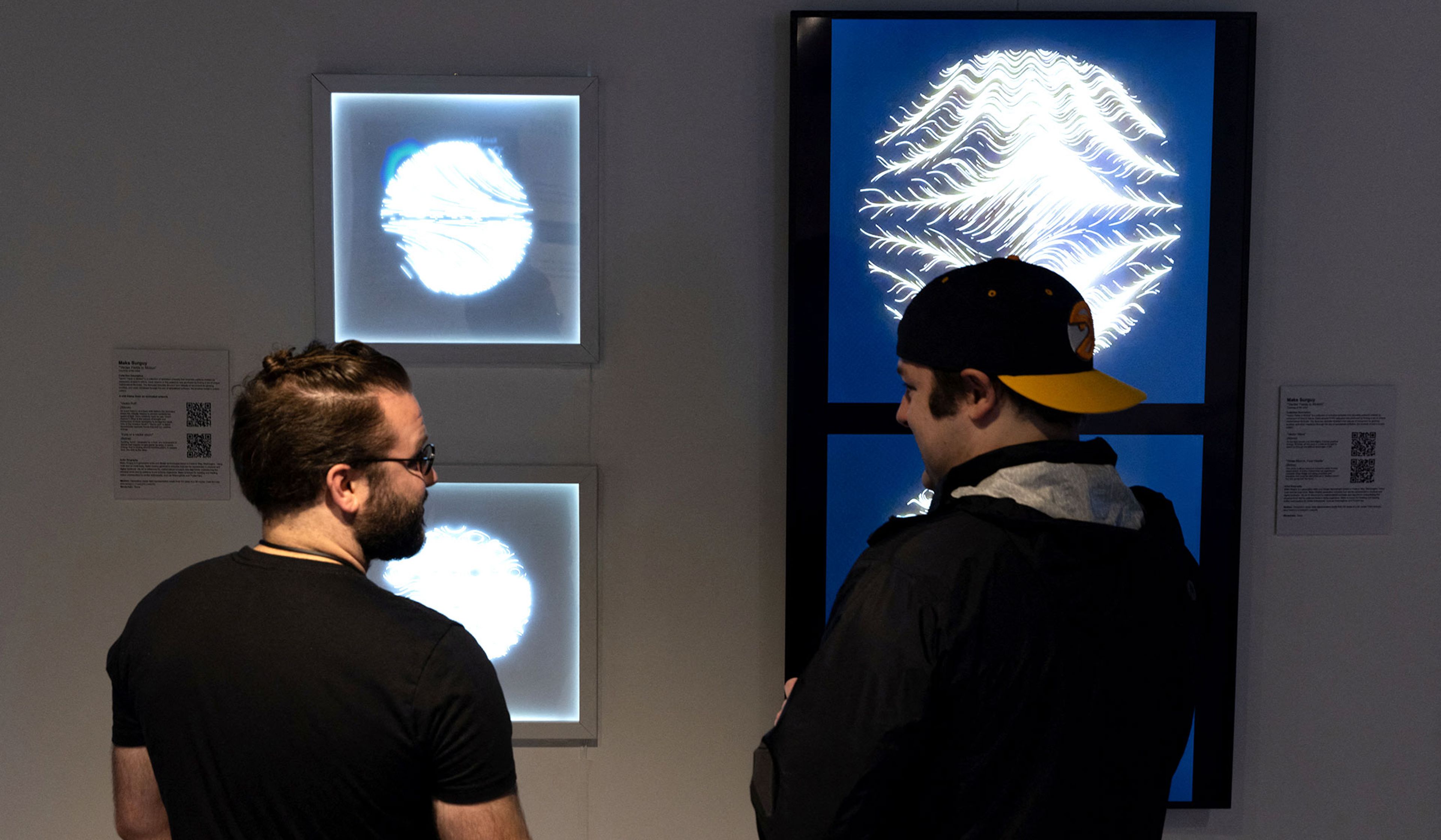
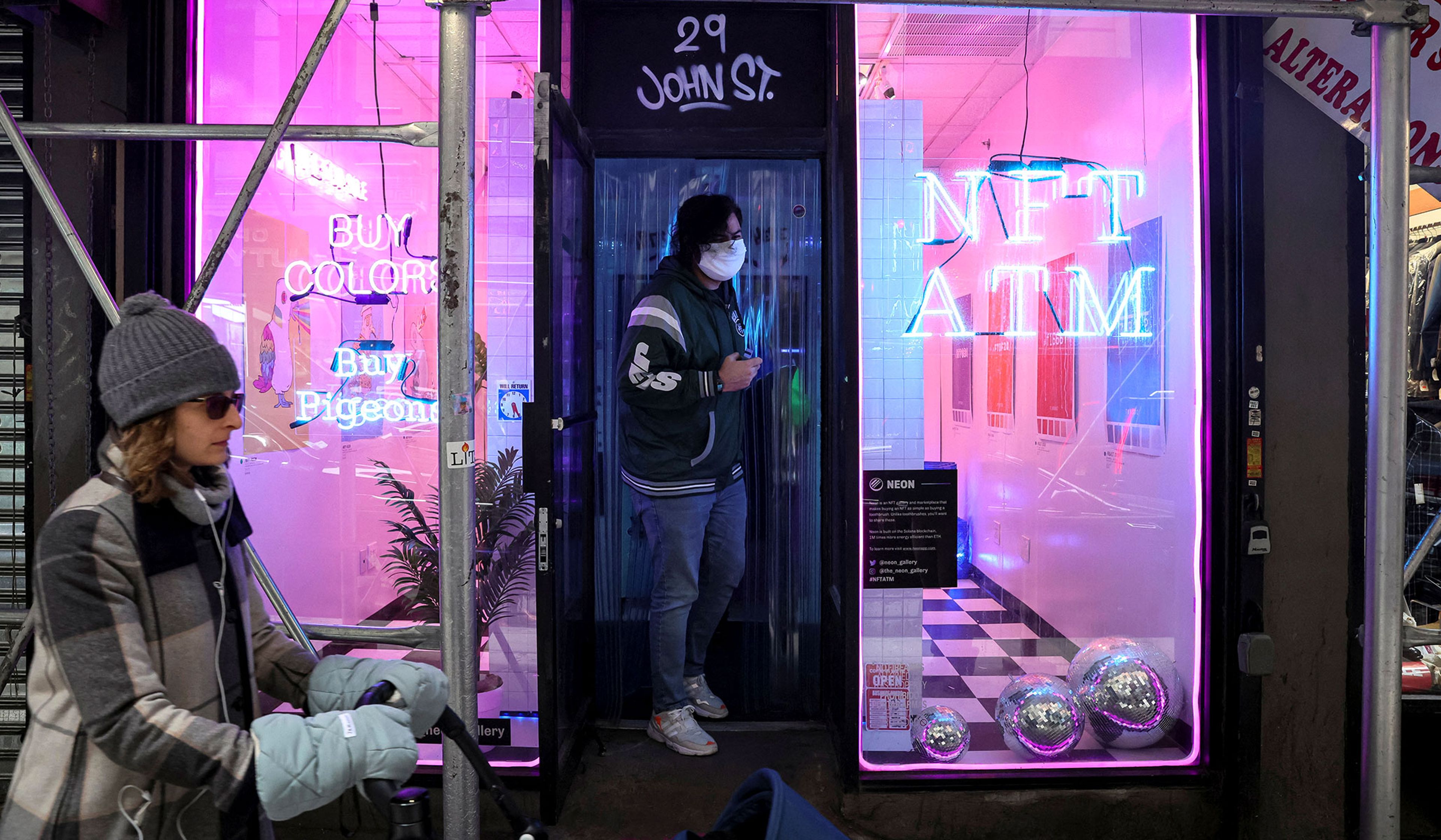
Visitors in front of an immersive art installation titled “Machine Hallucinations – Space: Metaverse” by media artist Refik Anadol, which will be converted into NFT and auctioned online at Sotheby’s, at the Digital Art Fair, in Hong Kong, China, September 30, 2021.
Tyrone Siu/Reuters












Comments