
• The good news is that Dr. Fauci says you can leave your house. The bad news is you can’t afford to go anywhere.
• An 18-year-old killed ten shoppers in a Buffalo supermarket by shooting them. All the victims were black, while the shooter was white. He appears to be mentally disturbed, and clear warning signs were ignored. He also wrote a manifesto of sorts. He believes that Jews are trying to take over the country by importing pliable voters, a noxious idea called the “great replacement theory.” Democrats and the press harped on the overlap between this theory and the rhetoric of some Republicans, who say the Democrats back progressive immigration policies to bring them new voters. There is, however, some overlap between the theory and reality. Democrats have moved left on immigration issues as they have become convinced that new immigrants, and newly legal immigrants, will usher them into a majority. Republicans cannot be blamed for noticing these trends. But two other trends should enter their field of vision, too. The Democrats’ gambits have tended to fail by alienating white working-class voters they need. And Hispanic voters, and to some extent Asian voters, are proving less and less reliably Democratic. Thinking primarily in racial categories is the enemy of mental clarity, and all too often of humanity.
• Ten days after that massacre, an even worse one in Uvalde, Texas, claimed the lives of at least nineteen children and two adults. President Biden claimed that an assault-weapons ban reduced mass shootings during the decade it was in effect and urged it be brought back. The evidence for that view, however, is very thin. What might make a real difference is a better system for identifying threats and acting on them; mass murderers almost always disclose something of their plans to people they know. But we seem more likely to see everyone repeating their old lines from decades of gun-control debates.
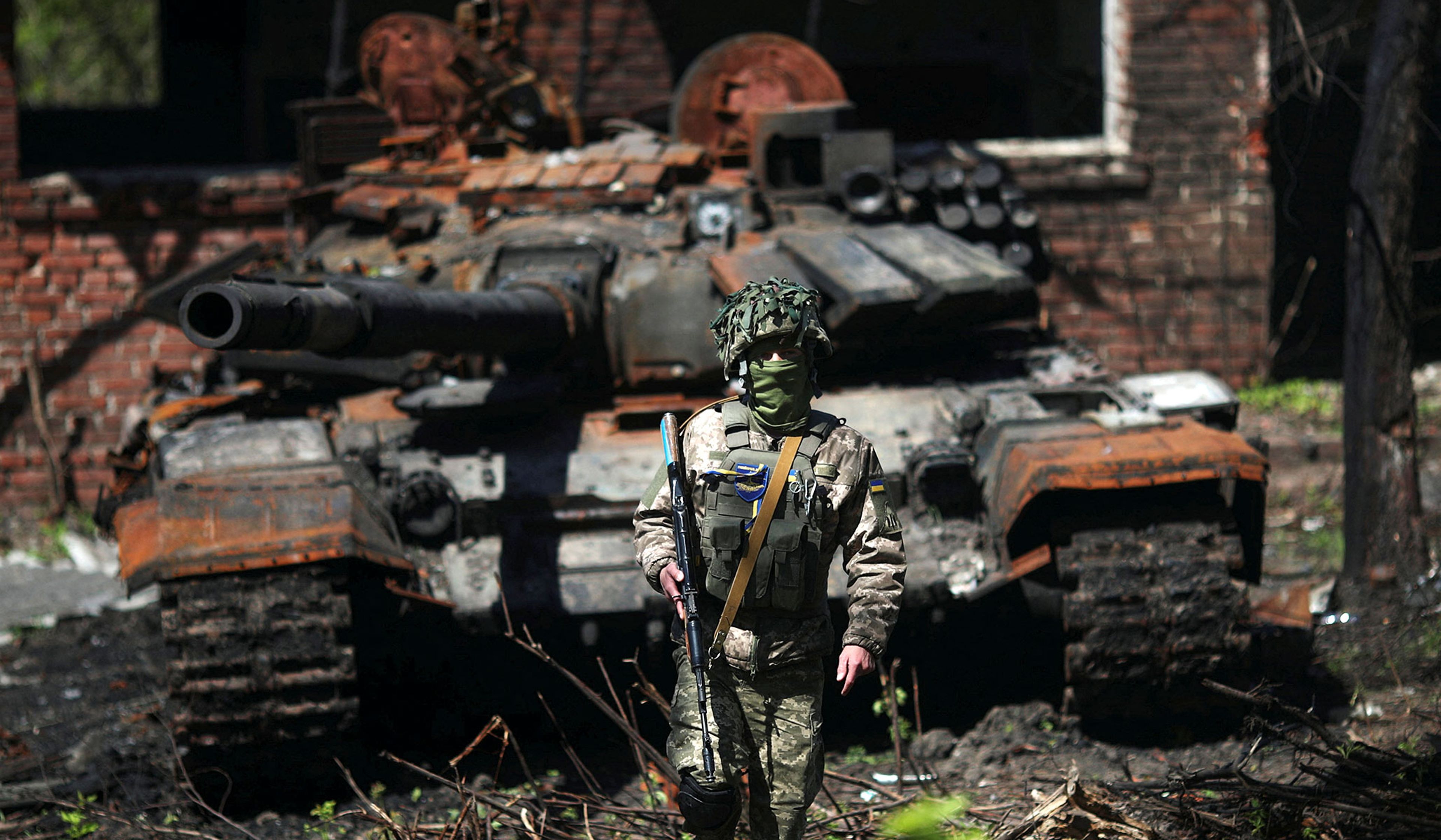
• The $40 billion in new aid to Ukraine, passed by Congress and signed into law by President Biden, has become a populist piñata. There is no doubt that the bill is hugely expensive, but it is worth it. Supplying Ukraine with the Javelins and other arms and support it needs to prevail is a bargain, given the strategic defeat it may inflict on an adversary of the United States. A significant portion of the aid package simply goes to replenishing the U.S. stock of weapons we’ve already given to Ukraine on an emergency basis and funding U.S. troop deployments to NATO countries. There have been complaints about the Europeans’ not doing more. There are certain high-tech weapons that only we can supply, but we should indeed be calling on the Europeans to do more to directly support the Ukrainian government and to provide food assistance to Ukraine and other countries affected by the war-related disruptions. To its credit, Ukraine is completely committed to the fight and is waging it without any soldiers from the West putting themselves directly in harm’s way. All the country needs is the matériel and other assistance necessary to fight off its much larger invader, and we should gladly provide it.














Ukrainian service members ride on top of a tank along a road near the town of Pokrovsk, Donetsk Region, Ukraine, May 25, 2022.
Carlos Barria/Reuters
• Following the Dobbs leak, Senate majority leader Chuck Schumer held a vote on a bill that would enshrine in federal law a right to kill a baby through all nine months of pregnancy in all 50 states. The Women’s Health Protection Act would supersede all federal and state abortion laws — thus overriding conscience protections for health-care workers; parental-consent requirements for minors; bans on sex-selective abortions; 24-hour waiting periods; and many other popular abortion limits currently on the books. Fifty-one senators voted against it, including West Virginia Democrat Joe Manchin and the two Senate Republicans who support a right to abortion, Lisa Murkowski of Alaska and Susan Collins of Maine. Bob Casey Jr. of Pennsylvania, who has campaigned in each election since 2006 as a “pro-life Democrat,” was among the 49 Democrats who voted for the bill. The WHPA is so extreme that it would invalidate Pennsylvania’s law banning abortions later than 24 weeks of pregnancy — a law under which late-term abortionist Kermit Gosnell was convicted on 21 counts (in addition to his murder convictions for killing babies outside the womb). Casey could not explain how he squared his earlier support for limits on late-term abortion with his newfound support for the WHPA. He is a pro-lifer with exceptions — and the exceptions turn out to include when his party needs him.
• In Senate testimony, Secretary of the Treasury Janet Yellen attempted an economic rationalization of abortion. She said that women need to have abortion access to “enable them to plan lives that are fulfilling and satisfying for them” and that having children forces women to leave the workforce and forgo education, which would harm the economy. She also noted that abortions are often performed on “teenage women, particularly low-income and often black, who aren’t in a position to be able to care for children.” She made these comments to Senator Tim Scott (R., S.C.), who replied, “I’ll just simply say that as a guy raised by a black woman in abject poverty, I’m thankful to be here as a United States senator.” Yellen’s comments ignore the fact that a decades-long decline in the number of abortions has accompanied the increasing participation of women in the workforce. More fundamentally, it is a mistake to view children as economic obstacles for adults to overcome.
• Salvatore Cordileone, the Catholic archbishop of San Francisco, has asked Speaker of the House Nancy Pelosi not to present herself for Communion in his archdiocese and directed that she not receive it if she does. His logic is airtight. Acting to expose unborn children to lethal violence is gravely sinful. Obstinate persistence in grave sin, according to both the Bible (1 Corinthians 11:27–29) and canon law, renders the sinner unworthy of Communion; sin committed in public requires public repentance. The archbishop is being accused, inevitably, of illegitimately interfering in politics. But he neither has nor claims the power to compel any government official to ban abortion, or anything else. He cannot make Pelosi attend Mass or identify as a Catholic. He can, however, transmit the church’s teachings, just as bishops in the civil-rights era did in denying Communion to unrepentant segregationists. Whether Cordileone’s stand will go over well in San Francisco or nationally — even whether it will advance the cause of life — is beside the point. His responsibility is to Pelosi’s soul, and to the souls of those whom her example may lead astray.
• When the country was told (via Twitter on April 27) that a new “Disinformation Governance Board” was to be set up within the Department of Homeland Security and that its head was to be Nina Jankowicz, a self-styled “disinformation expert” who had posted a video of herself singing a somehow sinister spoof of a song from Mary Poppins, Jankowicz and the 1984-ish proposed agency were heaped with well-earned ridicule. Jankowicz, who fell on her sword (or maybe her umbrella) when the agency was put “on pause” three weeks after its birth announcement, predictably made the rounds of left-wing television shows to whine that her fate was itself an ironic casualty of “disinformation.” The U.S. should not have official government agencies with vast policing powers labeling certain contentions “disinformation.” Democrats who find this point too subtle to grasp should ask themselves whether they’d like to see, say, Sarah Palin appointed disinformation czar in a second Trump administration.
• Democratic lawyer Michael Sussmann was working for the Hillary Clinton campaign a few weeks before the 2016 election, when he told the FBI he was not representing any client in bringing the bureau Internet data suggesting a back channel between Donald Trump and the Kremlin. Now he is on trial for the lie. In startling testimony, Clinton campaign manager Robby Mook acknowledged that Clinton herself approved the leaking of the Trump–Russia collusion story to the media, even though the campaign knew the evidence was scant. Notwithstanding that the copious evidence against Sussmann seems overwhelming, his hopes for acquittal are real. The judge, Obama-appointee Christopher Cooper, did not screen partisan Democrats out of the Washington, D.C., federal jury. Special counsel John Durham is also proceeding from the dubious premise that the FBI was duped by the Clinton campaign, rather than eager to believe any suggestion that Trump had corrupt ties to Russia — which could bear on the question whether Sussmann’s alleged lie was material.
• The latest mea culpa from the Census Bureau’s Post-Enumeration Survey confirms that the 2020 Census made some significant errors. Those errors were not evenly distributed politically: States undercounted by at least three percentage points were Arkansas (5.04 percent), Tennessee (4.78), Mississippi (4.11), and Florida (3.48), while the states overcounted by that much were Hawaii (6.79 percent), Delaware (5.45), Rhode Island (5.05), Minnesota (3.84), and New York (3.44). The pandemic hit just as the census was ramping up, but the Trump administration and big-state Republican governors also put fewer resources into maximizing their state counts than blue states did. In an ideal world, we could have a recount, but in the actual world there would be significant legal and political obstacles, and a new census would be massively expensive and likely face a lack of citizen compliance. With population continuing to shift from blue to red parts of the country since the spring of 2020, we will probably see a decade of the political system’s overcounting the voters of blue states and undercounting the voters of red states. The lesson for 2030: Get it right the first time.
• There was a time when Madison Cawthorn could claim to represent the future of the Republican Party. At only 24 — and after being a passenger in a car accident that left him a paraplegic — Cawthorn triumphed over the Trump-backed candidate in the 2020 Republican primary for a North Carolina congressional district and went on to win the seat. He said he hoped his youth and empathy would bring a new perspective to the party. But upon taking office, Cawthorn instead hewed to some of the worst tendencies of his party. He placed himself at the vanguard of “Stop the Steal” Republicans between Election Day 2020 and January 6, 2021; he consistently chose the most inflammatory position in whatever the day’s debate happened to be; and he treated his office mainly as a platform for self-promotion (at times with outlandish claims, such as an unsubstantiated allegation that many of his fellow members were participating in cocaine-fueled orgies). Cawthorn might have survived any of these things singly, but together they alienated both Washington and his district. He has now been sent packing by the latter, despite receiving Trump’s primary endorsement this time. There is ample evidence that the 26-year-old was not quite ready for the spotlight and still suffers lingering trauma from his accident. Losing may be for the best for himself as well as the nation.
• Former New York City mayor Bill de Blasio will seek the Democratic nomination for New York’s tenth congressional district. “The vast majority of progressive voters,” said de Blasio, “are going to start with a clean slate.” He won’t, though. Eight years in City Hall showed him to be lazy, sleazy, and conceited. Business languished so that he could enjoy a daily workout at his Brooklyn gym. He opposed carriage horses in Central Park so that a supporter could develop the land where their stables stood, and he shoveled almost a billion dollars into the black hole of ThriveNYC, a no-results mental-health initiative run by his wife. In the middle of his second term he ran for president, bowing out before the Iowa caucuses after peaking at 1 percent in the polls. If the voters want to send a progressive megalomaniac to Washington, there are any number who are active, relatively honest, and only normally ambitious. Stay home, Bill.
• San Francisco district attorney Chesa Boudin is up for recall on June 7, thanks to the surge in crime and disorder on his watch. Among the most troubling data: the death toll from drug overdoses (more than 1,300 in the last two years), even as convictions for drug dealing have withered (three in 2021, down from more than 90 in 2018). Boudin does prosecute dealers, but he knocks the charge down to the milder offense of “accessory” to a crime. Boudin cites the desire to keep prisons less crowded during Covid and the fact that many dealers are illegal immigrants who will be deported if they have the book thrown at them. But the result is that offenders are soon back on the streets, degrading neighborhoods and peddling their deadly wares. Progressive San Fransicans face the same choice their fellows in New York did a generation ago: live up to their slogans, or have a livable city.
• The public schools are shrinking. The New York Times reports that enrollment in New York City — the largest district in the country — has dropped by 50,000 in the past two years. In Michigan, enrollment is more than 50,000 students below pre-pandemic levels. Enrollment across California’s public schools has dropped by a quarter million since 2019. Some of the enrollment decline is driven by America’s ongoing baby bust. But more distressing to the unions is the political defection of parents caused by the pandemic. A study from the American Enterprise Institute showed that school districts that offered more in-person instruction during the pandemic were more likely to see their enrollment rebound. The decline of public schools has also been driven by a parental counterrevolution against progressive politics. Catholic schools, which have had declining enrollment for two decades straight, saw their ranks increase by 3.8 percent overall during the pandemic. Florida saw massive inward migration, but much of the growth in school enrollment in that state was captured by charter schools. Parents are exercising what choice they have, and wisely.
• The baby-formula shortage is largely the result of decades of bad regulatory and trade policies that went unnoticed until a product recall cut supply. While the Biden administration didn’t cause this problem, it has addressed none of the underlying causes. The administration got the headlines it wanted after invoking the Defense Production Act to force suppliers to provide inputs to baby-formula manufacturers before they fulfill any other contracts and announcing that the military would begin flying formula in from Europe. But when pressed by reporters, the administration could not name any inputs to baby formula that were in short supply. And if European formula is safe to consume, it should be available for purchase all the time. The U.S. government adopted policies that allowed what should have been a relatively minor market disruption to turn into a widespread, prolonged shortage. Rather than address those policies, House Democrats responded with a bill to give the FDA $28 million for more salaries. When 192 Republicans voted against that bill, which passed anyway, they were criticized for doing nothing to help end the shortage. Representative Peter Meijer (R., Mich.) responded to that criticism on Twitter by saying, “If baby formula shortage was caused by an underfunded FDA, this would help. But it wasn’t.” Meijer is correct. The way out of this shortage is less bureaucracy, not more, and the FDA doesn’t need any more money. Senator Mike Lee (R., Utah) proposed legislation that would waive baby-formula tariffs from friendly countries with high health standards, waive FDA labeling regulations, and make the newly available formula eligible for purchase through WIC benefits. Lee’s approach actually addresses the shortcomings of government policy, and Republicans should support it instead of whatever the Democrats come up with next.
• For the first time in half a century, the Pentagon has publicly briefed a House committee about sightings of UAPs (unidentified aerial phenomena — the term “UFO” has been withdrawn from government use, probably thanks to its somewhat disreputable associations). More specifically, the hearings were designed to explain the operations of a new group within the Department of Defense charged with looking into what’s out there. Some of these UAPs are optical illusions, but there is no harm in investigating further. There were no admissions that anything extraterrestrial is suspected, but some questions, listeners were told, should be reserved for a closed session, an intriguing recommendation that, if nothing else, means that the thought of UAPs/UFOs will, until the invasion, continue to enchant their fans.
• As of this writing, no one who caught monkeypox in the current outbreak has died, and the reported symptoms have been mild. (Past outbreaks have had a death rate of 10 percent — although the strain recently detected in Europe, the “West African clade,” has a fatality rate of less than 1 percent.) Nor does monkeypox spread as easily as Covid-19 — it is contracted (according to public-health information in the U.K.) through contact with “clothing or linens (such as bedding or towels) used by an infected person, direct contact with monkeypox skin lesions or scabs, [or] coughing or sneezing of an individual with a monkeypox rash.” And existing smallpox vaccines are effective against monkeypox. There will not be a monkeypox pandemic. Recent history is also encouraging: The U.S. had two travel-related cases in 2021, neither of which led to any further spread or new cases. Back in 2003, there was an outbreak of 47 confirmed and probable cases; everyone recovered, and life went on. But there’s one wrinkle: Just about all the cases so far are among “men who have sex with men” — the medical community’s preferred term – and David Heymann, who formerly headed WHO’s emergencies department, told the Associated Press that the leading theory to explain the spread of the disease was sexual transmission at parties held in Spain and Belgium. We suspect that public-health authorities generally will place the same emphasis on candor they always have.
• A federal judge in Louisiana threw President Biden a political lifeline by rejecting his effort to lift Title 42 immigration restrictions. While the White House mouthed objections and vowed to appeal, the Justice Department has not sought a stay of Judge Robert R. Summerhays’s ruling, ensuring that the appellate process will be on a monthslong slow track. That is welcome. Biden ordered the restrictions ended to please his progressive base, but with no plan to deal with the consequent migration surge. The restrictions are a health measure invoked because of Covid-19. That justification looks flimsy now, but border states still fear a deluge of illegal immigrants given Biden’s other policies. The lawlessness at the border is already a crisis, and estimates are that lifting Title 42 without a backup security plan could see border crossings surge to a catastrophic 18,000 per day. The court ruled that Biden flouted the Administrative Procedure Act by dodging the notice-and-comment requirement. Never has a litigant been so happy to lose.
• Three years ago, Ben Domenech — the founder and then-publisher of the Federalist — responded to a Vox Media writer walkout by tweeting a wisecrack and tagging his own publication: “First one of you tries to unionize I swear I’ll send you back to the salt mine.” This was obviously satirical, as anyone with the remotest bit of common sense could tell. Yet a left-wing lawyer with no connection to the website or any of its employees filed a complaint with the National Labor Relations Board, accusing Domenech and the Federalist of unfair labor practices. In 2020, an administrative-law judge at the NLRB (later upheld by the full NLRB) issued sanctions, including an order to take down the tweet. The NLRB refused to hear any evidence from the Federalist’s employees. Two years later, the Third Circuit finally laughed the NLRB out of court, finding “no inkling” of evidence that any of Domenech’s six employees would feel threatened. A concurring opinion further noted the flimsy basis for the NLRB to allow any random person unconnected to the company to initiate a case — a process that liberals professed to find shocking when established by the Texas abortion law. Sadly, the NLRB’s wholesale abandonment of elementary common sense is all too common when the administrative state faces American citizens and businesses that cannot afford to fight back. We commend Domenech, the Federalist, and the New Civil Liberties Alliance for fighting this case on principle and exposing how a powerful agency doesn’t know what a joke is. For many of the NLRB’s targets, the punch line isn’t so funny.
• That Finland and Sweden want to join NATO is unequivocally good news, not least because it would end the near-isolation of the Atlantic alliance’s Baltic trio, an isolation made more perilous by the Kremlin’s awareness that a quick victory in the Baltics could tear NATO apart. But before the applicants can join, all existing NATO members must agree. Turkey’s President Erdogan, complaining that Finland and (especially) Sweden have provided refuge for members of Turkish and Kurdish opposition groups, has said no. Among Erdogan’s demands are the extradition of some of these people. That won’t happen, nor will it be the only sticking point with Helsinki and Stockholm. Erdogan, however, has no interest in seeing an even stronger Russia in the Black Sea region and is under immense economic pressure at home. There is still a decent chance that a deal can be cut, probably involving arms sales and a bit more besides. It’ll be grubby, but the prize may well be worth the price.
• The list of those assassinated in Iran includes Mohsen Fakhrizadeh, in charge of the regime’s nuclear program, and no fewer than six nuclear scientists or academics working under him. The list just got longer. It was four o’clock in the afternoon when Colonel Hassan Sayyed Khodaei was sitting in his car outside his house. Two men on a motorbike rode past and shot him dead. The colonel was known as one of the more powerful officers of the Revolutionary Guards Quds Force, the paramilitary unit on which the regime depends. President Raisi decries what he calls “the global arrogance” of this assassination, by which he means that of the United States and Israel. But if Washington or Jerusalem is organizing these very professional murders, nobody is saying so.
• Hong Kong police arrested retired bishop Cardinal Joseph Zen and four other pro-democracy activists in May. All five were trustees of the 612 Humanitarian Relief Fund, which was established in 2019 to provide financial assistance to protesters against a bill that would have enabled the extradition of Hong Kong residents to mainland China. The fund ceased operations last September, after the police placed it under investigation for allegedly colluding with foreign powers. Zen, 90, is a long-standing critic of the Chinese Communist Party and has warned against the Sino–Vatican agreement that gives Beijing power over the appointment of bishops on the mainland. After several hours, he was released from the police station where he and others had been interrogated. As a veteran of the resistance to the Chinese government’s grinding assault on religious freedom and civil liberties in general, he has compiled a record of unyielding courage and was always unlikely to bend. Authorities might have calculated that the example of his arrest would intimidate others. A different example, that of his spine and spirit, inspires kindred souls among his countrymen to persevere in their fight for the most basic freedoms.
• China has a policy of island-hopping that looks set to end in empire-building, and the Pacific island nation of Kiribati is the very latest example of this operation. Strategically located about 1,850 miles southwest of Hawaii in waters hitherto considered a reserve of the United States, Kiribati has a population of about 115,000. Kanton is one of a number of small islands that make up the nation, and China has it in its sights. In 2019, Kiribatian president Taneti Maamau and China established diplomatic relations, and they now have a project to modernize an airfield left over on Kanton from World War II. According to a report, the declared intention is “to improve transport links and bolster tourism.” What transport links? What tourism?
• At its annual meeting in 2021, the Southern Baptist Convention commissioned a report on sexual abuse within the denomination, to be released before its annual meeting in June. The purpose of the report is to investigate and document how the SBC has handled accusations of sexual abuse in the past and give recommendations on how to improve its handling of them going forward. The report, which draws on five terabytes of electronic documents and 330 interviews, is now public, and the picture is not good. It shows that, repeatedly over the past 20 years, the denomination put concern about legal liability ahead of concern for victims of abuse. Institutional concerns and legal liability are not irrelevant details. The SBC’s decentralized church polity does not allow for some processes that other denominations could implement, and the denomination oversees scores of millions of dollars that fund mission work, disaster relief, and education, among other worthy causes. But when institutional and legal concerns repeatedly triumph over caring for abuse victims and bringing perpetrators to justice, it’s a Christian moral failure. That the SBC commissioned this report and ensured independence to the investigators was laudable, even if much too late. When the denomination meets in June, it will have a strong foundation upon which to build better practices, but it must start with repentance for sins.
• “I survived cancellation at Princeton,” distinguished classics professor Joshua Katz wrote in a 2020 op-ed. Maybe not: Though Katz has tenure, the university’s president, Christopher Eisgruber, recommended his termination to the board of trustees, which obliged by firing him. Eisgruber’s weak claim is that Katz deserves termination because of new information gleaned from reinvestigating his consensual affair with a student some 15 years ago. This matter was already investigated and concluded four years ago with an agreement that Katz would take a year of unpaid leave; dusting it off now looks like a transparent act of vengeance for an unrelated, but much more controversial, transgression: Katz profaned the new campus religion by opposing a far-left “anti-racist” group (the Black Justice League, now defunct) that, according to a 2020 essay by Katz in the Wall Street Journal, amounted to “a local terrorist organization” because its “members targeted and smeared fellow undergraduates for disagreeing with them.” Campus activists have been baying for the professor’s scalp ever since, and Eisgruber’s public denunciations of Katz make it clear that he agreed with the mob. The principle of academic freedom of expression and the norm that no one should be subjected to double jeopardy (even in noncriminal matters) have both been severely damaged by Eisgruber and the board’s pettiness. Should Princeton follow its president’s lead, every tenured professor in the nation will shudder, shiver, and think better of voicing controversial thoughts.
• The U.S. Soccer Federation — the organization that fields the men’s and women’s national teams — has agreed to a first-of-its-kind settlement under which male and female players will be paid equally. The men’s team had long been paid more, even though the women were by far the more successful team on the field, having won four World Cups and four Olympic gold medals. On the other hand, the Men’s World Cup and other international events are wildly more profitable than the women’s tournaments. Now the two teams will pool the prize money from their respective tournament appearances and split the whole bag between themselves and the federation, something no other country does. Is this equal pay for unequal work, equal pay for equal work, or a case of woke economics causing distortions in the market? Call it a hat trick. Since the ostensibly nonprofit national federation and the two teams don’t take taxpayer money (at least directly), it’s okay to let this one go, even if some might call it a financial “own goal.” America is really quite the country: so rich and so athletically blessed that its third-rate men’s team and its world-class women’s team can have their cake and eat it too.
• From a messaging standpoint, the main problem faced by People for the Ethical Treatment of Animals is that even when they’re right, they’re wrong. PETA protesters have started gluing their hands to countertops at Starbucks outlets to protest the chain’s 70-cent surcharge for customers who request nondairy milk. The protesters’ goal had no discernible connection with their chosen means, and the glue stunts have succeeded mainly in infuriating caffeine-seekers by making Starbucks’ notorious lines and waits even longer. When will the Left realize that when it comes to political demonstrations, the number of people annoyed is not the proper metric of success?
• Robert “Bud” McFarlane was national-security adviser to President Reagan from October 1983 to December 1985. Born in 1937, he went to the Naval Academy. He entered the Marine Corps and served in Vietnam. Later, he was an assistant to Henry Kissinger. He retired from the Marine Corps as a lieutenant colonel. In the Reagan White House, he got caught up in the Iran-Contra affair. Hours before giving testimony, he attempted suicide. He said he felt scapegoated and hung out to dry. Maybe he was. He later founded a consulting company and served on various boards. A patriotic life, tinged with controversy and sadness. Bud McFarlane has died at 84. R.I.P.
• In a long journalistic career, John Leo wrote more or less everywhere, from the National Catholic Reporter and the Village Voice to the New York Times and U.S. News & World Report. As a liberal Catholic he exposed the silencing of radical Jesuit Daniel Berrigan. As he aged, he turned his attention more to cultural squalor and academic inanities. His campaign against gangsta rap pressured Time Warner into offloading its stake in Interscope Records, owners of the label Death Row. In person Leo was gregarious and amusing, qualities that sparkled in his 1989 book How the Russians Invented Baseball and Other Essays of Enlightenment. Dead at 86, R.I.P. Gotham lunch chats and book parties will be duller affairs henceforth.
• “Go down to spring training and see what you find,” said William Shawn to Roger Angell. What he found was a perspective from which, for half a century, he would give readers of the New Yorker long rivers of easy, high-information prose about baseball. What could he ever add to the thorough reporting supplied by the “newspapermen”? “My main job, as I conceived it, was to continue to try to give the feel of things,” he wrote — “to explain the baseball as it happened to me, at a distance and in retrospect.” As a man of letters, he had range: The fiction and nonfiction writer was also an editor. His authors included John Updike, from whom he learned. He coached a novice Ann Beattie. He was elected a fellow of the American Academy of Arts and Sciences. Among his literary trophies, the J. G. Taylor Spink Award, conferred on him at the Baseball Hall of Fame in 2014, shone brightest. “Winning almost all the time has a lot to be said for it,” he observed, “but not quite winning, barely missing again and again, keeps you whining and breathing, and might even be more fun in the end.” Dead at 101. R.I.P.
Trump at the Races
A scattering of Republican primary races has been treated, by Donald Trump and pundits alike, as an early 2024 primary: a test of Trump’s ongoing clout in the GOP. The results have been mixed.
Trump-backed candidates who have won include three-term North Carolina congressman Ted Budd, who will be running to succeed Republican Richard Burr in the Senate; Pennsylvania state senator Doug Mastriano, who will face attorney general Josh Shapiro in the governor’s race; and J. D. Vance, who will be running for the Senate in Ohio.
Other Trump endorsees washed out. Rancher Charles Herbster lost in a Nebraska gubernatorial primary to Jim Pillen. Idaho lieutenant governor Janice McGeachin failed to best Governor Brad Little in the race for his office. Former Georgia senator David Perdue lost badly to Governor Brian Kemp. The troubled Madison Cawthorn will not be returning to Congress.
And some races are still up in the air. TV doctor Mehmet Oz and hedge-fund exec David McCormick are headed for a recount in the Pennsylvania Senate primary, a long count of mail-in ballots leaving them only a few hundred votes apart.
The tally of wins and losses is further complicated by special factors, including Trump’s own caprice. Herbster was hit by allegations, vigorously denied by him, that he groped several women. Mastriano was not the only Trump-supporter in his race; former congressman Lou Barletta complained bitterly that Trump had ignored his long loyalty in passing him over. (Trump, ungrateful? Stop the presses.) Cawthorn, it seems, lost as much for erratic personal behavior — trying to board an airplane with a pistol, claiming fellow Republicans invited him to coke-fueled orgies — as for his crazy opinions (calling Volodymyr Zelensky a “thug”). The main reason Trump picked Dr. Oz in Pennsylvania, and one of the main reasons Oz did so well, is that he is a TV celeb.
The most serious member of the Trump brigade is J. D. Vance. His 2016 memoir Hillbilly Elegy is a worthwhile book — half Balzac story of a young man from the provinces, half sociological exploration. It made him the Publius of populism. His transition to politics has been accompanied by a self-dumbing. When he declared that he did not care what happened in Ukraine, he expressed a plausible position — I am running to address America’s problems, not the world’s — in the most bully-boy manner.
Many of the other Trump candidates are election-denying freaks. Mastriano organized buses to take protesters to Trump’s January 6 rally, and marched on to the Capitol. Trump endorsed Perdue out of ongoing rage at Kemp for not overturning Georgia’s electoral vote. Kemp’s first gubernatorial opponent was Stacey Abrams, so he has long experience with election truthers. Trump’s reaction to the long count of the Oz–McCormick race was characteristic: Oz, he said, should just declare victory.
Though some races still remain — Wyoming’s, and Liz Cheney’s, primary is August 16 — the picture is clear. Trump has introduced isolationism and probably protectionism as permanent issues in GOP intraparty politics. He is potent, though not all-powerful. This was potentially the state of things throughout his presidency, though the GOP, with few exceptions, chose not to recognize the limits of his power, which made Trump all the stronger. How long he can maintain his strength as an aging loser refighting the last election remains to be seen.












Comments