In February I took my family to Walt Disney World, our first-ever trip. However mixed one’s feelings about Disney, there’s no denying that the theme-park experience is very good at instilling a kind of all-American awe — at the park’s scope and scale and efficiency at extracting money from your wallet, at its pseudo-religious vibes, at its success at uniting so much of American popular culture, so many different eras of Disney animation and so many different contemporary brands, into a single seamless pilgrimage.
One moment you’re rattling through a quaint mid-century ride under the gaze of various familiar animatronic faces; the next you’re inside the worlds of Avatar or Star Wars. The overall effect is a kind of limitless cultural power, the Church of Disney extending itself backward and forward in time and space, bringing more and more properties under its sacred canopy, to the point where imagining the end of the Magic Kingdom is like imagining the end of America itself.
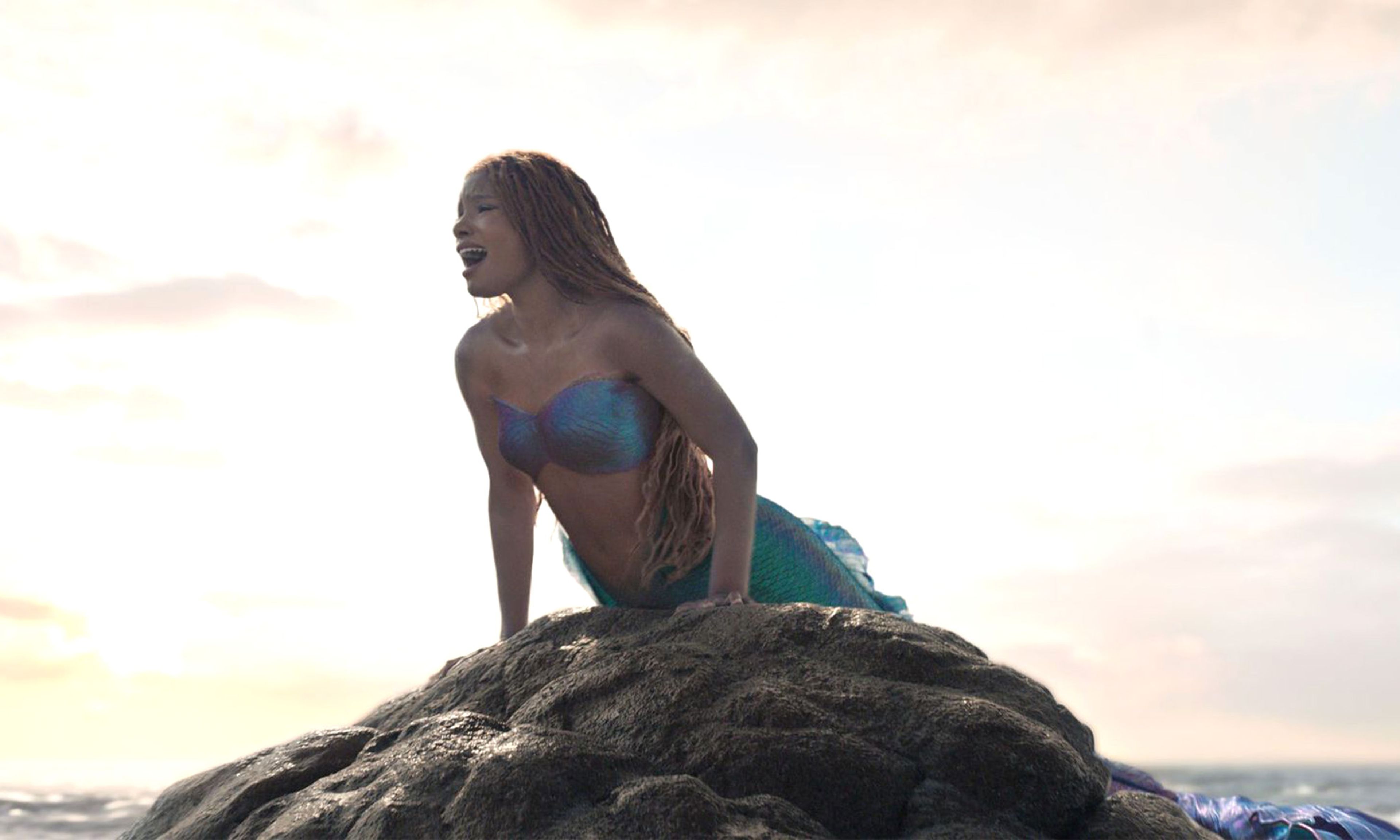
The new live-action version of The Little Mermaid, notable for an African-American Ariel (the singer Halle Bailey), a multiethnic mer-kingdom, and a lot of narrative bloat, yields a very different feeling about Disney. If the theme parks testify to the Magic Kingdom’s imperial expansions, the vast cultural territory that its brand now holds and rules, then the mediocrity on display in a core property like this one speaks to a fundamental rot at the center of the Disney brand, an increasing failure to generate the magic that built the empire in the first place.
It isn’t that The Little Mermaid is uniquely bad; it’s that it’s tedious and unnecessary in the way of almost all the live-action remakes that Disney has been churning out over the last decade. It has the requisite A-list cast (Javier Bardem as Triton, Melissa McCarthy as Ursula, the voices of Awkwafina and Daveed Diggs as Scuttle and Sebastian), the requisite re-creations of the classic songs, the requisite new additions (one of which, “Scuttlebutt,” is surprisingly good — and unsurprisingly written by Lin-Manuel Miranda, who has singlehandedly sustained the Disney song of late). It has, along with the diverse cast, various progressive gestures — the humans are polluting the mer-kingdom, the famous “Kiss the Girl” gets the affirmative-consent rewrite “Use your words, boy, and ask her.”
And it has no reason to exist except that people still expect fairy tales from Disney, remakes are bankable, and making audiences fall in love with new stories seems beyond the company’s capacities at the moment.
Not that it isn’t trying: The original movies keep coming off the conveyor belt, from Disney Animation and Pixar both, and some of them achieve a little more than the chronic mediocrity of the live-action remakes. But lately few of them are loved, and few deserve to be. Moana, seven years ago, feels like the last Disney movie with a big cultural footprint; people loved the songs in Encanto but the story was forgettable, and it’s hard to imagine any character from Luca or Onward or Turning Red or Raya and the Last Dragon inspiring passion or nostalgia among pilgrims to the Disney World of 2045.
Politics has something to do with this rut, though often in a subtle rather than a flagrant way: In the age of woke, Disney’s storytellers seem uncomfortable with the old fairy-tale reliables, such as sweeping romance and outrageous villainy, and instead keep trying to reinvent the Disney movie with more familial drama and more impersonal antagonists. And audiences aren’t fleeing a nakedly politicized Disney so much as they are drifting away from dreary storytelling: It wasn’t the presence of gay characters in last year’s inert Lightyear and tedious Strange World that tanked their box office, but that the political signaling felt particularly heavy-handed given that the movies had nothing else to offer.
The Little Mermaid isn’t tanking at the box office; it’s doing well enough, just not quite as well as Disney would have hoped. And that’s the general pattern for the Disney empire right now: Its Marvel properties have a little sag in their box office for the first time, its streaming app is being slowly dragged toward profitability by the old-fashioned expedient of raising prices, its Star Wars investment is generating lots of TV content but no new movies since The Rise of Skywalker debuted to widespread disappointment in 2019.
There is nothing in these trends that’s stark enough to make me prophesy about the Disney empire’s decline and fall; it seems, for now, much too vast and powerful for that. But at some point, one assumes, sheer power and intellectual property are not enough; an empire of entertainment has to rule through love, not fear. And a Disney whose movies don’t inspire that love any longer is a Disney that’s more vulnerable than a visitor to the Magic Kingdom might suspect.











Comments