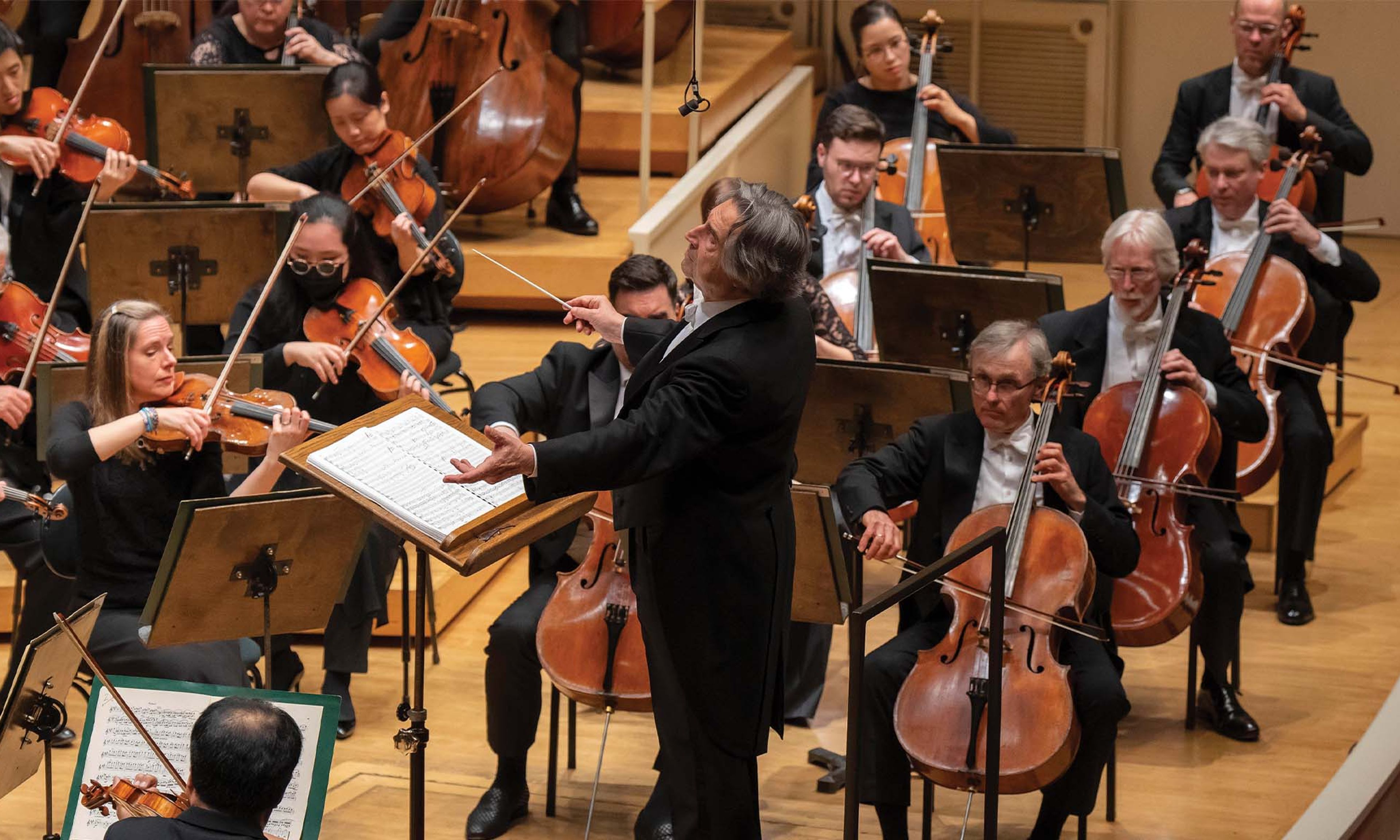
Many people, when they think of a conductor, think: “Muti.” He fits the popular conception of a conductor: in comportment, in knowledge, in charisma, in longevity. Born in 1941, he has conducted all over the world. He is essentially the same on the podium as he has always been. I have been watching him, listening to him, since at least 1980, when he became music director of the Philadelphia Orchestra.
In those days, the Philadelphians had a slogan: “Tutti per Muti” (“Everyone for Muti”). It was emblazoned on T-shirts, coffee mugs, and other things. In proper Italian, the phrase doesn’t really rhyme — as Muti has confirmed to me in the past — but people meant well.
Since 2010, Riccardo Muti has been the music director of the Chicago Symphony Orchestra. He is now in the final days of his tenure in Chicago. After a concert on a recent Friday afternoon, I sat down with him in his studio, at Orchestra Hall.
The walls tell the story of his life, to a degree — their photos, their memorabilia.
There is the place, in Naples, where Muti was born. (I’m not talking Florida, by the way.) There is Toscanini, the model of an Italian conductor. There are Muti’s cherished teachers, Nino Rota and Antonino Votto. (The former is best known for his music for The Godfather; the latter was the principal assistant to Toscanini at La Scala.)
On a table, I spot a small bust and say, “Verdi.” Muti responds, solemnly, “Always. Always.” Muti has had a very close relationship with this composer over the years.
But let’s get back to the walls: There is a picture of Muti with Queen Elizabeth II (and Prince Philip). She attended a performance at La Scala in 2000, when Muti was the music director there. Afterward, he did not go to the royal box; she came to him, backstage.
When Muti tells me this, I say, “The mountain came to Mohammed.” He says, “To the mouse.”
There is a letter, framed, from another Mohammed — Muhammad Ali. In it, the champ refers to music as “the heartbeat of the universe.” And he says to Muti, “You are the greatest and so am I.”
Muti comments, “Bellissimo, no? Commovente.” (“Moving.”)
This, too, is moving: There is a photo of the Castel del Monte, in Apulia, built by King Frederick II in the 1240s. Young Riccardo was taken to see it 700 years later. He was five or six years old. It is pretty much the first image he can remember — burned into his memory. It is a mysterious, alluring castle, octagonal.
Muti always wanted to buy a piece of land near it, so that he could sit in his retirement and gaze upon it. That is exactly what he has done.
Last season, Muti conducted a symphony of Philip Glass (No. 11). He told the composer about Castel del Monte and his intimate association with it. He asked Glass to write a piece for him to conduct, next season. (He will be touring with the Chicagoans, though he will no longer be their music director, officially.) Glass will deliver a piece called “The Triumph of the Octagon.”
This afternoon, Muti has conducted a program beginning with Mozart and ending with Respighi. The Respighi was Pines of Rome — whose concluding section, whose big payoff, is “The Pines of the Appian Way.” Muti built this fabulously. But he didn’t look like he was doing much. His gestures were relatively small.
Technically speaking, all you have to do is beat in four for five minutes, says Muti. So conductors take the opportunity to make a big show on the podium. They move about like windmills. “I hate this attitude, which is becoming more and more common among conductors,” Muti says. “They’re like clowns — with due respect to clowns.”
As Muti points out, one of his predecessors in Chicago, Fritz Reiner, was famous for small gestures. And no one ever got more out of an orchestra.
This afternoon’s concert began with a Mozart divertimento — the one in F major, K. 138 (which Mozart wrote when he was 16). Talking with Muti, I recall a conversation I had with a musician who said, “When I get to heaven, the first thing I’ll ask is, ‘Where’s Mozart?’” Muti has companioned with many composers throughout his life, but maybe especially with Mozart and Verdi. Would he like to see them and talk with them? Ask them questions?
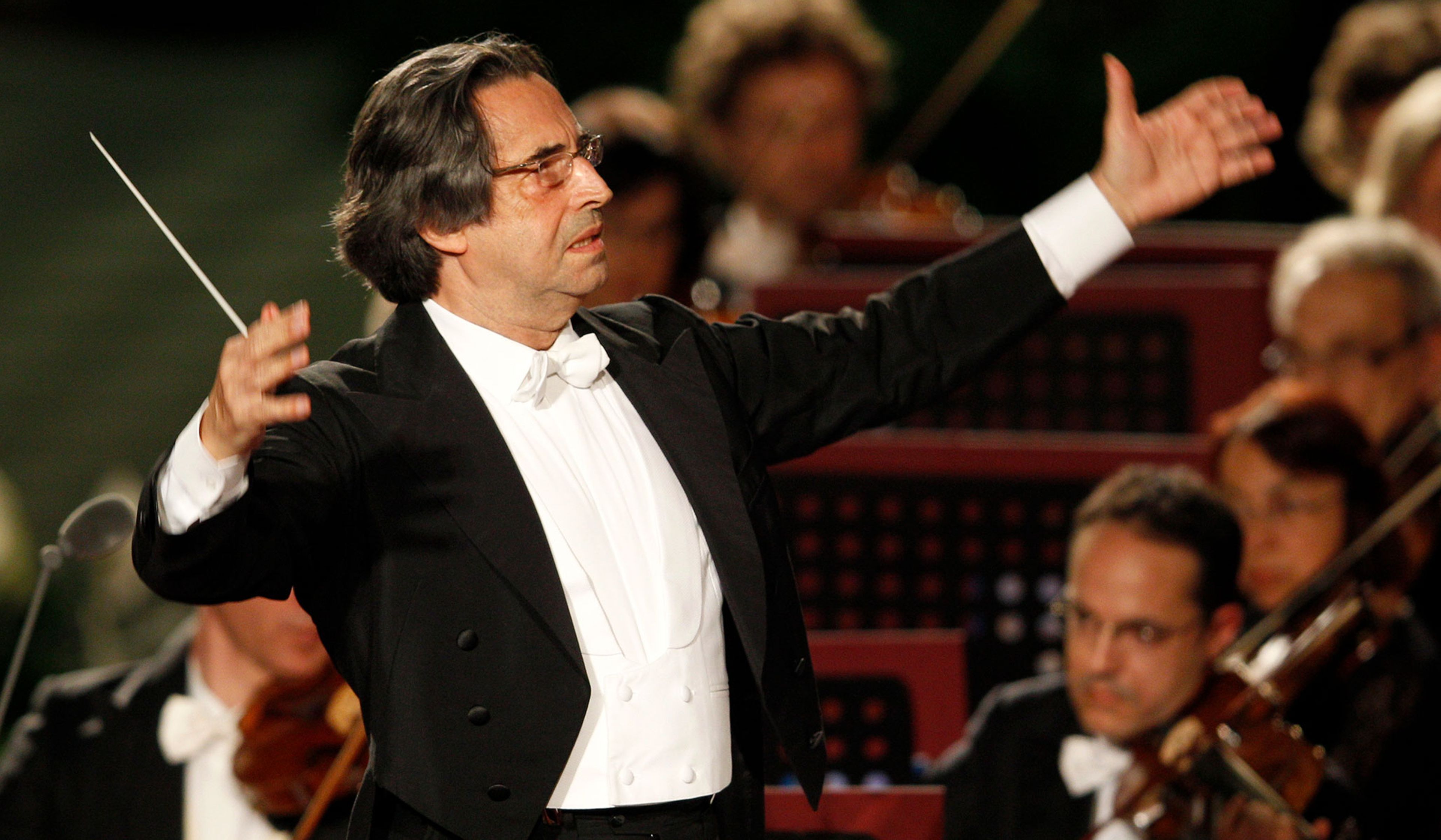
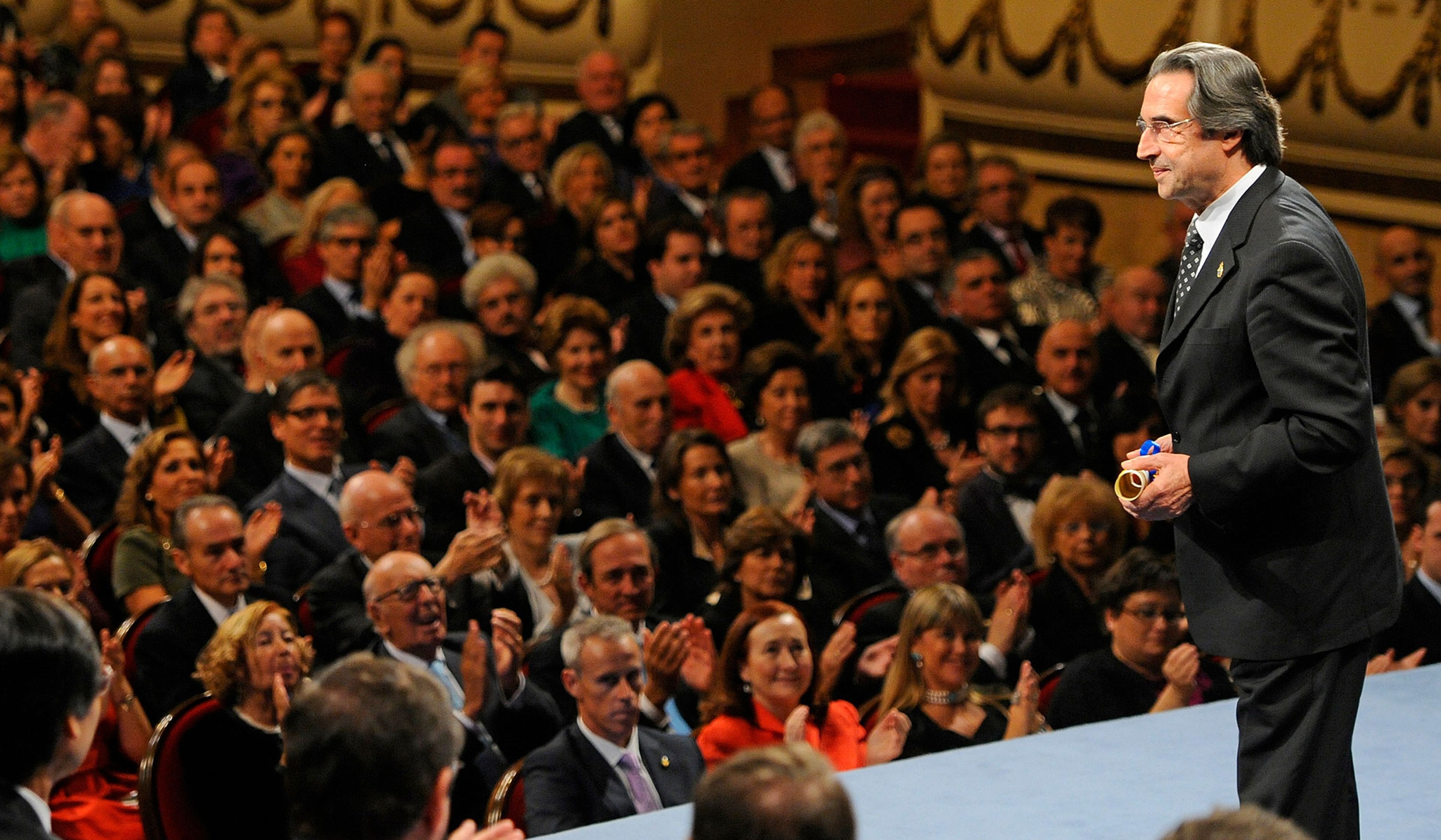
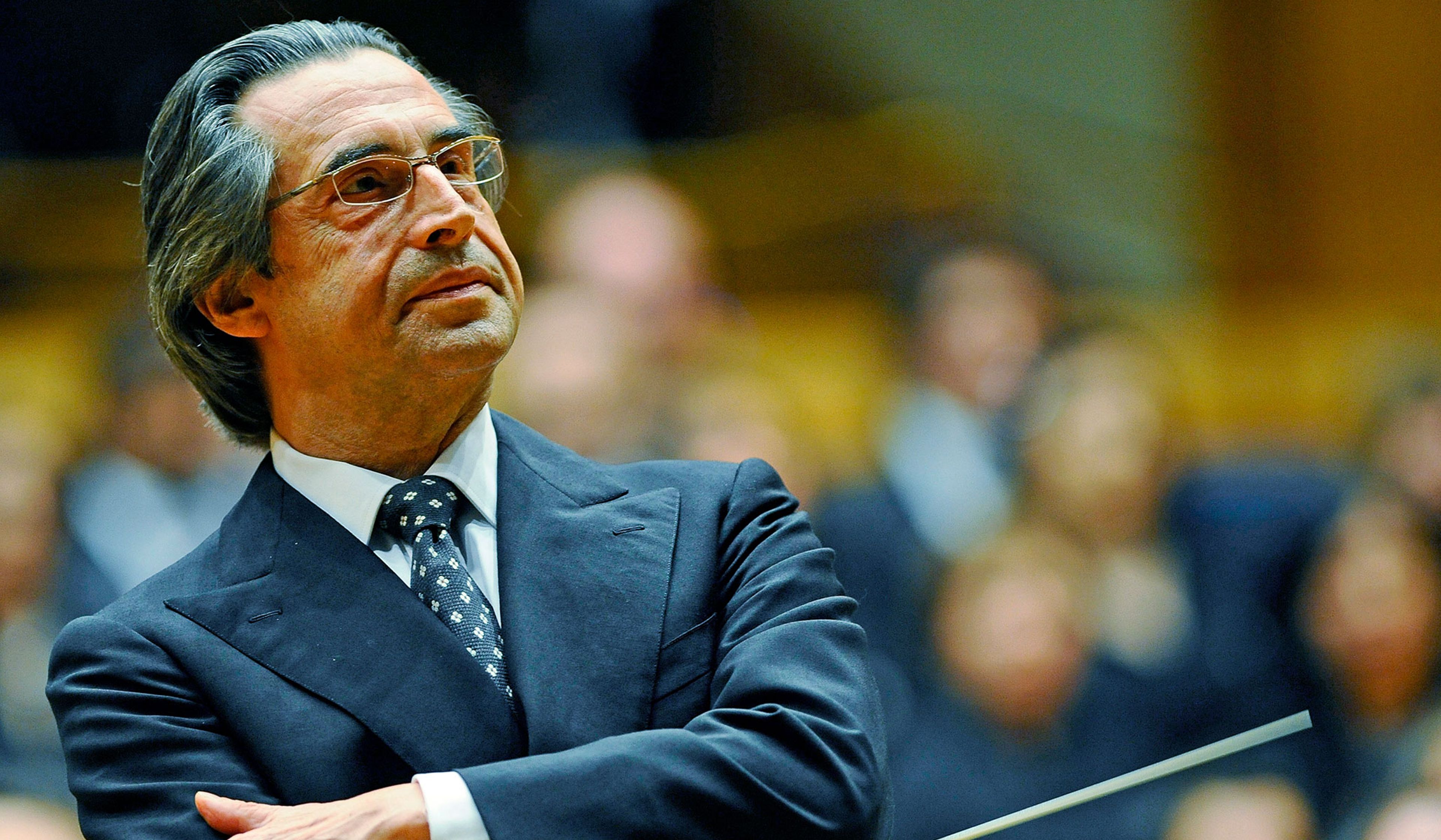
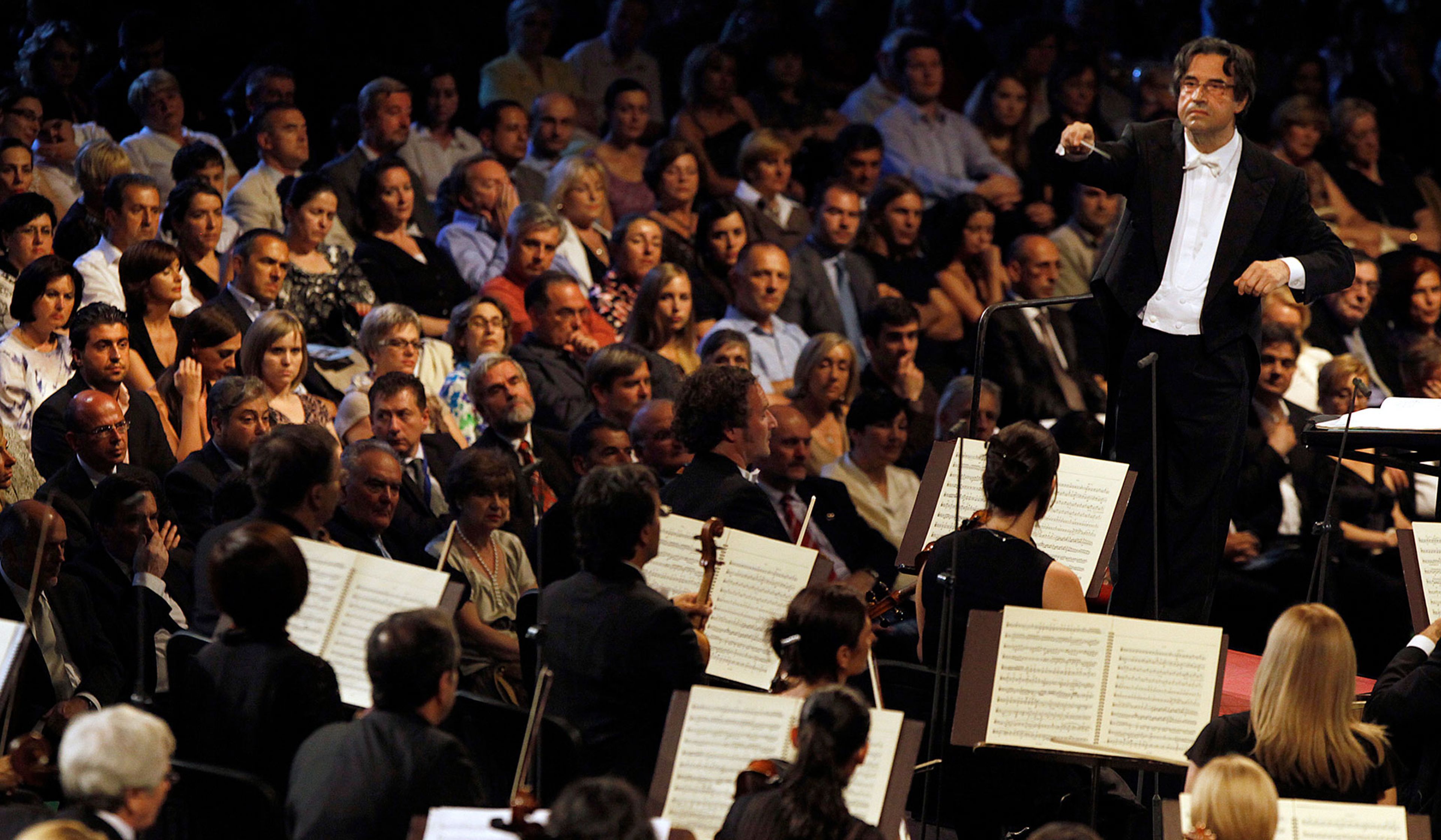
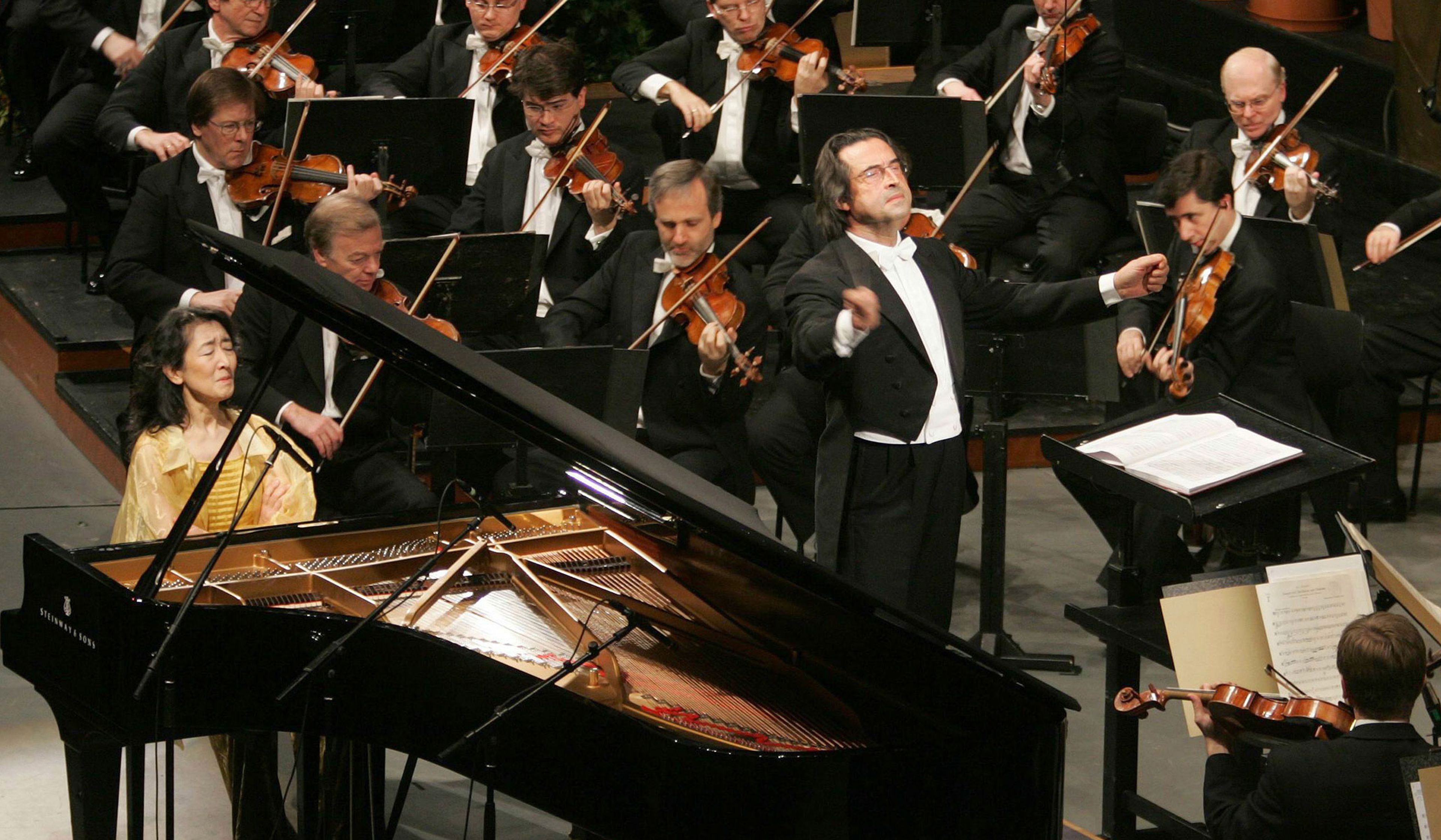
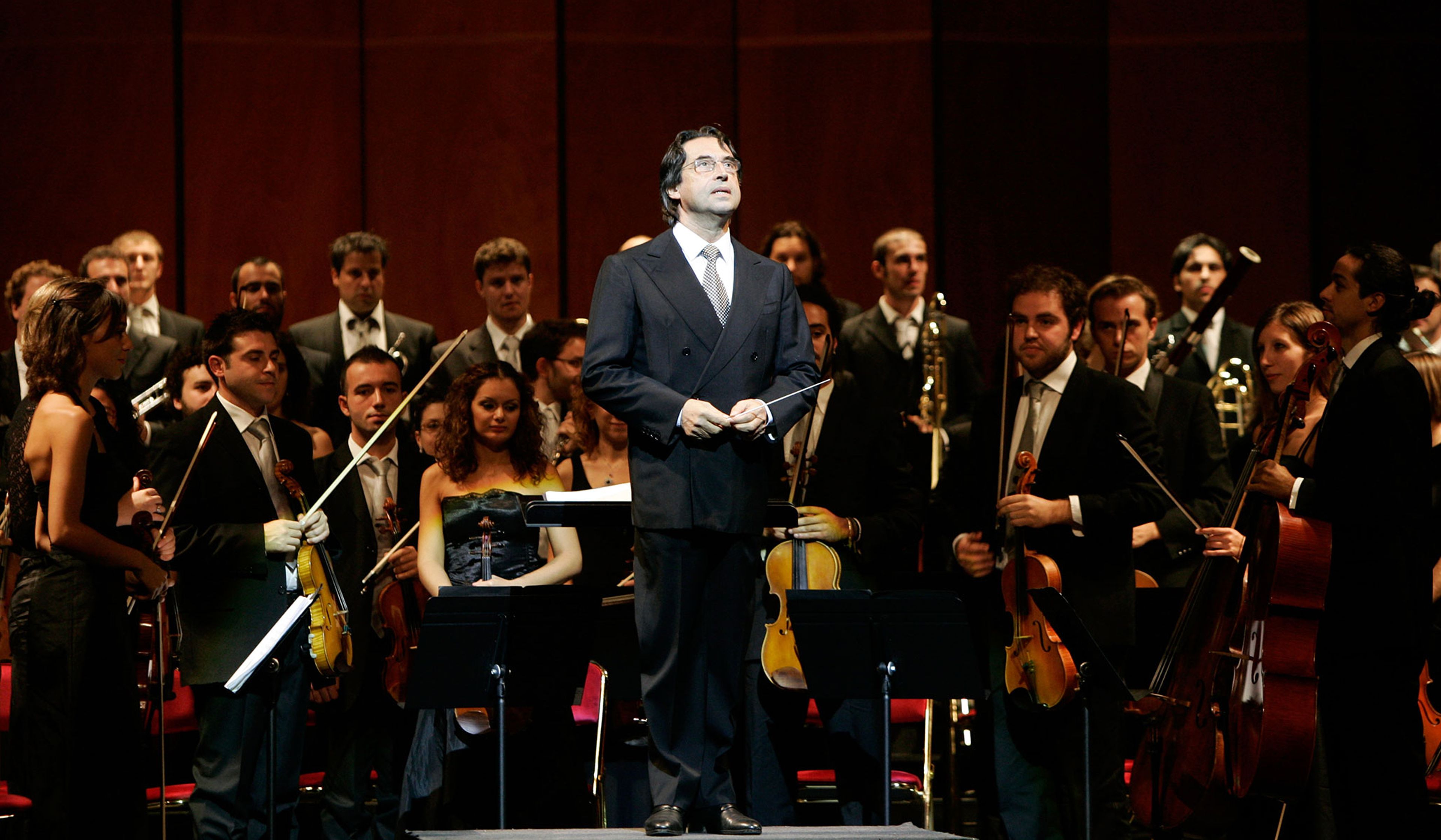
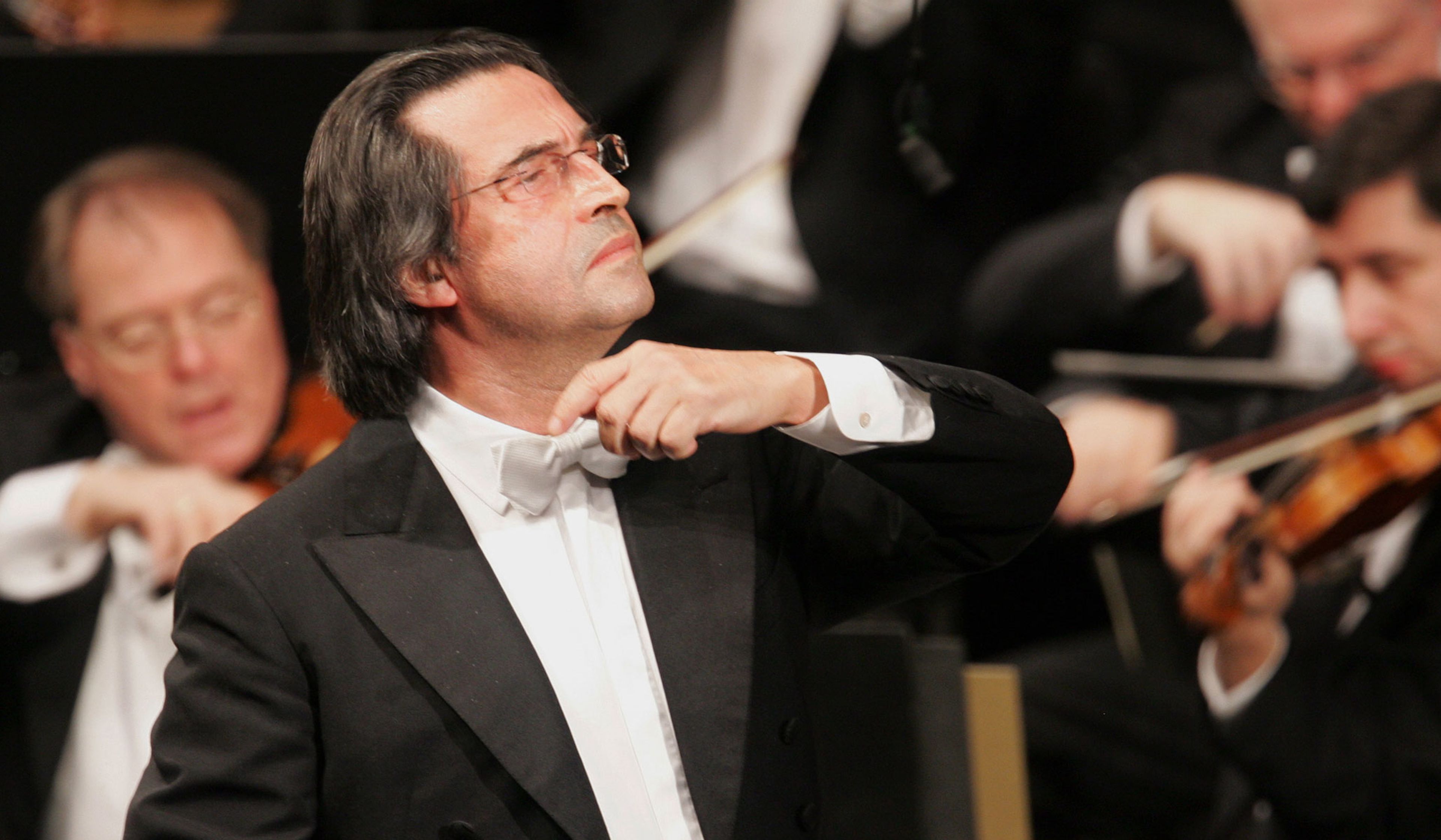
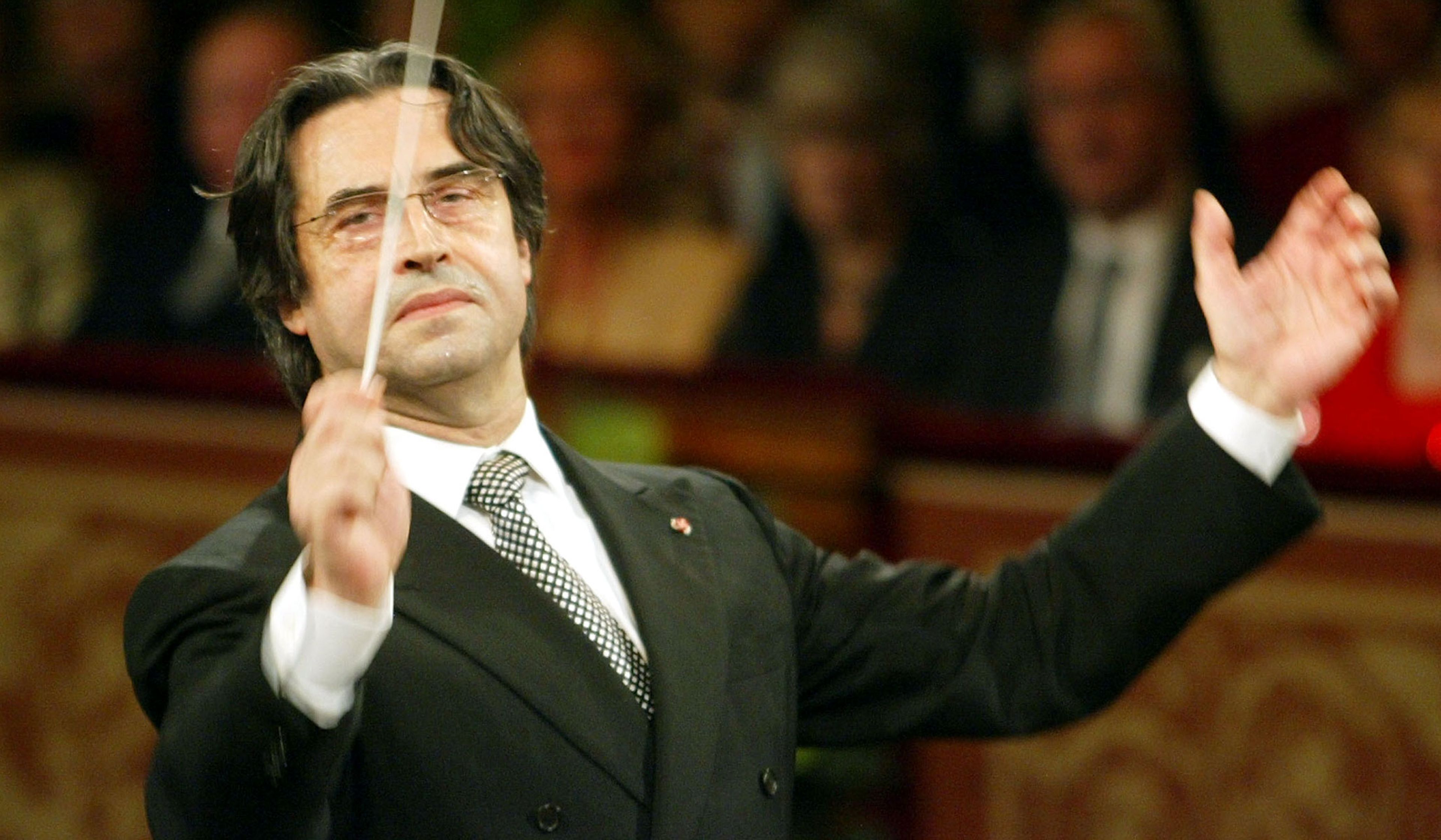
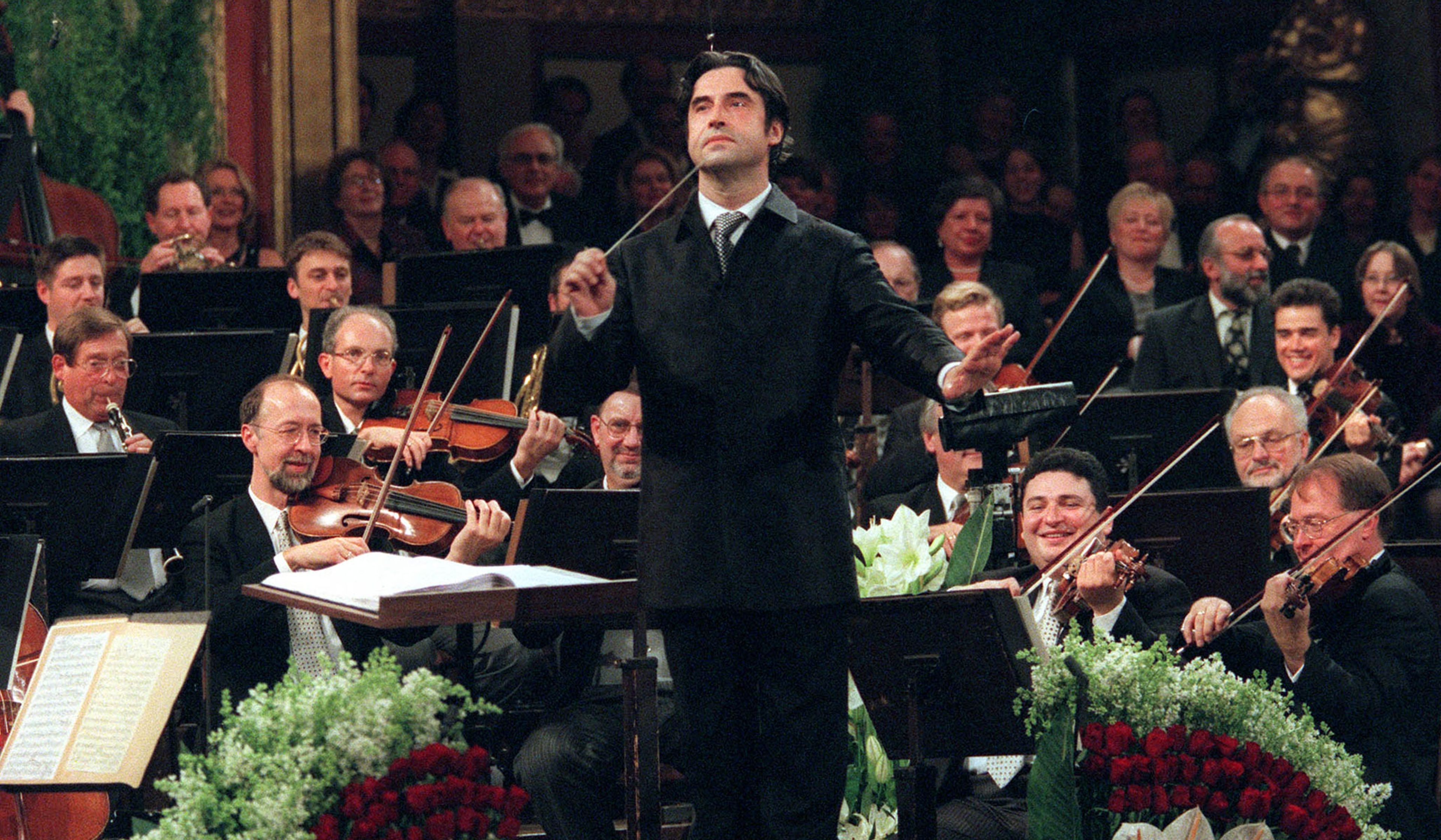
Italian director Riccardo Muti conducts a concert offered to the Pope by Italian President Giorgio Napolitano in Paul VI Hall at the Vatican, May 11, 2012.
Max Rossi/Reuters
First, says Muti, “I don’t think that I will meet them, because they are in paradise and I don’t think I will go in that direction.” But second, “I would be extremely afraid to ask a question. Because paradise is supposed to be the place of truth — Warheit, no? La verità — and if they say, ‘Muti, you got it all wrong,’ I would die a second time.”
Mozart and Verdi are similar in at least one respect, says Muti. In their operas, “they speak to us about us.” They expose our qualities, good and bad. They are not judgmental. They don’t wag a finger at us. But they show us who we are, often to our shame.
As we talk, I mention “Soave sia il vento,” that heavenly trio from Così fan tutte (Mozart). Muti mentions that he has asked his family to play this trio at his funeral — in a recording conducted by him.
Years ago, Mariss Jansons, the late, great Latvian, told me something about his tenure as the music director in Pittsburgh. “I had to conduct a new piece by an American composer every week. Otherwise, the critics would kill me.” “How about the audiences?” I said. “Oh,” Jansons smiled, “critics and audiences are two different things.”
Riccardo Muti has conducted a great deal of new music — American new music not least. In Italy, no one ever prods you to conduct new Italian music, and in Holland no one prods you to conduct new Dutch music. But in America? There is a “leitmotif,” says Muti, a “tired ritornello”: You don’t do enough American music. This suggests “a sort of inferiority complex,” says Muti (and I am one American who could not agree more).
Muti notes something startling: Much of the music of the 20th century is gone, just gone. Unplayed, unsung, unheard. Pizzetti, Malipiero, Nono, Berio, to name only Italians — gone, for the most part. There has been a great distance between modern classical music and public taste. Composers haven’t given people much to warm to, or remember. As for popular music, it is becoming ever more “stupid and superficial,” says Muti.
To generalize: Modern classical music is impossibly cerebral and abstract, and pop music is dumber than dumb. This, says Muti, leaves the poor public in the middle.
Decline is a big subject, in every generation: Are we undergoing cultural decline? “Tutto declina” — “Everything declines” — says Falstaff in the Verdi opera. Muti thinks that Western culture is indeed declining. Part of this is ignorance of the golden past, he says. “We are cut off from our roots, and without roots, the tree falls.”
But he feels he is doing his part, drop by drop, to switch metaphors: “I will continue to fight because I think that the ocean is made by drops. Even one drop — a single drop — can help, along with the other drops.”
Muti has a nice engagement in Vienna next May: He will conduct the Vienna Philharmonic Orchestra, which is nothing new — he has conducted the VPO in 53 straight seasons. But next May is something special in that it will mark the 200th anniversary of Beethoven’s Ninth Symphony, which premiered in Vienna. The VPO has chosen Muti to conduct the work on the anniversary.
He is moved by this, he says, “because they didn’t ask an Austrian or German conductor to do it, but an Italian.” As a rule, music is music, without nationality.
Over a leisurely hour, Muti and I discuss a variety of subjects and personalities — personalities he has encountered, over the years. Popes, for instance (Paul VI, Benedict XVI). And film directors (Bergman, Fellini). At the end, he reflects on his craft, his career, his calling.
“If you take this profession seriously, it is a torment all your life. I’ve never gone to the podium thinking, ‘Oh, I’m so happy to conduct a concert.’ Never. Never. Because every time you go to the podium, you put yourself in front of the composer, in front of the music, in front of the orchestra, in front of the audience. It’s a big, big responsibility.”
After the performance is over, says Muti, you smile at the audience. (He does not always smile. Sometimes, yes. He even exults. But sometimes he is somber.) Inwardly, however, you are thinking of all the things you could have done better.
In Milan, Muti talked with Toscanini’s daughter Wally. She told him about the time her father came home from a rehearsal of La traviata (Verdi), which he had conducted countless times. Her mother was preparing the risotto. And her father went to the score, searching its pages, trying to figure out how to do greater justice to it.
Muti and I chuckle over a story recounted by Harvey Sachs, our mutual friend, in his marvelous, mammoth biography of Toscanini. Before a concert, Toscanini is backstage pacing the floor. His concerto soloist, Gregor Piatigorsky, the great cellist, is warming up and practicing. Toscanini keeps muttering, “You are no good, I am no good.” Piatigorsky implores him to stop, because otherwise “I will be a complete wreck.”
As they stand in the wings, waiting to go on, Toscanini says to Piatigorsky, “We are no good — but the others are worse. Come on, dear fellow, let’s go.”










Comments