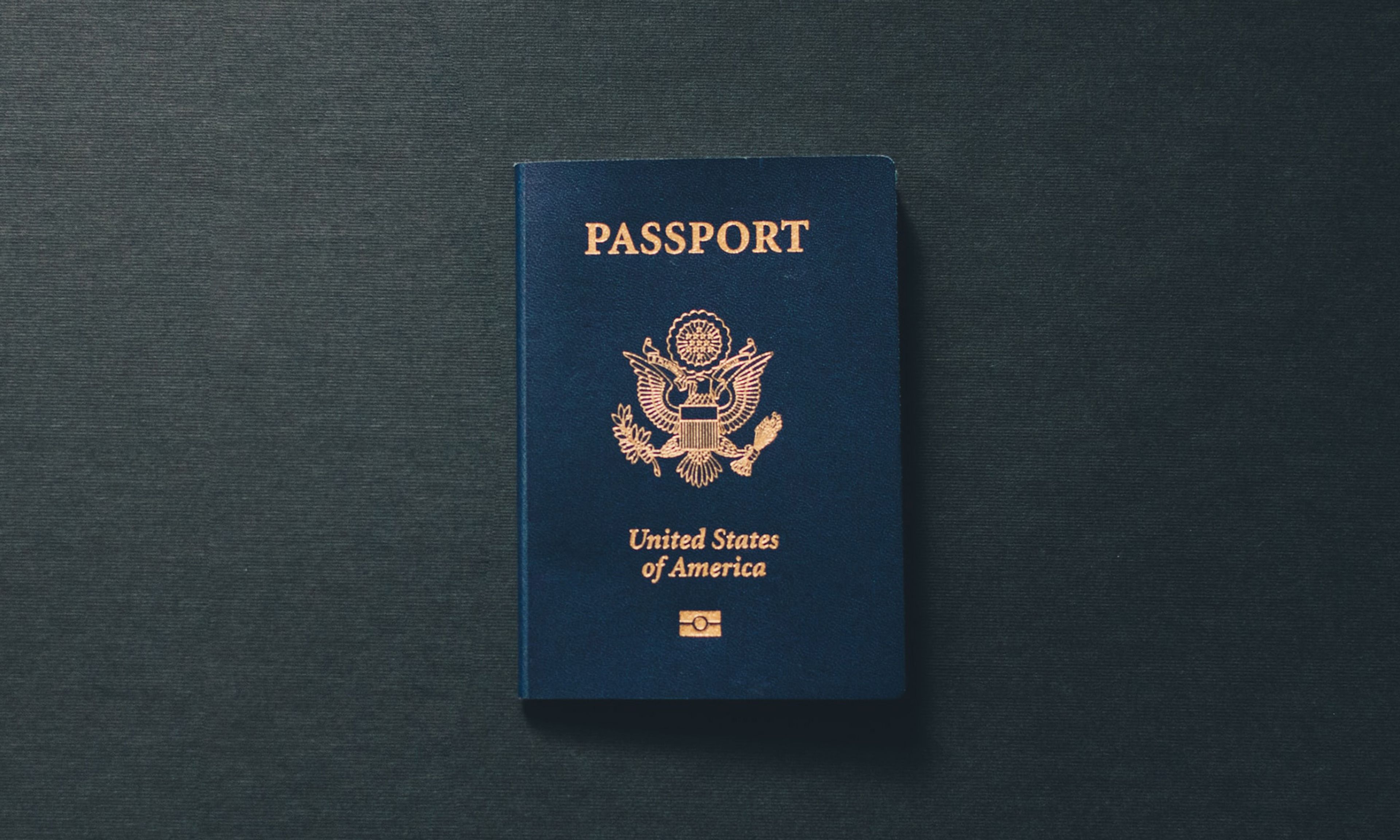
An “identity crisis” used to be the last word in chic, but now we have surpassed ourselves and developed identity-card crisis, proving once again that you can’t keep a neurotic American down.
Arizona’s “Your Papers Please” law was the immediate cause of the hysteria currently washing over us, but much more interesting is the speed with which the media coined the name. It was not the brainchild of any one newsperson in particular; rather, it seemed to spring spontaneously from every lip as if the same thought had popped into every head at the same instant. That is precisely what did happen. Calculate the thousands of times in the past half-century that classic-movie channels have shown The Third Man, add in all the other movies from the ’40s and ’50s starring generic European actresses with only one name, multiply Conrad Veidt by Sydney Greenstreet by Oskar Homolka, toss in a stateless psychopath called Demetrios, and you have the show-me-your-papers jamboree that underlies Americans’ most deeply buried fear: “They don’t believe me.”
We have devised various defense mechanisms for coping with our inchoate sense of inauthenticity. One proved so popular that it became an instant cliché: “What you see is what you get.” The sudden overuse of a new word is always a dead giveaway of action on the subconscious front. We have become infatuated with the verb “to tweak,” i.e., to change a little something here, a little something there, not much, just enough to make us sound more like what we think we are or ought to be. Recent résumé scandals in which college attendance becomes a B.A., postgraduate work turns into a master’s degree, and select-club memberships outnumber select clubs are examples of tweaking at its best/worst.
Our identity-card crisis is ironic because Americans normally love cards. The bulging Rolodex spilling out business-card bona fides is a status symbol, evidence that you “know everybody” and, by extension, that everybody knows you. The nametag long ago became the mark of the bumptious conventioneer, but it keeps him from forgetting names — a capital crime in the world of the bumptious conventioneer, whose many self-help books invariably contain a chapter on perfecting memory tricks to help him remember all the other bumptious conventioneers he’s ever met. As for credit cards, they have a vital secondary purpose. The big spender who ostentatiously shuffles through a dozen or more as he prepares to pay the restaurant check is acting less out of generosity than out of a need to prove that he is what Americans have always called a “somebody.” The list goes on: vanity plates, websites, Twitter, Facebook, MySpace, and no end of chat rooms, all desperately saying “This is who I am,” yet despite the proven dangers of some of the foregoing outlets, we are afraid of a national identity card.
Is it possible that we don’t really want an identity? It looks that way judging by the movies that don’t scare us, e.g., Shane and The Natural. The mysterious stranger who comes out of nowhere, never speaks of family or home, and always answers “Where’ya from?” with “Here and there” is the heroic personification of the better future we promise ourselves in mottos like “It doesn’t matter where you come from, it’s where you are going that counts.” This attitude inspired the pioneers, took the traumatic upheaval out of “pulling up stakes” and “starting over” and transformed them into rituals of self-betterment, and consigned the past to being left behind. We haven’t changed. We still think nothing of pulling up stakes, starting over, and leaving the past behind. Today it just means moving, usually to California, after you have screwed up somewhere else. Our most precious card, the driver’s license, is issued by states and contains only our current address, but a national identity card with birthplace filled in can trace the screw-up back to its origins.
Our identity-card crisis has triggered a mechanism of classic psychoanalysis called “projection” — the attribution of our own problems to someone else, or misery loves company. It shows up in the “Birthers,” who are convinced that Obama was not born in the United States and demand that he produce his birth certificate. They will not rest until they see his Obona-fides.
It is also possible that we have been so force-fed with political correctness that we have come to the subconscious conclusion that identity is a dangerous thing to have and caring too much about it will land us in big trouble. Take the trend toward foreign and interracial adoption. The Littlest Cossack was stamped Return to Sender and shipped back to his native steppes with a note complaining about his destructive behavior, his violence, and the air of menace he was said to project. It was all done with a briskly efficient coolness that shocked child-worshiping Americans, but we can bet it would not have happened that way had he not been a white child. In fact, it would not have happened at all. Had he been a child of color his white adoptive family probably would have kept him rather than risk complaining about his destructive behavior, his violence, and his menacing air. Moral: It’s safer to adopt babies of color so the PC Police will give you credit for Reaching Out. (I am convinced that Princess Diana, a dedicated enemy of her own identity, was about to do just that when she died.)
I favor a national identity card because I grew up with one — i.e., I belong, like Pat Buchanan, to that dwindling band born and raised in Washington, D.C., in the pre-home-rule years. “The gubment runs us,” we said, mushmouthing the word in the manner of the then-Southern city. The only exception to this blanket federal authority was the law that our cars had to carry both District and Maryland tags, but my mother explained: “We’re in Maryland but not of Maryland because we’re under the gubment.”
Like charity, schizophrenia begins at home.










Comments