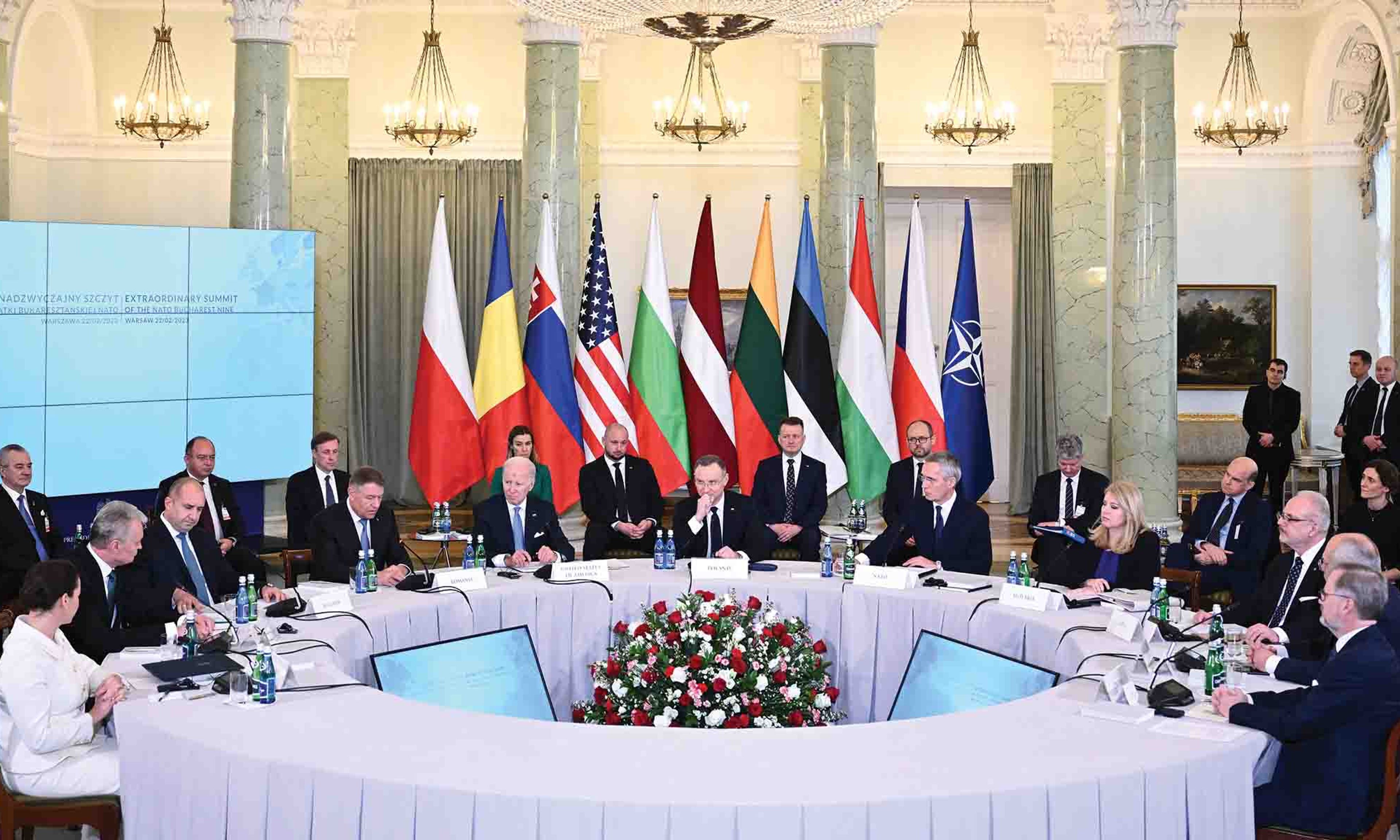
President Biden and his administration have recently been showing a much heightened strategic and diplomatic interest in the countries of Central and Eastern Europe. That’s hardly surprising since there’s a war in Ukraine that borders on seven of them — namely, Belarus, Hungary, Moldova, Poland, Romania, Slovakia, and of course Russia (though “borders” is at best an ambiguous term in relation to Russia). But there are other reasons too. The president’s visit to Kyiv, his speech in Warsaw, and his meeting with the “Bucharest Nine,” seemingly to discuss strengthening NATO’s eastern flank, have all aroused curiosity about whether the U.S. is considering a shift of policy on the war. And if so, in what direction?
One reason for this speculation is the very different tone of Biden’s Warsaw speech from the mood music of President Putin’s address on the progress of his “special military operation” the day before. Putin was tough but downbeat: The war had not gone as expected, but Russia would press on until it gained its objectives in Ukraine. For his part, Biden, addressing a cheering Warsaw crowd, was close to euphoric: Putin had miscalculated; Ukraine and democracy were on the verge of a historic triumph. It sounded as if the president had grounds for military self-confidence greater than the rhetorical case that freedom and democracy always win in the end.
I won’t hazard my own predictions, since at this writing we are likely two months away from a massive battle that will decide the matter one way or another. Whatever the result, however, it will have significant geopolitical implications for Russia, the U.S., and the region.
The U.S. must now be calculating how well NATO unity in support of Ukraine is likely to hold up. Those who argue that NATO has so far stood firm and united surprisingly well are correct. Indeed, NATO’s coming together surprised people a year ago; that unity is still more remarkable today. It’s not an achievement to be dismissed where future strategic calculations are concerned, as Konstantin Kisin’s report of a Russian joke illustrates:
“Have you heard, we’re in a war with NATO.”
“How are we doing?”
This question elicits a long list of Russian tanks, ships, planes, and weapons that have been destroyed or abandoned in the last year.
“And NATO?”
“Oh, they haven’t shown up yet.”
Under the surface of unity, however, is a series of clashing national impulses on financial, economic, and energy sanctions on Russia and on how to end the war, and in particular on how quickly and by what kind of approach. Those differences have been held in check by the desire of almost all the NATO allies and EU partners to maintain a united front, by clever diplomacy and by giving opt-outs from sanctions to countries such as Slovakia and Hungary whose economies would be massively damaged by them. But the longer the war lasts and the heavier the economic costs it imposes on Europeans, the more their governments are tempted to breach Western unity to prevent the conflict from stabilizing into a “forever war.” That’s what Putin is hoping for, of course; but it’s also an inevitable development in the public opinion of democratic countries.
Broadly speaking, America’s allies in Europe divide into two camps on the question of how best to end the war quickly. One camp believes that there should be an early cease-fire followed by negotiations on a final “peace settlement” that might not actually be agreed for several years. The most vocal and consistent advocate of this view is Hungary under its prime minister, Viktor Orbán. But it would be a delusion to think that Hungary is either alone or most influential in pushing this argument. As Germany’s actions indicate and as the occasional hints of a new diplomatic initiative from the Quai d’Orsay suggest, both Chancellor Olaf Scholz and President Emmanuel Macron are uncomfortable with a policy of living with a long war. They don’t want Russia to win, but they have no appetite for seriously wanting it to lose either. Europe pre–February 24, 2022, suits them and others very well.
The opposite camp does not want an outright Russian defeat in the unlikely sense of the Ukrainian army’s reaching Moscow. That would be too destabilizing for their tastes. But it wants a defeat for Russia so unmistakable that it would both show the absurdity of any future Russian revanchism and begin the long historical process of persuading Russia’s establishment to abandon its neo-imperial attitude toward its neighbors. Not surprisingly, this policy has the support of Russia’s near neighbors such as Poland and the Baltic states, which have frequently (and recently) been invaded and occupied by both czars and commissars. It is led, moreover, by the U.S. and the U.K. (or as the French call them, “les Anglo-Saxons”), which have provided the Ukrainians with the training, the arms, and the bulk of diplomatic and political support that have made their struggle practical and perhaps successful.
It’s important to realize that neither of these two camps will change its outlook substantially in response to the expected battle in the spring. If Russia were to triumph, the former camp would argue that it showed the need for immediate negotiations, and the latter, the need for greater military help. Were Ukraine to win the battle, both camps would say exactly what they said before. And this long-term reality is dawning on both of them.
That’s why Biden’s trip to meet the Bucharest Nine is so interesting. Who are the Bucharest Nine, by the way? They are the following countries on NATO’s eastern flank: Bulgaria, the Czech Republic, Estonia, Hungary, Latvia, Lithuania, Poland, Romania, and Slovakia. Finland would be in this group if allowed to join NATO, as seems likely. Ditto Sweden. And four of its members were in the group of countries bordering Ukraine above. In effect the Bucharest Nine — perhaps soon to be the Bucharest Eleven — bring together countries in Northern and Eastern Europe that between them have an unavoidable connection to Ukraine and a strong collective suspicion of Russian power. If you were a U.S. president anxious to preserve an anti-Russian European coalition in the face of the doubts and hesitations of “Core Europe” (i.e., France, Germany, and Belgium, the Netherlands, and Luxembourg), why wouldn’t you be interested in expanding the Bucharest Nine?
After all, other people have recently had much the same idea. The British weren’t present at Biden’s meeting with the Bucharest Nine, but they didn’t really need to be there. Back in November 2021 the U.K.’s defense secretary, Ben Wallace, signed a defense-cooperation agreement with Poland and Ukraine (complete with plans and business contracts to modernize their forces). By then, the U.K. had already been the lead nation in the Joint Expeditionary Force since it was formed in 2014. It now includes nine other northern European nations — Denmark, Estonia, Finland, Iceland, Latvia, Lithuania, the Netherlands, Norway, and Sweden — and it’s been a “dynamic” element in the West’s military support for the Baltic states as well as Ukraine. And according to a report in Corriere della Sera in May 2022, Boris Johnson, while he was still the British prime minister, privately floated the idea of a “European Commonwealth” that would unite the countries of Scandinavia, the Baltics, and Eastern Europe that wanted to take a stronger position than Core Europe has on Ukrainian policy. It would, alleges Corriere, be an alternative to the European Union.
That “alternative to the EU” sounds like a stretch to me, and Johnson is no longer PM anyway. On the other hand, President Macron is himself floating ideas of a new, looser European structure (though one built around the Franco– German core leadership); the Russian invasion of Ukraine has unsettled European politics in general, opening space for new ideas; and it’s far from impossible that under the stress of developments such as a dramatic outcome to Russia’s spring “push,” new alliances could take solid, larger, and highly practical forms that divide a Northern and Central Europe under U.S. and U.K. military and political leadership from a more pacific Core Europe.
America is already providing most of the money and muscle for the defense of Ukraine and the Baltics. The U.S. has itself joined in supporting other regional agreements. Five years ago, President Trump backed Poland’s “Three Seas Initiative” that brought together Austria, Bulgaria, Croatia, the Czech Republic, Estonia, Hungary, Latvia, Lithuania, Poland, Romania, Slovakia, Slovenia, and (more recently) Ukraine to work together on energy, the economy, and, not least, infrastructure — all now given greater importance by Russia’s actions in the war. In the light of these earlier commitments, Biden’s visit to Kyiv, Warsaw, and the Bucharest Nine seems like an announcement that Washington has decided to take a more direct hand in shaping whatever grouping of Central and Eastern Europe would be helpful in dealing with the next stage of the Ukraine crisis, without, if necessary, Germany and France. What might that mean?
We have a good idea of what Russia hoped to secure from a swift victory in Ukraine — namely, the restoration of a security alliance comprising Russia, Ukraine, Belarus, and Kazakhstan — because the Russian news agency RIA Novosti prematurely leaked this information on Day Two of the invasion. (It was quickly withdrawn — but too late.) A reduced version of this might still be achieved if Russia reversed Kyiv’s recent advances, but how much would survive? My colleague at the Danube Institute, Csaba Barnabás Horváth, has written a paper, “The prospects of a Central and Eastern European alternative to Core Europe,” examining the balance of forces (including economic strength and population) between this Russian alliance and different potential European coalitions in the event of both Russian and Ukrainian “victories.” Inevitably, much of its argument is speculative, but the statistics underlying it are reliable and thought-provoking:
Imagine, first, a Russian victory achieving RIA Novosti’s vision:
The combined population of such a conglomeration would be roughly 220 million people. By contrast, the combined population of the member states of the Three Seas Initiative, the broadest regional bloc proposed in Central and Eastern Europe, is, without Ukraine, only 110 million, a half of the population of a potential greater Russian grouping.
Now, consider a Ukrainian success:
Russia would be reduced to the Union State of Russia and Belarus. The two countries have a combined population of 154 million. On the side of the Three Seas Initiative, if we add Ukraine to it as well, its population also amounts to about 154 million people. With a two-to-one population ratio in the case of a Russian victory, as opposed to a one-to-one ratio in the case of a Ukrainian victory, the geopolitical picture is pretty clear.
And that geopolitical picture? It’s hard to imagine Ukraine as a useful future security partner to Moscow and still harder to imagine Russia without Ukraine as a major Eurasian power. One can see now why Biden might visit Kyiv and Warsaw to begin putting together a reliably friendly coalition to prepare for whatever advantages or setbacks the military facts on the ground present to U.S. policy-makers.
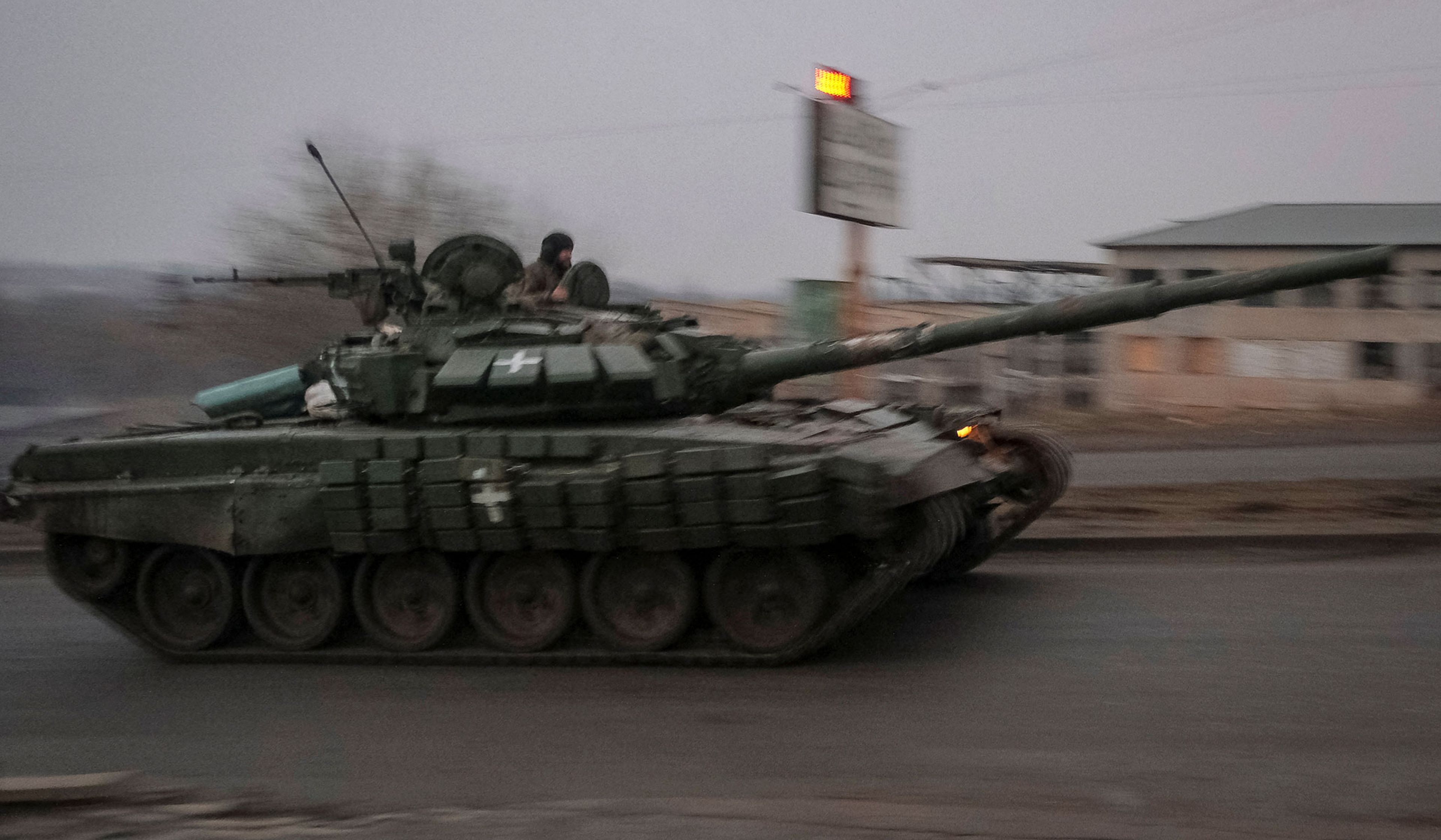
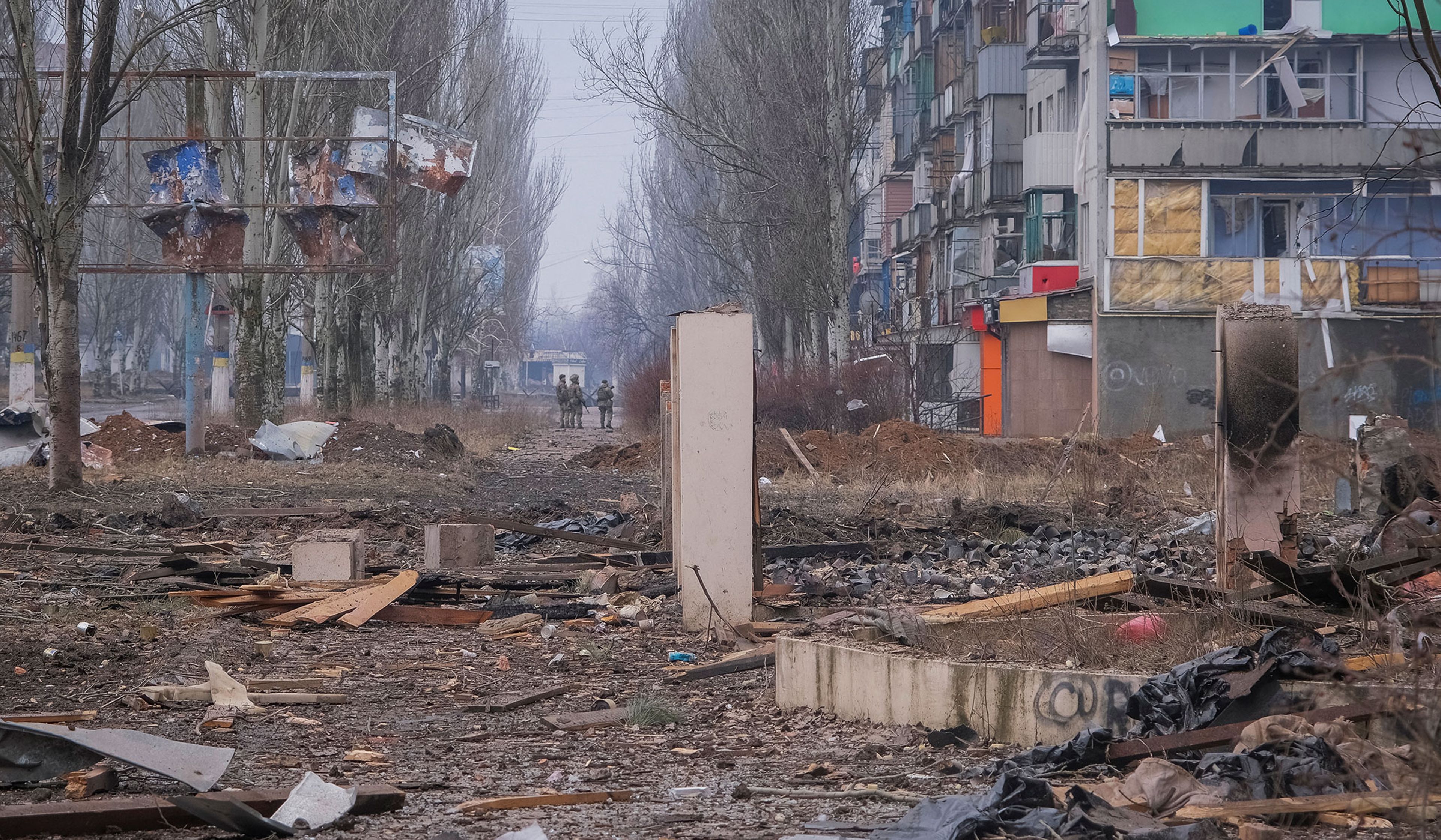
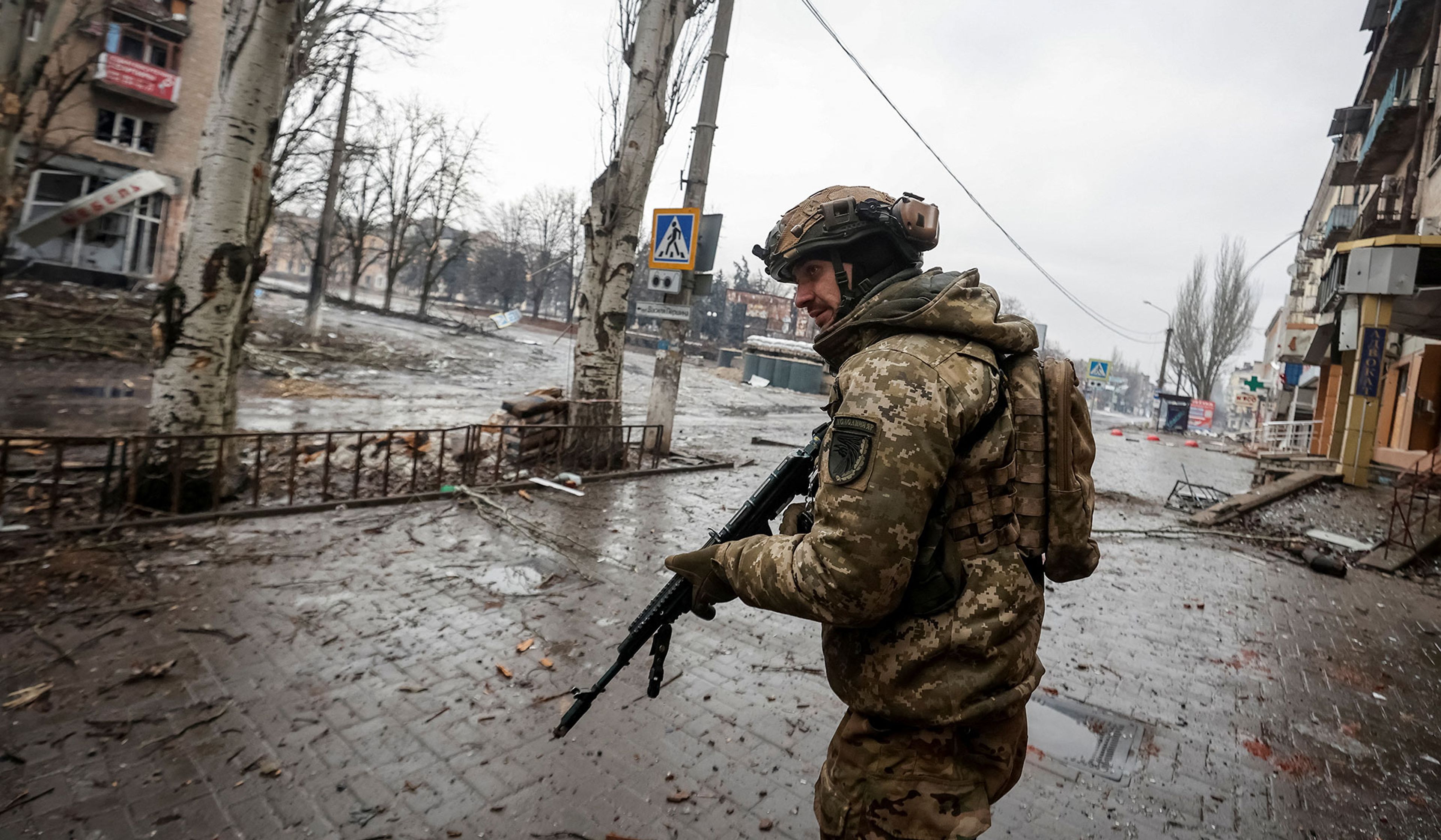
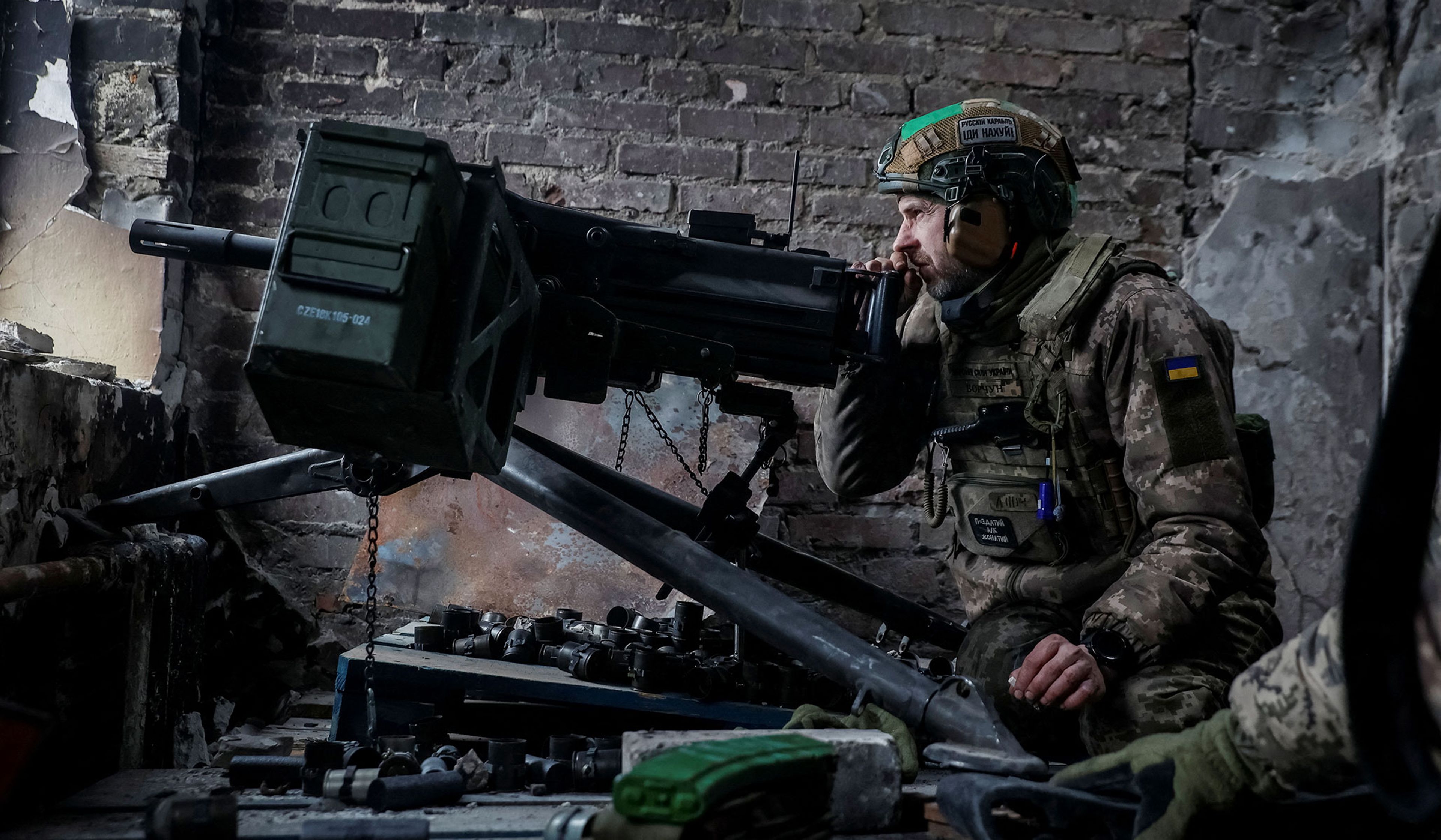
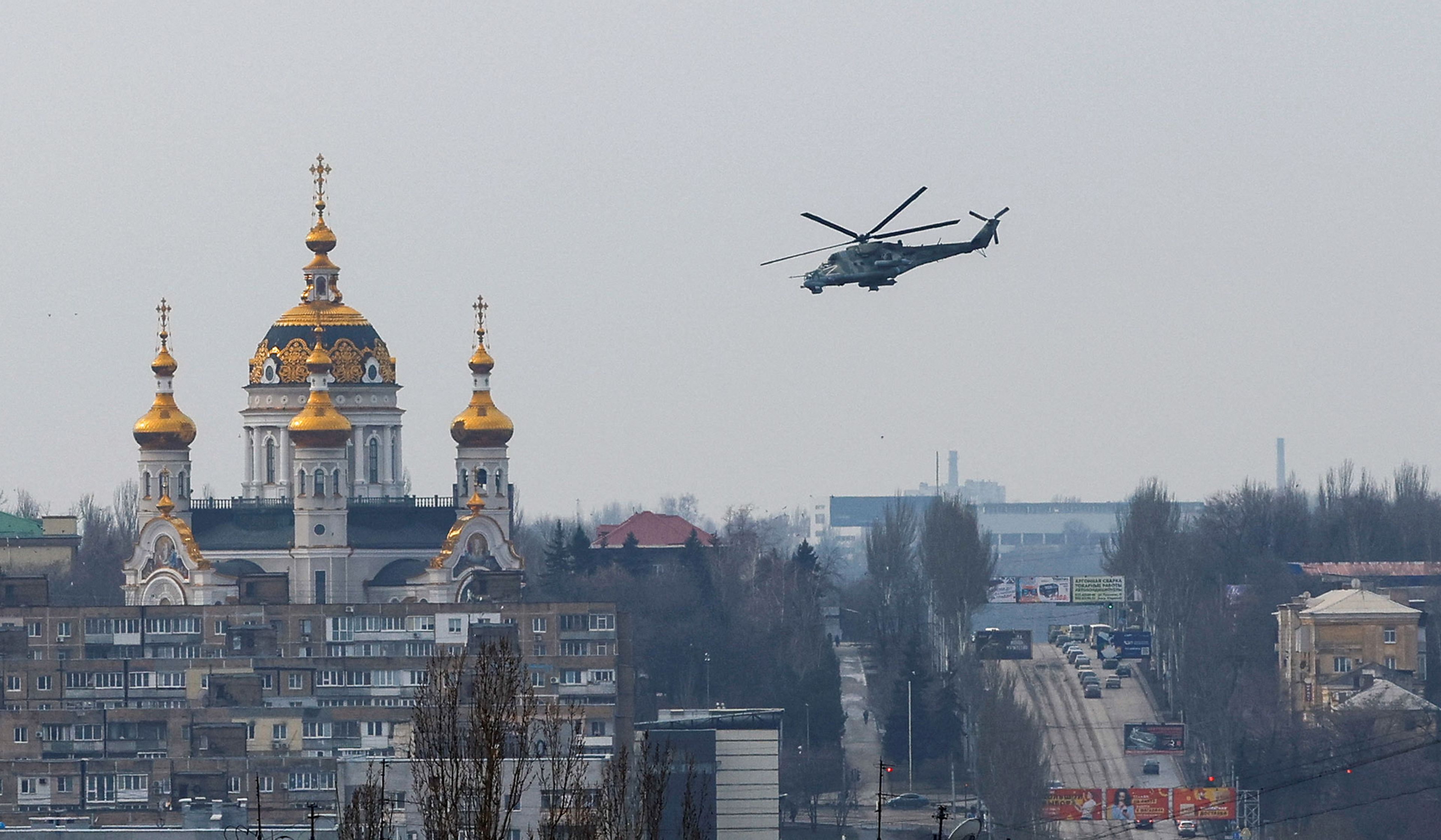
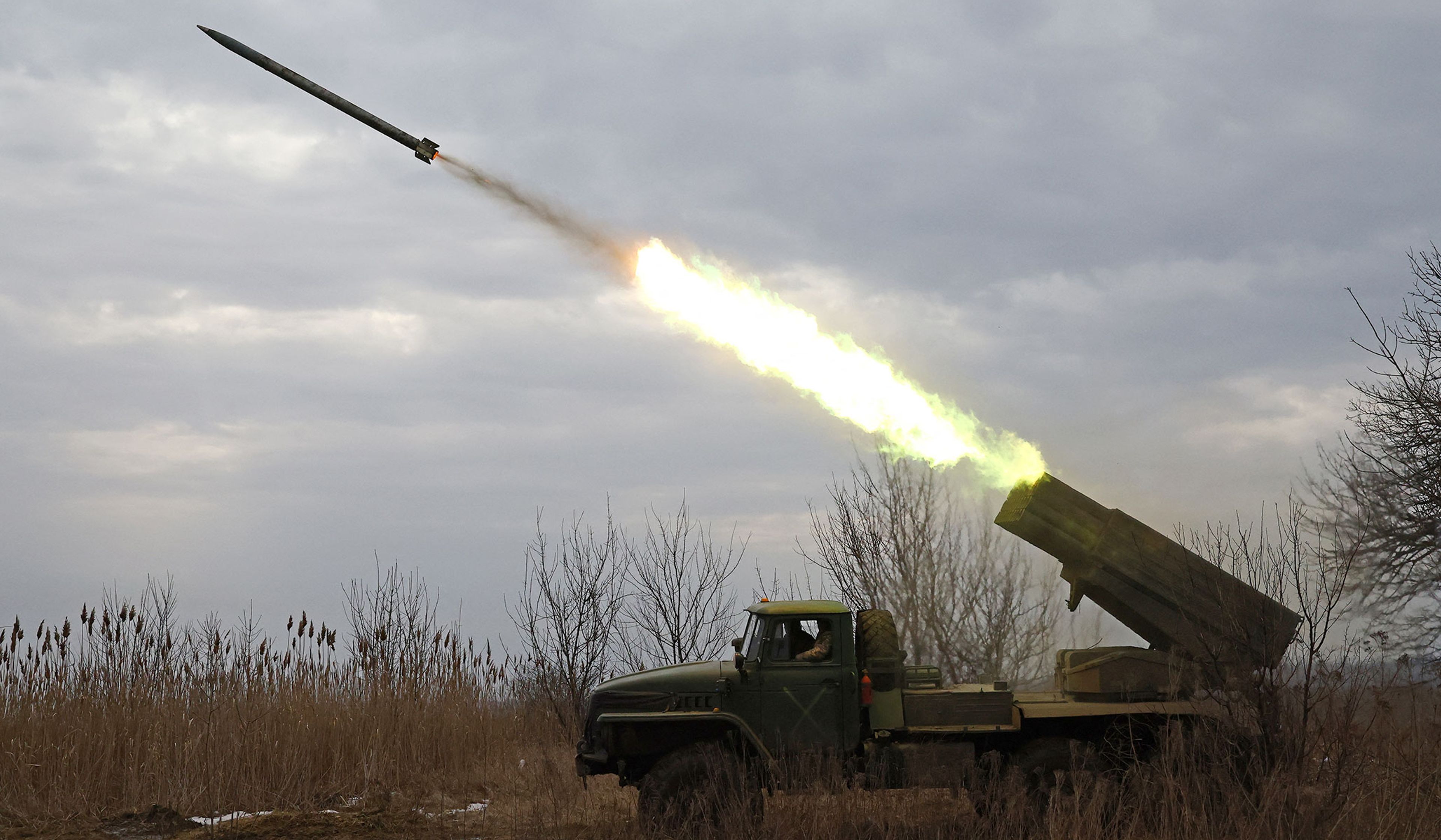
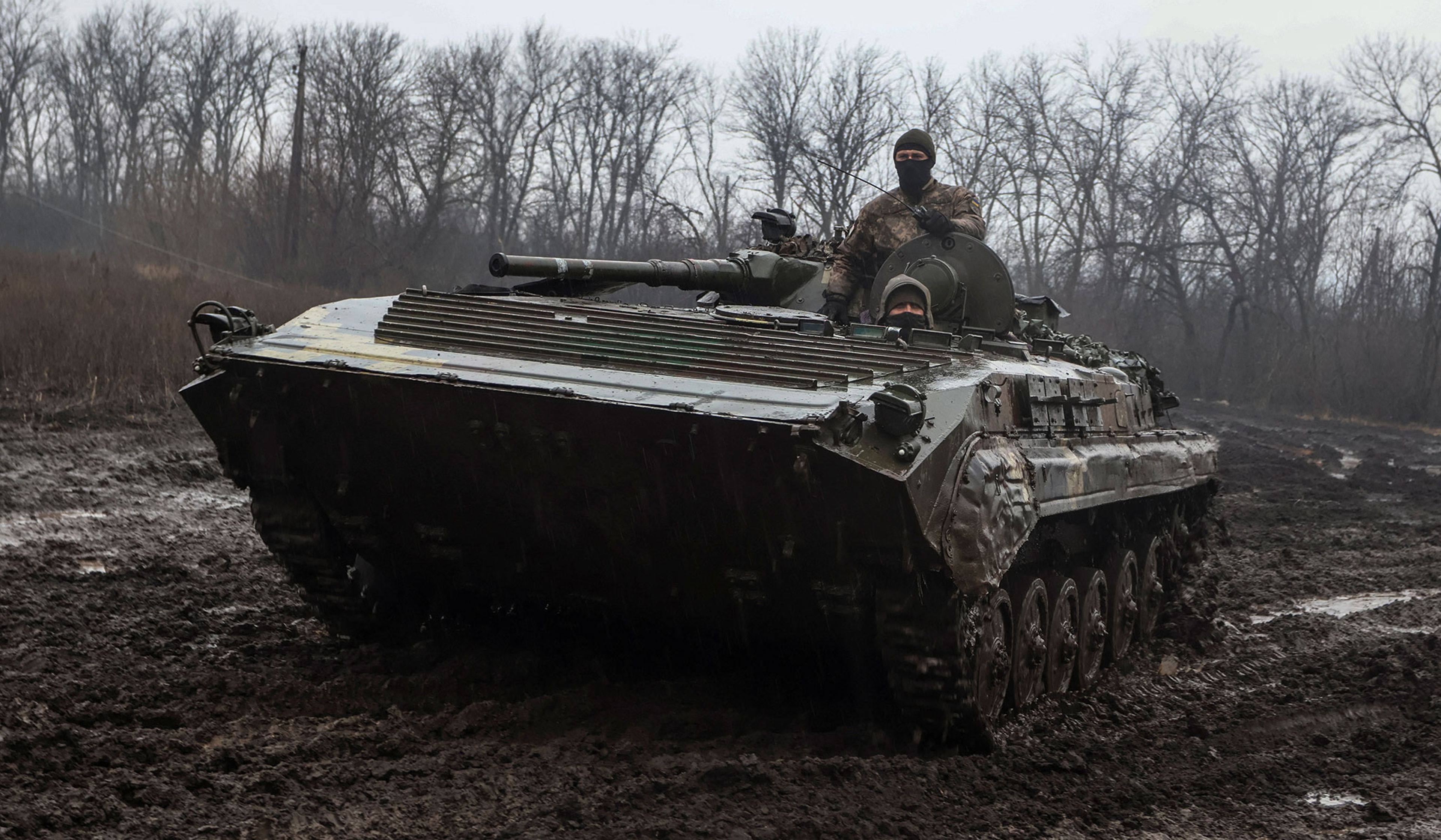
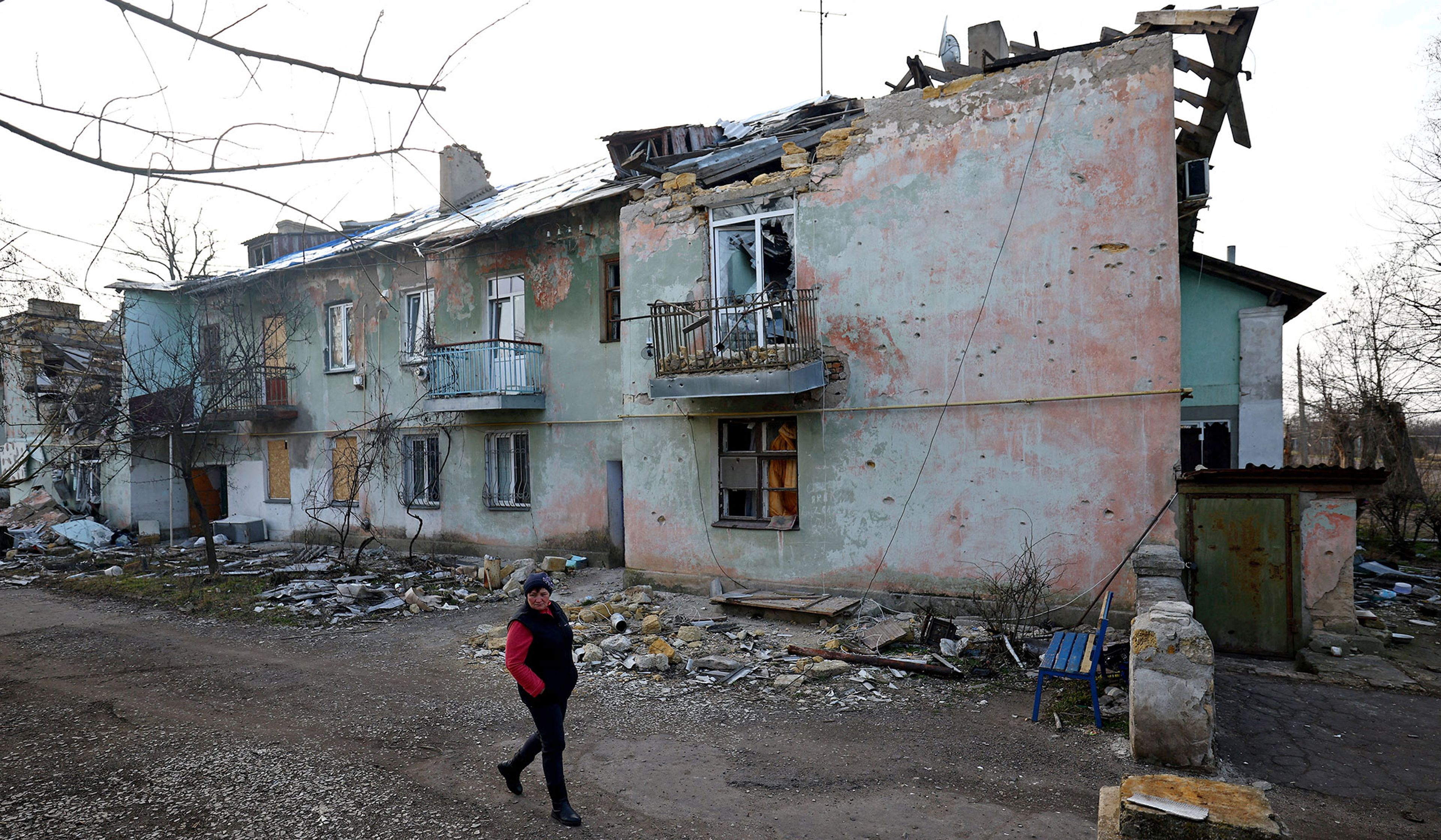
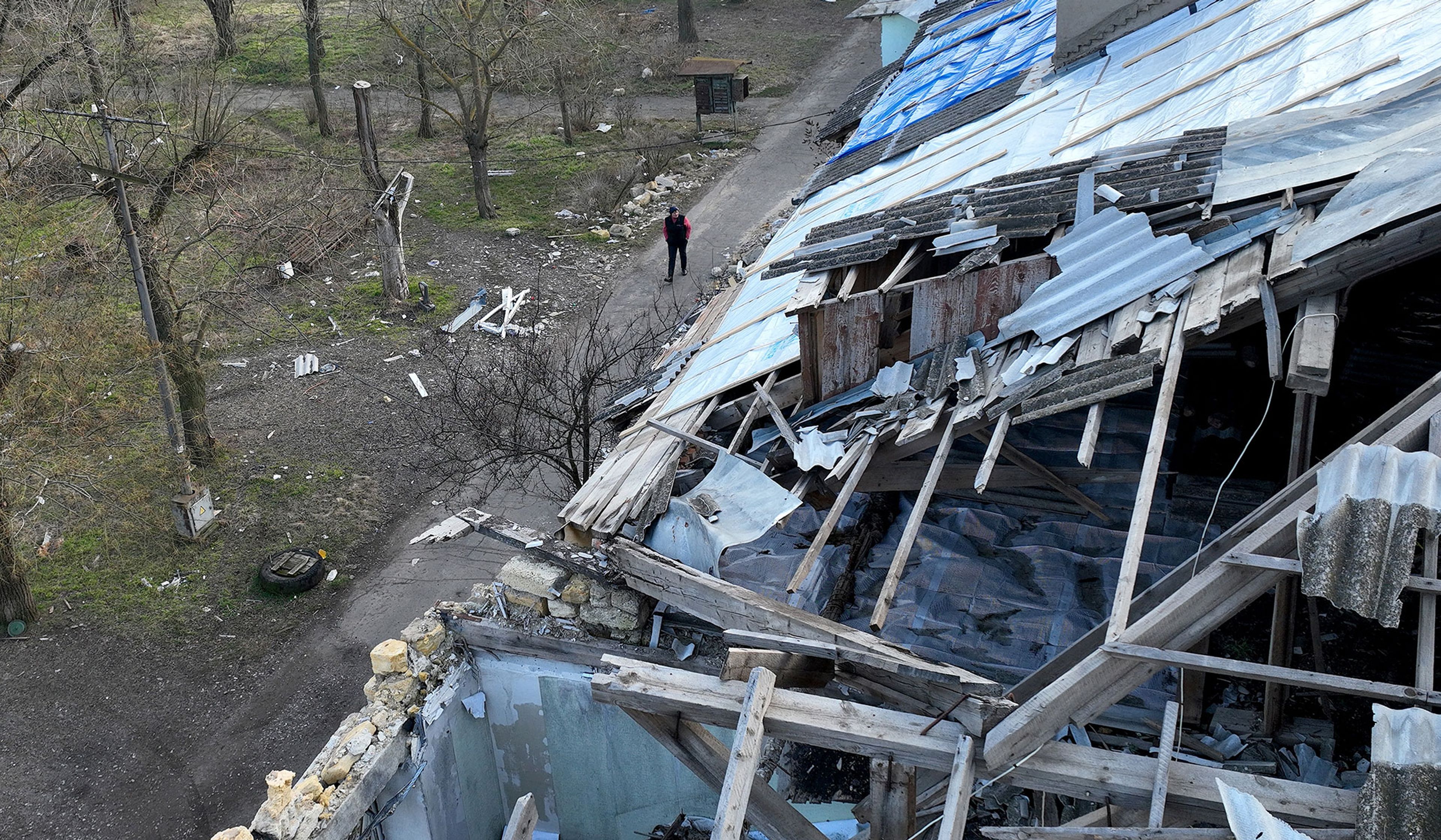
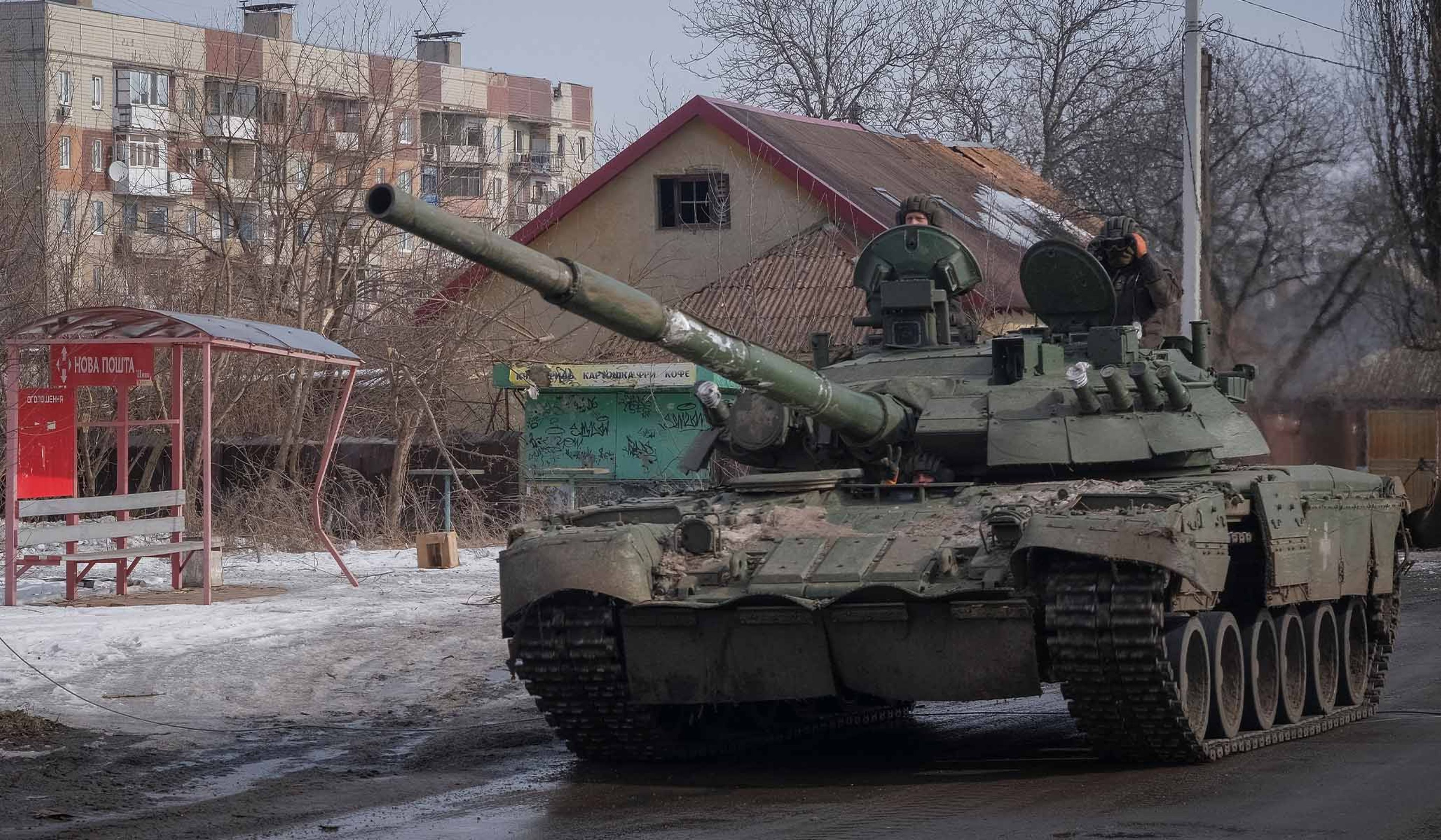
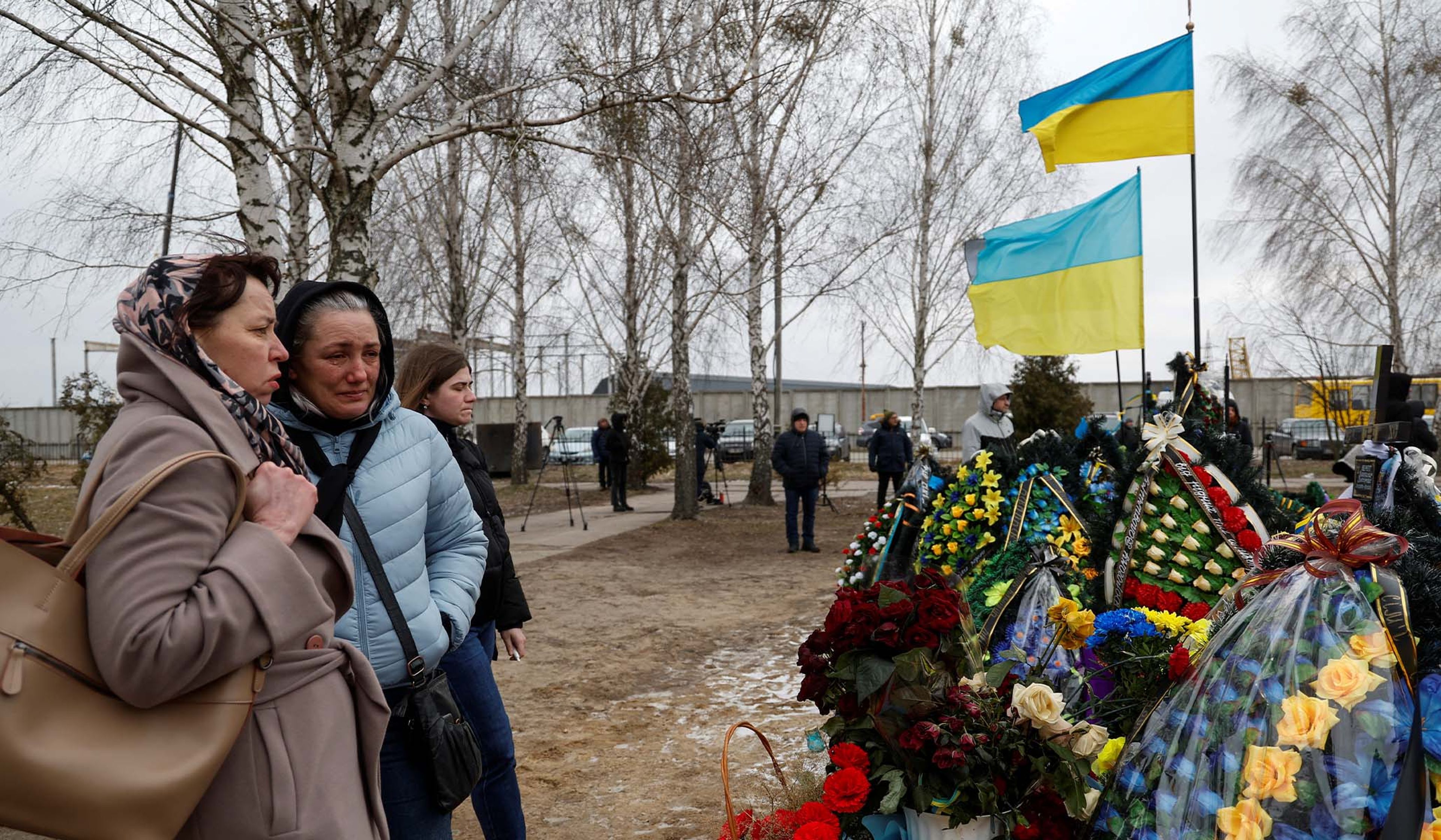
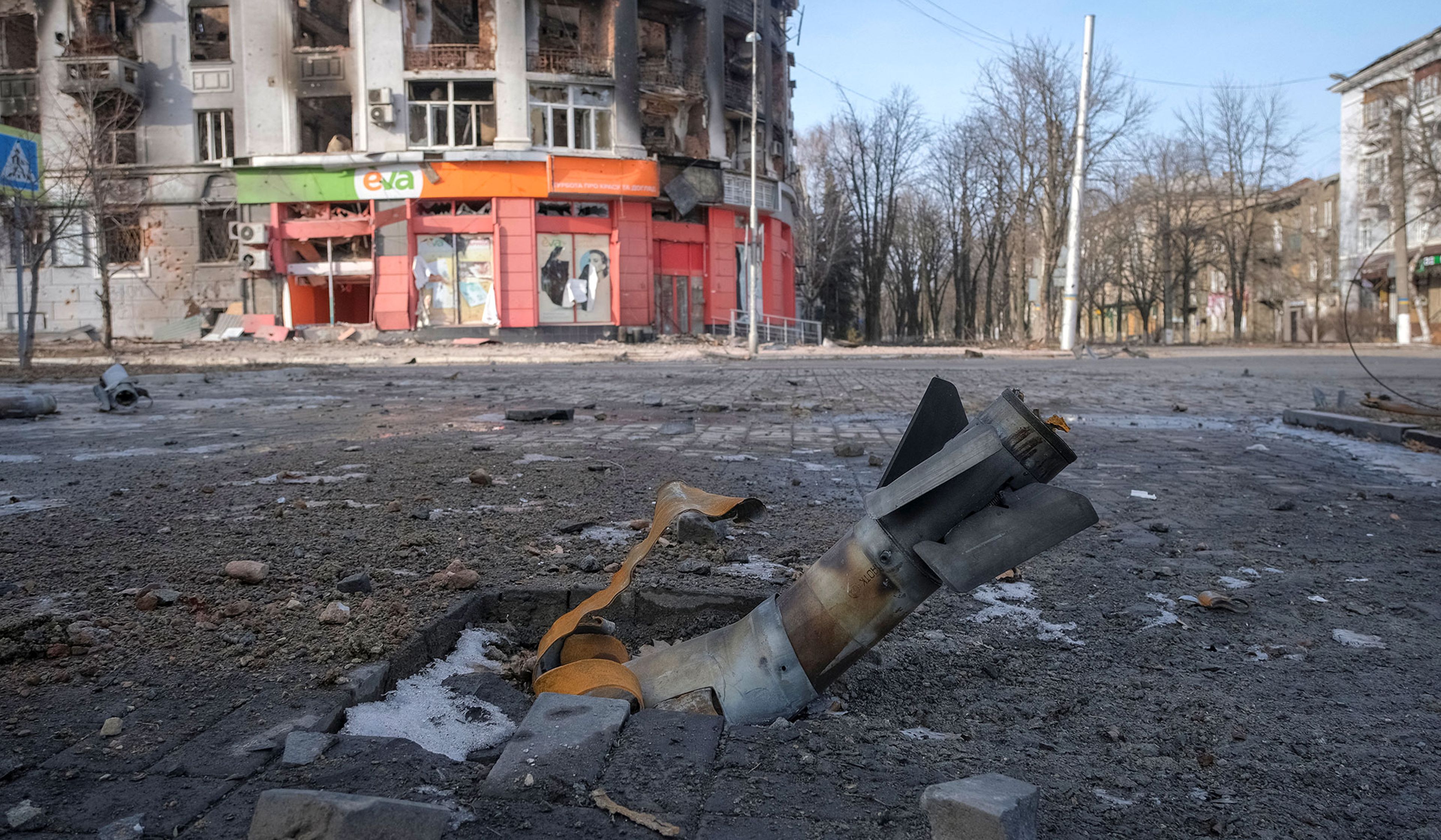
Ukrainian service members ride a tank near the front line city of Bakhmut, Donetsk Region, Ukraine, February 27, 2023.
Alex Babenko/Reuters
There are contradictions, however, between Biden’s strategic vision for Central and Eastern Europe and his administration’s other diplomatic approaches. A week before Biden’s Kyiv trip, his USAID administrator, Samantha Power, made a visit to Hungary during which she “highlighted USAID’s newly launched work to help support democracy in Central Europe, including by bolstering civil society and helping independent media build new audiences” (USAID official statement). What this might mean in practice was hinted in Power’s article in Foreign Affairs in which she revealed, inter alia, that USAID and the rest of G-7 plan to spend $600 billion in public and private investment to support democracy, oppose autocracy, assist new democratic forces (women, worker organizations, youth, etc.), finance independent media, and fight disinformation.
As writer N. S. Lyons and others have interpreted such inspiring messages, however, they too often turn out to mean that the U.S. is defining “democracy” to mean governments that hold not democratic elections but progressive values. As for disinformation, the story broke a few days later that the U.S.-funded National Endowment for Democracy (dating from Ronald Reagan’s 1980s Westminster speech) had been subsidizing the Global Disinformation Index (also reportedly financed by the U.K. Foreign Office and George Soros), which in turn had been certifying the New York Times, the Washington Post, and NPR (!) as the most reliable information sources and assorted conservative outlets as least reliable.
In earlier U.S. security initiatives starting with NATO, Washington sought to ensure that both democratic governments and their oppositions broadly signed onto U.S. policy. How are today’s governments in Central and Eastern Europe — and not just in Hungary — likely to react to signs that the Biden administration wants both to recruit them to an anti-Russian alliance and to replace them with woker administrations?
To reverse-engineer one of Ronald Reagan’s old self-deprecatory jokes, the trouble with the Biden administration is that its left hand has no idea of what its far-left hand is up to.
Except that in this administration it’s not self-deprecation.












Comments