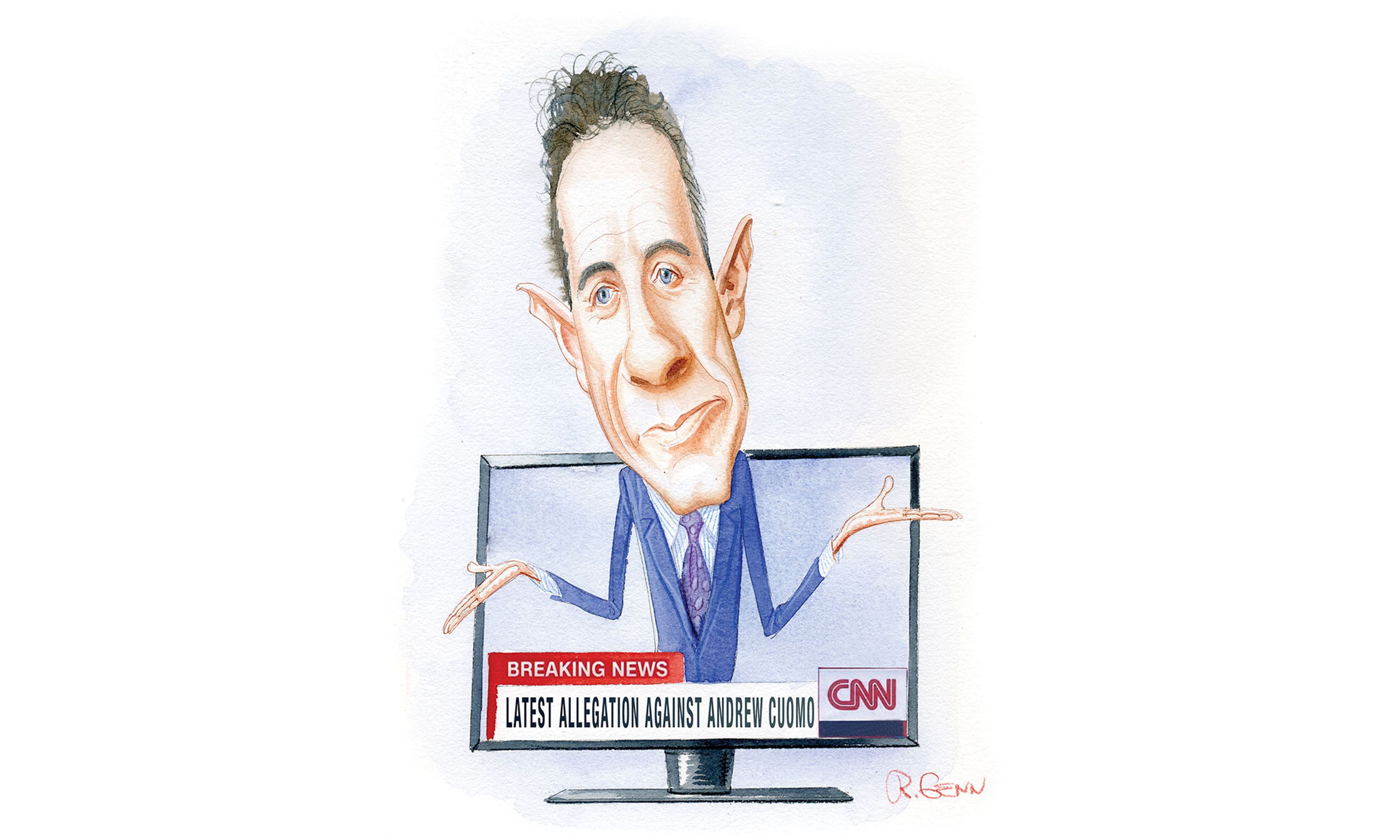
• So that’s what “Cuomosexual” means.
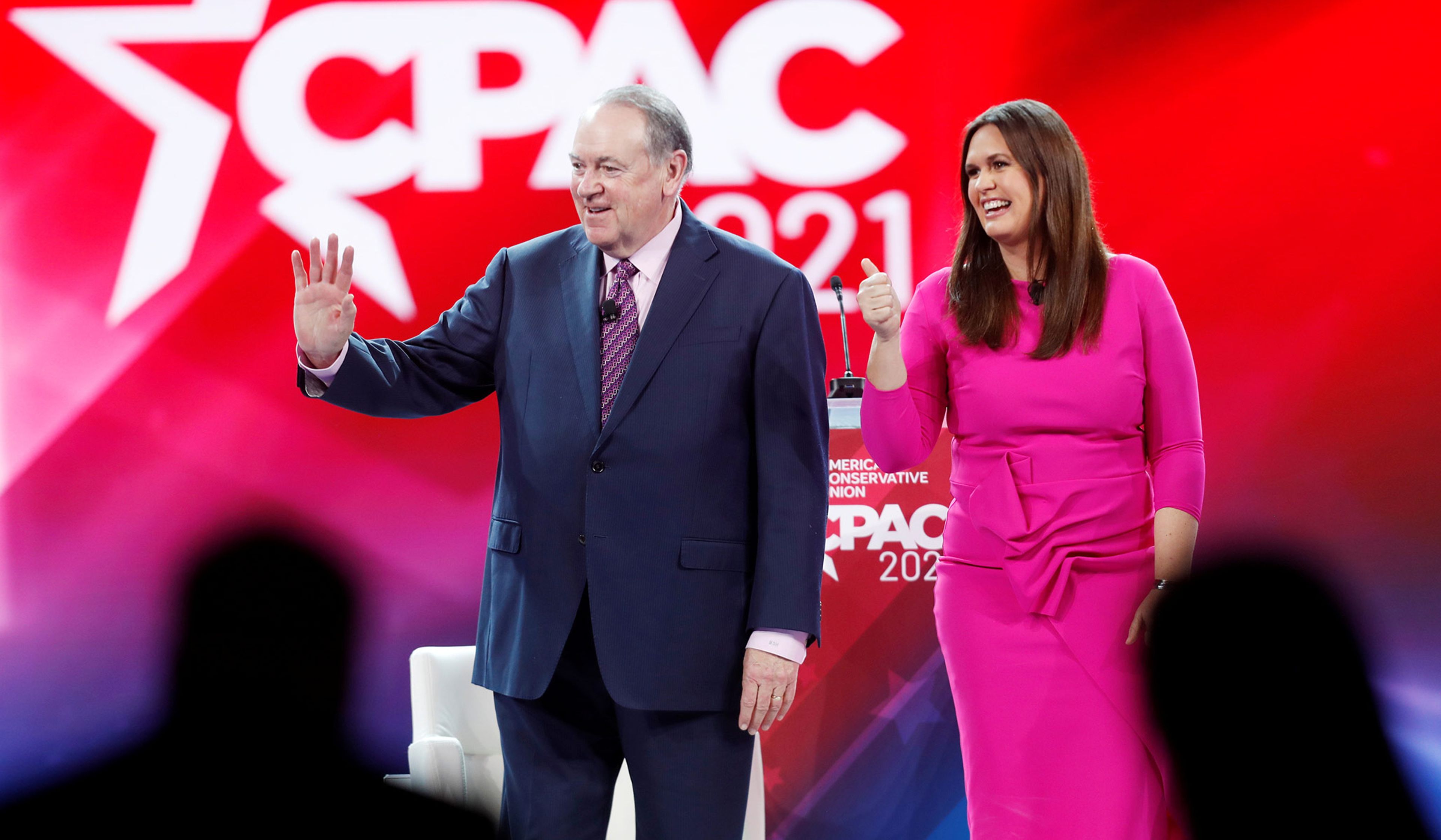
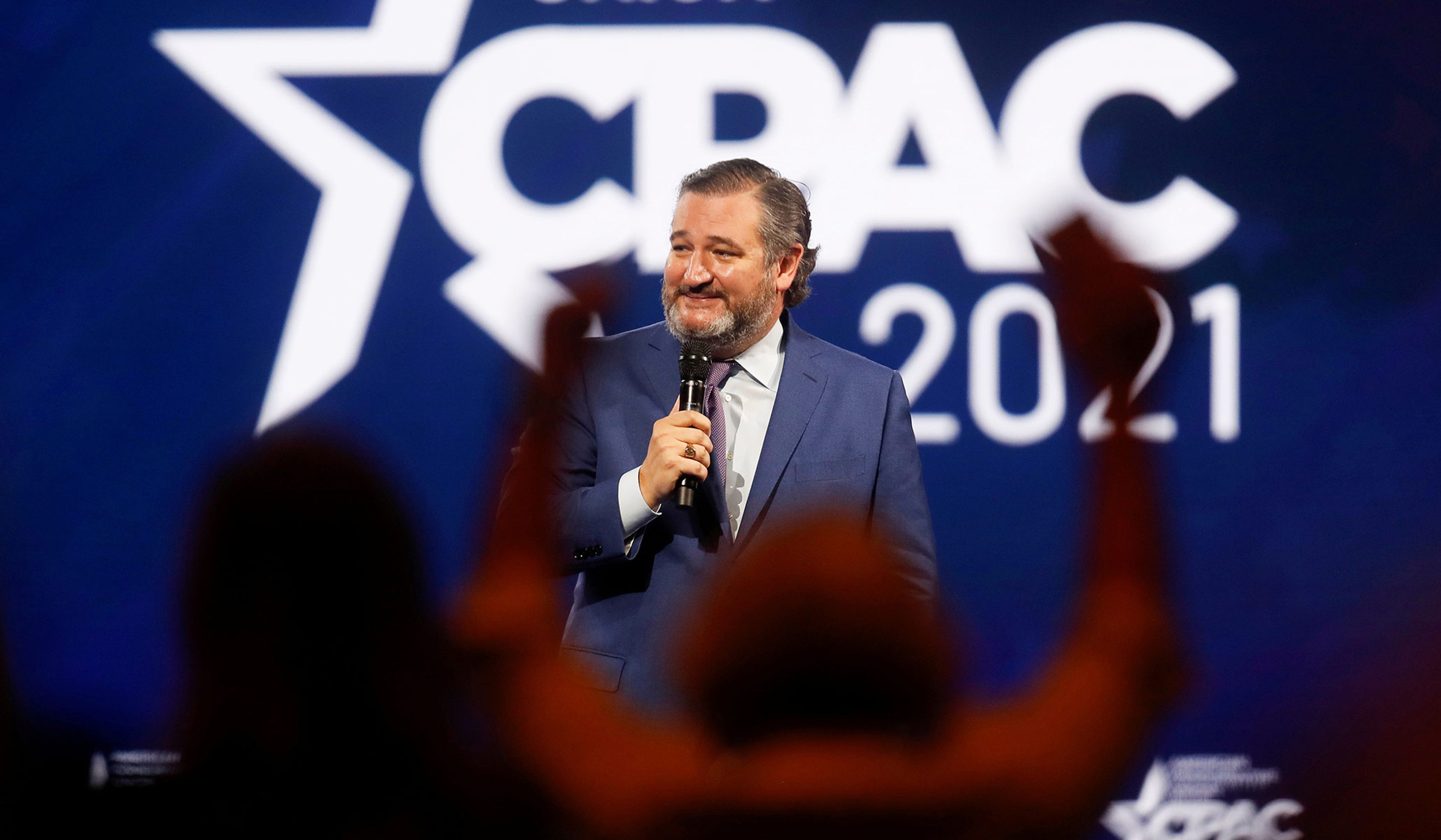
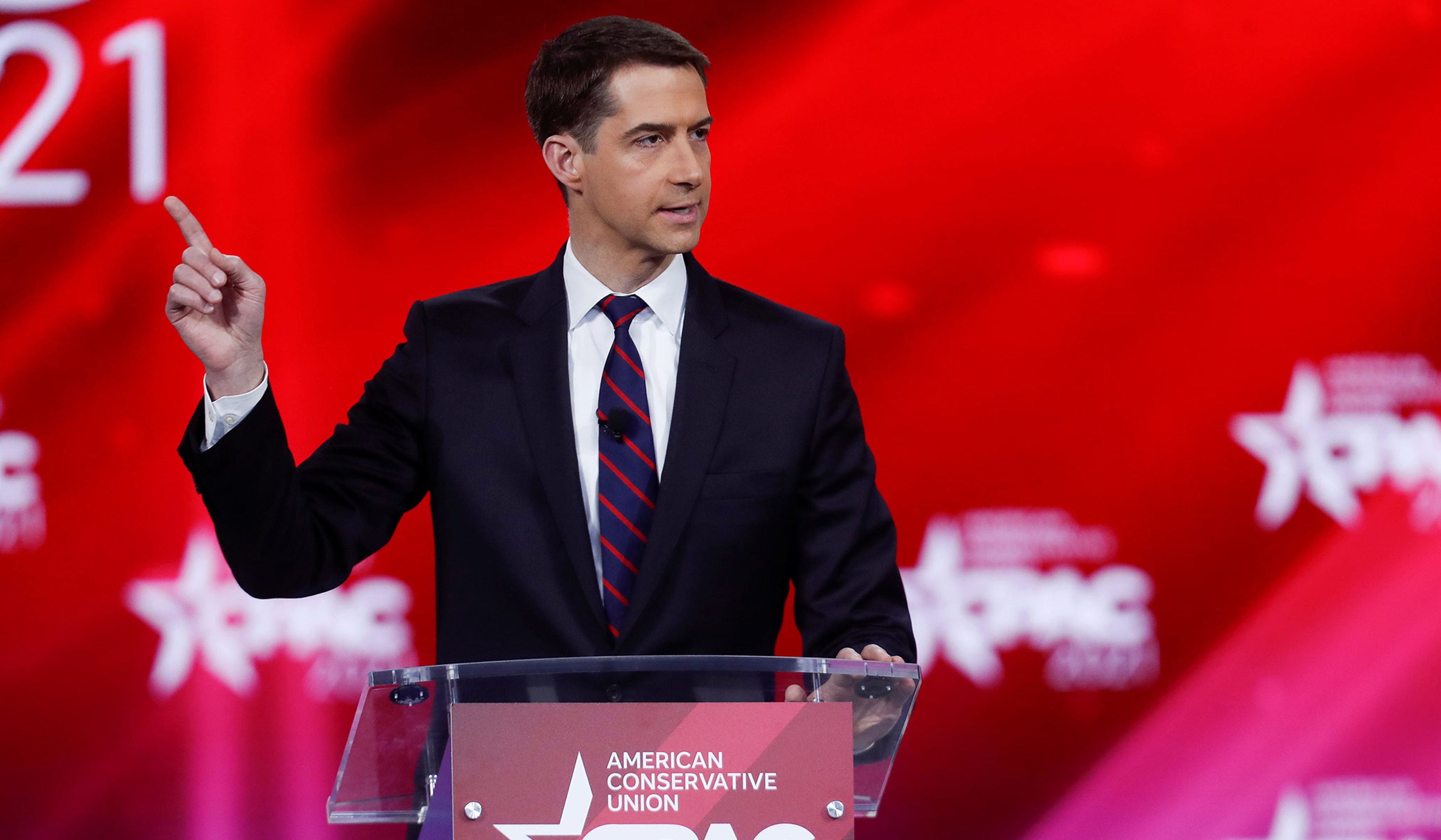
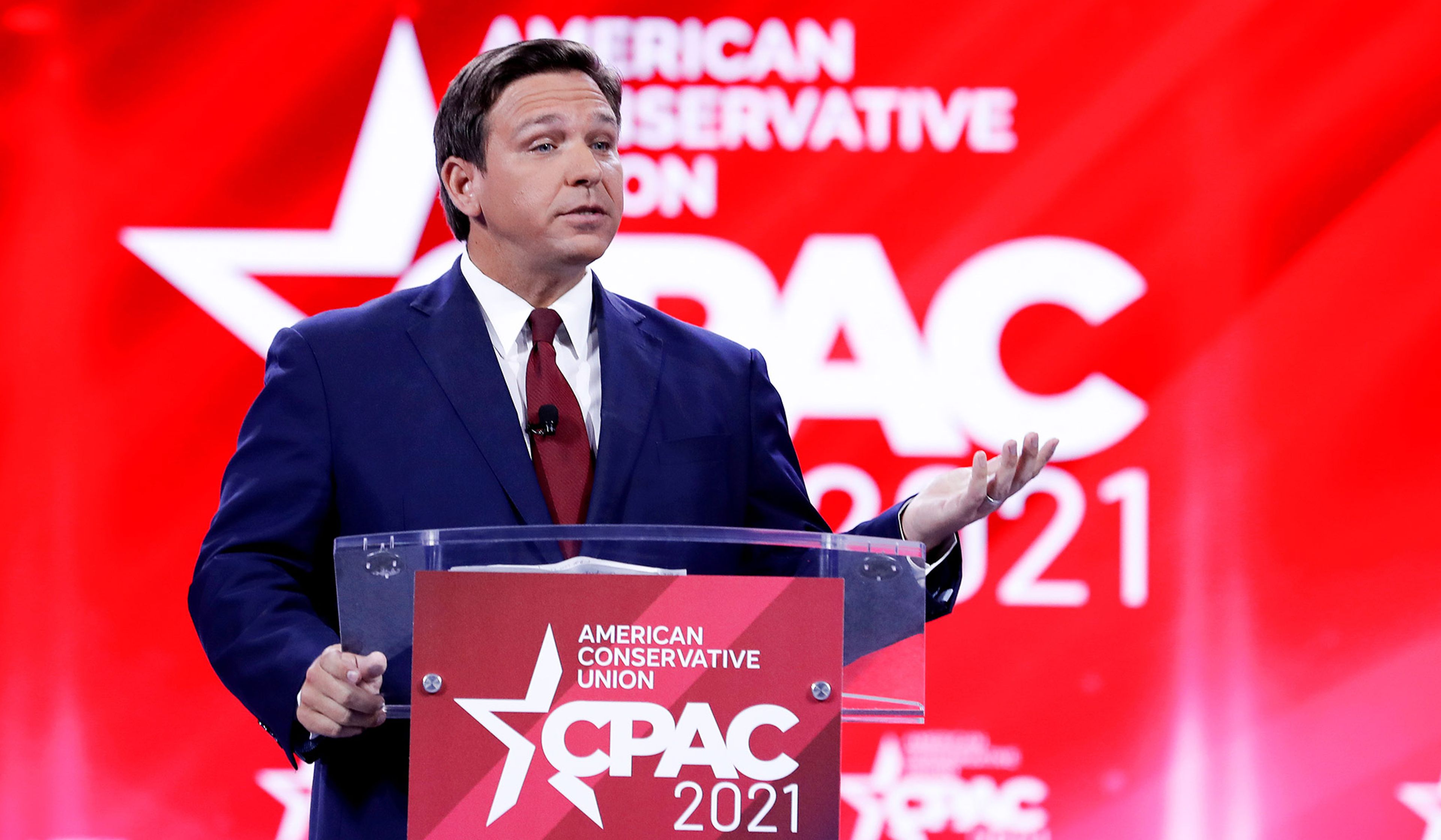
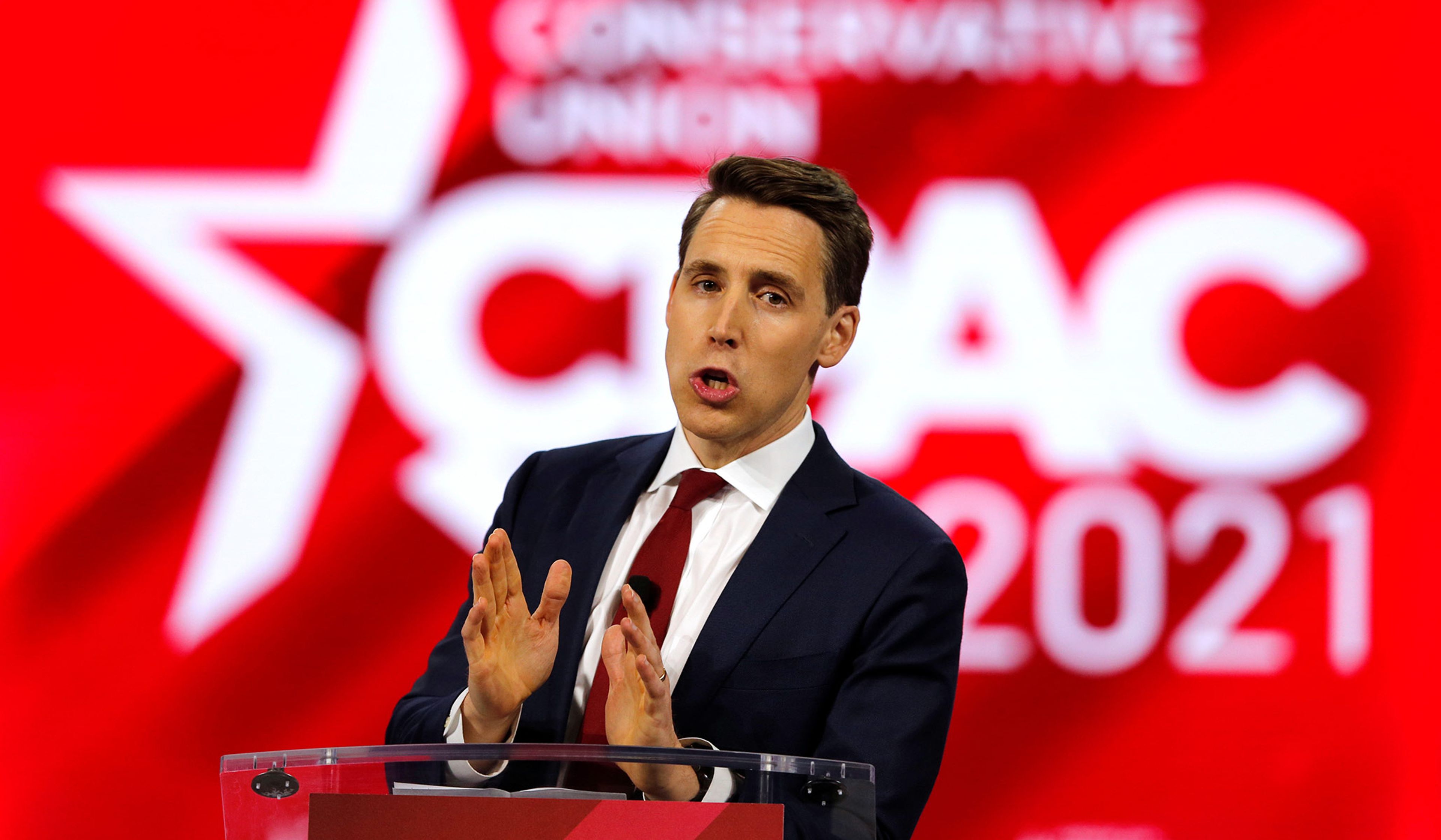
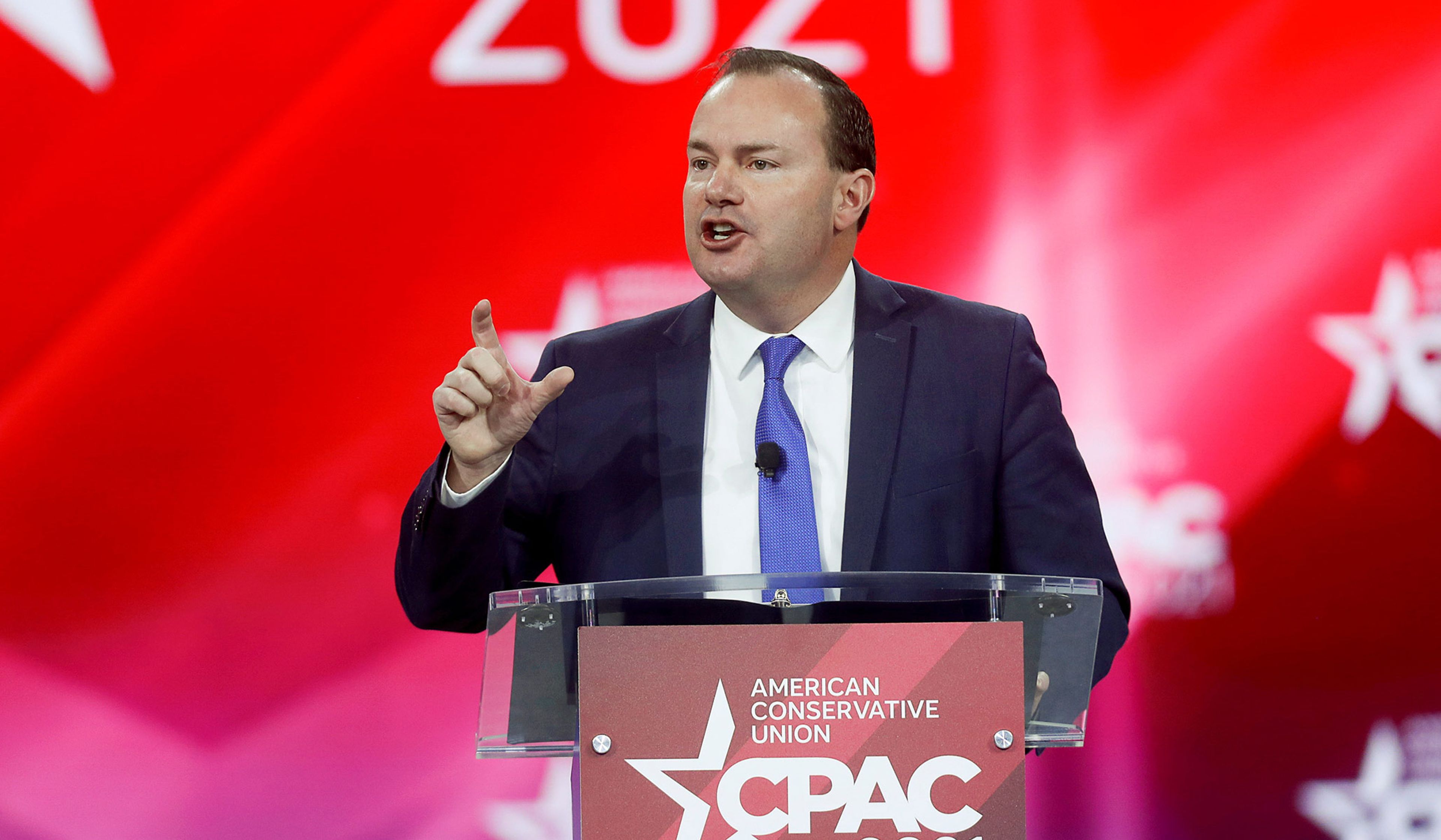
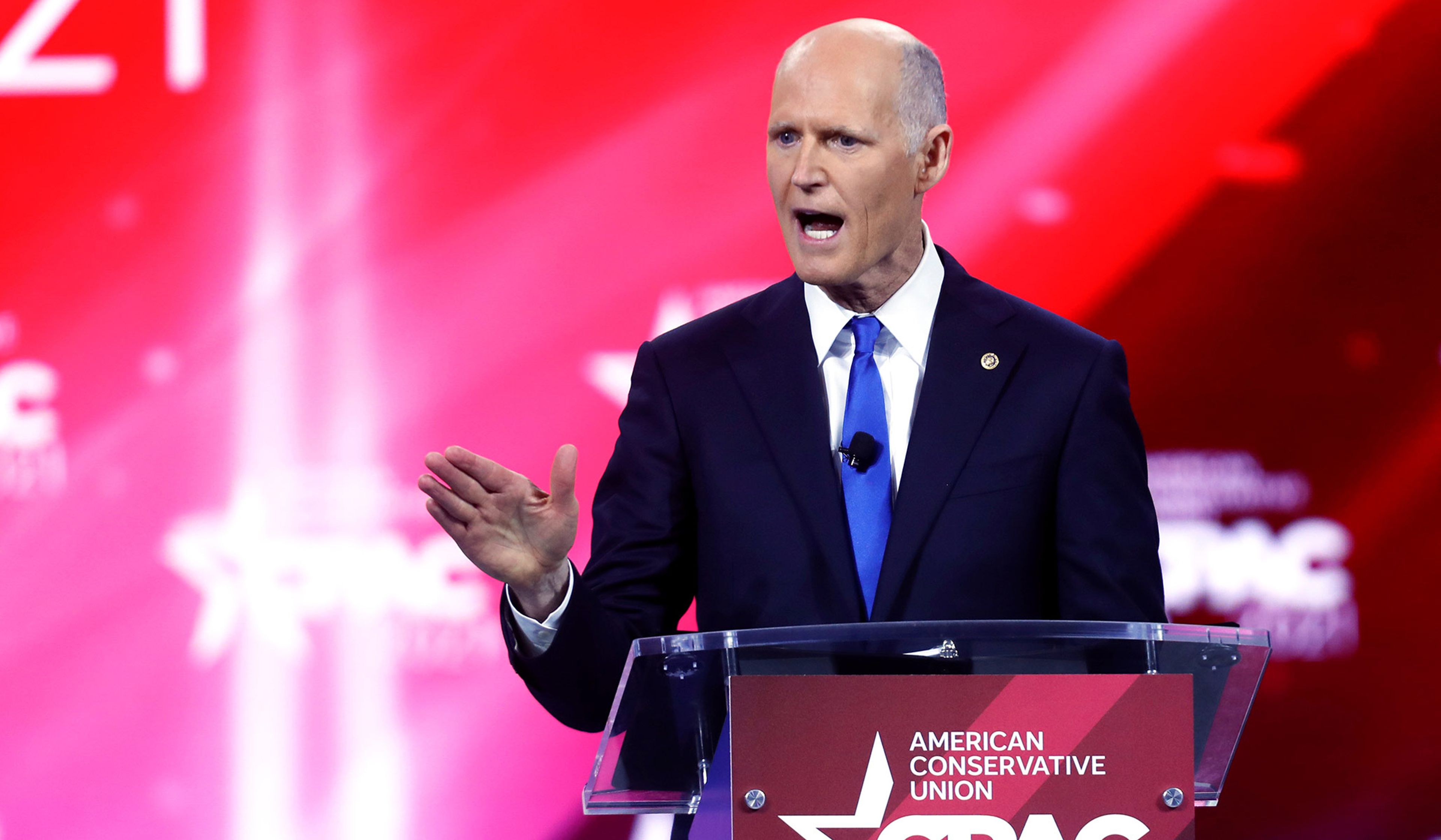
• The best thing about CPAC’s latest gathering was the golden statue of Donald Trump. With its gleaming pompadour and red-white-and-blue bloomers, it joins the hokum hall of fame alongside Old Hickory canes and Teddy (Roosevelt) bears. Trump himself came to CPAC and was less amusing. He maintained the fiction that he had won the 2020 election. And he blasted the Republicans in the House and Senate who voted to impeach and convict him for his conduct before and during the Capitol Riot, pouring special scorn on Representative Liz Cheney (Wyo.), whom he called a “warmonger [who] loves to see our troops fighting.” That was the kind of thing conservatives expected from the dolt Left, before Trump welcomed it into the GOP. He held open the possibility of running again in 2024, though he foreclosed a third-party run. He could probably most easily keep attention on himself and donations flowing by being a will-he–won’t-he kingmaker. Certainly other CPAC speakers — Ted Cruz, Josh Hawley — showed they are eager crown princes.
• Biden was denied his pick to lead the Office of Management and Budget: Neera Tanden withdrew from consideration once it became clear the Senate would not confirm her. Tanden, a policy wonk and political strategist, is a veteran of Hillary Clinton’s presidential campaign and the Obama administration, and for years headed a progressive think tank. She also specialized in issuing childish insults on Twitter, many of them aimed at the Republican senators who lined up in opposition to her nomination. Joe Manchin (D., W.Va.) announced that he would join them, dooming her chances in the evenly split Senate. Critics have charged Republicans with applying a double standard — how can mean tweets be disqualifying in the eyes of anyone who supported Trump? They have a point, but Biden ran promising a return to decency, and the norm against juvenile name-calling in public life is worth restoring. Less plausibly, but inevitably, opposition to Tanden was deemed sexist and racist. If she was the victim of anything, it was her own brand of nasty partisanship.
• During a confirmation hearing, Xavier Becerra, Joe Biden’s nominee to head the Health and Human Services Department, uttered the lines: “I have never sued any nuns. I have taken on the federal government, but I have never sued any affiliation of nuns.” This is true only in the narrowest sense: Becerra never initiated direct legal action against a group of nuns. But the facts of the case in question expose his disingenuousness. The case relates to the HHS Department’s Obamacare contraceptive mandate, which requires employers to subsidize birth control and abortion-inducing drugs through group health insurance. Under the Trump administration, religious employers such as the Little Sisters of the Poor, a charitable order of Catholic nuns, received an exemption from the mandate. Though Becerra never directly sued the Little Sisters, he sued the Trump administration because it had granted this exemption to religious employers such as the nuns (and the nuns joined the other side in the suit). Had his lawsuit been successful, the direct and intended result would have been to remove those exemptions and compel religious employers to cover the objectionable products. So while it’s technically accurate that he didn’t sue the nuns, it’s also true that he sued the federal government to make it crack down on them.
• Media outrage followed Senator Rand Paul’s questioning of Rachel Levine, the nominee for assistant health secretary. But that outrage was not directed, as it should have been, at Levine’s refusal to answer Paul’s questions about whether gender-confused minors should be given irreversible drugs and surgeries to stunt their puberty and remove healthy body parts. Or his questions about whether the state should override a parent’s right to object to such “treatment.” Rather, the outrage was directed at Senator Paul, who like Levine is a medical doctor, for having had the audacity to question a transgender-identified person about such matters. Senator Paul did not say a word about Levine’s self-identification. Evidently the press, like Levine, does not want the legitimate questions he raised to get an answer.
• The lights are going out all over Andrew Cuomo. The New York governor, already battered by a top aide’s admission that he withheld an accurate tally of nursing-home COVID deaths from the legislature, has been rocked by two former aides’ claims that he sexually harassed them. First came Lindsey Boylan, 36, who asserted that Cuomo suggested they play strip poker and on another occasion kissed her on the lips. Next Charlotte Bennett, 25, accused Cuomo of sounding her out for a possible affair (he has been unmarried since 2005, without a partner since 2019). State attorney general Letitia James has launched an investigation, and Cuomo, who denies the precise charges, admitted to telling “jokes” that might “have been misinterpreted as unwanted flirtation.” Cuomo is the target of his party’s left, which has never warmed to him, and of the New York Post, which dislikes Democrats as much as it likes a good scandal. This one may fit the bill.
• The alleged killing of Capitol Police officer Brian Sicknick by pro-Trump rioters at the Capitol was an element of the impeachment of Donald Trump. The House accused Trump of inciting a violent rabble that killed Sicknick. In their brief filed right before the Senate trial, impeachment managers elaborated that the rioters had killed Sicknick by striking him over the head with a fire extinguisher. The claim, also repeated in these pages two issues ago, appears to have been untrue. Rather than investigate, Democratic impeachment managers relied for their allegation on a single article in the New York Times, published just after Sicknick was pronounced dead on January 7. Yet other contemporaneous reporting recounted that Sicknick had not been rushed to the hospital from the Capitol. He made it back to police headquarters and, hours after the siege, texted his brother that, though he’d been assaulted with bear spray, he was fine. Capitol Police officials reportedly told his family he was rushed to the hospital from headquarters and succumbed to a stroke. CNN reported that medical examiners had found no evidence of blunt-force trauma. Strangely, no autopsy report was released and his death was barely mentioned at the trial. The officer’s passing may well have been connected to the siege, but we are owed more details.
• A $15 minimum wage does not qualify for the “budget reconciliation” process in the view of the Senate’s parliamentarian; this means it would be subject to a filibuster, and Democrats do not have the 60 votes it would take to override a filibuster. (Indeed, they probably don’t have the 50 they would need to pass it through reconciliation, either.) The parliamentarian got this right. It’s a basic and longstanding rule of reconciliation that all provisions must directly, and not just incidentally, affect the federal budget. The purpose of a minimum-wage hike is to require employers to pay higher wages, and any effect on the federal budget is clearly incidental to that. Angry and disappointed Democrats floated some backup plans — overriding the parliamentarian, or taking tax benefits away from companies that pay less than $15 — but these quickly fell by the wayside as well. Now it seems their COVID-relief bill will simply not hike the minimum wage. A bad idea dies; the system worked.
• Some Republican senators have joined the conversation about how to raise pay without killing jobs. Tom Cotton and Mitt Romney offered to trade a $10 minimum wage for a requirement that employers use the E-Verify system to make sure they’re not hiring illegal immigrants, while Josh Hawley suggested a tax credit for workers making less than $16.50 for the next three years. Neither proposal manages to nail the politics and the policy simultaneously: The Cotton-Romney plan is not likely to attract much Democratic support, while the Hawley plan has some technical issues (such as imposing high marginal tax rates on workers who get raises) and would cost a fair amount of money if made permanent. But brainstorming policies to help working-class families is something the GOP needs to be doing right now, and we welcome these contributions.
• The Equality Act passed the House again (the bill also passed in May 2019 but stalled in a Republican Senate) and will go on to the Senate, where it requires 60 votes. The act would add sexual orientation and gender identity to the list of protected characteristics under the 1964 Civil Rights Act, and also redefine “sex” to include gender identity. In effect, it would force every federally funded entity to treat males who declare themselves transgender as if they were females, expand the number of businesses that count as public accommodations, stamp out religious exemptions for nonprofits, keep the Religious Freedom Restoration Act from applying to any claim brought under the Equality Act, force taxpayers to fund abortion, and offer no conscience protections for pro-life health-care workers. It is hard to imagine how it could be more aggressively drafted, or more effectively use the 1964 legislation as a Trojan horse for imposing trendy injustices.
• “Ghost guns” may be the next frontier in the fight over gun control. It’s legal for Americans to build guns for their own personal use, and such guns do not need to be marked with serial numbers. Companies have made it easy to buy the parts online — with no background check required, so long as the buyer needs to do a certain amount of machining to make the weapon functional. Problem: The laws are vague as to where the lines are, and these guns are increasingly turning up in crimes, so the executive branch is starting to rethink its approach to such products. In December there was a federal raid on a company that sold “Buy Build Shoot” kits, and now the Biden administration is thinking about tightening up the rules via executive action. As always, we believe that Congress should write clearer laws rather than deferring to the executive branch, and that any gun restrictions must comport with the original understanding of the Second Amendment.
• Nearing his final days in office, President Trump signed an executive order encouraging the use of classical architectural styles over modernist styles in new federal buildings, barring “exceptional factors necessitating another kind of architecture.” The decision was welcome. Washington, D.C., is populated with what the former president called “undistinguished,” “uninspiring,” and “just plain ugly” governmental buildings. Take, for example, the J. Edgar Hoover F.B.I. building, which a former employee referred to as “ten floors of basement.” This newly established standard was meant to ensure that our federal architecture embodies American ideals, commands public respect, and inspires pride and confidence. (Think the U.S. Capitol, a notable D.C. exception.) It swiftly drew the ire of countless critics, however, some of whom claimed that the decision was unseemly and even authoritarian. Trump’s order was titled “Promoting Beautiful Federal Civic Architecture.” Biden has now issued a revocation, so there’ll be no more of that.
• New Jersey and Virginia joined 14 other states in legalizing the possession and sale of marijuana. Most of the rest have decriminalized possession, with or without legalizing medical use; in only six states is pot forbidden altogether. The medical and social arguments against and for legalization remain the same as they have been for years: Use among minors and drivers will go up (states must experiment with the sanctions that best keep this to a minimum); prohibition is both discriminatory and ultimately futile. Some new and distracting arguments have been added to the mix: fear of corporate behemoths’ monopolizing the product; a desire to shunt revenues and licenses to sell to communities hurt by past drug laws (i.e., black neighborhoods). Like any mood-altering drug, marijuana can be a pleasure, a habit, or a curse. Over time, drug use tends to moderate (alcohol consumption in early America was hair-raising). This may ultimately be the strongest pro-legalization argument.
• California is on the verge of mandating that every high-school student take a course in ethnic studies in order to graduate. The first draft of the curriculum, written by a committee of teachers, college professors, and ethnic-studies experts, was rejected out of hand by the president of the state board of education for its polemics and hyper-partisanship. It included woke neologisms such as “herstory” and “hxrstory” in its glossary of terms and defined capitalism as a system of oppression and exploitation. It also described the BDS movement directed at Israel as a “global social movement that currently aims to establish freedom for Palestinians living under apartheid conditions.” The dearth of lessons about anti-Semitism has been the most persistent criticism of the curriculum coming from citizens themselves, with 30,000 of the 57,000 comments made to the state about the curriculum having to do with this subject. It’s unclear whether the final form of the curriculum, if and when passed, will do much to remedy these problems. The field of history has become so shot through with identitarian agitprop that one wonders what can be salvaged.
• As we go to print, Americans are receiving COVID-19 vaccines at a rate of 1.8 million a day. With nearly 80 million doses administered, new cases declined by more than 20 percent in two weeks, putting the U.S. on pace to go back to normal by summertime. The path to herd immunity will be accelerated by the recent approval of a third vaccine, developed by Johnson & Johnson. And in a sign of the collaborative effort to defeat COVID-19, Merck will be helping manufacture doses of its competitor’s new, single-shot vaccine. Thanks to the ingenuity of medical researchers and the productive capacity of our health-care sector, the end of the pandemic is in the offing less than a year after domestic policy-makers began formulating a response to the coronavirus.
• Ryan Anderson, the president of the Ethics and Public Policy Center and the founding editor of Public Discourse, has added a new line to his distinguished résumé: samizdat author. His book on the transgender controversy, When Harry Became Sally, was quietly banned by Amazon in February. The bookseller and retail giant offered no explanation for its action; it maintains a policy of contacting authors and publishers to discuss moves against controversial books but has not done so in this case. The book, published in 2018, became the subject of a suppression campaign thanks to its success: It sold well enough to appear on Amazon’s gay-and-lesbian charts, provoking an uproar. The book is hardly a red-meat jeremiad (“We need to respect the dignity of people who identify as transgender, but without encouraging children to undergo experimental transition treatments, and without trampling on the needs and interests of others,” etc.), but, even if it were, do we really want Amazon and other corporate giants acting as the enforcers of political orthodoxy in the public square? Booksellers have a long and proud tradition of standing up for the circulation and debate of unpopular and controversial ideas, going back to the House of Elsevier’s smuggling the works of Galileo out of Inquisition-dominated Italy to publish them in Amsterdam. If Jeff Bezos et al. aren’t wealthy and powerful enough to stand up for an open society, who is?
• While Amazon is tripping over itself to suppress controversial books, the famously sensitive souls over at Condé Nast (short for “Condescending and Nasty,” local legend has it) are busy with a virtual book-burning of their own, conducting an “archive repair” campaign at Bon Appétit. The times being what they are, you will not be surprised to learn that the Bon Appétit archive is being “repaired” by excising articles — and recipes! — in which our nation’s grievance lobbyists have taken a professional interest. This began with an outcry over an old article on traditional Jewish cookies written by a Gentile who, in her capacity as a professional cook, offered some ideas for improving them. The usual Twitter mob complained about the gall of “someone who does not come from that tradition” expressing an unauthorized opinion about hamantaschen. Bon Appétit has been having a time of it: It was raked over the social-media coals for callously passing on a freelance pitch about “Afro-Boricuas that make regional rice fritters,” received complaints about “white presenting” nonwhites as “token” minorities, and pushed out its editor over a years-old photograph of him in a verboten Halloween costume. This is one of those controversies that manage to really hit the sweet spot between the Orwellian and the trivial. Well done, Condé Nast!
• Smith College, alma mater of Priscilla Buckley and other greats, has become a dystopia of illiberalism and madness. The semi-quaint term “wokeness” won’t cover it. The New York Times has published a report by Michael Powell on several incidents at Smith, each reading like something a conservative might make up in satire. Students lodge charges of racism — wild charges — and the administration jumps and cowers, upsetting the lives of the accused in the bargain. The accused include not only professors and administrators but also janitors. When conservatives make comparisons to the Cultural Revolution, do we exaggerate? Yes, because the youngsters on campus aren’t torturing and murdering the grown-ups. They are merely getting them fired or suspended. But sample just a line from Powell’s report: “The administration declined to challenge the student protesters and had the instructor submit to sessions of ‘radical listening’ with the protesters.” As always, one of the worst aspects of false charges of racism is that they can cast doubt on true ones. What will stop the madness, at Smith and elsewhere? Only a recoiling by sane liberals, and the recovery of nerve.
• The Supreme Court abdicated its duty to say what the law is on the critical question of how elections must be conducted. The Constitution vests state legislatures with the power to make laws governing voting procedures, subject to Congress’s authority to determine such matters as when federal elections are to be held. In 2020, however, progressive bureaucrats and judges presumed to alter state election law, arguing that the pandemic warranted an emergency loosening of rules designed to ensure ballot integrity — rules that progressives habitually deride. Prior to Election Day, claimants beseeched the justices to address the resulting havoc. The Court, led by a risk-averse Chief Justice John Roberts, turned a deaf ear, fearing the justices would be pilloried for meddling politically and, in effect, deciding the election. And now, the Court has formally declined to take up these crucial questions — even though there is no possibility that a decision could alter the outcome of the presidential contest. As dissenting justices Clarence Thomas and Samuel Alito (joined by Neil Gorsuch) compellingly warned, these controversies will recur, and if the Court won’t decide them pre-election, when there is time for deliberation, a post-election debacle is inevitable.
• The high court also declined to entertain former president Trump’s attempt to prevent Manhattan district attorney Cyrus Vance from executing a subpoena demanding his personal financial information, including years of tax returns. Vance has long sought the information for a state grand-jury investigation of the Trump organization, which appears to have been triggered by a mammoth report the New York Times ran in 2018 about decades of the real-estate mogul’s business practices. The DA is scrutinizing whether Trump’s reported habit of inflating property values for financing purposes while deflating them for tax purposes defrauded banks, insurance companies, and tax authorities. Investigators are also curious about how the Trump Organization booked 2016 hush-money payments to a porn star who alleges a fling with Trump a decade before his presidency. Vance has recruited Mark Pomerantz, a well-regarded former federal prosecutor, to help run the investigation, which, the DA maintains, cannot be complete without access to Trump’s financial records. Last year, the Supreme Court denied the then-president’s claim of complete immunity from investigation but sent the case back to the lower courts. They rejected Trump’s attack on the subpoena, but Vance agreed to hold off until the justices ruled. And so they have.
• Martin Lee, Hong Kong’s “father of democracy,” now stands trial for the crime of abiding by the principles for which he has stood his entire career. He presided over the drafting of the city’s Basic Law and fought for the democratic principles that allowed the city to flourish until Beijing’s crackdown. The octogenarian barrister was arrested this past summer for his role in protests that took place in the city in 2019, and he recently appeared in court alongside Jimmy Lai and Margaret Ng, other titans of democracy in Hong Kong. Just after his arrest, he wrote in the Washington Post that, although we can hope for a vaccine for the coronavirus, “once Hong Kong’s human rights and rule of law are rolled back, the fatal virus of authoritarian rule will be here to stay.” With that prospect very much in the offing, the world should come to its senses about China.
• In November, the Chinese government released “Administrative Measures for Religious Clergy,” which combines gray bureaucratese with flourishes of nationalist agitprop about the need to promote “the Sinicization of religion.” One of the document’s 52 articles is dedicated to the process for appointing Catholic bishops. No mention is made of the pope or the Vatican. That omission leads some observers to conclude that China has reneged on the agreement that it signed with the Vatican in 2018 and that the two parties renewed last fall. The text of the agreement has never been published. According to Vatican statements and comments from Pope Francis, however, it stipulates that final approval of episcopal appointments rests with the Roman Curia and the pope. Unless Rome has misrepresented the agreement, Beijing has decided to disregard it, at least in public. Government officials assure Chinese Catholic leaders in private that Beijing still honors the agreement in fact, behind the scenes, according to one published report. Even if that’s correct, Beijing dishonors the Church in China by withholding acknowledgment that the bishop of Rome exists, to say nothing of his reasonable expectation of independence from state authorities in ecclesiastical matters.
• In October 2018, the Saudi government murdered one of its most prominent critics, Jamal Khashoggi. It did it in Istanbul, and it did it in spectacularly gruesome fashion. Asked who should be held accountable for the atrocity, President Trump answered, “Maybe the world should be held accountable, because the world is a vicious place.” Now, the Biden administration has released an intelligence report, which concludes that the Saudi crown prince, Mohammed bin Salman, in fact ordered the murder. The U.S. has sanctioned the murder team itself — but not the crown prince and his government. The administration judged, rightly, that the alliance at large should not be risked. At the same time, Americans should be realistic about Saudi Arabia. The administration also revealed that Mohammed bin Salman had created a “rapid-intervention force” to attack dissidents abroad — same as Turkey (another dubious U.S. ally), Cuba, and China do. We should be ever alert to such matters, and do what we can to safeguard people on our soil.
• On November 8, Burma held elections, with the National League for Democracy winning an overwhelming majority: 83 percent of the available seats in parliament. The Union Solidarity and Development Party — the military’s instrument — won just 7 percent. Immediately, the military alleged electoral fraud (falsely). On February 1, the new parliament was set to meet for the first time and formalize the results of the elections. In the hours leading up to the meeting, the military staged a coup d’état, declaring martial law. Since then, Burmese citizens have been in the streets, protesting. On a single day, government forces killed at least 18 people, wounded at least 30 more, and arrested about a thousand. In Washington, the White House issued a statement, saying that the U.S. stood in solidarity with people “who continue to bravely voice their aspirations for democracy, the rule of law, and respect for human rights.” The administration, which has already imposed sanctions on the military regime, promised to impose “further costs” in the days ahead. This is a worthy and sensible response.
• It was good news when, in January, a large German company, Bilfinger, pulled out of a contract to supply various construction services to support Russia’s Nord Stream 2 pipeline. A fear of U.S. sanctions was, allegedly, the reason. Nevertheless, at the time of writing, it still seems likely that the pipeline, which will supply Russian natural gas directly to Germany via a Baltic Sea route, will be completed. This would be a major strategic victory for Moscow, while again raising the question of how good an ally Germany really is. By taking a northern route, Nord Stream 2 bypasses Ukraine and, as it will be used to transport some of the gas currently flowing westward from Russia across Ukrainian territory, could cost that cash-strapped country some billions of dollars in transit fees, as well as depriving Kyiv of a potential source of leverage against its belligerent neighbor. It will also increase the extent to which Germany and, for that matter, other parts of Western Europe come to rely on Russian gas, not a development to be welcomed. German chancellor Angela Merkel seems set on seeing Nord Stream 2 to completion. She is probably gambling that the Biden administration, which disapproves of the project but wants better relations with Berlin, can, with the help of a meaningless promise or two, be persuaded that the pipeline is a done deal and then talked out of imposing too tough a sanctions regime. That argument should not prevail. Germany does not pay enough for its defense. It should at least pay for actively undermining it.
• Amnesty International has removed its designation “prisoner of conscience” from Alexei Navalny, the Russian opposition leader and anticorruption activist. The decision was intended as internal guidance. After it leaked, Amnesty explained that “concerns” had led it to reexamine Navalny’s case. He “had, in the past, made comments which may have amounted to the advocacy of hatred,” read a statement that the organization sent in response to an inquiry from CBS News. Early in his political career, Navalny, now 44, espoused an ethnonationalism that shaded into xenophobia. He hasn’t in many years, however, although neither has he renounced his former positions. He has moved on to advocate a form of civic nationalism. From the beginning, he has sought to offer a compelling alternative to Putin, whose appeals to nostalgia for the lost Soviet empire compete with the vision of a modern democratic republic in which public officials are held accountable. A deputy director of a regional Amnesty office says that the organization had received a barrage of critical emails, nearly identical, about Navalny’s past and suggests that a smear campaign played on the scruples of Amnesty officials. Amnesty continues to campaign for Navalny’s release from prison, as it should.
• When Hasbro announced that its durable Mr. and Mrs. Potato Head toys would henceforth be known as merely Potato Head, the reaction was furious. Never before had such a fuss been made over the sex of a vegetable (and the company quickly clarified that the Mr. and Mrs. designations will be retained, but will be less prominently displayed on packaging). We are of two minds. On the one hand, standing athwart history has to start somewhere, and neutering a generation’s favorite toys by ukase does smack of the reeducation camp. On the other hand, it’s a potato. So how about a deal: We’ll stop pretending that edible tubers come in male and female varieties if the Left will stop pretending that people don’t.
• Another giant leap for mankind was made on February 18, 2021, when the NASA rover Perseverance landed safely on the surface of Mars. After its launch from the Earth in July 2020, the rover’s seven-month trip ended in Mars’s Jezero Crater, making it the fifth rover to land on the Red Planet. NASA livestreamed the big event. One of the main purposes of the rover is to study Mars for signs of ancient life, which is why the rover landed in a crater that used to be a lake. Though it will take some time for the rover to start on exploratory ventures, NASA has been sharing pictures taken by “Percy” (as the craft is nicknamed), giving viewers on Earth beautiful, color panoramic shots of the Martian landscape. The joy and pride of the scientists in the NASA control center after touchdown was wonderful to watch, and we wish them all success as the rest of the mission unfolds.
• In late February, the Walt Disney Company proudly announced that The Muppet Show would be joining Disney+, the company’s streaming service. Jim Henson’s 1970s-era variety hour is absurd and hilarious and classic Americana. It’s also apparently too offensive for Disney. Viewers tuning in to see Kermit, Gonzo, and Fozzie Bear are now greeted with a disclaimer that the show “includes negative depictions and/or mistreatment of people or cultures.” “These stereotypes were wrong then and are wrong now,” Disney hastens to add. What’s causing all the fuss? Well, in one episode, country legend Johnny Cash sings the southern-themed duet “Jackson” with Miss Piggy on a set that includes the Confederate battle flag. In another episode, folk star Joan Baez does an Indian accent. In a third, a subplot involves Muppets dressed in Arab robes drilling for oil in Kenny Rogers’s dressing room. As Kermit would say, “Sheesh!” Better shield the children’s innocent eyes.
• For two years now, Charlie Cooke has wanted to return to full-time writing. Given the importance of his role as the editor of NationalReview.com, it took a long time to identify a worthy successor. Philip Klein is just that person. Charlie’s imminent return to writing is great news for us, but very bad news for the enemies of liberty. As for Phil, he is an accomplished journalist with extensive experience in conservative opinion journalism, most recently at the Washington Examiner. He is a deeply grounded conservative, a brilliant and engaging writer, and a happy warrior. There is a lot of work to be done in these unsettled times, and NR has the team to do it.
• Lawrence Ferlinghetti, poet, publisher, and proprietor of City Lights bookstore in San Francisco, was the oldest of the Beats and the last to go. His signature volume, A Coney Island of the Mind, sold a gajillion copies and inspired almost as many contributions to high-school literary magazines. Much of Ferlinghetti’s work was little better. But he had a real lyrical impulse; his ears were open to both Fifties jazz and the High Modernists who preceded him and with whom he sparred; and he avoided the alternative lifestyles that preoccupied and addled his Beat peers. Jack Kerouac, probably the most talented of them all, fell early to drink. Allen Ginsberg too often played the role of Allen Ginsberg. Ferlinghetti, by contrast, was a lively, accessible presence. Dead at 101, R.I.P.

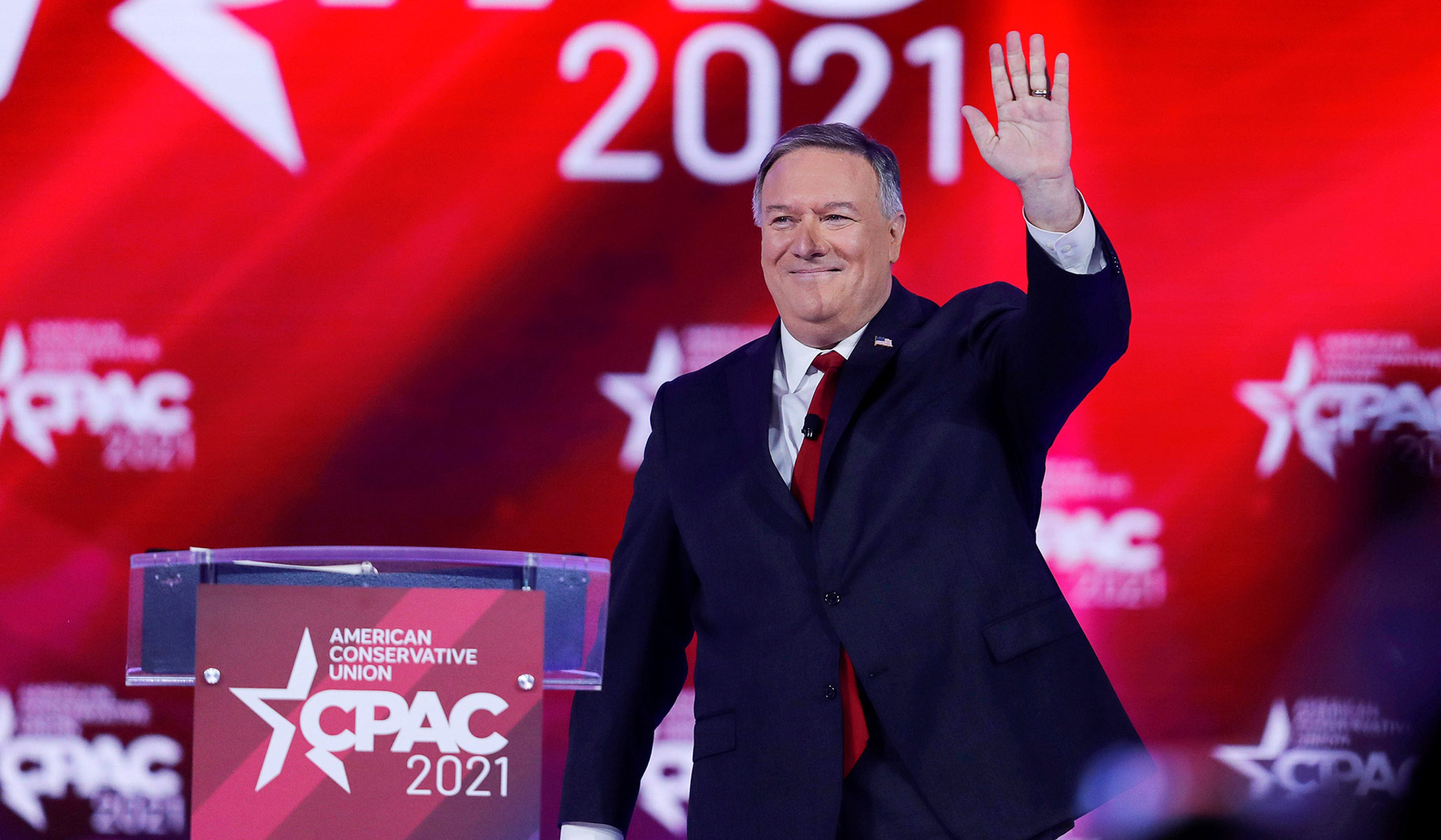
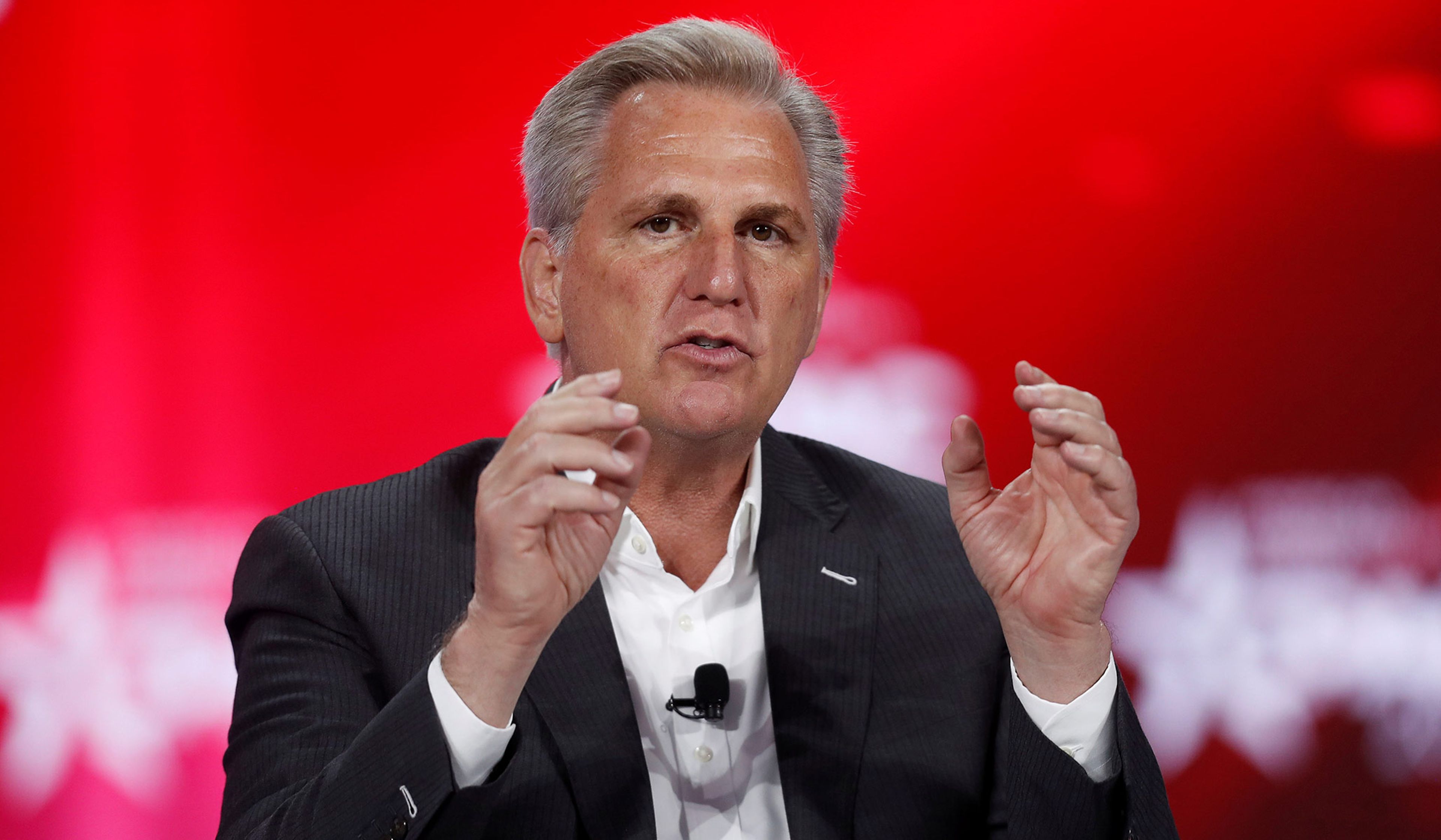
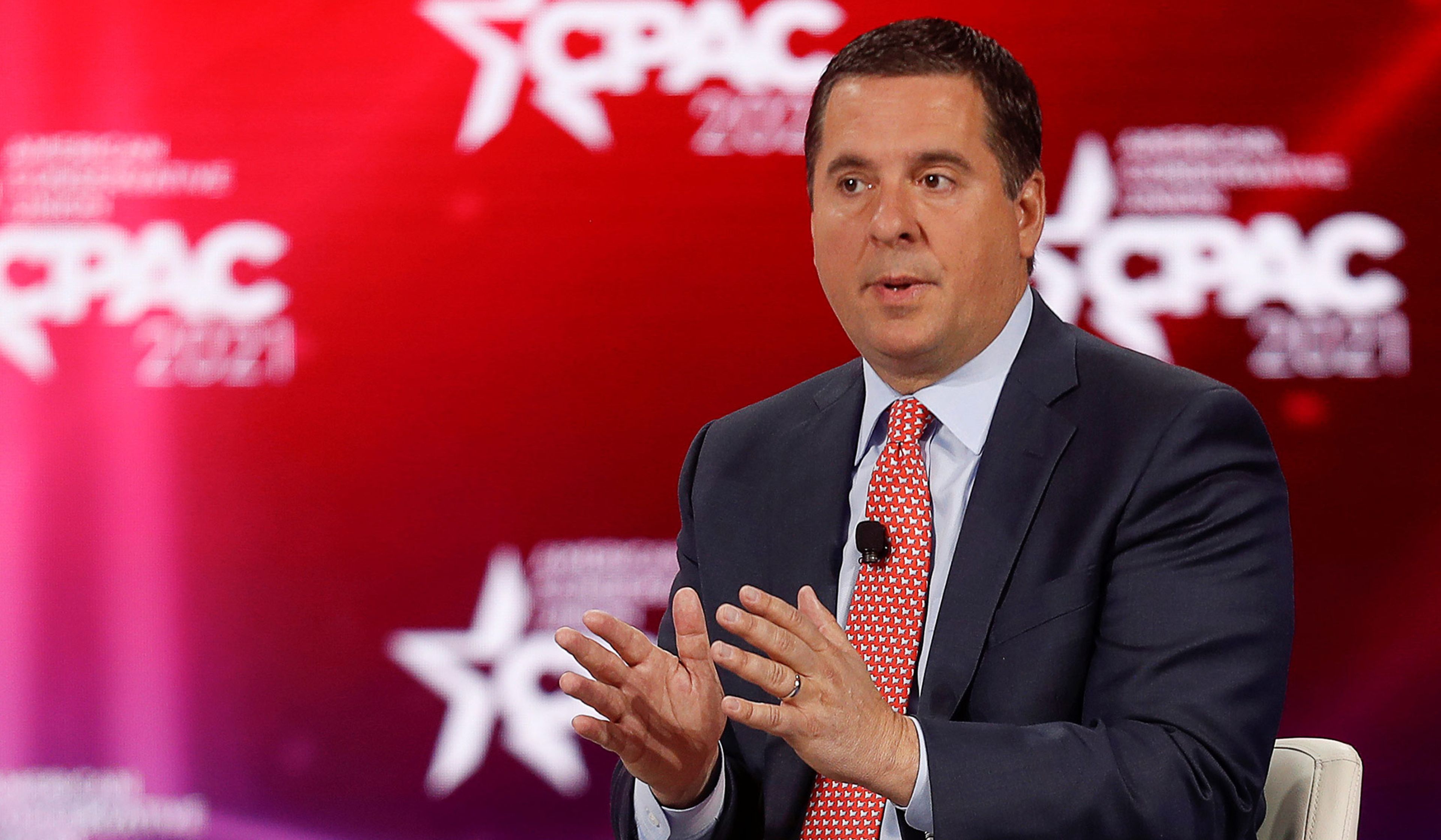
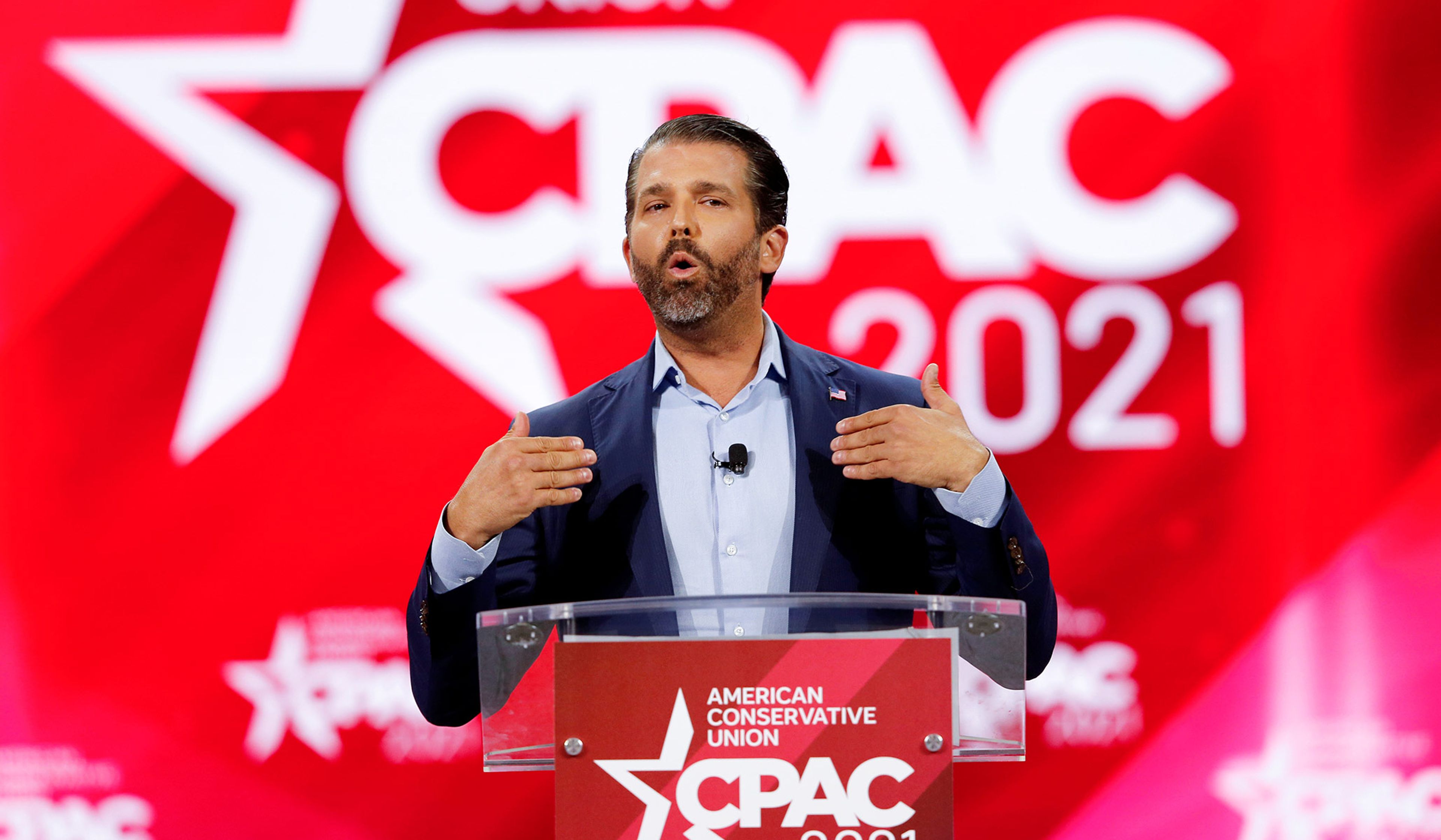
Former President Donald Trump speaks at the Conservative Political Action Conference in Orlando, Fla., February 28, 2021.
Joe Skipper/Reuters
An Ill-Timed, Ill-Judged Stimulus
In January, President Biden presented his $1.9 trillion spending package as an emergency measure to address a continuing public-health crisis. Now, as the Senate debates the bill, close to 80 million Americans have been vaccinated, with new cases of COVID-19 on a steady decline. In the meantime, jumps in consumer spending and business investment have coincided with falls in jobless claims.
For a party ostensibly committed to “following the science,” the Democrats are surprisingly willing to ignore the data and act as if it were still March 2020.
Yet even if the economic outlook were as negative as the Democrats claim, Biden’s proposal would do little to improve it. More than one-third of the so-called stimulus won’t be spent until 2022 or later. Public-education grants are expected to last until 2028, even as teachers’ unions refuse to reopen schools. That’s partially because most of the $113 billion in education aid from the last relief bill remains unspent.
So too with $370 billion in state and local assistance, the lion’s share of which would sit unused until 2023. With some exceptions, state and local budgets are in good shape. In fact, state and local tax receipts grew by 10 percent in 2020. What the Democrats position as emergency relief is in fact a bailout of profligate public-pension plans and mismanaged blue-state budgets.
The money that will be spent this year — on checks to households and unemployment top-ups — is wasteful at best and contractionary at worst. Thanks to last year’s CARES Act, personal incomes are higher now than they were before the pandemic. Most Americans used the first round of checks to pad their savings accounts or pay down debt. The second round, delivered in December, contributed to the highest bump in retail spending since 2009.
A deficit-funded subsidy to consumers might be a boon to economic growth if Americans went back to work, but the Biden administration is committed to making unemployment as attractive as possible. The proposed $400 unemployment top-ups, extended until September, would leave 60 percent of benefit recipients making more off the job than on the job. Not to mention Biden’s proposed federal minimum wage of $15, which — while fortunately unlikely to pass — would kill 1.4 million jobs, according to Congressional Budget Office estimates.
Recent shortages of everything from lumber to computer chips show that supply remains a bigger issue than demand. No amount of consumer spending can stimulate an economy in which businesses are unable to produce goods and services. Not only does the Biden bill ignore these issues, but it exacerbates them by incentivizing the unemployed to stay home.
Elsewhere, the bill’s expanded Obamacare subsidies — a backdoor attempt to improve some of the many disappointing results of Obamacare — would raise prices for most Americans and increase the already astronomical sums of money spent on health care in the U.S. As with most of Biden’s proposal, it does not belong in an emergency-relief bill.
The pandemic is not yet over, and the economy remains fragile. Legislation that accelerated vaccinations and supported businesses in reopening as quickly as possible would be welcome. The Biden stimulus is not that.











Comments