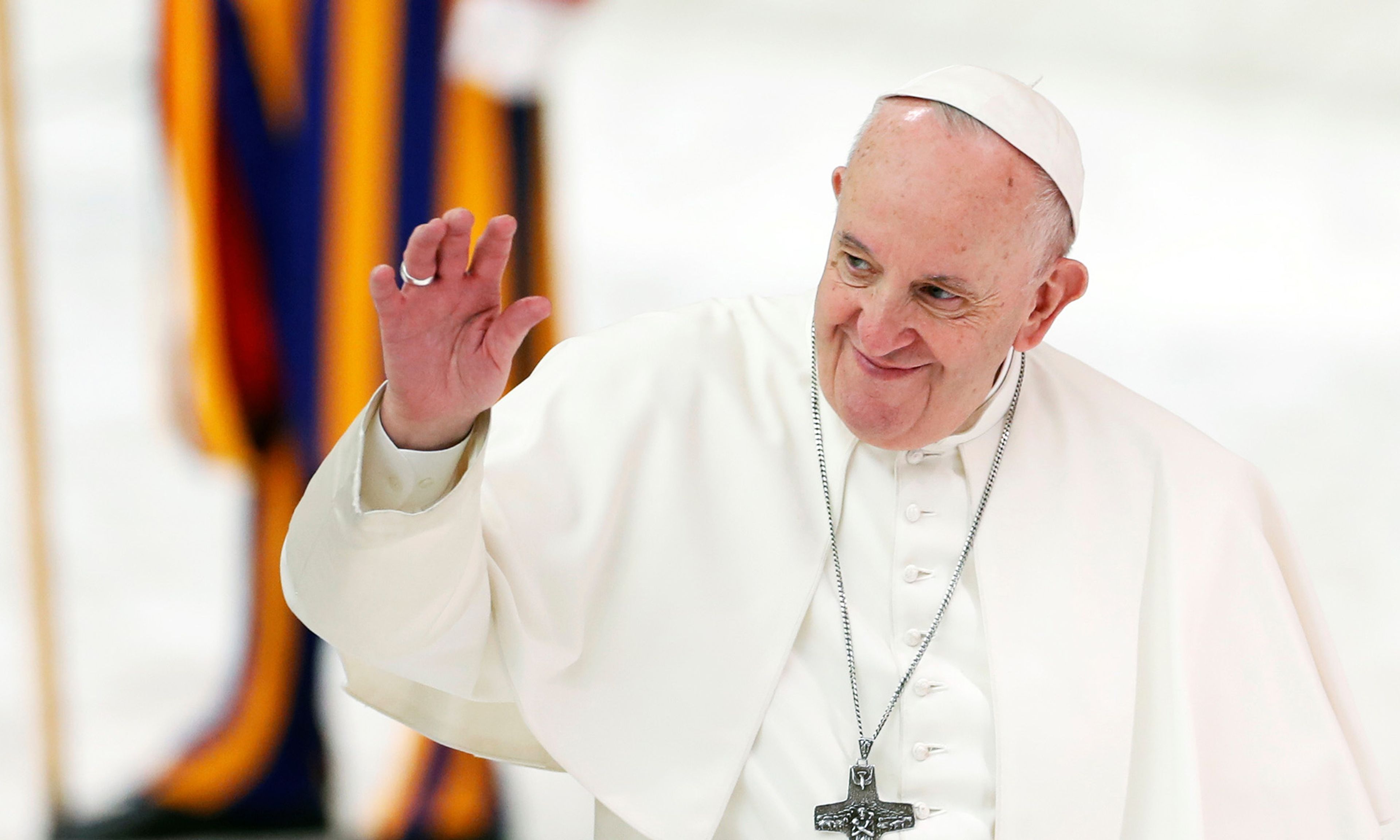
Problems in the Papacy?
In “The Wayward Shepherd” (February 24), Professor Mahoney longs for a pope to “uphold authentic continuity in the Church” and to refrain from “change for change’s sake.” Surely, the pope who in 2019 compared obtaining an abortion to contracting a hitman; the pope who in 2019 also said he would rather die than end priestly celibacy; the pope who in 2019 publicly celebrated Mass in the United Arab Emirates; the pope who in 2018 paved the way for 1.4 billion Chinese to gain access to the sacraments would be such a pope. Had Pope Francis called for “a more internationally coordinated approach to the management of earth’s goods” (as Saint John Paul II did in 1990), he would still be such a pope.
Professor Mahoney’s criticism fails to point to a substantive change to Church doctrine, and hardly quotes the Holy Father at all. Fellow critics’ observations are more common, as are the sins—real or perceived—of other prominent clerics. It’s right to lament the persecution of Christians around the globe. It’s reasonable to wonder about the near-term political impact of the pope’s diplomacy. In the meantime, Catholics of all stripes should take comfort in the words of the professor’s protagonist, Cardinal Sarah, when he observed that “every pope is right for his time.” Our victory is not political.
Kevin McCarthy Via email
Daniel Mahoney responds: I’m afraid the letter writer’s account of Pope Francis’s fundamental convictions and actions is very partial, indeed. And the radical separation of theology and politics (which at its highest aims at a common good worthy of free and responsible human beings made in the image and likeness of God) is untenable. As I have argued elsewhere, the pope’s ecological convictions lean toward pantheism, and his emphasis on the Church’s role in the world risks making the Church a secular nongovernmental organization. There is also a persistent confusion of the biblical “signs of the times” with a progressivist understanding of the zeitgeist, or what I called in my article “the authority of the present moment.” The pope’s forgetting of the unique evil that is totalitarianism is rooted in both theological and political misjudgments, as is a strange deference to movements, regimes, and religions that persecute Christians and human freedom. I give plenty of examples in my article. Cardinal Zen has spoken forthrightly about the abandonment of China’s underground Church and the appeasement of an “official” church in China dominated by collaborators and secret-police agents. On the theological front, this pope has sullied the nonnegotiable Catholic understanding of the indissolubility of marriage and has increasingly severed mercy from its crucial link to repentance. That risks giving aid and comfort to what his predecessor so memorably called “the dictatorship of relativism.”
From time to time, Pope Francis speaks unequivocally in the voice of Catholic orthodoxy. That is most welcome. But he also has more regularly downplayed the grave evil of abortion by preferring not to speak of it even as he freely denounces capital punishment. He also rehabilitated Cardinal McCarrick and gave him a leading role in recommending new bishops and cardinals in the United States. That is lamentable by any standard. But mainly this pontificate has failed to stand up to the forces of moral nihilism with vigor and conviction. I wish the moments and statements highlighted in the letter above were less rare and more typical of this pontificate as a whole. I do indeed hope and pray that the Holy Roman Pontiff rejects fashionable “change for change’s sake,” for the good of both the Church and the world. And I do so as a faithful Catholic mindful of the continuity of truth.











Comments