
Macroeconomics is difficult, and nobody is entirely sure how it works. Anybody who claims to have it all figured out is trying to sell you something. It’s a field where many practitioners, even (and perhaps especially) very learned ones, are hesitant to make predictions, because they have a long record of being proven wrong.
So it may seem strange that so many economists are so confident that “modern monetary theory” (MMT) is wrong. Paul Krugman has called it “Calvinball.” Larry Summers likened it to fad diets. Noah Smith called it “a fringe ideology.” Michael Strain wrote that it “sounded like lunacy.” Scott Sumner wrote, “MMT is clearly not ready for prime time.” John Cochrane renamed it “magical monetary theory.”
In lengthier, more academic treatments, MMT has fared no better. Eric Leeper of the Progressive Policy Institute devoted 30 pages to it and concluded that “economic science, such as it is, provides no support for MMT’s central claims.” In a working paper for France’s central bank, Françoise Drumetz and Christian Pfister concluded “that MMT is based on an outdated approach to economics and that the meaning of MMT is more that of a political manifesto than of a genuine economic theory.” Thomas Palley, a post-Keynesian economist, concluded “there is no there there.”
Which brings us to humility. How can these denunciations of MMT, which flow freely from the mouths of people of every other school of economic thought, fit into the ethic of humility that ought to characterize good macroeconomics? The critics could be interpreted as jealous gatekeepers, blocking any new ideas from encroaching on their intellectual territory.
New ideas should be welcome in macroeconomics. The 20th century saw many different schools of economic thought pop up, and many different economists populated them. You had the Keynesians, the monetarists, the new classicals, the Austrians, the real-business-cycle theorists, etc. Economists would snipe at one another from their various silos and crank out research to back up their schools.
In the 21st century, economists have been much less willing to attach themselves to a particular school. This is largely based on the experience of the 20th century. Each school made some good points on some things. Some certainly made more good points than others. But overall, no individual school can claim to have figured everything out, and each school can claim some valuable contribution to the body of macroeconomic knowledge.
That body continues to develop in a world of uncertainty. In macroeconomics, that uncertainty comes from a few different places. One is observational equivalence, which arises out of what Hayek called “the infinite variety of phenomena which we can find in any concrete situation.” There are simply too many possible explanatory variables to say with any certainty which ones were the most important only by observing outcomes.
And it’s not as though we could eventually enumerate all of them and build a supercomputer powerful enough to spit out answers. They are infinite in number, and because they arise from humans making decisions, they are malleable in character. As the economist James Buchanan said, the order that we observe “emerges only from the process of voluntary exchange among the participating individuals” and “the potential participants do not know until they enter the process what their own choices will be.” People aren’t pinballs responding to the laws of physics; they are independent, living beings who make different choices from one another even when given the same information.
Those choices also involve predictions, as Nobel laureates Ed Prescott and Finn Kydland noted. They used a lot of technical economics to demonstrate that because people’s preferences do not remain consistent through time, even policies enacted with perfect information in the present would backfire in the future. Only in economics can you win the highest prize in the field for demonstrating that even if everyone did everything perfectly, they’d still fail.
In the face of this overwhelming uncertainty and constantly shifting body of knowledge, the starting point for any serious economic analysis must be humility. We don’t fully understand the past; we can’t have any quick fixes for what’s going on in the present; and we don’t know what will happen in the future.
It is into that context that modern monetary theory enters, asking, “What if you’re all wrong?”
On February 6, Jeanna Smialek of the New York Times wrote a profile of Stephanie Kelton, the Stony Brook University professor who is one of MMT’s leading proponents. When macroeconomics is the subject of a lengthy feature in the New York Times, it’s bad news. Either there’s been a recession, or you’re about to encounter some bad ideas. This time it’s the latter.
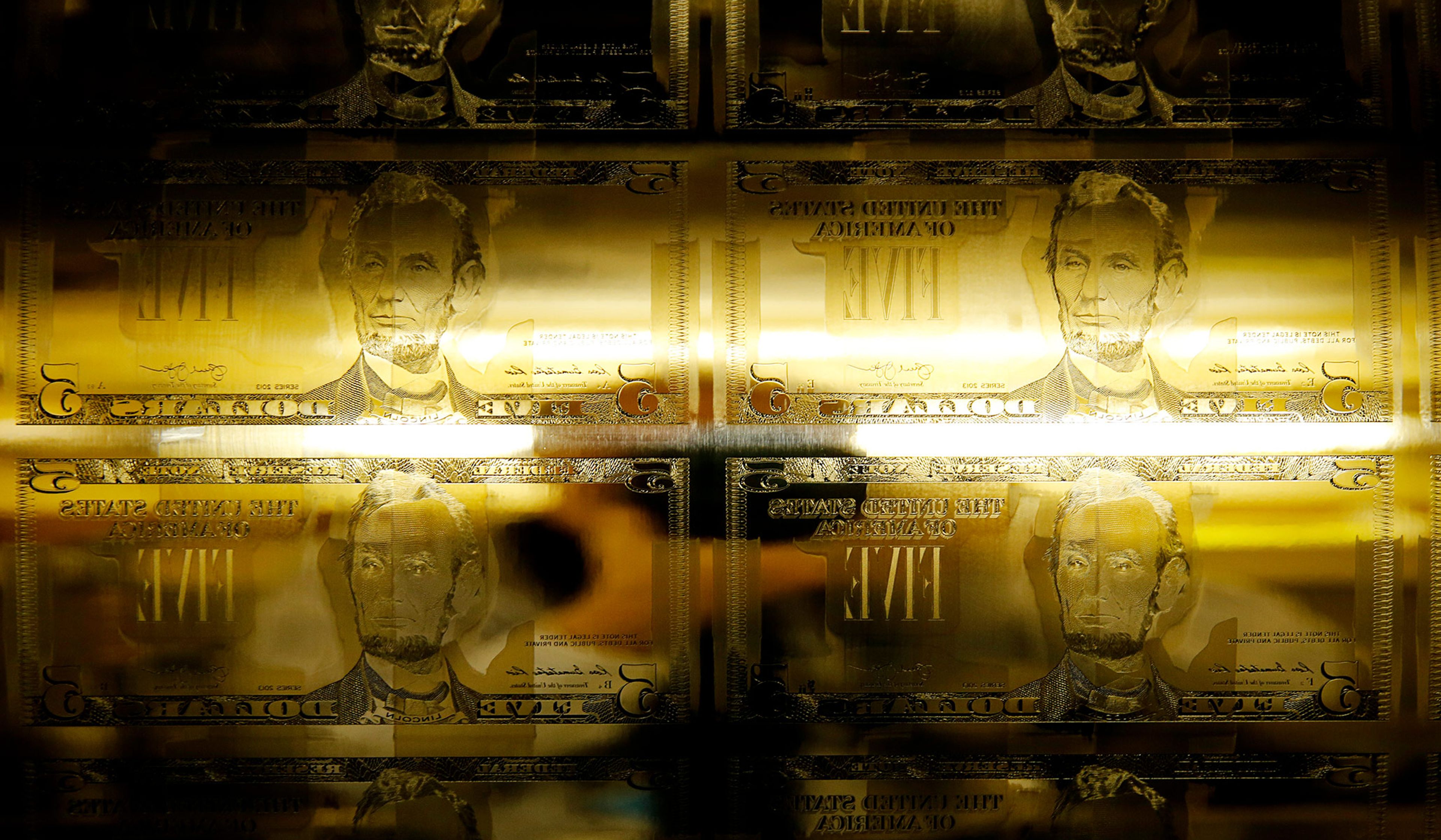
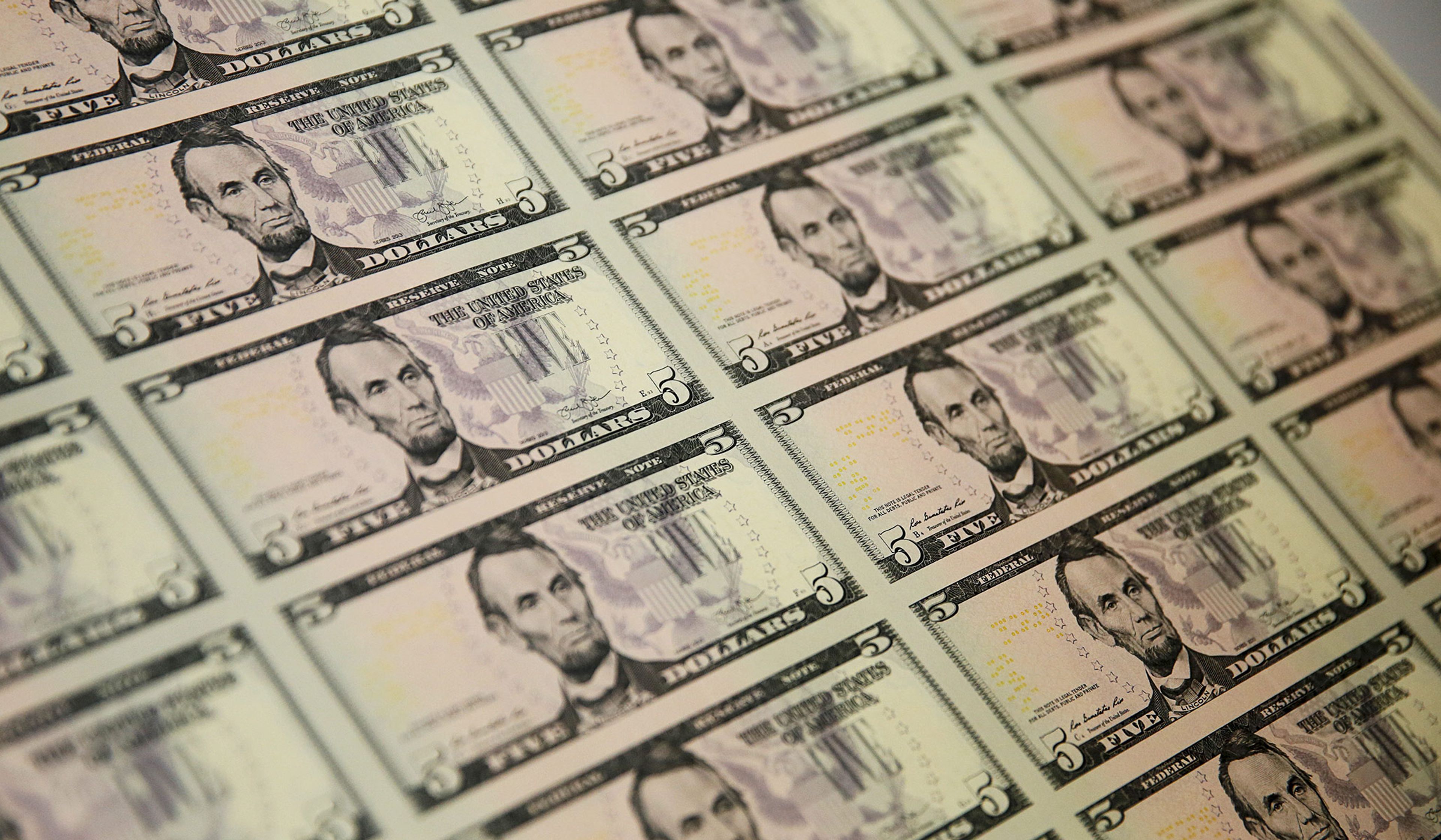
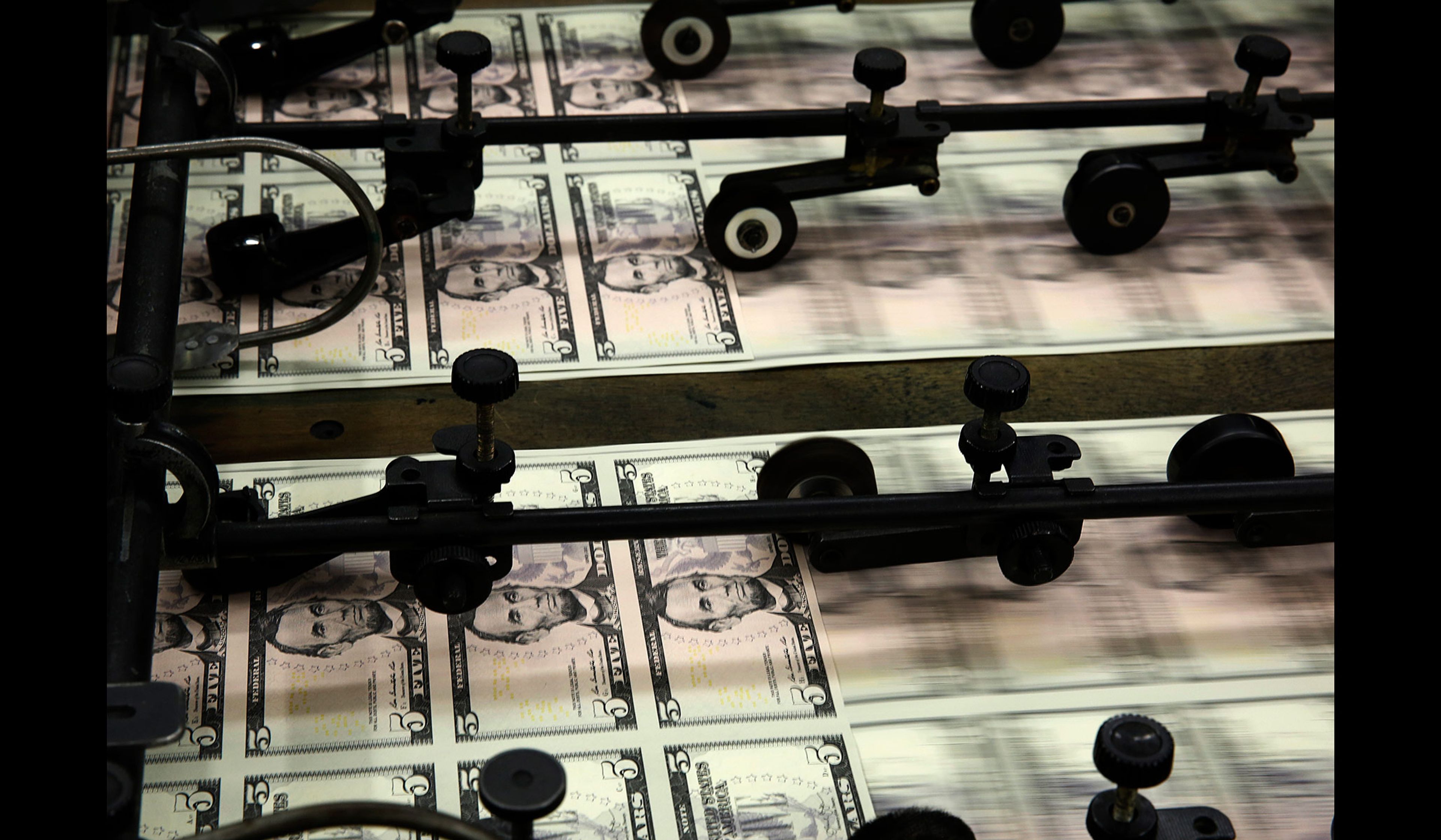
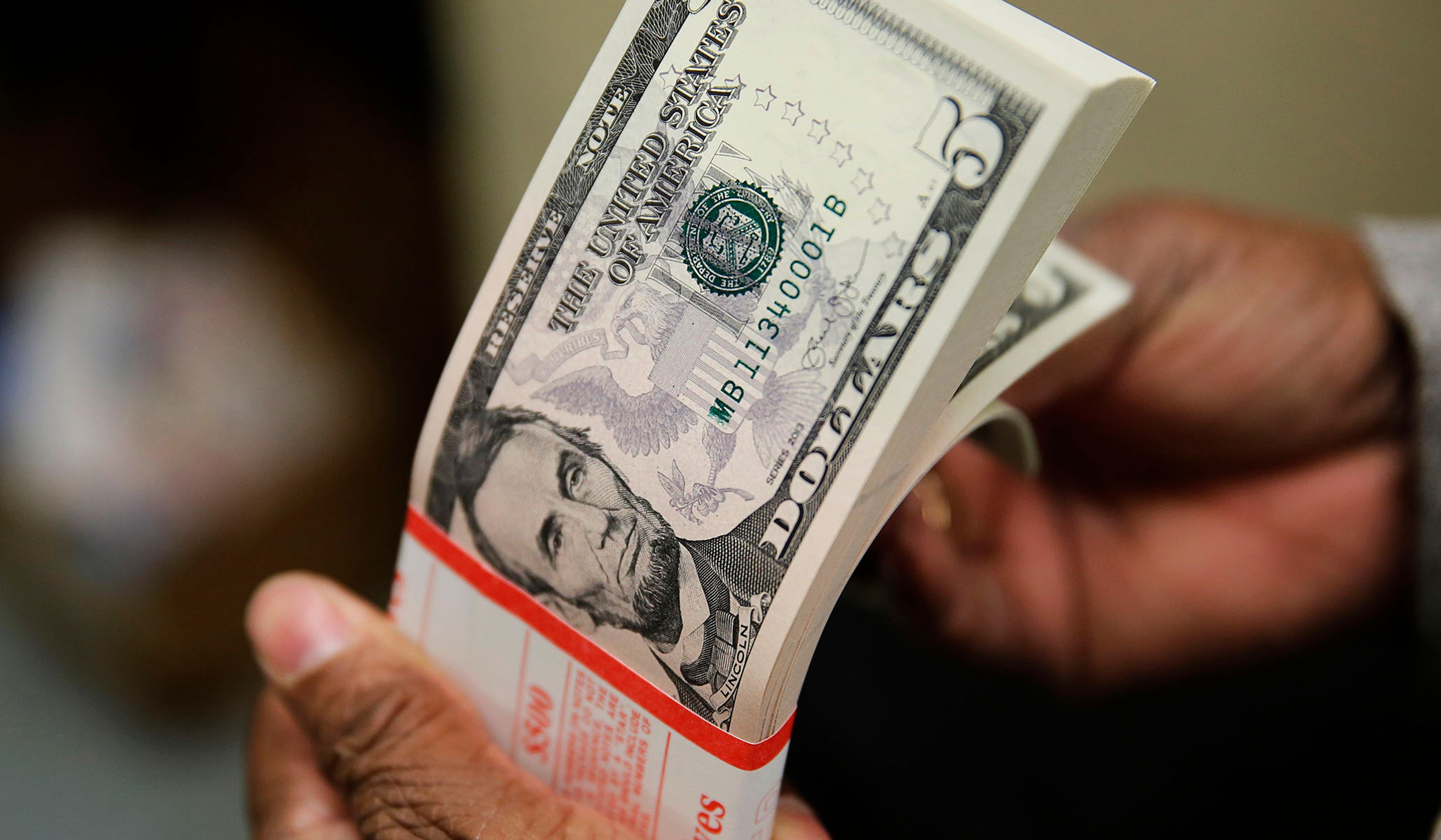
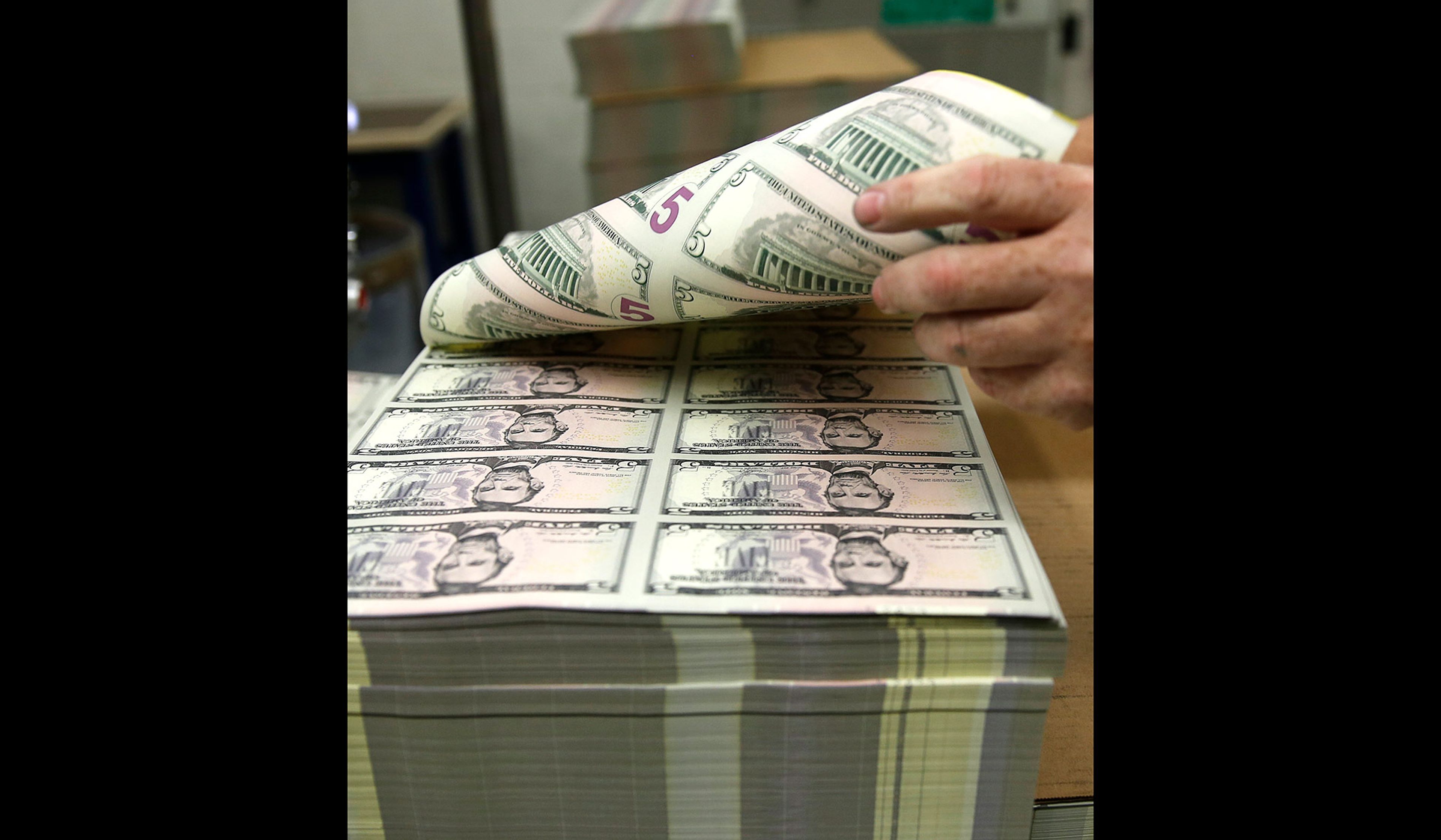
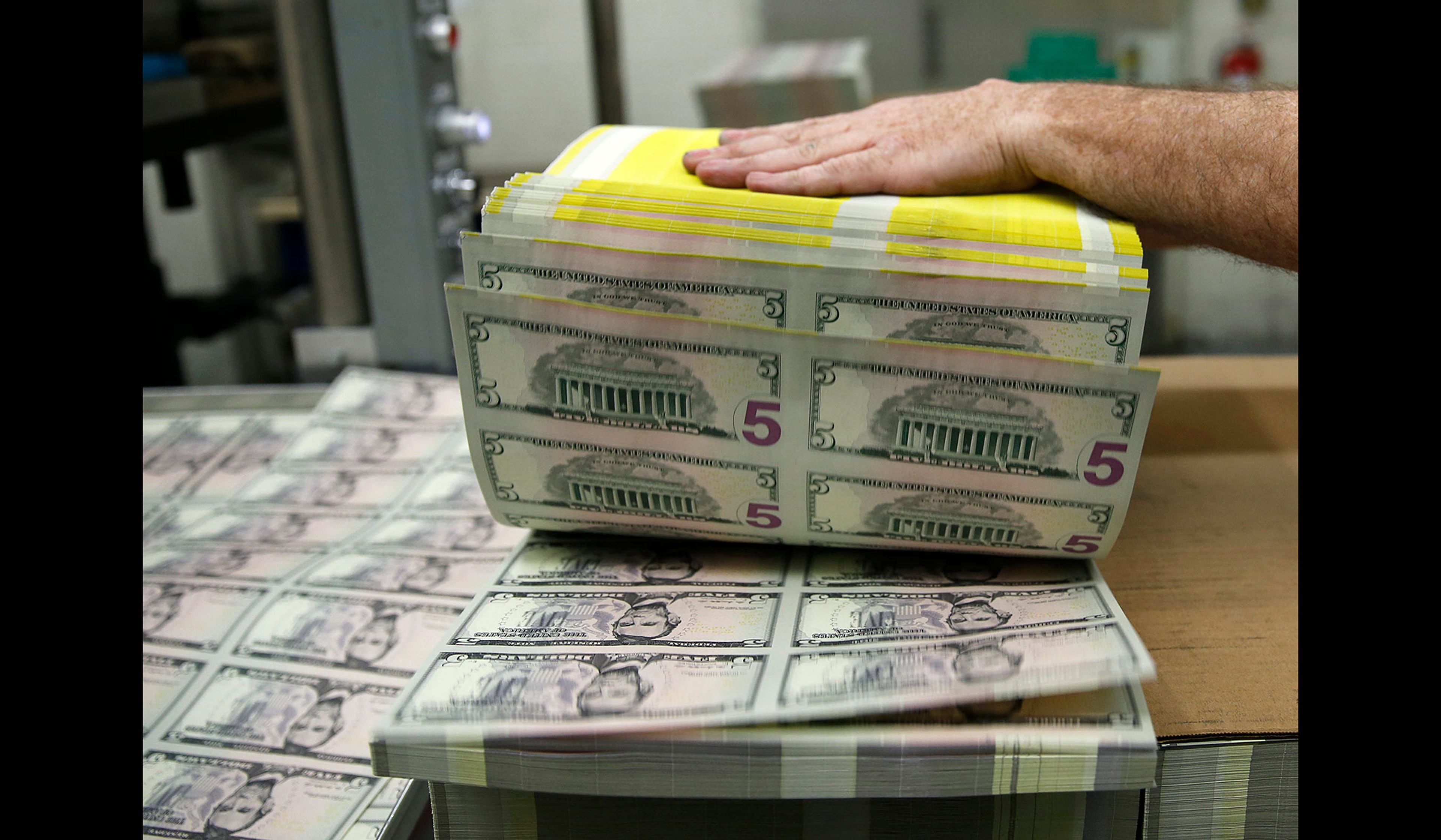

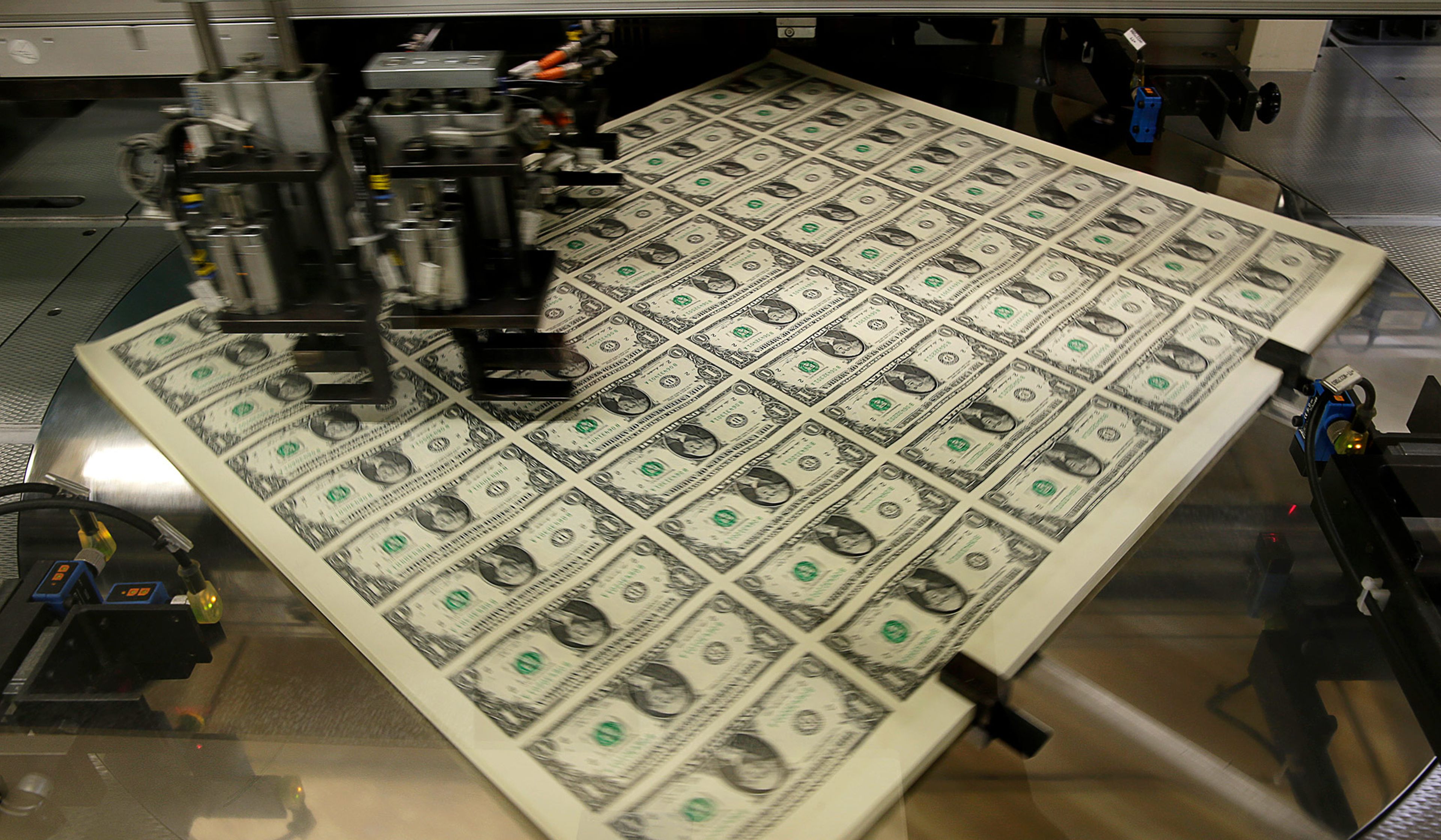

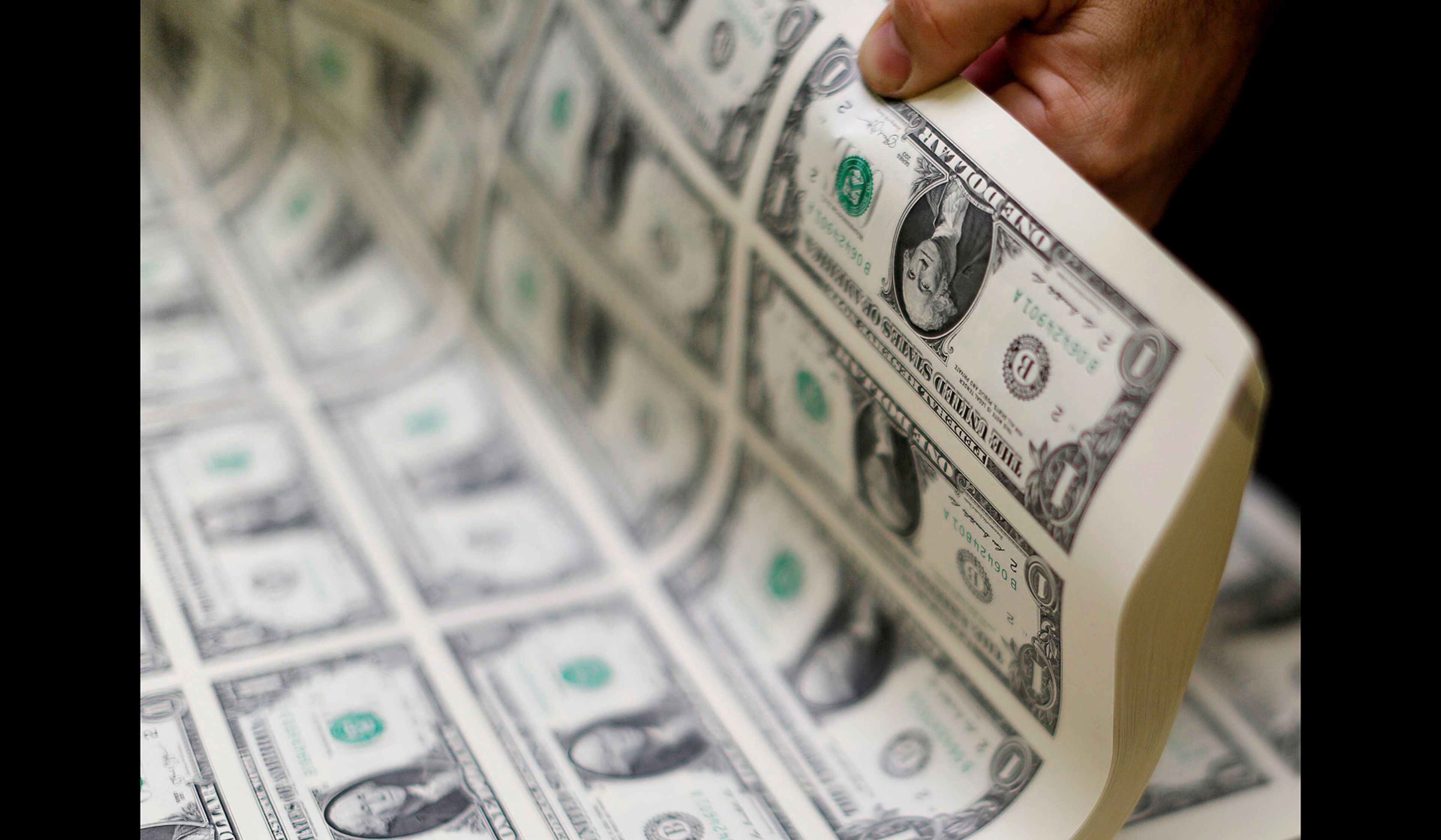
Engraving printing plates of President Abraham Lincoln on the $5 bill on a printing press at the Bureau of Engraving and Printing in Washington, D.C., March 26, 2015.
Gary Cameron/Reuters
Macroeconomics is not well suited to this kind of journalistic treatment because when you have a writer putting together a glowing profile and a New York Times photographer at your house, you want to be impressive. That means you’re not going to say things like “I’m not really sure, because observational equivalence obscures things, and uncertainty is baked into everything we do.” When performing for a reporter, economics, which in Hayek’s words is supposed to be about demonstrating how little we know about what we imagine we can design, can easily take a back seat to vanquishing your intellectual enemies and boosting your intellectual tribe.
The MMT tribe says macroeconomics is all wrong. As Smialek writes, MMT says that “if a government controls its own currency and needs money . . . it can just print it, as long as its economy has the ability to churn out the needed goods and services.” If you accept this claim, then government spending never needs to be paid for; fiscal policy is not revenue-constrained.
Not just during recessions, as Keynesians would say. Never. The government never has to worry about paying for things because it has the power to print money. There’s no need for independent central banks or budgetary offsets or any of that stuff.
Under MMT, monetary policy and fiscal policy are essentially the same thing. Taxes need to exist only insofar as they create demand for money by restricting the supply of money available to consumers at a given time. The only relevant constraint is the real resources in a country. The ordinary trade-offs that economists are used to considering when governments want to spend are no longer relevant, MMT says. So long as the necessary materials and workers exist for any government project, just print money to finance it.
Of course, governments that control their own currencies can just print money, but that causes inflation, right? Not according to MMT theorists. Or at least some of them, at least some of the time. This is where things get tricky, because MMT isn’t really a school of economics in any traditional sense of the term. There are no models or anything to pin down what it prescribes on any particular issue.
On January 18, Kelton wrote a rambling, Sound of Music–themed Substack post about inflation (“How Do You Solve a Problem Like Inflation?” “So Long, Farewell,” etc.) that boiled down to this: “There isn’t one” — an MMT solution to inflation, that is. She wrote that MMT suggests preventing inflation before it starts, as if that were a controversial position. Once it starts, though, there’s no MMT solution.
In the past, inflation has been reduced by the Fed’s raising of interest rates. But Kelton writes that each episode of inflation is unique, and you can’t use the same tools from the past to fight inflation in the present. Again, everybody is wrong, according to MMT.
And in a sense, MMT is correct. Everybody is wrong. The Federal Reserve is really bad at forecasting inflation. Nobody has a comprehensive theory of the business cycle that actually works. Economists aren’t even sure anymore that there was a housing bubble before the Great Recession.
But humility is a two-way street in macroeconomics. Just barging in and saying “Everyone is wrong!” will get you attention in the New York Times, but it won’t earn you any respect among macroeconomists. Most of them already know they are wrong about stuff and don’t need any reminders. The question is whether a new entrant is willing to use the tools of macroeconomics to explain why its explanation is better. That’s how new schools of thought are started.
MMT does not attempt to do this. It does not engage with macroeconomics as it currently exists. It does not seek to build on what is already there.
MMT is wrong because it fails to understand why everybody else is wrong. Macroeconomists get things wrong because they study a web of human interactions that is never stable and in many respects is inevitably unpredictable. MMT proponents have the arrogance to say, “It’s actually simple; just print money.” Then, once inflation starts, they’re out of ideas.
Even within the world of uncertainty that macroeconomics operates in, and even with the appropriate humility of judgment, MMT should not be taken seriously as monetary policy — not because it is a new idea, but because it is a bad idea.












Comments