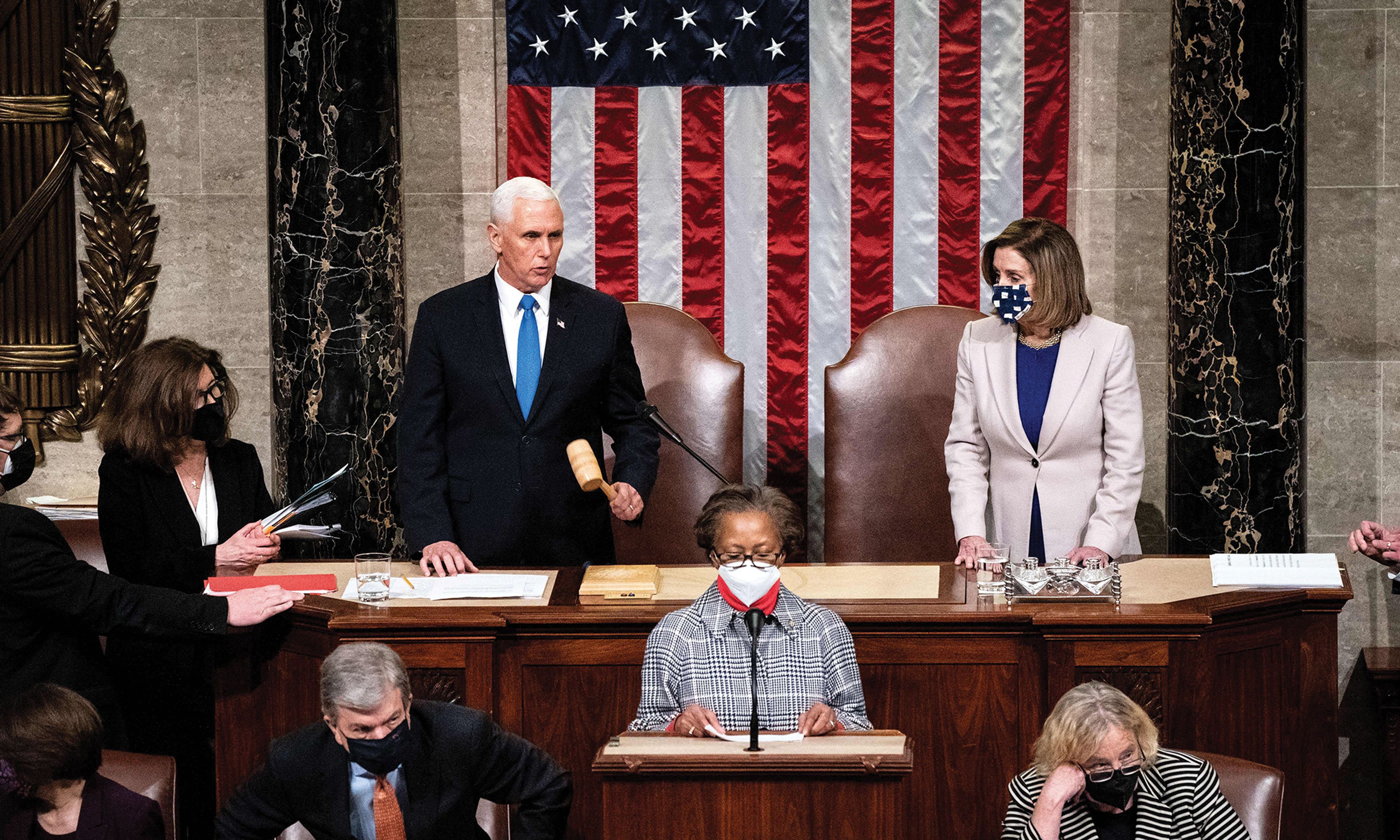
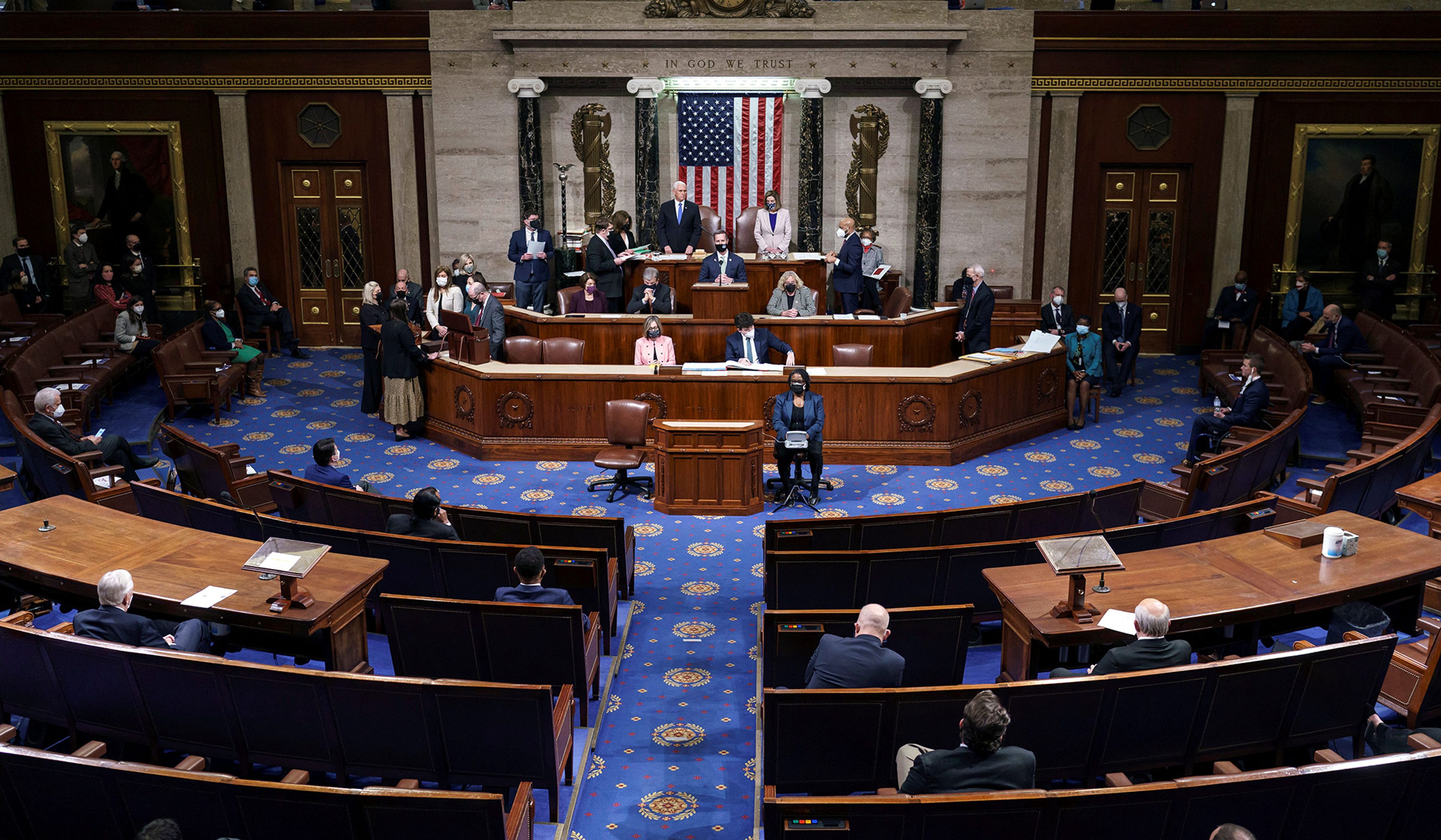
Over the past month, there has been a bipartisan burst of activity in the Senate to reform the Electoral Count Act of 1887 — the law governing the counting of Electoral College votes that has drawn so much scrutiny since the events of January 6, 2021.
The effort to reform the ECA gained steam following Senate Democrats’ failed attempt in January to override rules regarding the filibuster in order to pass a separate bill, backed only by Democrats, to federalize elections. “We had an insurrection that happened because of an antiquated law that should have been changed many, many years ago,” West Virginia Democratic senator Joe Manchin told reporters in the Capitol on January 20, the day after he and Arizona Democrat Kyrsten Sinema thwarted Senate majority leader Chuck Schumer’s attempt to change Senate filibuster rules. “We have total support among Democrats and Republicans. Let’s do what we can do.”
Manchin overstated his case for ECA reform in a couple of key respects: While the ambiguities in the 1887 law contributed to the confusion surrounding Congress’s role on January 6, 2021, it is unfair to say that the law caused the mob violence that targeted the peaceful transfer of power. And while there is widespread support among Senate Republicans — including Mitch McConnell, Ben Sasse, and Lindsey Graham — for some reform of the Electoral Count Act, that level of support is far from “total.” But the bipartisan group led by Manchin and Maine GOP senator Susan Collins has nevertheless been making progress, and their ultimate proposal will likely address at least a few key issues.
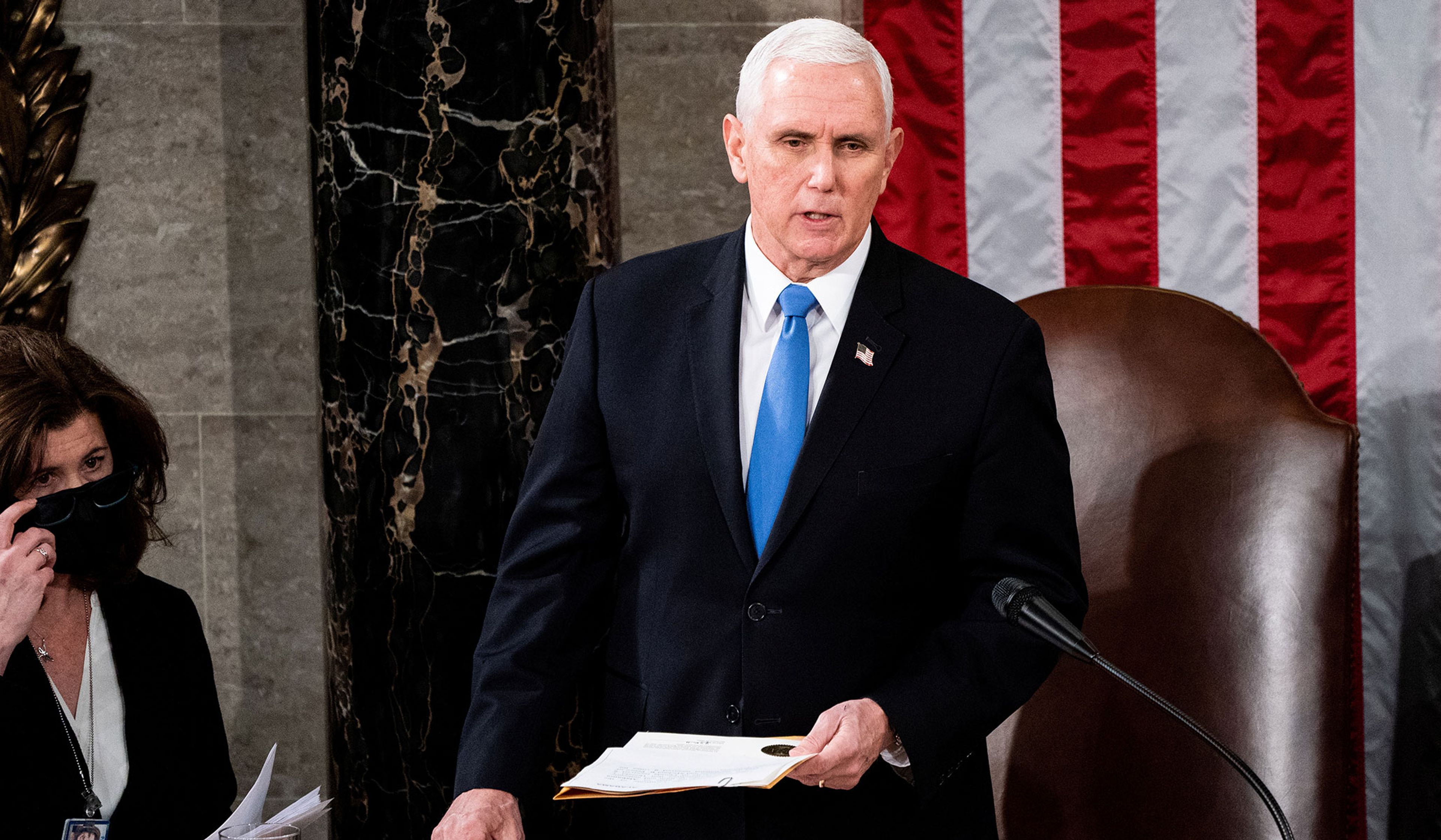
First, it will clarify the role of the vice president, who as president of the Senate presides over the joint session of Congress that counts electoral votes in accordance with the Twelfth Amendment. “We pretty much reached an agreement that the role of the vice president needs to be made crystal clear that it is ministerial, but we’re still drafting the legislation,” Collins told reporters in the Capitol on February 10. That provision of ECA reform is a response to former president Donald Trump’s public and private efforts to get former vice president Mike Pence to try to stop Congress from counting several slates of electoral votes for Joe Biden.
Trump has now taken this provision of ECA reform as proof that he was right all along about the vice president’s authority. “If the Vice President (Mike Pence) had ‘absolutely no right’ to change the Presidential Election results in the Senate, despite fraud and many other irregularities, how come the Democrats and RINO Republicans, like Wacky Susan Collins, are desperately trying to pass legislation that will not allow the Vice President to change the results of the election?” Trump said in a press release issued the evening of Sunday, January 30. “Actually, what they are saying, is that Mike Pence did have the right to change the outcome, and they now want to take that right away. Unfortunately, he didn’t exercise that power, he could have overturned the Election!”
There are many ambiguities in the Electoral Count Act, but the notion that it gives the vice president the final say over the counting of the Electoral College votes is not one of them. Indeed, after the election, Trump’s legal advisers argued that Pence needed to deem the Electoral Count Act unconstitutional in order to toss out Biden electoral votes. When Rudy Giuliani mentioned the Electoral Count Act at the January 6, 2021, “Save America” rally outside the White House, he did so only to say that “the vice president can cast it aside” so that he can “decide on the validity of these crooked ballots, or he can send it back to the legislatures” to investigate (baseless) claims of widespread voter fraud. Giuliani was echoing an argument made in two legal memos written by John Eastman of the Claremont Institute that claimed the Twelfth Amendment makes the vice president the “ultimate arbiter” of any electoral-vote-count disputes.
In our constitutional republic, neither the vice president nor Congress has the authority to overturn a presidential election — their only role, according to the Constitution, is to “open” and “count” the Electoral College ballots. In the rare instances in which states send competing slates of electoral ballots, any fair reading of the Electoral Count Act would lead one to conclude that Congress, not the vice president, settles disputes. If the Electoral Count Act were revised to state explicitly that the vice president is not the arbiter, but instead plays a purely ministerial role, it would not in any way concede that Mike Pence — or former vice president Al Gore or current vice president Kamala Harris, for that matter — had the near-dictatorial authority, in Trump’s words, to “overturn the Election!”
A second provision of ECA reform will likely raise the threshold that triggers congressional debate for challenges to the counting of Electoral College votes. The law currently states that it takes only one senator and one House member to trigger a debate. Raising the threshold could help prevent frivolous challenges in the future. In 2005, Democratic senator Barbara Boxer backed the effort to cast doubt over the legitimacy of George W. Bush’s victory. In 2021, about a dozen GOP senators intended to join more than half of House Republicans in challenging Biden electors. One of those GOP senators, Josh Hawley of Missouri, gave Trump supporters false hope that Congress might actually overturn Joe Biden’s Electoral College victory. “Are you trying to say that, as of January 20, that President Trump will be president?” Fox News host Bret Baier asked Hawley in an interview on January 4, 2021. “Well, Bret, that depends on what happens on Wednesday [January 6]. I mean, this is why we have the debate,” Hawley replied.
But the third and most important part of Electoral Count Act reform — strengthening guardrails to prevent a future constitutional crisis and ensuring that the legitimate winner of a presidential election takes office — is the most difficult.
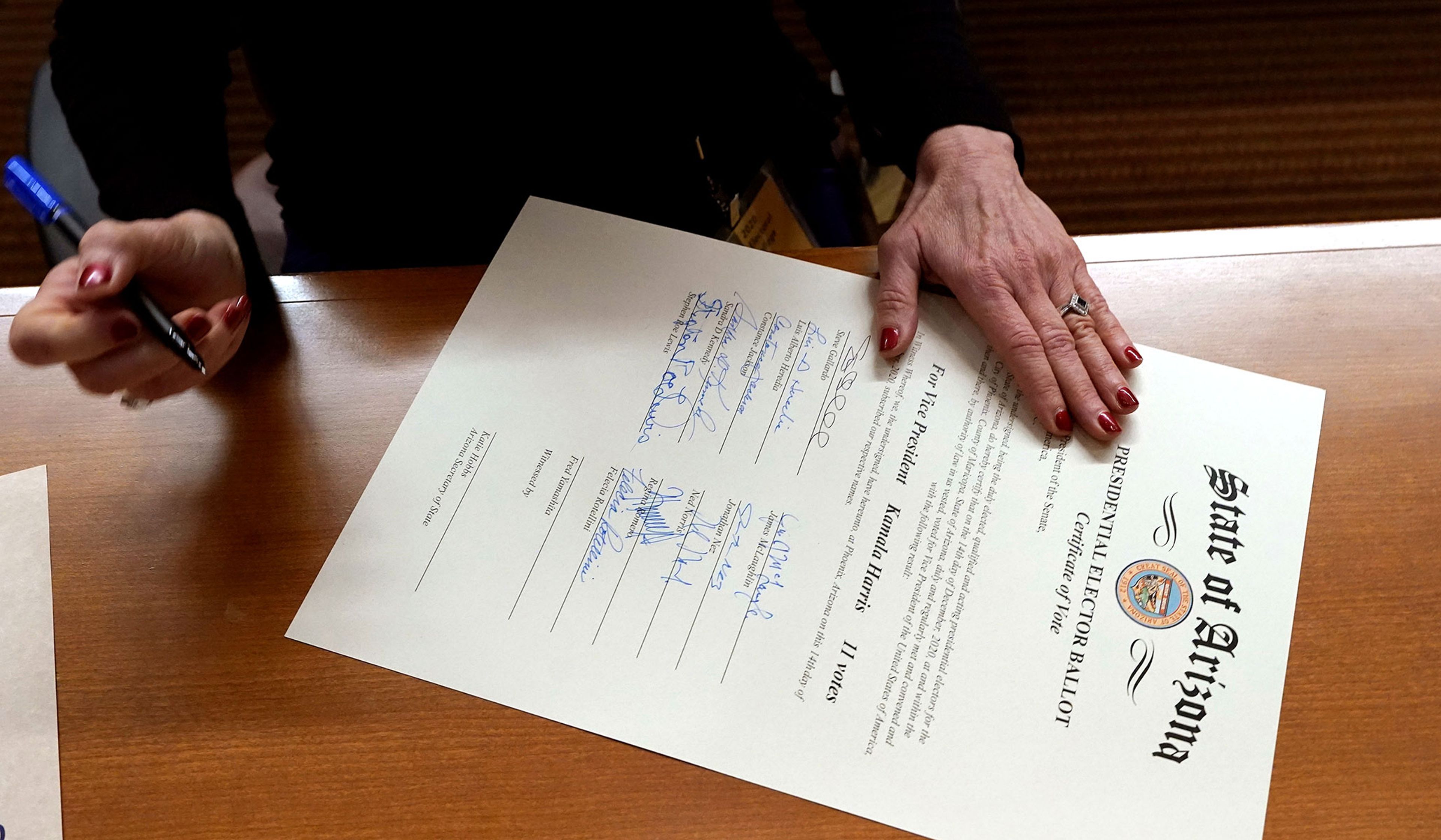
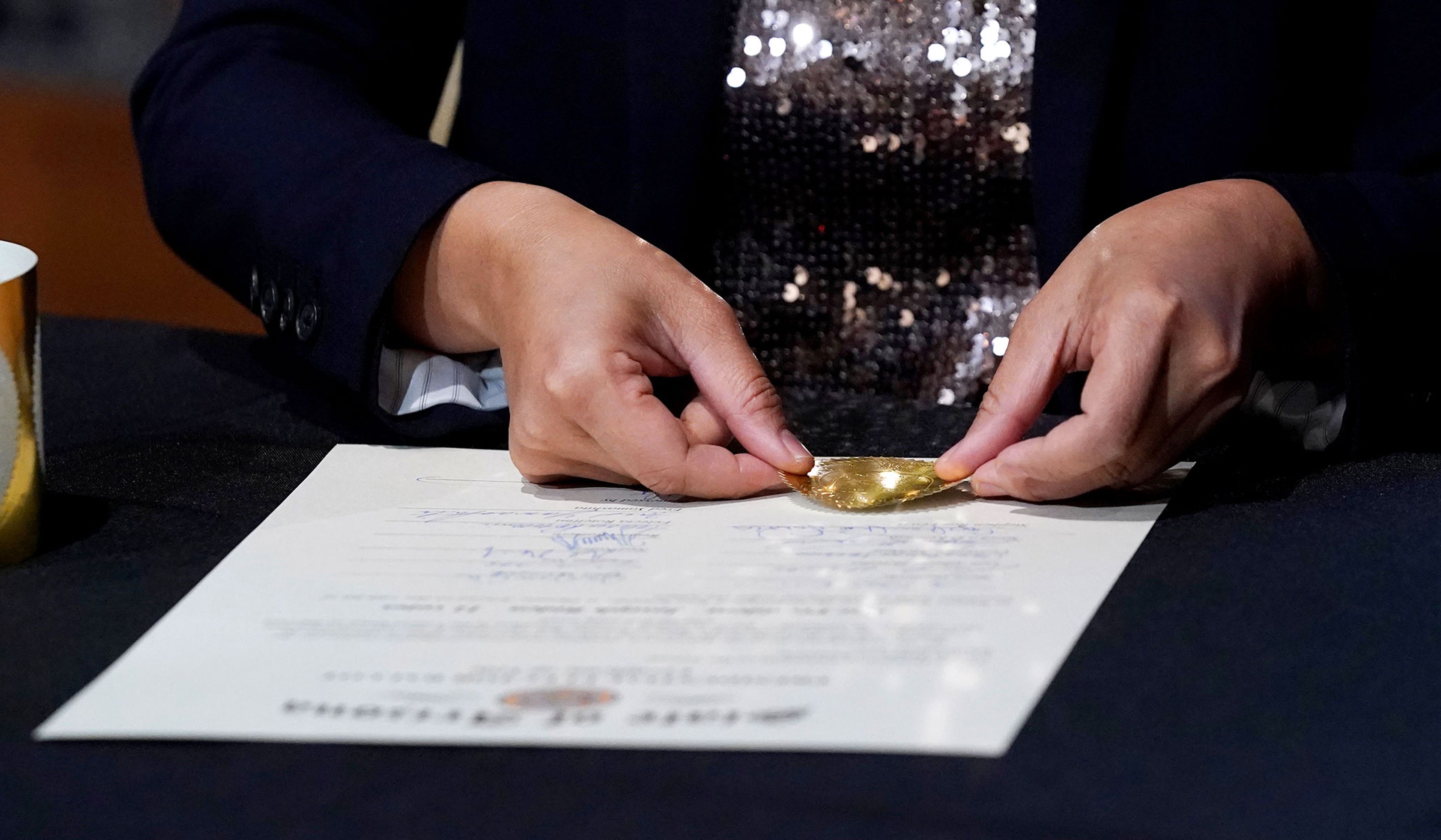
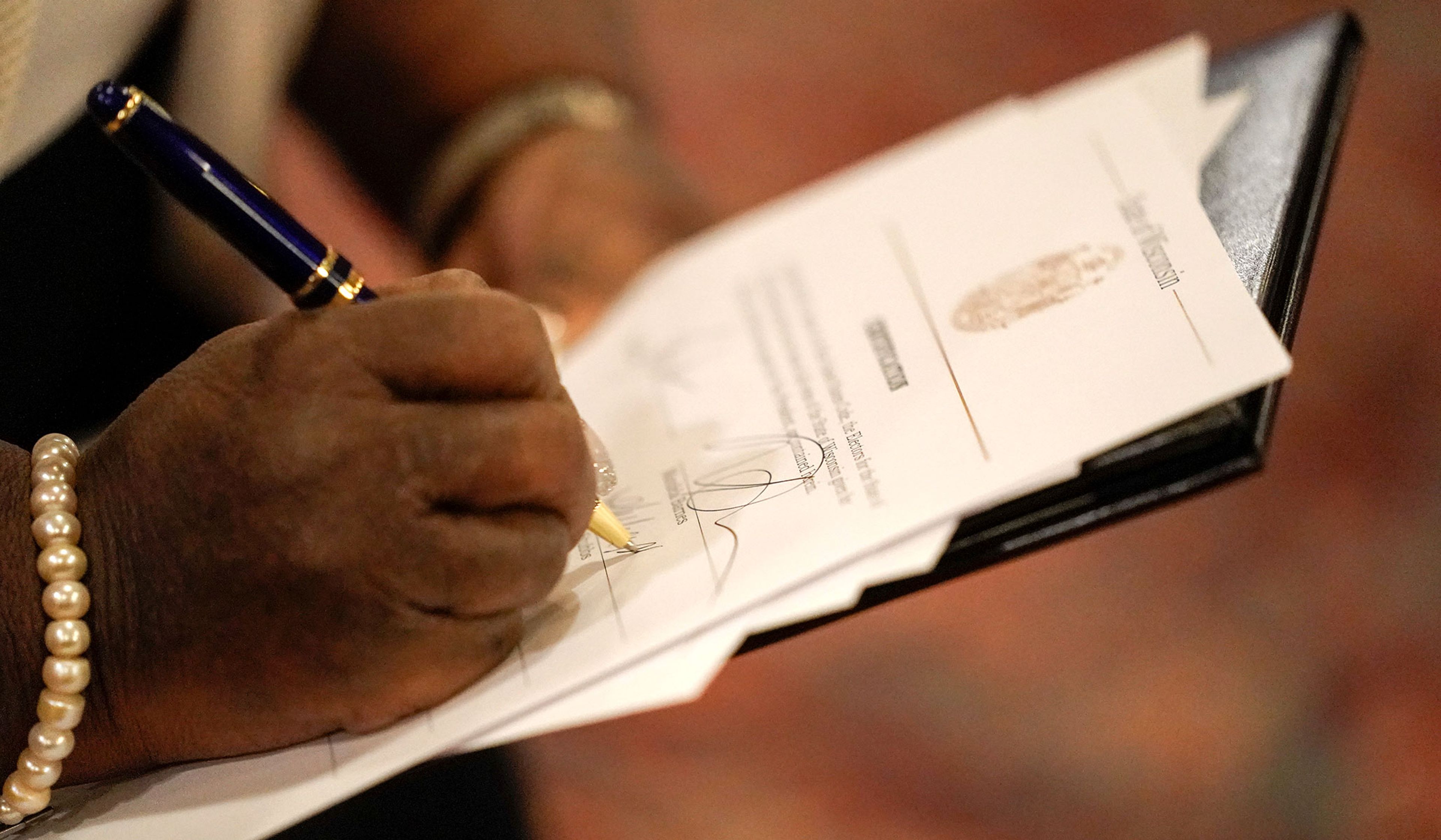
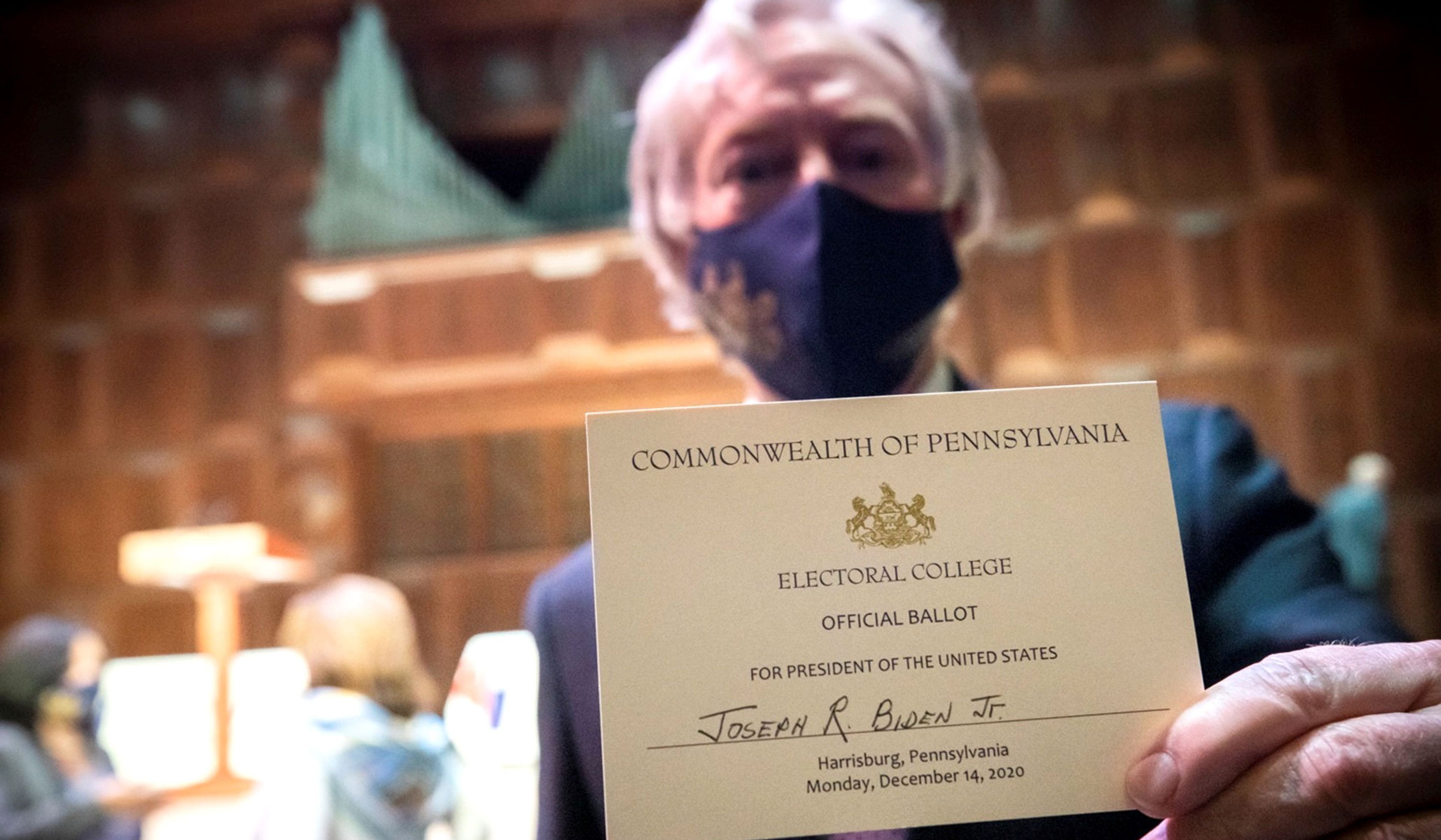
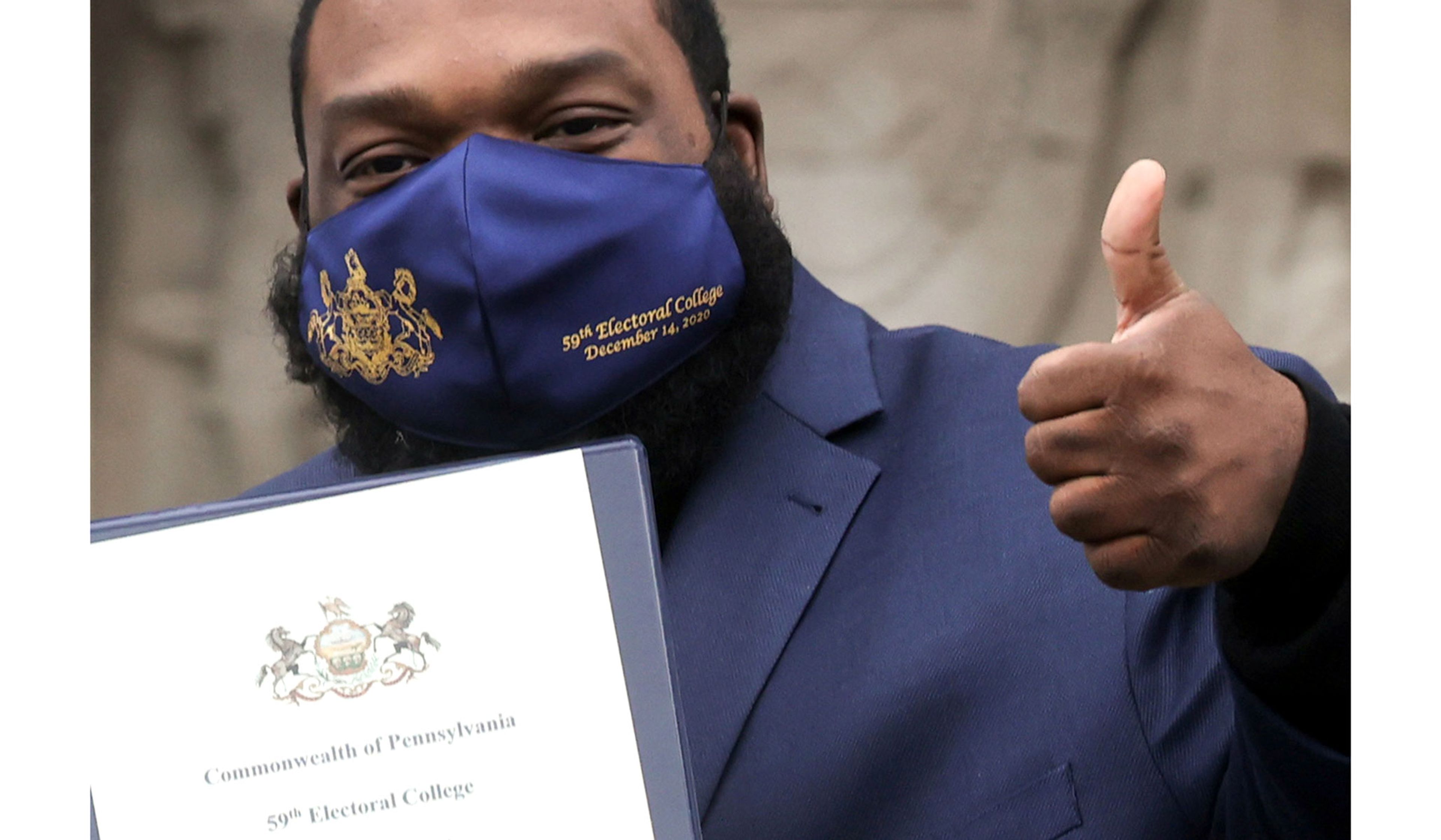
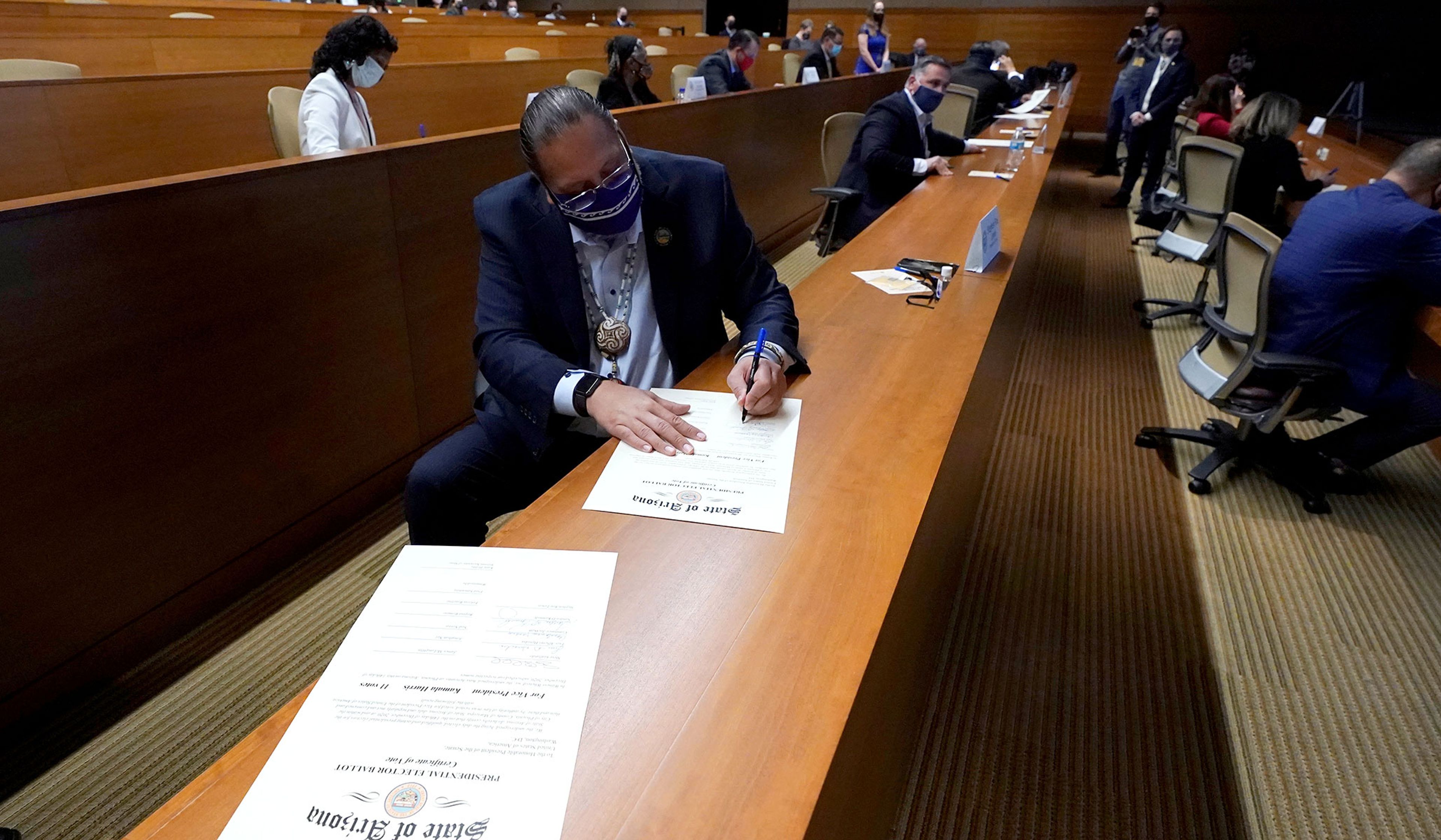
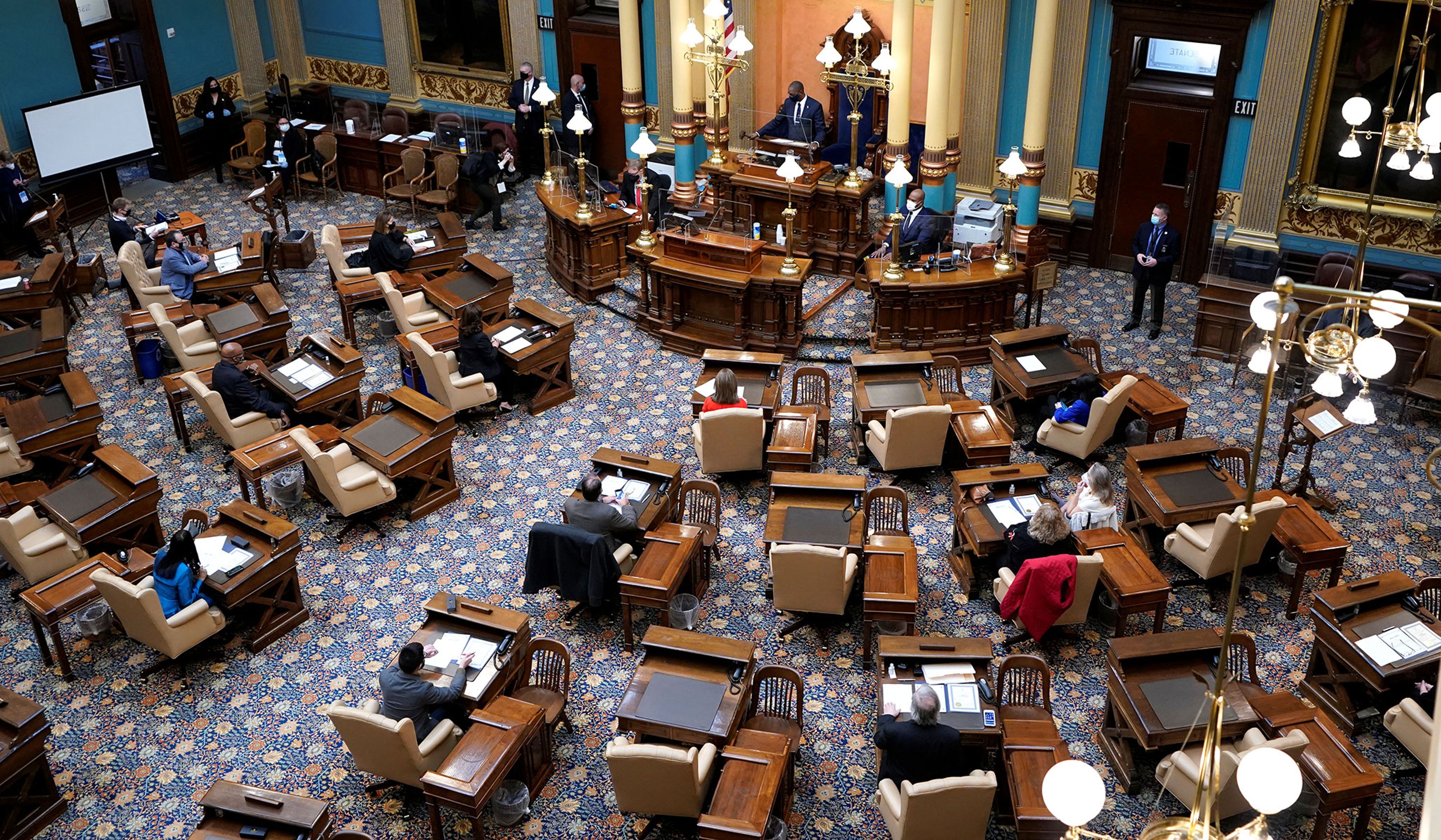
Felecia Rotellini, a member of Arizona’s Electoral College, signs the Arizona Presidential Elector Ballot certificate in Phoenix, Ariz., December 14, 2020.
Ross D. Franklin/Pool via Reuters
As disgraceful as the Capitol riot was, the republic wasn’t in mortal danger on January 6 because there was never a chance Congress would overturn the results of the Electoral College. There wasn’t a single state in the country that sent competing slates of electors to Congress. There wasn’t a single state legislature in which a majority even tried to certify an alternative slate of Trump electors. Republican governors Doug Ducey in Arizona and Brian Kemp in Georgia said “No” to Trump’s efforts to attempt to overturn Biden’s victory in those states. The courts resoundingly rejected Trump’s post-election legal challenges, and state election officials followed laws regarding recounts and certification of electors. Democrats controlled the House, and Senate Republicans voted overwhelmingly with Senate Democrats to shoot down attempts to reject Biden electoral votes.
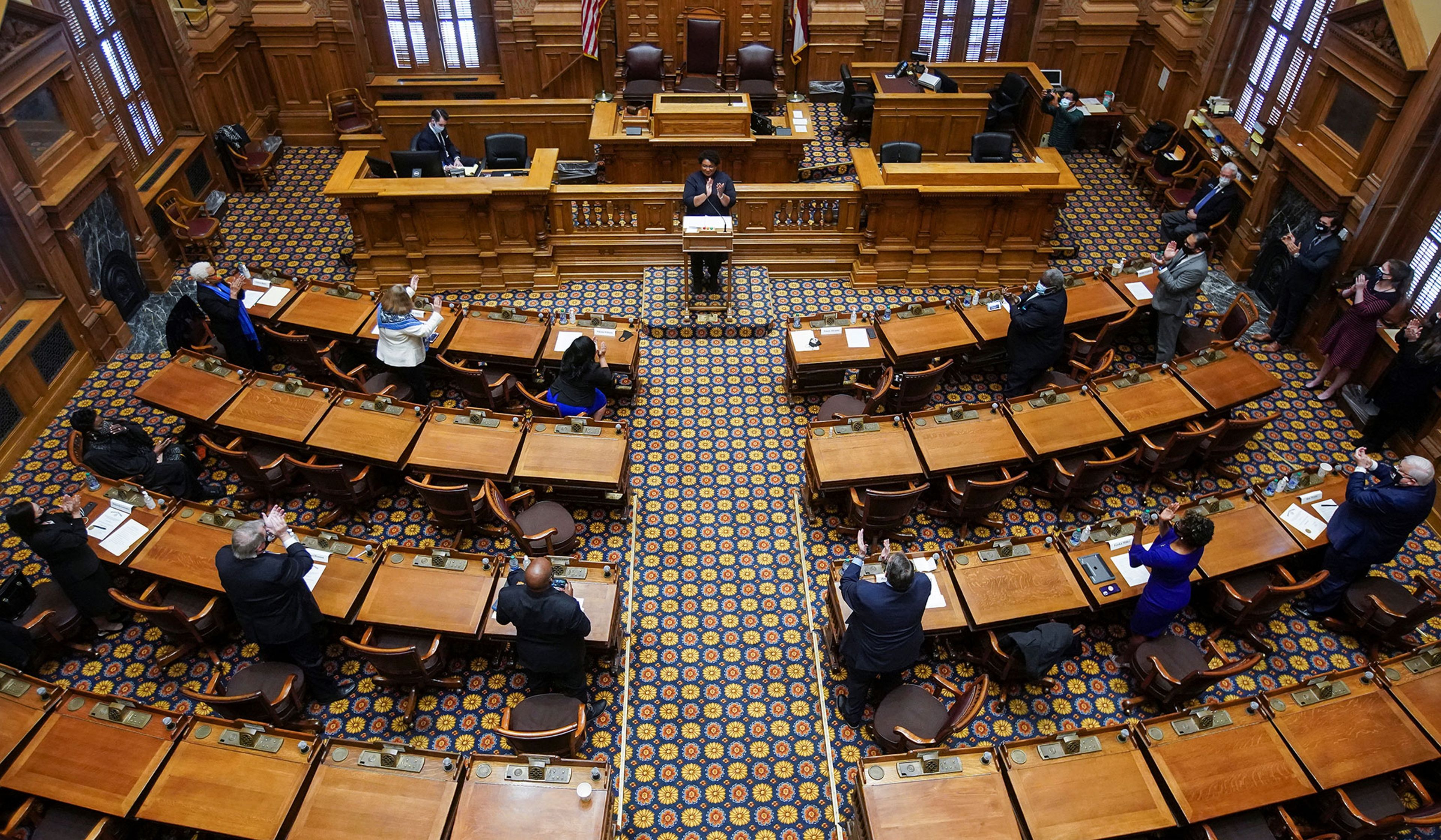
But imagine a scenario in which the next presidential election comes down to one state — say, Georgia — where the governor certifies an alternative slate of electoral votes. We could be talking about former senator David Perdue, who is challenging Governor Brian Kemp in the GOP primary and has said he would not have certified Biden’s victory in 2020. We could be talking about a Democratic governor — Stacey Abrams, who did not concede her own 2018 gubernatorial loss.
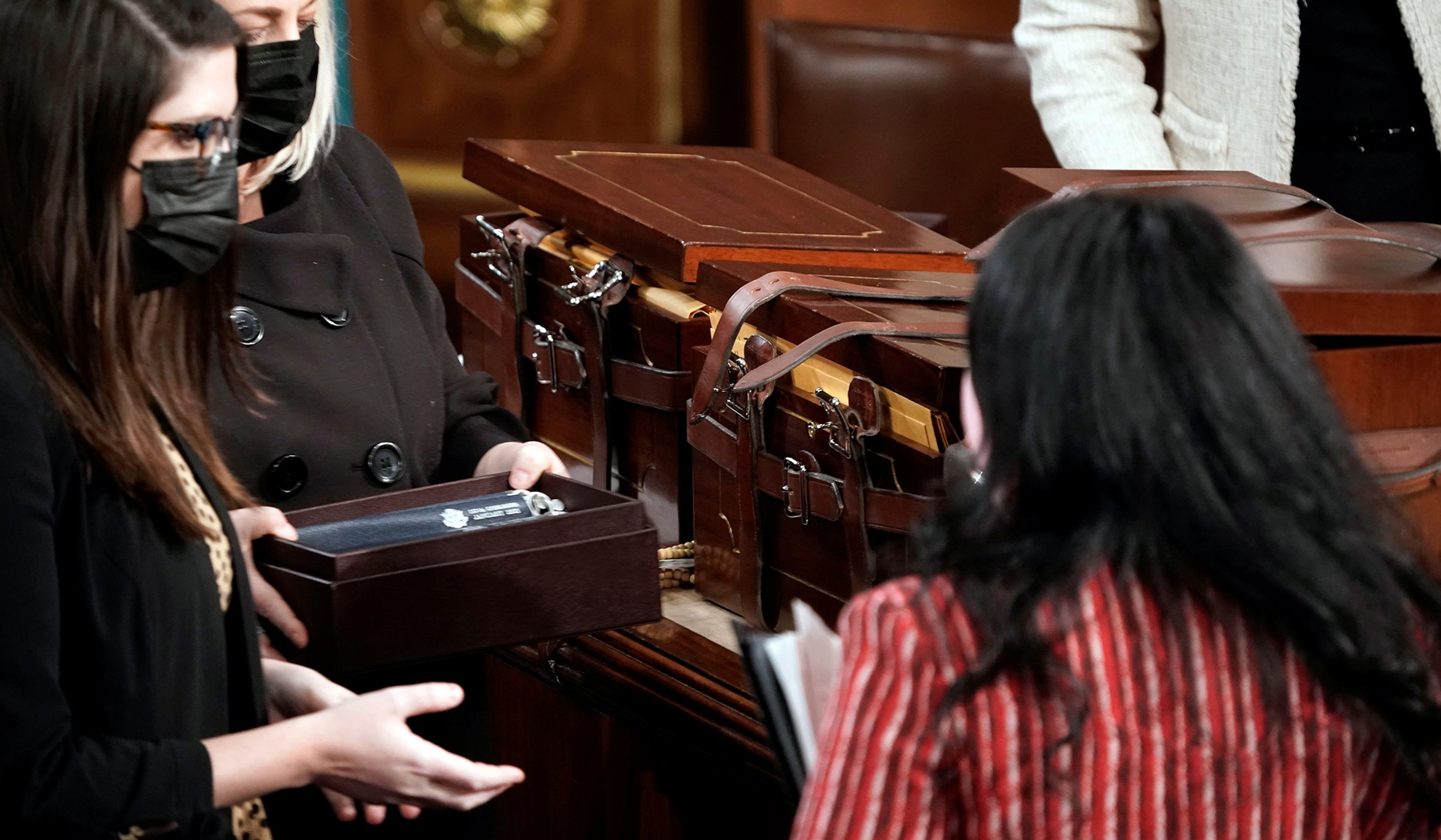
The Electoral Count Act says that a majority of both the Senate and the House may decide which slate of electors to count, but if the House and Senate render a split decision, then Congress is supposed to count the electors certified by the state executive.
The odds of such a scenario may be low, but potentially catastrophic events with low odds still deserve serious attention.
“The issues are more complicated than they might first appear,” said Senator Collins. “For example, what do you do if a governor refuses to submit a slate or submits a slate that does not reflect the popular vote in his or her state? Does that go to the state courts? Does it go to federal courts? Does it just go to Congress?”
“It is one of the thornier questions, and I’m still researching it,” Collins told National Review. “My inclination is that it should go to the courts, rather than directly to Congress.” Collins said she hasn’t yet made up her mind on whether state or federal courts should address such disputes. “It’s a hard issue, so that’s what I’m looking at,” she said. Reaching a consensus on this issue will be one of the trickiest parts of ECA reform. Some Democrats want to tie parts of their failed voting legislation to a bill to reform the Electoral Count Act, but it’s impossible to see how any bill that federalizes voting procedures would win enough Republican votes to pass.
Even the best-written law, of course, can only do so much to prevent a crisis. “The basic problem is if you have real corrupt officers — a governor who wants to declare the winner the loser — there’s really fairly little you can do,” Yuval Levin, editor of National Affairs, told National Review. “It’s already the case that that would go to court, and it would be very messy.”
And of course, future threats to presidential elections aren’t limited to rogue governors. There can also be corrupt state legislatures, corrupt majorities in Congress, corrupt vice presidents, and corrupt judges. There can even be real instances of widespread vote tampering — as happened in the 1876 presidential election and more recently in a 2018 congressional race in North Carolina.
“The law can’t substitute for lawfulness,” says Levin. “If people in the system — politicians — are eager to play a corrupt role and deny the results of an election, there’s only so much that a law written in advance can really do to stop it.” Reforms to the Electoral Count Act can perhaps provide a clearer and better process for how electoral disputes are resolved, but the law ultimately can’t prevent crises precipitated by politicians who don’t respect the rule of law.












Comments