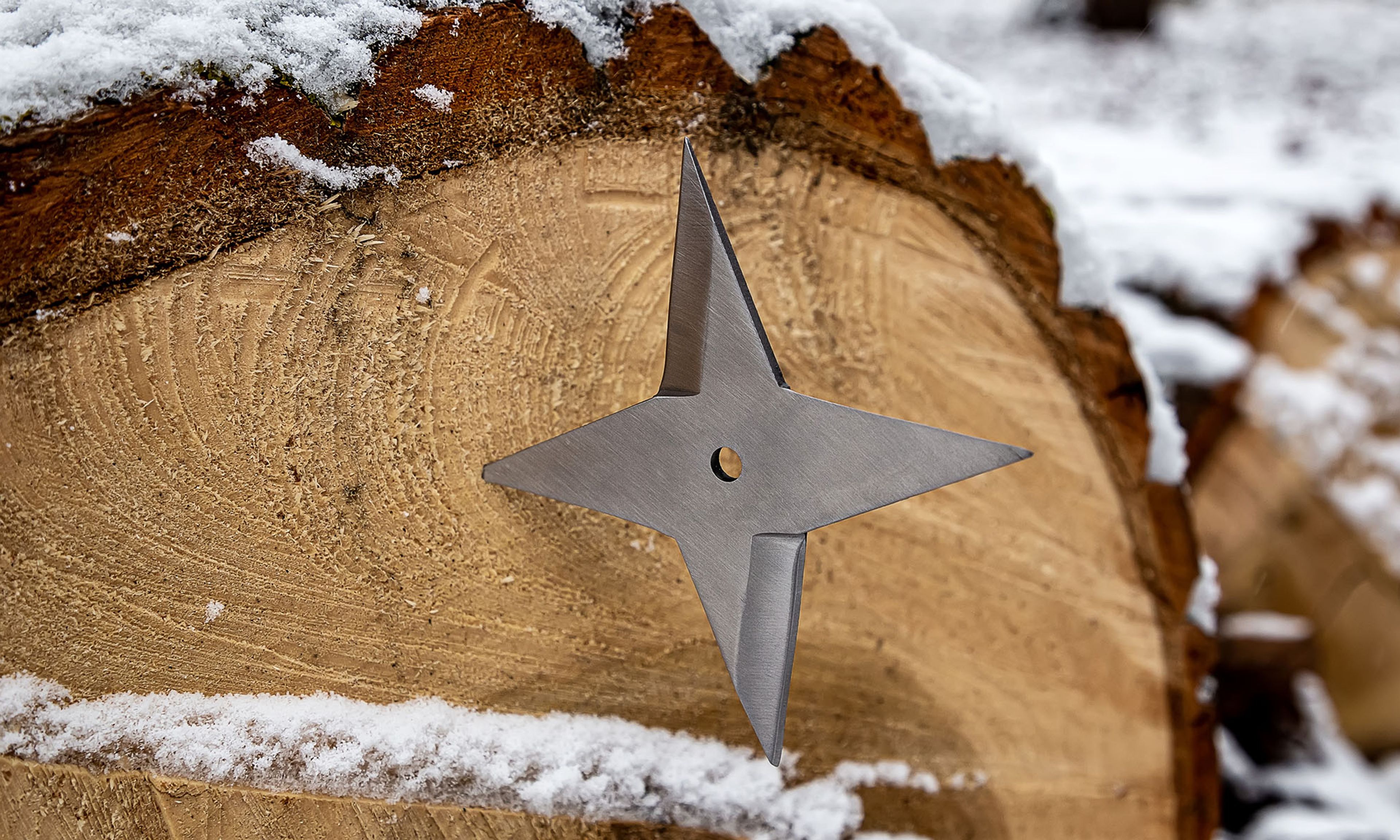
When I was a young teen, in the early 1980s, a shockingly high number of my friends owned butterfly knives, Chinese stars, clackers, and nunchucks.
The last, a traditional Okinawan martial-arts weapon consisting of two wooden bars connected by a short metal chain or rope — originally used by peasants to harvest rice — was probably the most popular. Nunchucks were also incredibly dangerous, but mostly for the kid swinging them around. And though we would all fall victim to numerous, exceedingly painful self-inflicted injuries — and probably concussions — not one of us ever took the time to figure out how to properly use these contraptions. We were too busy laughing at the person heaped on the floor in pain.
From an Associated Press story dated February 7, 1984, “Danger Seen in ‘Throwing Stars’ Fad,” I learned that ninja stars — “an ancient Oriental weapon with sharply pointed metal blades” — could cost somewhere between $1 and $4.50. A couple of weekends of cutting lawns, and a young teen could have a small armory. “All these little boys are carrying them around in their pockets like toys,” one mother of a twelve-year-old boy in suburban Plano, who asked not to be named, complained. “But they’re not toys. They are lethal weapons.” Darrell Craig, a Houston martial-arts master, added: “They are very dangerous. I wouldn’t let my kids have them, and I’m in the business.”
Imagine that; even the guy who was in the business of throwing Chinese stars would not allow his children to handle these weapons, and yet we, suburban kids of all colors, faiths, and ethnicities and from all socioeconomic stations, were prepared to wage war in feudal Japan should the need arise.
Though it wasn’t only weapons from the Orient that made the grade. It was not rare to see switchblades. Switchblades. Like the ones the Jets and Sharks pulled on each other in West Side Story. Boys, who had 9 o’clock bedtimes, who had only recently been bar mitzvahed, would confidently hold court to explain the number of inches a blade could reach before the cops would consider it illegal, as if they had just done a stint in Attica for racketeering.
Ninja stars, switchblades, and dangerous clackers, also known as Ker-Bangers — two unbreakable acrylic spheres attached by an even longer string — would be squirreled away under baseball cards and Mad magazines. And, as far as I remember, parents never knew or seemed to care.
How did we get our hands on these weapons in the pre-Internet days? Some were handed down from older kids. Some were bartered for. Some were won in games. Many were ordered from the backs of comic books. I have in front of me a pile of 1970s comics — the Mighty Thor, Doc Savage, Fantastic Four, the Sandman, the Eternals — and, my God, the things they sold in the back of them. You could have a “Real Switchblade . . . comb” or an “Electrostatic generator.” You could purchase the secret of how to “Be Taller in Five Days” or, if you were patient, get an “Atlas Body in 7 days.” You could buy a fake badge, a fake mustache, a Hercules Wrist Band, and X-Ray Specs, all for under $10.
The more courageous kids would buy their weapon in a dark, ominous, mysterious store we used to call the “rock shop.” In the front end of the establishment, one might find three-quarter-sleeve rock T-shirts — Rush, Journey, Ozzy — and spiked heavy-metal bracelets, as was the fashion of the day. Maybe there would be posters of Christie Brinkley or the Grateful Dead. Deeper, out of your parents’ sightline, were the drug paraphernalia, trinkets, lava lamps, and plastic skulls and various toys that were for unknown debauchery or possibly witchcraft. And if you wandered even deeper, you would find the collection of Pacific Rim weaponry. The disinterested cashier would give you anything you wanted, no questions asked. Remember, these were the days when parents could send their prepubescent child into a “stationery shop” to buy smokes, and the shopkeeper would ask not for an ID but rather “Regular or 100s?”
These places, incidentally, weren’t in the seedy neighborhood near the airport. They were ensconced right in the middle of the mall, the center of wholesome 1980s American commerce. There’s the Kmart, the movie duplex, the Hallmark store, Benetton, JCPenney, Sizzler, and the place that sells sharp metal projectiles shaped like stars to teenage boys.
Like many things in those days, it would end when Senator Edward Kennedy showed up. “Forty cents and a stamp. That’s all it takes for youngsters to buy the latest badge of courage — one of the lethal ‘throwing stars’ advertised in many comic books and martial arts magazines,” read a breathless article in the Christian Science Monitor in 1985, explaining new legislation, sponsored by Kennedy, that would make it illegal to mail throwing stars, fighting chains, and nunchucks.
In my research I could not come up with a single instance in the 1970s or ’80s of anyone being slain by the weapons in question (though I did find a delightful story about a gas-station attendant repelling an armed robbery using nothing but nunchucks).
Today, throwing stars are illegal in most states, if not outright banned under laws covering knives. So it probably seems weird for a (nominally) mature man to get nostalgic over the prickly weapons of his teen years. Yet, the older I get, the more insane and exciting my then-conventional upbringing now seems. Don’t get me wrong, I’m sure twelve-year-old boys are doing lots of fun stuff these days. But we were armed like 14th-century ninja assassins.
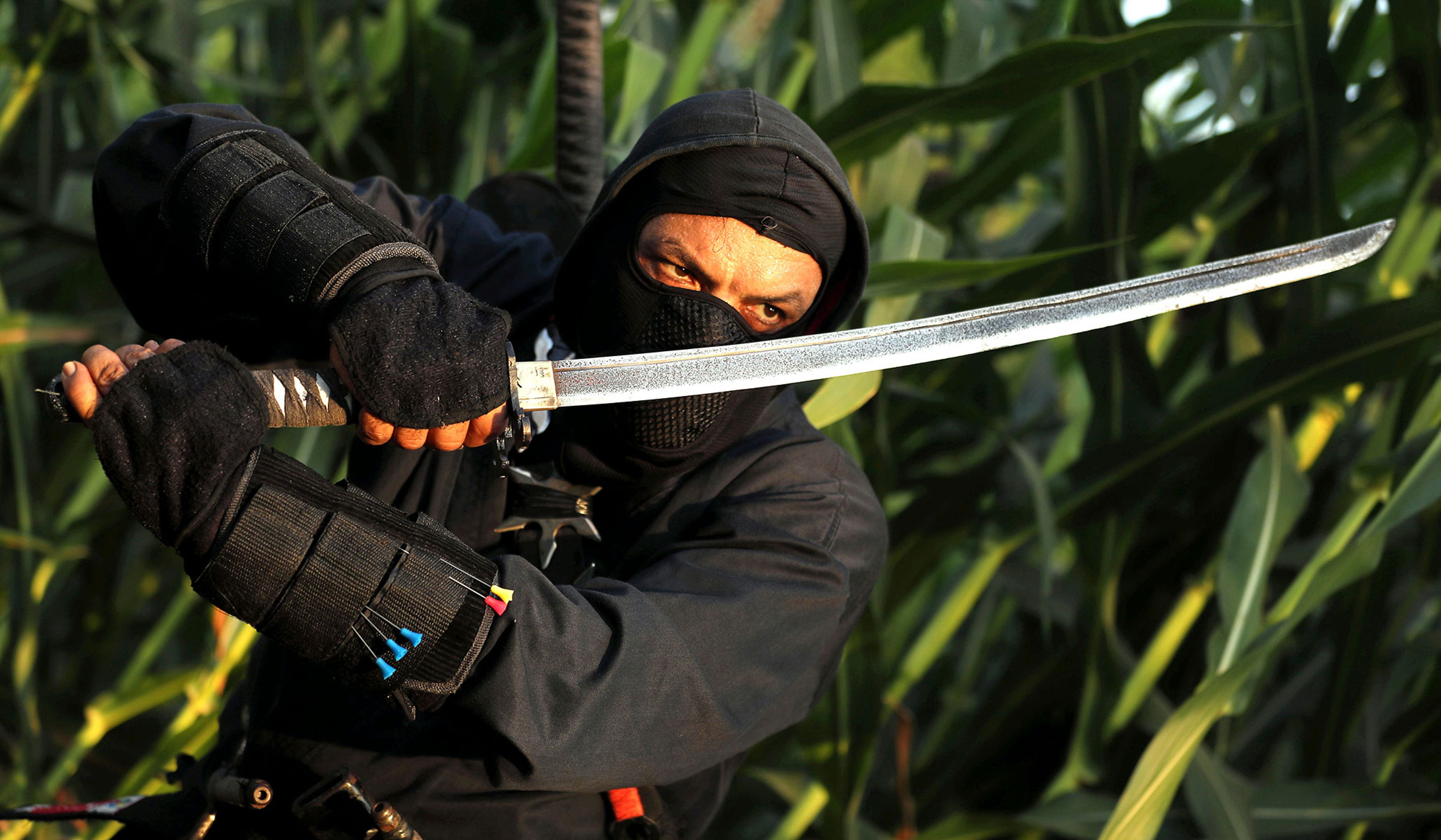

Abdel Qader Ahmed, a self-taught ninja enthusiast known as Abouda Ninja, holds a sword he made himself at a field in the Sharqia Governorate north of Cairo, Egypt, August 13, 2021.
Mohamed Abd El Ghany/Reuters











Comments