
• The way things are going, they’re going to have to change the slogan to “This was CNN.”
• “While I do not expect to agree with every decision she may make on the Court, I believe that she more than meets the standard of excellence and integrity.” So wrote Senator Mitt Romney of Utah, announcing that he would vote for Judge Ketanji Brown Jackson’s nomination to the Supreme Court. She had the votes already; perhaps Romney thought the grace note of another Republican vote for her — Senators Susan Collins of Maine and Lisa Murkowski of Alaska also backed her — would help turn down the temperature of the judicial-confirmation wars. It is conventional to lament that both parties have made confirmations a political prize, voting against nominees with sterling qualifications. But the notion that such nominees deserve the votes of senators from the opposition party is outdated, based on background assumptions about the role of the federal courts that no longer hold. Once the courts assumed the power they now hold to set policy in areas of great partisan contention, the old process became untenable. This trio of Republicans is not going to bring it back.
• The editorial board of the Washington Post, along with many liberal pundits, has claimed that Jackson was treated worse in her confirmation hearings than Brett Kavanaugh was in 2018. This is pure revisionism. A nominee’s lenient sentencing of criminals, including sex offenders and child predators, is part of her record and speaks to her thinking as a judge. While the criticisms of Jackson were debatable, they were not in any way comparable to senators’ demanding a nominee answer for every entry in his teen diary — much less to leveling uncorroborated accusations of rape at him. If we are to judge by the treatment of recent Republican nominees, Judge Jackson was subjected to a mildly inconvenient series of meetings.
• Now that the New York Post’s reporting on Hunter Biden’s laptop has been confirmed by multiple establishment media outlets, including the Washington Post and the New York Times, the new line from the president’s defenders is that the story is little but an irrelevant distraction. That’s how the Atlantic’s Anne Applebaum put it at the “Disinformation and the Erosion of Democracy” conference. It should be recalled that the “disinformation” charge was widely used as a pretext for the concerted effort by mass media and virtually every Big Tech company to suppress the Hunter story and protect a presidential candidate before the 2020 election. The labeling of the story as disinformation turns out to have itself been disinformation. Moreover, the Hunter emails implicated Joe Biden as the “big guy.” To this day, the president denies any knowledge of his son’s business deals with Chinese Communists and Ukrainian energy interests. As so often, the press’s curiosity is curiously selective.
• Continuing his career of post-presidential grotesquery, Trump is once again begging Vladimir Putin for political assistance, requesting that the Russian caudillo take a minute off from his campaign of mass murder in Ukraine to share whatever dirt he might have on Hunter Biden. Trump has a long and ugly history here: Recall that he got himself impeached trying to extort the Ukrainian government into helping his reelection campaign. A normal, mature human being might be a little bit circumspect in such circumstances. That Hunter Biden is a corrupt influence-peddler seems very likely, and it is also likely that Joe Biden is not without some culpability in that. No sane person would be surprised if we were to learn that President Biden’s involvement was deep and dirty. This is a matter that should be carefully and rigorously investigated — by Americans, not by Moscow.
• Donald Trump has disappointed Pennsylvania conservatives by doing exactly the sort of thing Donald Trump reliably does, in this case spurning the actual conservatives in the Republican race for the Senate seat being vacated by Pat Toomey and endorsing instead his fellow television personality, Dr. Mehmet Oz. The doctor has only the lightest connection to Pennsylvania (he went to college there and listed his in-laws’ home as his residence for electoral purposes), is entirely unqualified for the position, has no meaningful connection to conservative principles or politics, would be a weak candidate in the general election, and comes with all sorts of unattractive baggage, from his affinity for cultish New Age nostrums to his ties to the Erdogan regime in Istanbul. (Dr. Oz has dual citizenship.) Pennsylvania Republicans appear inclined to ignore Trump’s unsolicited input in this matter. Their example is one to follow.
• When asked by an interviewer whether tales of D.C. decadence were true to life (or at least true to television), freshman representative Madison Cawthorn (R., N.C.) told an interviewer that congressional colleagues have already invited him to an orgy and used cocaine in front of him. His fellow Republicans scoffed, calling Cawthorn an “embarrassment” who “lacks judgment.” Minority Leader Kevin McCarthy said the lawmaker that Cawthorn purportedly saw using coke in front of him was probably “a staffer in a parking garage from 100 yards away.” On the other hand, Trump thinks Cawthorn is telling the truth. As far as we can tell, the only orgy Republicans are engaged in is the familiar one of recriminations.
• In March 2020, the Trump administration invoked Title 42 to block migrants from seeking asylum in the midst of the Covid-19 pandemic. Now the Biden administration plans to lift the restrictions. His CDC insists the decision is a public-health call, but it comes after months of pressure from the Democrats’ progressive wing. Since its inception, Title 42 has been used more than 1.7 million times to turn away asylum-seekers. Over the same period, the Biden administration, owing to a lack of detention space, has released tens of thousands of migrants into the country on their own recognizance as they await asylum proceedings. Many never show up; their impunity encourages more illegal immigration. With warmer weather approaching, the DHS anticipates an influx of 170,000 migrants at the southern border. Biden has yet to present a plan to do anything about that. Senator Raphael Warnock (D., Ga.) has said he thinks it’s “the wrong time” to lift the Title 42 restrictions. Presumably the right time would be after he goes back to the voters this November.
• Inflation shows no signs of cooling off. In March, the consumer price index rose 1.2 percent over the previous month; prices were up 8.5 percent over the previous year. Nancy Pelosi explained that it’s an inevitable consequence of falling unemployment, noting that a Fed chairman had said so when she was a new member of Congress back in the 1980s. Had she paid attention in the following decades, she might have noticed that we had long periods of falling unemployment without higher inflation (1992–98, 2011–20). Others on the left are using rising corporate profits to bolster their prejudice that greed explains inflation. But they are mistaking effect for cause. Spending throughout the economy has been rising rapidly. Excess spending typically raises profits in the short run, until input prices rise in response. It is up to Jay Powell and his colleagues at the Fed to bring spending levels back to earth, while ignoring Democratic superstitions.
• President Biden is stuck between a rock and a hard place on gas prices. On one hand, he isn’t really to blame for them — political superstitions notwithstanding, the president does not control the price of gasoline, which is affected by myriad factors in a global marketplace. On the other hand, Biden has been quick to take credit when gas prices have declined (also not his doing), so he has set himself up to get blamed when they rise. Biden also faces a problem in his party, which believes that fossil fuels are evil but that gasoline should be cheap. The law of demand is not Democrats’ strong suit, so Biden is instead demanding that Congress pass a law to “speed the transition to clean energy,” according to a White House statement. It seems that the president’s solution to high gasoline prices is for Americans to stop using gasoline — all 337 million gallons per day of it. This is apparently something he thinks he can bring about with some subsidies, some executive action, and a few billion dollars in government spending. It’s not going to work, but given his party’s contradictory beliefs on energy policy and the public’s belief in the shamanic power of the presidency, nonsense is the only possible result.
• Biden announced another raft of pointless gun-control demands — reclassifying certain gun parts as though they were actual firearms for legal purposes — and plans to rely on constitutionally questionable executive orders to enforce his agenda, cutting the nation’s lawmakers out of lawmaking. The issue is so-called ghost guns, an imprecise category that includes both homemade firearms and commercial weapons that have had the serial numbers removed. There is no law against making firearms, something that Americans have been doing at home for a couple of centuries; there already is a law in place that prohibits selling such firearms commercially without the same license required of an ordinary firearms manufacturer. Like so many of the exotic items that command the attention of the gun-grabbers — suppressors, so-called assault weapons, etc. — “ghost guns” are not much of a factor in the homicide-happy streets of our nation’s besieged cities, though police agencies do report an uptick in seizures of unserialized firearms. Because the United States does not maintain a national firearms registry, serial numbers are not (in spite of what you see on television) very useful in tracking firearms from dealer to criminal, except in those rare cases when a criminal buys a firearm legally after passing a background check and then leaves that firearm at the scene of a crime. This is a nonissue that will do very little other than inconvenience law-abiding hobbyists — and set the precedent for yet another unwelcome expansion of unilateral executive policy-making.
• The Biden administration extended the pause on student-loan payments yet again, this time until August 31. The pause began under President Trump and has now lasted two whole years. Its alleged connection to the pandemic that supposedly justifies it is strained. The Department of Education acknowledges that “the economy continues to improve and COVID cases continue to decline” in its statement announcing the extension. It said Biden wants a “responsible phase-down of pandemic relief,” but the responsible thing to do would be to end the pause. It provides relief for the people who need it least. The median American adult has no student loans, since many people never attended college in the first place, and plenty of the ones who did either already paid off their loans or took out none. The people with the most debt are holders of doctorates and professional degrees — people who are, on average, doing just fine and should be expected to pay back the money they borrowed. Progressives argue for total repayment cancellation, but Biden’s half-measure of an indefinitely extended pause is arguably worse. Not only does it have the same immediate financial downsides as outright cancellation, it also keeps student debtors in limbo as they wonder when payments will resume. If Democrats want to cancel student loans, they should try to pass a bill through Congress. If they don’t have the votes (note: they don’t), they should scrap this idea and make the most educated people in our society pay back the money they owe.
• Latest academic brainstorm we could do without: gender affirmation. If a kid feels massively depressed or lonely, and concludes that he or she inhabits the wrong body (schools don’t need to tell them that, the Internet is full of it), faculty and counselors will use the kid’s newly chosen name and pronouns, without telling parents, or even against parents’ expressed wishes. Schools that won’t give an aspirin without a parent’s consent will help put a kid on the yellow brick road to a sex-change operation. Parents are right to sue over this, as they have in Wisconsin, and conservatives are right to pass laws affirming parents’ primacy in their children’s lives, as they have in Florida. But is it right to call this new madness “grooming”? Anywhere but in a stable or a pet store, the word means a specific sinister act of training a targeted person, usually younger, to be a sex partner. Educrats gone wild are acting out of ideology, not lust. Calling them groomers overshoots the mark — and marks the user as ignorant, careless, or malicious. The Left has mischaracterized the Florida law by saying it bans saying the word “gay.“ Conservatives should not see their dishonesty as an invitation to be dishonest themselves.
• The Department of Health and Human Services released a document claiming that “for transgender and nonbinary children and adolescents, early gender-affirming care is crucial to overall health a and well-being.” The treatment that HHS euphemistically refers to consists of three stages, each riskier than the last: social, chemical, and surgical interventions attempting to confirm a child in her belief that she is of the opposite (or neither) sex. Facing increasing scrutiny, clinicians caring for gender-distressed minors in Europe have taken a more cautious approach. Recently, the French National Academy of Medicine warned of the “vulnerability” of such minors “and the many undesirable effects and even serious complications that can be caused” by so-called gender-affirming treatments. In the U.S., however, only state lawmakers seem capable of putting on the brakes. Alabama became the latest state to enact legislation that bans gender-transition treatments for minors. Here is a matter of sex in which the French and Alabama are on the same side, which is also the side of common sense.
• As the debate over Florida’s Parental Rights in Education Bill crescendoed in late March, the Walt Disney Company convened a bizarre all-hands meeting in which executives pledged to oppose the Florida law and highlight “LGBTQIA” story lines and characters. Video of the virtual meeting, which was obtained by the Manhattan Institute’s Chris Rufo, showed Disney employees championing a “not-at-all-secret gay agenda,” a focus on “canonical trans characters” and “canonical bisexual characters,” and the change in the traditional “ladies and gentlemen, boys and girls” theme-park announcements to the genderless “dreamers of all ages.” Under fire from employees for not opposing the Florida bill earlier on, CEO Bob Chapek claimed that the company, though “opposed to the bill from the outset,” thought it “could be more effective working behind-the-scenes, engaging directly with lawmakers — on both sides of the aisle.” But as National Review’s Isaac Schorr confirmed by speaking to Chris Sprowls, speaker of the Florida house of representatives, Disney didn’t attempt to lobby one way or the other on the bill until after some of its employees revolted. Instead of aligning itself with a bipartisan majority of voters who support Florida’s law and sensibly believe that instruction on sexual orientation and gender identity should be age-appropriate, the Walt Disney Company is apparently prepared to become the kingdom where woke dreams come true.
• Two anti-abortion activists and sidewalk counselors have obtained the corpses of more than 100 aborted babies from a Washington, D.C., abortion clinic. Five of those babies were victims of late-term abortions. The evidence suggests that at least one of those babies was killed after having been born alive, and another appears to have been killed in an illegal partial-birth-abortion procedure. So far, the D.C. government has resisted all demands to investigate what appear to be violations of federal law. Regardless of what further details come to light, the incident reminds us with horrible clarity that every abortion — legal or otherwise — brutally ends the life of a human being.
• Idaho has enacted a law to support parents who receive a prenatal diagnosis of Down syndrome. The policy directs Idaho’s Department of Health and Welfare to “create an up-to-date, evidence-based support sheet about Down syndrome that has been reviewed by medical experts and the Idaho Down Syndrome Council.” This information must be shared by health-care providers with expectant parents after they receive a Down-syndrome diagnosis. Many parents report having been pressured by doctors to have an abortion in that circumstance, and while precise figures are hard to come by owing to a lack of reporting requirements, some statistics suggest that about two-thirds choose abortion. Idaho’s idea is a good one, and other states should copy it.
• Two years ago, Chicago mayor Lori Lightfoot joined in the clamor demanding that police be defunded, proposing an $80 million cut in the Windy City’s police budget. She later withdrew the proposal, and now she loves the police enough to have established a 71-member squad with the sole mission of protecting Mayor Lightfoot (on top of her previously established 21-member bodyguard unit). Presumably she no longer thinks police are racist, or she wouldn’t surround herself with so many of them. We can’t blame the mayor for being worried about crime in Chicago, but we suspect that her fellow residents might prefer it if she could spare a few more police officers to protect the general public.
• President Biden has referred to Vladimir Putin as a “war criminal” who should be put on trial. Where, though, is such an investigation to be had? One answer: the International Criminal Court, in The Hague. According to a report in the New York Times, Biden-administration officials are considering lending support to the ICC’s ongoing investigations. That interest is apparently bipartisan: The Senate recently passed a resolution led by Senator Lindsey Graham (R., S.C.) that backs war-crimes investigations before the ICC. It is a serious error. First, the United States is not a party to the treaty that established the ICC. And for good reason: The ICC claims to exercise jurisdiction even over countries that have not agreed to be bound, and it defines crimes very loosely. The ICC has begun discussions over the possibility of adding “ecocide” — vague environmental and climate-related crimes — to the list of offenses over which it claims jurisdiction. Congress and presidential administrations have labored to shield us from ICC processes for years, even sanctioning ICC officials over their investigation of American combat operations in Afghanistan, which the main prosecutor portrayed as war crimes. Putin’s aggression has been despicable, and we should be doing everything we can to punish it, but we should take care not to load a gun that can be pointed at us.
• The Russian invasion has probably sunk Ukraine’s chance of joining NATO, but it may drive another neighbor into the Atlantic alliance. An unwillingness to antagonize Moscow, as well as a tradition of self-reliance — legacies of its bitter wartime experience — kept Finland out of NATO even after the collapse of the USSR. But the scale of the Russian attack on Ukraine is leading Finns to the conclusion that it is now too dangerous to stand alone, especially given Russian threats and violations of Finnish airspace, and a massive recent cyberattack. If Finland does apply to join NATO, it should be welcomed, and quickly, too. A waiting period might invite meddling by Moscow, and Finland would be a useful ally, not least to help deter Russia from any aggression against the vulnerable trio on the other side of the Baltic. Finland’s accession might also encourage an even more hesitant Sweden to follow suit, closing a dangerous gap in NATO’s defenses.
• One by one, the last remnants of Russia’s independent media are being snuffed out, with the war in Ukraine giving the Kremlin the excuse to act. Among the most prominent, the radio station Ekho Moskvy was shut down at the beginning of March, followed a few days later by TV Rain. Now the newspaper Novaya Gazeta has suspended operations until the end of the “special military operation.” It must be unlikely that it will reopen. That wasn’t enough, however: While traveling on a train, Dmitri Muratov, Novaya Gazeta’s editor, a co-winner of the Nobel Peace Prize in 2021 (he gave away the prize money to charities, and has now announced that he will auction his medal and donate the proceeds to Ukrainian refugees), was drenched in red paint to which acetone had been added, leaving him with badly burning eyes. Six of Novaya Gazeta’s journalists have been murdered over the years, making the warning implicit in the attack even more menacing. The darkness deepens.
• The top finishers in round one of France’s presidential election are incumbent technocrat Emmanuel Macron (at 27.8 percent of the vote) and third-time nationalist-populist challenger Marine Le Pen (23.1 percent). Leftist Jean-Luc Mélenchon finished third (22 percent), while Éric Zemmour, a more flamboyant nat-pop, faded (7.1 percent). Le Pen has labored over the years to become presentable, kicking her ex-fascist father and mentor, Jean-Marie, out of their party, and emphasizing economic over culture-war issues. Russia’s invasion of Ukraine forced her to do a hard tack, scrapping 1.2 million campaign leaflets showing her shaking hands with a smiling Vladimir Putin. (Putin is a nat-pop hero in Europe, and a supporter, via a Russian bank loan, of Le Pen’s party.) Le Pen called the invasion “truly regrettable,” but she has also criticized sanctioning her old friend. Macron, meanwhile, faces economic headwinds and his image as a shiny technocrat. Odds on the April 24 runoff favor him, but Russia has real hopes of a second front in the Élysée Palace.
• Forty-seven days into the war, 4.6 million Ukrainians have fled their country, according to U.N. estimates. Most of the refugees have crossed the border into Poland. Of the 2.6 million there, more than 300,000 have settled in the capital, Warsaw, swelling its population by 17 percent. Residents looking to assist arrivals at the Central Railway Station quickly organized themselves into a volunteer association, Grupa Centrum, whose members now number about 2,000, not including the many who donate to their work. Thousands of refugees find temporary lodging in venues, including a concert hall and an expo center, that have been converted to improvised dormitories and community centers. “Really, I don’t know anyone who is not helping,” said Kamilia Gorniak, a Warsaw businesswoman who has helped organize donations. “We want to take everyone who needs help,” Mayor Rafał Trzaskowski insisted, while warning that the city was near the breaking point. He asks other countries to support Warsaw’s effort and urges that refugees be relocated more evenly throughout Europe. The generosity of the people of Warsaw is uplifting. The mayor’s plea for help is urgent. Governments and NGOs should answer it. Private citizens can at least donate.
• What happens when an unstoppable force meets an immovable object is an age-old puzzle being tested right now in Israel. In separate acts of terror, three Arabs from Israel and one from a village on the West Bank have assassinated 14 victims, among them a Druze, a Christian Arab policeman, and two Ukrainians. Attacking the evening crowd on Dizengoff, the central boulevard of Tel Aviv, Ra’ad Fathi Hazem spread a good deal of panic as he was on the run for nine deadly hours before special forces caught him hiding in a mosque and shot him dead. Official terror organizations rejoice but do not claim responsibility. Prime Minister Naftali Bennett and military chief of staff General Aviv Kochavi both accept that what might look like the first wave of a campaign was in fact all freelance operations, and they evidently think there will be more to come.
• Imran Khan was toppled from Pakistan’s premiership after a vote of no confidence by the country’s parliament — the first in its history. No prime minister has ever served the full five-year term. Khan lost control as popular discontent grew with rising inflation and an ongoing dispute between himself and the military leadership. His turn toward China and Russia, and his distancing of Pakistan from the U.S., also put him in political jeopardy. He managed to parlay his foreign policy into the conspiracy theory that the U.S. was behind his ousting, a narrative that the former cricket star hopes will return him to power in the next elections. Shehbaz Sharif, the new prime minister and a brother to a former one, Nawaz Sharif, took office pledging a higher minimum wage and a pension increase to address the discontent that led to his predecessor’s ouster. At this stage, only one thing is certain: Khan isn’t going quietly. He has rallies planned across the country. What’s one more political crisis in a nuclear-armed country of 230 million people?
• At night, screams fill the skies in Shanghai, where the Chinese authorities have told the city’s 25 million locked-down residents, via messages delivered by drones, to “control [their] soul’s desire for freedom.” A new wave of severe Covid restrictions was imposed on March 28 amid soaring case numbers in the city. China never approved Western mRNA vaccines, which are significantly more effective at preventing death and severe illness than the alternatives, and Beijing staked quite a bit of its credibility on a disinformation campaign intended to foster distrust of the Western shots. The consequences of that effort are obvious: Chinese case counts are reliably unreliable, but even the Shanghai authorities recorded 26,000 cases in a day recently. On Chinese social-media sites and elsewhere, videos have circulated of desperate people scrounging for food or trying to enter hospitals, to no avail, as they struggle to survive under Xi’s “zero Covid” policy. Children have been separated from their mothers to enter quarantine, and in at least one case, a health official beat a family’s dog to death with a spade after it was not allowed to accompany them. Is this tyranny, or public health with Chinese characteristics?
• A new article in the American Journal of Transplantation found that Chinese surgeons killed death-row prisoners by removing their organs. The study confirmed long-held suspicions about Chinese organ-harvesting practices. Researchers found 71 cases in which prisoners were not brain dead before doctors removed their heart or lungs. “Because these organ donors could only have been prisoners, our findings strongly suggest that physicians in the People’s Republic of China have participated in executions by organ removal,” the article concluded. Churchill warned of “the abyss of a new Dark Age made more sinister, and perhaps more protracted, by the lights of perverted science.” Never forget that China is in that abyss.
• MIT has announced it will reinstate-standardized testing requirements for undergraduate admissions. The tests, though much reviled, continue to be highly predictive of collegiate success, and are irreplaceable in opening opportunities for highly intelligent students from unpromising backgrounds. Let’s hope that our other great centers of learning can learn from their mistakes.
• Elon Musk, who has a love/hate — and sometimes a hate/hate — relatioanship with Twitter, has become the social-media sewer’s largest shareholder. Whether this is a serious bid to move the social-media firm in the direction of Musk’s own free-speech principles or merely a billionaire’s whimsy is unclear at this time — Musk originally had been positioned to join the company’s board but later announced that he would not do so. (His first tweet after the news of his acquisition broke was: “Oh hi lol.”) Musk’s refusal of a board seat may have been a reaction to the strings that were attached to it, which included a commitment not to acquire more than 14.9 percent of the company. (He currently owns a little more than 9 percent.) As it stands, Musk may acquire as much Twitter stock as the market will sell him, and there is some fear within the firm that he means to take it over. But he may simply be using his money — and Twitter itself — to reform the platform, which suffers from serious problems of political bias and arbitrary suppression. “Twitter has always suffered more than its fair share of dysfunction,” former board member Jason Goldman told the New York Times. “But at least we weren’t being actively trolled by prospective board members using the product we created.” Enjoy the world you’ve created.
• Oskar Schindler had a list. It had the names of about 1,200 Jews on it. They were saved, thanks to his efforts. The story was told by Steven Spielberg in his 1993 movie, Schindler’s List. Someone typed up that list — Schindler’s secretary, Mimi Reinhard (as she was later to be called). She herself was on the list. She was one of the Schindlerjuden, as they were known. Her husband was not. He had been shot, trying to escape the Krakow ghetto. After the war — after the Holocaust — Mrs. Reinhard lived in Morocco, New York, and, finally, Israel, where she has died at 107. R.I.P. And, once more, bravo, Herr Schindler.
• “I would rather die than give you the sweat off my [expletive deleted],” Captain Charles G. Boyd told his interrogator at Hỏa Lò Prison, better known as the Hanoi Hilton. “To die is easy,” said the interrogator. “To live, you will find, is not so easy.” As a prisoner of war in North Vietnam from April 1966 to February 1973, Boyd, a fighter pilot, endured torture and isolation. “They could break you,” he later admitted. “The real issue is: Can they keep you broken?” In his case, as in that of Navy flyer John S. McCain III, who was for 18 months his neighbor at the Hanoi Hilton, the answer was no. After returning to the United States, Boyd flourished as an Air Force officer, rising to the rank of four-star general. He also served as a strategy consultant to House speaker Newt Gingrich in the 1980s; a program director at the Council on Foreign Relations; and president and CEO of Business Executives for National Security. Not long before 9/11, Congress and the Pentagon solicited his national-security expertise. They should have heeded his warning about the rising threat of terrorism. Sad that they didn’t, he remained proud of his effort. Dead at 83. R.I.P.
• The Liberal Democratic Party, the first “opposition” party allowed in the USSR, was, the saying went, neither liberal, democratic, nor a party. It was almost certainly a KGB creation designed to siphon away support from the genuine opposition, and its early success — it won nearly a quarter of the votes in the first post-Soviet Duma elections — reflected both the gargoyle charisma of its leader, Vladimir Zhirinovsky, and the appeal of its ultranationalism, an early warning of what was to come. Zhirinovsky was corrupt. He was sexist, grotesquely so, as loose with talk of rape as he was with talk of nuclear weapons. He was a xenophobe and, despite his Jewish father, an antisemite. A carnival-barker revanchist, he called for Russia to take back Alaska. After his party peaked, Zhirinovsky was kept on as a kind of court jester by Putin, perhaps as a warning of how much worse Russia could be. He died of complications from Covid-19. Putin attended his funeral, nuclear football in hand. R.I.P.
Horror, Again
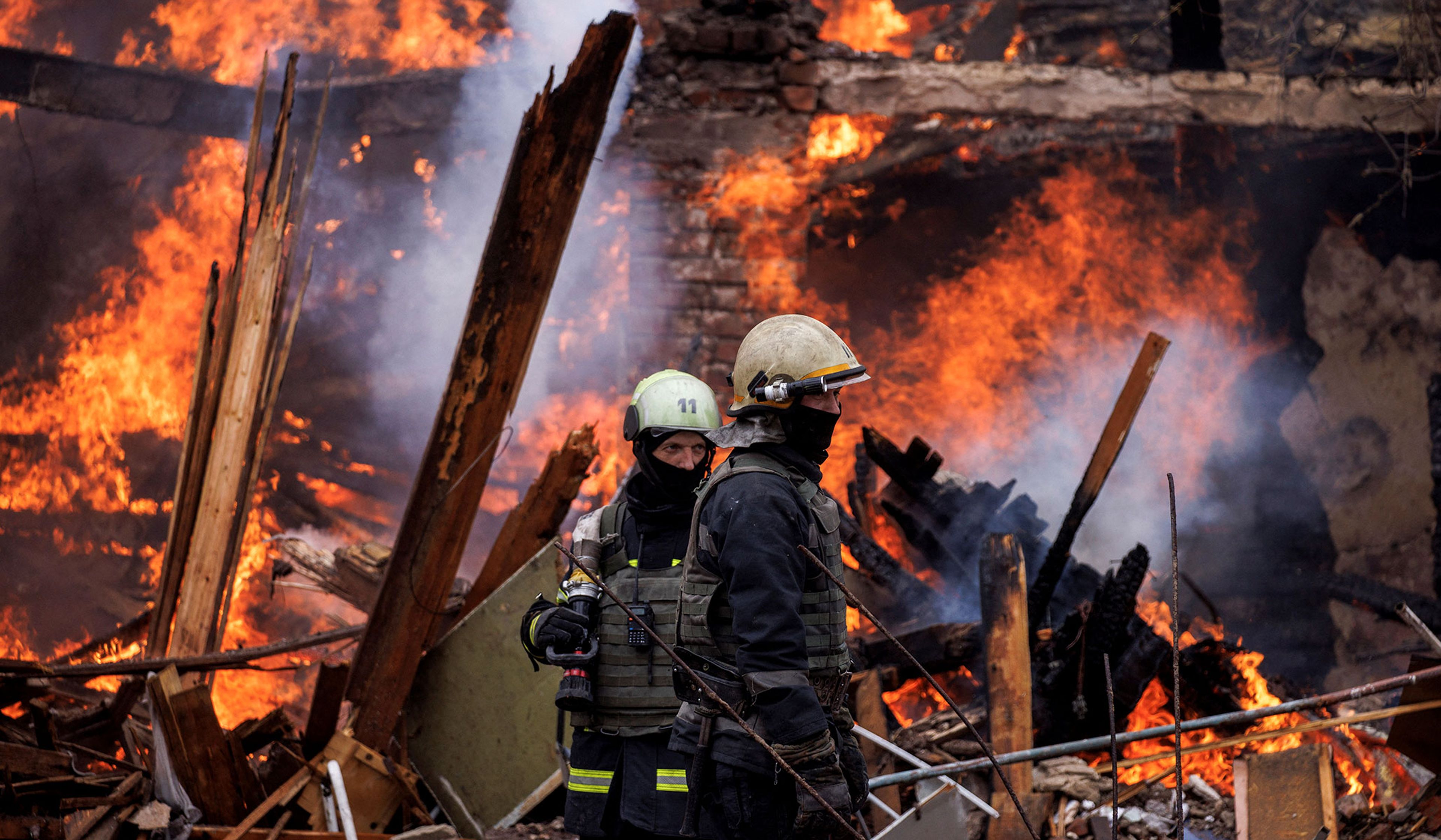
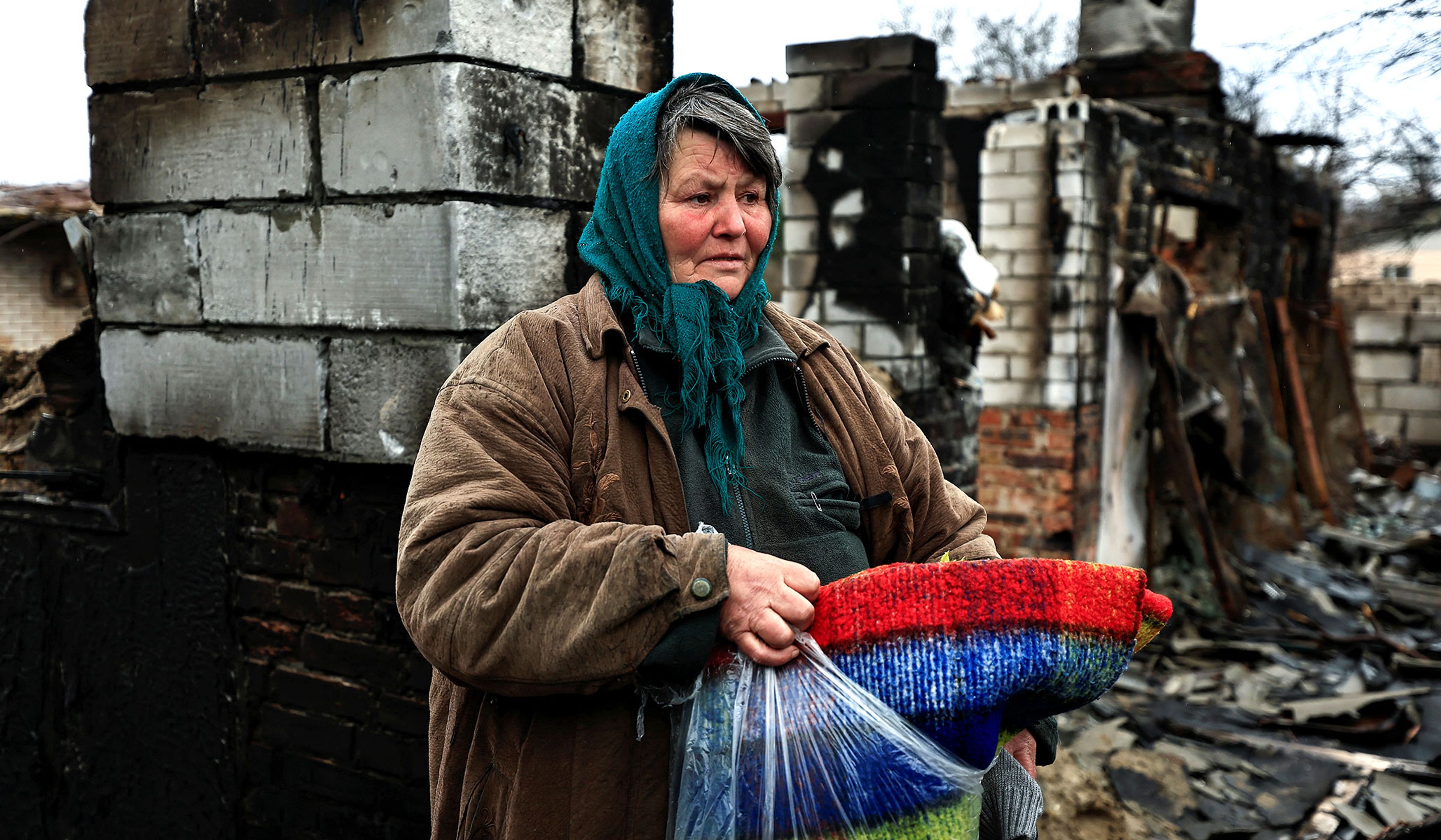
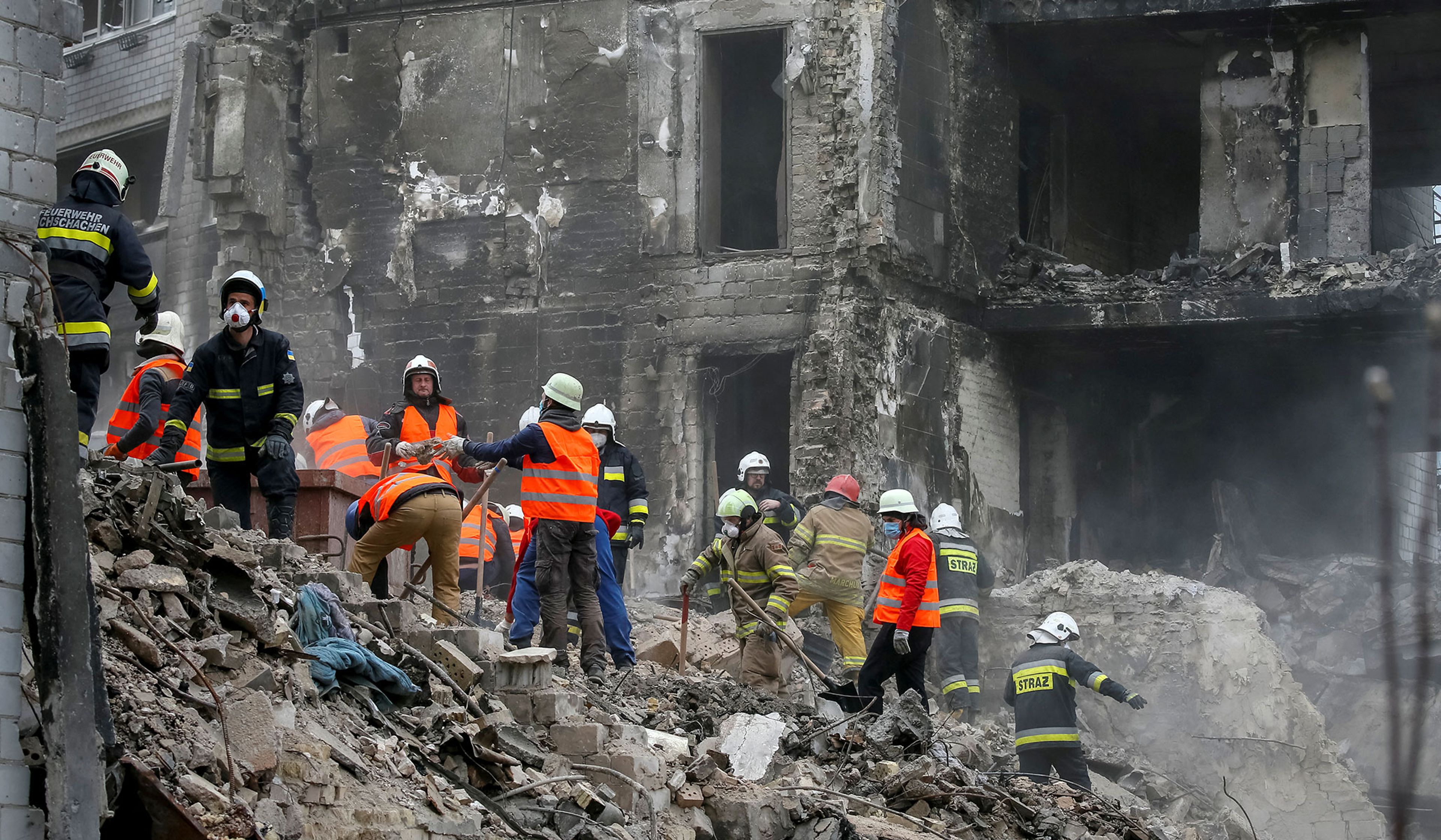
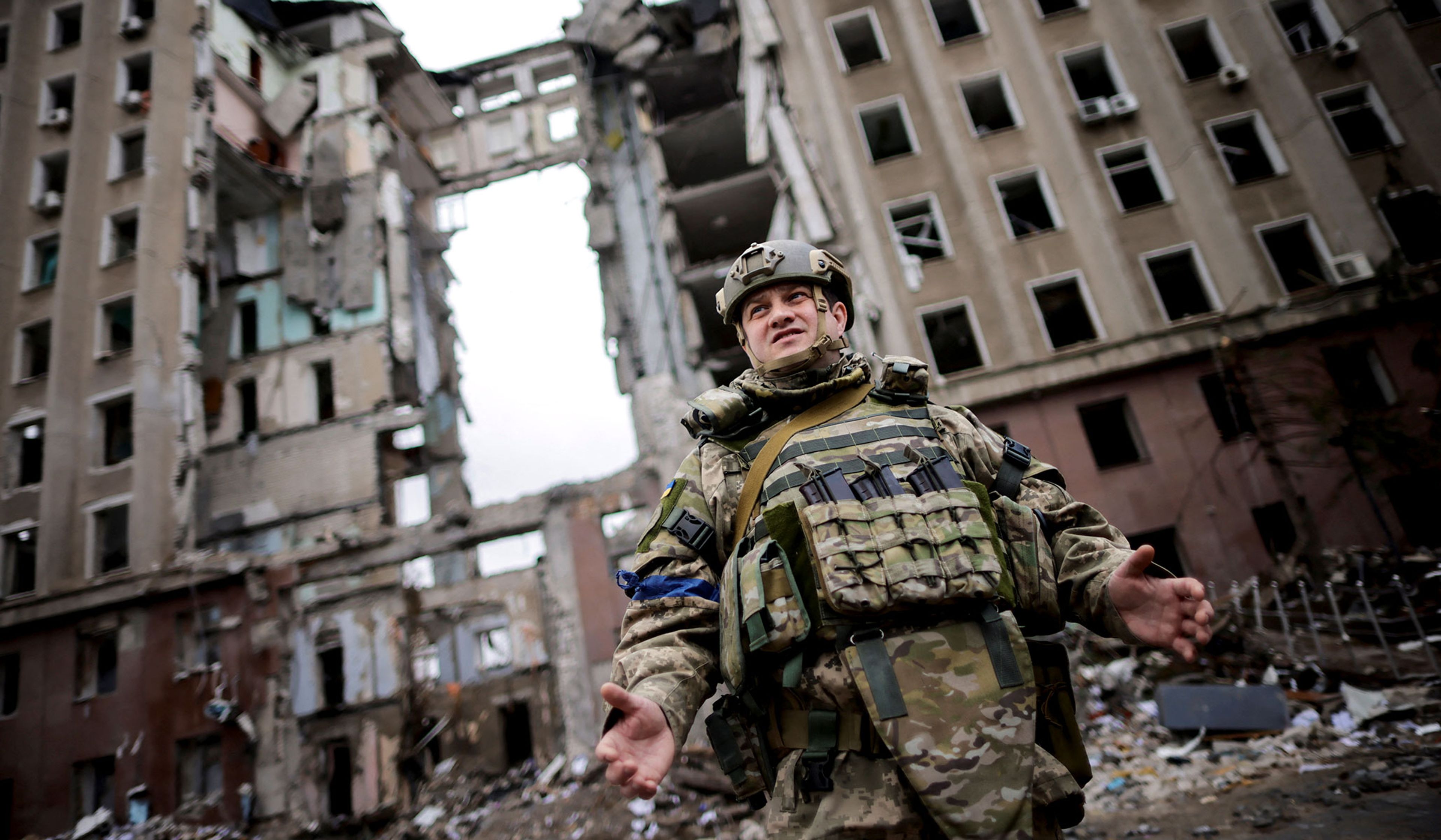
Early in its invasion of Ukraine, the mark of Russia’s brutality was its indiscriminate shelling: civilian targets in Kharkiv and Mariupol flattened by barrages that should be unthinkable in an era of precision-guided weapons. But Ukrainian counterattacks that have recovered formerly occupied villages and suburbs have revealed new infamy: corpses and survivors, testifying to a comprehensive Russian program of torture, rape, and murder.
Let one family speak for all: Olga Sukhenk, mayor of Motyzhyn, a village outside Kyiv, her husband Igor Sukhenko, and their son Oleksandr, were found tortured, murdered, and dumped in a shallow grave. The son was of military age; the mother represented Ukrainian public life. So the Russians erased them.
Volodomyr Zelensky, touring a 45-foot-long trench stuffed with over 400 corpses in the neighboring town of Bucha, said the invaders “treated people worse than animals”: “These are war crimes, and this will be recognized by the world as genocide.”
The G-word triggers thoughts of Rwanda, the Holocaust, and the Holodomor (Ukraine’s first experience of mass murder by the Kremlin). The scale as yet is several orders of magnitude off, but who can doubt the genocidal intent after reading Russian boasts? An April 3 article in RIA Novosti, Russia’s official domestic news agency, explains, as its title says, “What Russia Should Do to Ukraine.” First, it defines terms: Independent Ukraine is, by its nature, Nazi. It “disguises Nazism as a desire for ‘independence’ and a ‘European’ (Western, pro-American) path of ‘development.’ . . . ‘Ukronazism’ poses a much bigger threat to the world and Russia than the Hitler version of German Nazism.” What should be done to such an enemy? “The punishment must be harsh. . . . Tragedies and dramas are good for those nations seduced to become Russia’s enemy.” And the endgame? Eastern Ukraine will be absorbed by Russia, while the “Catholic regions” of the west will be “demilitarized,” except for “a permanent Russian military presence.” Borrowing the memory of a victory 77 years old, Russia means to extirpate Ukraine as an identity.
Leading Russia’s push in the east and south is General Alexander Dvornikov, who won his chops by destroying Aleppo in the Syrian civil war. Putin tapped him to deliver more of the same now.
The motto of pious handwringers is “Never again,” while the voice of events is “Here we go again.” What can be done to today’s war criminals? The U.N. General Assembly voted to kick Russia off the Human Rights Council — a matter of little moment to anyone seriously concerned with human rights, though important to anyone still interested in the integrity of the United Nations, and a powerful symbolic rebuke. Boris Johnson met Zelensky in Kyiv, arriving by train from Poland and walking the streets — a brave and gallant gesture, accompanied by a pledge to supply “the equipment, the technology, the knowhow, the intelligence, so that Ukraine will never be invaded again.” May other Europeans follow his example, symbolically and materially. The United States meanwhile is encouraging and coordinating transfers of weapons to Ukraine from Eastern European countries (e.g., Slovak S-300 air-defense systems).
In the blizzard of horrors came a video showing Ukrainian soldiers shooting Russian prisoners in a village outside Kharkiv. A Zelensky adviser promised an immediate investigation. War crimes are no answer to a war-crime wave. But there will be more such as Putin’s murder machine grinds on.
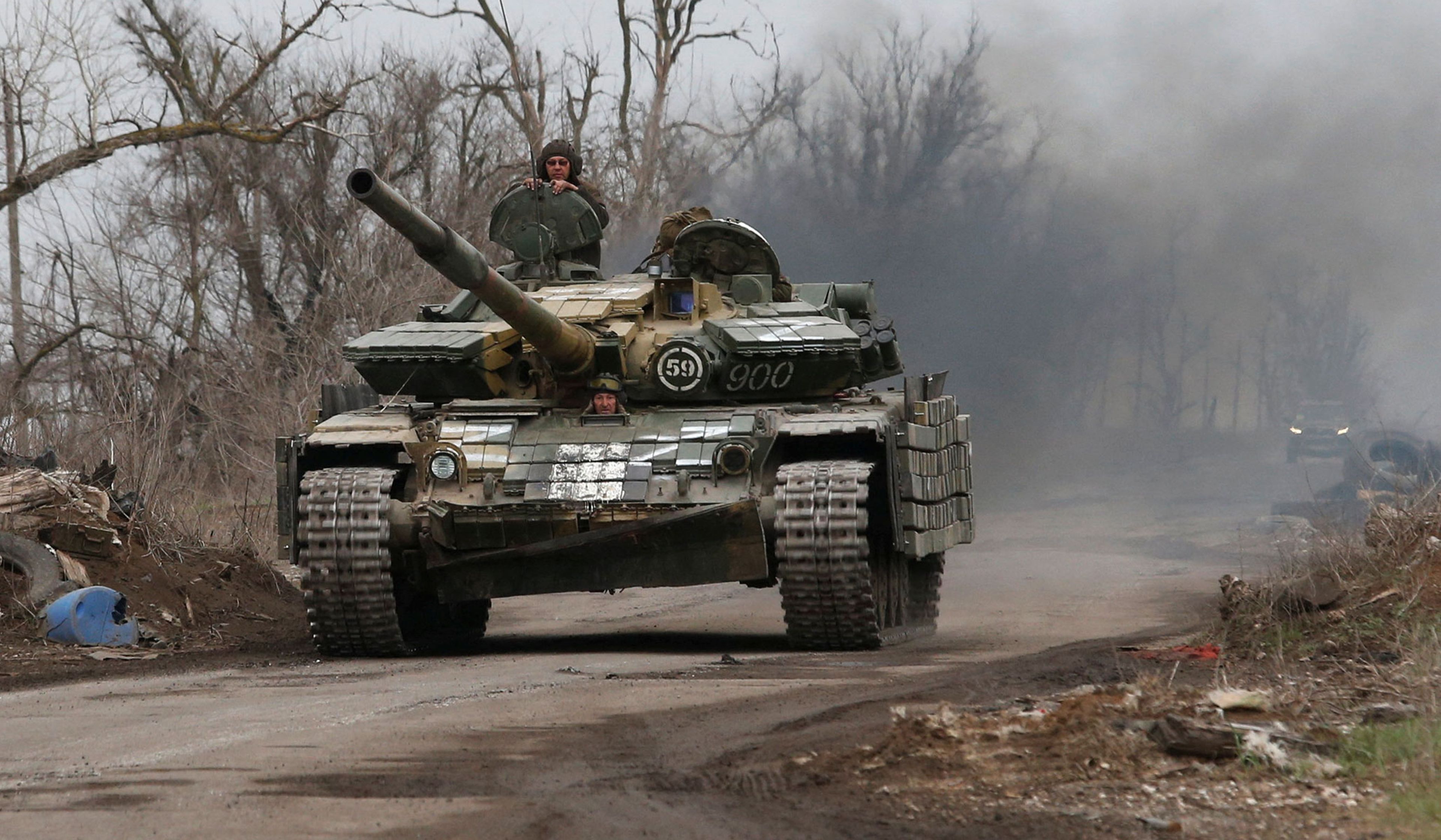
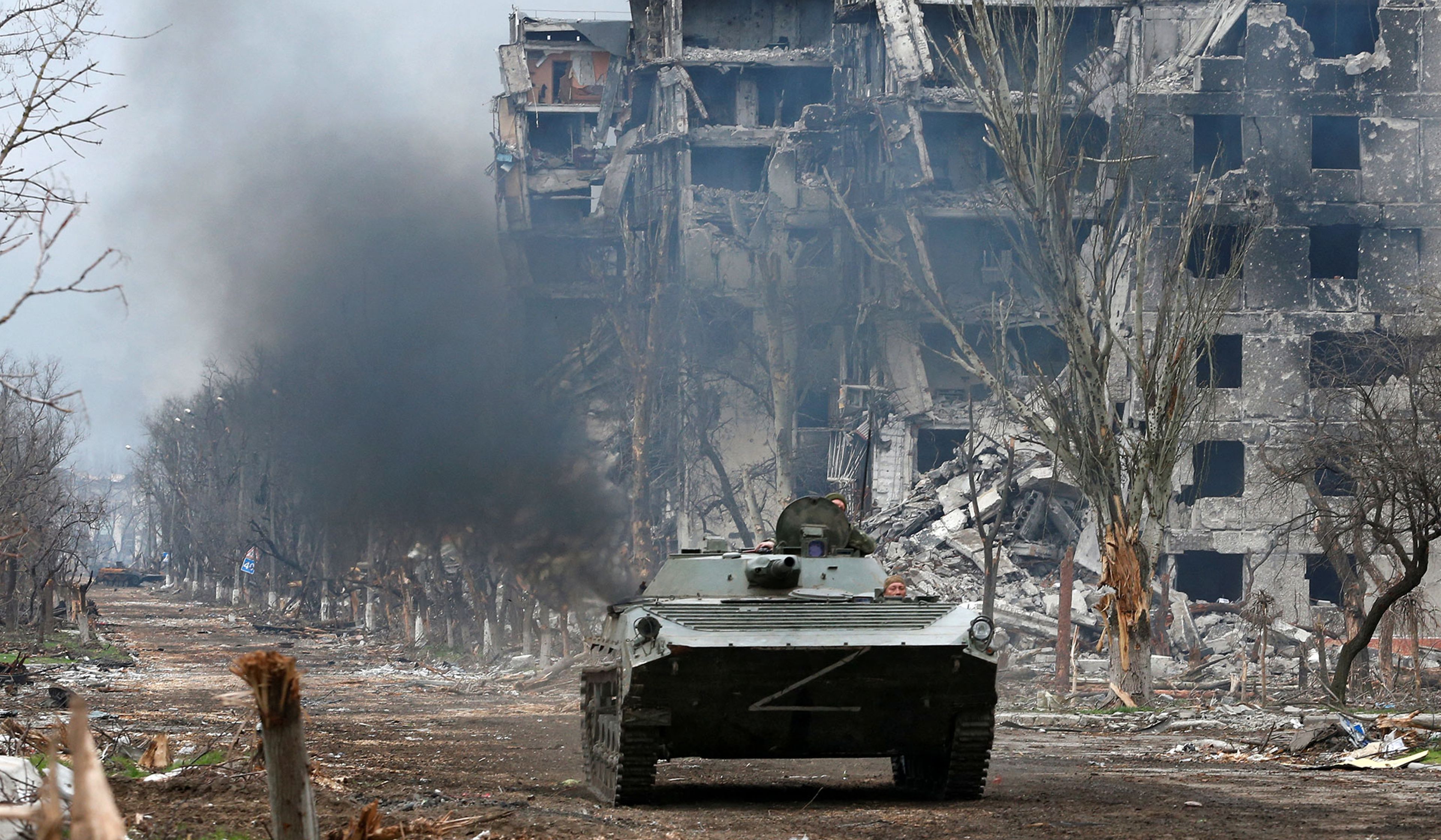
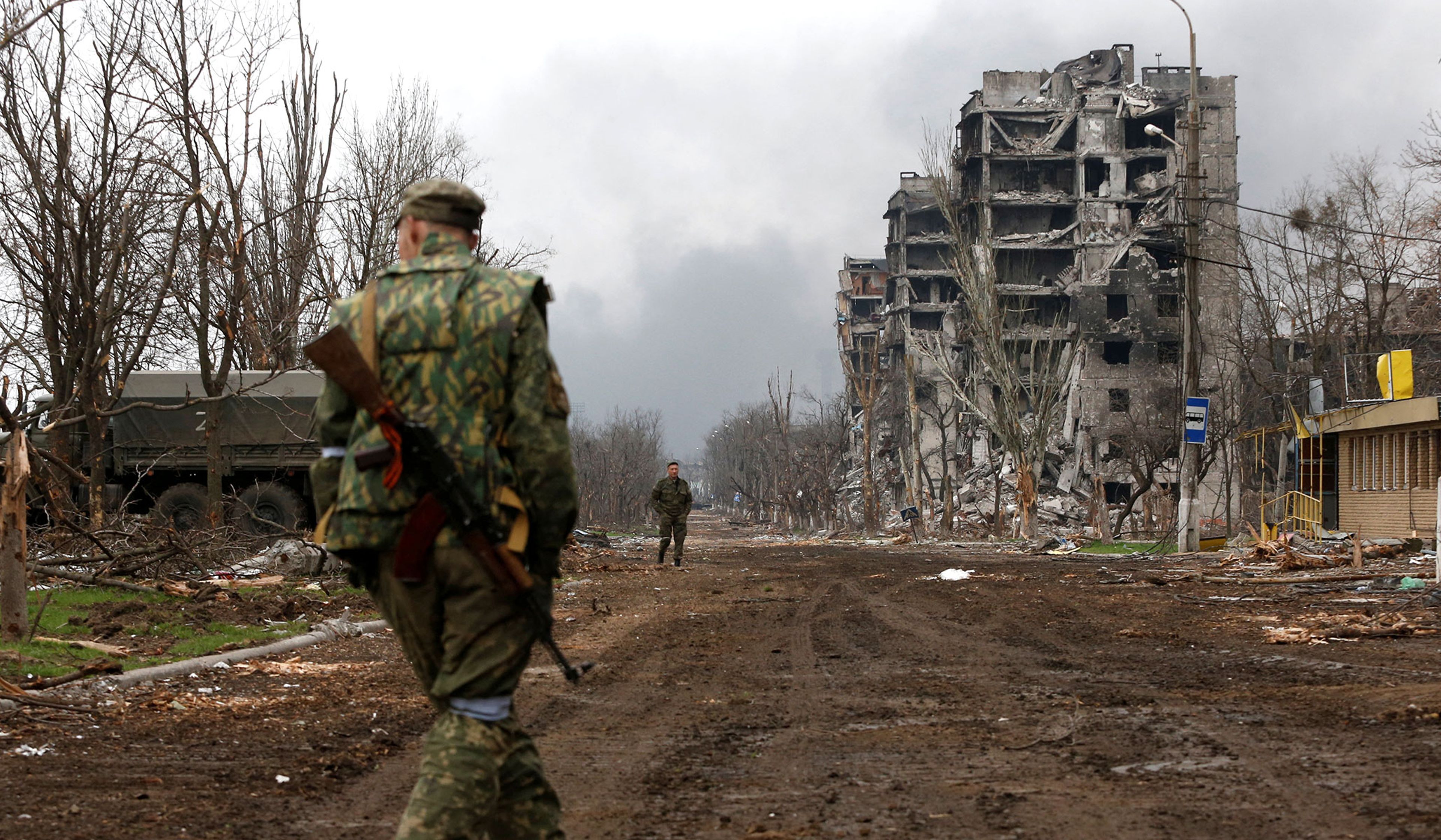
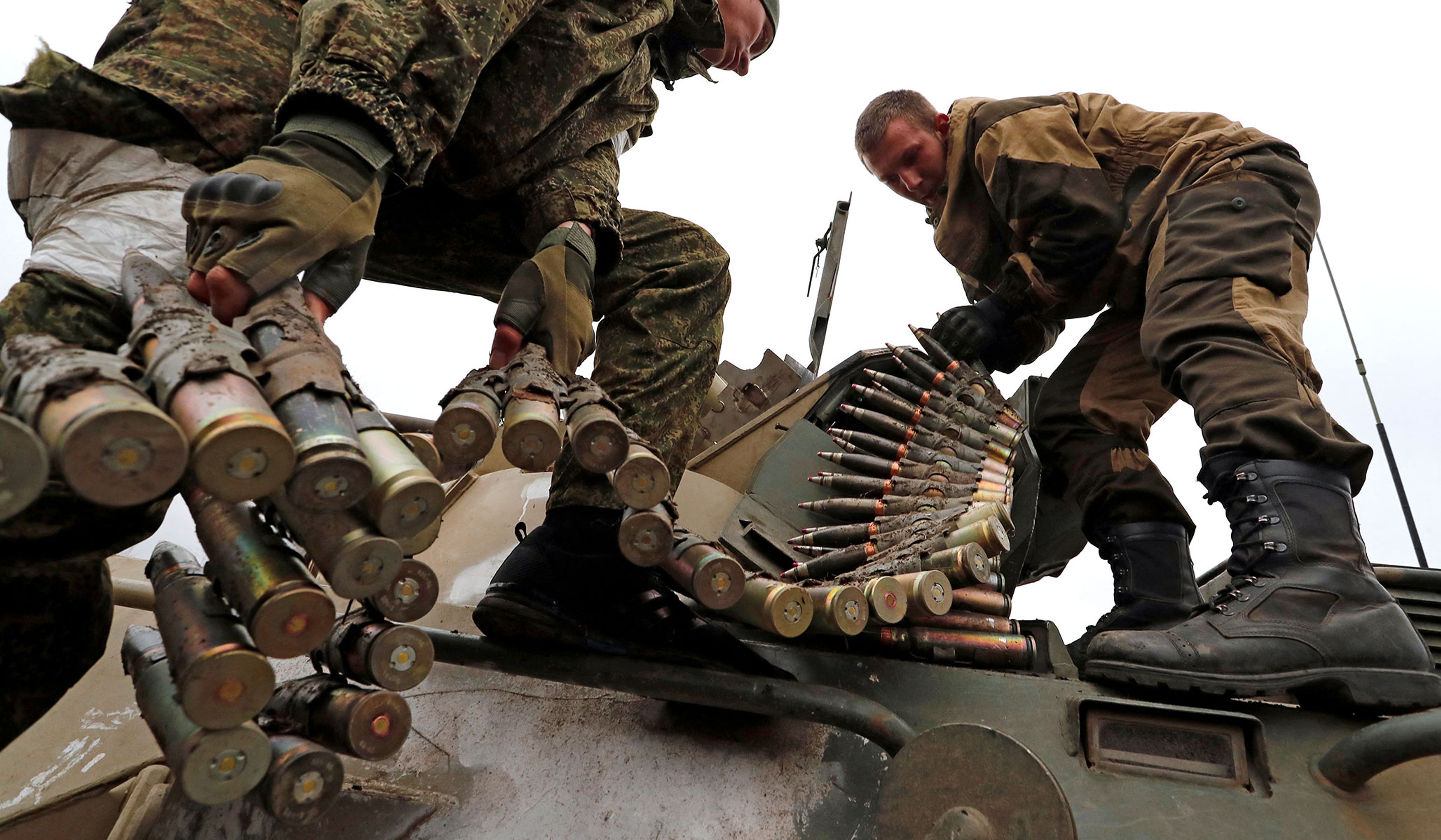
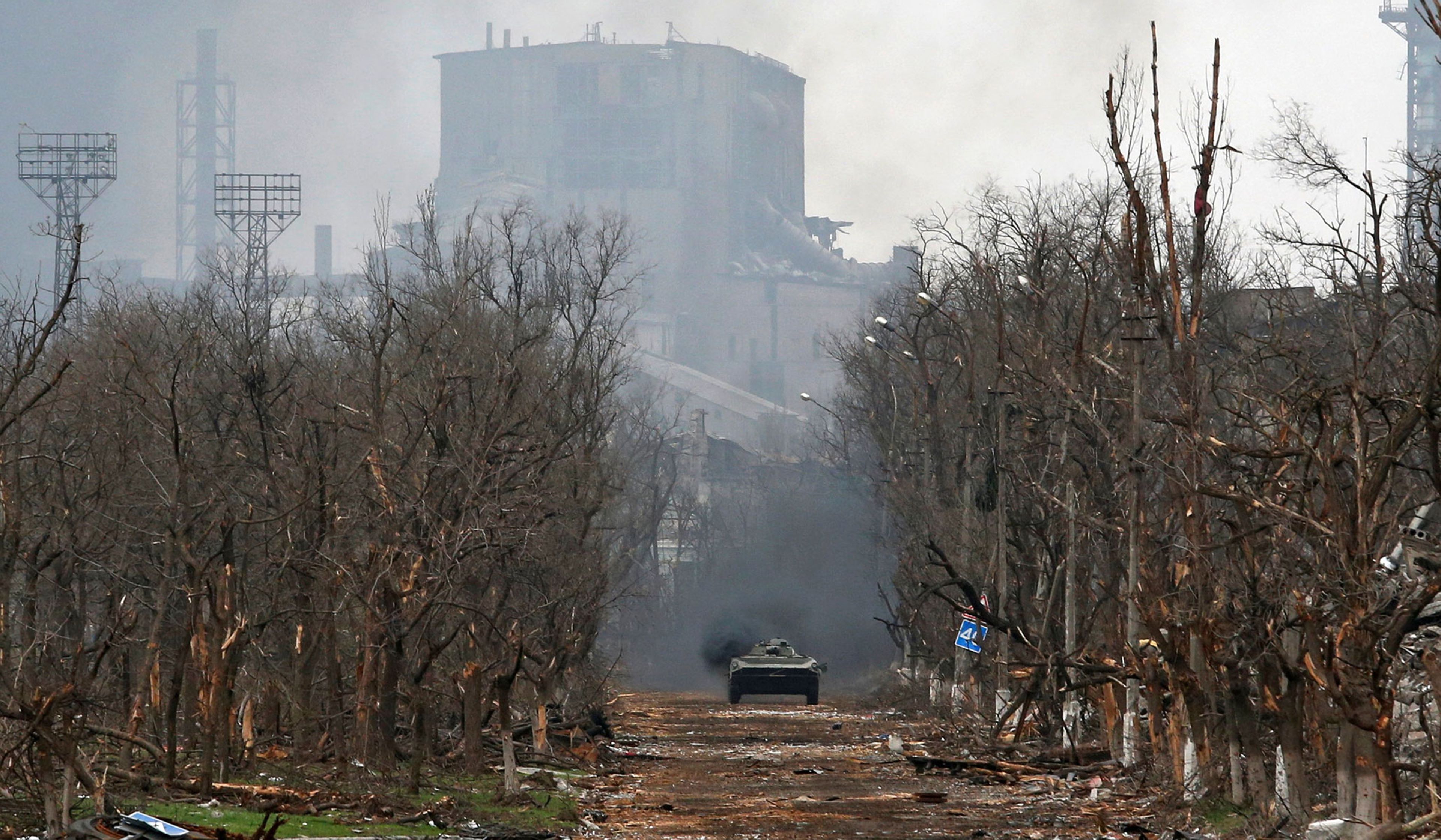
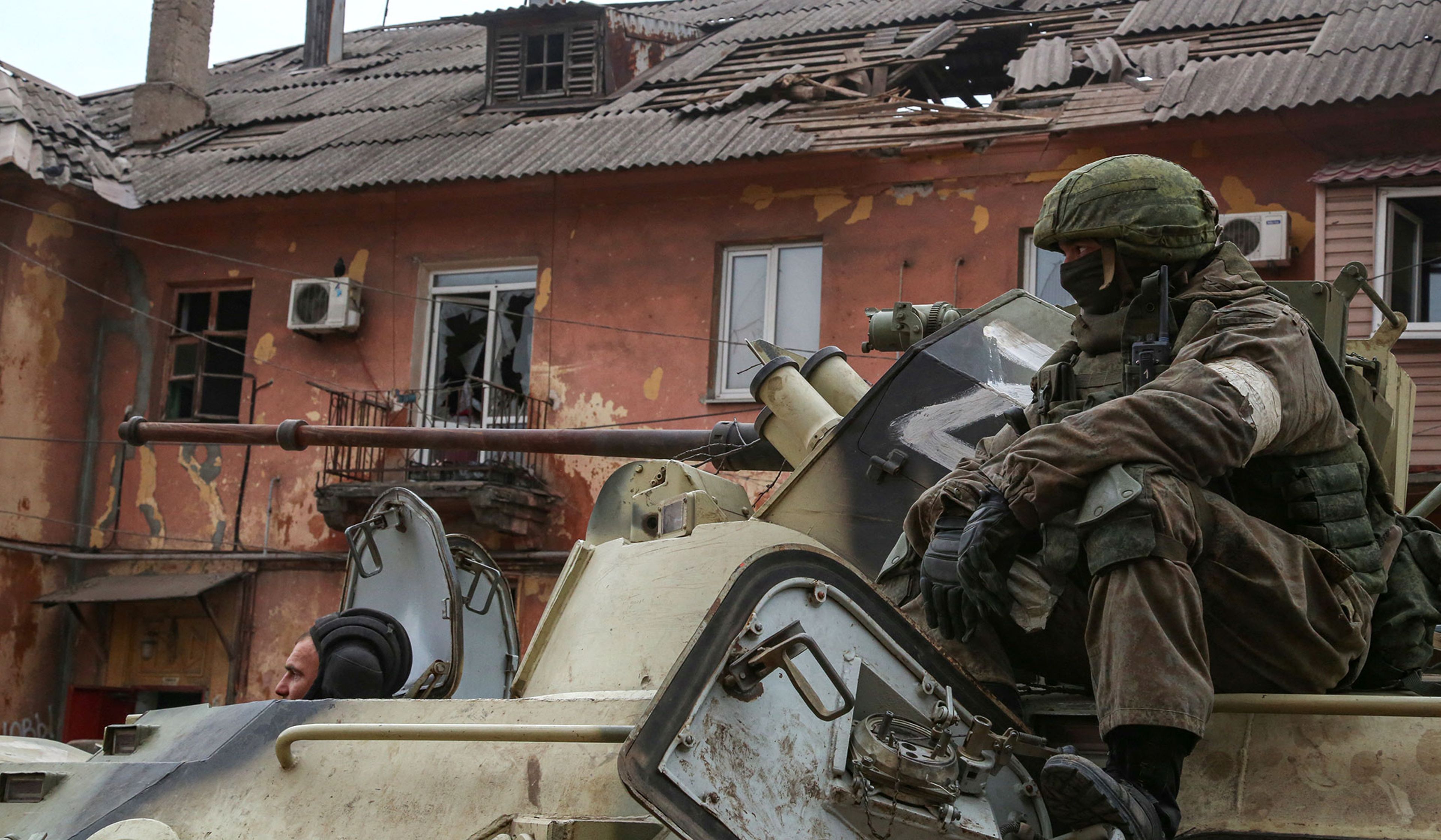
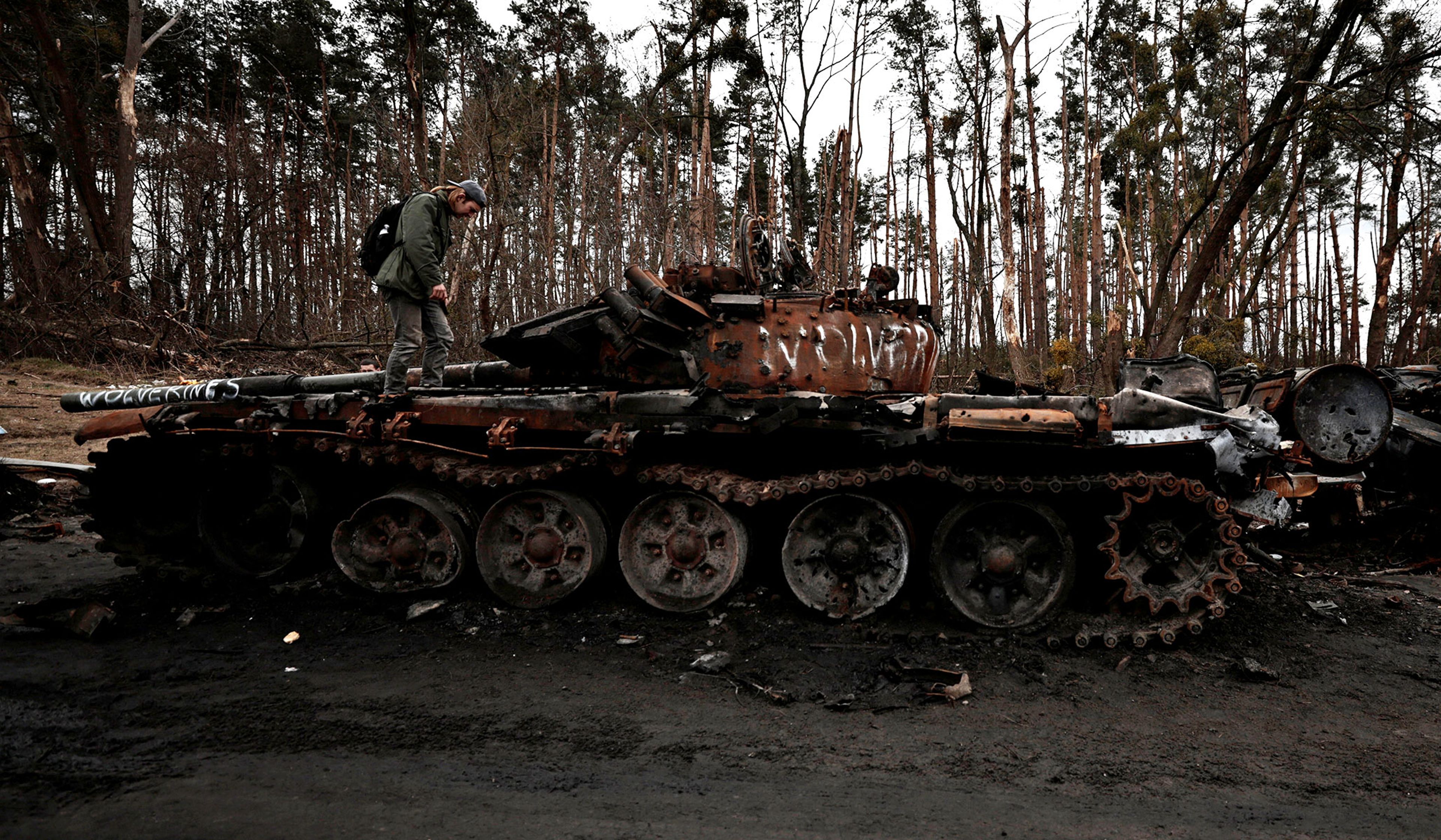
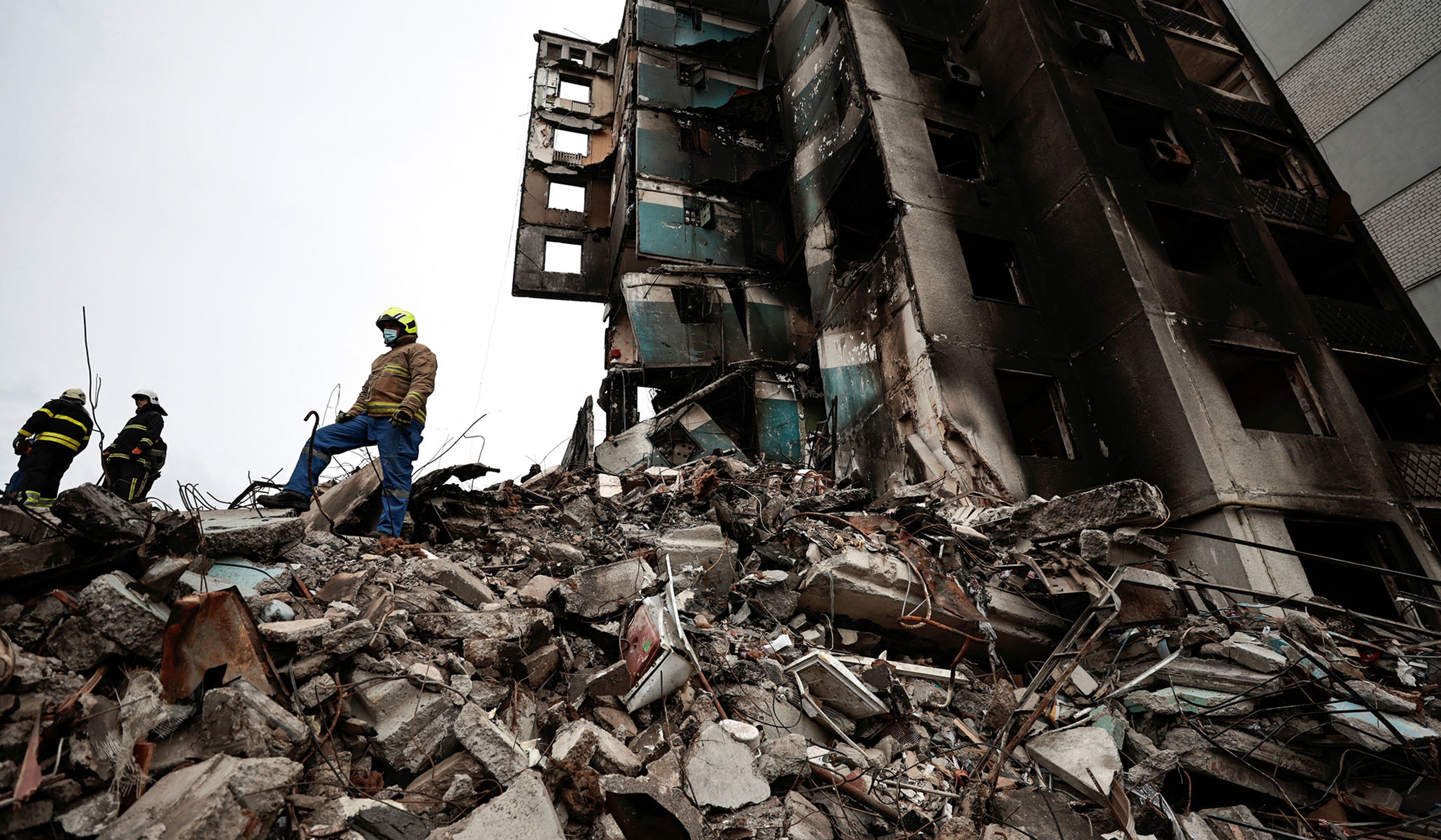
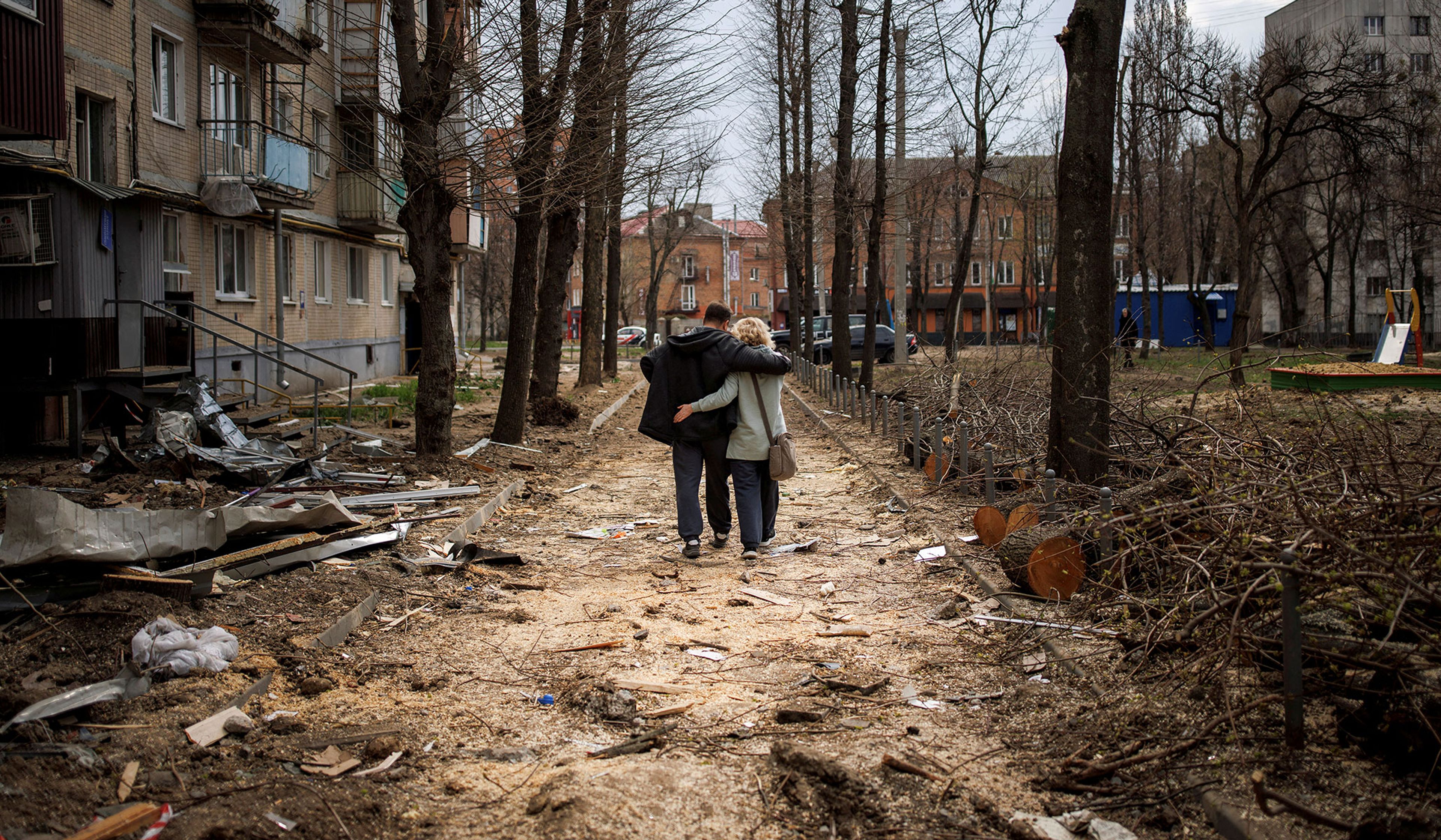
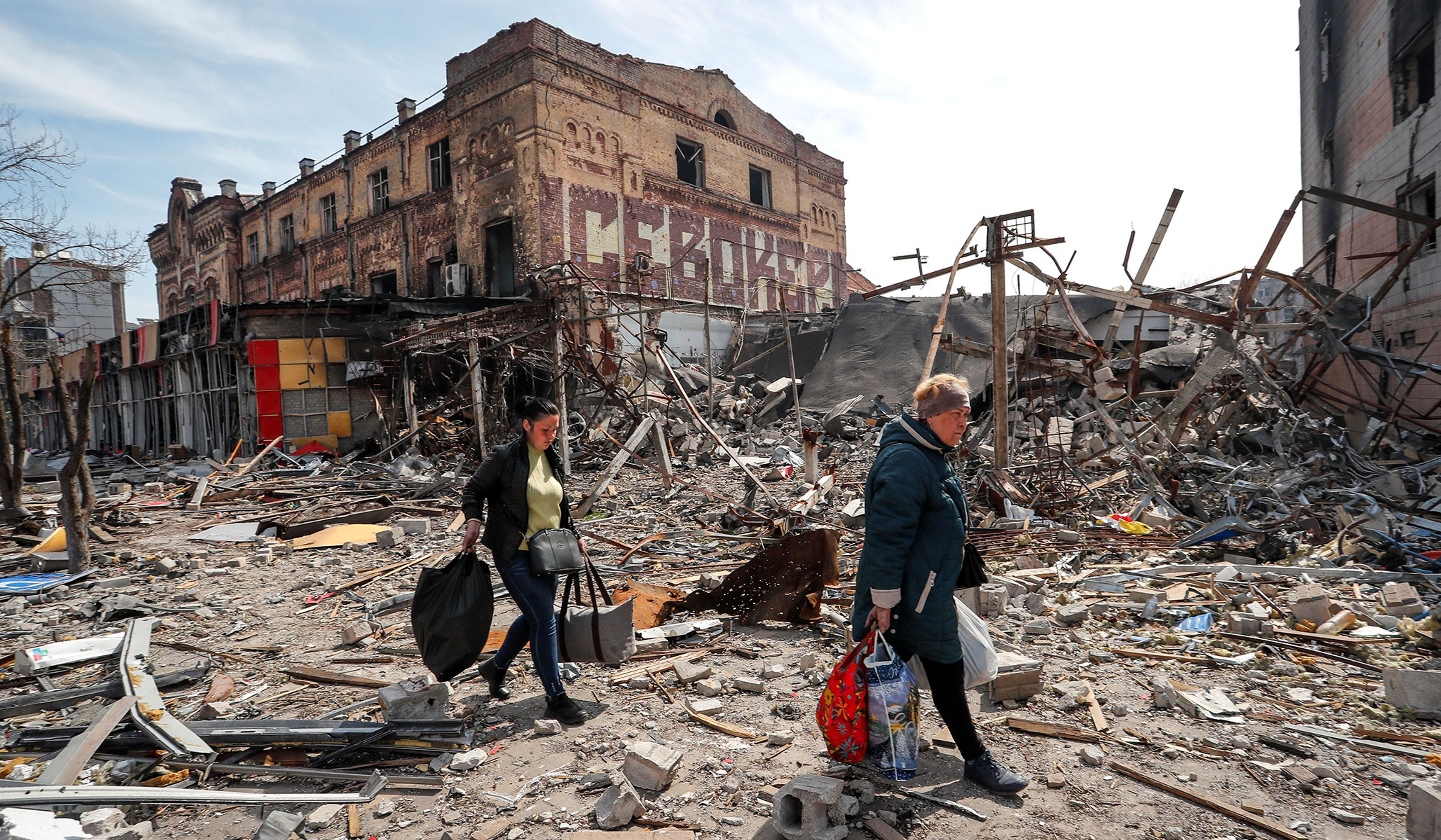
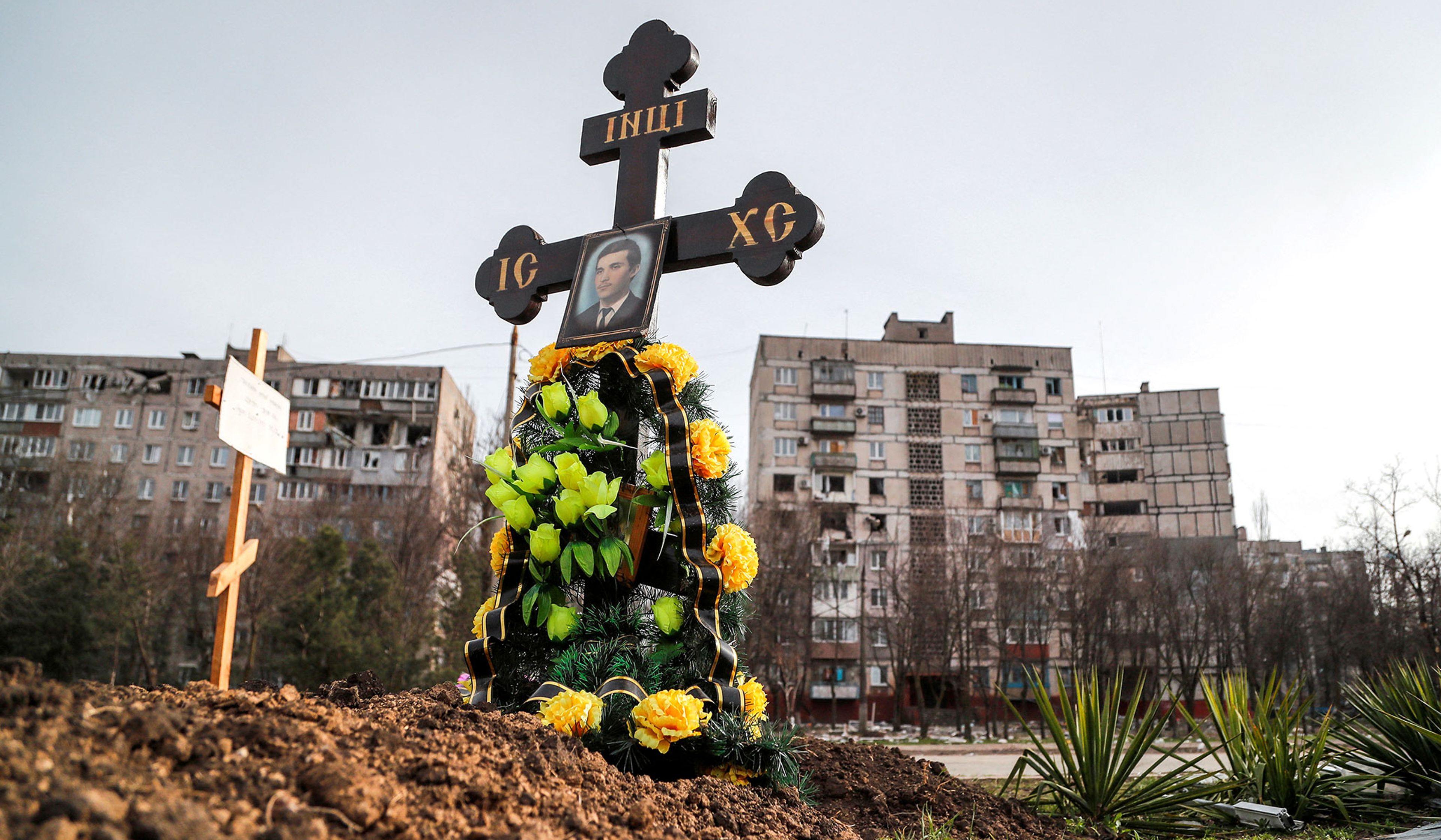
Pro-Russian troops drive a tank on the outskirts of the southern port city of Mariupol, Ukraine, April 12, 2022.
Alexander Ermochenko/Reuters












Comments