I have been waiting a long time to review the new Dune adaptation that has every nerd’s heart aflutter at the moment — 30 years since I first read the Frank Herbert novel, several years since the Denis Villeneuve movie was announced, then an extra year because the COVID pandemic denied us Dune at the appointed time, along with everything else.
But waiting is good for the soul, and I’ll write about Dune next issue. For this issue, I have an exhortation. If you read this column regularly you know that one of its themes is the disappearance of popular moviemaking for adults — the ebbing of the movie star, the decline of entire grown-up genres, the complete takeover of Hollywood by superhero franchises and endlessly proliferating sequels and reboots.
The Dune adaptation is a good thing, but it isn’t a solution to this problem. In the best case, it will be an example of franchise filmmaking raised to its highest level, like Peter Jackson’s Lord of the Rings — the most sophisticated and artful possible adaptation of a famous epic beloved of teenagers of all ages. That will prove that we can have a better sort of franchise than whatever the umpteenth Marvel flick or Star Wars cash-in delivers. But it won’t prove that Hollywood can make money delivering original stories outside the existing blockbuster framework.
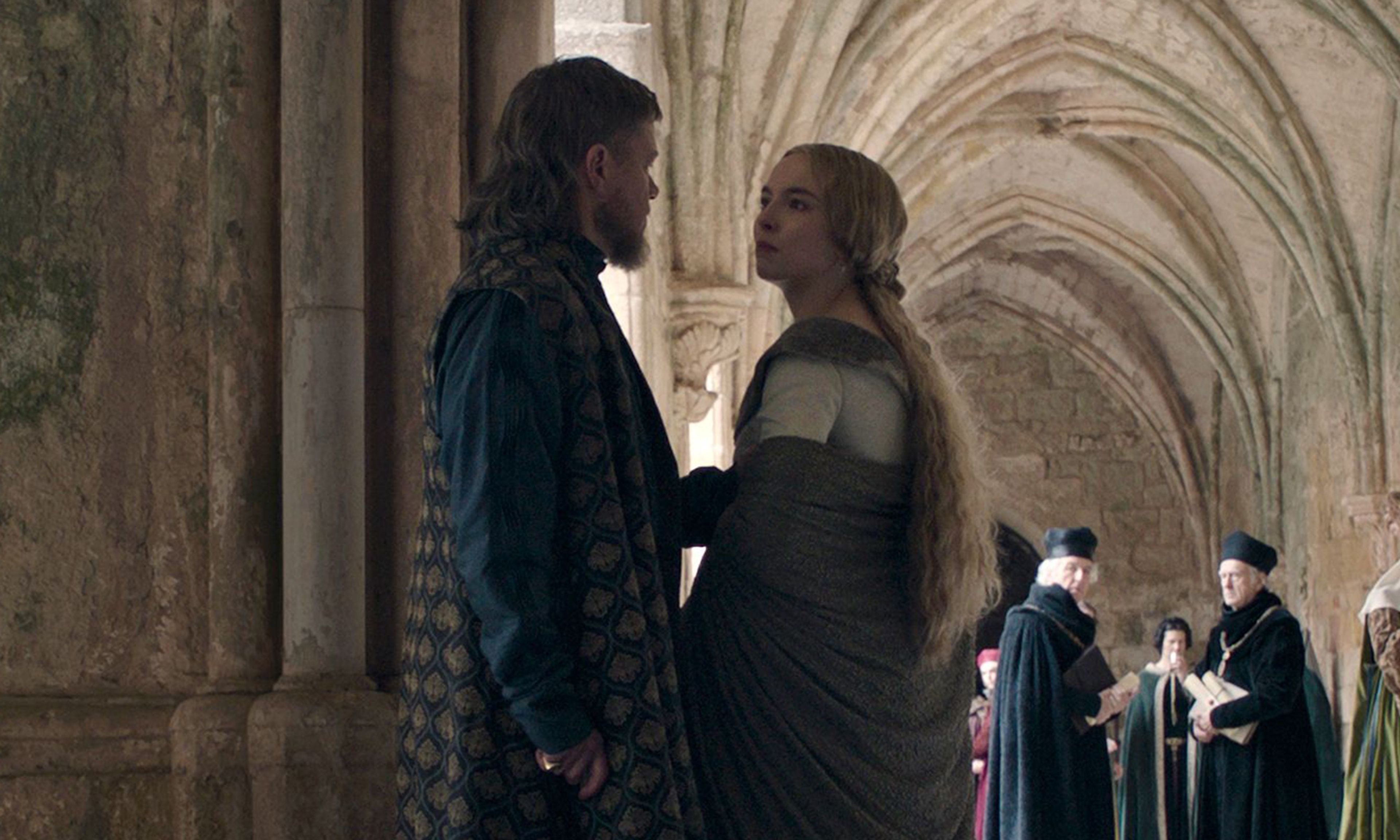
Which is why, if you find my rants at all convincing, you should go to the nearest theater and see The Last Duel before you buy your Dune tickets. This is Ridley Scott’s latest movie, and his best in some time: a depiction of an alleged rape in medieval France that led to a trial by combat, the last legally sanctioned one in French history, in which the husband of a beautiful noblewoman battled to the death with the man she accused of raping her.
It’s also the kind of movie that was commonplace in Hollywood before the Marvel age. It has two famous movie stars — Matt Damon in a leading role and Ben Affleck in a supporting one, together again as co-writers for the first time since Good Will Hunting — serving alongside two rising, charismatic near-stars in Adam Driver and Jodie Comer. It has an interesting historical setting, an often clever script, and a story that you probably haven’t heard before, unless you happen to have read the work of history it’s adapted from. Its themes are political (the medieval Me Too angle is fairly obvious) but its stakes are fundamentally personal: The fate of the world doesn’t hang in the balance, only the fate of these characters’ worlds, their reputations and relationships and very lives.
And so far The Last Duel has made about $17 million worldwide on a $100 million budget. Who’s to blame for the decline of adult moviemaking? Ladies and gentlemen, I am afraid it’s you.
The movie is not a masterpiece. It uses a tripartite structure, where we see the events surrounding the rape accusation first from the perspective of Damon’s Jean de Carrouges, a successful soldier and a blundering failure at feudal politicking; then from the perspective of Driver’s Jacques Le Gris, first Carrouges’s intimate and then, as Le Gris ascends politically, his hated ex-friend; and finally from the perspective of Comer’s Lady Marguerite, Carrouges’s much younger wife, who accuses Le Gris of forcing his way into her chateau and forcing himself upon her on a day when her husband was away and her mother-in-law had taken all the servants with her on an errand.
This Rashomon-like style is an effective way to depict a contested event, and even before the dueling versions of the rape itself — which to the besotted Le Gris played as a kind of game of false resistance of the sort he expected from court ladies, but which Marguerite’s memory lays bare as simple violence — we get a good sense of the differences between self-perception and reality, especially for Carrouges, stalwart and heroic to himself and insufferable and bullheaded to his friends and spouse and liege lord. (That liege lord would be Affleck’s Count Pierre d’Alençon, a pretentious sleaze and a truly great Affleckian character.)
At the same time, having to trace the same narrative three times makes the overall story relatively short, which in turn requires a lot of world-building shorthand that tells instead of shows. And there isn’t enough space for the character development you need with Marguerite, in particular — whose desire to push the accusation all the way to mortal combat, even at risk of her own life (since if her husband loses she’ll be executed for bearing false witness), is fascinating but not quite fully explained by Comer’s otherwise vivid performance.
Much of that explanation, given the context and the times, probably had to do with religious faith, and here Scott has the recurring problem (which doomed his Crusades epic, Kingdom of Heaven) of being a filmmaker fascinated by religious eras but with a skeptic’s truncated understanding of faith itself. At its best The Last Duel uses the exotic aspects of medieval Christendom to comment on universal patterns of power and judgment, but it needed an extra dose of sympathy for Christianity itself to bring the most important of its characters to life.
But a movie need not be a masterpiece to deserve commercial success, and The Last Duel deserves it. And if the next time Affleck and Damon appear together is in some sort of Dune–Marvel crossover event on the Netflamazon app in 2034, the audience that refused to reward this kind of movie will have no one but itself to blame.












Comments