
As Judge Amy Coney Barrett was testifying before the Senate Judiciary Committee, many liberals thought they had found the perfect riposte to her. Hillary Clinton tweeted, “At the time the Constitution was adopted, women couldn’t vote, much less be judges.” More than 250,000 people hit their “like” buttons. Dan Rather suggested that applying originalism in law, like using “an old mule for transportation,” entails denying that “the world changes.” Senator Ed Markey (D., Mass.) pithily summed up why he was voting no: “Originalism is racist. Originalism is sexist. Originalism is homophobic.” It invites us to “go back in time.”
Conservatives scoffed at the elementary misunderstandings of originalism revealed in such remarks. But their popularity — and many of the other arguments made by Barrett’s opponents —
suggests that the basics of originalism, even after all these decades of debate over the courts, remain unknown to many politically engaged Americans.
Varieties of originalism have proliferated, especially in recent years, with the different schools within it disagreeing about such matters as just why it is the best method of determining the meaning of legal texts. Almost all originalists agree on the core point: Those who are tasked with applying laws should take them to mean what the informed public of the time understood their words to mean.
That description may sound banal, but it excludes some alternatives. The subjective intentions of the drafters of a legal text, for one thing, count for nothing if they conflict with the understanding available to the public. Originalism also holds that judges should not feel free to substitute their own judgments for those of the people who consented to adopt the provision. The phrase “letters of marque and reprisal” means what people thought it meant in 1787, not what a judge wishes they had meant. As Judge Barrett testified of the law, “It’s not up to me to update it or infuse my own policy views into it.”
None of this means that we are doomed to be ruled by the laws of 1787, or that government cannot take account of social and technological developments. Old laws can be applied to new situations, legislatures can pass new laws, and the Constitution itself can be amended. The Constitution left state legislatures free to extend the franchise to women at their discretion, and eventually a supermajority of the public decided that all states should follow that practice.
Women’s suffrage came about in a way entirely compatible with originalism: No judge took it upon himself to say that the Constitution required it before the 19th Amendment was ratified. Now an originalist judge is just as bound by the understanding of that amendment that prevailed in 1920 as by the understanding of the original Constitution that prevailed in the founding generation.
Kristen Clarke, president of the Lawyers’ Committee for Civil Rights Under Law and an expert witness called by Senate Democrats for the confirmation hearings, gave testimony backing the Clinton-Markey argument: “We do not want to risk going backwards to a time when earlier generations did not share the values that the majority of Americans now rely on as the foundation of a just and fair society.” As the example of women’s suffrage suggests, though, originalism does not require any such retrogression.
In most of the politically heated judicial controversies of the last several decades, moreover, originalists have not been seeking to foreclose democratic outcomes; non-originalists have. The most contentious issue in the politics of the judiciary has long been abortion policy. The Supreme Court insists that the Louisiana voters and legislators of today not be allowed to pass laws that reflect their beliefs, essentially because some long-dead justices favored permissive abortion laws. On this issue and many others, a return to the original understanding of constitutional provisions would enable Americans to set the policies they want based on contemporary views, and then to alter those policies as views change.
The other major arguments advanced against originalism during the hearings were no more substantial. Often, they contradicted one another. So, for example, some progressives argued that originalism fails because in the important cases we can rarely reach agreement on what the original understanding was. More often, though — especially when Democratic senators were making the case — progressives suggested that the original understanding had obvious, and obviously unacceptable, implications.

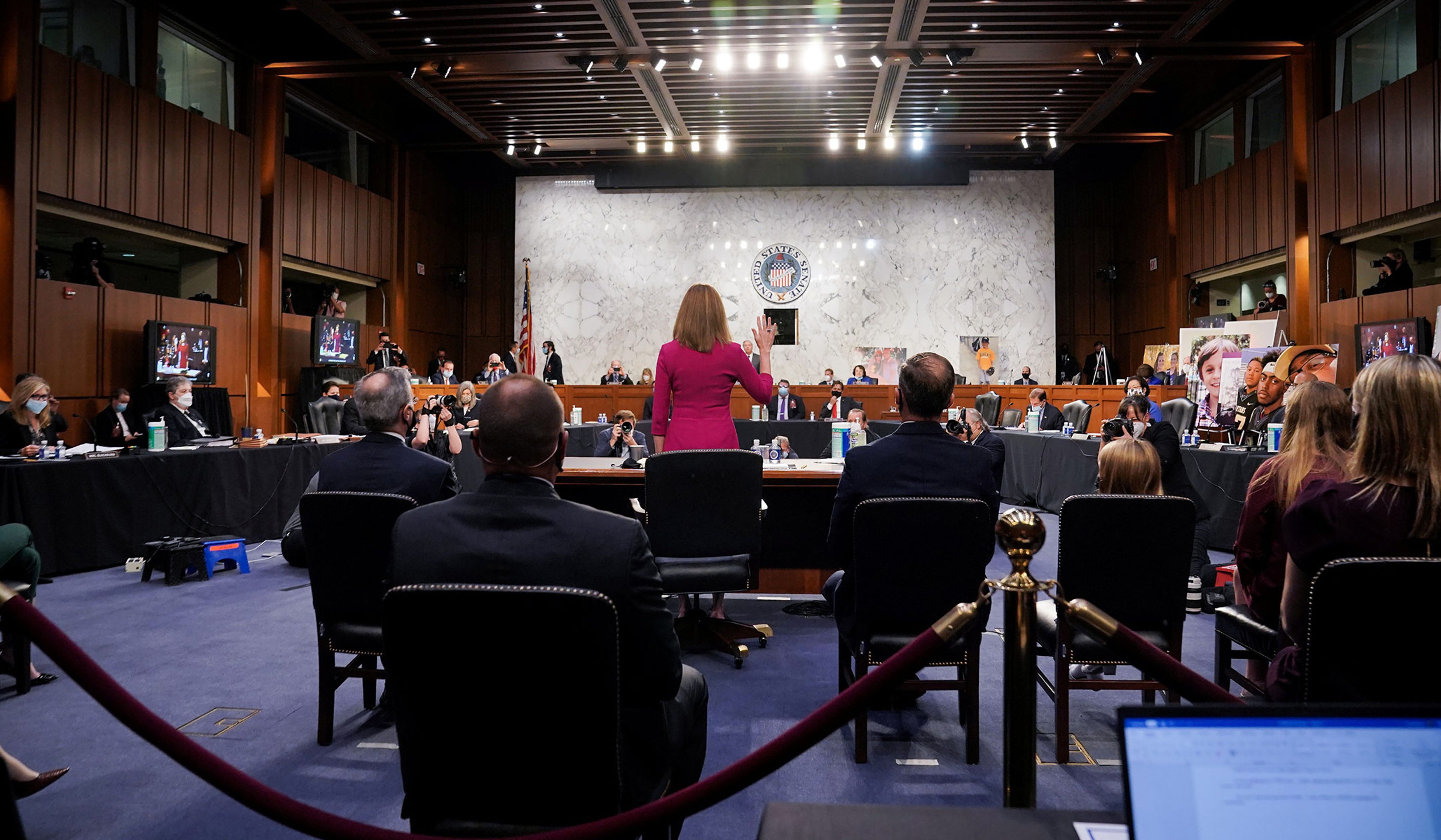

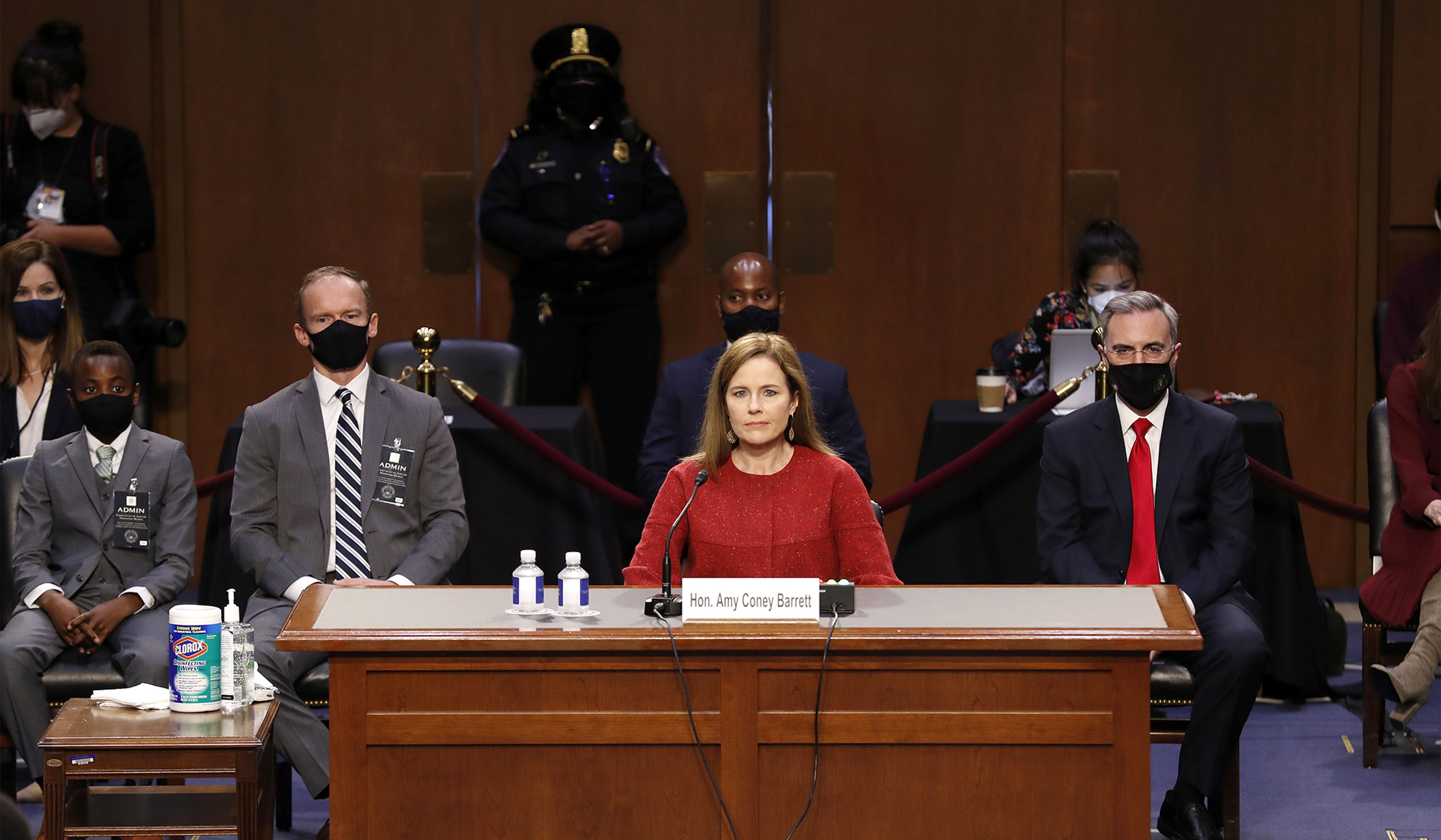
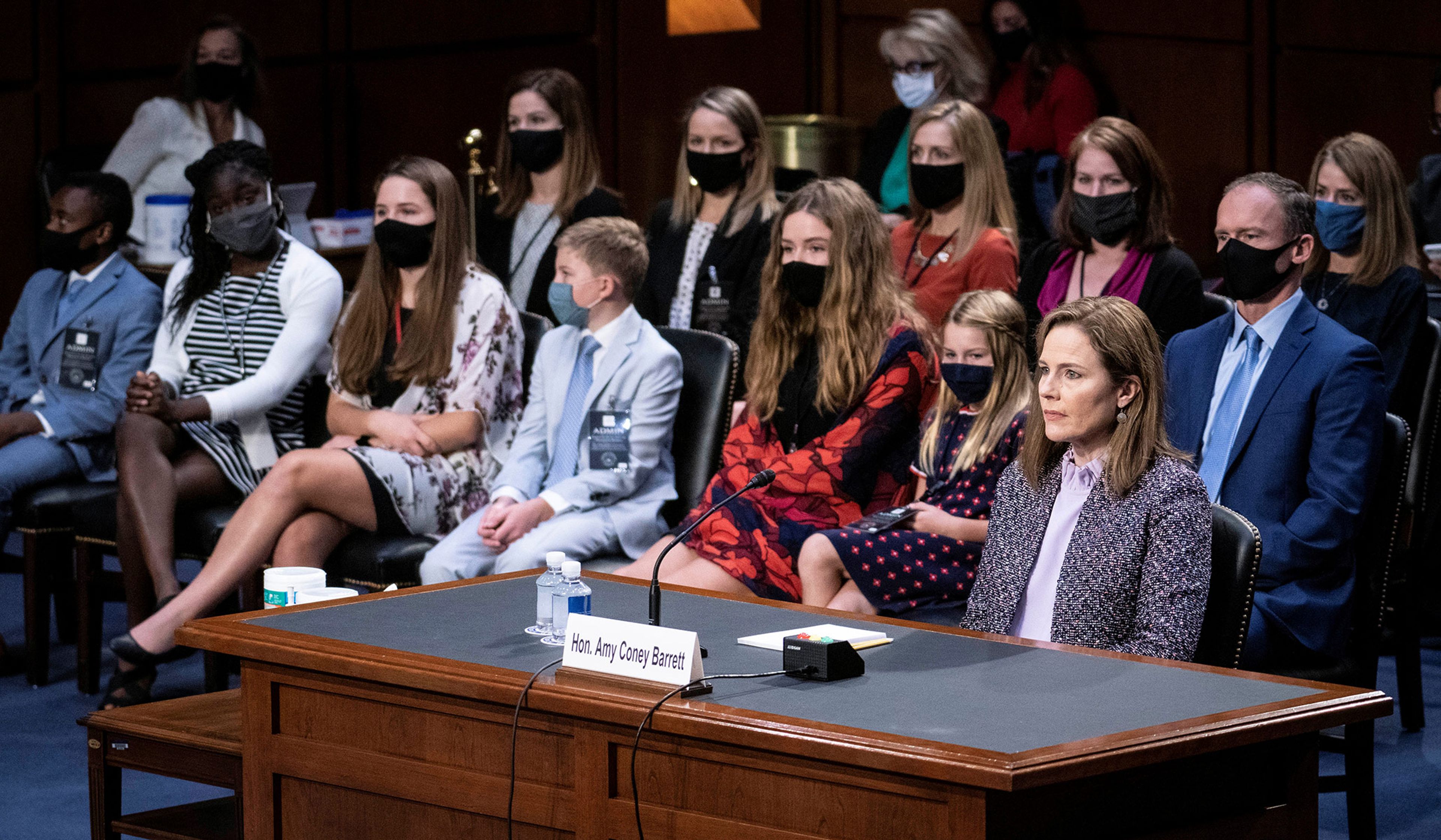


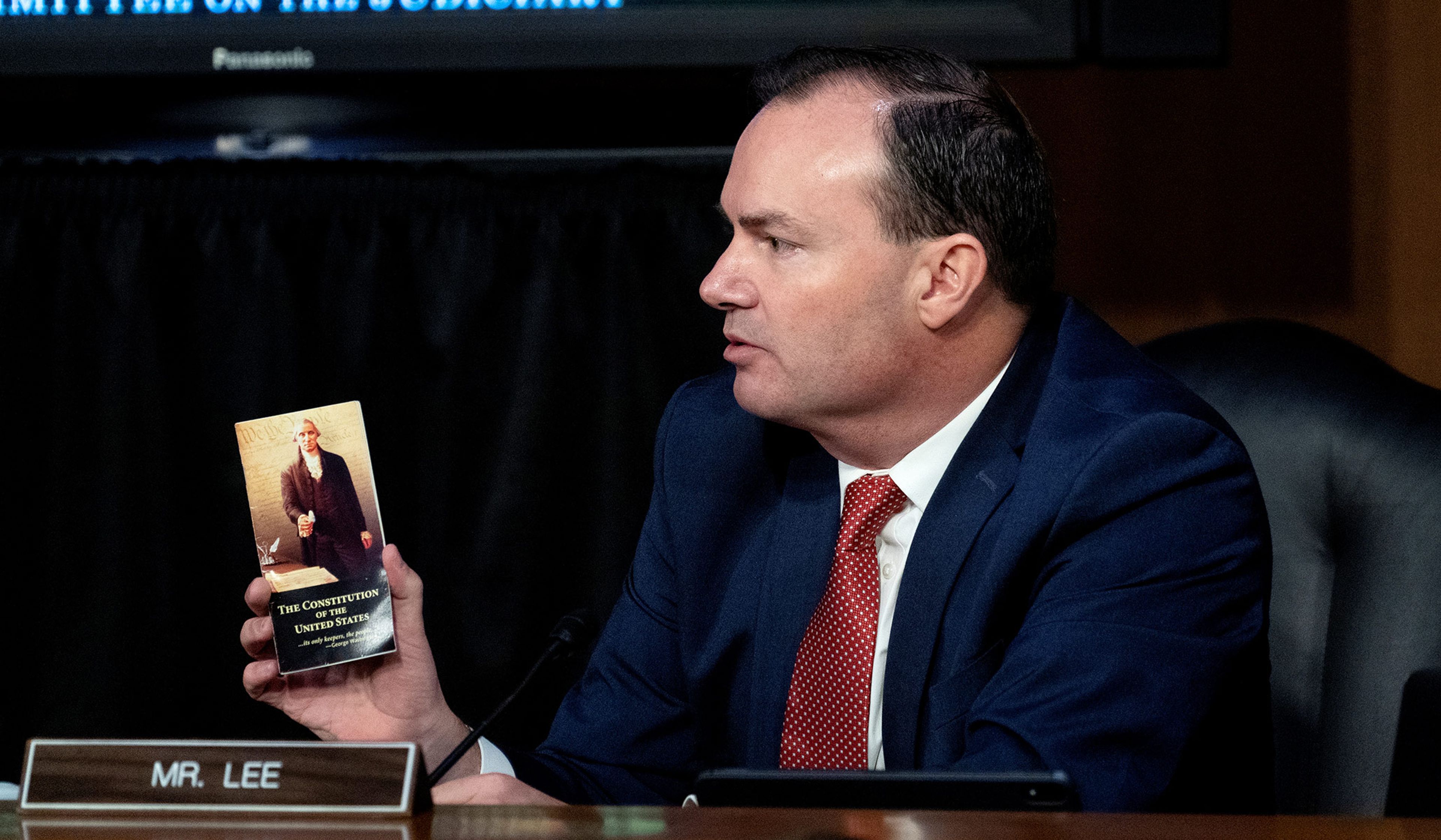

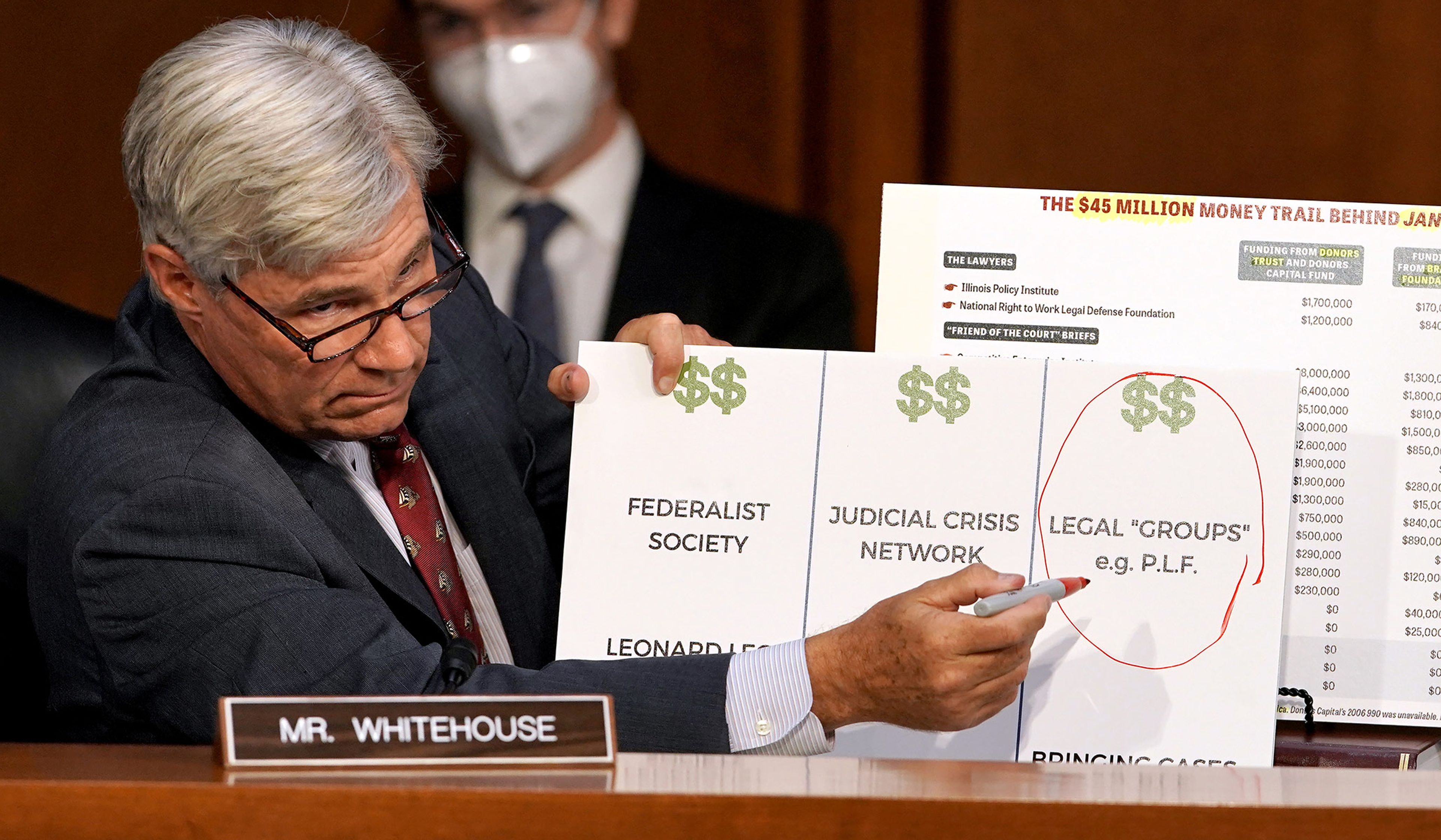
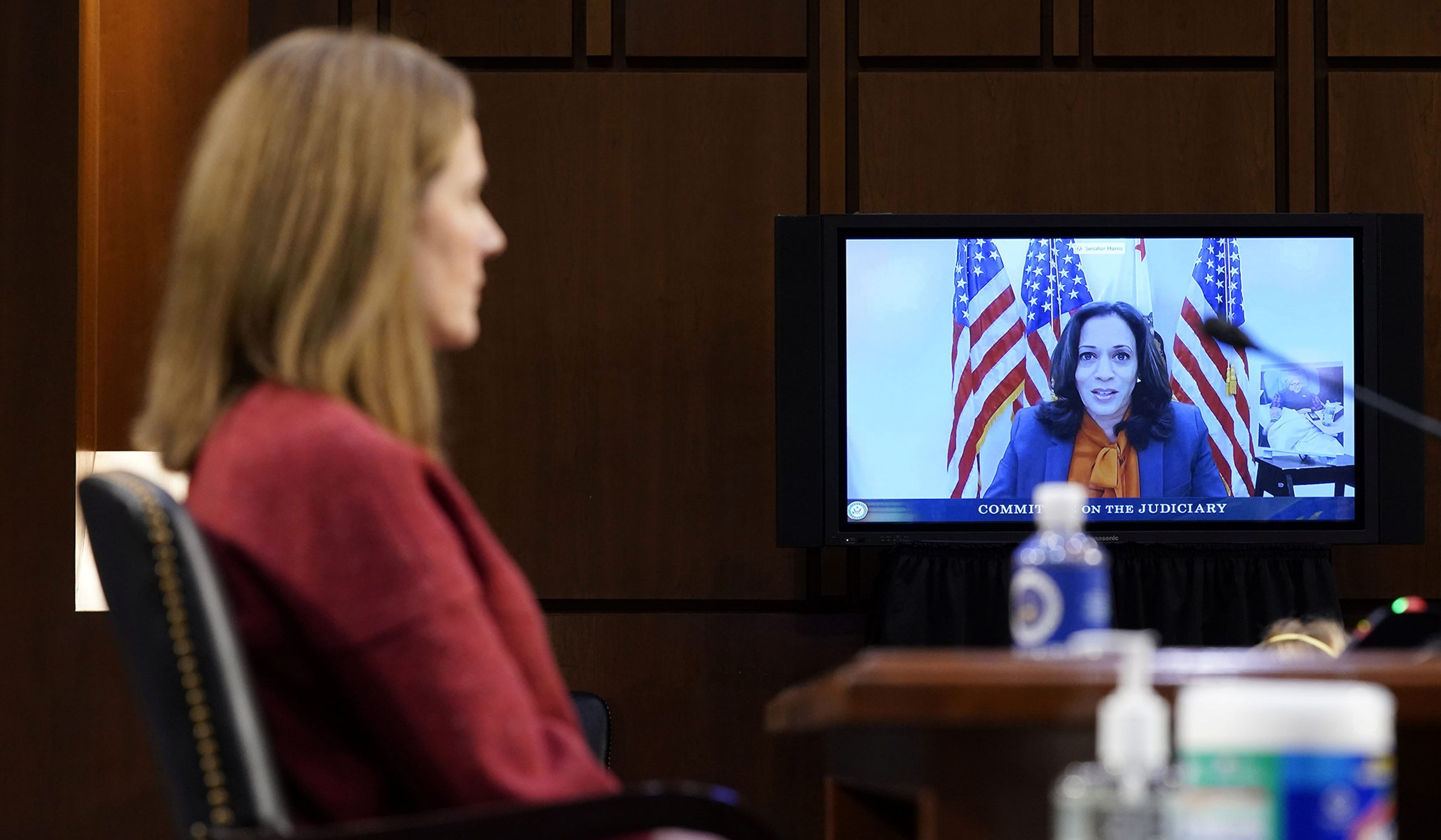
Supreme Court nominee Amy Coney Barrett speaks during a confirmation hearing before the Senate Judiciary Committee, Washington, D.C., October 12, 2020.
Patrick Semansky/Reuters Pool
Senator Chris Coons (D., Del.) thus tried to portray originalism as a clear threat to Griswold v. Connecticut, the 1965 decision holding that the Constitution protects a right to contraception. Judge Barrett explained that while she would not comment on whether Griswold was correctly decided, it is extremely unlikely to go away because there was no prospect of a case or controversy that would invite the Court to rethink it. Clarke followed the same tactic as Coons in treating Brown v. Board of Education as incompatible with originalism. Never mind that many originalist scholars have concluded that Brown got the Constitution right — and that one of those scholars was Judge Barrett.
There are sophisticated arguments against originalism in the law reviews. Yet law professors sometimes managed to sink lower than senators in their discussions of judicial philosophy. Erwin Chemerinsky, the dean of Berkeley’s law school, maintained in the New York Times that originalism would block the election of a female president. Supposedly, when the Founders referred to the president as “he” in Article II, they were putting a restrictive condition into the law. No. The Founders explicitly listed requirements for the presidency that did not include sex, and they followed convention in the generic use of masculine pronouns. Nobody has ever imagined that a woman can be compelled to be a witness against herself because the Fifth Amendment follows the traditional convention.
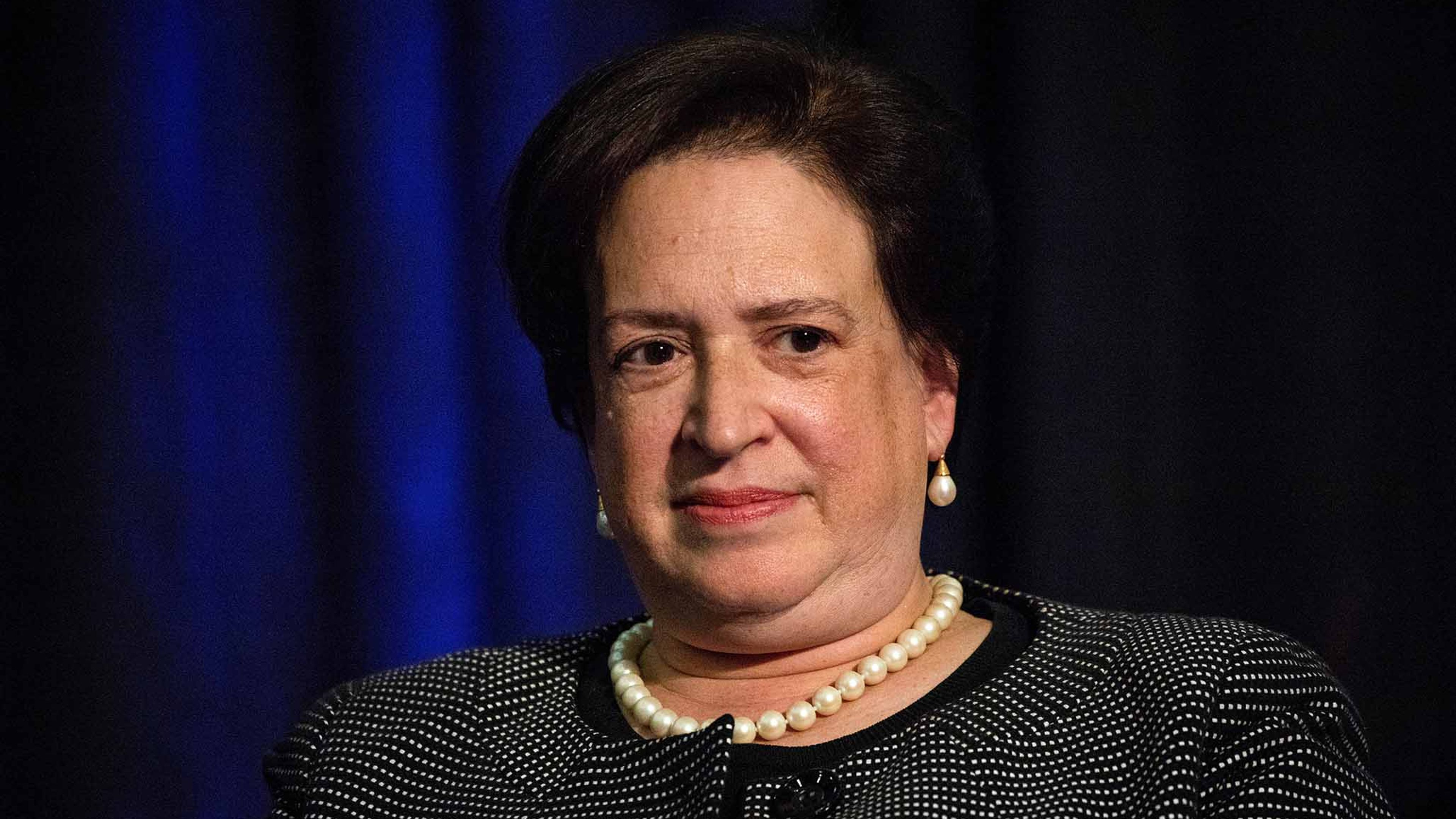
District of Columbia v. Heller came up several times during the hearing. In that 2008 case, the Supreme Court ruled that the Constitution protects an individual right to bear arms. As Barrett observed, justices on both sides of the question attempted to ground their analyses in the original understanding of the Second Amendment. Two years later, during hearings on her own confirmation to the Supreme Court, Elena Kagan said that to some degree “we are all originalists.” Originalism is gaining strength on the Supreme Court. Somehow, the debate over it is simultaneously getting dumber.











Comments