• The corporate account for Tampax tweeted, “Not all people with periods are women.” Can’t blame them for trying to expand their market.
• Testifying at her confirmation hearings, Amy Coney Barrett was just as intelligent and winsome as prior reports had said. She gave the Democrats none of the ammunition they craved. Republican senators rightly confirmed her to the Supreme Court on the strength of her credentials and her commitment to the rule of law. Justice Barrett will vote as she thinks right, but a few predictions can safely be made. Americans will continue to have access to contraception. Obamacare will stand. The presidential election will be decided by who gets the most votes in states representing a majority of the Electoral College. And none of the people who predicted the reverse of any of these events will ever admit they were just scaremongering about Barrett.
• Biden said he would appoint a bipartisan commission to study Court-packing and other changes to the courts. It might be a way to bury an idea that thrills some of Biden’s supporters more than the candidate himself does, or a way to keep his options open, or a standing threat to the conservatives on the Supreme Court. Best for voters not to give Democrats so much power in Washington that we find out.
• COVID-19 has made this election year unique, as early voting and absentee ballots are the order of the day. The strange circumstances only highlight the problems of stretching out the vote. A civic rite becomes a season, akin to some minor sport. Confusion abounds. Late-returning ballots will delay results and breed lawsuits. American elections have never been pure. One of the first squabbles over counting a ballot box involved a gubernatorial bid by John Jay, one-third of Publius. The 1876 presidential election inspired one of Gore Vidal’s America-sucks novels. WFB’s grandfather voted for LBJ in his 1948 Senate run — 44 years after he died. The long lines showed Americans’ hunger to have their votes counted. Let us give the process a dignity that suits their aspirations.
• By the time you read this, you may know the winner of the presidential election. If you don’t, it’s quite possible that the Pennsylvania supreme court will be to blame. In September, a 4–3 ruling by that court struck down an 8 p.m. Election Day deadline for mail-in ballots. The ruling permitted such ballots to be received until the following Friday, provided they were postmarked by Election Day. (A 4–4 U.S. Supreme Court decision allowed this ruling to stand.) In late October, moreover, the Pennsylvania supreme court unanimously ruled that mail-in ballots may not be rejected on the basis of failed signature comparisons alone. Of these two decisions, the former seems an invitation to shenanigans, and the latter seems more defensible. But, as a rule, decisions affecting the nature of voting, made without the input of the state legislature, shortly before an election, and in a contested state are bound to engender controversy. It would better serve Pennsylvania, and the nation, if the state legislature made any necessary changes in a timely manner.
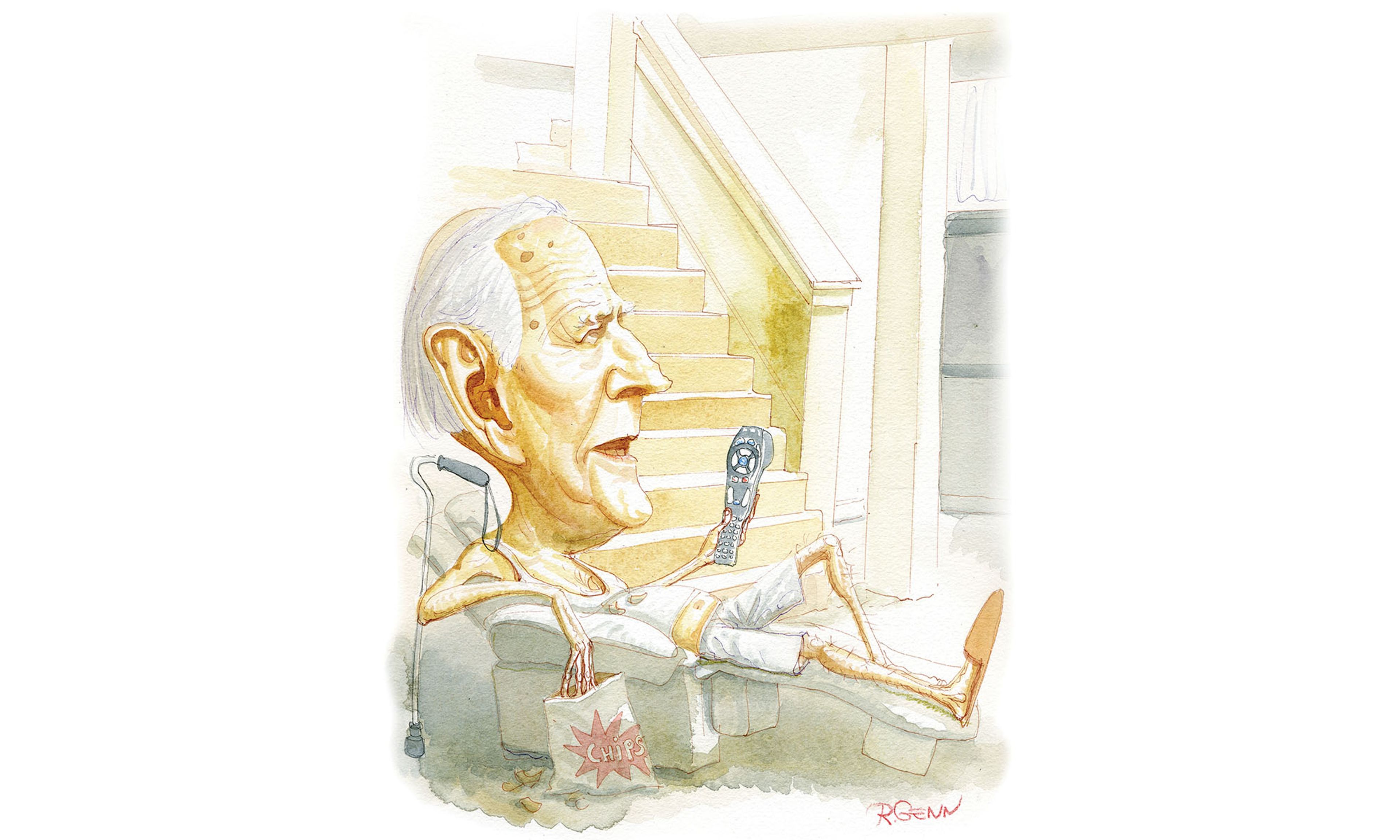
• The second presidential debate has already receded in the rearview mirror, just as (thankfully) the first one did. If President Trump had given the performance in Cleveland that he gave in Nashville, he would have been in a better position in the campaign’s homestretch. The mute feature on the candidates’ mics restrained his heckling and forced him to give tighter answers. The relative absence of crosstalk, meanwhile, allowed Biden to talk himself into Kinsley gaffes (what Michael Kinsley defined as the embarrassments that arise when politicians inadvertently tell the truth): Yes, he does want to wind down the oil industry in 15 years, as per the goals of the Green New Deal (Texas and Pennsylvania media outlets, please copy). Yet, despite some flagging at the end, Biden was neither senile nor doddering, refuting Trump’s poisonous characterizations of him. Moderator Kristen Welker, finally, was pointed, brief, and more interested in hearing the candidates than in hearing herself.
• “Not one single person with private insurance would lose their insurance under my plan, nor did they under Obamacare,” Biden said in the second debate. His plan could cause many people to lose their private health insurance. A sympathetic group commissioned an analysis that found that a public option — the new government-run insurance program that is the centerpiece of Biden’s program — would induce employers to drop their coverage for 14 million people. Biden also wants new subsidies to enable people with employer coverage to move to Obamacare’s exchanges, which could destabilize more employer plans. The end of Biden’s sentence, about Obamacare, is the giveaway: His real plan is to force a lot of people to lose their coverage, and then pretend it didn’t happen.
• As of this writing, the New York Post’s Twitter account is still locked. Its sin? Retweeting the paper’s investigation into the shady business dealings of Joe Biden’s son Hunter. Numerous media outlets have maintained they’re unable to cover the story before verifying the contents of Hunter’s laptop, which have been handed over to the FBI. Lack of verification, however, never stopped the media from passing along The Atlantic’s recent anonymously sourced story about Donald Trump’s alleged disrespect of the military, or four years’ worth of Russian-collusion coverage. In this case, no one has denied the veracity of the emails showing Hunter involved in favor-trading on his father’s name. And no one has denied that Joe Biden is mentioned in them. But the presidential candidate has yet to be asked any probing questions about his role in Hunter’s dealings with Chinese Communist and Ukrainian energy interests. Joe Biden has merely tried to wave them away by making the evidence-free claim that the Post’s stories are Russian disinformation. And why should he answer, when most of the press, with the help of big tech companies, has invented a new set of standards meant to suppress a newsworthy scoop because it may hurt their favored candidate?
• Floating on the Internet is a theory that Barack Obama and Joe Biden conspired with Iran to fake the death of Osama bin Laden, and then had members of SEAL Team Six killed in order to cover up the conspiracy. This theory was promoted by a tweeter calling himself “Oscar the Midnight Rider 1111.” President Trump retweeted Oscar. Asked about this by Savannah Guthrie during an NBC “town hall,” Trump replied, “I know nothing about it. That was a retweet. That was an opinion of somebody, and that was a retweet. I put it out there. People can decide for themselves. I don’t take a position.” It should be unnecessary to say that a president should not behave this way. But Trump makes it necessary.
• Republican senator Kelly Loeffler of Georgia, who is facing challenges from Democrat Raphael Warnock and Republican congressman Doug Collins in a jungle-primary-style election, has made Marjorie Taylor Greene — Georgia’s congressional candidate from QAnon — a prominent part of her campaign. Loeffler celebrated Greene’s endorsement on October 15, calling herself “proud to have this strong, conservative fighter” on her team. Since then, she has made a habit of retweeting Greene and issuing frequent reminders of having garnered her support. It is not “strong” to claim that because a few Muslim Americans were elected to Congress there’s been an “Islamic invasion” of our government; it is mendacious and bigoted. There appears to be a conspiracy afoot in Georgia to make the Republican Party look ridiculous.
• If you want a glimpse at the Democrats’ future on energy policy, consider the final days of the Biden campaign. After threatening to ban fracking, he attempted to weasel his way back into the good graces of Pennsylvania’s oil-and-gas country by emphasizing that he had not promised that at all. He walked sideways away from the so-called Green New Deal even as he chose a prominent Green New Dealer as his running mate and defended that daft proposal as a potential job creator. In the final debate, he threw in with the Left and promised to “transition” the U.S. economy away from existing sources of energy, and then spent the next several days trying to explain that he hadn’t meant quite that, and that any such transition would be completed, at the earliest, sometime after his 100th birthday. Here, the Trump administration unequivocally has the better case: A more-is-more approach to U.S. energy has environmental benefits (as cheap and abundant natural gas displaces relatively dirty coal on its own economic merits), economic benefits in the form of wealth creation and both white-collar and blue-collar jobs, and potential national-security benefits. Hamilton’s counsel that we need “energy in the executive” has never been more apt.
• President Trump signed an executive order to create a new category of federal employees. The quaint idea is that the closer government bureaucrats come to policymaking, the more they should be under the control of — and fireable by — the elected president. The Washington Post ran an unrelievedly hostile news article on this “assault on the civil service,” but it is really a blow for democratic and accountable government. If it ever takes effect, we will be one step closer to having an executive bureaucracy that serves the president rather than forms his chief constituency.
• According to longstanding reports, Pope Francis endorsed civil unions for same-sex couples as archbishop of Buenos Aires in 2010 — but only in private, among Argentine bishops, arguing that the establishment of civil unions would disarm the growing movement for the legalization of same-sex marriage. Meanwhile, in public, he opposed same-sex marriage, denouncing it in harsh terms that appeared to backfire. It soon became the law of the land, supported by the Argentine president and a senate majority. Ten years later, in a documentary, Pope Francis, speaking before cameras, has talked up civil unions for same-sex couples. His tone is warm and pastoral. His charitable spirit is welcome. The substance of his proposal is, however, confusing. Catholic teaching forbids non-marital sexual activity, with marriage understood as the permanent union of one man and one woman, oriented toward children, and it encourages governments to promote the conditions for upright family life. Civil unions of a sort might be compatible with those views, which are not held only by Catholics; but the argument would need to be developed more carefully than Francis appears to have done.
• The cancel-culture playbook for tech platforms has become a fact of life: Someone says something that butts up against the cultural Left’s orthodoxies and gets “fact-checked” or banned. Shelby Steele’s new documentary What Killed Michael Brown? might be the first case of an “un-canceling.” Steele, a respected scholar of race relations, and his filmmaker son Eli set out to examine the narrative surrounding Brown’s death at the hands of a police officer in Ferguson, Mo. Their film finds that the accepted narrative, one of systemic racism and wanton police brutality, doesn’t reflect what happened. And interviews with local activists, including the head of the NAACP’s St. Louis branch, reveal that few local crusaders for racial equality actually buy the progressive line on Brown’s death. Hence the film’s initial canceling. After the documentary debuted on Amazon’s video-streaming service, it was taken down for violating unspecified content-quality standards. “We were canceled, plain and simple,” the elder Steele told the Wall Street Journal’s editorial pages, which unearthed the story. The documentary has now reappeared, following a public backlash. This rare un-canceling is a very welcome thing, but Amazon still owes the Steeles an apology.
• Purdue Pharma, maker of the opioid OxyContin, filed for bankruptcy last year; what happens to the company next is being sorted out in the courts. Most recently, Purdue struck a deal with the Justice Department to plead guilty to three felonies and pay more than $8 billion in various fines, forfeitures, and penalties. The company’s sins include giving kickbacks to doctors and impeding the government’s efforts to keep prescriptions from being diverted into the illicit trade. And this isn’t the end of the story: The judge still needs to sign off; other lawsuits are in the works; the agreement doesn’t preclude future criminal charges against individual owners and executives; and there’s debate over whether Purdue should continue as a “public benefit” company, as the agreement envisions. Purdue broke the law and should be held accountable for its role in opioid addiction. But there’s plenty of blame to go around. Governments approved these drugs for sale, signed off on the quantities produced, and licensed the doctors and pharmacists who distributed the pills; other companies sold plenty of opioids too. The drug epidemic has long since moved on from prescription pills to illicit heroin and fentanyl. See the company’s reckoning as justice, but not as any kind of solution.
• In recent months, Beijing has walked the line between pressure and outright aggression against Taiwan, simulating a takeover of the island nation in combat drills. Signaling its commitment to defend the country, the U.S. recently announced the finalization of a $1.8 billion arms sale to Taiwan, a package that includes cruise missiles, mobile rocket launchers, and air-reconnaissance pods. While the Trump administration has already allowed $15 billion in weapons sales to Taipei since 2017, the lightweight, mobile weapons add more to Taiwan’s defense capabilities than have previous sales. Beijing responded by slapping sanctions on U.S. weapons makers, a symbolic measure. Unperturbed, the State Department approved an additional $2.7 billion sale of Harpoon missiles to Taiwan the following week, and appears poised to follow that up with a sale of drones in the near future. To its credit, the Trump administration has responded to China’s militarization of the Taiwan Strait and its surrounding seas with a measured but forceful campaign to strengthen diplomatic and military ties to our Asian allies. May that campaign continue.
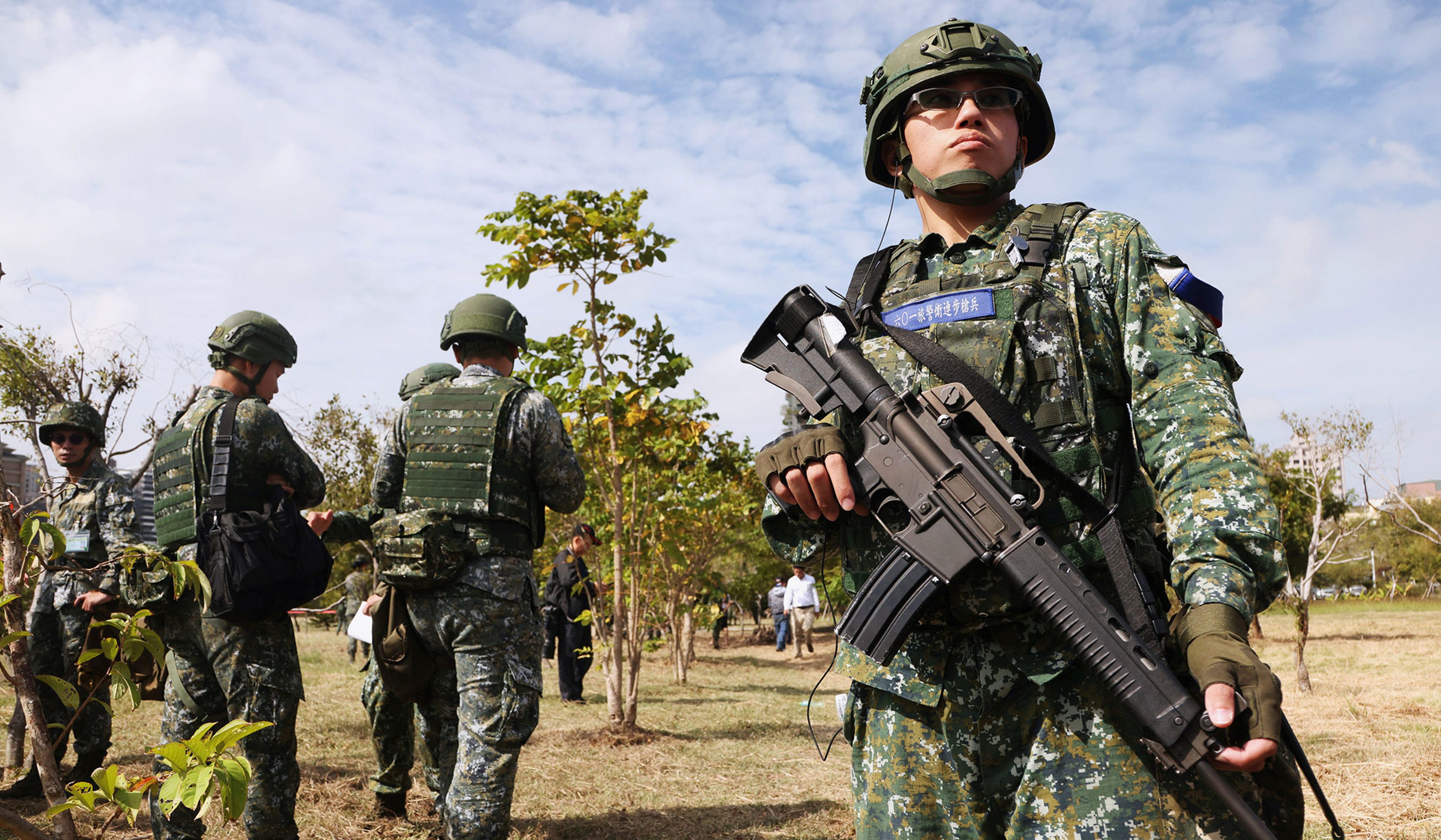







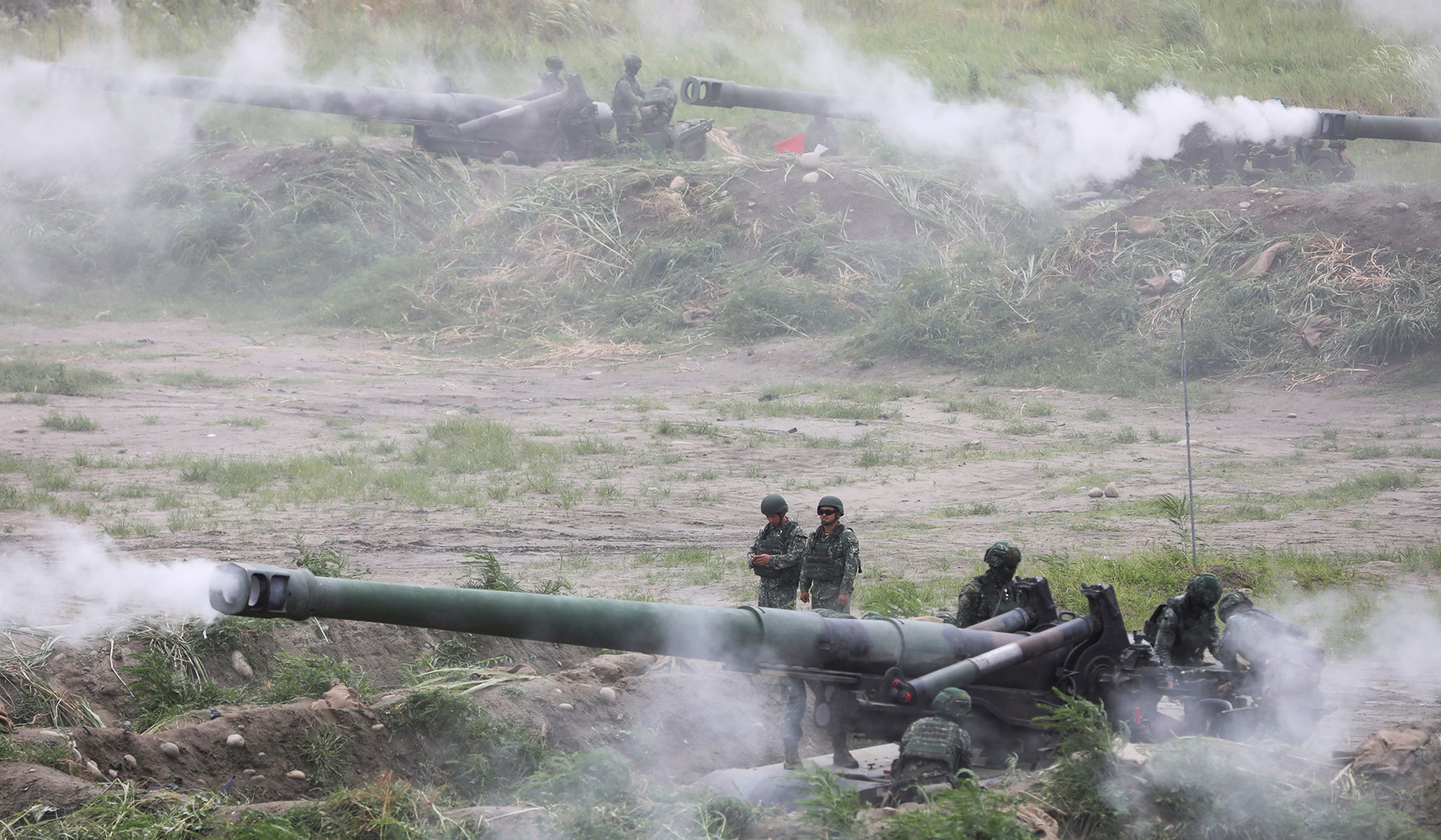

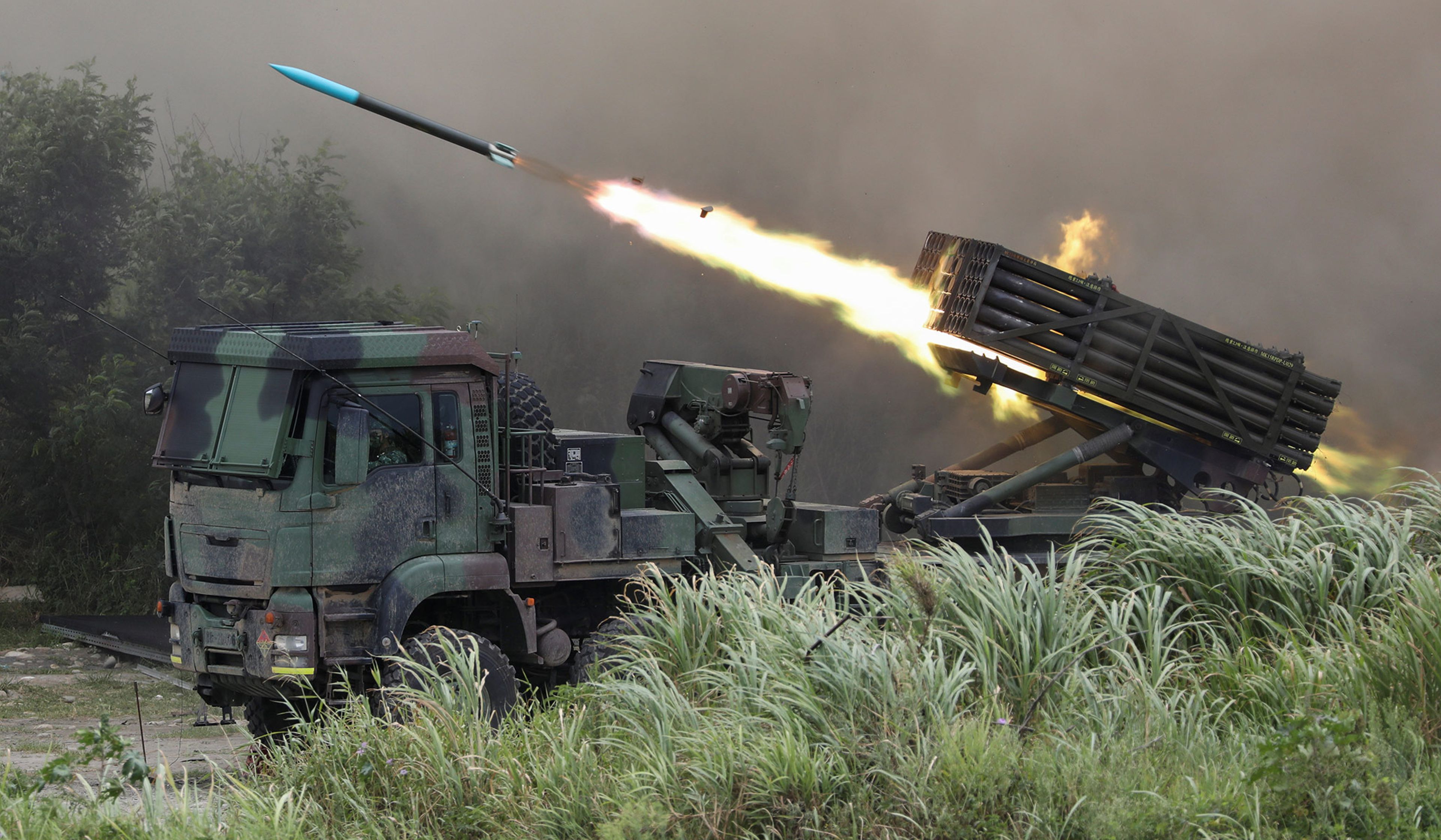
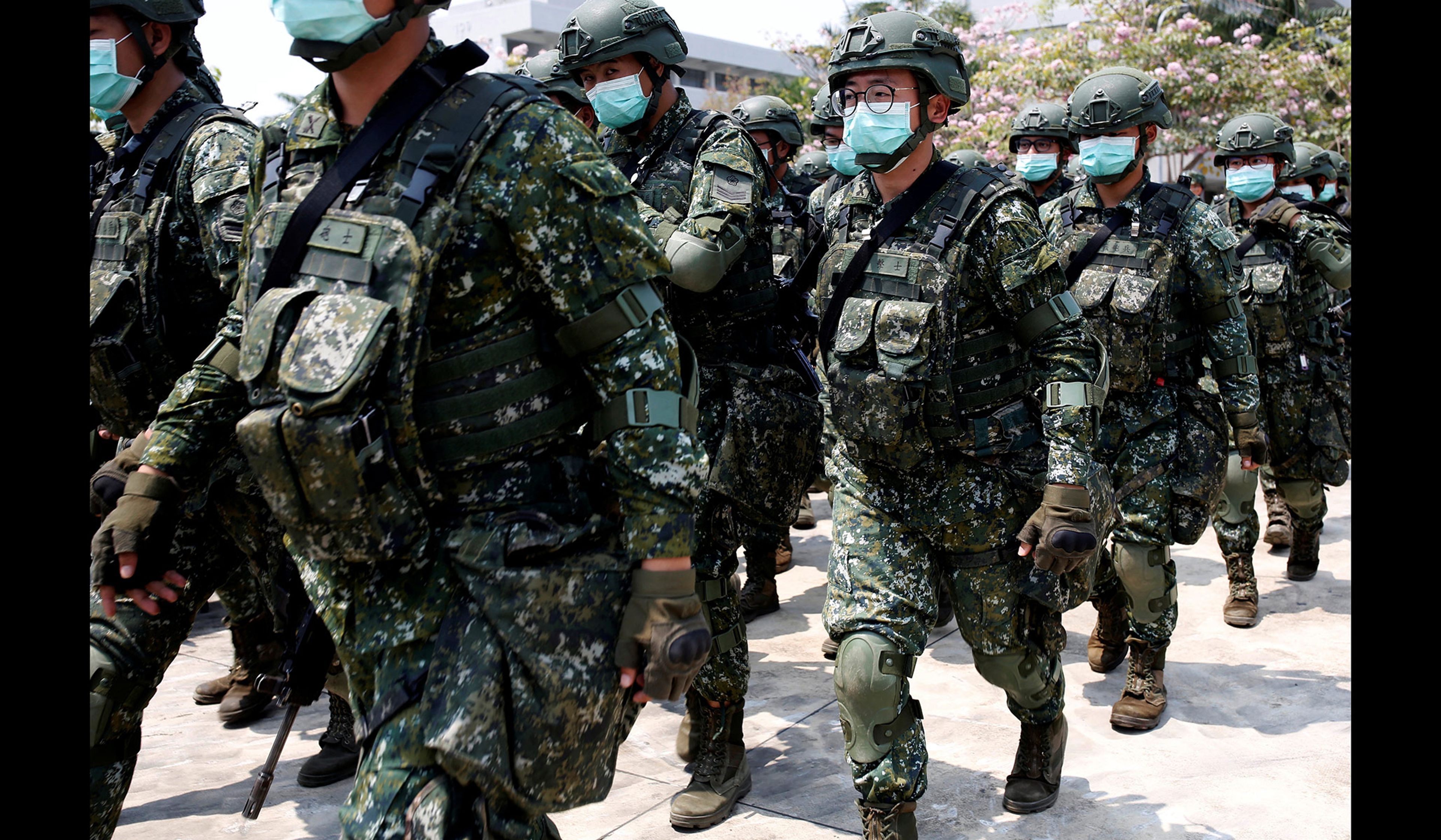
A soldier stands guard during Combat Readiness Week drills in Hsinchu, Taiwan, October 29, 2020.
Ann Wang/Reuters
• And now there are five. Sudan became the fifth member of the Arab League to normalize relations with Israel, following the UAE and Bahrain earlier this year. (The initial two, in the ’70s and ’90s, were Egypt and Jordan.) This is good news. The United States had to give something to make the deal possible: The Trump administration removed Sudan from the State Department’s list of terror-sponsoring nations. In order to get off the list, Sudan agreed to pay $335 million in compensation to American victims of terrorist attacks (at our embassies in Kenya and Tanzania, for example). We should keep a wary eye on Sudan — but, once more, the new normalization is good news.
• The Taliban, a group the U.S. has waged war on for two decades, is now the beneficiary of American tactical air support in its fight with ISIS. The air cover, according to the Washington Post, has not been directly coordinated with the Taliban; the U.S. simply observes the battlefield situation and then intervenes in support of Taliban movements against ISIS. This remarkable development should nonetheless cause Americans to sit up and think about how we got here. What is American policy in Afghanistan? The U.S. government has sided with the Taliban because it does not officially view the group as a purveyor of international terrorism, unlike ISIS. But the Taliban has never repudiated its alliance with al-Qaeda, which it harbored before 9/11 and harbors still. Whatever our other calculations, let no one delude himself that aiding the Taliban will buy us influence with it.
• A 47-year-old French middle-school teacher, Samuel Paty, was decapitated in a Paris suburb after showing cartoon depictions of Mohammed, originally published in the satirical magazine Charlie Hebdo, to his students in a civics class. He is reported to have done this, as part of a discussion of free speech, every year since staffers at the magazine were gunned down by Islamists in 2015. Before showing the cartoons, Paty gave his Muslim pupils the opportunity to leave the class. But an incensed Muslim father, whose daughter had not been present in class on the day the cartoons were shown, posted Paty’s name and the school’s address on social media. Abdullakh Anzorov, an 18-year-old, Russian-born refugee, then waited for Paty outside the school gates, confirmed his identity, followed him, beheaded him with a knife, and posted an image of his severed head on Twitter. Anzorov was shot dead by the police minutes afterward. ISIS claimed responsibility for the attack. French president Emmanuel Macron hailed Paty as a “quiet hero” and “the face of the republic,” and bestowed on him the Legion of Honor, the nation’s highest recognition of merit, in this case awarded posthumously and presented to his family.
• Abortion has been illegal in most cases in Poland since the 1990s. Exceptions are made for pregnancy that results from rape or incest or that threatens the life or health of the mother. A further exception, for fetal abnormality, was ruled unconstitutional by a Polish court in October. Abortion for fetal defects is “a directly forbidden form of discrimination” against the unborn child, wrote Julia Przylebska, president of the Constitutional Tribunal in Warsaw. All but approximately 25 of the 1,100 legal abortions in Poland last year were for fetal abnormality, and thousands of Poles, many of whom thought that the country’s anti-abortion laws were already too restrictive, took to the streets to protest against the tribunal’s ruling. Meanwhile, popular support for the government’s commitment to protect unborn children remains high. The tribunal’s legal defense of their human rights is morally sound but, by itself, politically inadequate. Supporters of the pro-life cause in Poland, outside government as well as inside it, need to address with honesty and compassion the anguish that many women bearing a child in these circumstances are liable to feel.
• Euthanasia has been legal in the Netherlands in certain cases since 2002. Doctors may administer it to patients who meet stipulated criteria and request it. In increments, the law has been expanded to allow doctors, with the parents’ consent, to euthanize infants under one year of age and children between the ages of twelve and 16. In October, the Dutch health minister, Hugo de Jonge, proposed to make euthanasia legal for children between one and twelve. Parliament is expected to register its approval sometime this winter. In 2016, euthanasia accounted for 4 percent of deaths in the Netherlands. The country’s only euthanasia clinic reported a 22 percent increase in demand from 2018 to 2019. Against that background, de Jonge argues that his proposal would touch only “a small number of cases” in which “palliative care is insufficient.” A counterpoint: “We can always manage someone’s physical suffering,” Dr. Ira Byock, the director of a palliative-care facility in California, tells the New York Times, commenting on the Dutch law. “We can always provide medication that approaches general anesthesia and allows someone to die gently.” Medical advances have removed pain as an argument for euthanasia. How do you say that in Dutch?
• Not everybody is able to place Nagorno-Karabakh on the map, let alone explain why it keeps cropping up in the news. Armenia and Azerbaijan, neighboring nations in the Caucasus, are fighting to possess a territory about the size of the state of Delaware. The mischief goes right back to Joseph Stalin. Azerbaijan is Muslim-majority. Armenia is Christian-majority, and so is Nagorno-Karabakh, an autonomous region inside Azerbaijan. Mixing up populations, Stalin thought they’d all get on together as good communists. This illusion could not survive the ending of the Soviet Union. In the war that began in 1991, 30,000 people died, and there were hundreds of thousands of refugees. Ever since, confrontation and skirmishing have been constant and costly. Last July, Armenians killed a top-ranking Azeri general and the war stepped up accordingly. Each side is resorting to long-range artillery, drones, and missiles. Estimates of the civilian dead go as high as 5,000. The United States, Russia, and France are co-chairs of the OSCE (Organisation for Security and Co-operation in Europe) group charged with resolving this conflict, and they repeatedly impose ceasefires that have no effect. Russian president Vladimir Putin has come out for Armenia, and Turkish president Recep Tayyip Erdogan talks about Azeris as Turkic brothers and is reported to have sent 1,000 Syrians as instructors. The unlikely consequence of the Nagorno-Karabakh dispute, then, is that Russia and Turkey once again are face to face.
• The U.N. General Assembly has elected new members to the U.N. Human Rights Council — including China, Russia, and Cuba. The governments of those countries, of course, specialize in violating human rights. We remember Solzhenitsyn’s point: The U.N. is not so much the united nations as the united, or assembled, governments. Many of those governments, as the organization so regularly reminds us, are murderous dictatorships.
• The United Kingdom has signed its first free-trade agreement as an independent nation after leaving the European Union. The deal, negotiated with Japan, is expected to boost annual trade between the two countries by about 15 billion pounds and will take effect on January 1 next year. Since member states of the EU are prohibited from pursuing their own trade agreements, this deal marks Great Britain’s first foray into free trade in almost half a century. British trade secretary Liz Truss was quick to rub it in the face of Brexit doomsayers, noting that “it used to be said that an independent U.K. would not be able to strike major trade deals, or they would take years to conclude.” The British government has also issued a statement on the deal voicing its broader commitment to “champion free trade” when “the UK takes up the G7 presidency,” and announcing its intention to pursue membership in the Trans-Pacific Partnership free-trade area in the Pacific. Any hopes or fears of post-Brexit protectionism on the part of Boris Johnson’s government can be laid to rest.
• No Sex Please, We’re British was a West End bedroom farce in the 1970s, but today’s plague-plagued Britons are encountering too much farce and too little bedroom, now that some couples who live apart are no longer allowed to visit each other for a tumble or two. In fact, people who live in areas designated as Tier 2 (those hardest hit by COVID-19) are prohibited from visiting each other indoors for any reason. It’s all part of a complicated set of rules: Tier 2 residents may not visit Tier 1 areas; Tier 2 residents from different households may visit each other only if they have established an official “support bubble” together; and everyone must obey the “rule of six” (no gatherings of more than six people anywhere). It promises to make the U.K. winter even colder this year, but Britons are bearing all the regulations with their well-known fortitude and stiff upper lip. We’ll meet again, don’t know where, don’t know when . . .
• Since June, a group of Northwestern University students called “NU Community Not Cops” has urged the institution to disband its police department. After meeting with the students over the summer, the university issued a statement in September committing itself to a host of measures promoting racial justice. This was evidently not enough for the student group, which began a series of daily protests in mid October, leading to vandalism in downtown Evanston. One protest ended in front of President Morton Schapiro’s on-campus home, in which students referred to the president as “Piggy Morty.” Schapiro did not capitulate, and instead issued a strong response the following day. “I condemn, in the strongest possible terms, the overstepping of the protesters,” he wrote. “They have no right to menace members of our academic and surrounding communities. When students and other participants are vandalizing property, lighting fires and spray-painting phrases such as ‘kill the pigs,’ we have moved well past legitimate forms of free speech.” The entire letter is well worth your time, and is a model of courageous leadership to boot.
•The New York Times Style Magazine has published a glowing new profile of Angela Davis in an issue dedicated to “five talents who, in mastering their crafts, have changed their fields — and the culture at large.” The author charges Davis with perpetually radiating “rebellion and intelligence,” as well as being “pensive” and “challenging,” “radical and chic.” But the State of California charged her with murder (she got off). The author notes that Davis did not support the Vietnam War. The Soviet Union noted that she did far more than decline to support it, and gave her a Lenin Peace Prize. The author praises Davis for her view that the United States “represses our humanity.” Davis praised the Soviets, Fidel Castro, and Erich Honecker. To the extent she has changed the culture, it’s not for the better.
• From what we hear, Cleopatra was one of the most beautiful women in all history. From what we can see, Gal Gadot is right up there. The latter is an Israeli actress, best known for playing Wonder Woman. She has now been hired to play Cleopatra, naturally — as Elizabeth Taylor was before her, in the 1960s. Not everyone is happy with the latest development. Here is a headline from the BBC: “Gal Gadot’s Cleopatra film sparks ‘whitewashing’ claims.” The Beeb reports, “Some have said the role should instead go to an Arab or African actress.” Ay caramba (as they say elsewhere in the world). First, we are talking about acting. Second, Cleopatra was a Greek princess, ruling in Alexandria — she may well have looked like Gal, or Liz. Third: See points one and two (and get a life).
• In a historic feat of patience and engineering, NASA’s OSIRIS-REx spacecraft made contact with the surface of the asteroid known as “Bennu” on October 20. At over 200 million miles from Earth, Bennu is called an “ancient storyteller of the solar system,” whose early history it may hold some keys to understanding. After two years in orbit around the asteroid, OSIRIS-REx made a nerve-wracking descent to its boulder-studded surface, and then employed a touch-and-go maneuver, using nitrogen gas to disturb dust and pebbles that were captured and stored for transport back to Earth. Four years into its mission, OSIRIS-REx still has a bit more time left in space, but it is scheduled to return on September 24, 2023. This is human ingenuity at its finest, and we applaud NASA for its dedication and creativity in seeking to discover more about our incredible universe.
• In November 1945, the smoke of the Holocaust and the Second World War had hardly cleared when the American Jewish Committee published its first issue of Commentary, a journal of opinion and ideas. Gracing the cover was an all-star team of mid-century American intellectuals — Salo Baron, Paul Goodman, Theodor Gaster, Harold Rosenberg, Mary McCarthy — and, for good measure, George Orwell, a Brit. The founding editor, Elliot E. Cohen, wielded a tough blue pencil, sparing not his authors’ egos, and the publication fast acquired a reputation for depth and rigor. At age 30, Norman Podhoretz, whom Lionel Trilling once called the best student he ever taught, took over in 1960. Podhoretz moved Commentary briefly to the left and then, by the late 1960s, to the right, establishing it as the indispensable periodical of the budding neoconservative movement. Irving Kristol and Daniel Patrick Moynihan graced its pages. “All intellectual enterprises are acts of faith,” John Podhoretz, the current editor, writes on the occasion of Commentary’s 75th anniversary. “Reason and argument have the power to change the world, despite all the evidence to the contrary.” Looking forward to the next 75 years. L’Chaim.
The Unwelcome Lodger
As is often the case with uninvited guests, COVID shows no sign of leaving. While the rates of new cases have fallen in the coastal urban centers it ravaged in the spring and early summer, the heartland and rural areas are now bearing the brunt. Europe, whose practices we are urged to follow, whether they are the restrictions of Germany or the looseness of Sweden, is again in COVID’s thrall. The return of cold weather and indoor living in northern latitudes bodes ill for the next four months.
There is no denying we have made progress. We know more about the disease than we did when China was still lying about it. The scientific consensus has settled on the usefulness of wearing masks, washing hands, and prudent social distancing as first lines of defense. The mass production of ventilators, which once seemed absolutely vital, is now understood to be less urgent. Operation Warp Speed, the Trump administration’s public–private partnership, is on track to produce a vaccine — possibly vaccines — in record time.
The national fight against the plague is still plagued by myths, and by exhaustion, which makes salvationist myths attractive. For all our progress, we have not turned the corner. Or rather, we have turned some corners in our understanding and may soon turn others in our ability to treat, but a spiral is a series of unspooling corners. Vaccines, for example, will be a blessing. But there will be a period of trial and error; effective vaccines may have side effects; and the effectiveness of vaccines may vary.
COVID is not an election fever, an anti-Trump campaign ploy that will disappear from the headlines if Joe Biden is inaugurated. COVID does not follow the election returns. It afflicts countries that hold elections and those that don’t. The countries that don’t hold elections can lie about its spread more effectively, but the bell tolls for them too.
While masks are not always necessary, scorn for masks and mask-wearers is not a badge of freedom or the spirit of resistance. It is a puerile mark of unconcern for oneself, one’s family, and one’s neighbors. The Trump administration, beginning with the president, has given the worst of examples in this regard. Trump’s own bout with the disease demonstrated his folly; his recovery — no one ever denied that he is a vigorous septuagenarian — has only encouraged him in his recklessness, and in his disposition to feud with advisers like Dr. Anthony Fauci. Trump confuses cheerleading for optimism, euphoria for determination. At the same time, his long-time penchant for conspiracy theories only stokes the national id.
The White House is not, however, the only or even the most important player in the fight against COVID. Social plagues test the mettle of society. America has enormous resources of both ingenuity and wealth, and it has at times shown great reserves of courage and good spirits. Let us draw on them now, whatever the tiny people on the screens of our devices may be arguing about.
A Weak Case against Google
The Trump administration’s lawsuit against Google doesn’t live up to the hype. Early reports suggested a bipartisan group of state attorneys general might join together with the feds and demand the company’s breakup. Instead, the eleven AGs who joined are all Republicans, and breakup talk is thus far limited to a brief mention that “structural” remedies could be an option.
The core allegation here is that Google has a monopoly over Internet searches and the accompanying advertising — with a roughly 90 percent share of Web searches in the U.S. — and illegally maintains that monopoly through numerous business practices. For instance, Google has paid billions of dollars to other companies for the privilege of being the default search engine on various mobile devices and Web browsers. These agreements make it even harder than it would be otherwise to compete against Google for search traffic.
The suit is not frivolous and has a chance of success higher than zero. Google’s actions bear a resemblance to the behavior that got Microsoft hauled into court 22 years ago, and it may well lead to a similar result: a lot of legal wrangling followed by a settlement in which the company scales back the sketchiest parts of its business model but doesn’t lose too much of value. Such a result would, frankly, not be the end of the world.
But is this a good suit, one that serves the country’s best interests? That is less clear, especially if the government eventually does pursue drastic measures such as a breakup.
American antitrust laws are broadly written, and the prevailing legal standards have changed over the years. The dominant and most economically sensible approach to enforcing these laws, however, remains the one that Robert Bork laid out in the 1970s: “Anticompetitive” behavior becomes a problem when it harms consumer welfare. In our view, officials should not pursue antitrust actions unless they can compellingly show that a company is, in fact, harming consumers — and not just that it is doing everything it can to attract consumers to its product at the expense of the competition.
Is it harmful to consumers for Google to pay other companies to feature its search engine as the default? That’s a hard case to make, because it’s generally easy for those who prefer other search engines to change the default (Google and the alternative engines are all free and switching can be achieved in a few clicks); because these lucrative arrangements help to subsidize the devices consumers use; and because most users would probably choose Google anyhow, if its runaway success over the past two decades is any guide.
The argument to the contrary, as it stands so far, is highly speculative. It holds that consumers would be better off if they had to affirmatively choose Google, because other engines would then have more of a chance to compete; the added competition and innovation would lead to better products and greater choice, as well as lower rates for those who advertise in Web searches. That argument may find some sympathy in court, and it might even be true. We, like the folks behind this lawsuit, have no supernatural ability to see what would happen in that counterfactual world. But it is a poor excuse for a government crusade against one of the country’s most successful private enterprises.
Further, if Google’s size and influence create problems that don’t fit the antitrust framework, that may provide a case for changing other laws rather than stretching antitrust enforcement. Much of the current discontent with Google and other search and social-media companies is about their ideological biases, their internal corporate cultures, their impact on the public marketplace for free speech, and how they relate to China and other hostile foreign governments. But we should not use antitrust law as an all-purpose stalking horse for entirely separate agendas.
There is much more to come in this lawsuit, and in the additional lawsuits against Google that states are expected to file soon. Google is not a corporate angel, and we will not be shocked if genuinely incriminating evidence of anticompetitive conduct emerges. This opening salvo, however, is rather underwhelming.











Comments