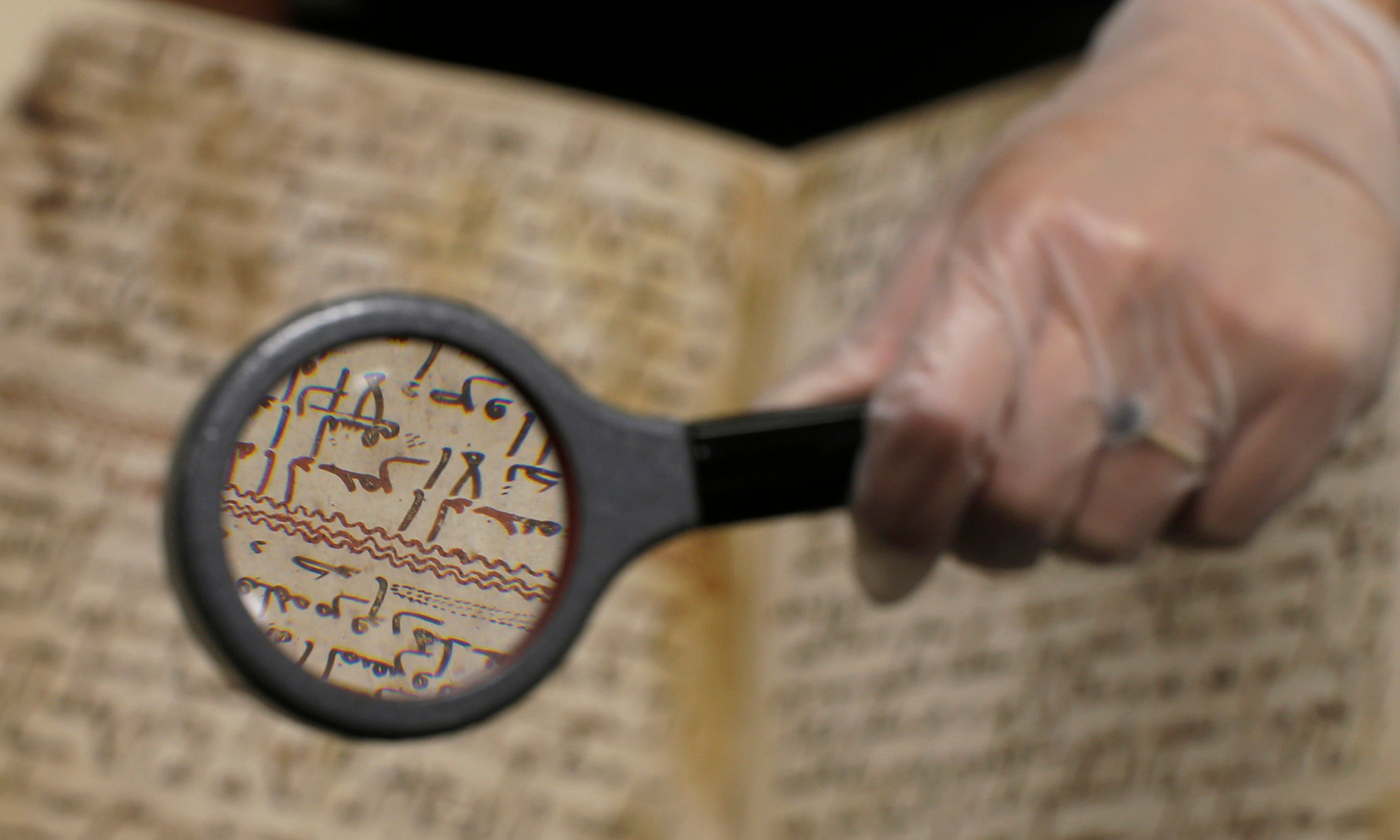
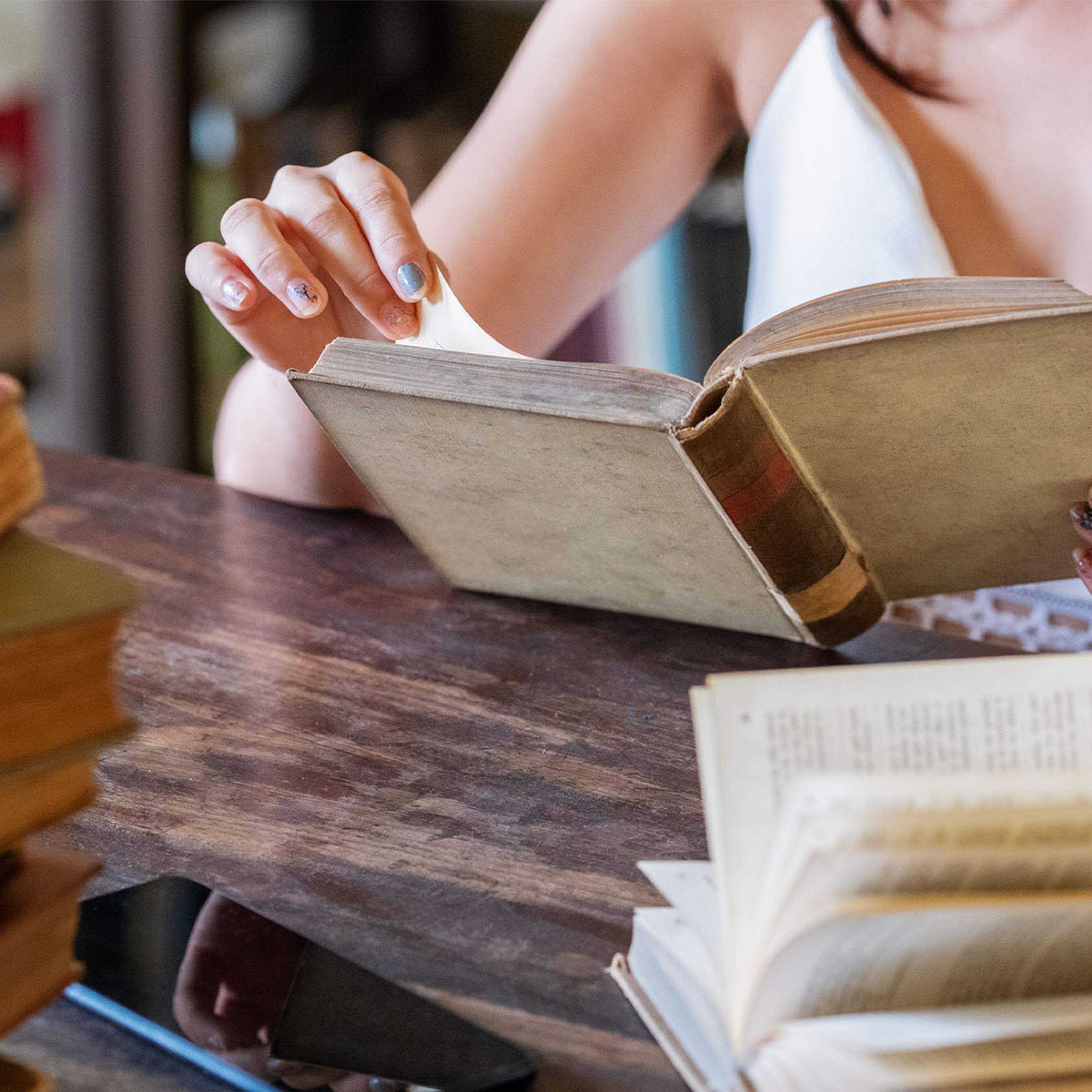
I used to read. Most of my fare was paperbacks. I developed, as all confirmed readers did, tastes and taboos peculiar to myself. Cracking the spine of a book seemed destructive to me, so the front and back covers had to be curled back as I read. I also made musical accompaniment by tapping the spine with my fingertips. In college, when it became necessary to take notes, I underlined, by preference with a ballpoint pen. A friend of mine, another reader from youth, considers this monstrous, but he turns down the corners of relevant pages, which I find sloppy and unhelpful (where on the page is the point to be noted?). De gustibus non est disputandum.
There were also magazines and, once I started working for my favorite magazine as a journalist, newspapers. There were times the volume seemed so heavy — the papers of record, the tabloids, the weeklies, the monthlies — I would read them backwards, to make the task stimulating.
And always, for relaxation, there was the Encyclopaedia Britannica. Our grandmother bought a set for the use of my brother and me when we were boys. It came with an atlas and sat in its own bookcase in our living room. Years later, when I moved to the city, I discovered at the great used-book emporium an eleventh edition, the pre–World War I summa of all knowledge. This added, to the experience of browsing, the pleasure of strangeness — so many Oxbridge dons on the authors’ page, so many backward places in its view of the world. But the chief pleasure of both versions, the contemporary and the long gone, was randomness. You look up X, and as you finish, your eye catches the lede of X + 1 — something entirely different, made adjacent by the caprice of the alphabet. Then in X + 1 might be a parenthetical reference to (J), which would call for another volume, and more adjacencies. How many unnecessary yet piquant things did I learn by this means. As Holmes tells Jabez Wilson, the dull-witted pawnbroker who was induced to copy volume 1 of the Britannica by the master criminal who needed to get him out of his shop, “You know more about the letter A than any man in England.” Happy man.
I realized how unhappy I have now become when our Wi-Fi went down in rural Elba. All of a sudden, all our devices fell silent — PC, laptop, two smartphones (now dumb phones). I performed the tech fix of the helpless, useful to know because it does work much of the time, plug and unplug — but to no avail. Happily our landline is serviced by a different tech behemoth, so I was able to call the customer-relations number of the Wi-Fi behemoth. The helpful person who appeared after I had hacked through the thicket of menus was across the continent. She informed me that there was a problem with a “node.” ? A “node” is a receptor for a signal from a satellite. This sounded serious, work for the Space Force. Any idea how long this might take to fix? We try to get service back in four hours. Okay, thanks. If you want to take part in a customer survey, hit —
And it was beginning then, and continuing as the hours passed, that I realized how dependent I have become on a different kind of information processing. Call it reading, because much of it is, but as it is different in kind, so it is in quality. Once I went from book to book, article to article. Now I hop from page to page, paragraph to paragraph; screen to screen, image to image.
Some of the new consumption mimics old food groups. Wikipedia is the new Britannica. Yes, it’s dully written, but clicks take you farther and faster than pages. Fighting in Nagorno-Karabakh? Look up “Azerbaijan,” “Armenia,” “Armenian Apostolic Church” (not, N.B., Orthodox; cf. that Chalcedon tiff). Then the clicks respond to thoughts as wispy as old earworms. Haven’t heard Prince in years? Melanie in decades? My wife mentions Johnny Mathis. Zip, there they are.
I still read two newspapers; one is Hamilton’s tabloid. A star took a selfie. Said to be a star. I have never heard of this person. Zap, there she is. My favorite magazine has a click doppelgänger. Long may it wave. But unlike the old one, the first one, this one has comments sections. WFB was a Stakhonovite when it came to answering reader mail, but he could never have coped with this volume. Trump-o-rama! Trump is a traitor! You said. No, you said. Reading these is like following a chicken bone into a toilet trap.
Then there is the 240-character InstaMessage. I sent you 240 characters because I didn’t have time to send you 120 characters. For years, I have worked to keep my little half acre free of bindweed. I serve history buffs. No current politics, no rudeness (the Civil War still gets tense sometimes). But then there are the idle moments when I decide to see what everyone else is InstaMessaging about. Touchdowns, doggies, ads for movies, items in alphabets I do not recognize — these are the least of it. Then come rancor, retaliation, threads of rancor and retaliation, like plastic garbage trailing from the flipper of some poor sea turtle, endlessly . . .
What would I have been doing instead once upon a time? Reading an article about a medieval heresy. Reading a sonnet, a 14-line packet of pain and beauty. Reading a chapter about a battle, a hopeless love, my youth, his old age. Reading is always listening, to a voice. The bards never died, they got fonts. And if there was a voice, then you had one too. A listener is an observing soul. But clicking suggests that the anatomists of consciousness are correct, and that mind is nothing more than a drum set of neurons. I have some books up here, find them.









Comments