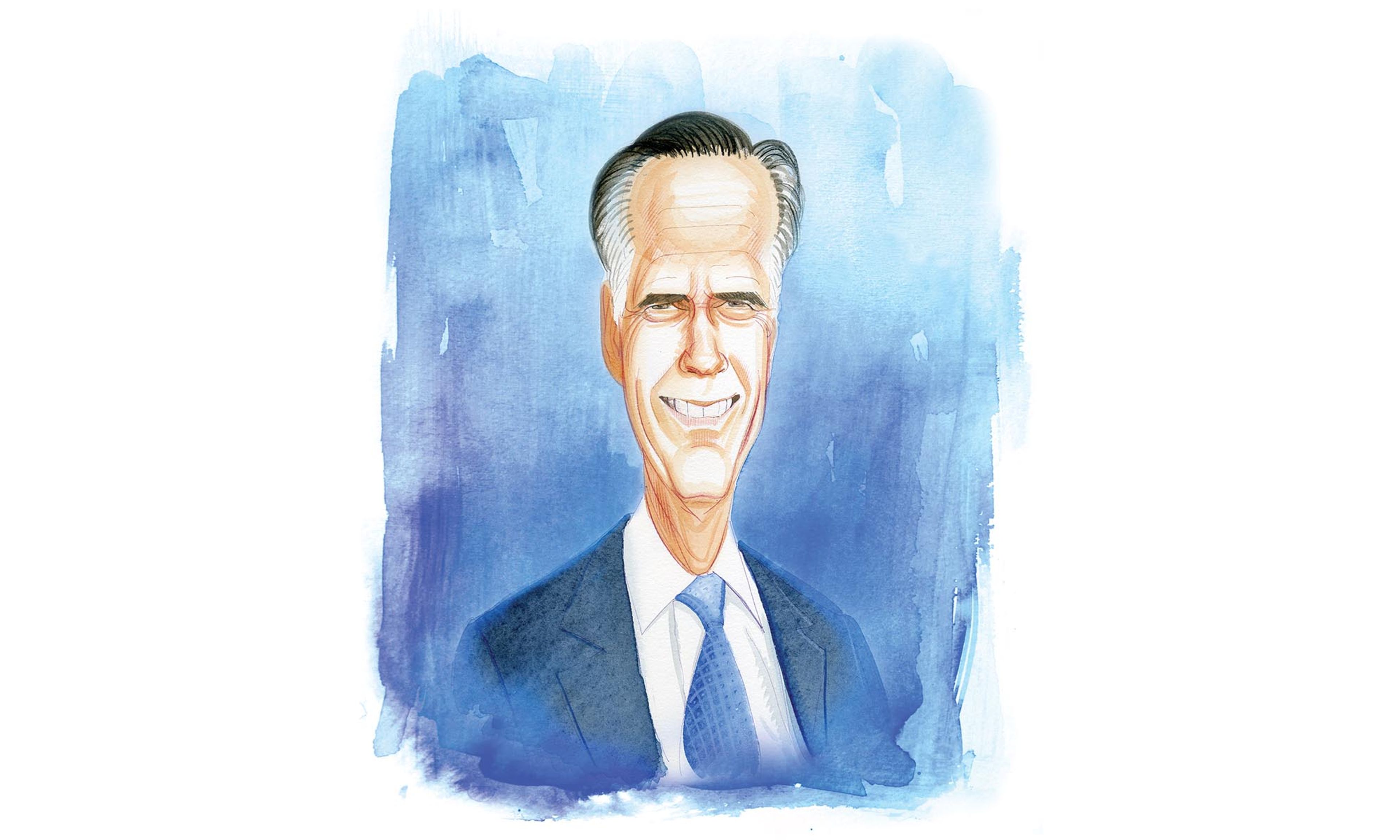
In 2012, the Obama-Biden campaign aired a television ad, ending with the following words on the screen: “Mitt Romney. Not one of us.” Who was “us”? This was never quite specified. But Romney is indeed “not one of us,” certainly in 2023. He is an exceptional person, an individual. He is a pariah in his party, the GOP (like Liz Cheney and some others). He is almost a party of one.
And many call him “establishment.”
On September 13, Romney announced that he would not seek reelection to the Senate. He will retire after one term. Commenting on the current race for the Republican presidential nomination, he said, “It’s pretty clear that the party is inclined to a populist-demagogue message.”
The 2012 race was an interesting one, a race that would make an excellent subject of a book or two or more. Let me recall only one episode, out of many. In a debate with President Obama, Romney took a stern line on Putin’s Russia. Obama gibed, “The 1980s are now calling to ask for their foreign policy back.”
Seven years later, Madeleine Albright was testifying before the House Intelligence Committee. (She had been a secretary of state under President Clinton.) “I personally owe an apology to now–Senator Romney,” she said. Why was that? Like Obama, she had knocked Romney for his stance on Russia and Putin. Before the Intelligence Committee, she acknowledged, “I think that we underestimated what was going on in Russia.”
People judge Romney to be goofy or awkward in his speech. During a presidential-campaign stop in Michigan, he said, “Everything seems right here. You know, I come back to Michigan: The trees are the right height; the grass is the right color for this time of year — kind of a brownish-greenish sort of thing. It just feels right.”
Romney was born and raised in Michigan. So was I. I must say, I knew what he meant.
In the 2000s, he was governor of Massachusetts, for one term. After losing the presidential race in 2012, he lived mainly in La Jolla, Calif., it seemed. (Who wouldn’t choose to live in La Jolla?) In February 2018, he announced that he was going to run for the U.S. Senate in Utah.
“Oh, geez,” I said. “Why can’t these guys ever give it up? Must they always run for and hold office? Romney’s in his 70s. He has had a full and illustrious life. Can’t he kick back and enjoy his grandchildren?”
I am glad that he ran for, and won, a Senate term. He was an important voice, and he set an example. Interviewed in December 2020, he allowed that he represented “a very small slice of the Republican Party today.” You can imagine the gratitude of that slice.
He also said, “The party that I knew was very concerned about Russia and Putin, and Kim Jong-un and North Korea, and we pushed back aggressively against them.” He continued, “We were a party concerned about balancing the budget. We believed in trade with other nations.”
A little more: “We believed that character was essential in the leaders we chose.”
This is something that drives people nuts about Romney. He reminds them of what they know, and don’t want to be reminded of. They lash out with the words “moral preening,” among others. I think of a slogan from ’64: “In your heart, you know he’s right.”
In February 2020, Romney became the first senator in history to vote against a president of his own party in an impeachment trial. (He voted to convict President Trump on one of the two charges against him.) A year later, he was joined by six other Republican senators in Trump’s second impeachment trial.
It was very hard to stand alone, that first time. It took guts. Friends and staff warned Romney that he would blow up his career. Explaining his vote on the Senate floor, Romney said, “I knew from the outset that being tasked with judging the president, the leader of my own party, would be the most difficult decision I have ever faced. I was not wrong.” He said that he was bound by oath and conscience.
A few weeks later, the Conservative Political Action Conference took place. The chairman, Matt Schlapp, let it be known that Romney would not be welcome. “I would actually be afraid for his physical safety,” he said. (Apparently, no CPAC-er took offense.) Schlapp also said, “We won’t credential him as a conservative.”
There are some, believe it or not, who would not credential Schlapp or CPAC as conservative.
One of the speakers at the conference was Charlie Kirk, the founder of Turning Point USA. When he brought up Romney’s name, the crowd booed. “Correct answer,” said Kirk. “Every time his name is mentioned, you should respond that way.”
The star speaker at the conference was, of course, Trump, who, in the course of his remarks, called Romney a “lowlife,” twice. (“Lowlife” is in the eye of the beholder.)
In the Senate, Romney’s fellow Republicans often told him that they wished they could be as open about Trump and Trumpism as he, if only they could get away with it, politically. Romney discussed this with his biographer, McKay Coppins. In answer to his colleagues, Romney would sometimes say, “There are worse things than losing an election. Take it from somebody who knows.”
When Joe Biden defeated Trump in the 2020 election, Romney would have no part in the effort to overturn that election. The threats to him increased — not political ones but physical ones. He told his wife, Ann, who was worried, “If I get shot, you can move on to a younger, more athletic husband.”
On January 5, 2021, Romney boarded a flight from Salt Lake City to Washington. So did many other Republicans, who were going to attend the Trump rally the next day. “Traitor! Traitor! Traitor!” they shouted at Romney.
“Traitor,” like “lowlife,” is in the eye of the beholder — and Constitution-reader, perhaps.
Trump relished the performance of his supporters on the plane. In his January 6 speech, he gibed at Romney. “I wonder if he enjoyed his flight in last night.”
After the riot — the physical attack on Congress, for the purpose of stopping a constitutional process — Romney spoke on the Senate floor. He delivered a grave, thoughtful, and blunt speech. Here is one sentence: “The best way we can show respect for the voters who are upset” — upset by the results of the 2020 election — “is by telling them the truth.”
That’s the core of it. It’s one reason — a big reason — I, personally, am glad for Romney’s Senate term. Someone who respects people will tell them the truth, not soothe or inflame them with lies.
In May 2021 came the Utah GOP convention. Romney was greeted with boos. “Traitor!” some shouted. “Communist!” others shouted. That was rather a new one. In the race for the 2012 Republican presidential nomination, one of Romney’s competitors, Rick Perry, called him a “vulture capitalist.”
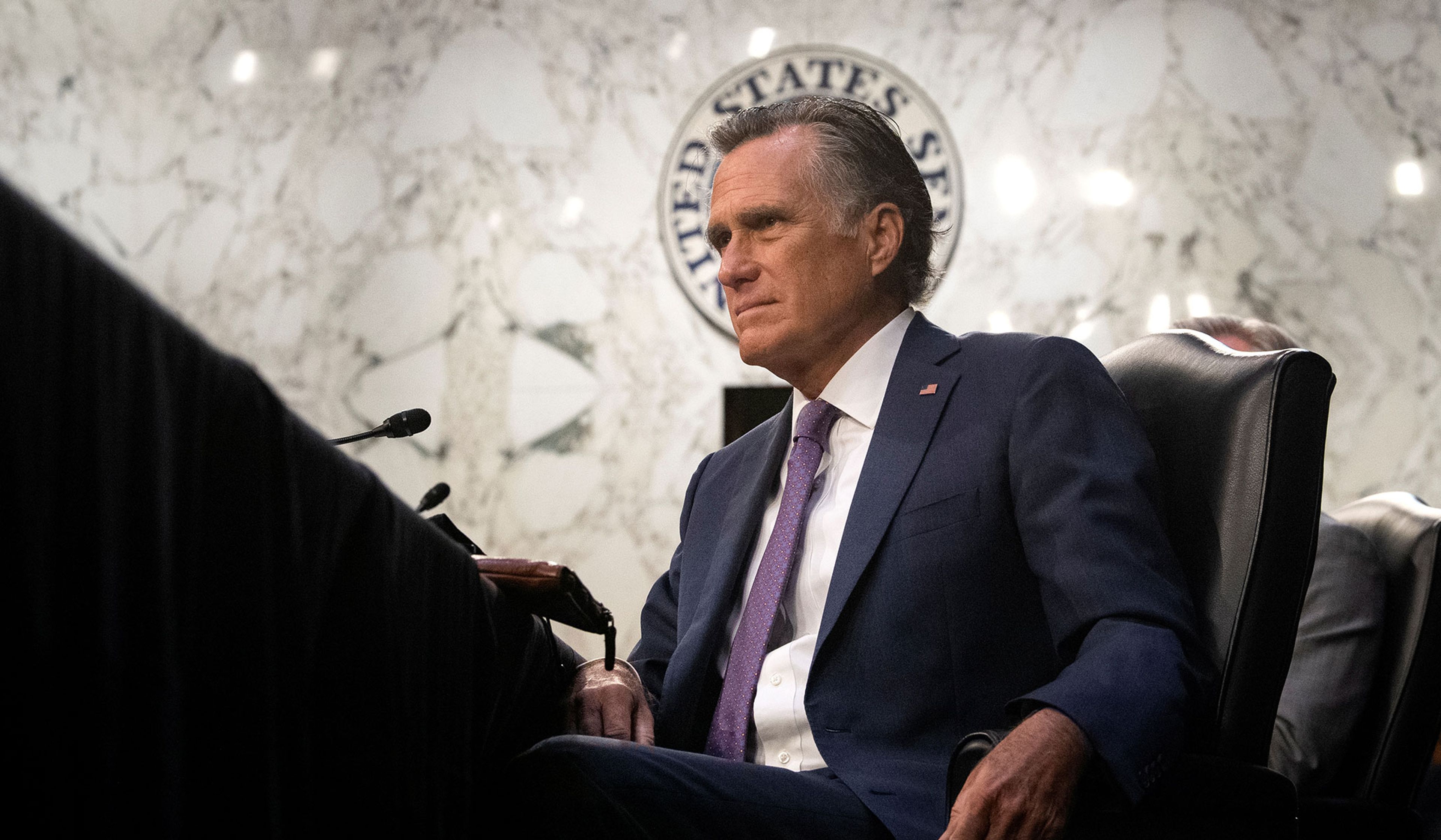
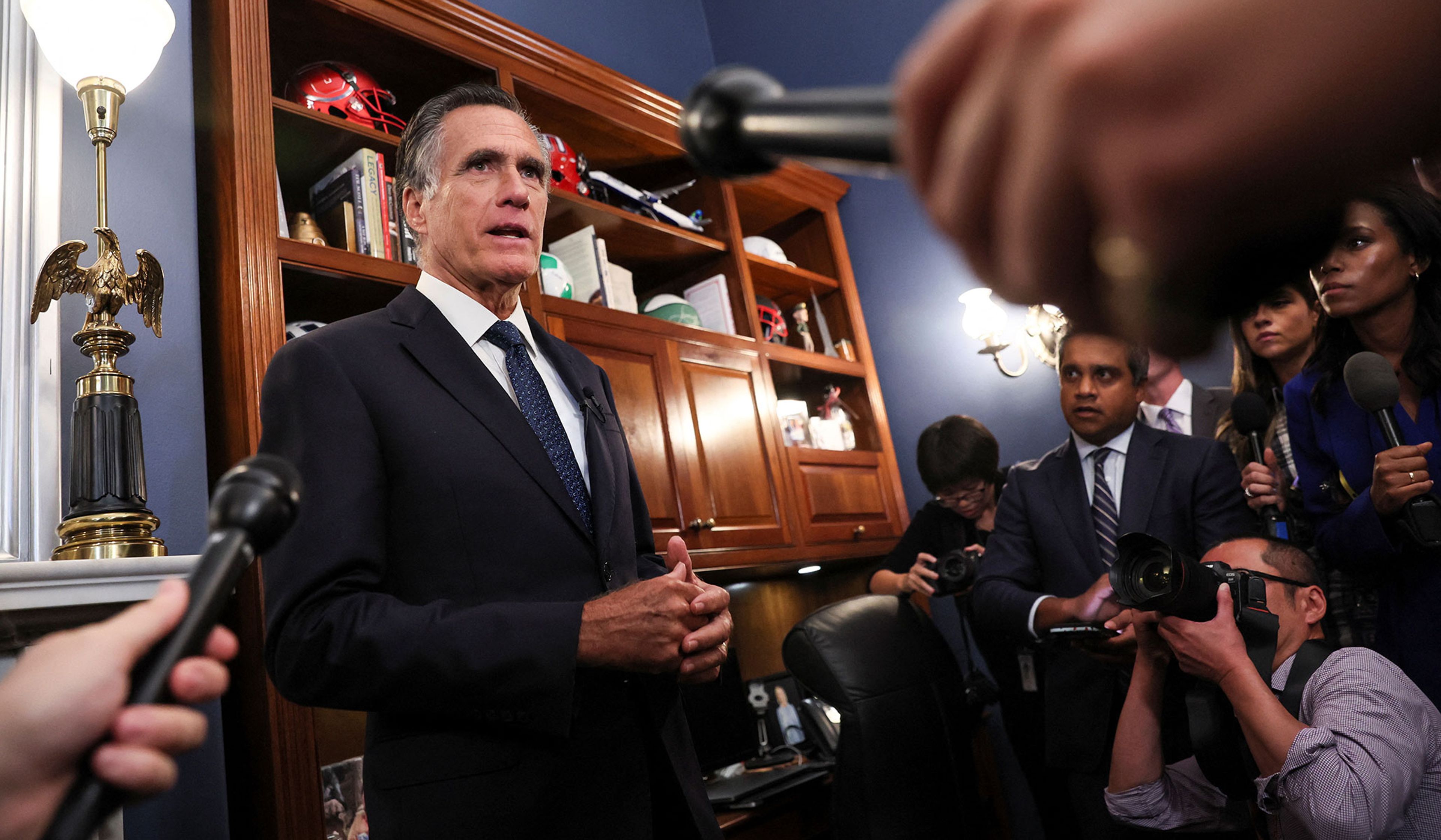
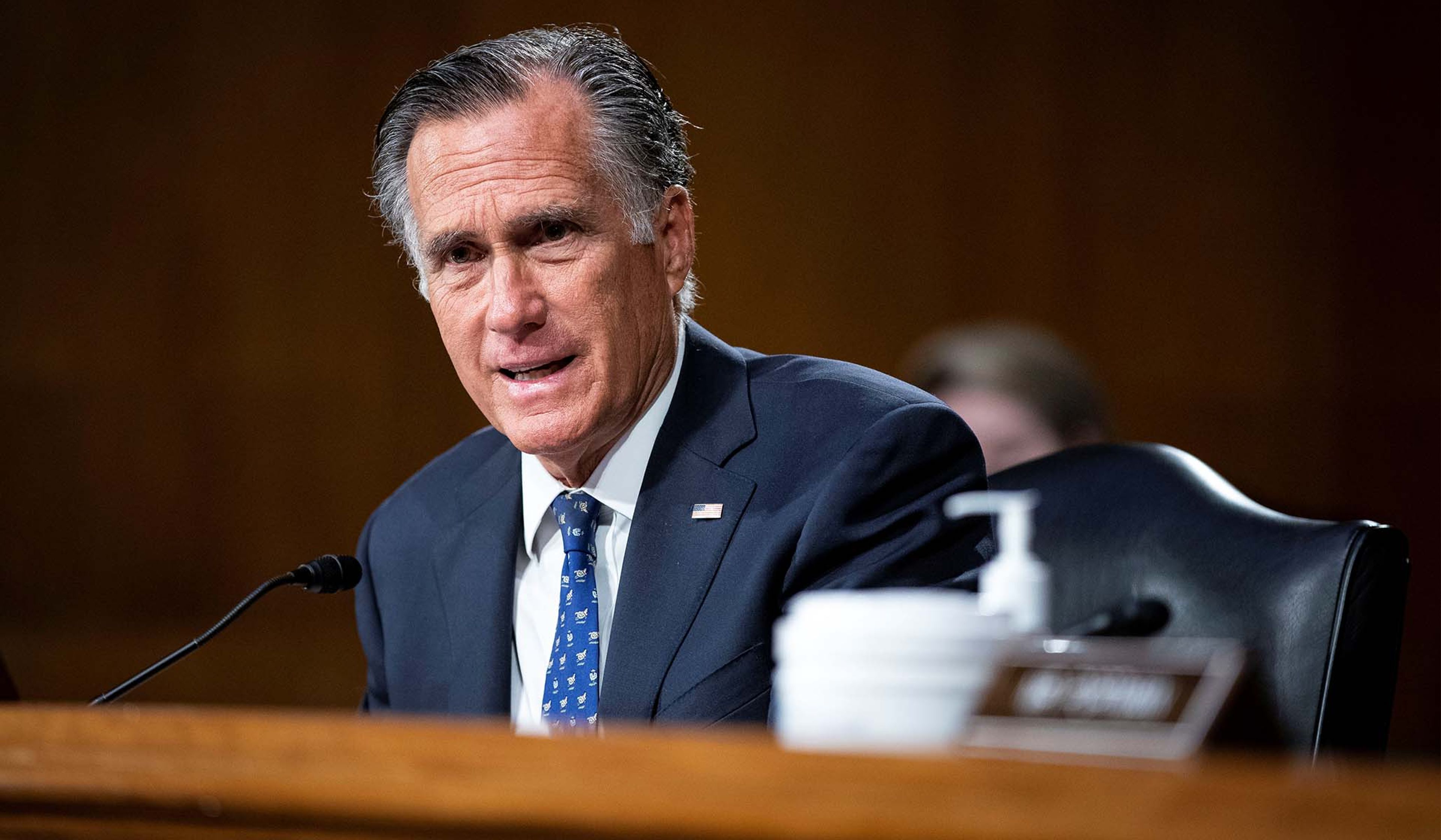
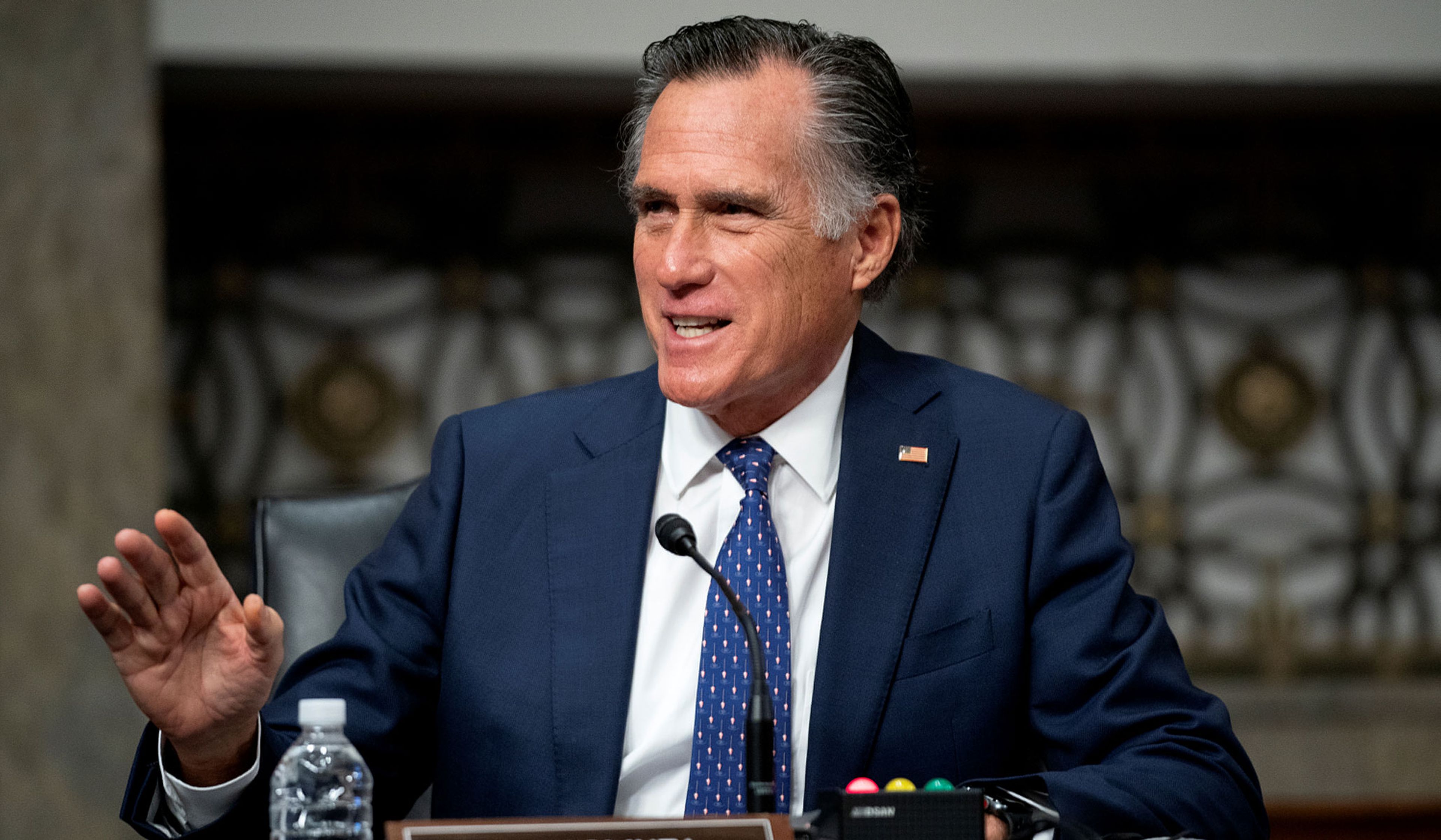
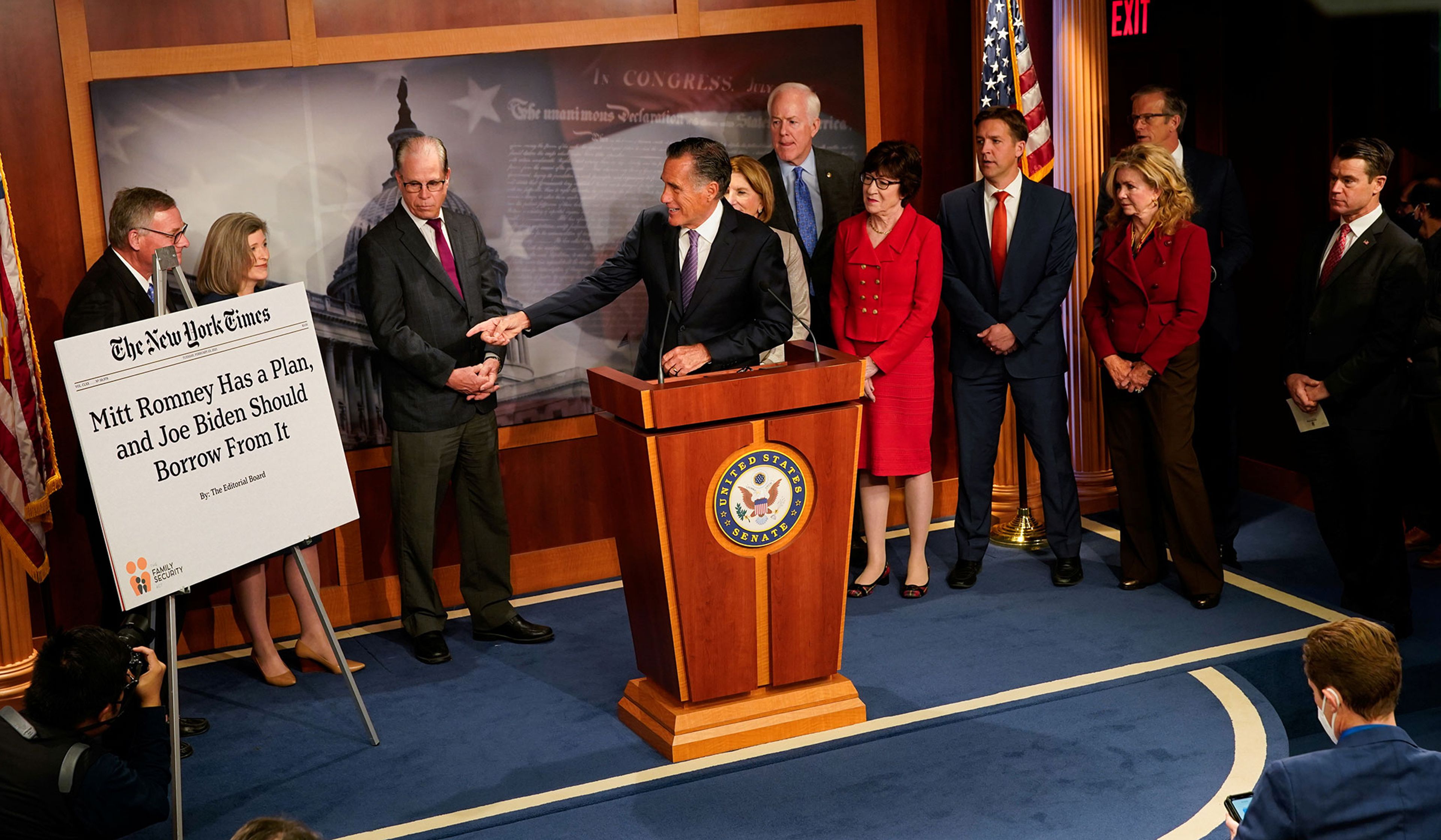
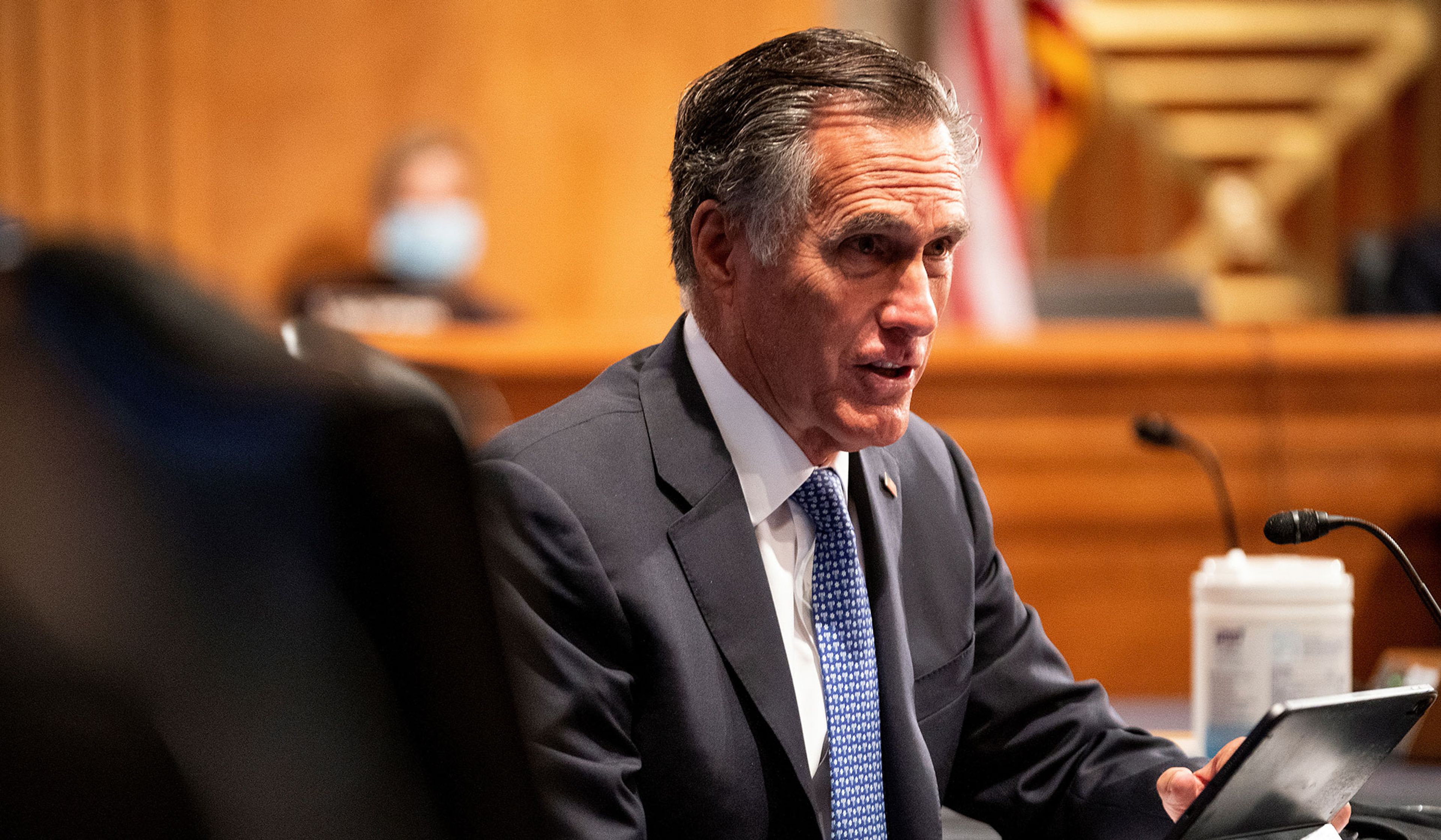
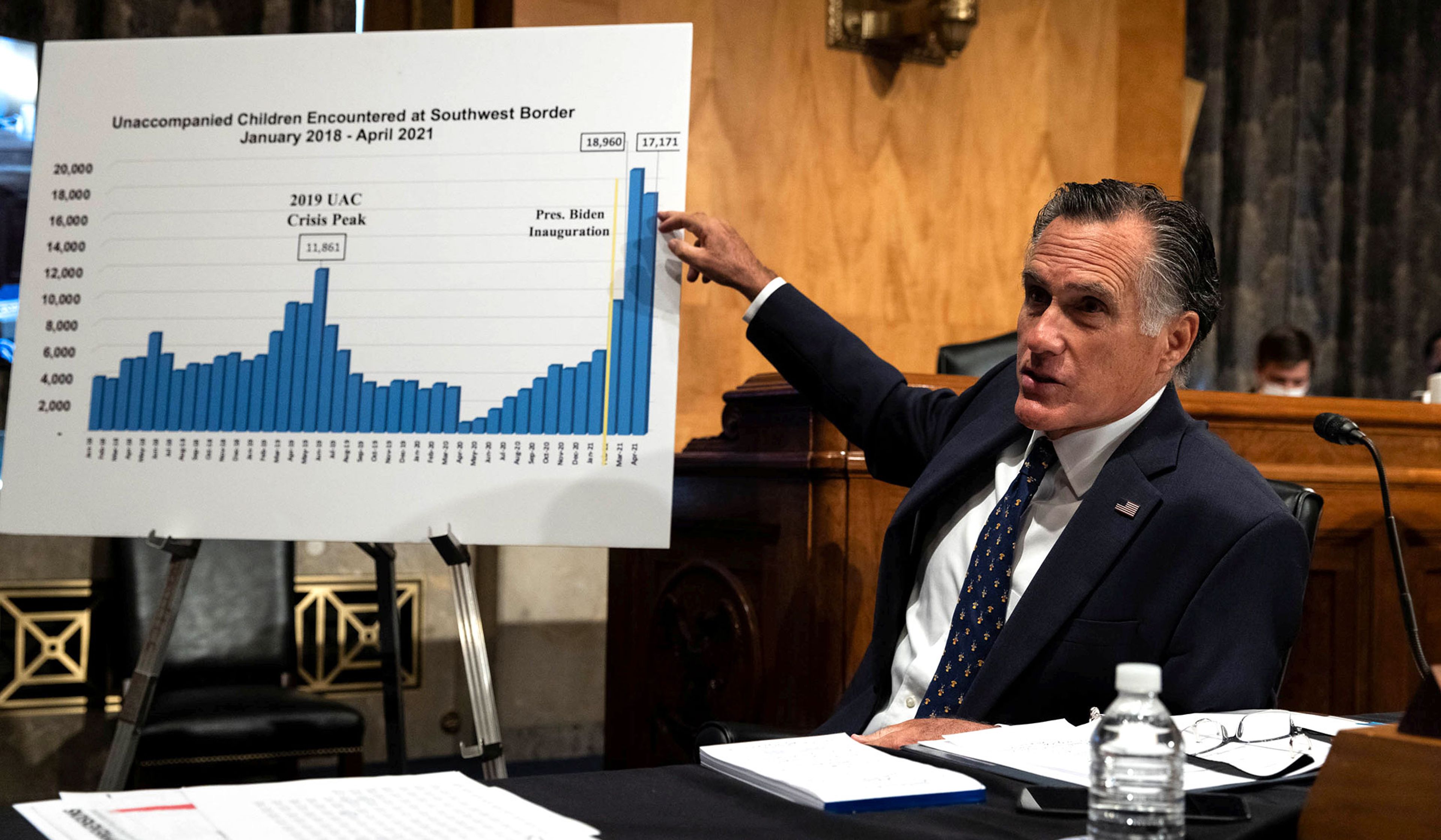
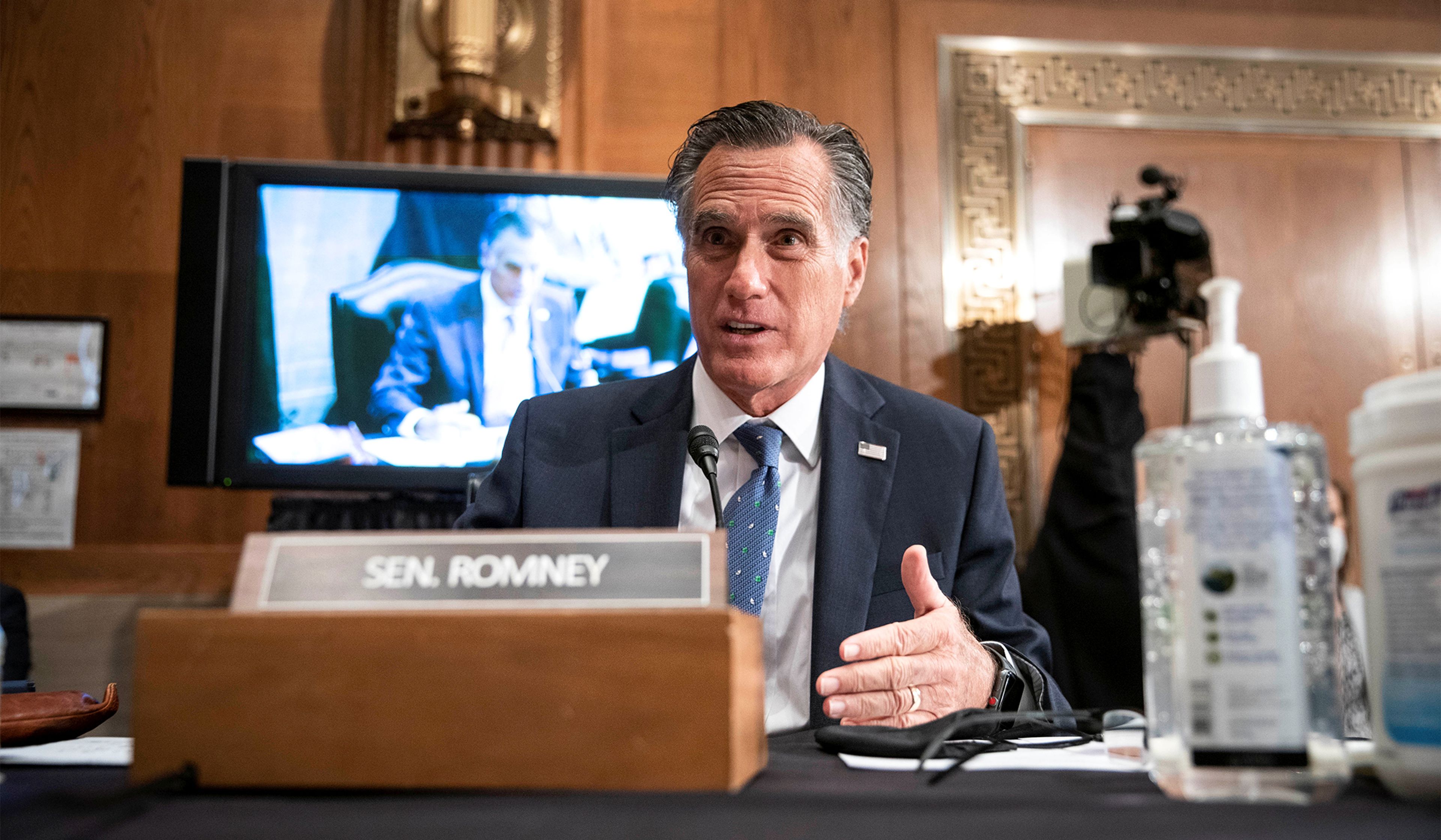
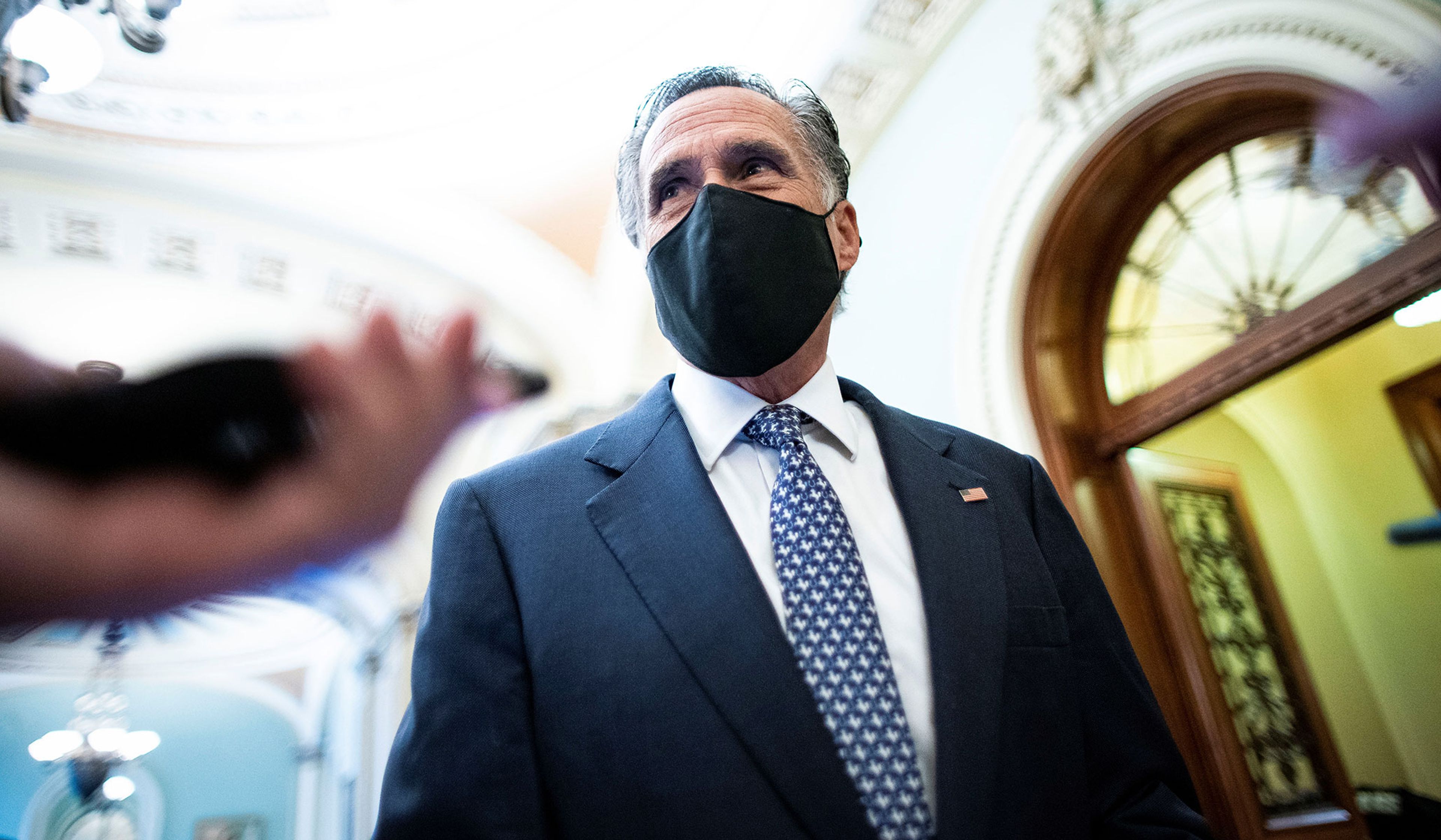
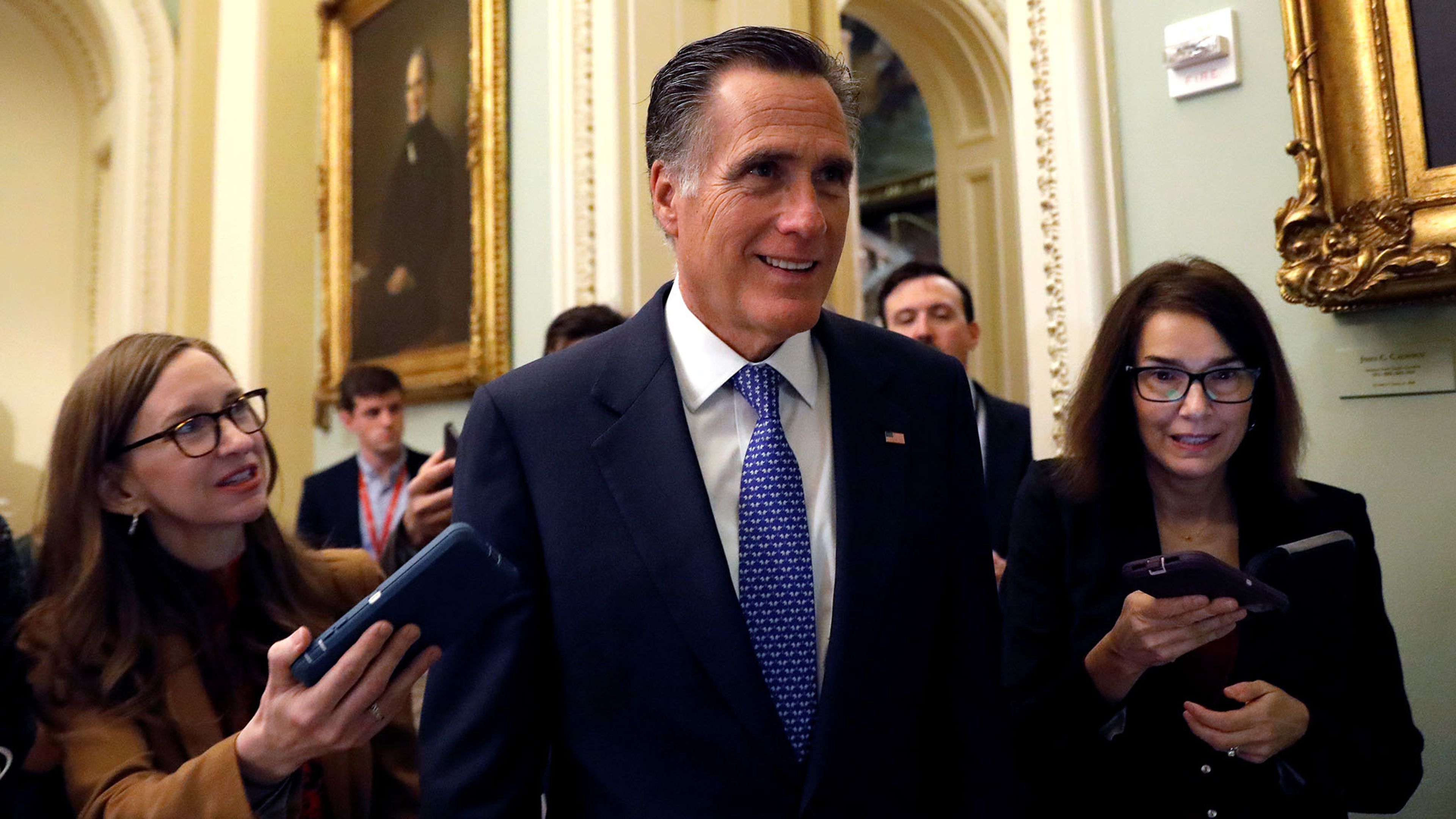
Senator Mitt Romney (R., Utah) attends the confirmation hearings of Vivek Murthy and Rachel Levine before the Senate Health, Education, Labor, and Pensions committee in Washington, D.C., February 25, 2021.
Caroline Brehman/Pool via Reuters
As Romney spoke, a woman in the front row kept screaming at him. Her child was by her side. Romney stopped and asked her, “Aren’t you embarrassed?”
That’s just what I had thought, in 2016, when watching clips of Trump rallies. People would gather at the “media pen,” screaming at the reporters, hurling vulgarities and threats. I saw people do this with young children at their side.
“Teach your children well,” went a folk-rock song.
The issue of violence — not yelling or name-calling, but violence — should not be swept under the rug. Romney told Coppins something that other Republicans have addressed, usually sotto voce. There were congressmen who wanted to vote to impeach Trump, and senators who wanted to vote to convict him, but shrank from doing so out of fear for their family’s safety.
Peter Meijer told Tim Alberta about a congressman who voted against certifying the 2020 election — only because he was concerned for his family’s safety. Meijer was a congressman from Michigan (Republican); Alberta is a journalist who writes for the Atlantic.
“Remember,” said Meijer, “this wasn’t a hypothetical. You were casting that vote after seeing with your own two eyes what some of these people are capable of. If they’re willing to come after you inside the U.S. Capitol, what will they do when you’re at home with your kids?”
Mitt Romney himself has spent a good deal of money on his family’s security since that day, January 6. He can afford it. The ordinary politician cannot.
Romney’s term in the Senate has coincided with Russia’s full-scale invasion of Ukraine. On this issue — so important to so many — Romney has shown great understanding. He knows the background, he knows the stakes. He knows that the Ukraine war is not a “territorial dispute” or a “border dispute,” as Ron DeSantis and countless other Republicans have claimed. He also knows that Putin is responsible for the war, not the West.
In October 2022, Donald Trump, the once and possibly future president, spoke to Real America’s Voice, a multimedia network. He blamed American leaders for Putin’s invasion. “They actually taunted him, if you really look at it,” said Trump. “Our country, and our so-called leadership, taunted Putin. And, I would listen — I’d say, ‘You know, they’re almost forcing him to go in, with what they’re saying.’”
Credit Trump, if you like, for saying “almost.”
Here is Romney:
It is in America’s interest to support Ukraine. If Russia can invade, subjugate, and pillage Ukraine with impunity, it will do the same again to others, and a world at war diminishes the security of Americans.
Here is another statement:
The single most important thing we can do to strengthen America relative to China is to see Russia defeated in Ukraine. A weakened Russia deters the CCP’s territorial ambition and halts Putin’s vision of reestablishing the old Soviet Union.
Here is one more, embracing the human, intensely:
I join the world in awe of true heroes: the courageous President Zelensky, the brave Ukrainian soldiers, the citizen armies, the mothers cradling frightened children, and the journalists risking their lives to bring us truth. God bless them and God bless us to never forget.
Something like that would have been Republican boilerplate, once upon a time. Today, it can seem fresh and daring.
If Romney is a pariah in the contemporary GOP, the other Utah senator, Mike Lee, is in its bosom. He tweets as “BasedMikeLee.” “Based” is a way of saying “cool,” basically. “With it.” Lee “knows what time it is,” to use other New Right parlance.
He regularly belittles Ukraine and our efforts to help that nation fend off invasion and subjugation. For instance, he tweeted an image of the Ukrainian flag, writing on it, “New Symbol for Money Laundering.” He added, “Brought to you by the Military Industrial Complex™.”
Chances are, BasedMikeLee will be reelected forever.
Romney, in his one Senate term, has struck me as senatorial. Manful and senatorial. It’s easy to see why people hate him so much. Trumpers would, obviously, but so would anti-anti-Trumpers, perhaps even more. I will lapse into the psychological (as I did earlier on).
Everyone hates the one guy not drinking. Everyone hates the one guy not turning a blind eye. Romney, I think, may prick people’s consciences. He may make them “hold their manhoods cheap.”
If I read him correctly — even his facial expressions — Romney is both pained and bewildered by the current era. In September, a poll found that 53 percent of Republicans regard Trump as a “person of faith”; only 35 percent regard Romney as the same.
Googling around, in preparation for this article, I came across a piece I had overlooked — a piece published on January 2, 2013, in Esquire. “Mitt Romney’s Last Fan — the Last Soldier in the Mountains.” That would be me. The writer was mocking me for my admiration of Romney, recently defeated by Obama.
He refers to Romney as “Willard,” the senator’s given first name. (His middle name is “Mitt,” and he has always gone by it.) That’s what anti-Romney people have long done, whether they are left-wing or right-wing: refer to Romney as “Willard,” or “Mittens,” which is supposed to cut Romney down to size, somehow.
In any case, the writer begins,
it is not true that nobody in America really likes Willard Romney. It is true that it generally seems that nobody in America really likes Willard Romney. It is true that there is some actual polling data to the effect that, the more you are exposed to Willard Romney, the less you like him, and that that has been true for two presidential campaigns in a row now. But, empirically, it is incorrect to say that “nobody” really likes Willard Romney. Jay Nordlinger of National Review really likes Willard Romney.
Yes, he does. I was glad to vote for him in ’12. Wish I could again.












Comments