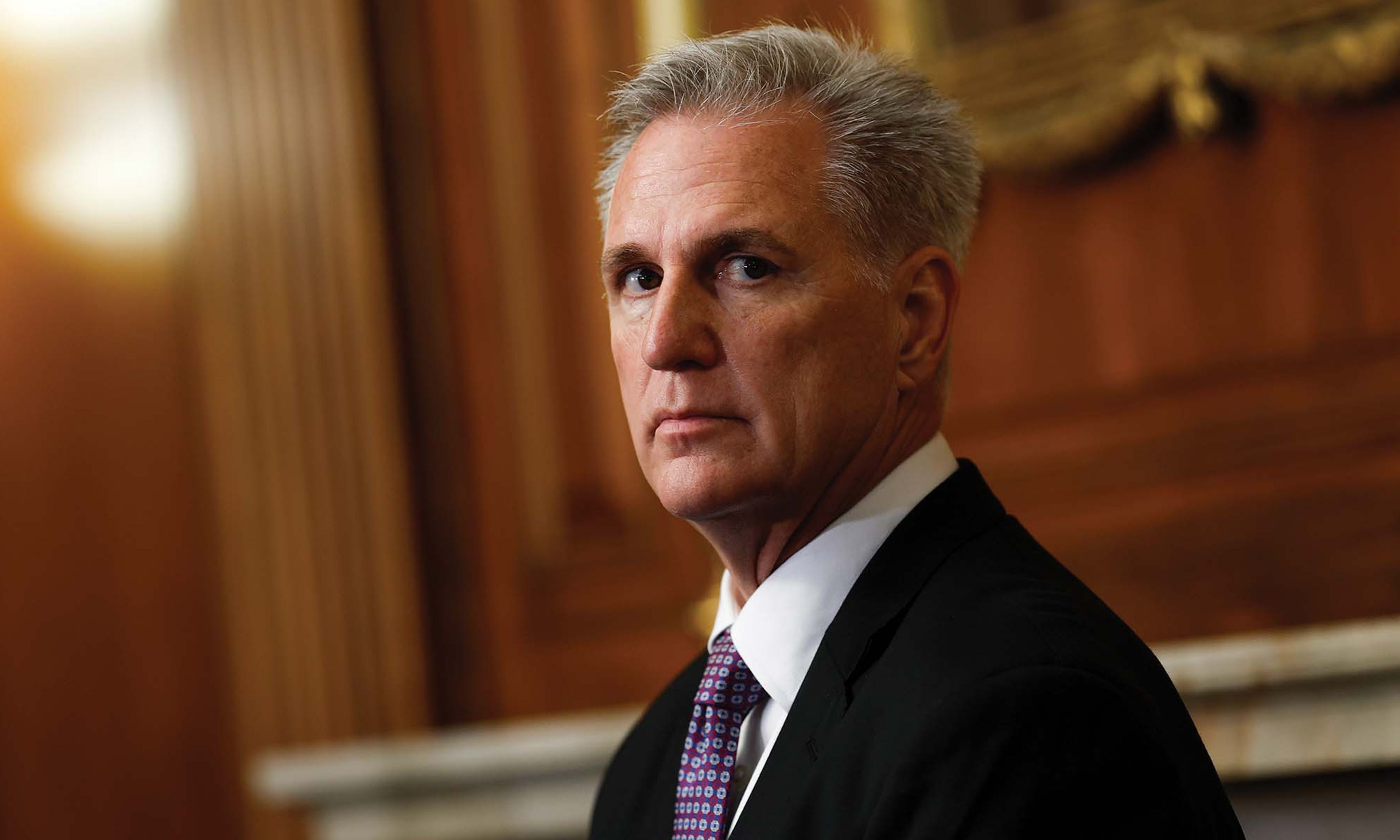
In early January, Kevin McCarthy was at a crossroads. The California Republican and House majority leader had spent years within arm’s length of the speakership, forging relationships with the rightmost flank of his party as his window of opportunity drew near. Long considered a talented fundraiser but lacking in policy expertise, he knew that securing the speaker’s gavel with such a slim and fractious majority would come at a high price. The deal he made soon led to his undoing.
Roughly 20 Republican holdouts eager to leverage their power during the January speakership fight forced the California Republican to accede to a long list of demands in exchange for their support. The backroom deal included pledges to institute a three-day window to read legislation before a floor vote, place hard-right members in powerful committee posts, and, most important, reinstate a rule that predated Nancy Pelosi’s resumption of the speakership in 2019: A motion to vacate the speakership could be filed by any one member and would no longer require a majority. This granted individual representatives the power to hold at will a snap vote on ousting the speaker.
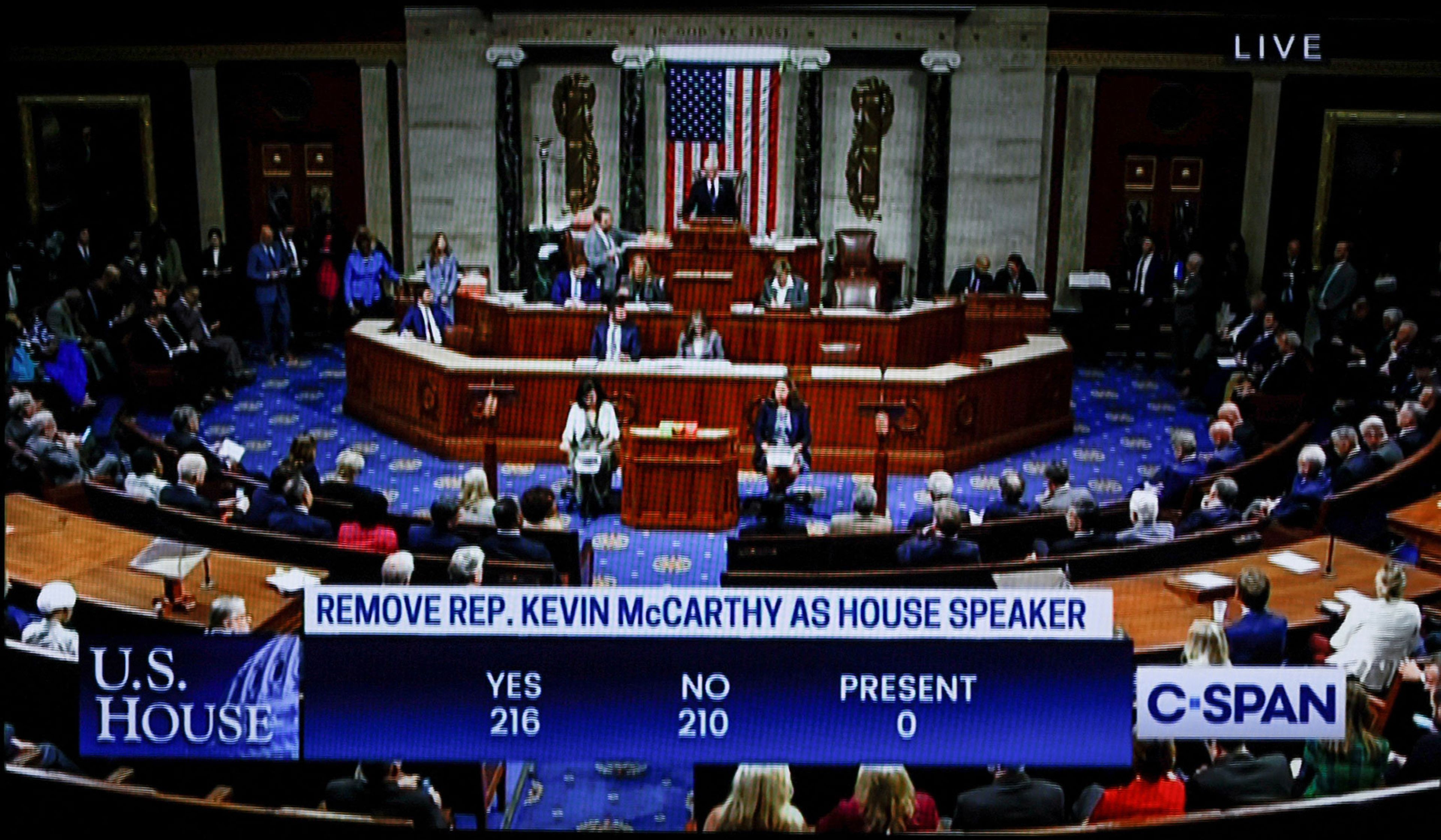
After days of unsuccessful political maneuvering — and 15 humiliating rounds of ballot-counting to show for it — McCarthy finally got his gavel. But after nine short months, that leadership dream came crashing down when eight Republican members joined the entire House Democratic caucus to remove him by a vote of 216 to 210.
The handful of pro-ouster Republicans accused McCarthy of colluding with President Biden and congressional Democrats in early October to pass a stopgap spending bill to fund the government. But the frustrations didn’t end there. In their stated view, McCarthy’s other transgressions during his nine-month tenure included failing to rein in federal spending, bolster security at the U.S.–Mexico border, and end U.S. military funding for Ukraine.
McCarthy’s defenestration has led to widespread uncertainty and resignation among rank-and-file GOP members. Much of their worry about what the future holds is grounded in their concern that a small and ultra-right-wing minority of House Republicans are far more interested in media-oriented self-promotion than in governing, a situation that reflects a party still dominated by Donald Trump.
Morale is low. As many members in swing seats tell it, working with Democrats in any capacity is in some corners of the House GOP now considered an unforgivable offense.
“You don’t have to be a front-liner” — i.e., in a highly competitive seat — “or a moderate to accept reality,” McCarthy ally and first-term member Marc Molinaro (R., N.Y.) tells National Review, referring to the divided government in which Democrats occupy the White House and control the U.S. Senate. “If you wish to have a solution to any of America’s problems in this moment, it needs bipartisan support.”
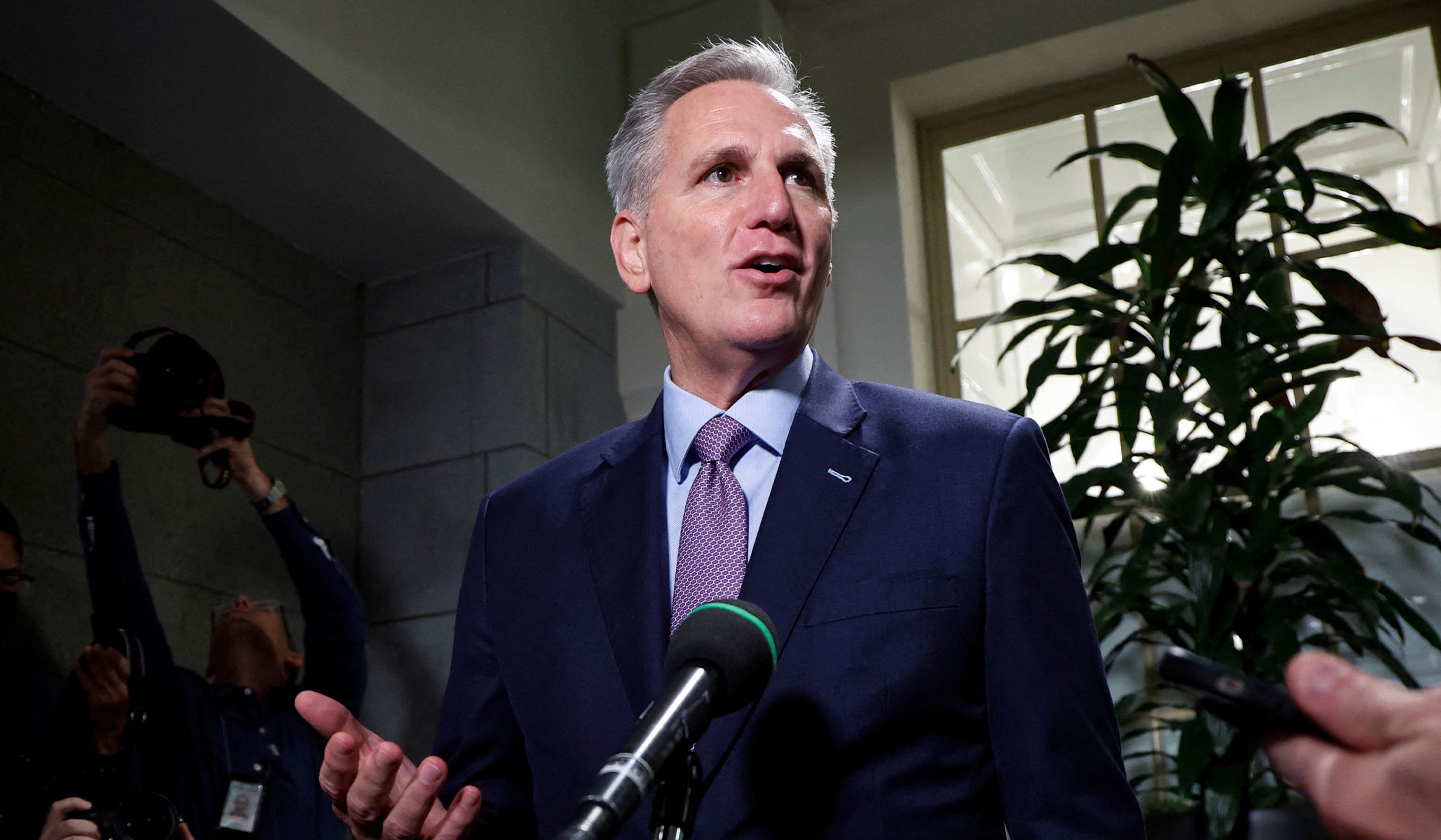
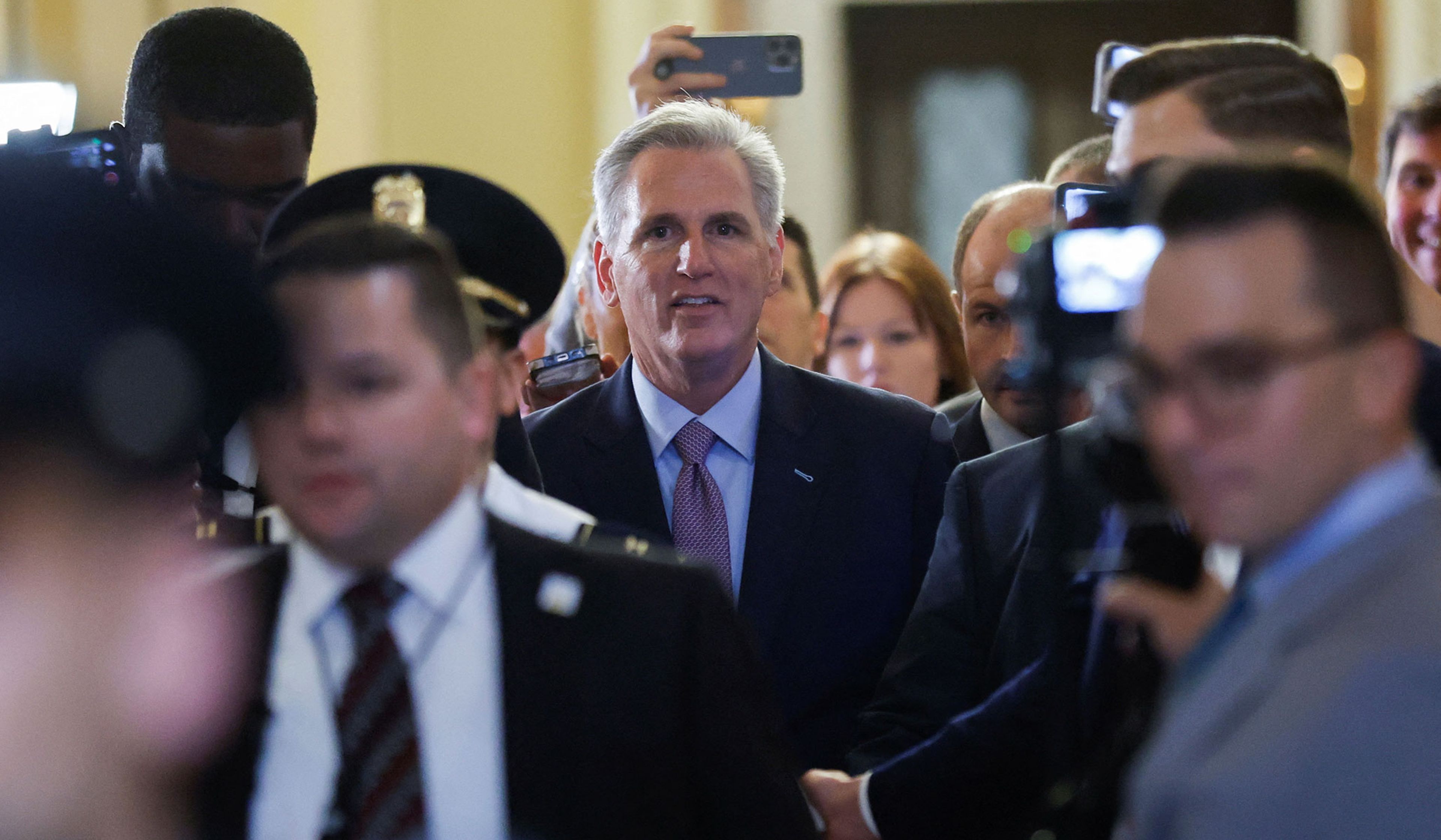
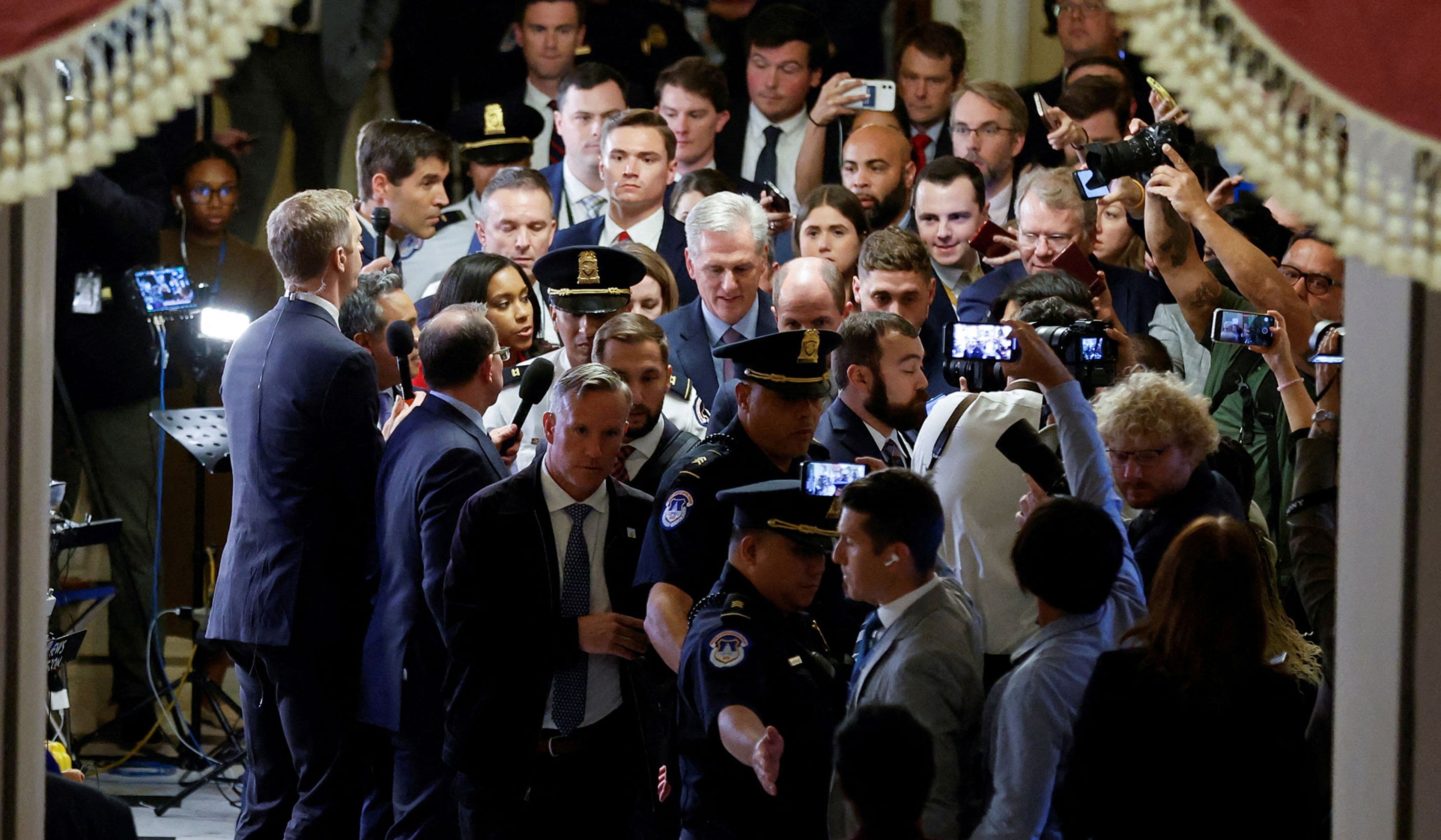
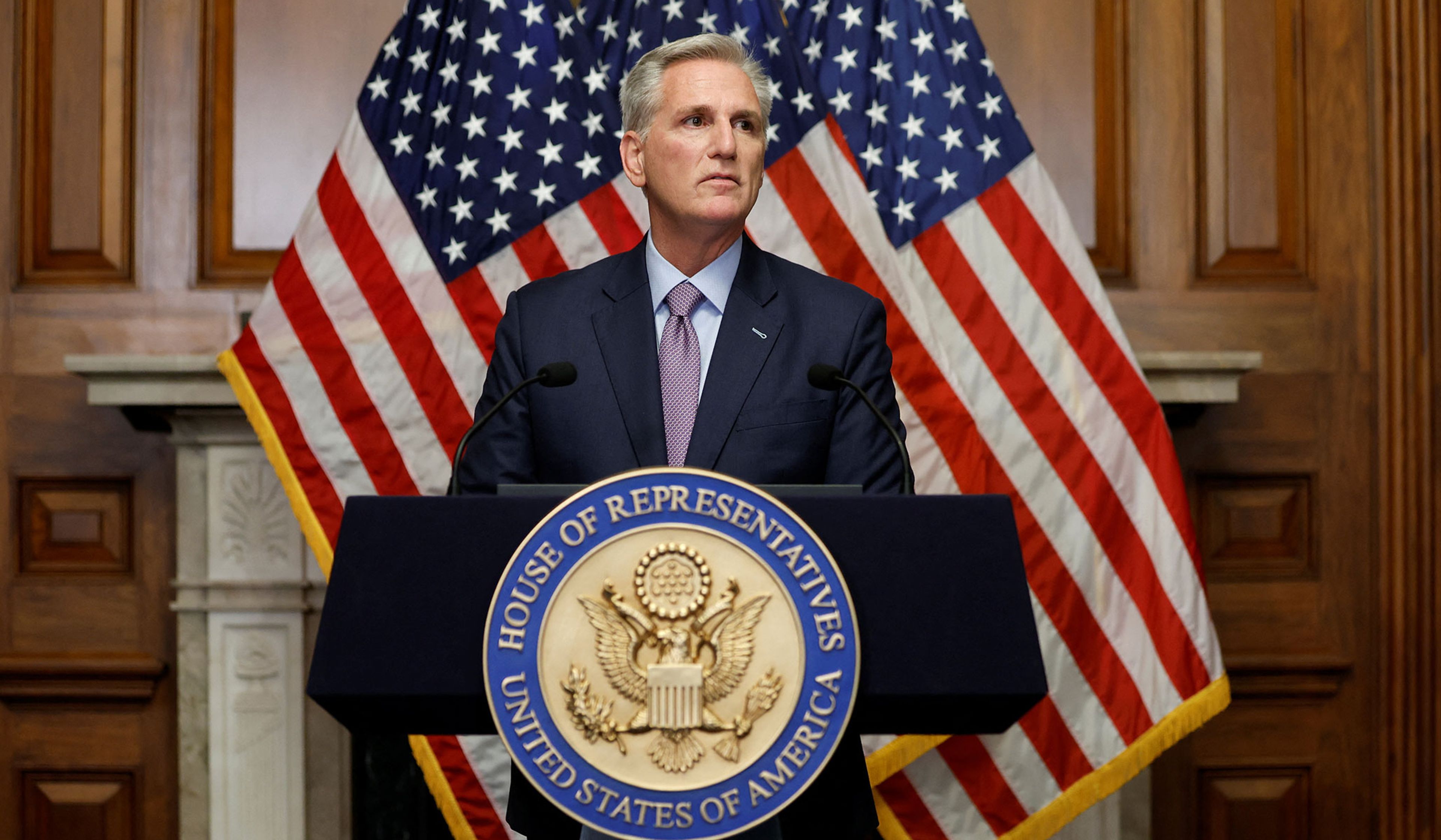
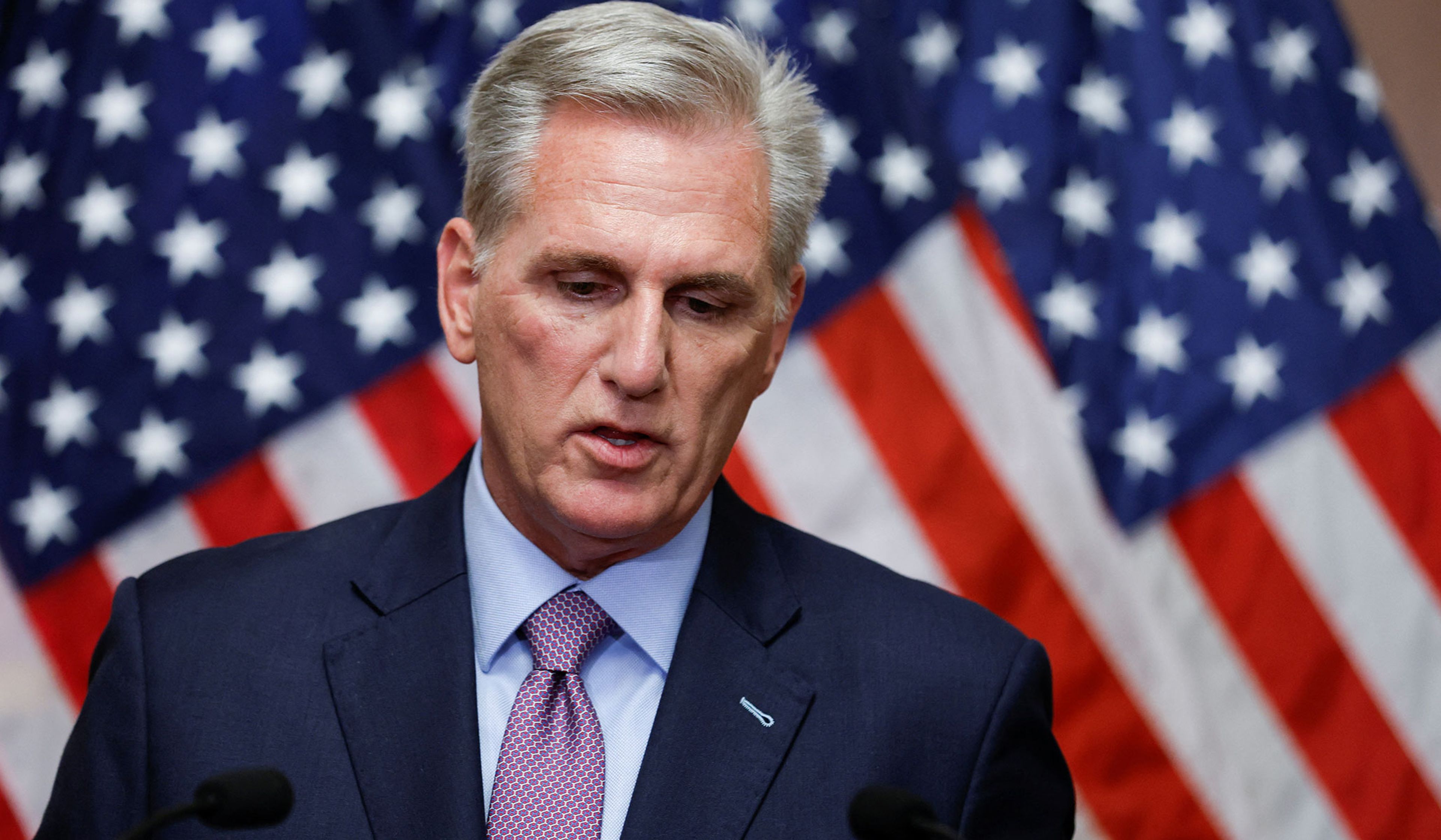
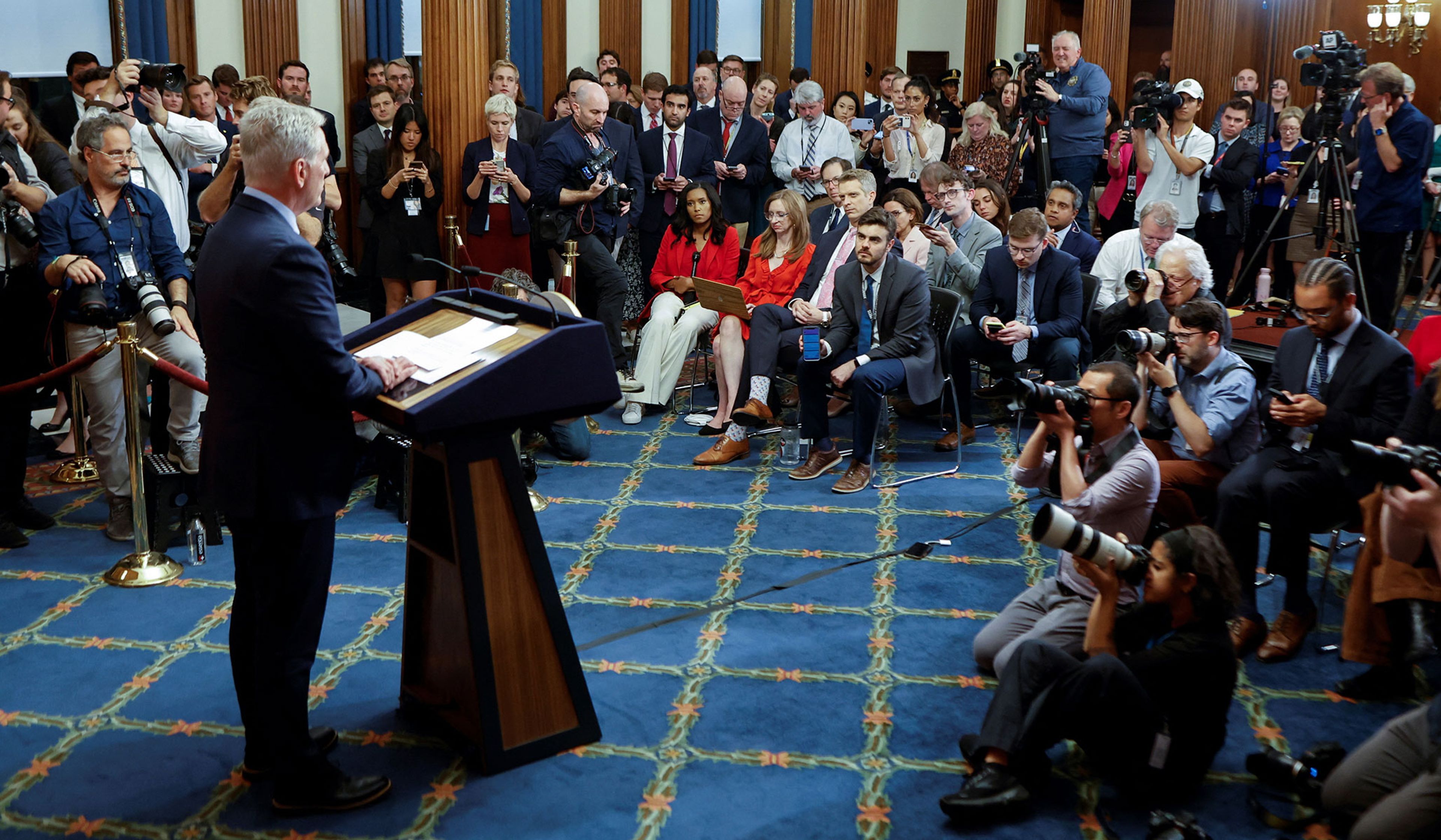
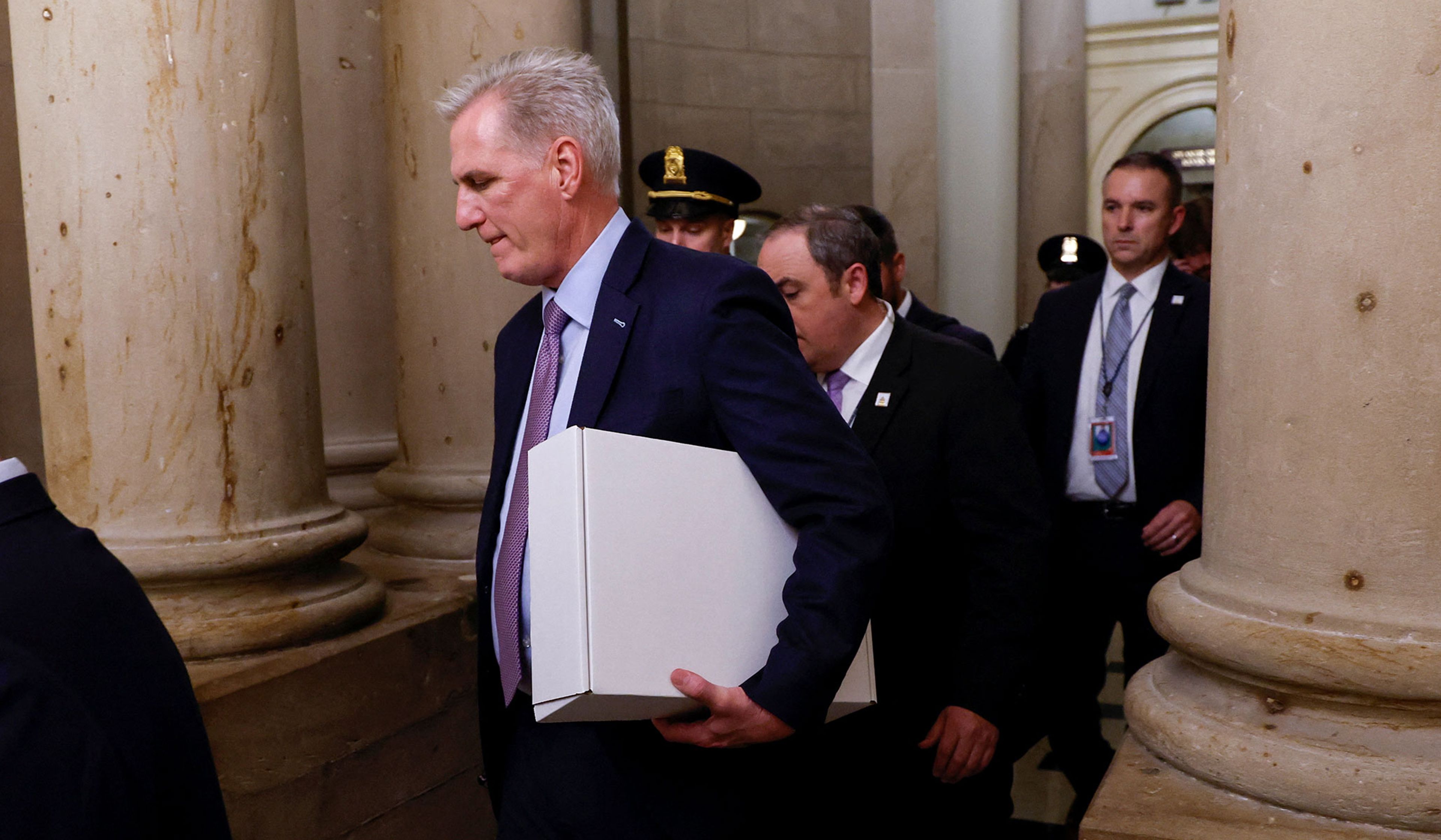
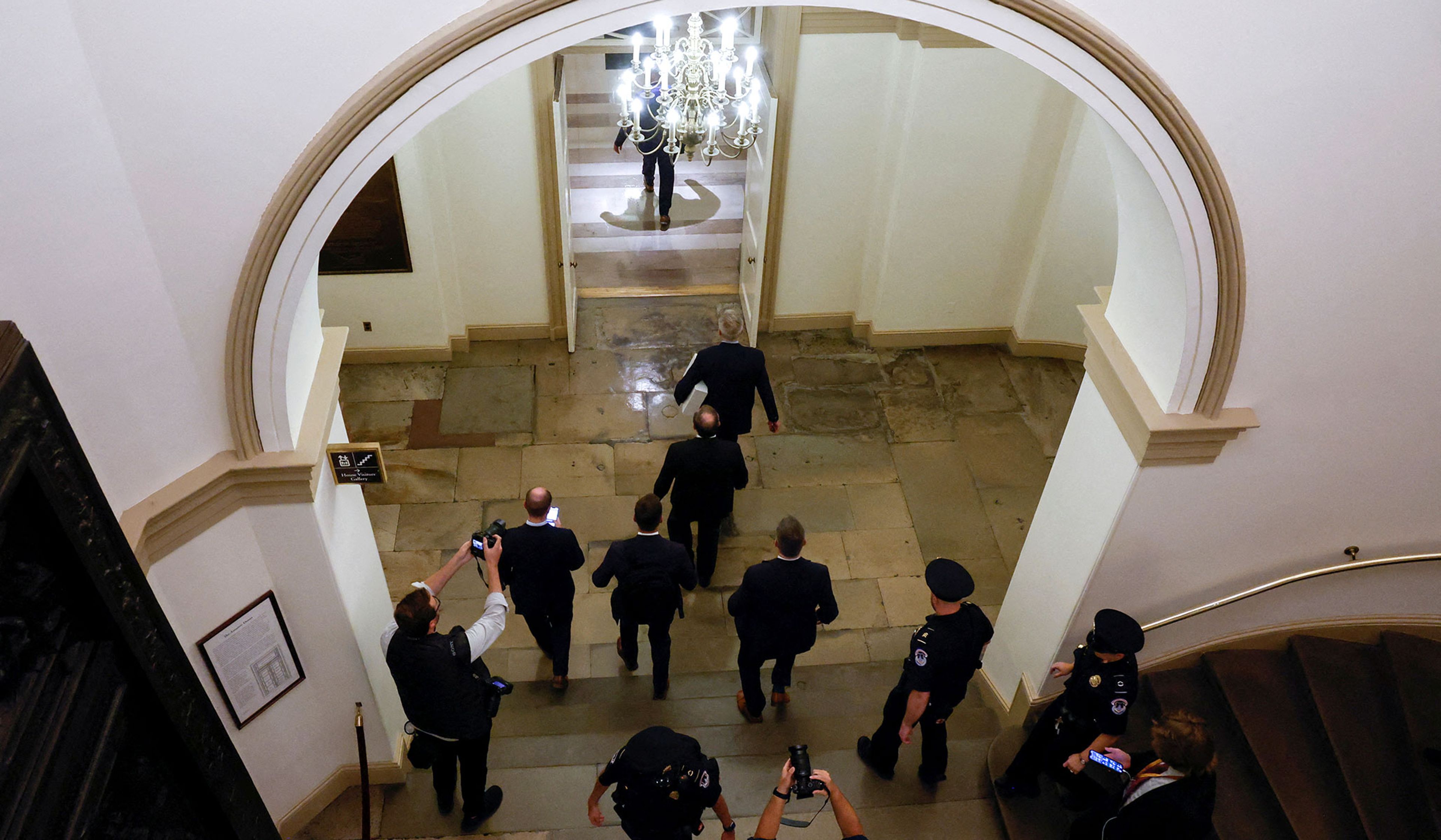
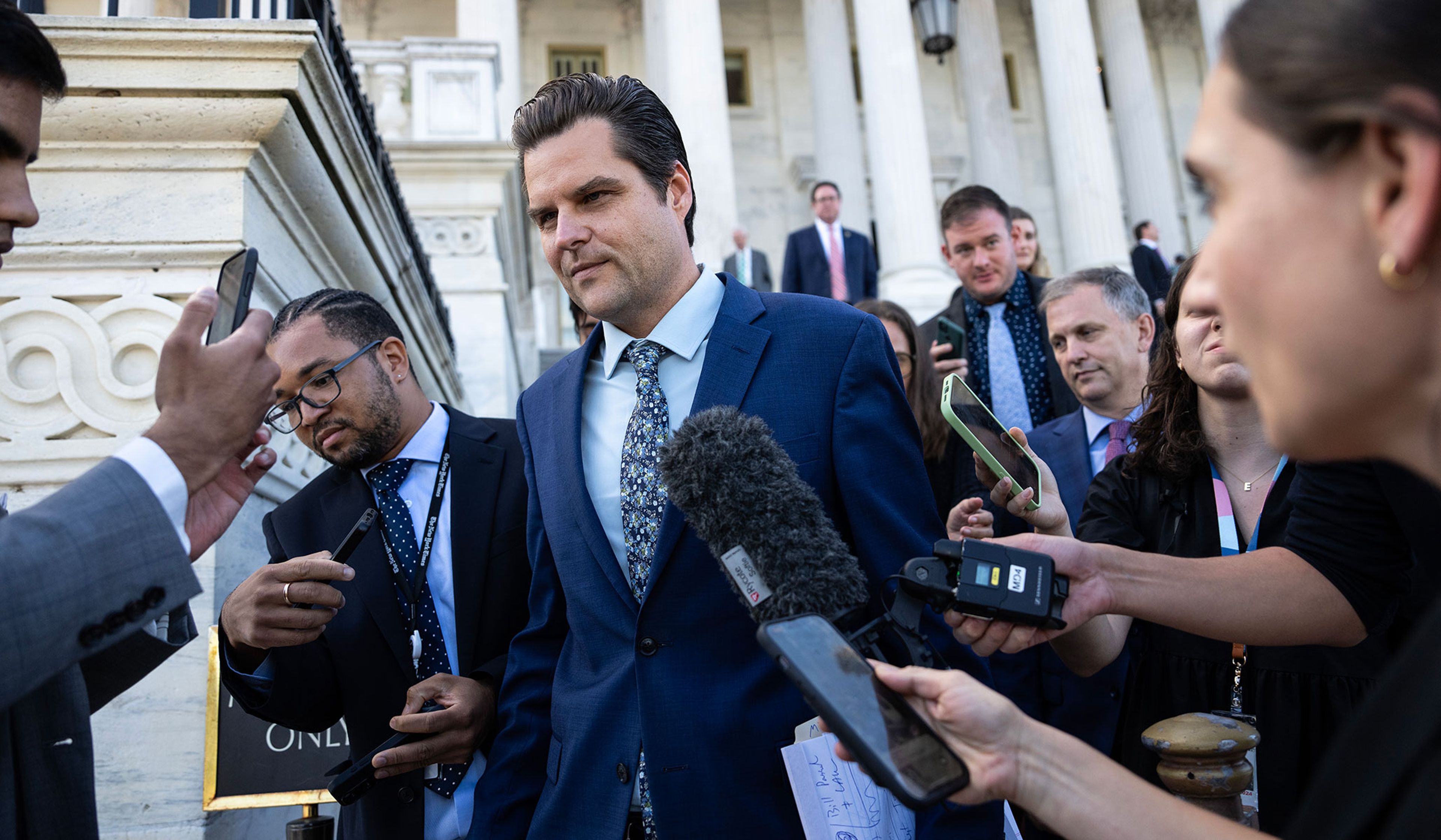
Then-House speaker Kevin McCarthy (R., Calif.) speaks with reporters after a House Republican conference meeting at the U.S. Capitol in Washington, D.C., October 3, 2023.
Jonathan Ernst/Reuters
And it’s not just moderates who fault the eight House Republicans who banded with Democrats to depose McCarthy. More-conservative members, too, accuse the rebels of upending party unity for their own political gain. Take South Dakota’s lone representative, Dusty Johnson, who chairs the Republican Main Street Caucus. He is deeply worried about the trajectory of the House GOP.
“For those of us who try to be more thoughtful, who try to be inspired by optimism or opportunity rather than anger and fear, it is an incredibly frustrating time to serve,” says Johnson. “The incentives in the system don’t really reward you for passing important — but unsexy — meat-and-potatoes governing legislation. They do reward you for calling the other side ‘traitors.’” Johnson’s complaint clearly applies to camera-loving Matt Gaetz (R., Fla.), the architect of the House GOP’s early October surprise.
“I don’t credit Matt Gaetz with pulling anything off,” says first-term congressman Anthony D’Esposito (R., N.Y), who will face an uphill reelection fight in his blue-leaning Long Island district next fall. “I credit Matt Gaetz with working with Democrats against the country.”
Even former members who watched the chaos unfold from beyond the U.S. Capitol’s walls lambasted Gaetz for the self-interest underpinning his burn-it-all-down approach. “Got a fundraising email from Gaetz during the vote,” observed former South Carolina congressman Mick Mulvaney, who under Trump served as director of the Office of Management and Budget and as acting White House chief of staff. “Probably more telling than anything.”
Many House Republican members and staffers who spoke with National Review immediately after McCarthy’s ouster said they were deeply worried about the institutional health of the party amid an already tumultuous presidential campaign cycle.
The roll-call vote to vacate McCarthy’s speakership put their unease on full display. “The feeling was, this was not going to end well,” Molinaro says. He calls McCarthy’s ouster an “embarrassing” moment that should not be celebrated or repeated anytime soon. “Motion to vacate is a tool that should only be used in the most serious and significant situations. This did not rise to that. This was used in a callous way for political and personal benefit.” Reporters watching the vote in real time remarked in social-media posts that spectators in the chamber could hear a pin drop the moment the clerk of the House, Steve Womack (R., Ark.), declared the position of speaker vacant.
Many House Republicans still stunned by McCarthy’s removal fear that GOP infighting will last well beyond the choosing of a new speaker. “Right now, with the margins we have and with the personalities we have, the Republican House is not governable in any traditional sense,” Johnson says. He nonetheless remains cautiously optimistic and believes that somehow, someday, this GOP fever will break, even though he has “no earthly idea” what it will take to get there.
“History is an odd thing. There are events that only seem inevitable in hindsight,” Johnson says. “The day of the Lord will come like a thief in the night. And I feel like whatever will cause a renaissance into an optimistic Republican worldview is also going to arrive at a time that is hard to predict. But it will come. And that’s one of the things that keeps me optimistic.”












Comments