London
I had come to Westminster to report on a new prime minister. And yet I found myself standing outside Buckingham Palace under a friend’s umbrella, staring up in disbelief at a lowered Union Jack, as a crowd of hundreds grew to thousands, all grappling with this strange new reality. The queen is dead. Long live the king.
The change in Britain’s new political era came at dizzying speed. On Tuesday, Boris Johnson and his successor, Liz Truss, had been summoned to Balmoral Castle in Scotland by Queen Elizabeth II, a constitutional necessity for the transition of the office of prime minister. Few had any idea it was to be her final act of service. Two days later, the palace’s initial statement about her declining health was characteristically reserved, but the situation was clearly grave. Doctors were “concerned” for Her Majesty’s health. She was under “medical supervision.” Her family was rushing to her bedside. BBC presenters were dressed in black. In the hours before her death was announced, the mood in London was one of pregnant gloom.
As the flag was lowered to half-mast on Buckingham Palace, a grandmother, father, and son — a three-generation family of onlookers — discussed the strangeness of a permanent fixture in all their lives, from childhood, being no more. A 26-year-old Brazilian immigrant told me how “grateful” he was to the queen as a symbol of British greatness — he and his family, arriving “with nothing,” had come to the U.K. “in her era.” Some in the crowd sang “God Save the Queen,” as others paid tribute through scattered applause. People came with flowers, hugging each other, and wiped tears from their eyes. Most simply raised high their phones to take videos. Indeed, what was most striking was an overwhelming sentiment less of mourning than of bewilderment. A sense that something — as much as someone — was gone.
In the past 70 years, Great Britain has had 15 prime ministers — three in the past three years alone. And yet for the same length of time, the country has had just one monarch. When Elizabeth II first became queen, Winston Churchill was prime minister. Longevity helps explain why there is perhaps a deeper attachment to Her Majesty than to “Her Majesty’s government.” But it is not the only explanation.
Character, as well as circumstances, matters a great deal. And the caliber of some recent prime ministers has left much to be desired. The outgoing prime minister, Boris Johnson, aspired to a grand legacy, modeling himself on Churchill. Johnson’s biography of the great man, The Churchill Factor, was widely received as an audition for the top job. And yet, despite his irrefutable talents and successes, including a historic landslide election victory, in the end he turned out to be a major disappointment. Just another politician without principles, motivated by self-interest.
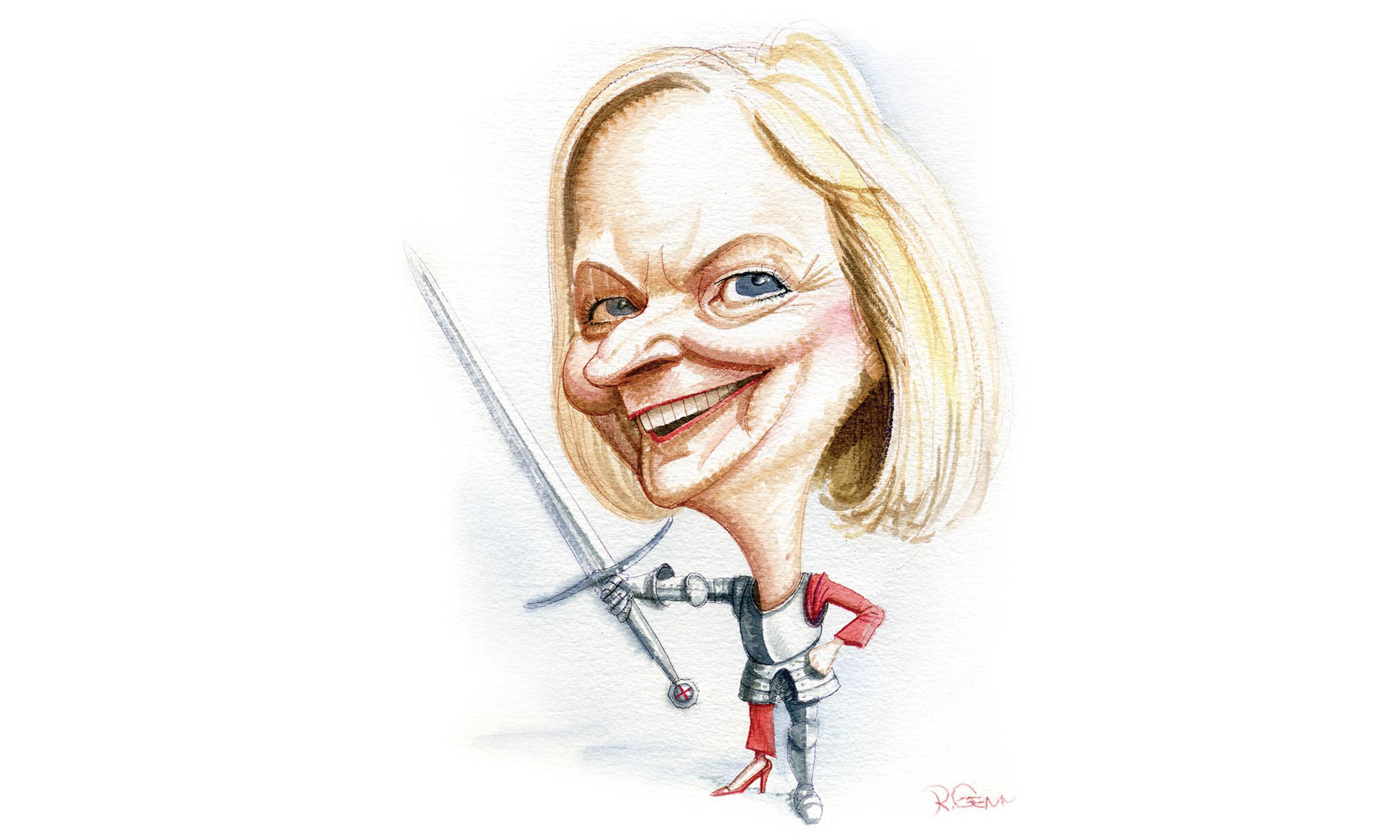
Likewise, although some have offered the comparison, Liz Truss is no Margaret Thatcher. While the Iron Lady was an exemplar of conviction politics, Truss has a reputation for political shapeshifting and opportunism. One recent example is her U-turn on Brexit. In 2016, Truss was a staunch Remainer. By 2022, as a member of Johnson’s cabinet, she was an ardent Euroskeptic. Her malleability is perhaps evident in that she has served in the cabinets of the past three ideologically diverse Tory prime ministers.
Truss, who comes from a left-wing family, went to a state school and won a place at Oxford University. As a student, she was a Liberal Democrat in favor of abolishing the monarchy. When she was first elected to Parliament in 2010, she co-authored After the Coalition: A Conservative Agenda for Britain, a book emphasizing “the paramount importance of fiscal responsibility” for any such future agenda. But now that she’s prime minister, her plans for government spending and borrowing tell a different story.
Every prime minister enters No. 10 with his or her unique set of challenges. Truss’s problems are serious. There is the issue of the National Health Service. The pandemic worsened the system’s already unacceptably high wait times, excess mortality, and pressure on staff. There are some 132,000 staff vacancies. Heading into winter, these figures are unsustainable. Workplace conditions and pay are so poor that nurses are threatening to go on strike. This is a key priority for Truss, as evidenced by her double appointment of Thérèse Coffey as deputy prime minister and health secretary.
Moreover, Truss will have to deal with serious economic problems. The European reliance on Russian gas has exacerbated an energy crisis. Inflation rages at 10.1 percent, and the British pound is the weakest it has been against the dollar in nearly 40 years. Tens of thousands of businesses — which employ hundreds of thousands of workers — are teetering on the brink of collapse. Truss’s new chancellor, Kwasi Kwarteng, is to meet with Andrew Bailey, the governor of the Bank of England, twice a week to “coordinate” on how best to support the economy.
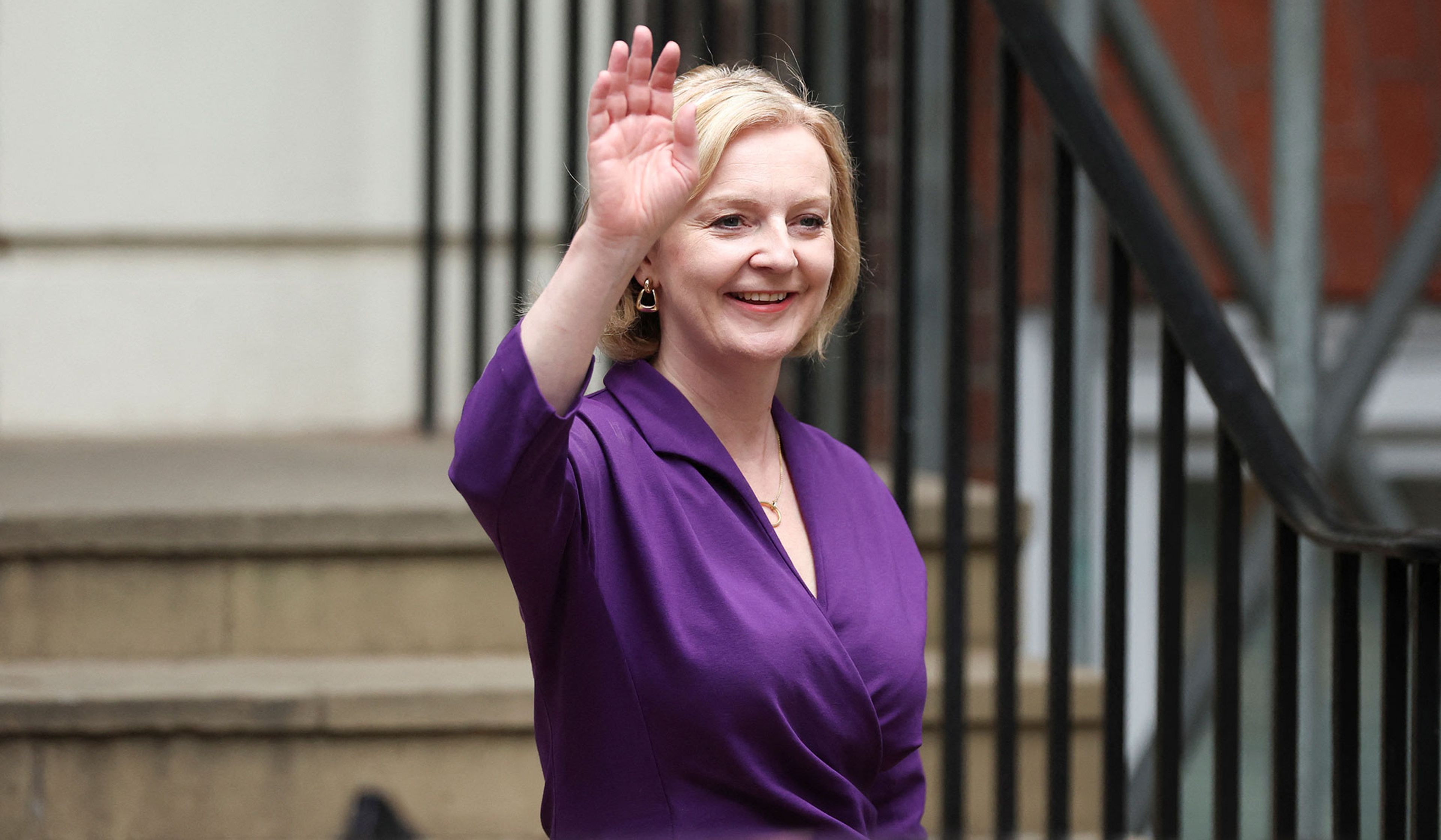
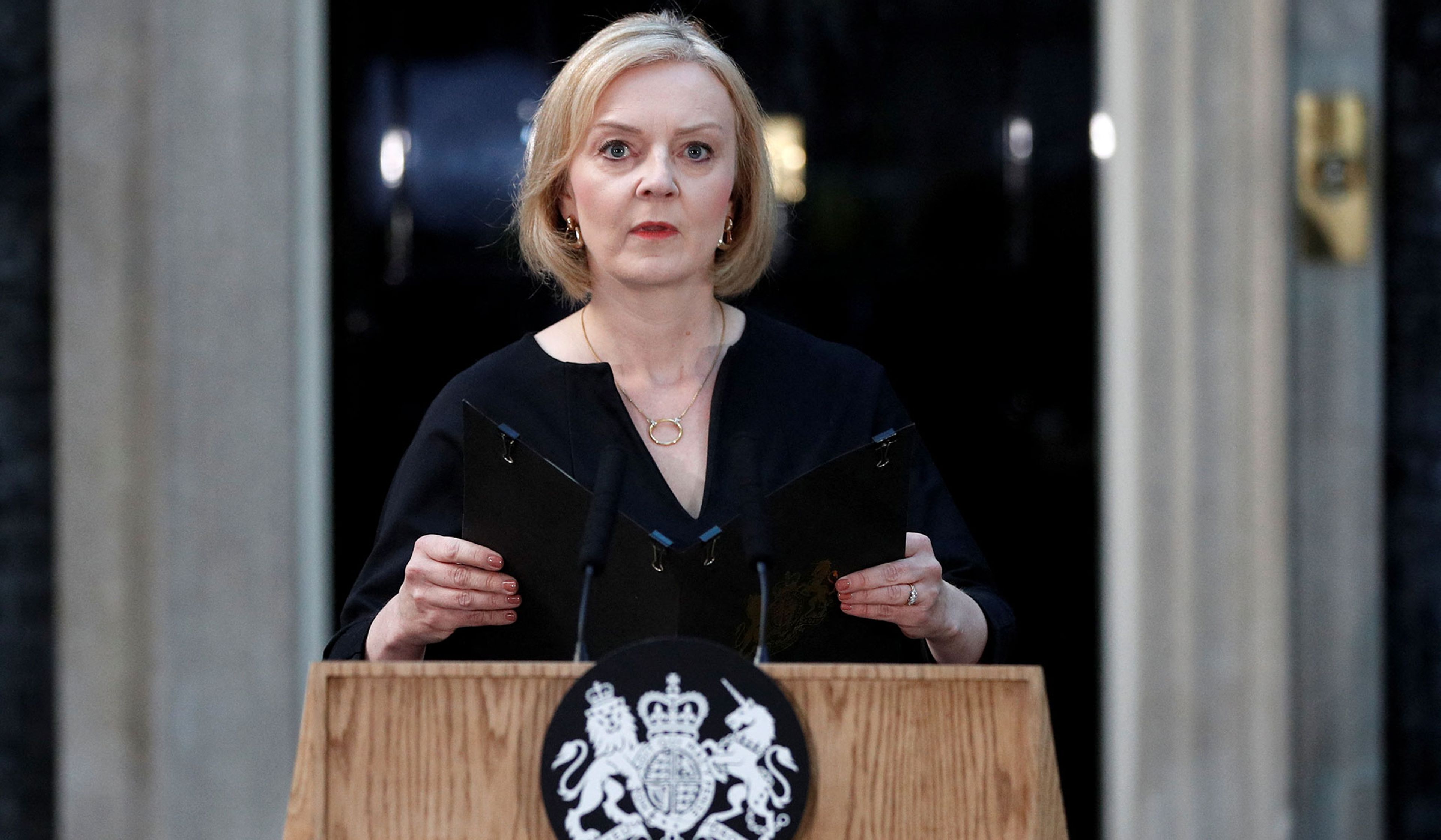
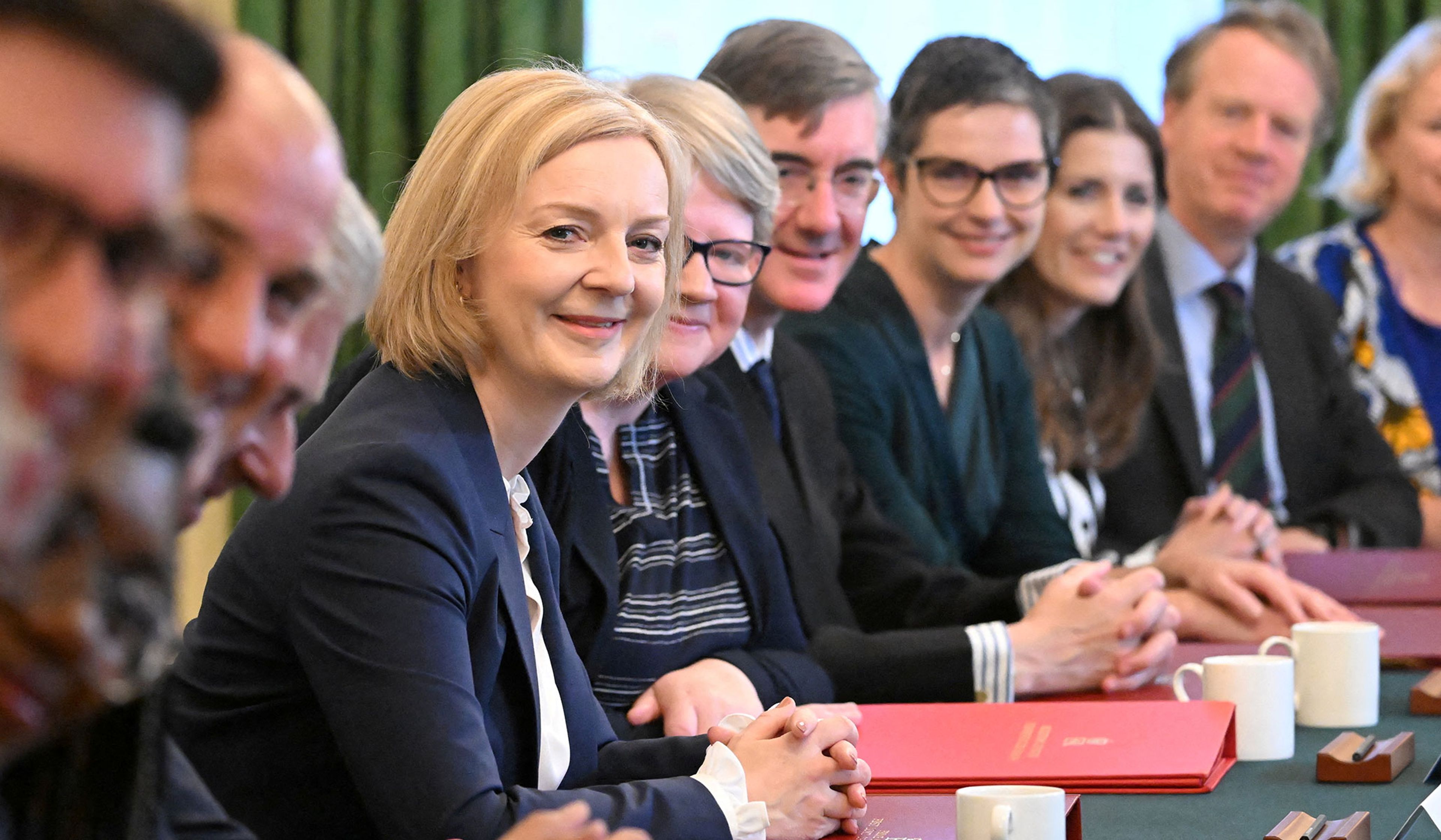
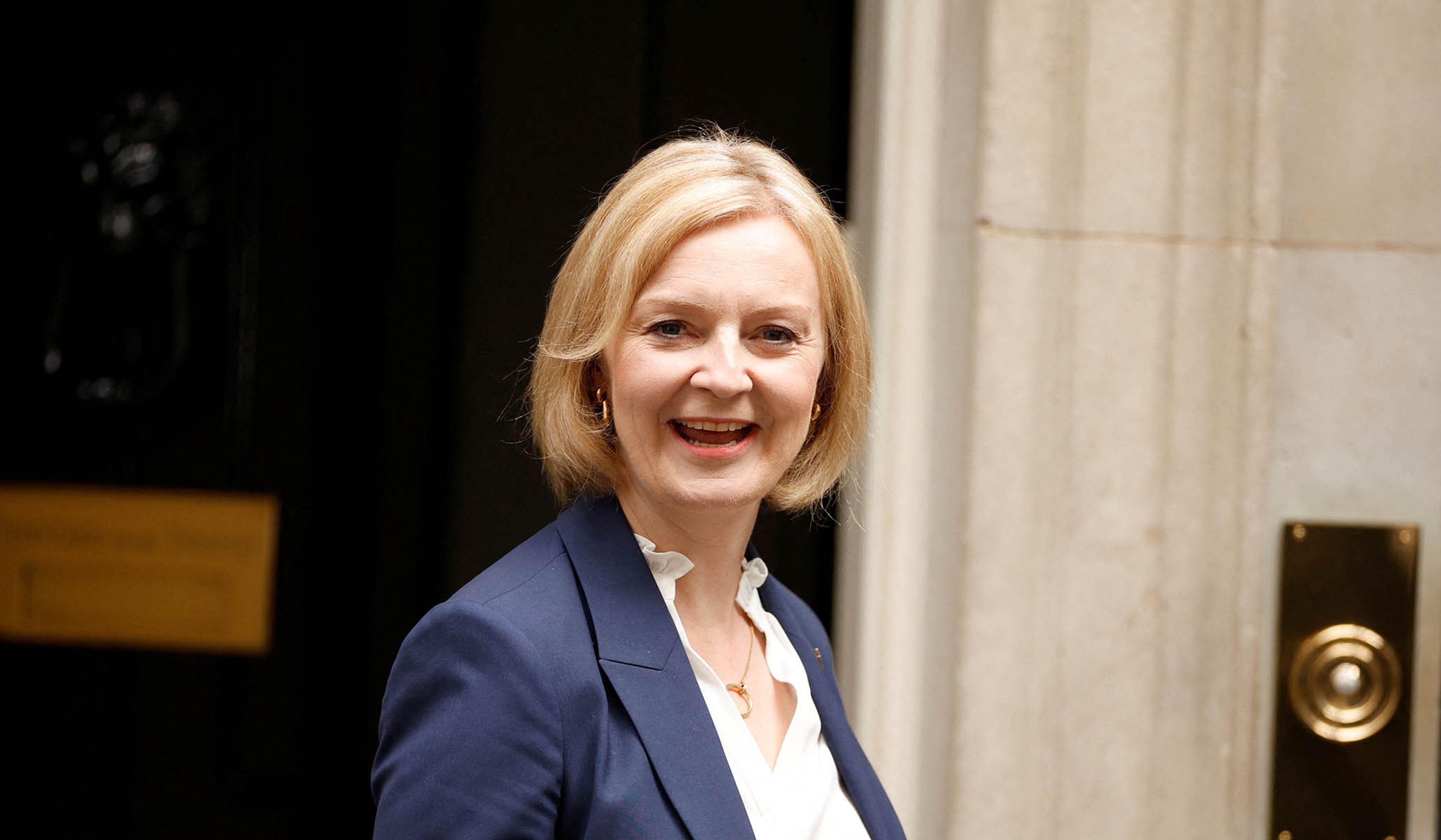
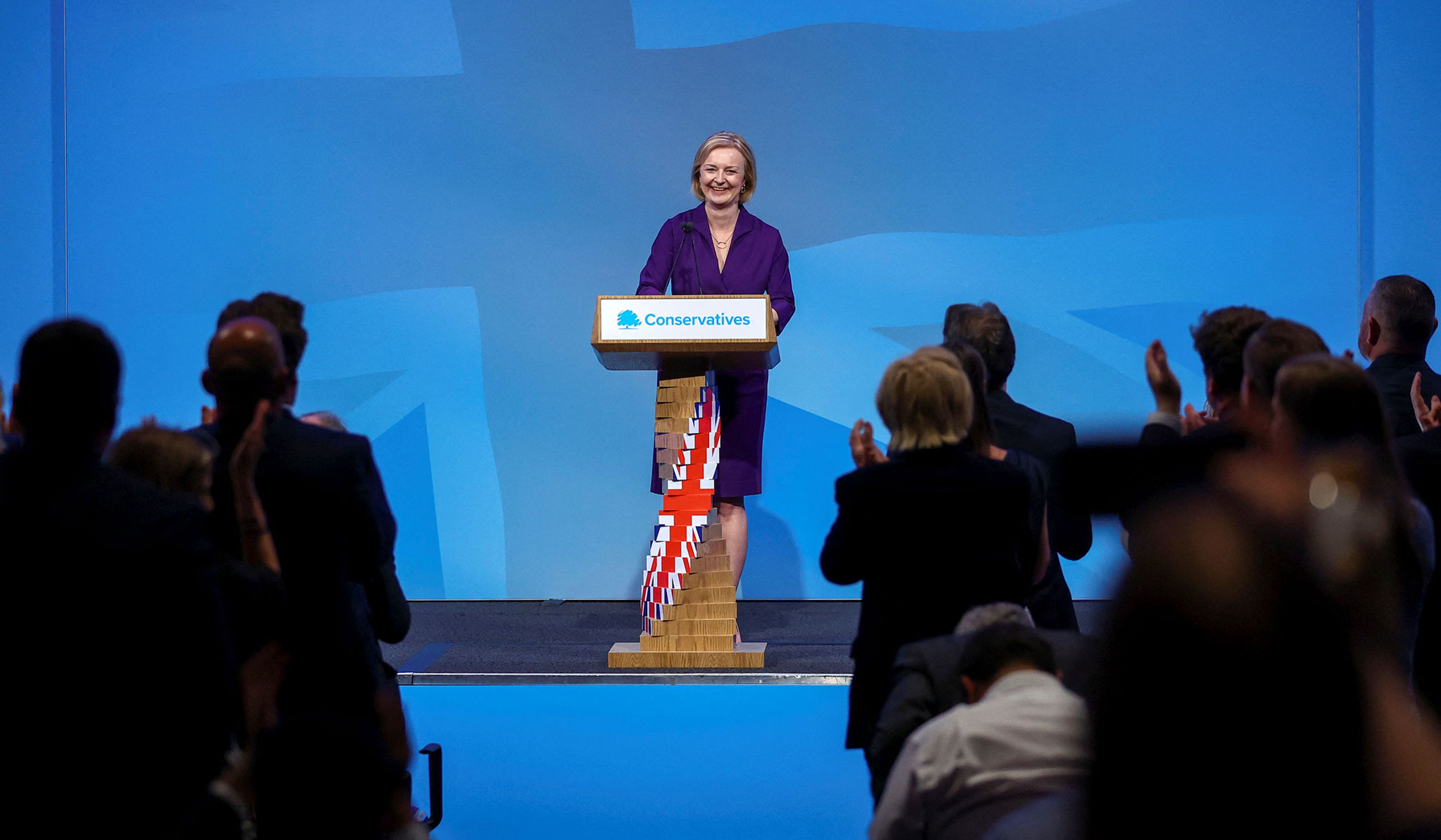
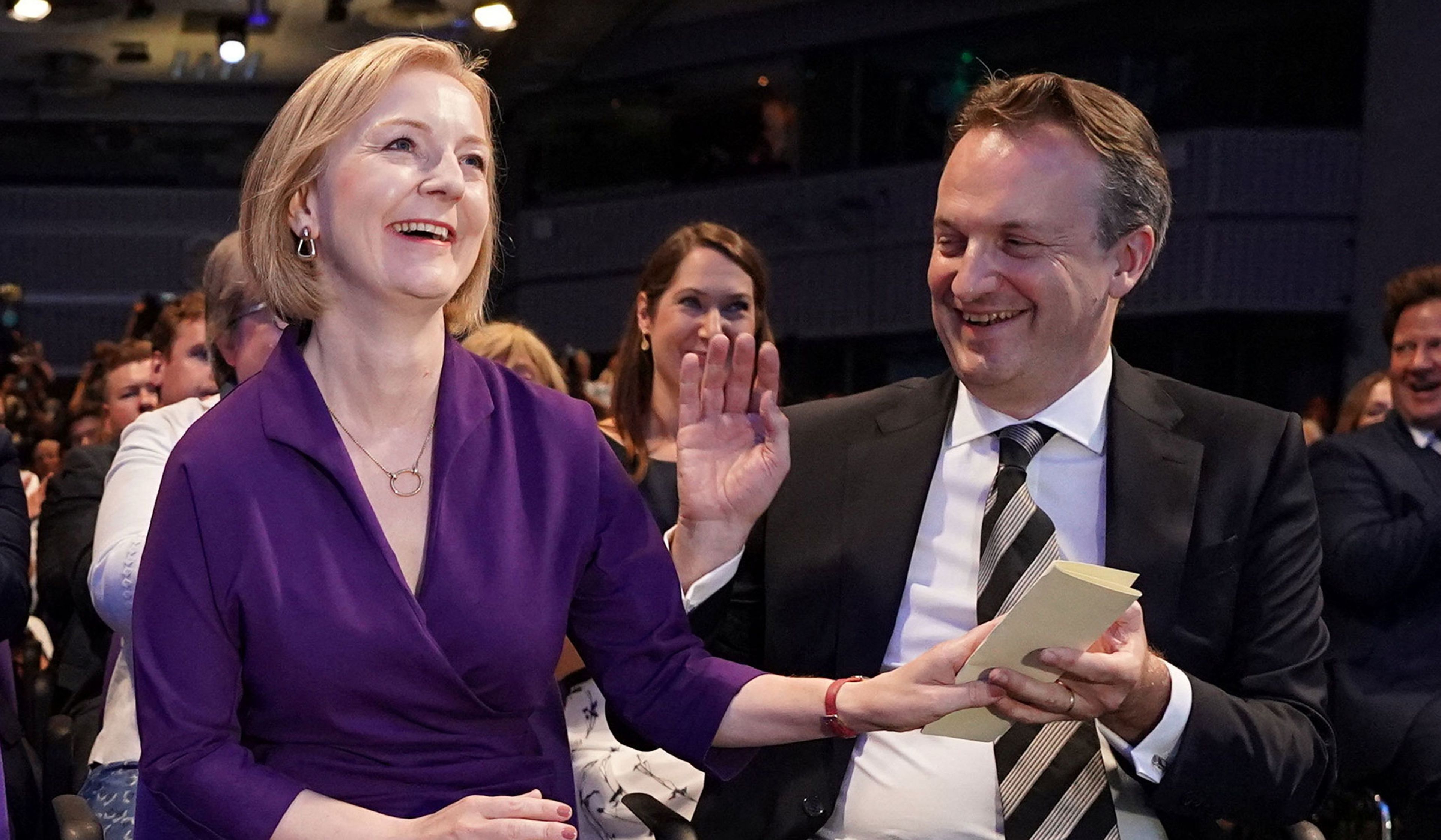
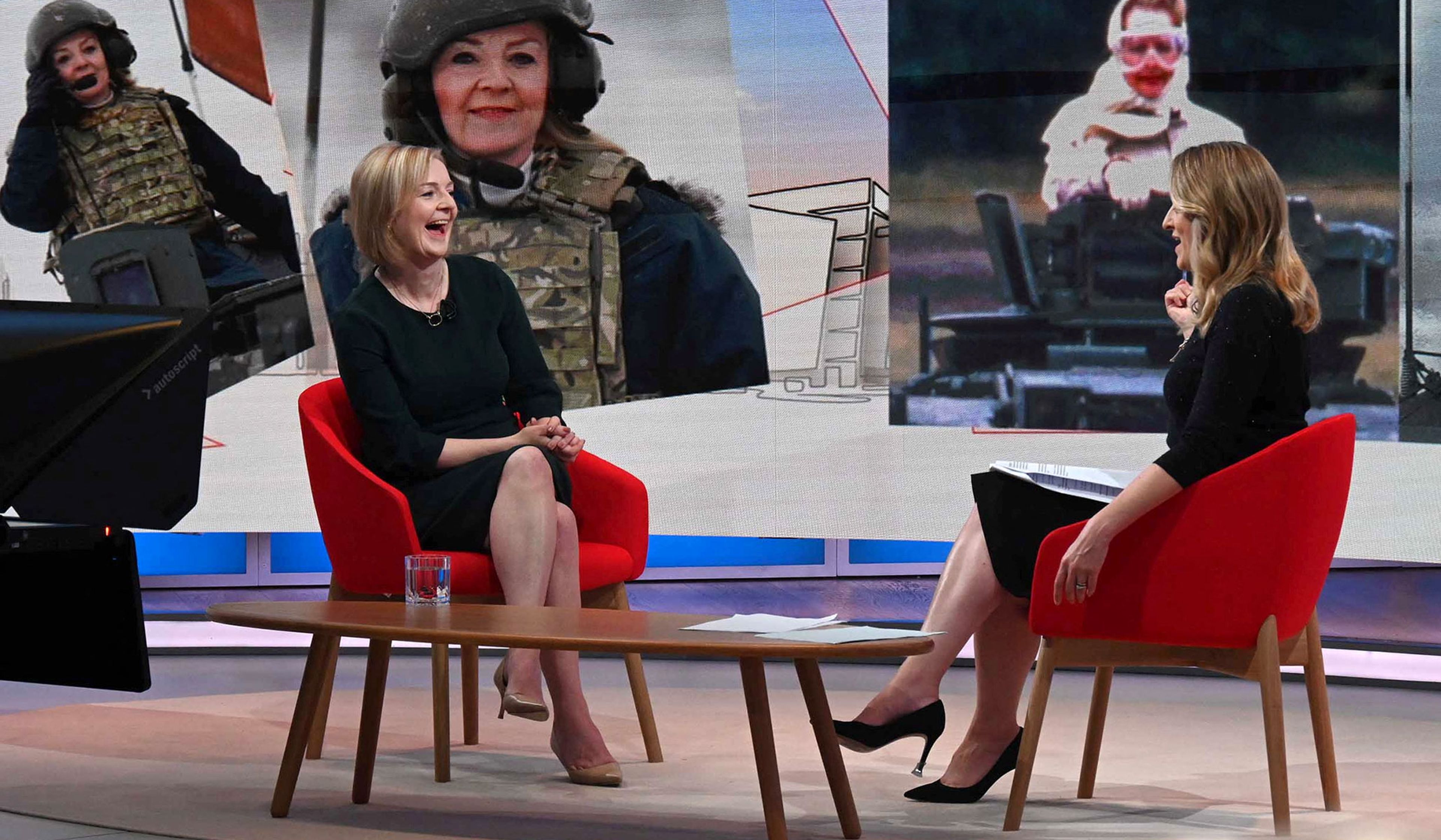
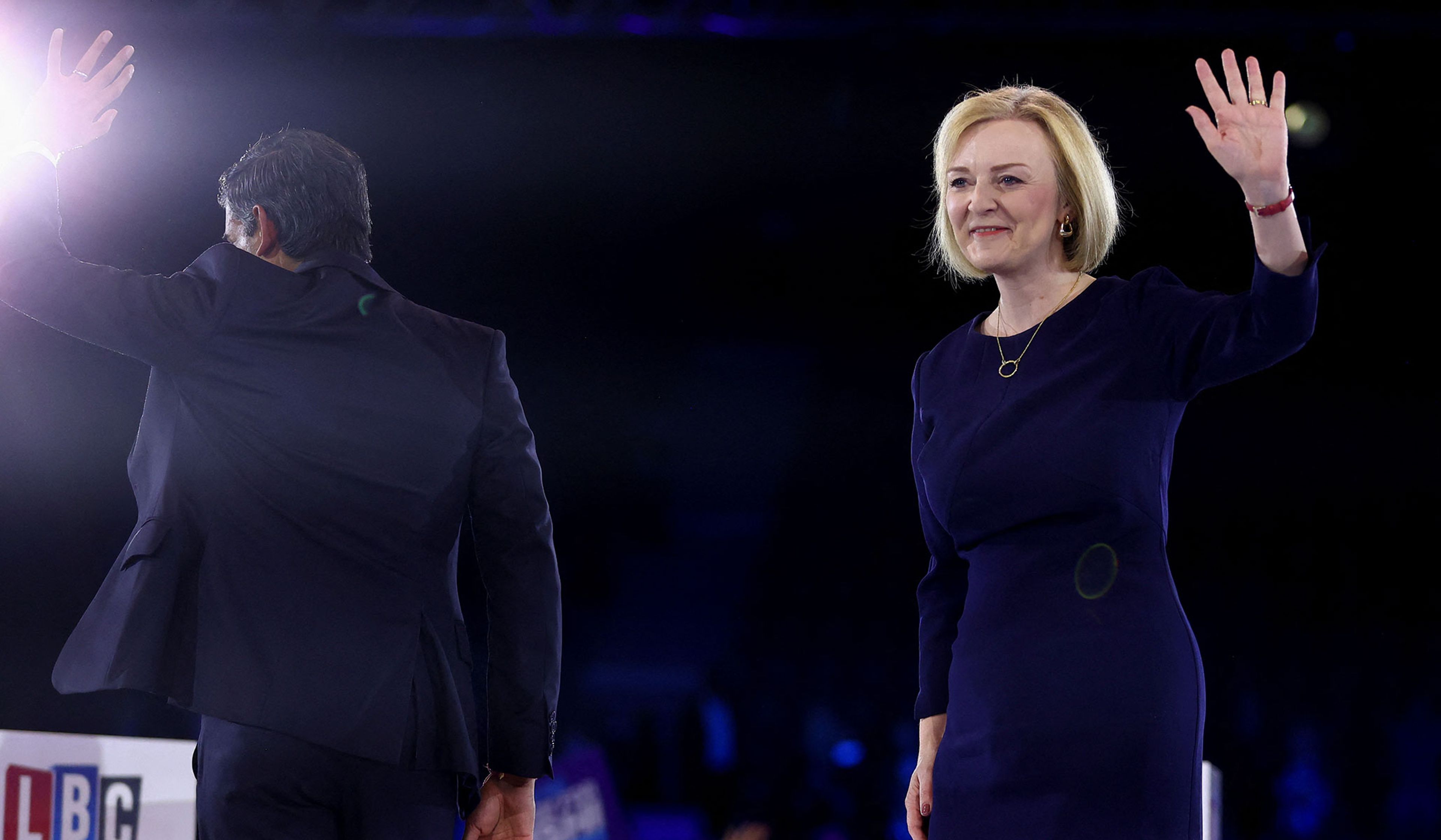
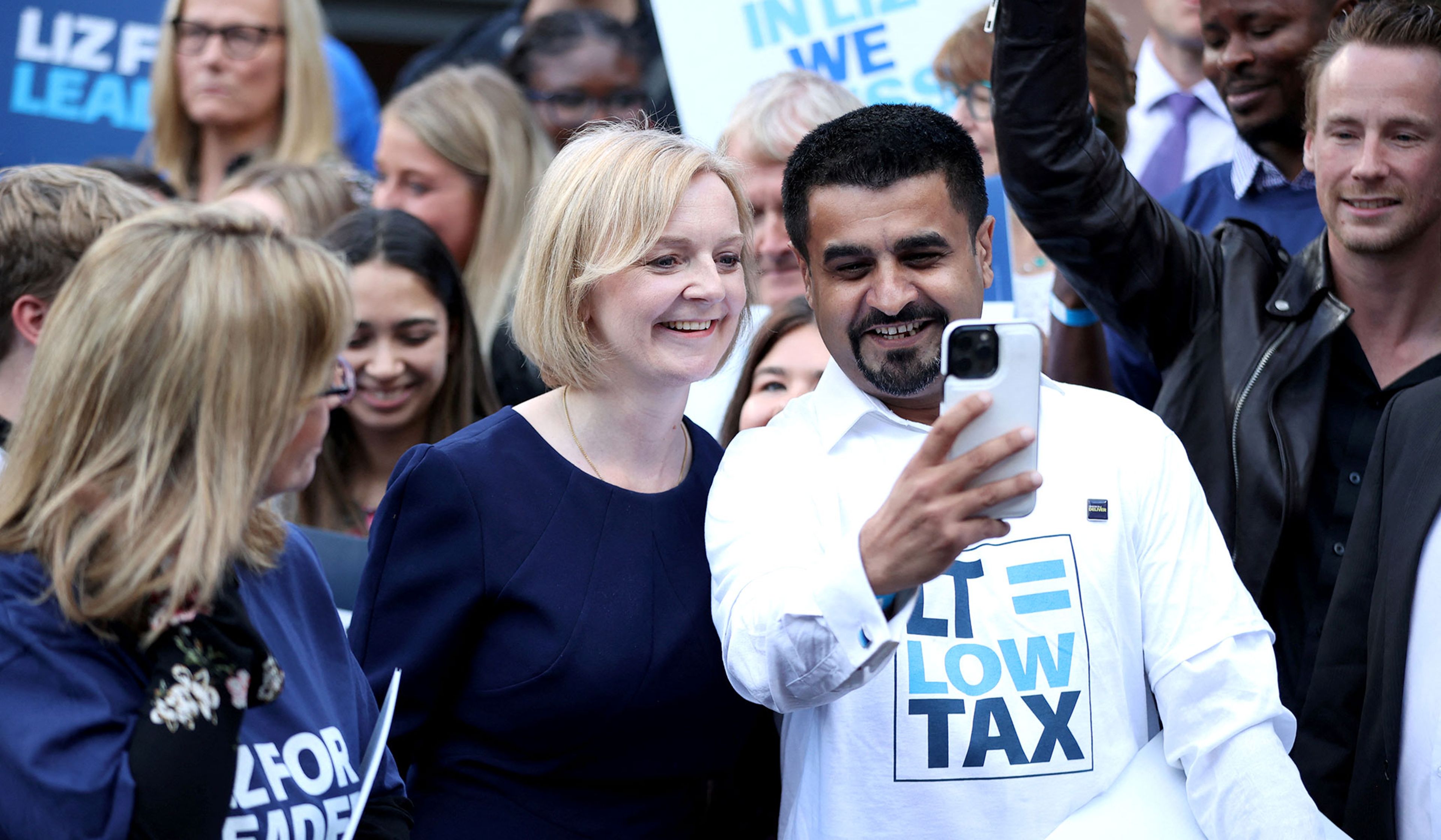
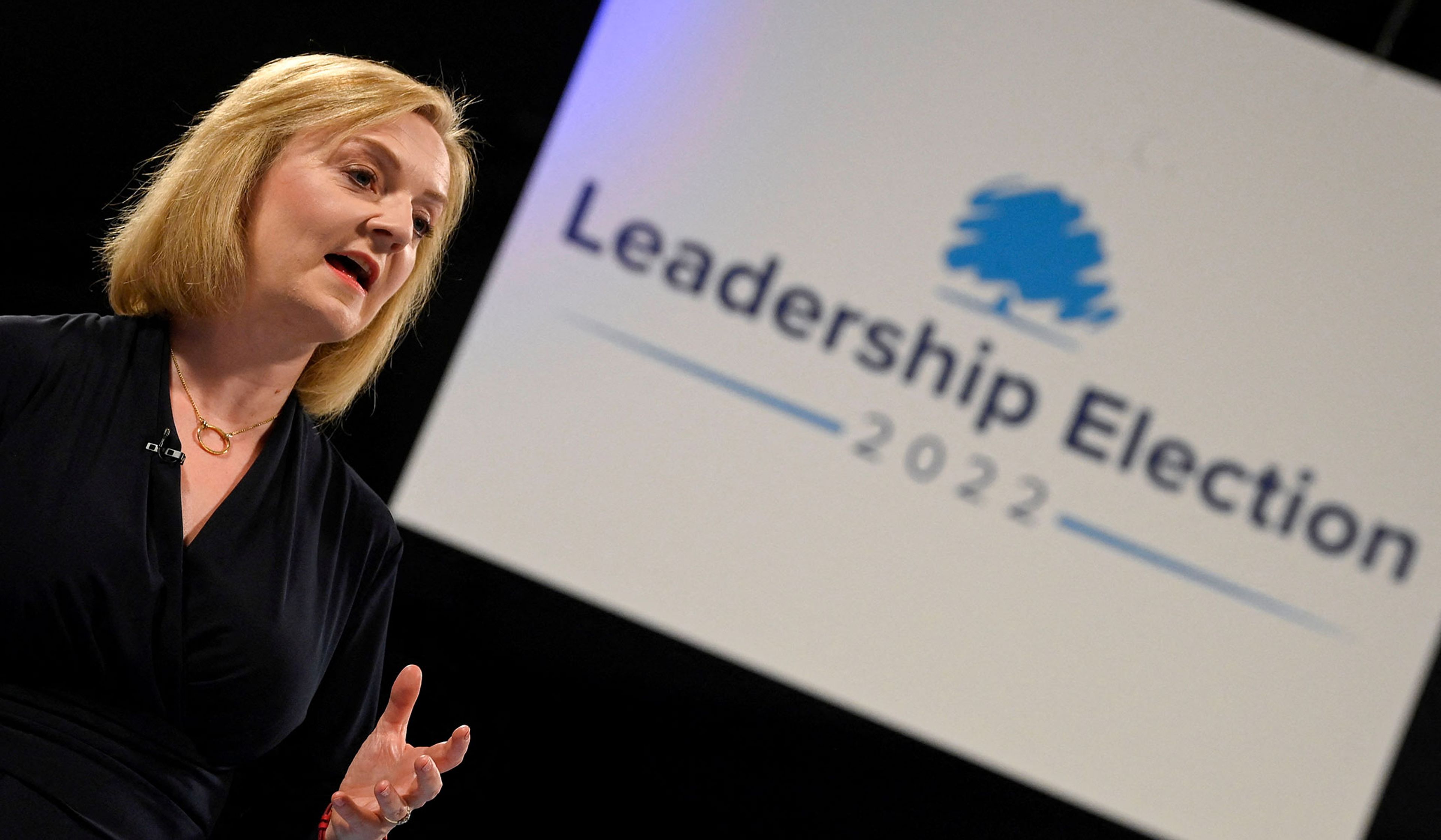
Liz Truss gestures outside the Conservative Party headquarters after being announced as Britain’s next Prime Minister in London, England, September 5, 2022.
Phil Noble/Reuters
“I campaigned as a conservative and will govern as a conservative,” Truss said during her victory speech, perhaps distancing herself from Boris Johnson’s notorious leftward lurch on the economy. And indeed, she immediately announced a rightward turn. “The way we will grow our economy is by attracting investment [and] keeping taxes low,” she said. She is lifting the ban on fracking and green-lighting oil and gas drilling in the North Sea, though it will take time for new wells to become operational. But Truss has not suggested cutting any of her predecessor’s spending plans. Moreover, her plan to “freeze” household energy bills would have Thatcher turning in her grave.
This controversial scheme is straight from Labour’s playbook. The idea is to cap the annual energy costs for households at £2,500. Politicians’ setting prices flies in the face of free-market principles. John Macdonald from the Adam Smith Institute warns that “the wrong policy” could drive the country “further into debt” and “push thousands of businesses into bankruptcy.” For instance, an energy cap would interfere with natural incentives. If prices are capped, people have no reason to ration use. The result could be blackouts.
Another problem is how this will be paid for. Truss’s scheme could cost upwards of £150 billion, adding 6 percent to the national debt. During her debut Prime Minister’s Questions, Labour Party leader Keir Starmer accused Truss of burdening the taxpayer rather than energy companies: “She knows that every single pound in excess profits she chooses not to tax is an extra pound on borrowing that working people will be forced to pay back for decades to come.” His suggestion — a windfall tax that would deter investment and worsen inflation — is no better. Still, he has a point. Former chancellor Philip Hammond said that “if the government contributes anything, the taxpayer will have to pay.”
Truss defended the measure by saying that “extraordinary times call for extraordinary measures.” This is what we’ve come to expect from a Conservative government willing to abandon its self-professed principles whenever convenient. If principles are to mean anything at all, then it is precisely during a crisis that they matter most.
Under recent leadership, the Tory Party has not been reliably conservative. There is little reason to think that Liz Truss will be any more reliable. The best that Britain’s right-wing leaders seem able to do is define themselves in opposition to what they are not. During PMQs, Starmer said to Truss that “there is nothing new about a Tory prime minister who when asked ‘Who pays?’ says: ‘It’s you, the working people of Britain.’” Truss shot back: “There is nothing new about a Labour leader who is calling for more tax rises. It is the same old, same old tax-and-spend.” This is the politicians in their comfort zones. It is also theater. There will be plenty of taxing down the line and plenty of spending today under Liz Truss.
Britain’s constitutional monarchy has changed dramatically in its thousand-year history. The queen may have been “head of state,” but all political and executive power lies in the elected parliament. Or at least it’s supposed to. While the monarchy has been letting go of power, during the pandemic Britain endured the worst ministerial overreach in its history. In the words of the former U.K. Supreme Court judge Jonathan Sumption, the state took “effective legal control, enforced by the police, over the personal lives of the entire population: where they could go, whom they could meet, what they could do even within their own homes.” All this under a “conservative” government.
Power corrupts and politics divides. Queen Elizabeth II upheld the British constitution and united the country using soft power only. As she said on her Christmas broadcast in 1957: “I cannot lead you into battle. I do not give you laws or administer justice. But I can do something else: I can give you my heart and my devotion to these old islands, and to all the peoples of our brotherhood of nations.” Sadly, heart and devotion are lacking in Whitehall. At 10 Downing Street, we will see what change brings.












Comments