Forever Wars Disagreement
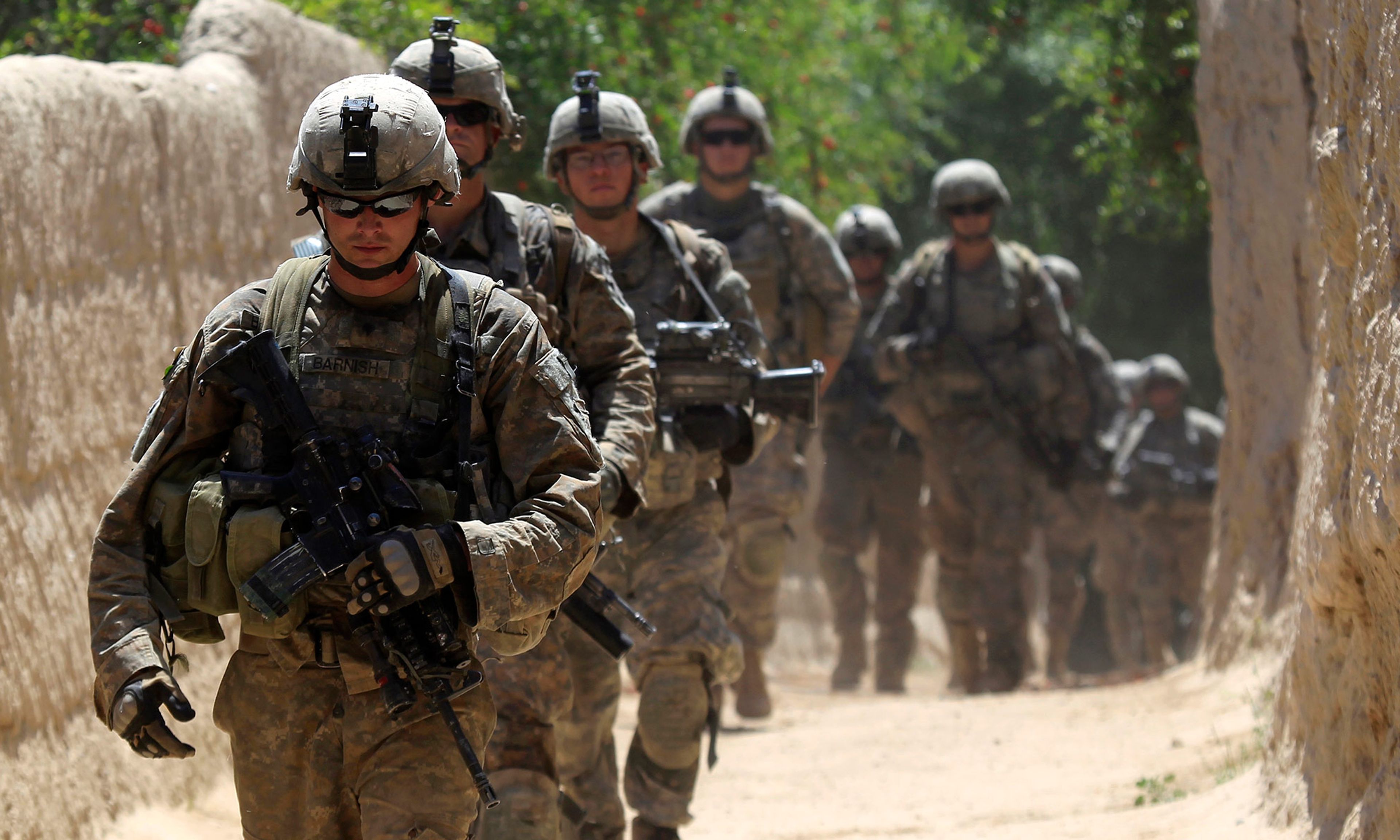
Noah Rothman’s contention (“The ‘Forever War’ Fallacy,” September 13) that the U.S. military footprint in Afghanistan was a “low-cost, high-reward” deployment couldn’t be further from the truth. The cost certainly wasn’t low for the tens of thousands of Afghans who were killed during the war. And it most certainly wasn’t low for U.S. troops either, over 2,440 of whom made the ultimate sacrifice on behalf of an Afghan government that was woefully inadequate to the task of surviving (let alone governing).
Could the U.S. have retained a presence on the ground? Theoretically, yes. But for what purpose – and to what end? Rothman fails to sufficiently explain why protecting a corrupt band of insular, out-of-touch Afghan politicians in perpetuity would be worth the cost of wasting more money and potentially sacrificing more American lives. At best, such a course would have bought the Afghan government a little more time, even as the foundations of the state continued to rot.
Afghanistan’s security situation will remain precarious after the departure of U.S. troops. The Taliban are now fully in control of Kabul and are unquestionably the dominant force on the ground. For some, this is an intolerable situation. But for those who argued in favor of withdrawal, what we found even more intolerable, even senseless, was maintaining a stalemate for stalemate’s sake, throwing more money into a failed $2 trillion state-building enterprise, and naïvely assuming that the U.S. military could force a helpless Afghan government to reform.
Extricating ourselves from an unwinnable civil war was the right decision. The alternative – sticking around – would have amounted to one more mistake on top of 20 years of poor foreign-policy judgment.
Daniel R. DePetris
Fellow, Defense Priorities New Rochelle, N.Y.
Noah Rothman responds: The central question before any rational policy-maker should always be, “Compared with what?” Was the cost of the Afghan War in lives paid by Afghans and NATO allies worth it? Was it valuable to compel aspiring jihadists to operate in Middle Eastern and North African nations where friendly governments allowed the U.S. to disrupt and deter those operations with only a modest footprint? Compared with what?
The “end” to which the combined forces of the world worked in Afghanistan was, quite simply, to prevent the Taliban and their al-Qaeda-aligned allies from returning to power. We abandoned that mission, and the Taliban are back in a form that is strikingly unchanged from their pre-9/11 iteration. Was that mission worth it? Compared with what? Unfortunately, we’ll learn soon enough.
Was “maintaining a stalemate” in Afghanistan worth it? Compared with a debacle that sacrificed America’s standing among its now vocally hostile allies in Europe, the sacrifice of tens of thousands of Afghan allies who foolishly trusted the U.S. to keep its word, and the abandonment of Americans to be used as bargaining chips for a cash-starved Taliban government? The answer should be blindingly obvious.
Compared with a sustainable mission with predictable partners on the ground, the present situation — one that “may very well deteriorate” further than it already has — is not a desirable outcome. And those of us who acknowledge that unmistakably manifest fact are not the people in this debate who are stubbornly beholden to their ideological commitments.











Comments