I’m pretty good at avoiding content I think will annoy my beliefs.
I don’t mean content that I think will challenge my beliefs. I’m still open to that, even seek it out sometimes. Try to at least. I’m sure I could be better.
But the odd lefty podcast I listen to or essay-length bit of devil’s advocacy I read is at least discursive. It’s about persuasion, making an argument.
Not every bit of worthwhile content has to be about that, of course. (Why yes, I am lowering the stakes for this column!) It’s perfectly fine to make things exclusively for people who are already sympathetic to your point of view, to make assertions with which you assume your reader already agrees.
It’s even fine to make this kind of content about points of view with which I am not sympathetic, to assume assertions with which I don’t agree. And it’s just that kind of content I’ve gotten really good at avoiding, lest it annoy my beliefs.
But sometimes my wife has the remote control.
And so it came to pass that I saw about 20 minutes of a bad new documentary about Woodstock ’99, the music festival held on the fifth anniversary of Woodstock ’94, the music festival held on the 25th anniversary of regular old Woodstock, the music festival.
I’d heard from a couple of people who had seen the bad documentary that it was bad. Bad mostly because it was anachronistic and thus off-key, more preoccupied with 2021 political etiquette than with evoking its 1999 subject matter.
And the 20 minutes I saw certainly bore out this critique. It had to do with what you might call “the Boobs of Woodstock ’99.” “Boobs” in both senses. Boobs as in women’s breasts. And boobs as in the oafs and dolts and philistines who spent Woodstock ’99 ogling and molesting them.
I was 15 or so in 1999, and I remember that sexual assaults were an issue at the Woodstock show. Specifically I remember MTV News reports that women crowd-surfing or just standing there were often subject to being forcibly disrobed and groped.
This was obviously very bad, and the documentary presents some evidence that some of the people at Woodstock ’99 knew at the time it was bad. In particular, the punk singer Dexter Holland, frontman of the Offspring, is shown telling the crowd that this behavior is completely unacceptable and that any decent person who witnesses it should intercede. And good on him.
In addition to having written songs like “Pretty Fly (for a White Guy),” Dexter Holland has, believe it or not, a Ph.D. in molecular biology. But it doesn’t take a molecular biologist to know that molesting girls at concerts is wrong.
The documentary goes quite a bit further, though, with righteous and rambling digressions on the intrinsic misogyny of the festival and the reactionary ’90s culture that produced it (reactionary! the ’90s!), which we’re told laundered new ways of objectifying women by, among other things, mainstreaming pornography.
You might agree with these additional takes or you might not, but the documentary shows shockingly little evidence that any of the people interviewed about Woodstock ’99 (most of whom were there) held them at the time, or even five minutes ago.
Instead we’re asked to just take their word for it that they’re very enlightened and have all and only the beliefs they’re supposed to have at just this moment and none of the ones they aren’t. Oh, and we’re asked to take their word for it while being shown pair after naked pair of boobs, from archival concert footage.
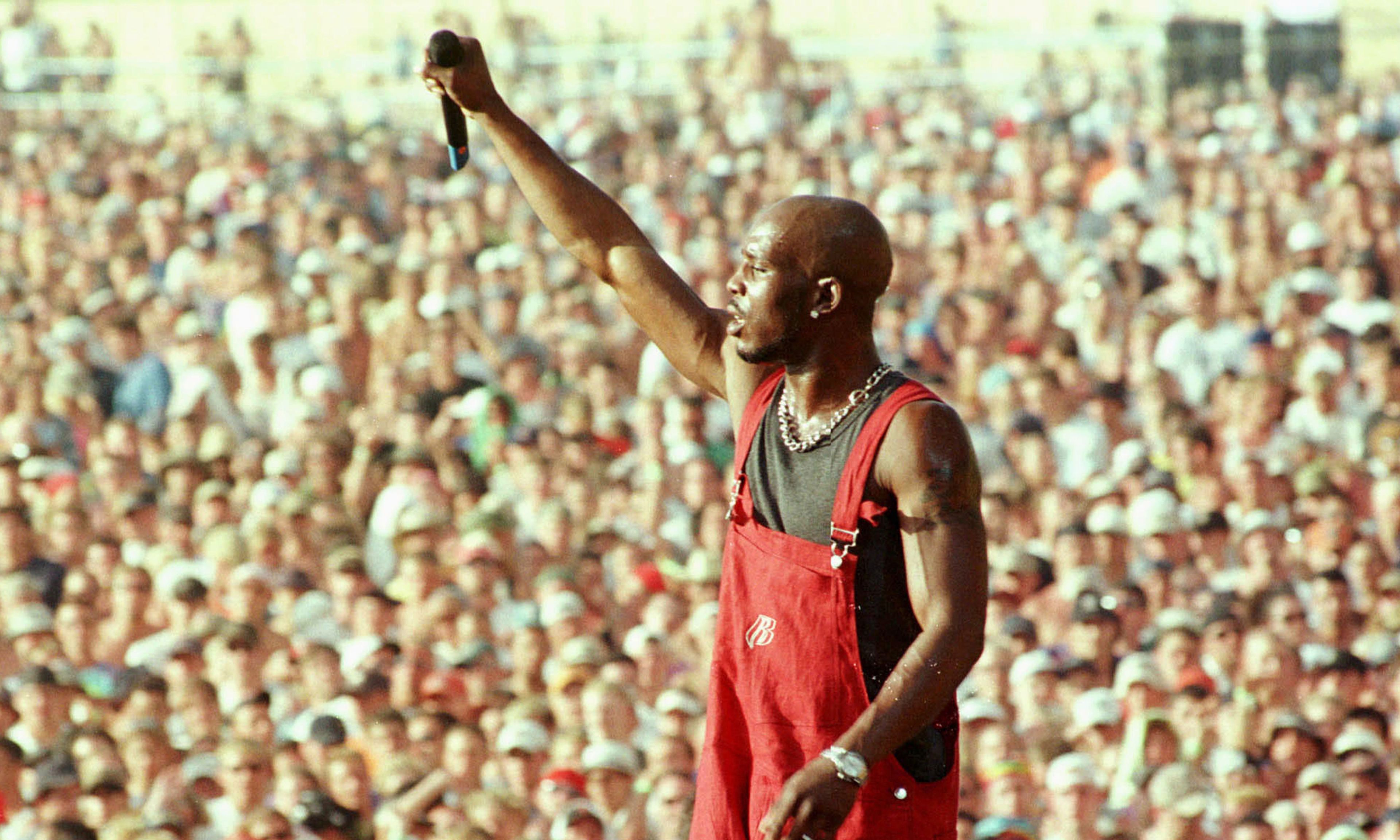
I didn’t see the whole thing, admittedly, but similarly just-so diagnoses popped up in the two other sections I caught. In one, we’re told how racist it was for an overwhelmingly white audience to have sung along with racial slurs in the lyrics of the late rapper DMX during his Woodstock set, by overwhelmingly white commentators who absolutely used to sing along with racial slurs in the lyrics of the late rapper DMX.
In the other, we see footage of the Woodstock crowd descend into riotous destruction, tearing down scaffolding and doling out concussions after the band Limp Bizkit comes on stage baring double middle fingers, screaming “F*** you” at the audience, and commanding it to “break some sh**!”
Smash cut to the same commentators: “It’d be too easy to blame the artists . . .”
A better question, they insist, is why were there so many angry young white men in the audience that day in the first place? (Humble suggestion: Because they were watching Limp Bizkit?)
This extremely convenient revisionism is fitting for a documentary produced by Bill Simmons, the sports and pop-culture publishing mogul who recently endured a number of struggle sessions, instigated by current and former employees, regarding his own insufficient wokeness.
And it’s fitting for a cultural situation like ours, in which not just your public actions but your private thoughts, and not just your present disposition but the sins of your youth, can cost you massive amounts of cultural capital — and sometimes more.
But it’s a little much to ask me to look at the haggard, bloated, piercing-and-tattoo-festooned assemblage of Woodstock ’99 attendees and performers interviewed by the documentarians and think, wouldn’t you know it, these were the secret Intersectionalists at Woodstock ’99! These lily-white Xers and Boomers, these were the Allies, the Anti-racists hidden in plain sight! Now, only now, their story can be told!
Or maybe the kind of people who went to Woodstock ’99 then, and are so eager to disavow it now, are the same kind of people who used to watch Hugh Hefner’s reality show and read think pieces in Maxim and quote edgy Dave Chappelle bits to their friends, and who told us that a POTUS seducing an underling in the Oval was no big deal, so Move On Dot Org.
And maybe they’ve lived long enough to see the ’90s declared anathema and don’t want to be anathematized themselves.
Hey, I sympathize. More and more of the past is becoming reactionary, unusable, and unfit for anybody to have lived through.












Comments