As campaigns for the 2024 election season heat up, various economic subjects are likely to gain emphasis in politicians’ appeals to voter angst about pocketbook matters. The Biden campaign has opted to go all in on a slogan of “Bidenomics” (call it bold). Republicans have understandably made the high inflation of 2021 and 2022 a major talking point, believing that higher prices at the pump, at the grocery store, and in monthly utility bills will be a liability to the party in charge. It didn’t play out that way in the 2022 midterm elections, but a presidential race puts the voters’ focus on economic issues more than a congressional race does.
I am skeptical, nonetheless, that it is wise to make inflation one’s sole economic message when the underlying reality is a rather violent disinflation. Prices are higher than when President Biden took office, and his reckless 2021 spending bill should be a political liability. But inflation packs a bigger punch when its growth rate is still increasing, not when it is collapsing, as it is now. The year-over-year Consumer Price Index peaked at 9.1 percent in June 2022, and the most recent reading, for June 2023, came in at just 3 percent. That number is deceiving, with two to three percentage points attributable to a highly dubious calculation of “shelter” price inflation (the increase in what a household pays for a primary residence), which is subject to a notorious lag effect (since leases signed months ago do not capture current market reality).
Whatever one believes about the causes of the 2022 inflation, the economic drama of it is in the rearview mirror, with only idiosyncratic pockets warranting headlines at this point. I myself think inflation is headed back down to around 2 percent and that the 2022 spike was almost entirely attributable to the shutdown of production caused by Covid lockdowns. Demand surged when the economy reopened, but goods, services, and labor to meet that demand were lacking until the supply chain caught up. Some areas of the economy were more sensitive to interest rates than others (housing being the best example), and reckless amounts of government transfer payments in the Covid moment added sugar highs to demand, but structurally we had a supply-deficiency inflation that the economy has now largely corrected.
What has not been corrected is the U.S. economy’s prolonged stagnation. That is the real economic story, and it ought to serve as the primary economic-agenda issue of the Right for years to come.
The U.S. economy has grown at an average annual rate of 3.1 percent, net of inflation, since World War II. There were recessions along the way, but real growth above 3 percent had been the norm in American economic life for decades, and wage increases, job creation, and corporate profits were monumental. But ever since the country suffered its Great Financial Crisis of 2008, real GDP growth has been halved.
From 2010 until the Covid year of 2020, there was not a single year of negative real GDP growth — there was no recession or even mini-recession to damage the data — and from 2010 through 2013, we were even in post-crisis recovery years, traditionally among the most robust for GDP growth owing to a “rebound” factor. And yet, alas, for 15 years now, the U.S. economy has averaged precisely half of its post-war real GDP-growth rate: just 1.6 percent net of inflation per year. Furthermore, not a single year in this period reached the 70-year average level of 3.1 percent, except 2021, when Covid reopenings pushed the number cosmetically higher but mostly made up for a huge lockdown-induced contraction the year before. Altogether the 2020–21 period averaged 1.6 percent annual growth — exactly the same as the decade prior to Covid. It is surreal to think of 2018 and its 2.95 percent real GDP growth as the high-water mark of the post-financial-crisis era. Fresh off the Trump tax cuts, a fair amount of domestic investment following the repatriation of foreign profits, accelerated expensing and bonus depreciation for various business expenditures, and a surge in business optimism after various 2017 economic-policy implementations, we got up to a 2.95 percent growth rate — for one year!
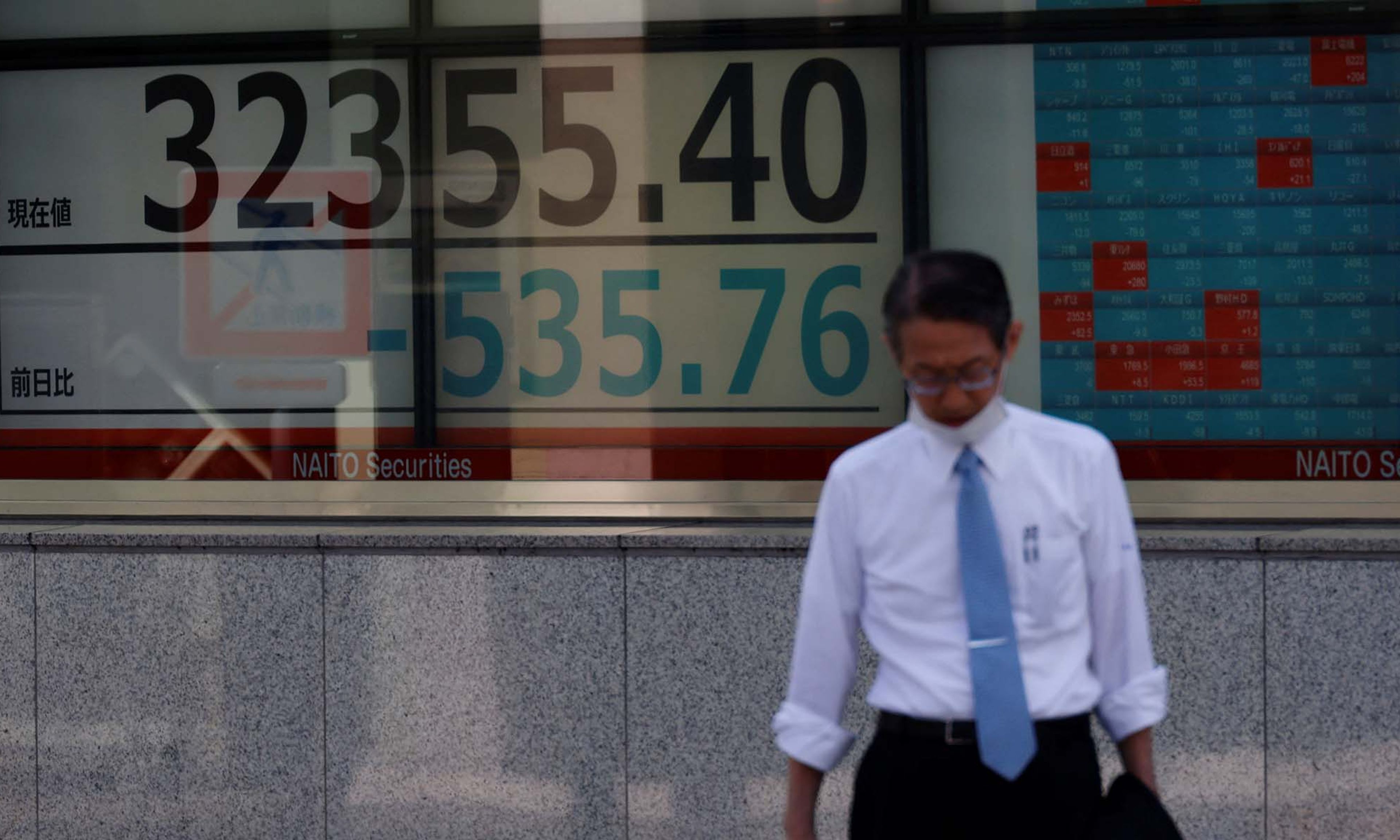
The lack of a recession in the postcrisis period has distracted us from the most significant economic story of our lifetimes — that American economic growth is stagnating before our very eyes and in a truly secular and embedded sense. Unlike a jolt of economic change or an idiosyncratic event such as Covid, the last 15 years have seemingly become a “new normal,” with depressing implications for the future. Many economic bears look to depressions, recessions, and significant episodes of distress as their markers, but the new U.S. economic story has become something altogether different — and in many ways worse. It has become Japan.
Now, Japan’s real GDP growth has certainly been worse than that of the U.S., averaging just over 0.5 percent for the last 25 years. This near-complete lack of growth has been accompanied by a diminishment in Japan’s global competitiveness and a flatlining of quality of life for Japanese citizens. The 1980s narrative of Japanese ascendancy was violently reversed in the 1990s, and three decades of stagnation ensued. But the sequence of events that played out in Japan is quite simple to describe, and it bears striking resemblance to what the United States is suffering through now.
The asset bubble that was Japan in the 1980s burst, forming a debt–deflation spiral. (Attempts to pay down debt make matters worse as asset prices drop at a faster rate than debt can be paid down.) The government instituted great Keynesian antidotes to stem the bleeding, inviting both fiscal spending to stimulate demand and monetary stimulus to soften the pain. As more government spending led to greater debt, fewer resources were available for capital investment, confidence collapsed, and the drag on growth became a self-reinforcing challenge: The drag necessitated more debt, which made the drag worse.
The debt-to-GDP ratio in Japan is over 225 percent, a figure so shocking that only desensitization keeps us from appreciating its horror. To service this ghastly debt accumulation, Japan has used every monetary-policy tool in the box — from 0 percent and even negative interest rates to massive bond-buying on the central bank’s balance sheet (affectionately termed “quantitative easing” here in the United States) to yield-curve control (whereby the central bank sets various target rates across the yield curve and interferes in the bond market to hit those targets). The Bank of Japan now owns over 50 percent of Japan’s bond market, a market that, by the way, yields about 0 percent (suffice it to say, it exists to serve the needs of the borrower, itself, but not the needs of its lender, also itself).
The negative-feedback loop of treating economic contraction with fiscal and monetary stimulus that essentially forces more economic contraction is what I refer to as “Japanification.” A more crude description is “hair of the dog” economics, whereby the ongoing supply of booze keeps the patient from feeling the harshest level of hangover yet precludes any possibility of recovery and health. It is a vicious cycle, yet one without a dramatic moment of collapse.
The American economy is, with its entrepreneurial DNA, a juggernaut. One would have to try very hard to interrupt our capacity for growth — and try hard we have. Our own debt-to-GDP ratio was 36 percent in 2006 and sits at 110 percent now (calculated using federal debt held by the public and excluding intergovernmental debt burdens). We run $1 trillion deficits and have done so for most of the last 15 peacetime years. Why is this not stimulating more economic growth? Why is there no Keynesian multiplier effect adding to aggregate demand? Why did the Fed’s decade of easy monetary policy not result in tremendous economic gains? Because the U.S. has mired itself in a Japan-like problem of diminishing returns.
As a basic algebraic identity, excessive debt has crowded out productive investment. Savings equals investment. More debt means less savings. Reduced savings, therefore, means less investment. And less investment means less productivity. To make all these matters worse, the downward pressure on growth that this dynamic creates is treated with . . . more of the same. Absurdly accommodative monetary policy (interest rates well below the natural rate and massive interventions in the yield curve via bond-buying through quantitative easing) distort asset prices, cause malinvestment, enable zombie companies to stay alive when their demise would redirect resources to more-efficient use, and disincentivize productive investment. This last point is key. Why take the risk of investing in new factories, technologies, and projects when artificially low rates mean you can achieve your desired returns just by purchasing more assets like your current ones with borrowed money? The desire to stimulate with monetary policy destroys innovation. Rinse and repeat.
What has happened to growth in the American economy is really not up for debate. We are living at half of our post–World War II trend line, which has become an embedded status quo. We have $32 trillion of national debt and are apathetic about that figure’s ascent toward $50 trillion by the end of the decade. Our central bank still has some semblance of political autonomy, unlike the Bank of Japan, yet that façade is damaged at each crisis point. The central bank’s policy tools are wildly experimental, lack any humility or acknowledgment of trade-offs, and serve to distort price discovery.
This Japanification portends not an economic doomsday but rather — as the great economist Lacy Hunt has said, alluding to T. S. Eliot — a way for the world to end not with a bang but a whimper. The antidote to Japanification is a government that lives within its means, which itself requires the voting public to live within its means. It involves the recovery of a growth mind-set that prizes aspiration and risk-taking and allows for failure. It must repudiate the central planning of heavy fiscal and monetary interventions that obfuscate economic normalization and recovery and delay the need to sober up.
Two years of falsely claiming that “the economy is too hot” have come to an end. The economy is suffering stagnation because we are overly indebted and our policy tools, used to excess, have lost efficacy. Reversing Japanification will not happen without pain. But the alternative will hurt much more.







Comments