In one of his earliest acts as a declared candidate for president, Joe Biden promised Americans that he would “end the forever wars in Afghanistan and the Middle East.” In this, he echoed Donald Trump’s pledge to end “the era of endless wars” by withdrawing Americans from “ancient conflicts in faraway lands that many people have not even heard of.” Both presidents tapped into a populistic impulse among voters and their interpreters in the punditocracy who want nothing more than for the United States to declare the nation’s overseas commitments won and done.
In Afghanistan, the demagogues who wanted to see an end to America’s “forever wars,” regardless of the consequences, got their wish. It has been a disaster arguably without parallel.
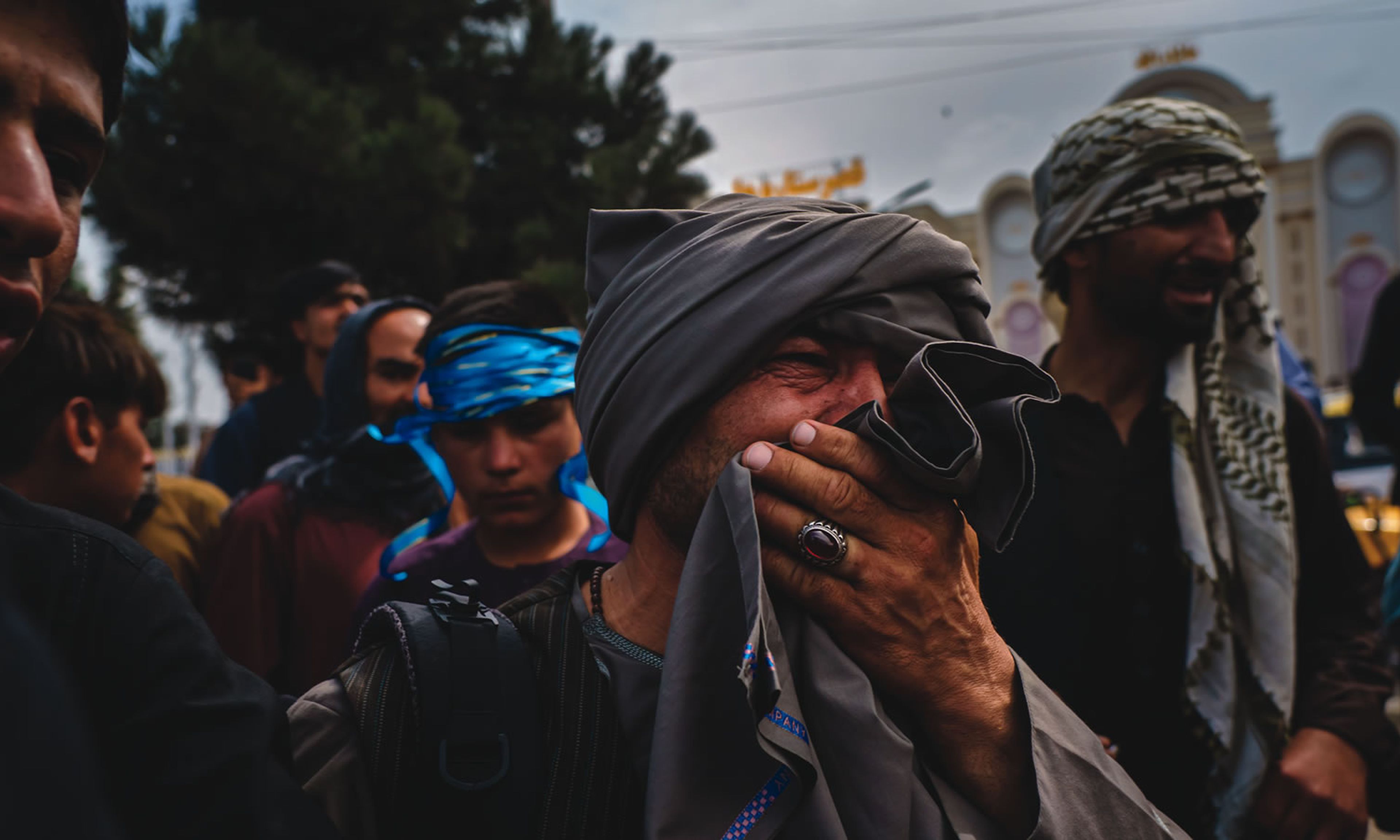
As a result of our withdrawal of America’s roughly 2,500 troops and the approximately 7,000 NATO member-state forces in Afghanistan, we have seen more war, not less. The Taliban’s offensive, the collapse of the Afghan government, and the resulting humanitarian catastrophe at Kabul’s airport — the only remaining site from which Westerners and the Afghan civilians who worked with them could be exfiltrated — looked more like a war than anything American audiences had seen in Afghanistan for years.
To stave off an unmitigated disaster, the pullout necessitated the deployment of more troops to an overseas conflict, not fewer. Just to defend the airport, the United States hastily committed two and a half times the number of forces previously stationed in Afghanistan — a force far larger than the one that had deterred the Taliban from mounting the kind of offensive operations they undertook this summer.
Withdrawal has not ushered in a new era of revitalized American leadership. Just the opposite. It has delivered an abject humiliation for the United States and inspired a revolt of our closest allies. The chairman of the German parliament’s foreign-relations committee called Biden’s blunder “a serious and far-reaching miscalculation.” His British counterpart deemed the president’s actions “shameful,” and Parliament held Biden in contempt. French president Emmanuel Macron castigated Biden for sacrificing his “moral responsibility” not to “abandon” the Afghan people — a rebuke the Biden White House sheepishly scrubbed from its official readout of their conversation.
And, most importantly, the pullout has made America less safe. America’s near-peer competitors in Beijing and Moscow, both of which have demonstrated a willingness to court international opprobrium by reasserting claims on territory they covet, are emboldened. They are using the Afghan pullout to demoralize America’s partners in strategically vital parts of the world, including the Baltics, Central Asia, and the Taiwan Strait.
Perhaps most imminently, the Islamist terror threat has been reinvigorated by America’s defeat in Afghanistan. “There is no question that they will provide a safe haven for al-Qaeda,” Barack Obama’s CIA director Leon Panetta recently warned of the reinstated Taliban-led government. Intelligence agencies around the world have indicated that jihadist chatter is spiking, and the chairman of the Joint Chiefs of Staff has said the time frame in which he expects terror threats emanating from Afghanistan to mature has accelerated. As of this writing, American forces are evacuating civilians from the airport in Kabul with the Taliban-backed Haqqani network — a U.S. State Department–designated terrorist outfit that is closely allied with al-Qaeda — providing for our “security.”
Other than that, America’s latest experiment with retrenchment is going great.
The fig leaf to which Joe Biden and like-minded supporters of American retreat from the world stage still cling is that all of this was inevitable. “American troops cannot and should not be fighting in a war and dying in a war that Afghan forces are not willing to fight for themselves,” the president insisted, a shameful slander of the Afghans who fought and died for their country — indeed, who continue to fight alongside Western forces as we scramble to evacuate our own. “The evacuation of thousands of people from Kabul is going to be hard and painful, no matter when it started, when we began,” Biden later added, contradicting his earlier assurances that Americans would not be confronted with Saigon-like images punctuating their nation’s disgrace.
Biden’s case that our humiliation was unavoidable doesn’t have just Democratic heads nodding along. The Right’s more isolationist elements appear to agree. “It’s time for a late-stage empire to come home and rebuild itself as a durable and functioning nation-state,” Newsweek opinion editor Josh Hammer insisted. “True, the Taliban takeover was inevitable,” The American Conservative’s Rod Dreher agreed, “and we had to get out.” And, some prominent Trumpian figures on the right maintain, at least the Taliban has values. “Why did the Taliban win?” Fox News Channel host Tucker Carlson asked. He answered his own question by insisting that, like himself, the Afghan people “rejected what our leaders were selling” them: e.g., the “grotesque” “neoliberal program.” It turns out, Carlson added, Afghans “don’t hate their own masculinity. They don’t think it’s toxic. They like the patriarchy. Some of their women like it, too. So, now they’re getting it all back.”
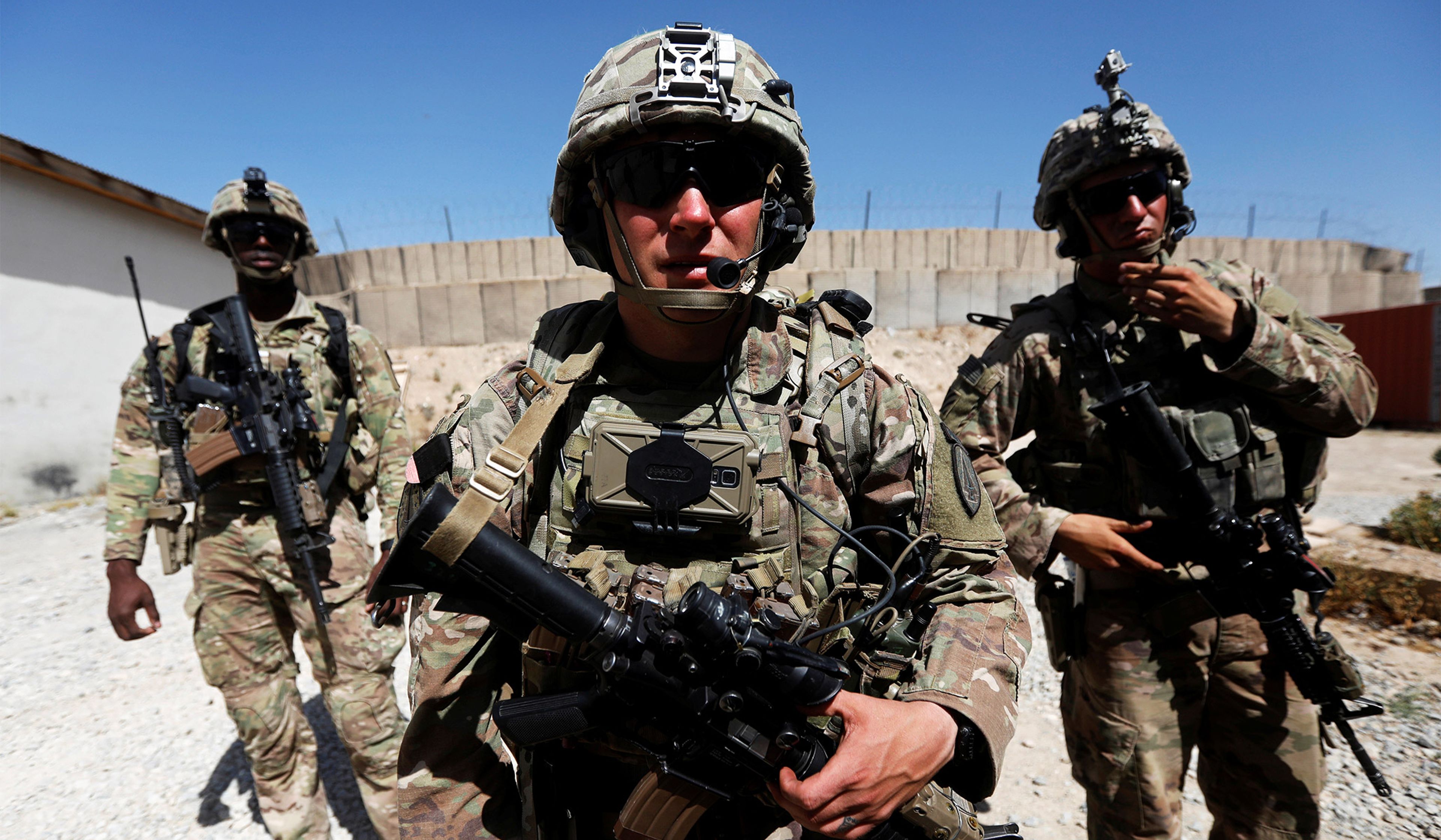
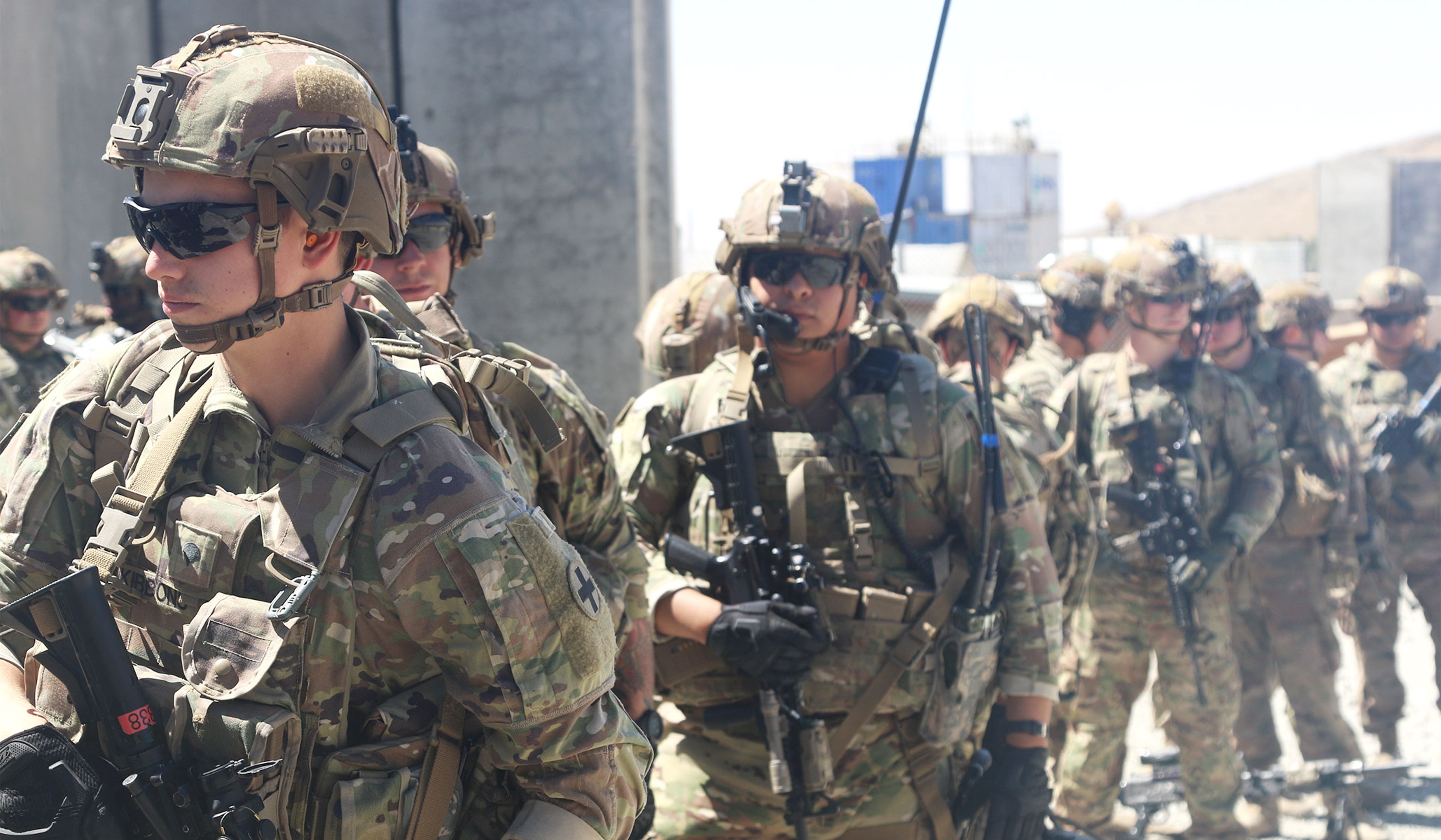
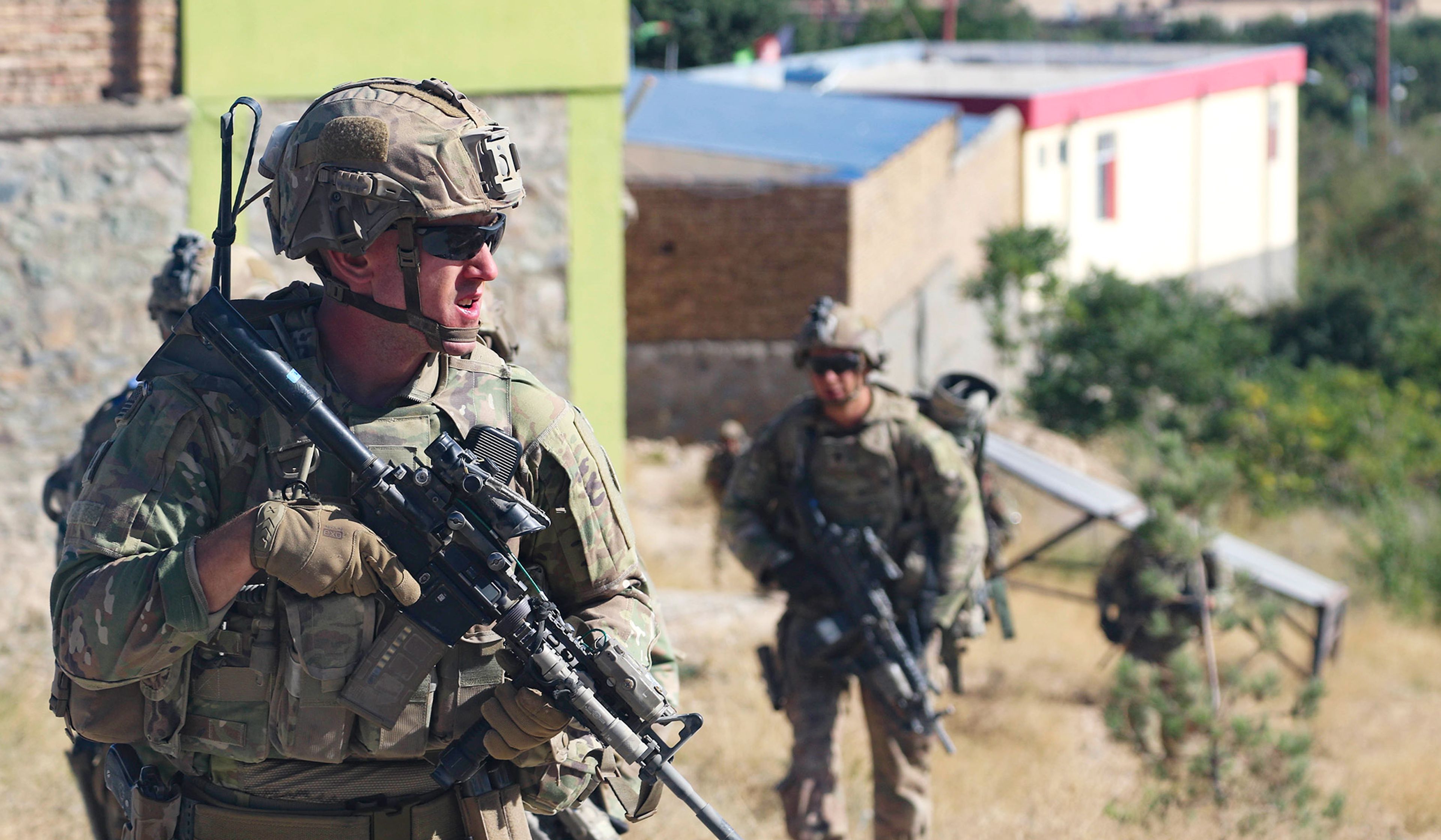
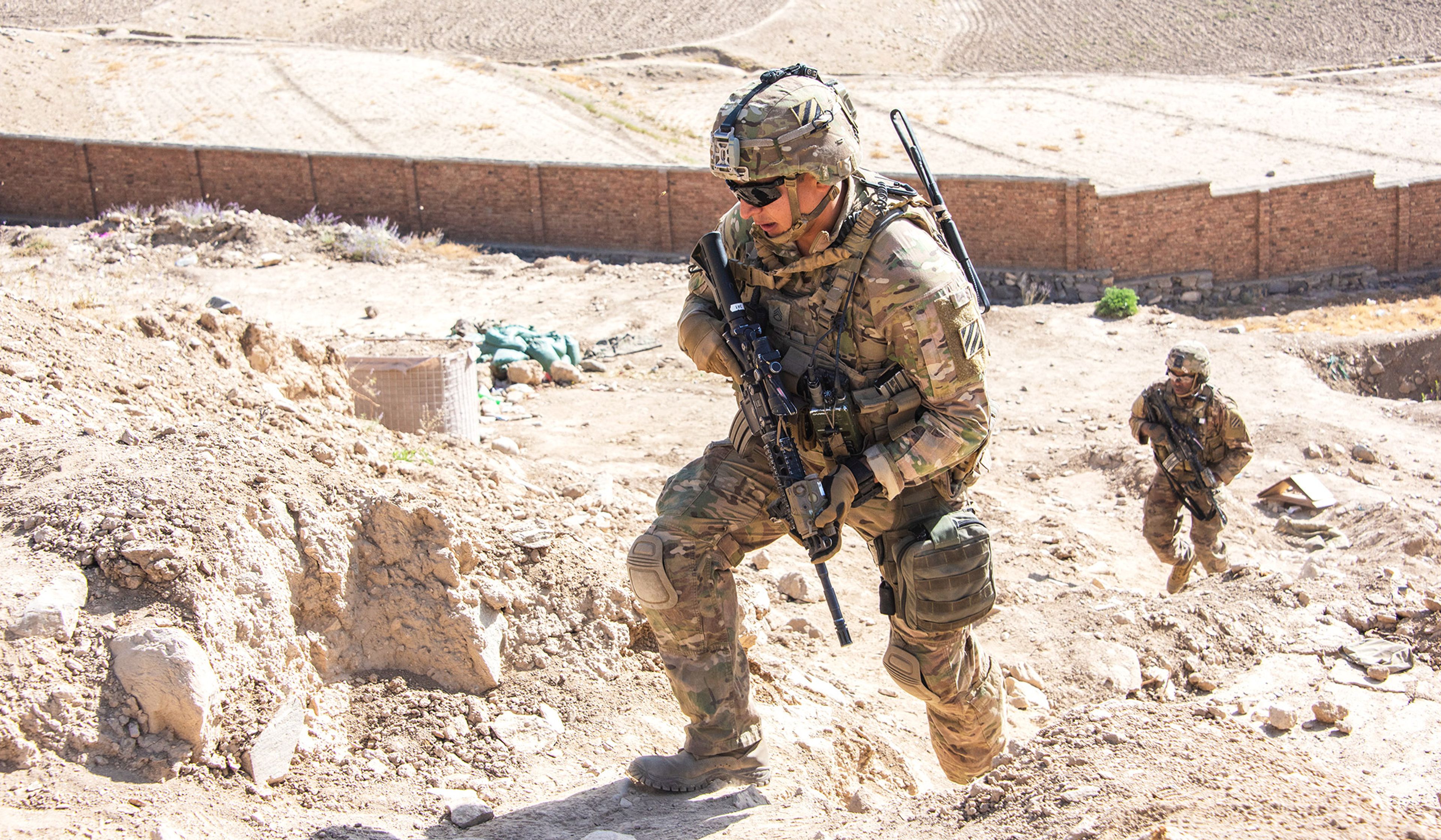
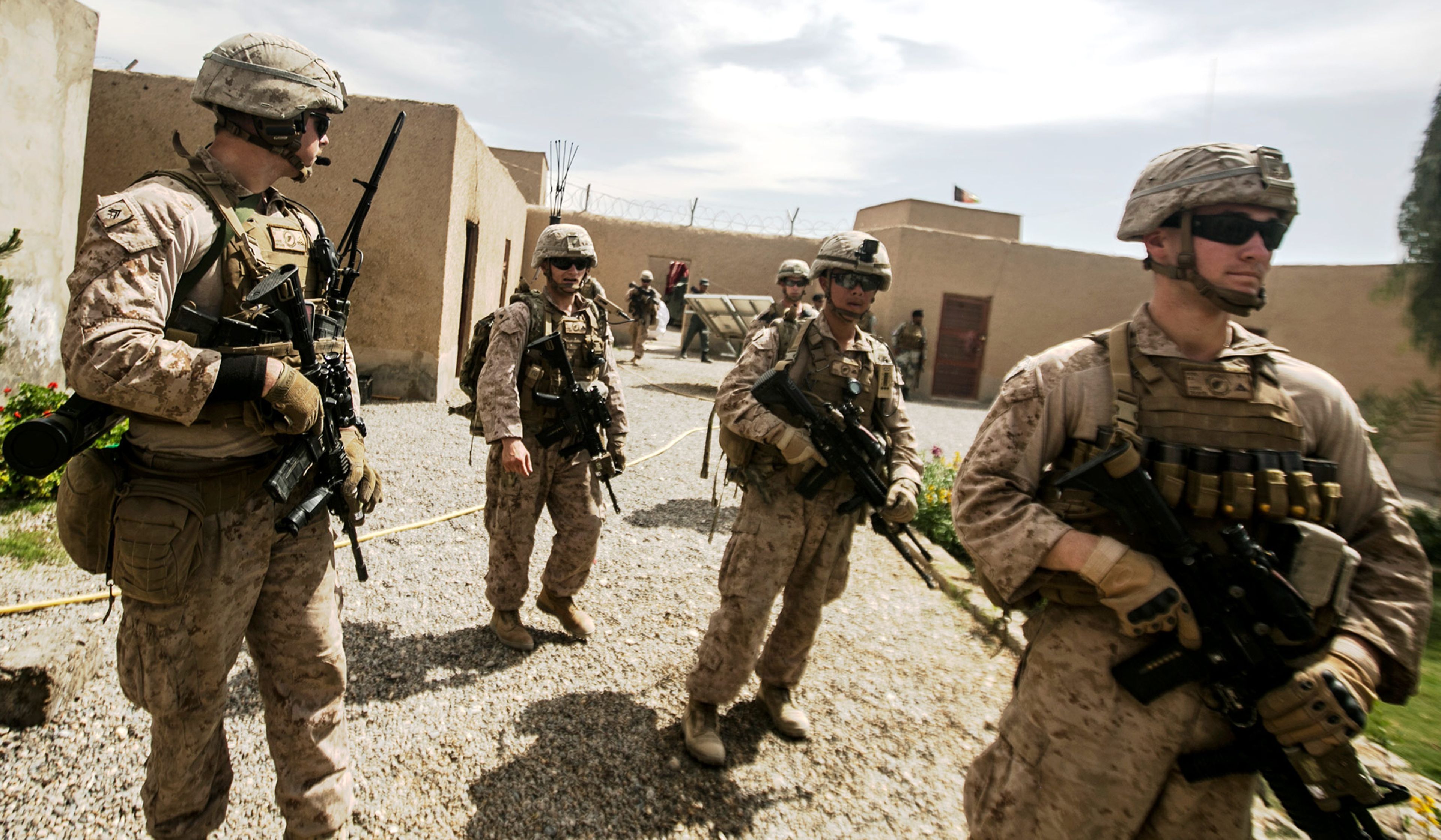
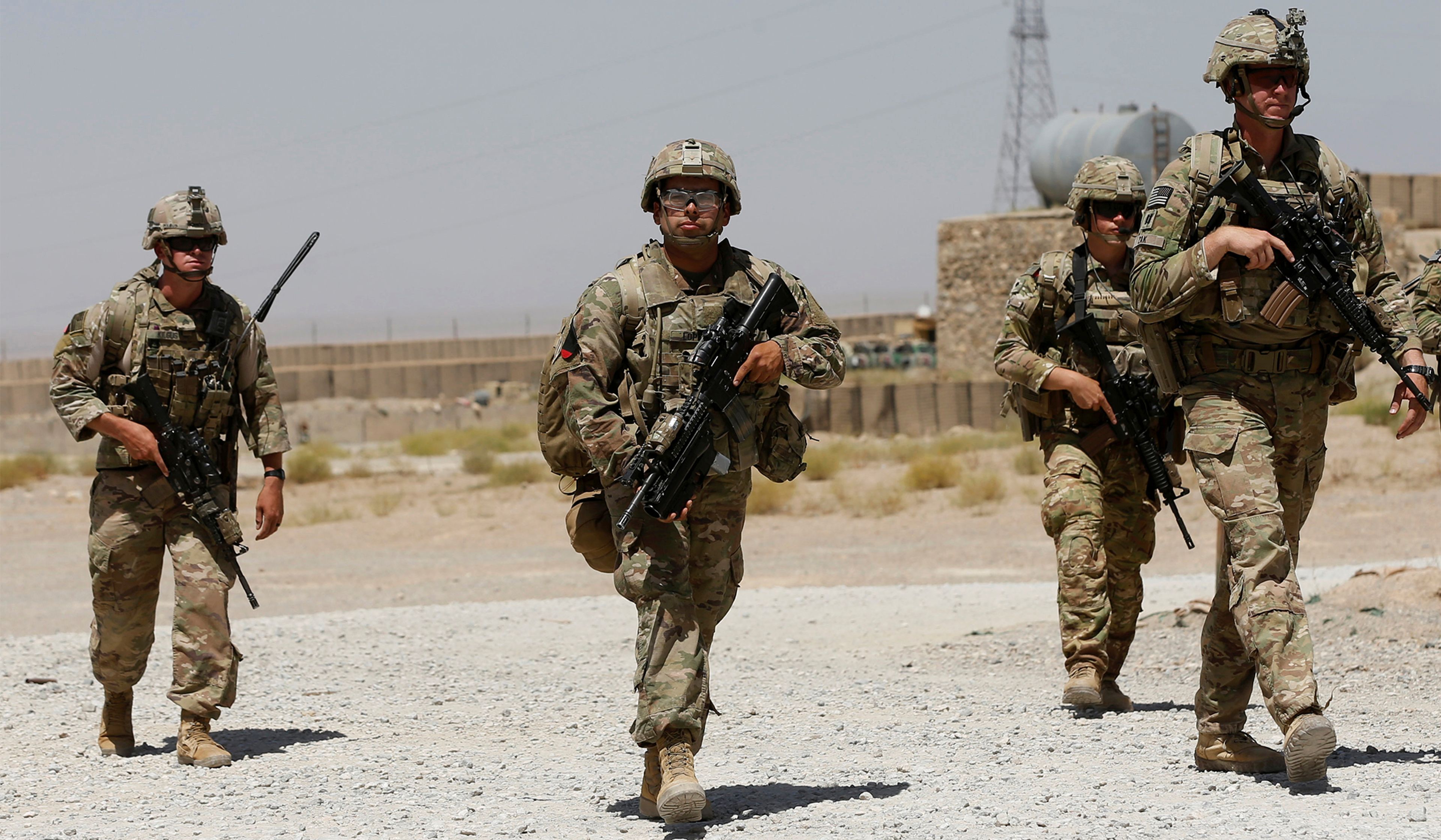
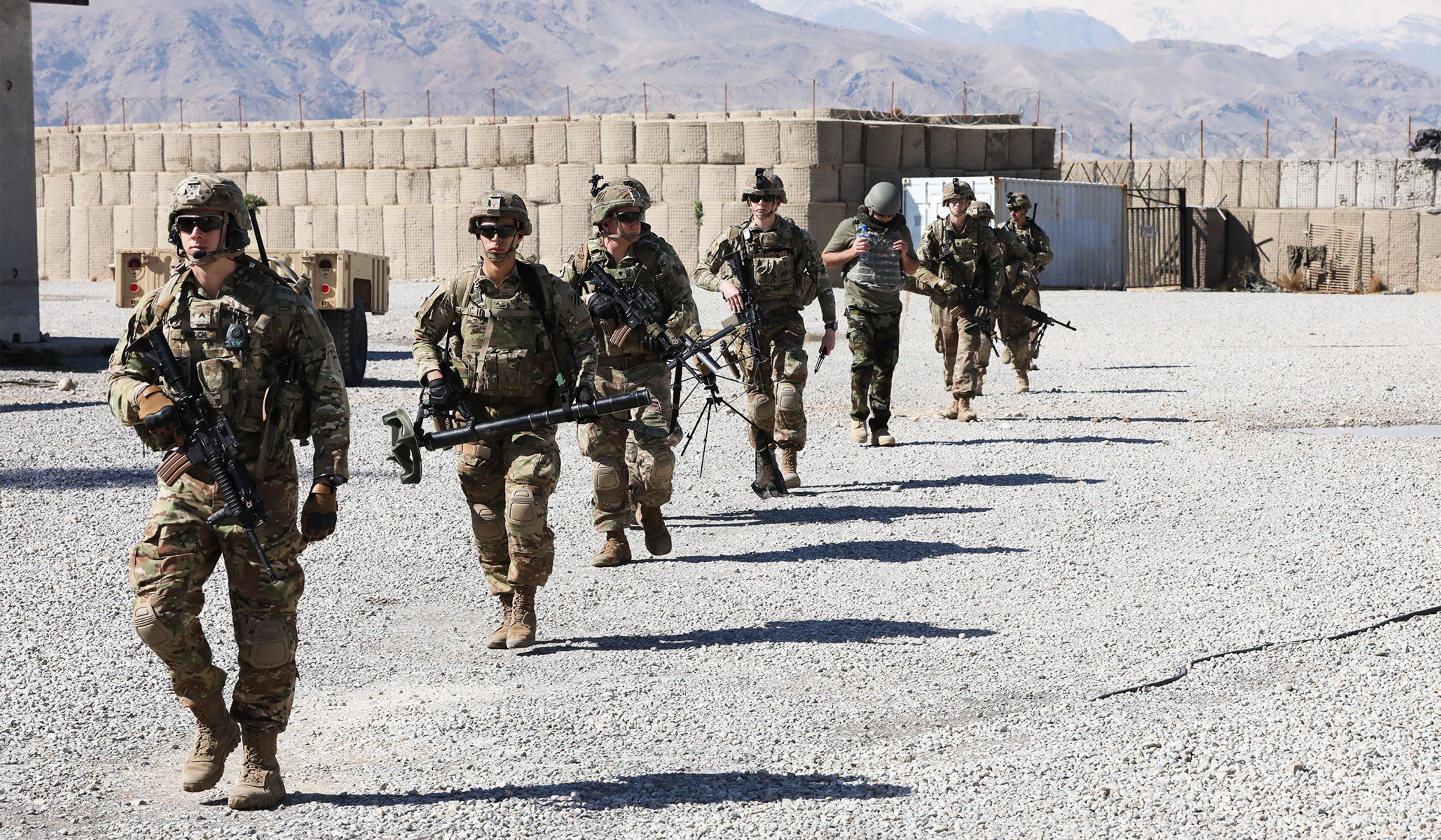
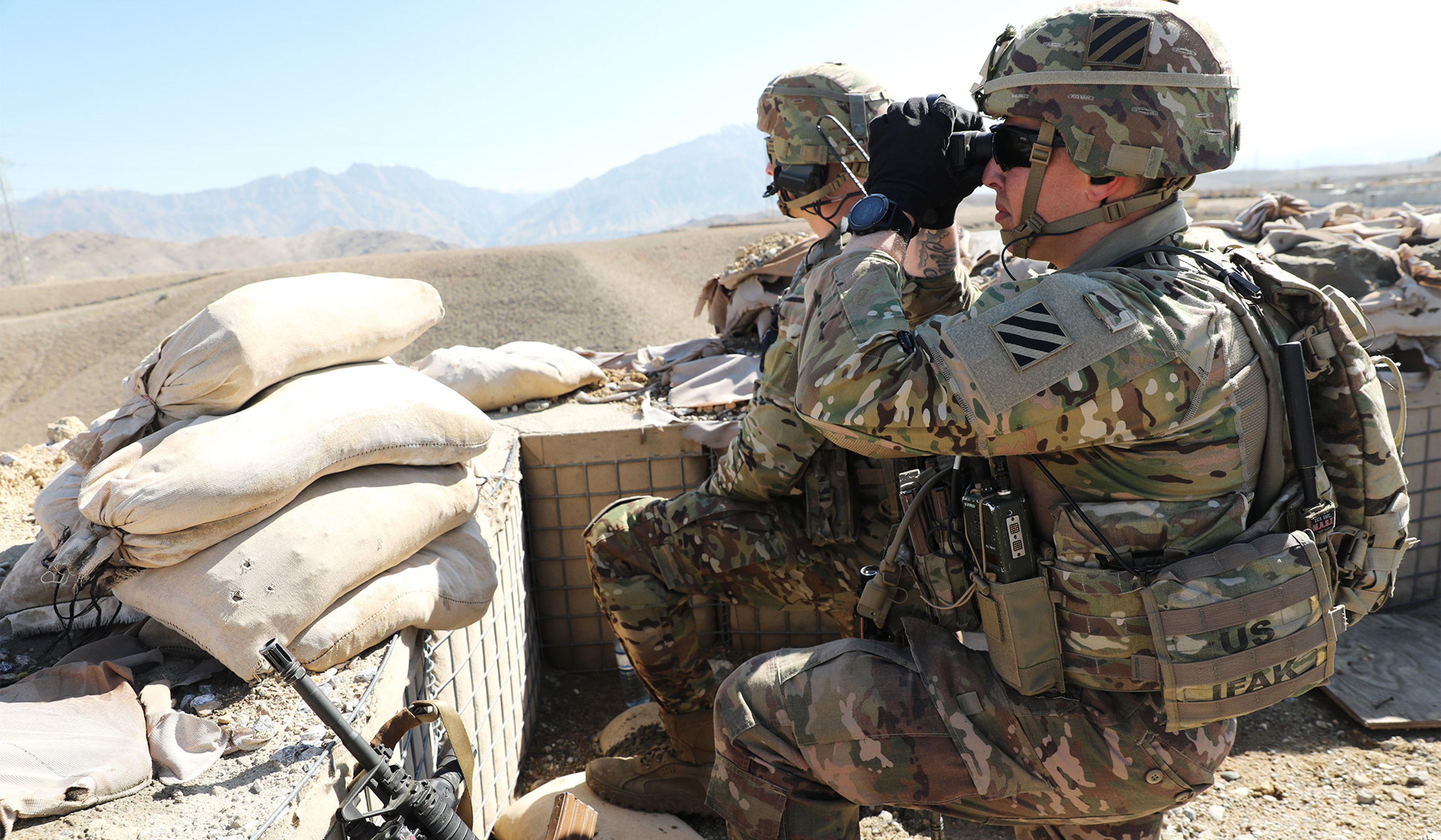
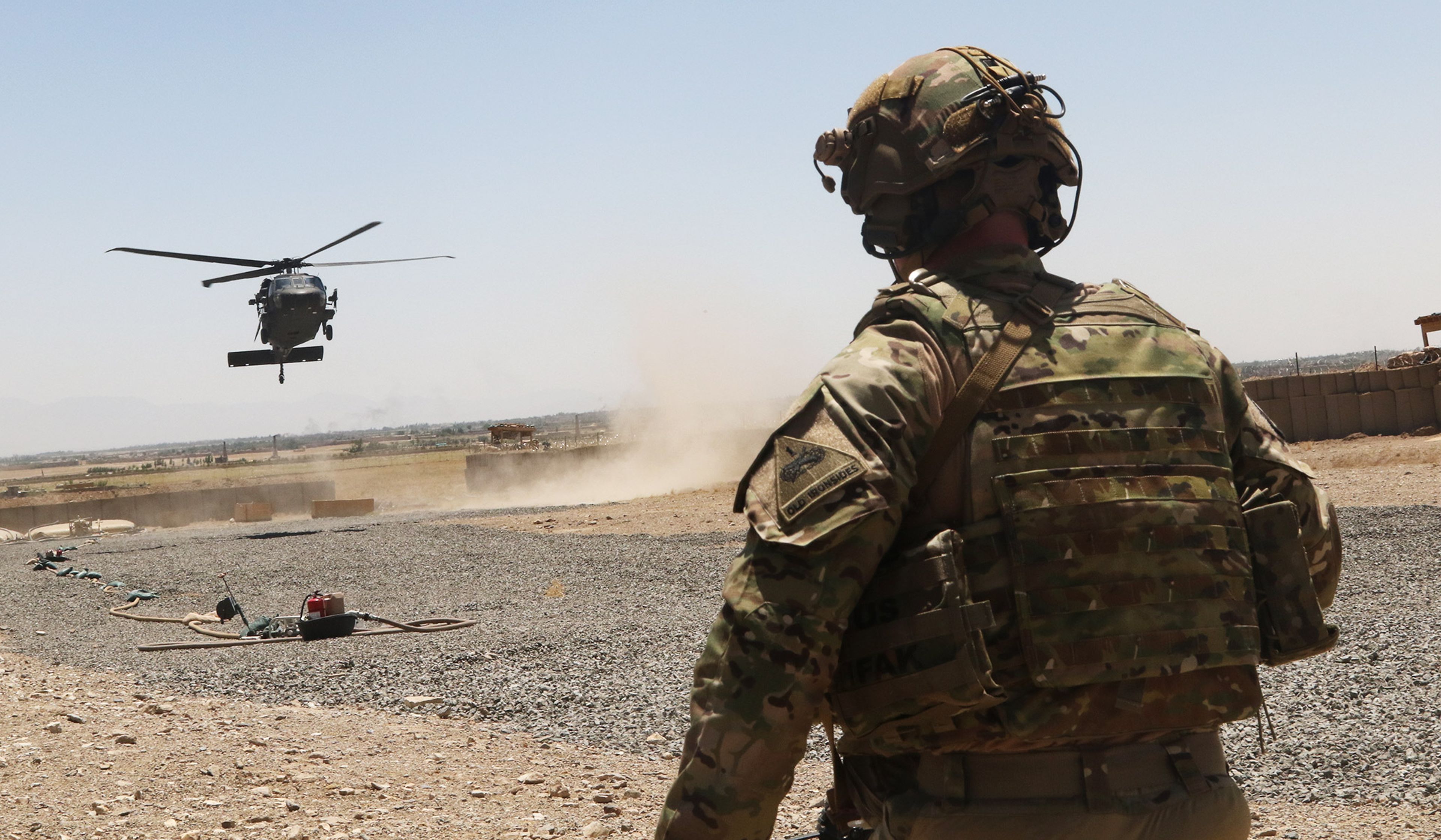
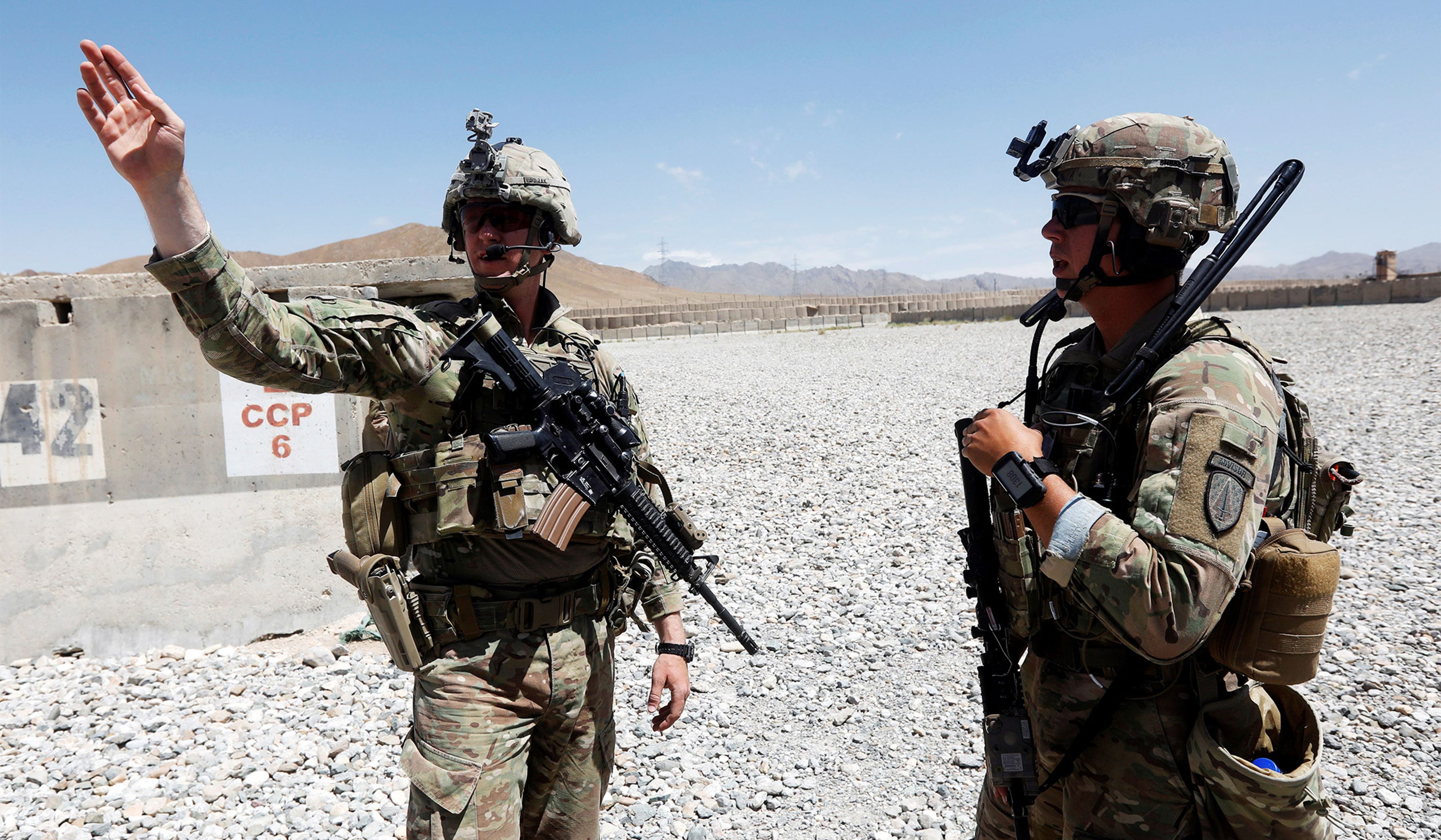
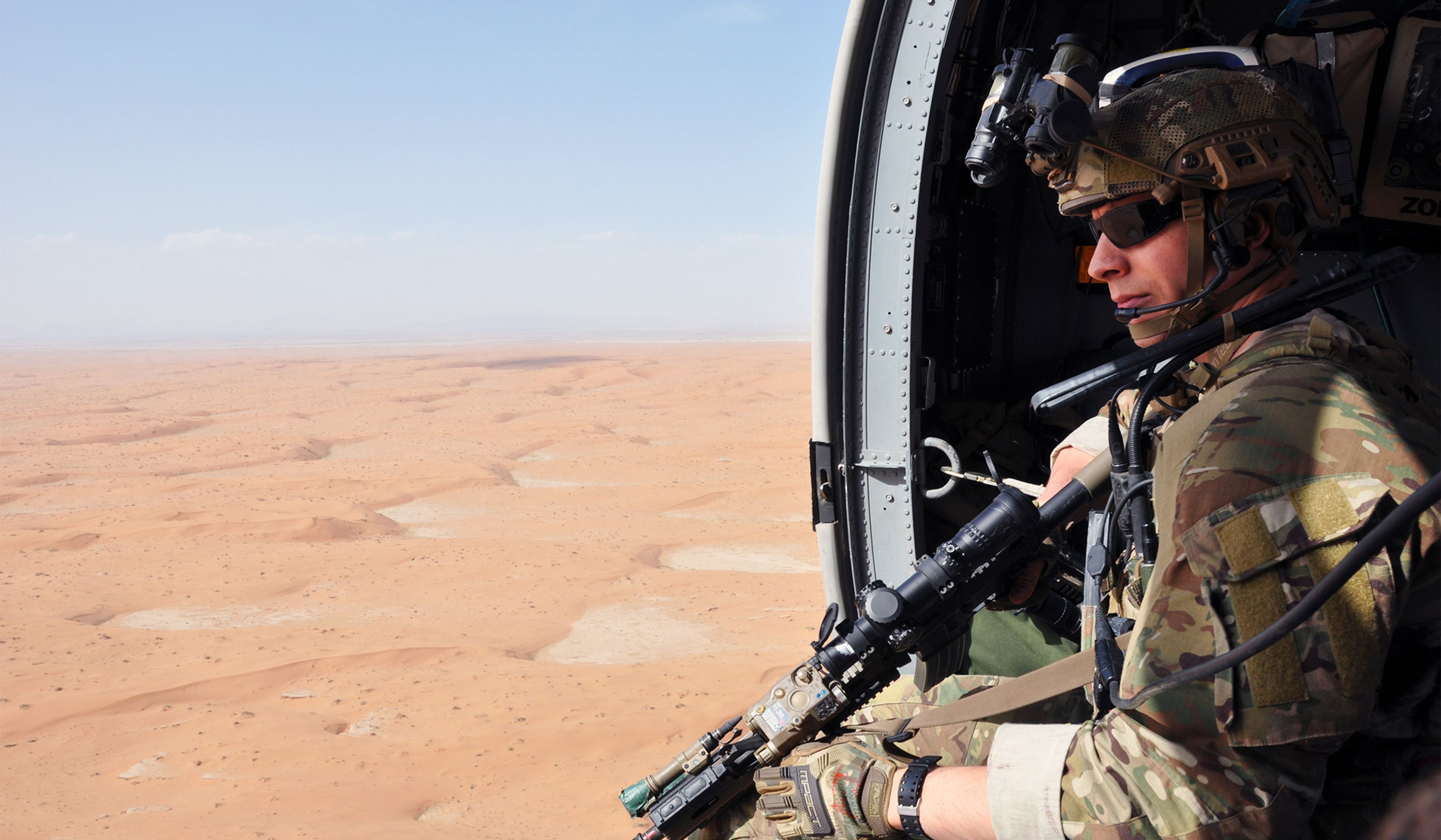
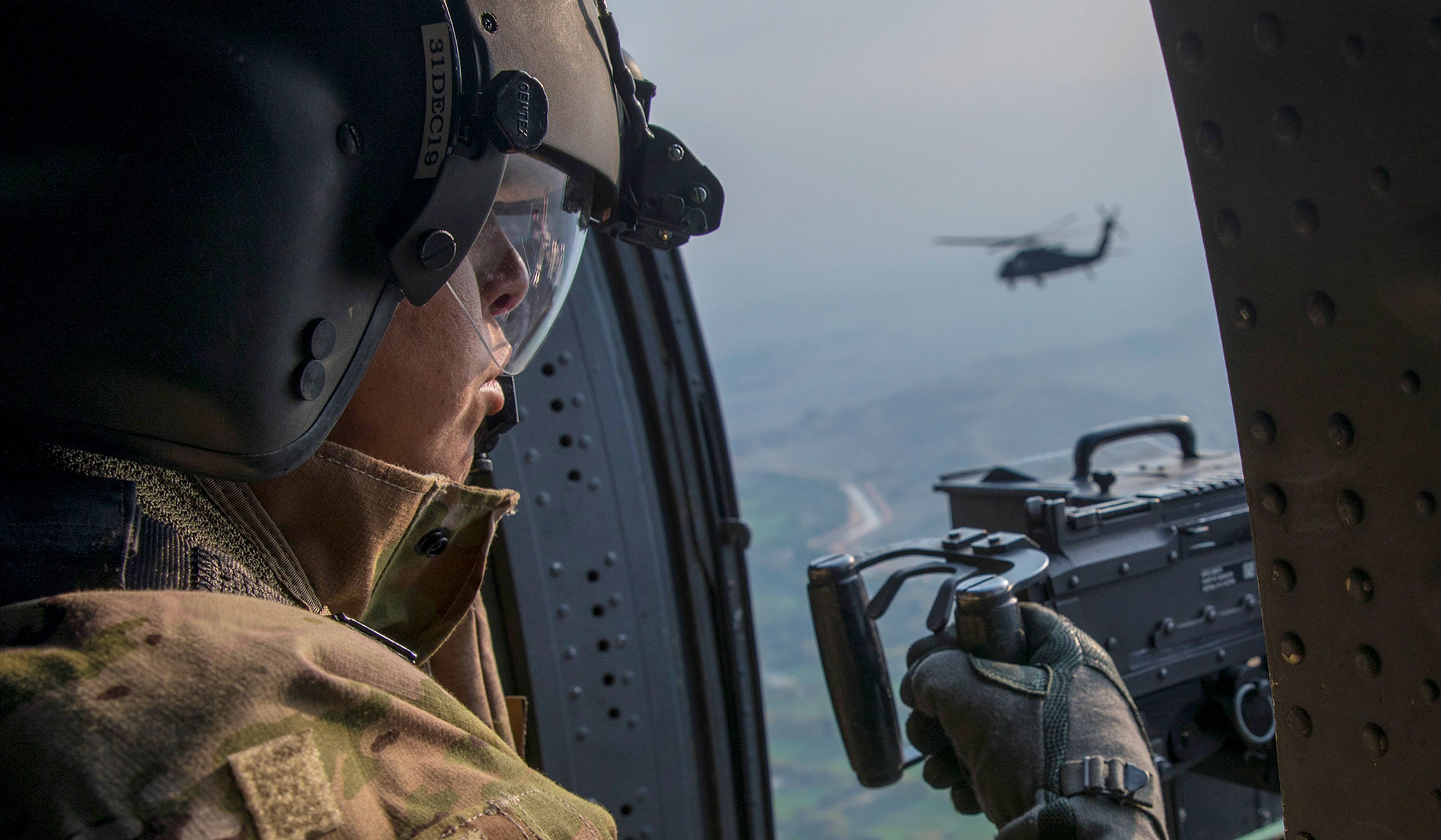
U.S. troops patrol at an Afghan National Army base in Logar Province, Afghanistan, in 2018.
Omar Sobhani / Reuters
If the Afghan debacle is worthy of criticism, in their view, it is only in that Biden didn’t manage this declinist project with more aplomb.
Advocates of retrenchment insist that the situation in Afghanistan was unsustainable partly owing to the Trump administration’s negotiated “cease-fire” with the Taliban on February 29, 2020, which settled on an eventual withdrawal date in 2021. That cease-fire is the only reason the U.S. has not suffered a combat-related fatality in Afghanistan since February 8, 2020, they insist. But the U.S. resumed air strikes on Taliban positions less than a week after that vaunted deal was secured, after the Taliban violated its terms. Both the Trump and the Biden administrations maintained that tempo of operations until May 2021, when Biden withdrew not just air support for the Afghan National Army but logistical support as well. It was then that “the U.S. pulled its air support, intelligence and contractors servicing Afghanistan’s planes and helicopters,” the Wall Street Journal’s Yaroslav Trofimov reported. “That meant the Afghan military simply couldn’t operate anymore.” Biden briefly resumed air strikes on advancing Taliban positions in late July when it became clear that the entire edifice was collapsing, but by then it was too late.
The collapse of the Afghan government wasn’t written in the stars. It was engineered.
Joe Biden also continues to insist that American national security is not impaired by the loss of Afghanistan; to the contrary, it is strengthened, in part because the terror threat across the globe is “metastasizing.” Refocusing our attention elsewhere in the Islamic world will prove a strategic boon because we can, for instance, preserve our counter-terrorism operations in the Afghan–Pakistan region without a permanent presence. The Biden administration’s actions betray this as a fantasy.
Although U.S. war planners were unable to convince Biden to leave a residual counter-terrorism operation behind in Afghanistan, the White House has subsequently scrambled to secure basing, overflight, and military-cooperation agreements with Afghanistan’s Central Asian neighbors. Why? Because the idea that we can reliably deter and disrupt terrorist operations in this region from “over the horizon” via carriers parked in the Persian Gulf, and without the benefit of reliable intelligence from our regional partners, is fictional. As we learned when Islamic State militants cascaded over the Syrian border into Iraq, satellites and overflights are no substitute for reliable intelligence provided by dependable observers on the ground.
The truth is that our low-cost, high-reward footprint in Afghanistan wasn’t just sustainable; it was vital, just as are the many other similarly imperative deployments the United States maintains all around the globe.
In Iraq, where the United States also hasn’t suffered a battlefield casualty since March of 2020, despite the absence of any Trump-era peace deals with militant groups, the American mission is clear: disrupt insurgent operations, preserve the stability of our Iraqi partners, and deter Iranian regional aggression. Would we sacrifice that mission, inviting an even greater global backlash against American leadership, and emboldening Tehran to execute attacks on Western assets in the Gulf, for the sake of a domestic political narrative? No responsible president would contemplate such a thing — at least, not after America’s ill-fated pullout of all troops from the country in 2011 and our subsequent reintroduction of those troops three years later at a time and place not of our choosing.
American troops are stationed all over the world as a deterrent against chaos, instability, and metastatic threats to Americans at home and abroad. The U.S. maintains deployments in and around the Middle East that fluctuate between 45,000 and 65,000 troops. Would advocates of retrenchment sacrifice that mission — and the Middle Eastern governments that rely on it to prevent non-state actors and Iranian proxies from destabilizing those regimes? If so, they would shatter a sustainable status quo in a move that would likely necessitate more American involvement in the region.
What about Africa, where between 6,000 and 7,000 American troops are advising local forces fighting Islamist militant groups? In Somalia, Niger, Chad, and Mali, the U.S. maintains small forward outposts from which it operates drones and supports local governments in a cooperative effort to keep Islamist elements from consolidating and, eventually, exporting terrorism. What about our 2,000 or so soldiers who are helping to prevent Islamist elements from gaining strength in the Philippines and elsewhere in the Indo-Pacific?
But these deployments, critics of America’s forward-basing posture are quick to note, aren’t producing American casualties and draining the Treasury in the process, which would sap the country of political support for those missions. And yet, in 2020, America lost more of its men and women in uniform in “peaceful” deployments around the world than in either Afghanistan or Iraq. That year, Americans died in missions to places such as Kosovo, the United Arab Emirates, Egypt, Jordan, Bahrain, and Kuwait.
American soldiers are at risk wherever they serve, and the sacrifice of any life in service to this country is one we must honor. But what is the qualitative distinction between our support for friendly governments in Kuwait City, Amman, and Pristina (whose friendliness it behooves us to preserve) and our support for Baghdad or Kabul? The only consistent argument in favor of pulling back from all of the world’s complications is the McGovernite view that it’s time to “come home, America.” Honest advocates of American retreat from the world stage rarely articulate such an outlook in part because it is so tactically and strategically foolish that it has been repudiated by every American administration until this one. We can now see why.
Few could be satisfied with America’s record on the development of a civil society in Afghanistan. As the Special Inspector General for Afghanistan Reconstruction (SIGAR) revealed in an August 2021 report, we made plenty of mistakes in Central Asia. We tolerated too much corruption, made allies of too many bad actors, and were too solipsistic in our efforts to establish political institutions that lacked regard for Afghan cultural conventions. None could say with a straight face that our efforts at democracy promotion over the decades have been successful.
And yet democracy promotion abroad is successful when it is incidental to the pursuit of an achievable long-term mission. Somehow, Germany managed to overcome what critics of its political culture insisted was its inseverable attachment to Prussian militarism. Likewise, Japan managed to implement a new social contract free of imperial feudalism. South Korea was a nation ruled by military junta until the early 1970s. Despite unrest and, indeed, attacks on U.S. personnel, the United States maintained a permanent presence in these countries in pursuit of our permanent security interests. Republican political cultures developed as a secondary consequence of our involvement there, and only after decades of growing pains.
Perhaps that would never have happened in Afghanistan. We will never know now. But even if America’s commitment to a fledgling democratic government in Kabul is over, our involvement in Afghanistan is not. As SIGAR’s bleak and clear-eyed report on the woeful state of the American mission in Afghanistan concedes, “there will likely be times in the future when insurgent control or influence over a particular area or population is deemed an imminent threat to U.S. interests.” No competent American president would or should allow an “imminent threat” of this sort to materialize. Our interests in Central Asia will persist even if they are not seen to by this administration.
What did we get out of an exercise that cost America over 2,400 lives and nearly $1 trillion? First and foremost, zero major foreign-directed terrorist attacks on U.S. soil in the generation that has elapsed since September 11. That’s no small feat, and it did not happen by accident.
Of course, the geostrategic obligations of the only nation capable of sustained power projection anywhere on earth do not always align with the desires of its electorate. Americans are tired of the mission. That fatigue, which ambitious politicians cannot help but exploit, was foreshadowed in George W. Bush’s 2001 address to a joint session of Congress, in which he outlined a “lengthy campaign unlike any we have ever seen” against terrorism and its enablers abroad. “Our resolve must not pass,” he warned, perhaps with America’s historic apathy toward the world beyond its shores in mind.
And yet, the kind of war Bush envisioned was not so new as to shock the American psyche. It had been outlined nearly 40 years earlier by John F. Kennedy in a 1962 speech at West Point. Then, America faced a threat posed by communist “guerrillas, subversives, insurgents, assassins,” and tactics involving “war by ambush instead of by combat.” He outlined a doctrinal posture that would transform the American military from a reaction force and an instrument of deterrence into a preventative apparatus. It would deploy in smaller numbers but broadly and in pursuit of advantage in America’s struggle against the Soviet Union.
It was the logical basis that led the U.S. into the ill-fated morass that came of its support for South Vietnam, yes. But it also informed more successful deployments to Lebanon, the Dominican Republic, and Grenada. It guided the decisions by successive policy-makers to counter Soviet influence in Nicaragua, Cambodia, Mozambique, Angola, and, eventually, Afghanistan. And in the end, the United States emerged victorious in that great battle between two competing theories of social organization. We are once again engaged in a generational conflict against an ideology that is incompatible with egalitarian republicanism. It will end as the Cold War ended: when one side surrenders. But America’s political class has misjudged Americans if it believes the public will welcome surrender and defeat as a remedy for exhaustion.
If you thought Americans were displeased by the way we got out of Afghanistan, wait until you see how they respond to the circumstances that force us to go back. At best, the American retreat from Central Asia represents a new phase in the Global War on Terror — one that delivers us from stalemate and into a situation in which Afghanistan is once again a void in which threats to the U.S. and our allies can develop. As Joe Biden’s defense secretary, Lloyd Austin, reportedly told the president, “We’ve seen this movie before.” And we know how it ends.











Comments