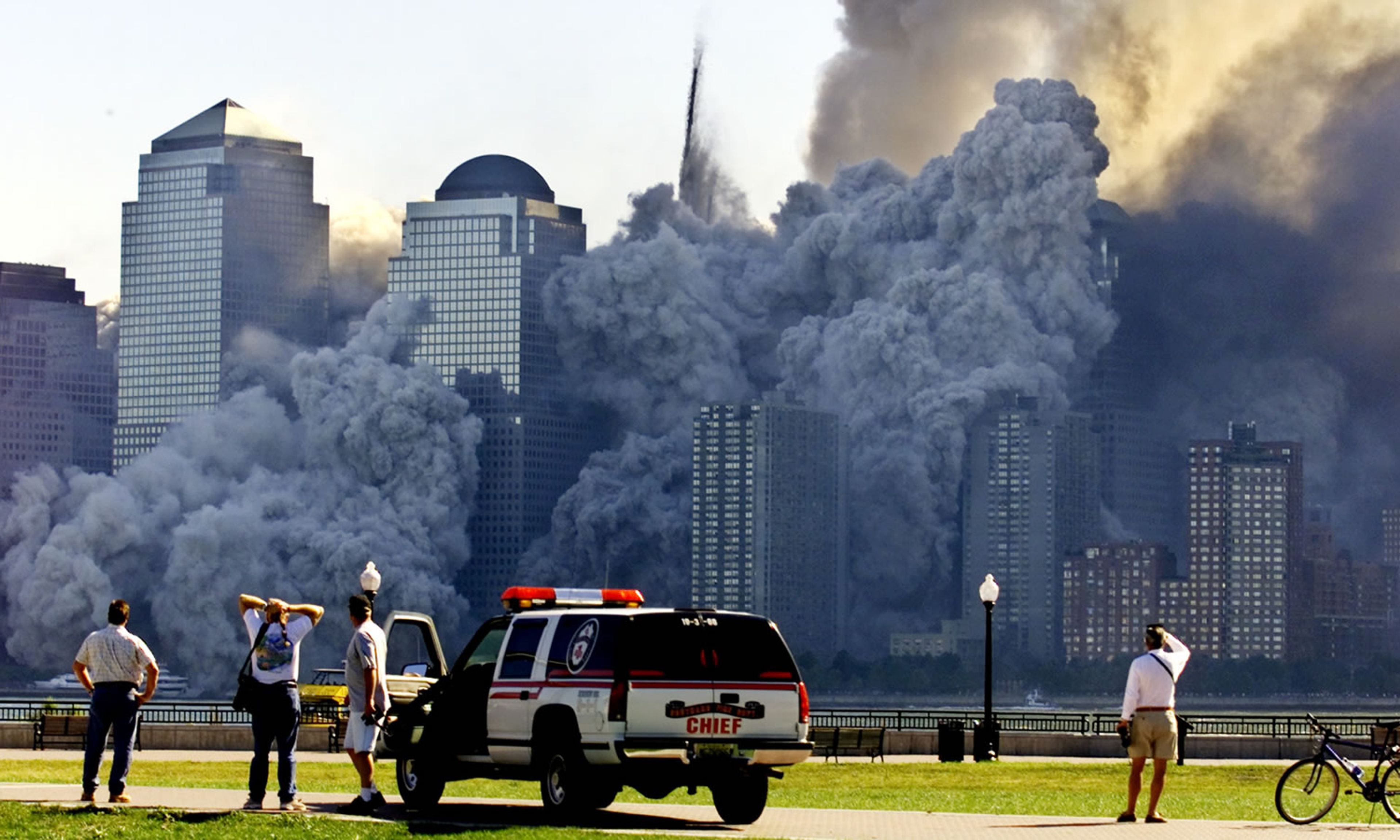
Twenty years on, we look at the first 9/11, at this one, and at possible ones to come.
Meaning no disrespect to those who lost their lives at the Pentagon or on Flight 93, I most remember what happened in New York.
The first noxious effect was rumor. There were twelve more airliners unaccounted for. Wrong. Maybe there were survivors still to be rescued in the subway tunnels beneath the collapsed Trade Towers. Wrong. A cop had ridden down on the roof of one of them as it fell, as on a giant concrete surfboard. Wrong. Muslims had cheered the collapse in Paterson, where one of the terror team had lived; across the Hudson on the Jersey shore; and on the Brooklyn promenade. Anti-Semites said that the gleeful were not Muslims but Israelis, celebrating a successful false-flag operation. Mostly wrong; two people I trust have told me that the stories about Paterson and the promenade are true, though I have no double-check on them. And there were no celebrating Israelis. Rumors, like conspiracy theories, which are their fossilized remnants, are projections of animosities and fears and almost always to be ignored, like static.
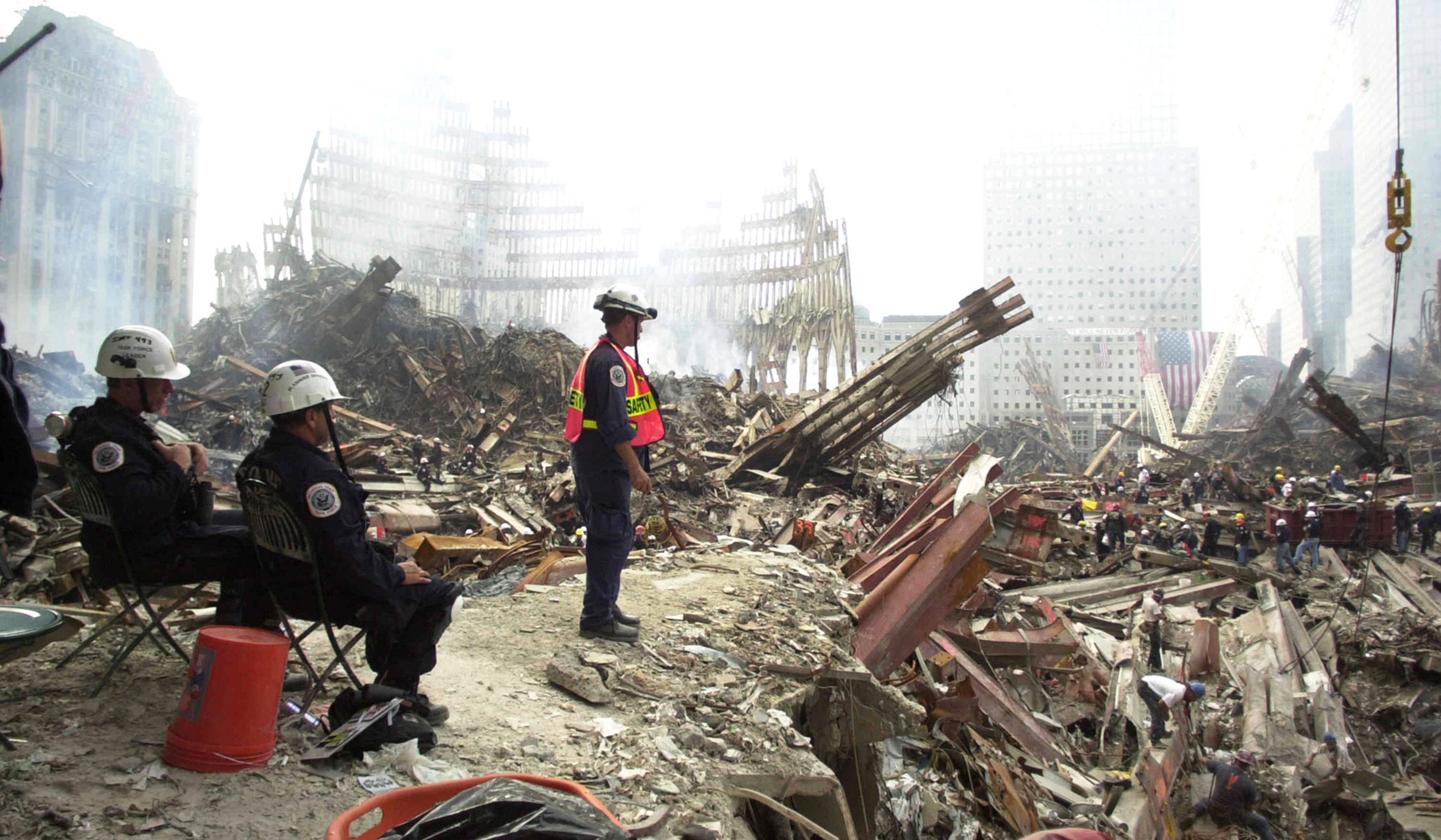
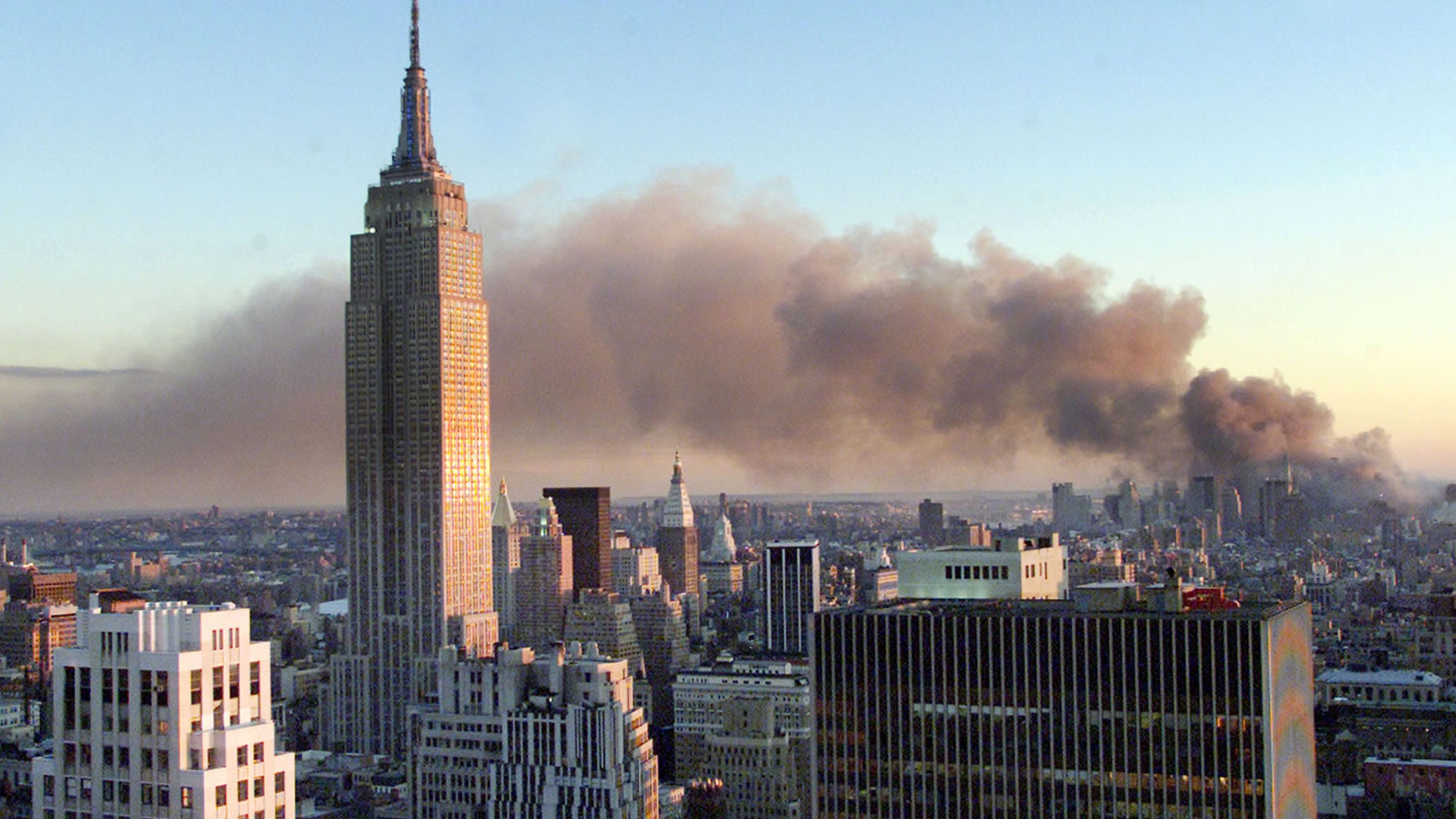
The second noxious effect was the smell. It was most like the smell of an electric fire. It lingered for many, many weeks. The propagation of the smell seemed helped by the fact that the weather that autumn was notably mild and sunny, as glorious as it had been on 9/11 itself. Would rain and an early cold snap have made the smell less? It might have amplified our dark moods — unless the rays we got instead were their own amplification, a meteorological taunt.
An effect that seemed noxious at the time was the sudden inconvenience of air travel. I remember the old days, covering New Hampshire primaries from New York, which was most easily done by hopping a shuttle to Boston and driving on in a rental car. How often, coming and going, did I rush to a gate at the last minute before take-off, to be wheels-down, air-traffic control permitting, in another 40. Bad habits: Half the planes the terrorists commandeered took off from Boston’s Logan. Libertarians and the performing Right railed at the subsequent restrictions — baggage checks, pat-downs, removing shoes. They were instituted with dashes of wokeness and administered with bureaucratic thoroughness. Yet how readily we have all accommodated. If your free soul bleeds, saddle up Trigger and ride to Boston. The post roads are still there. See you in five days.
Perhaps the most noxious effect, which has diminished only because our attention has been drawn to other things, was the chatter about the event: All the people who used it to repeat things they had always said, only louder. We romanticize the rare men who have been eloquent in the face of catastrophe — Lincoln; Churchill during the Battle of Britain (who has been hailed in not one but two movies in the last few years). Because right thinking and right speaking so rarely combine, maybe Grant after the first day of Shiloh is the more useful model. Sherman searched for him after the debacle — surprise attack, four of five encamped positions overrun — to discuss orders for the retreat Sherman assumed must follow. He found Grant on the dark battlefield chewing an unlit cigar. Well, Grant, said Sherman, we’ve had the devil’s own day. Yes, yes, said Grant. Lick ’em tomorrow.
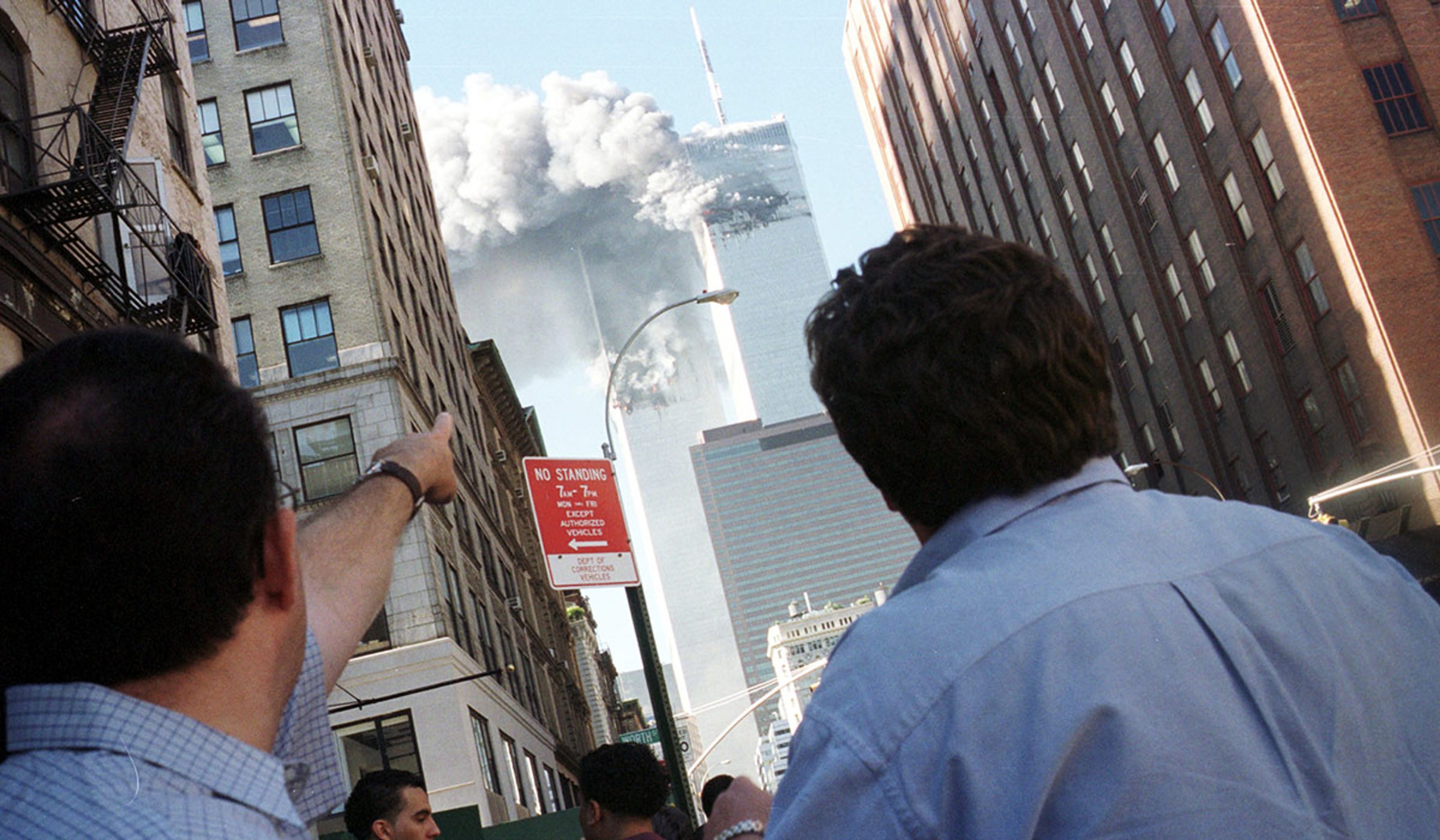
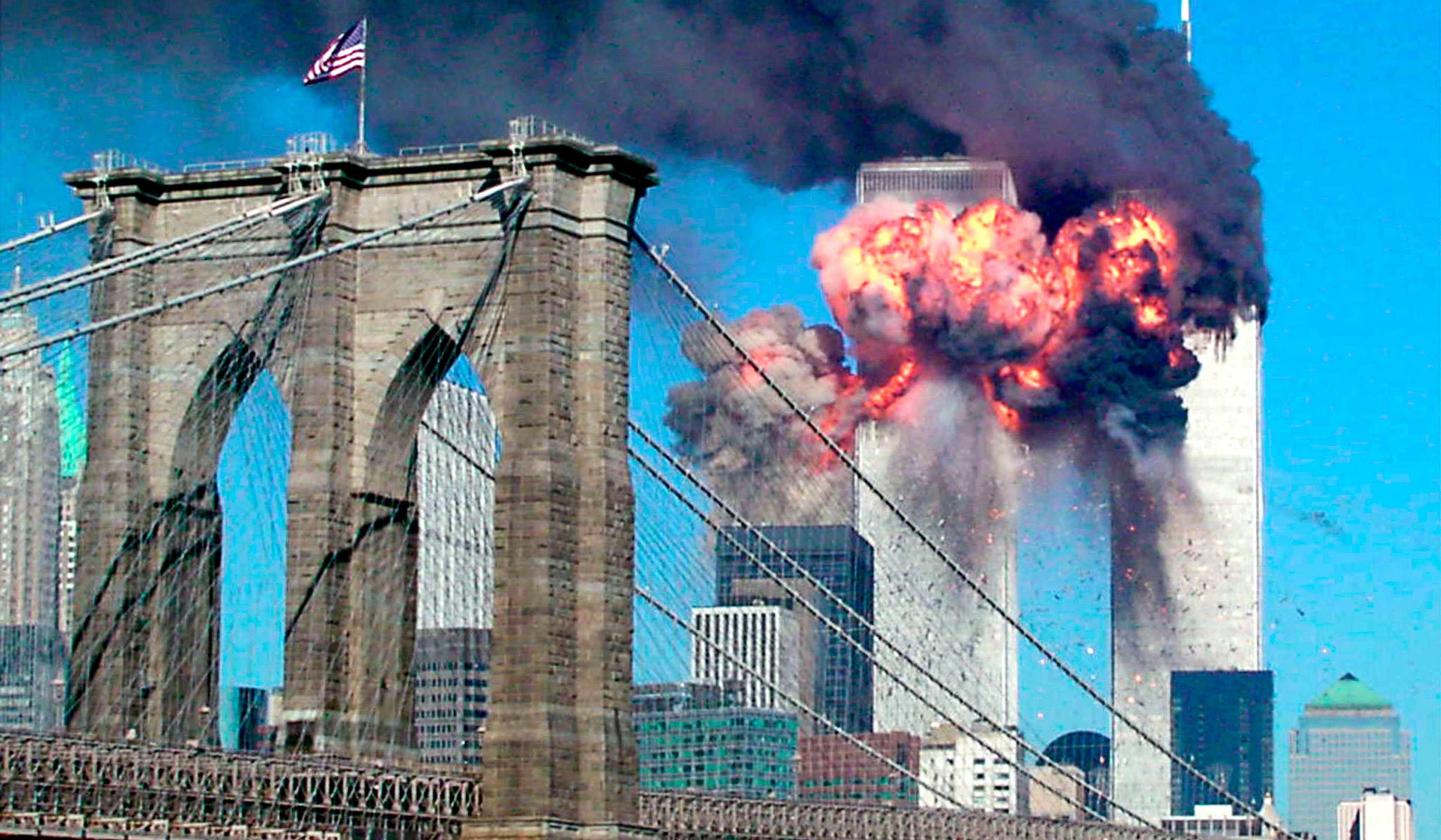
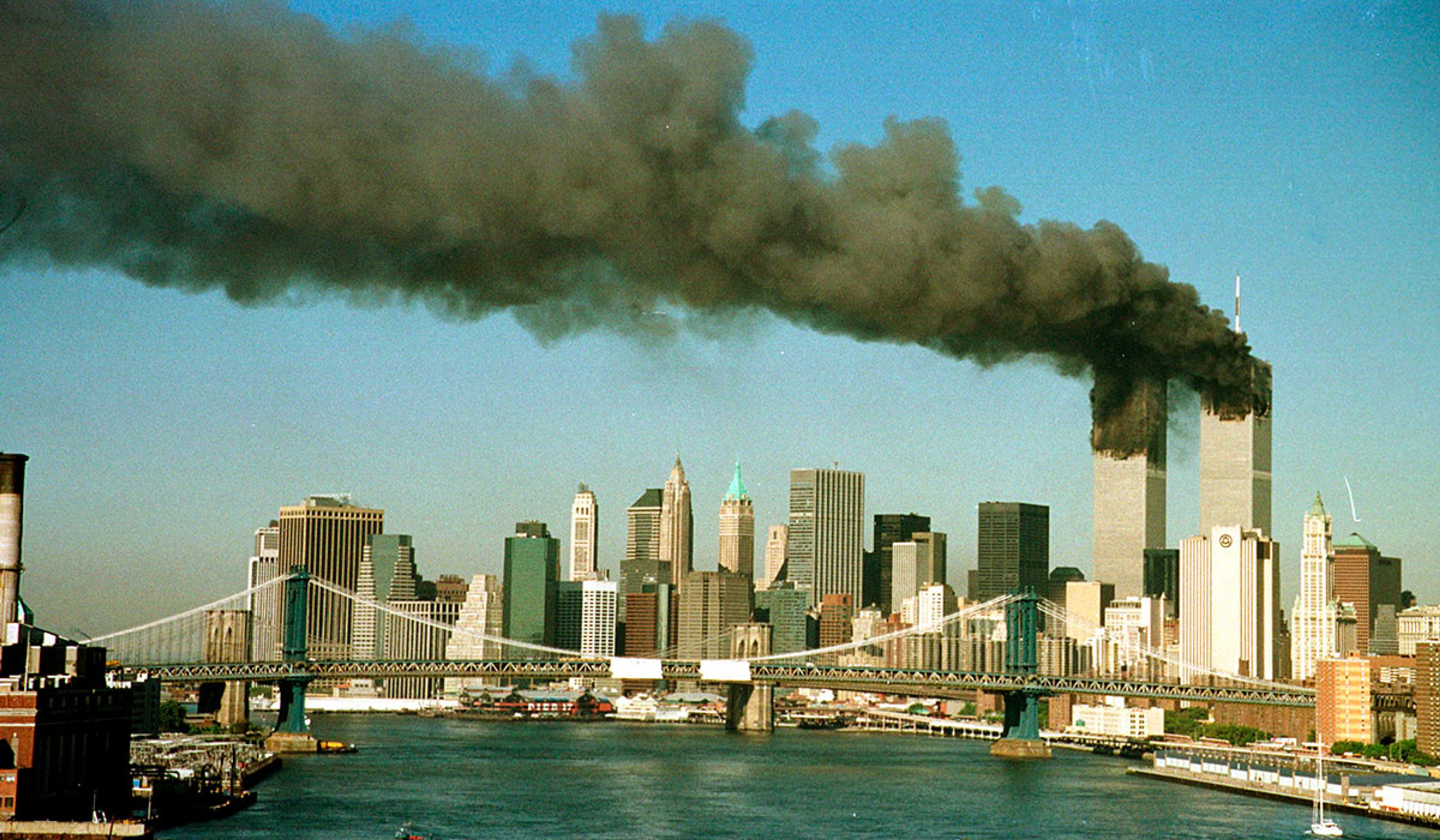
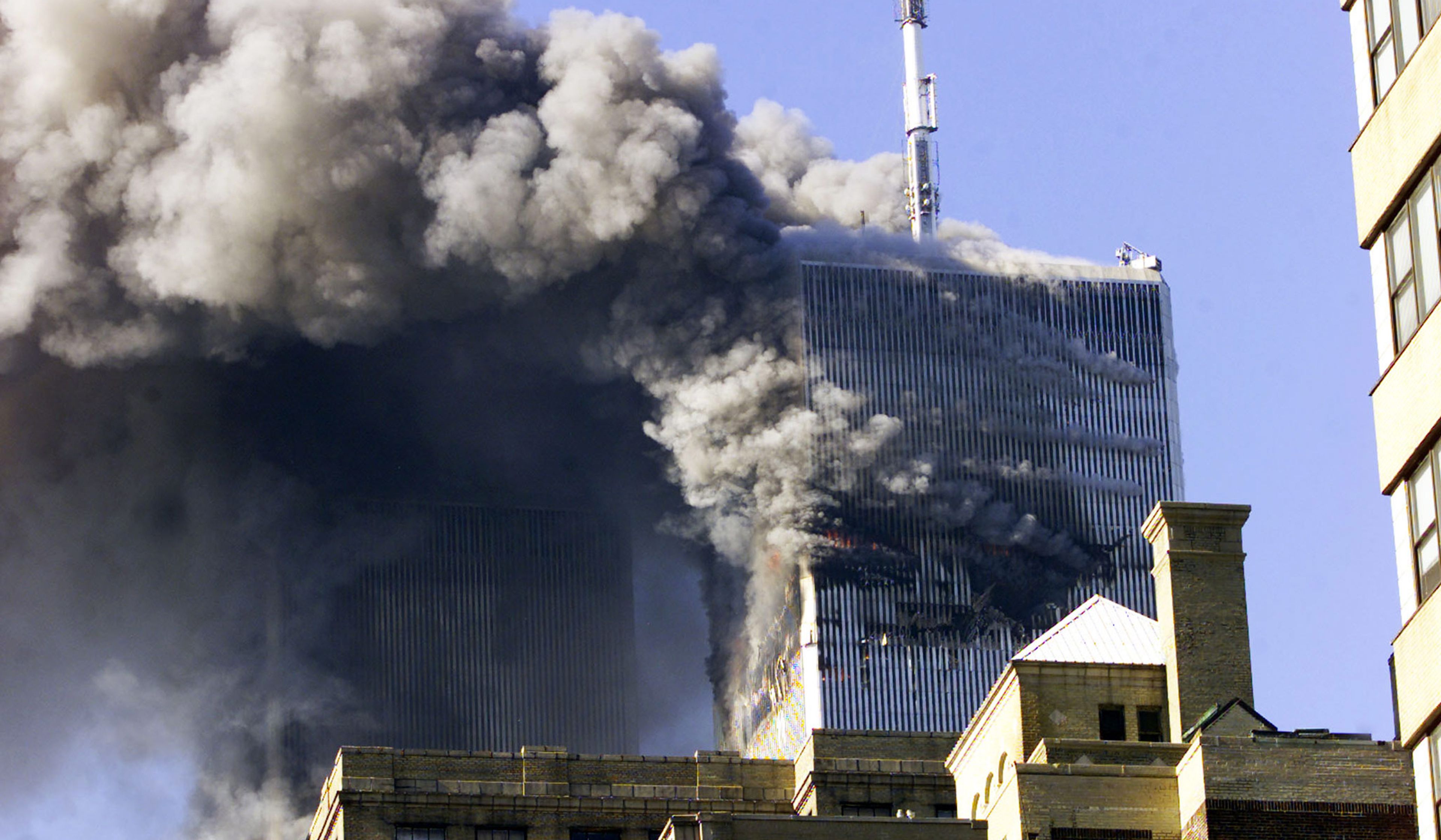
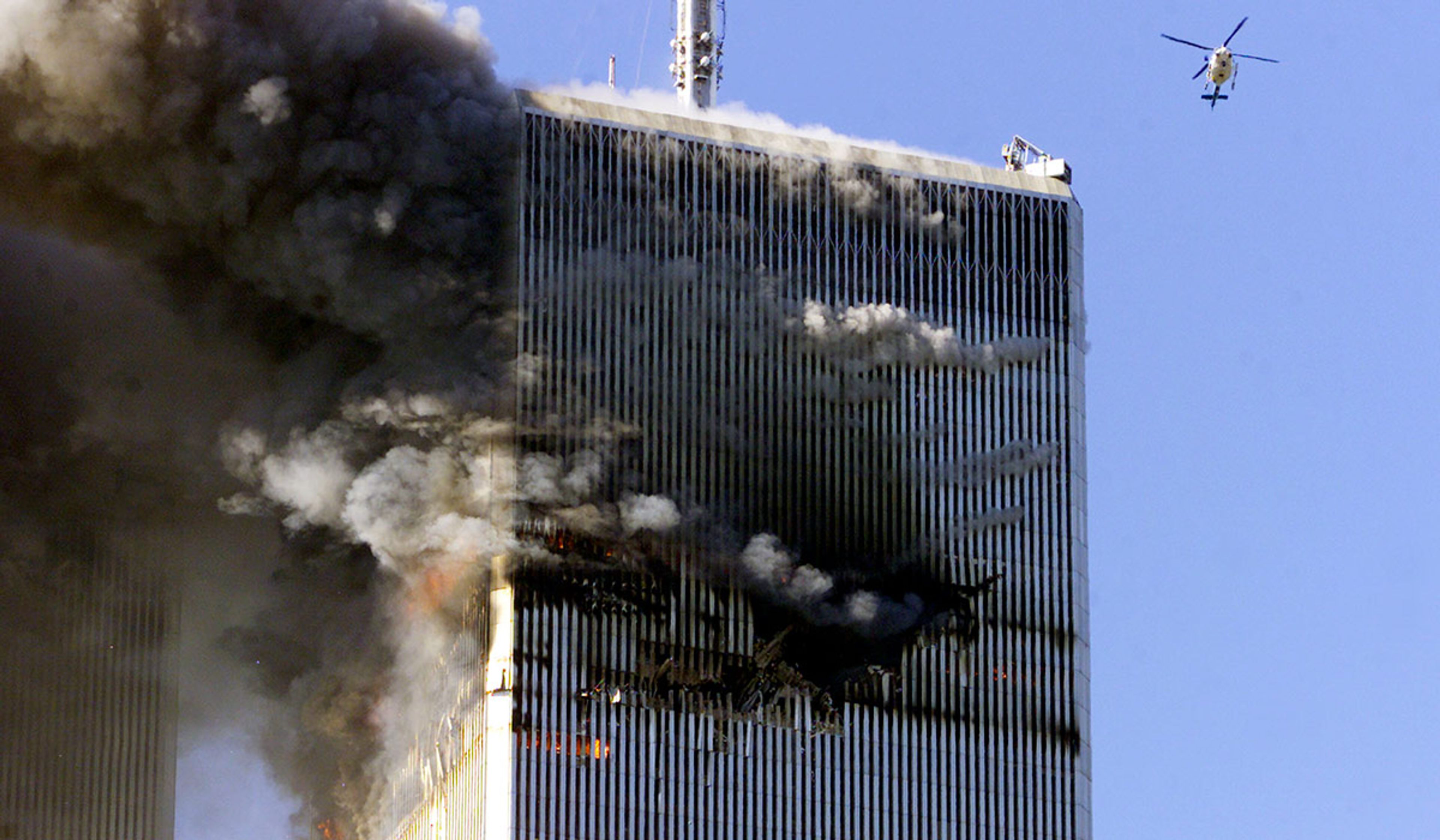
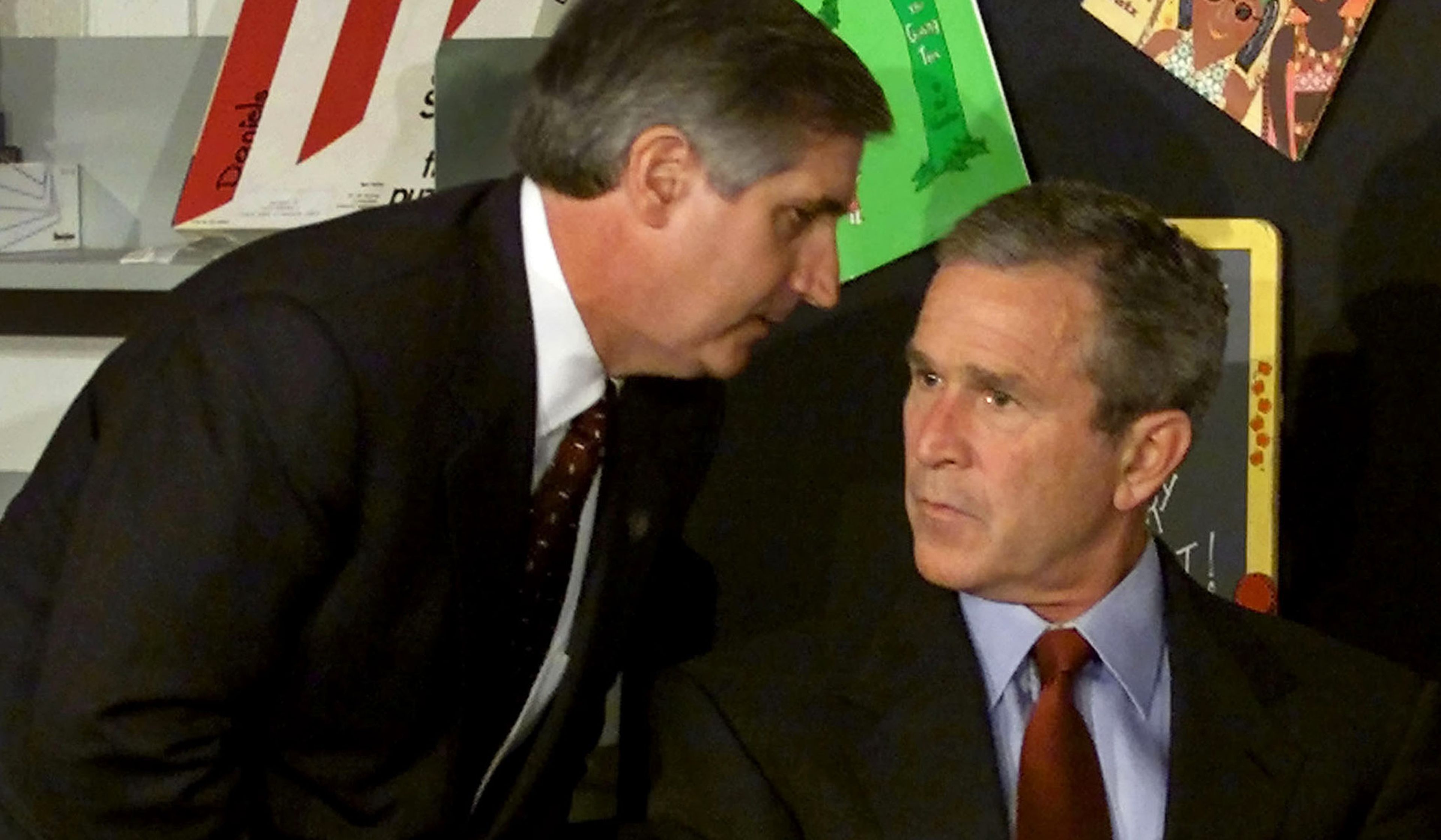
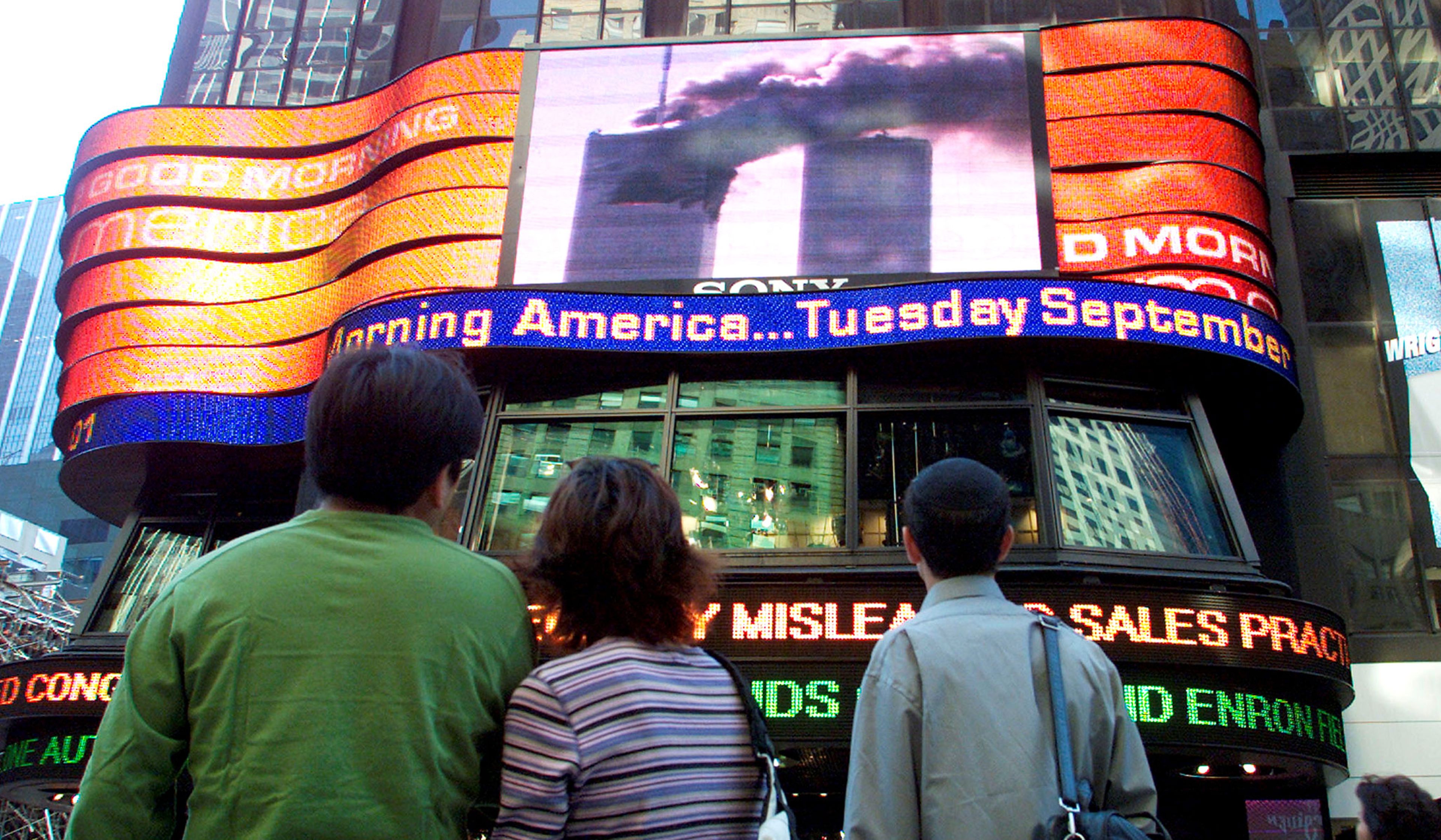
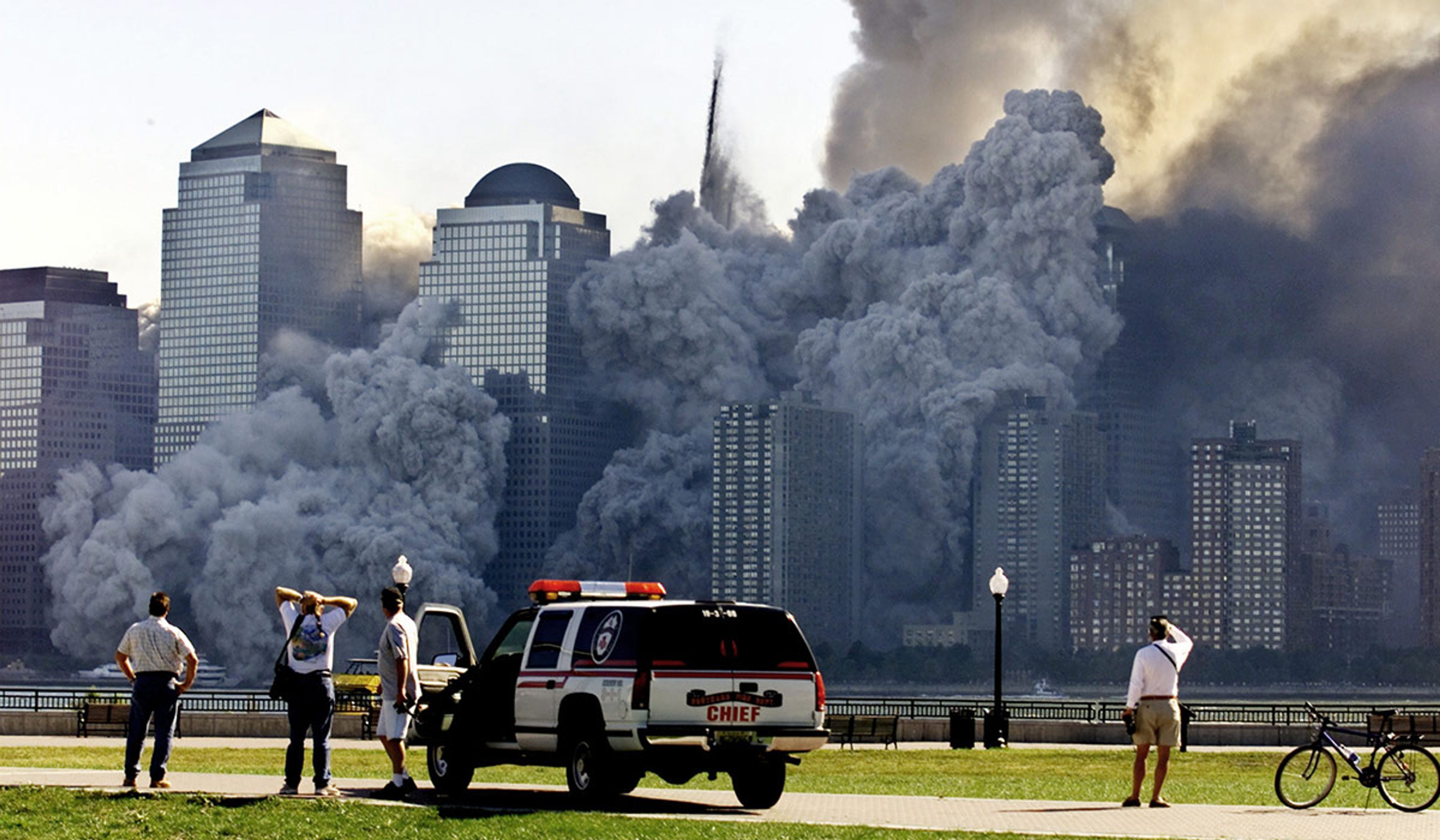
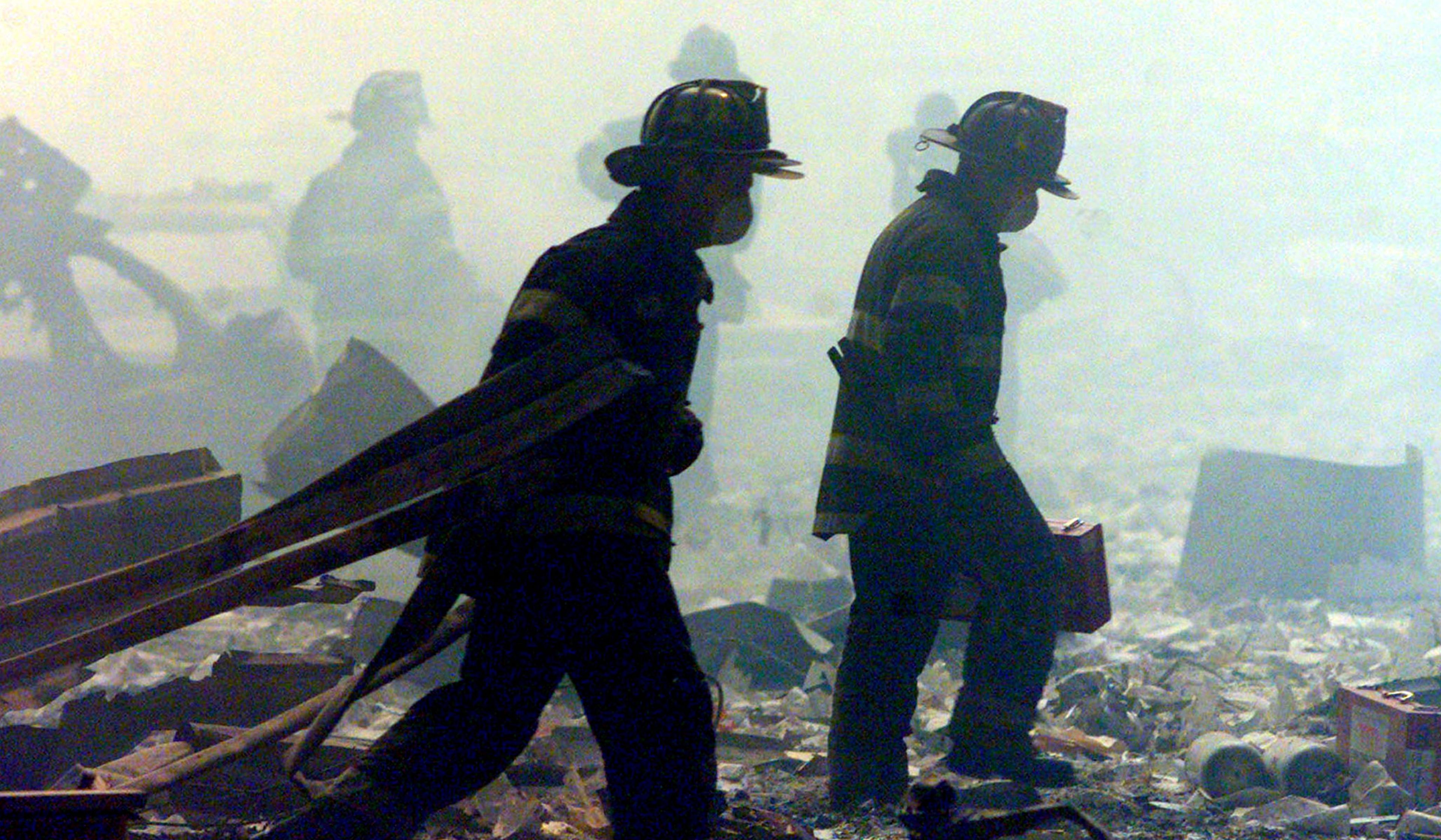
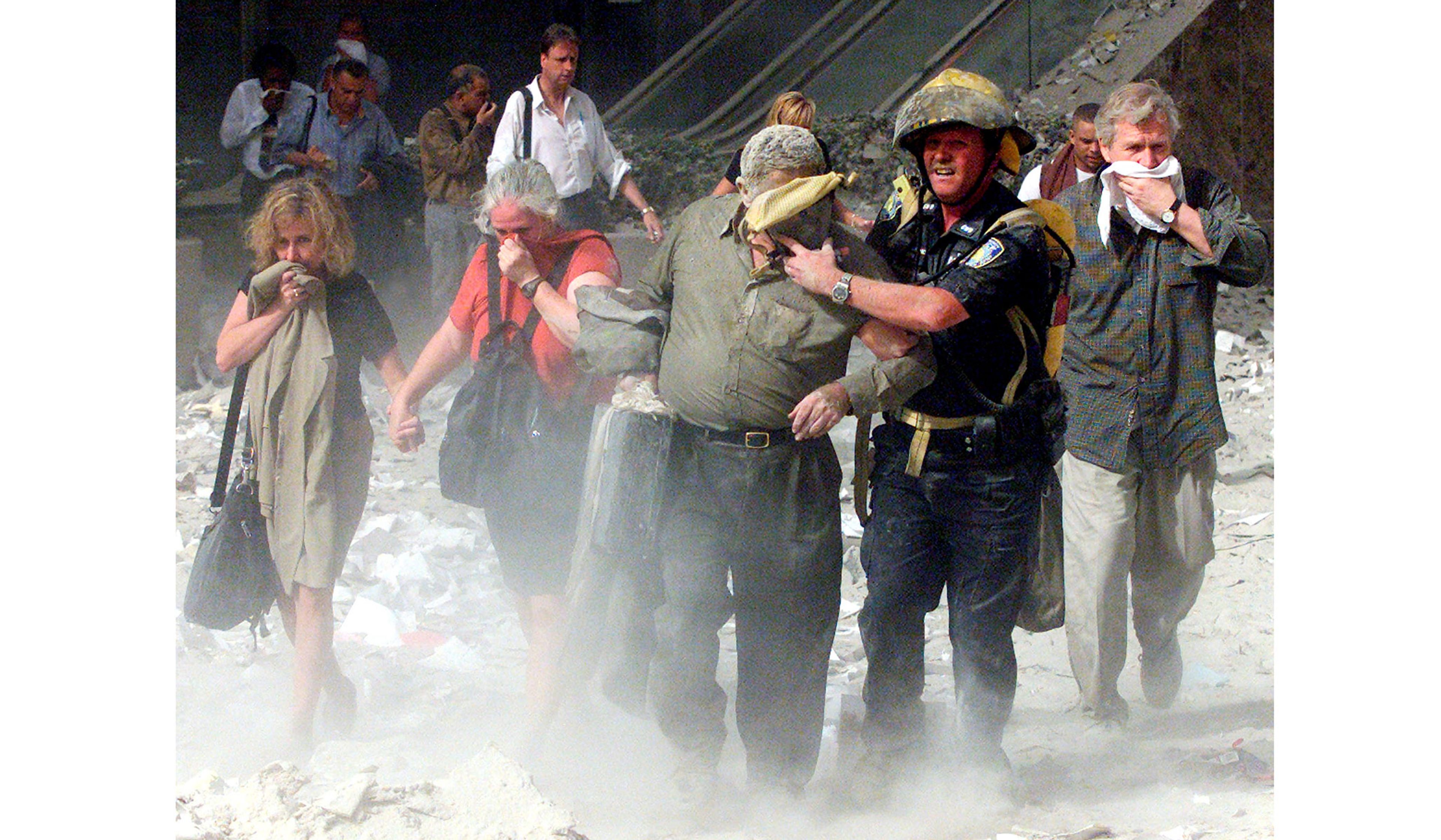
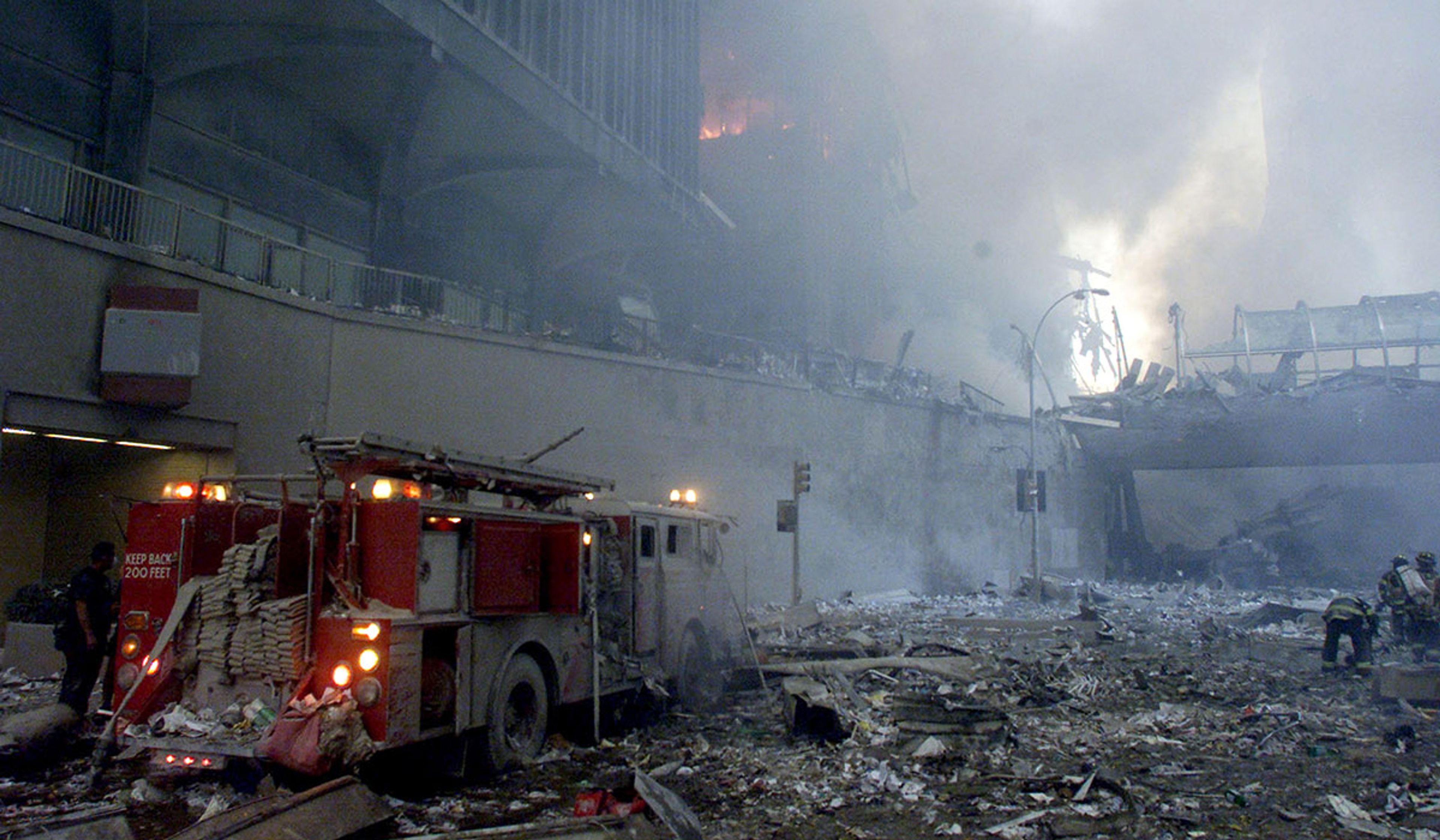
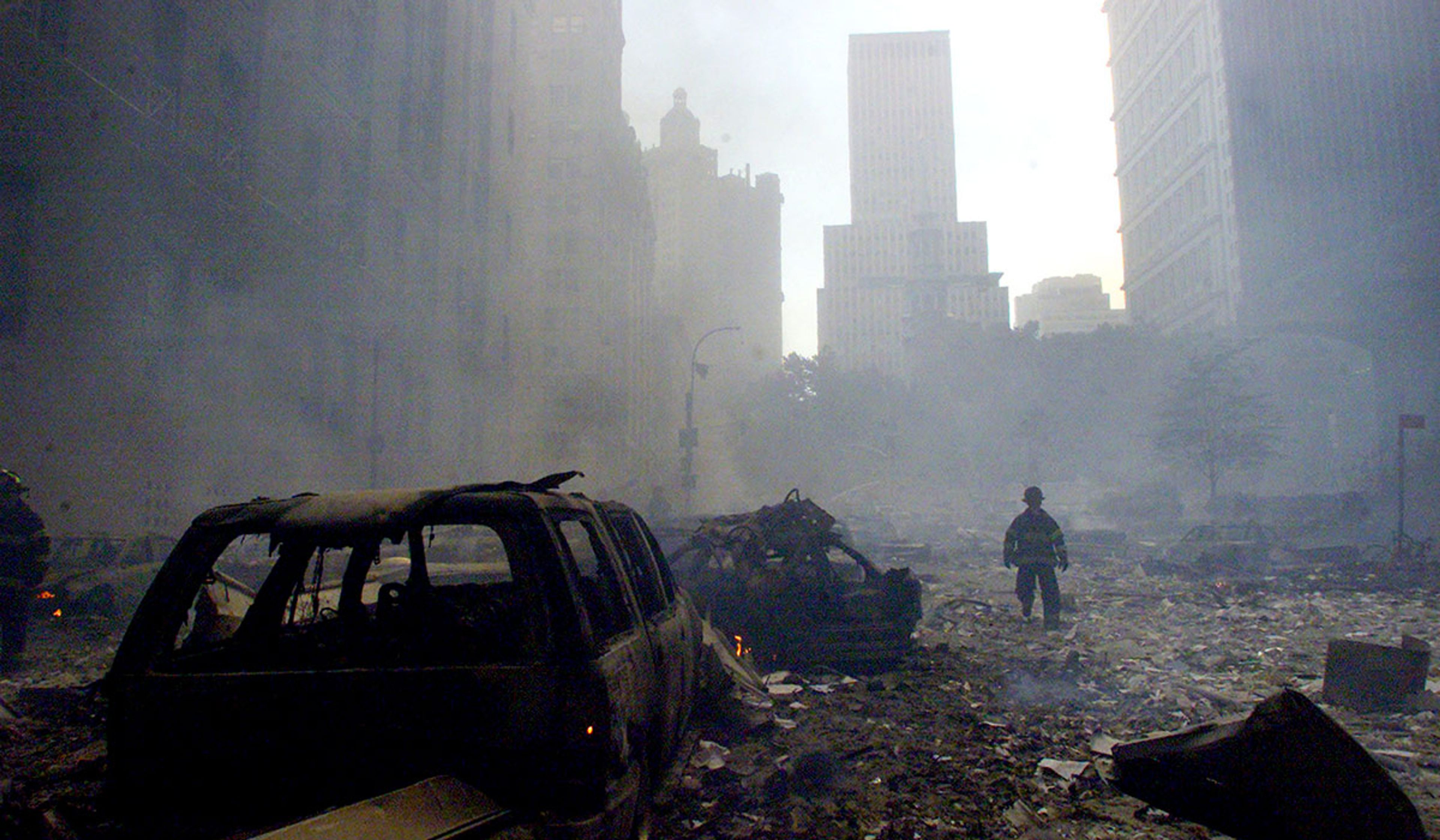
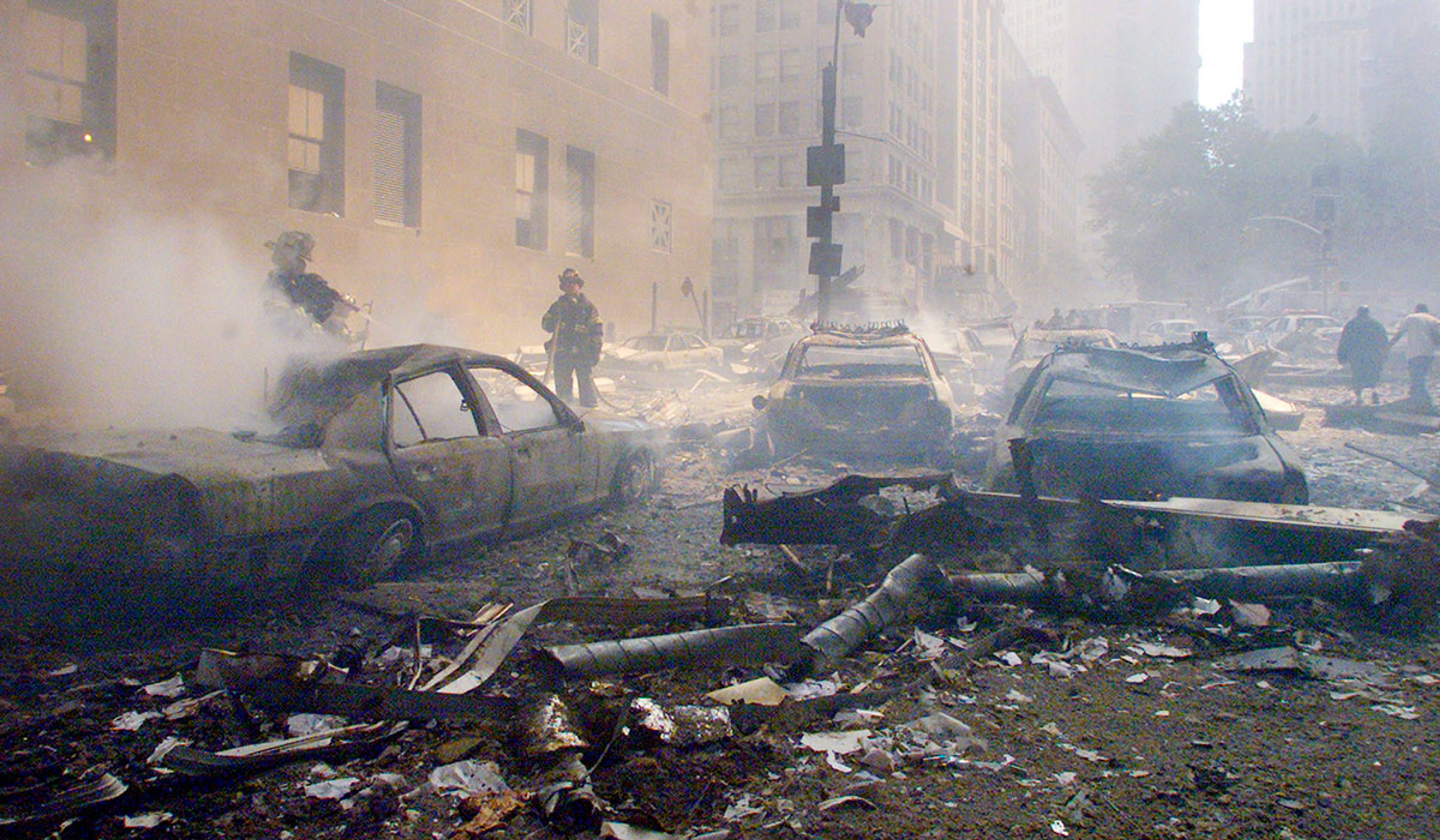
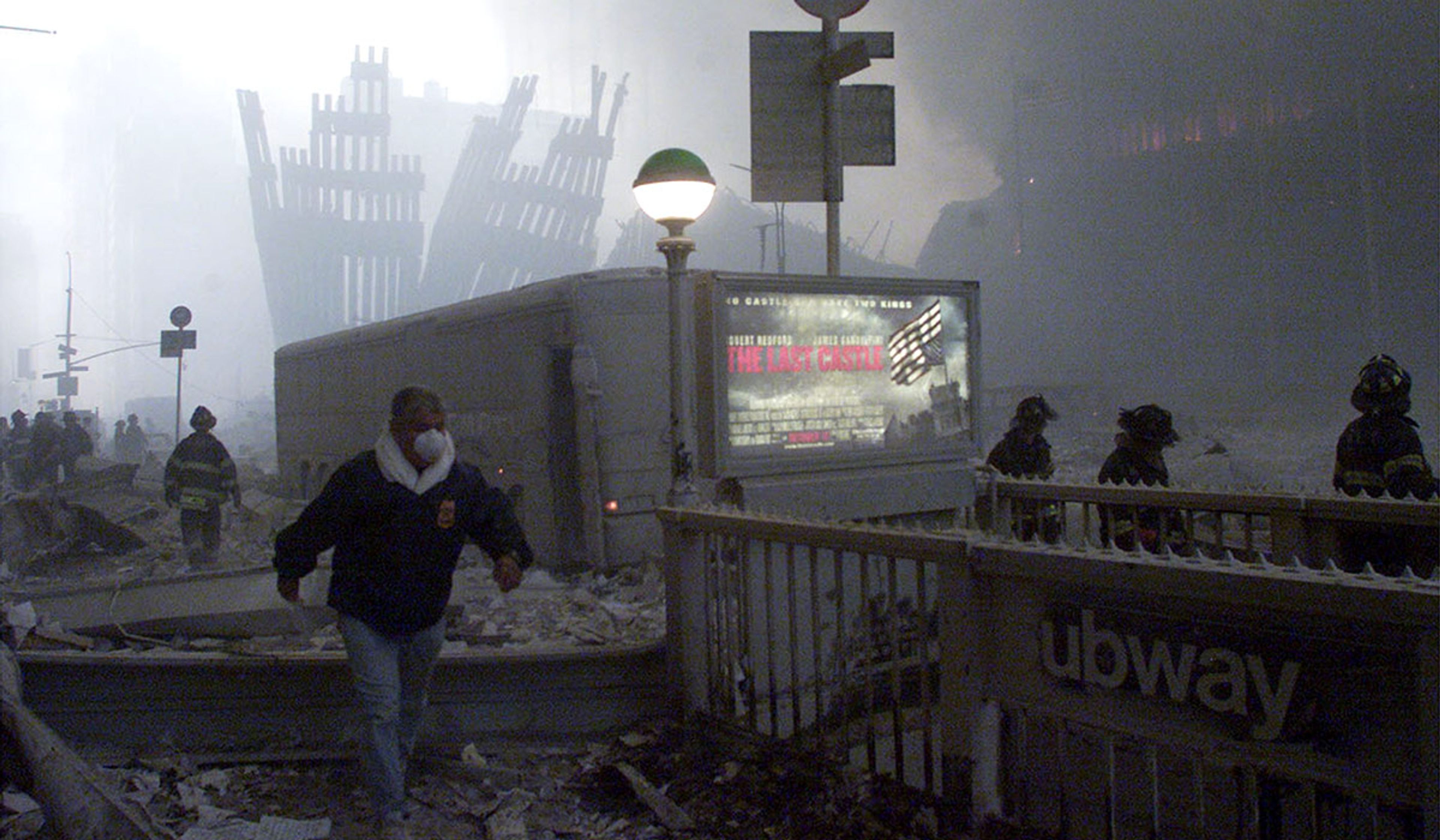
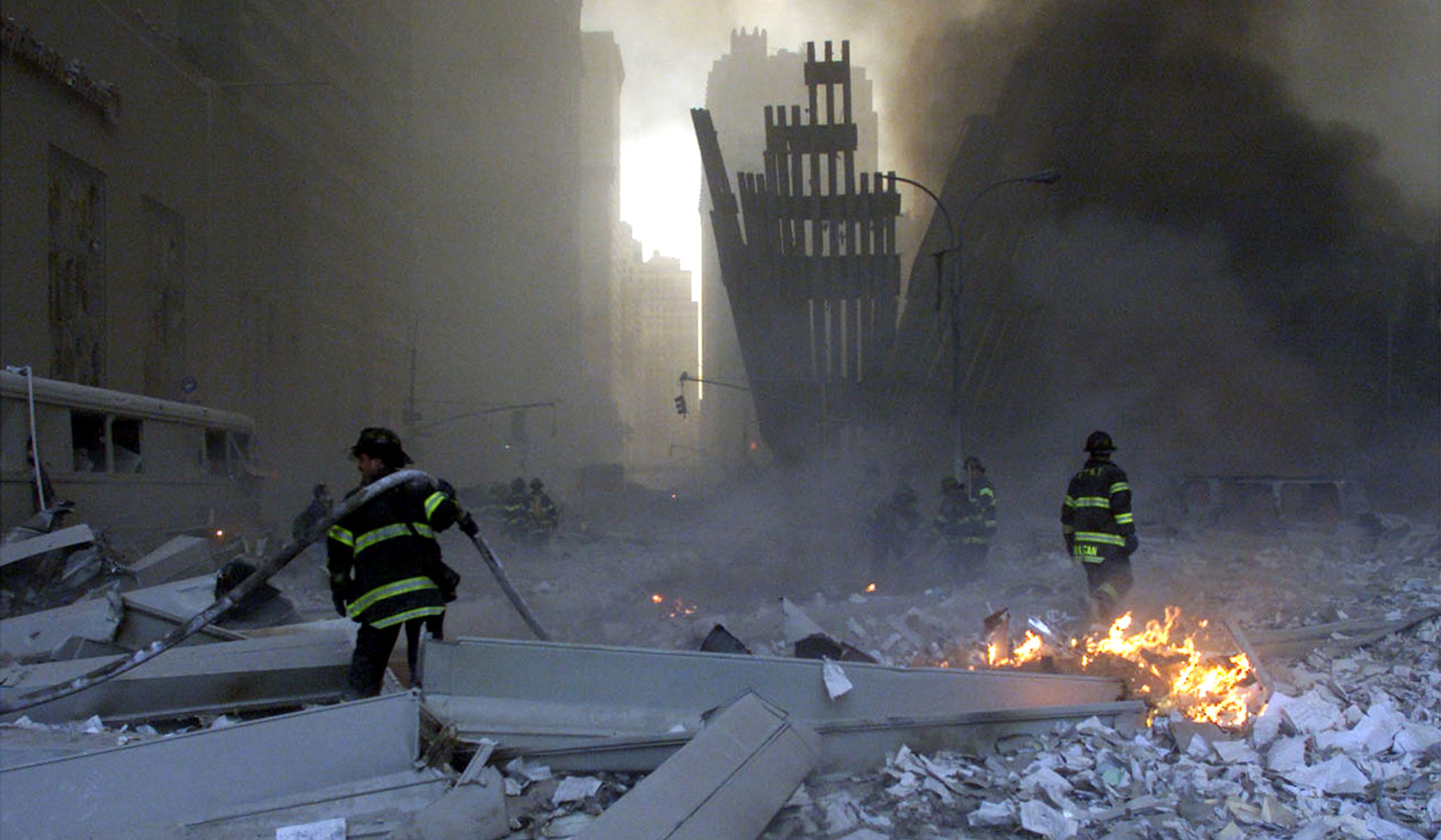
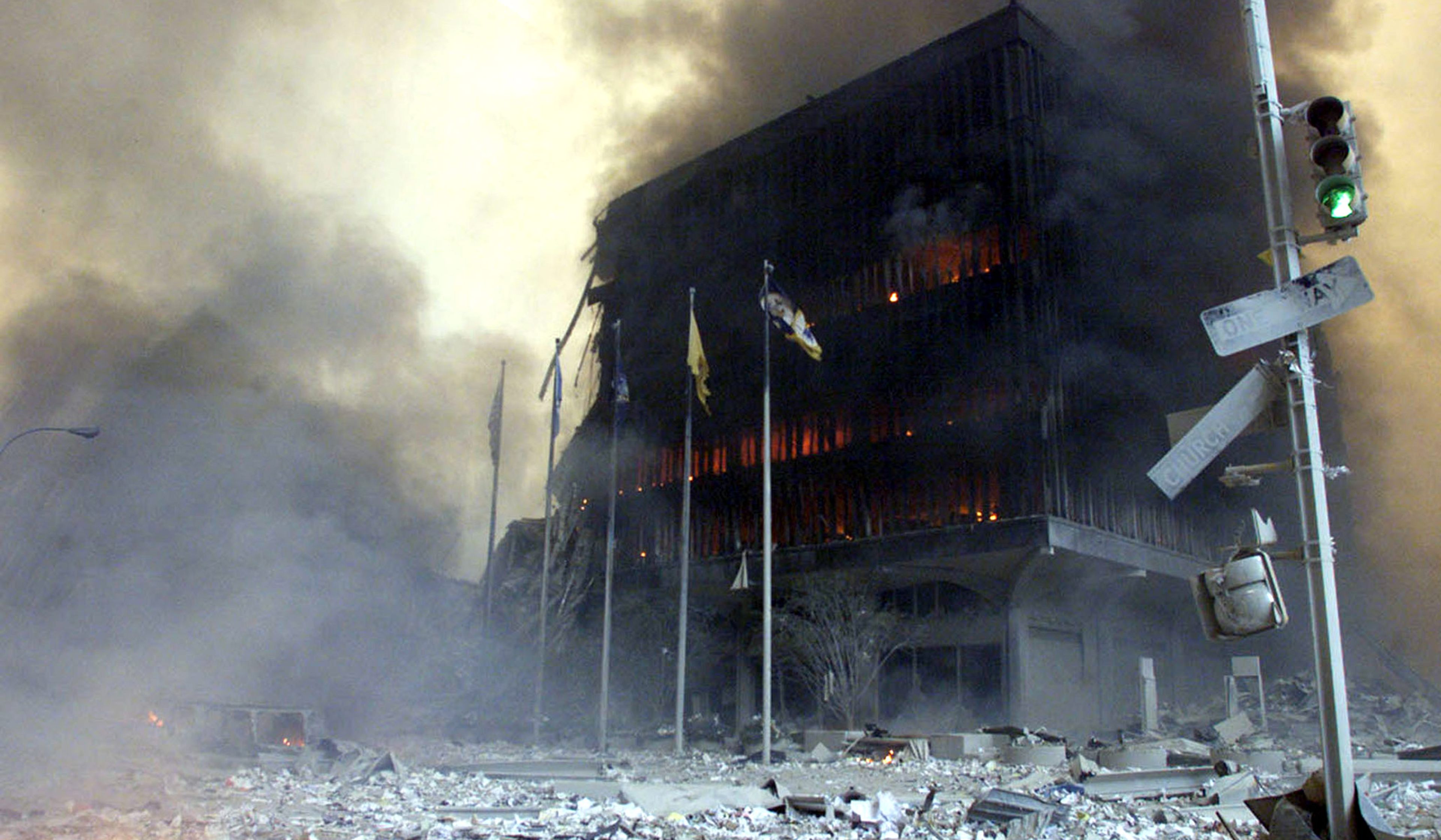
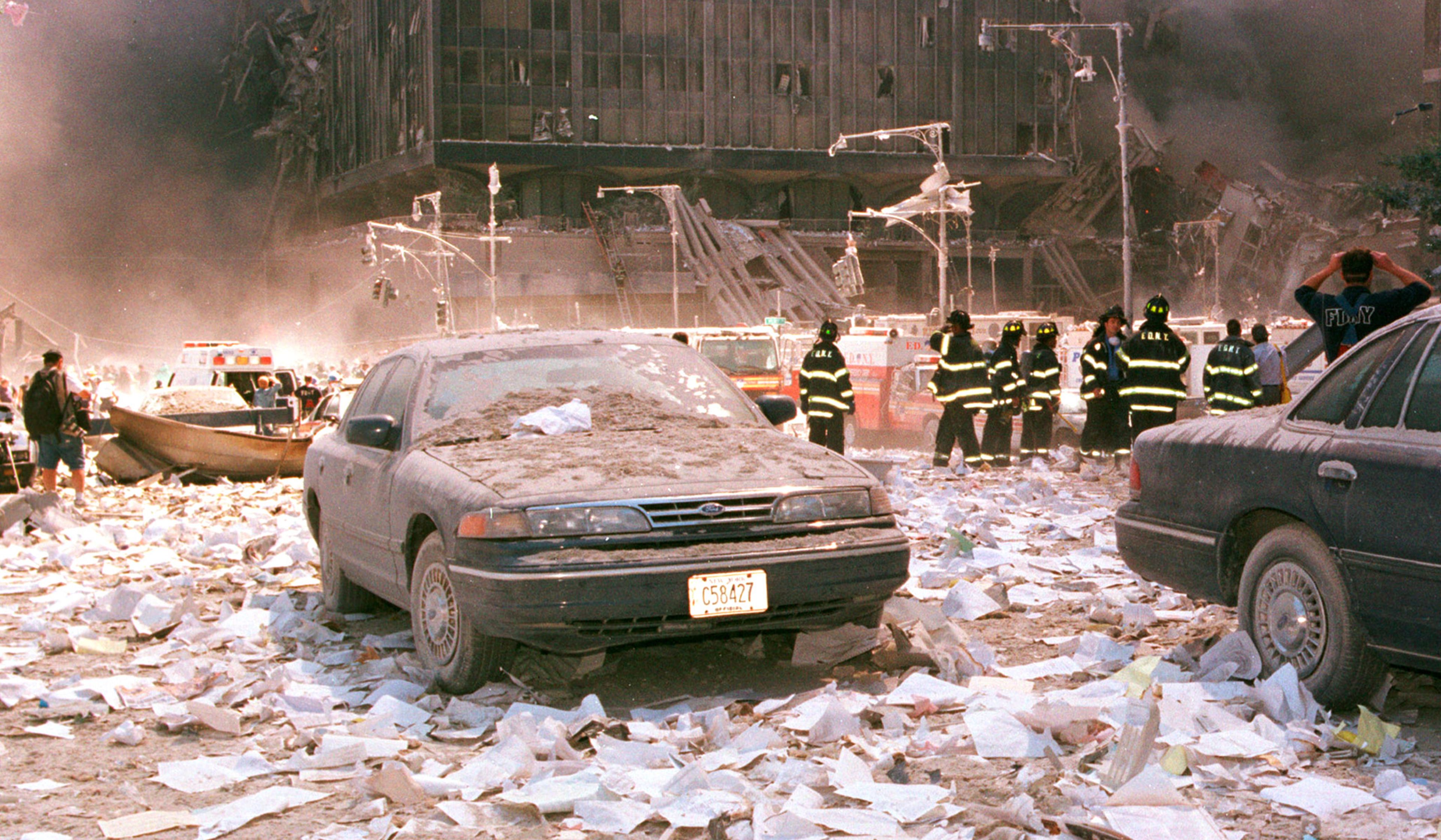
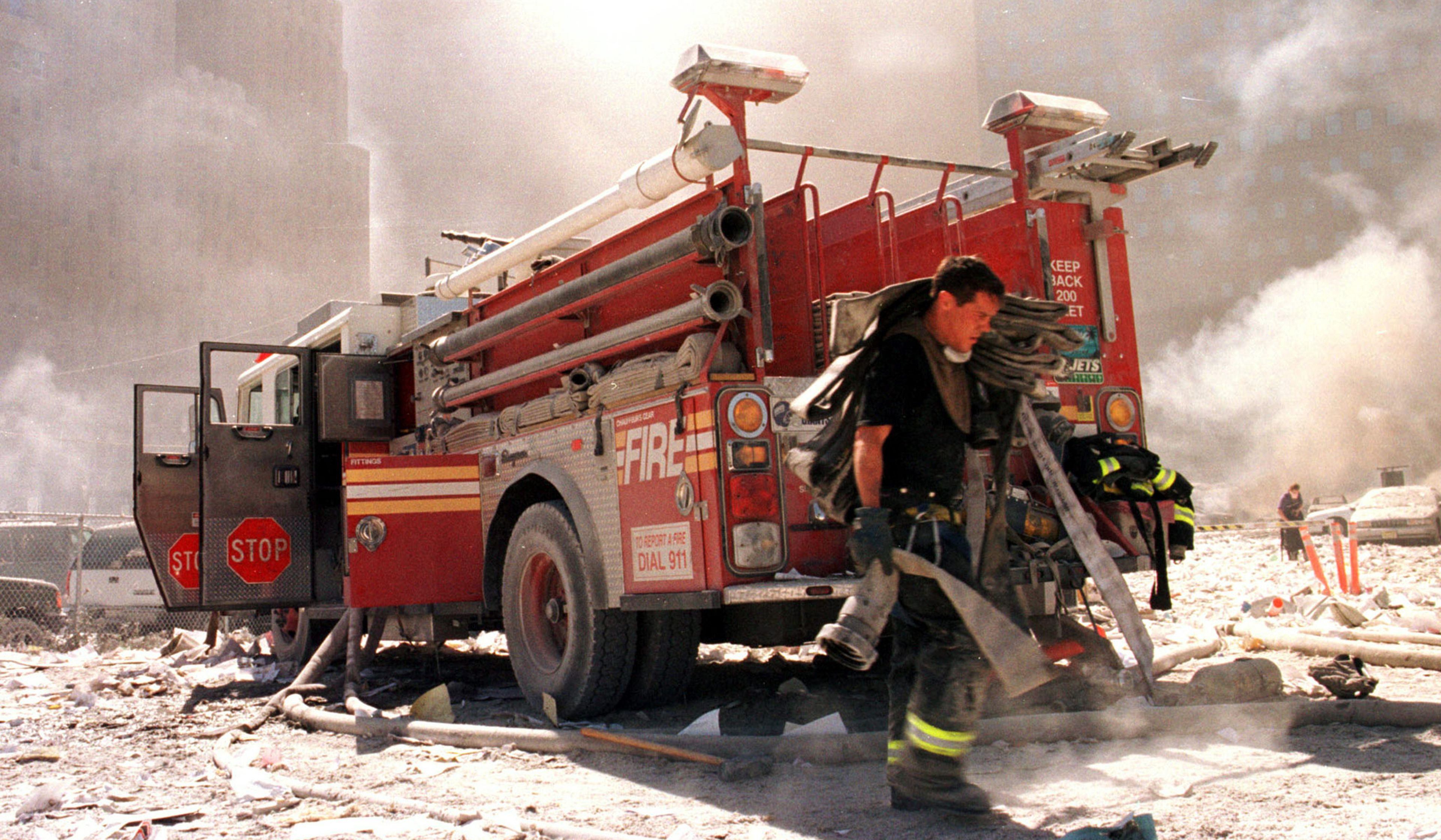
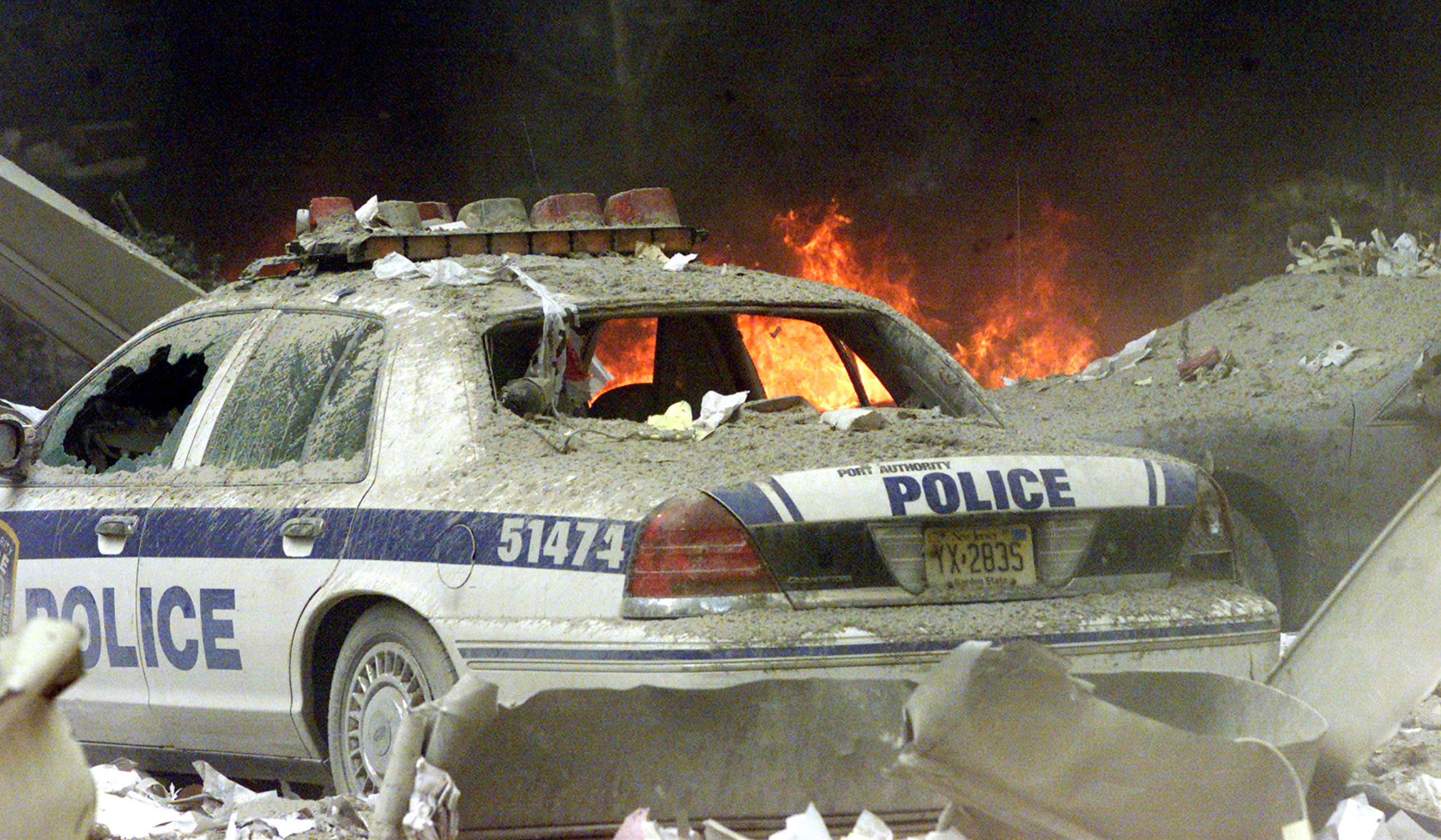
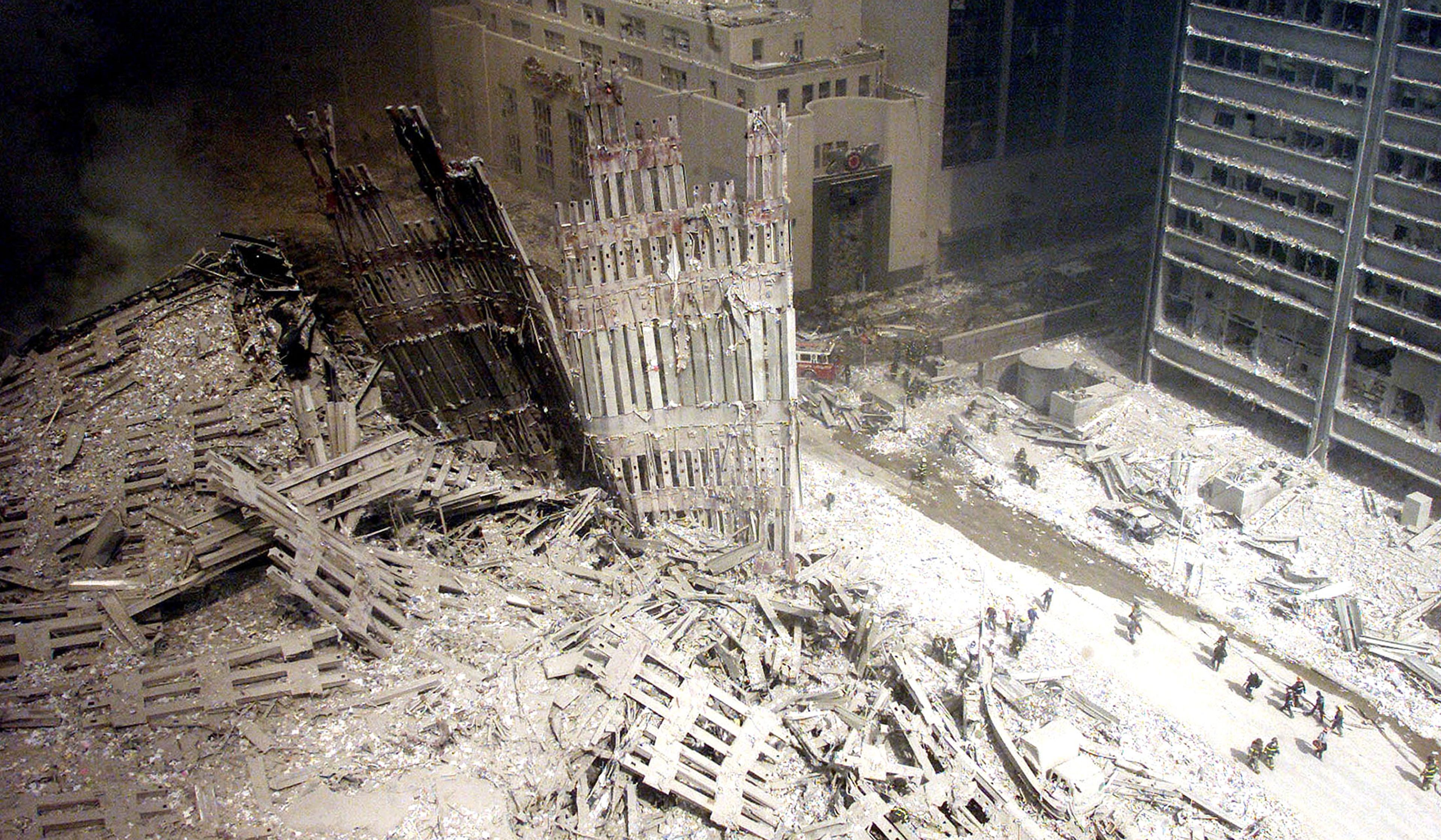
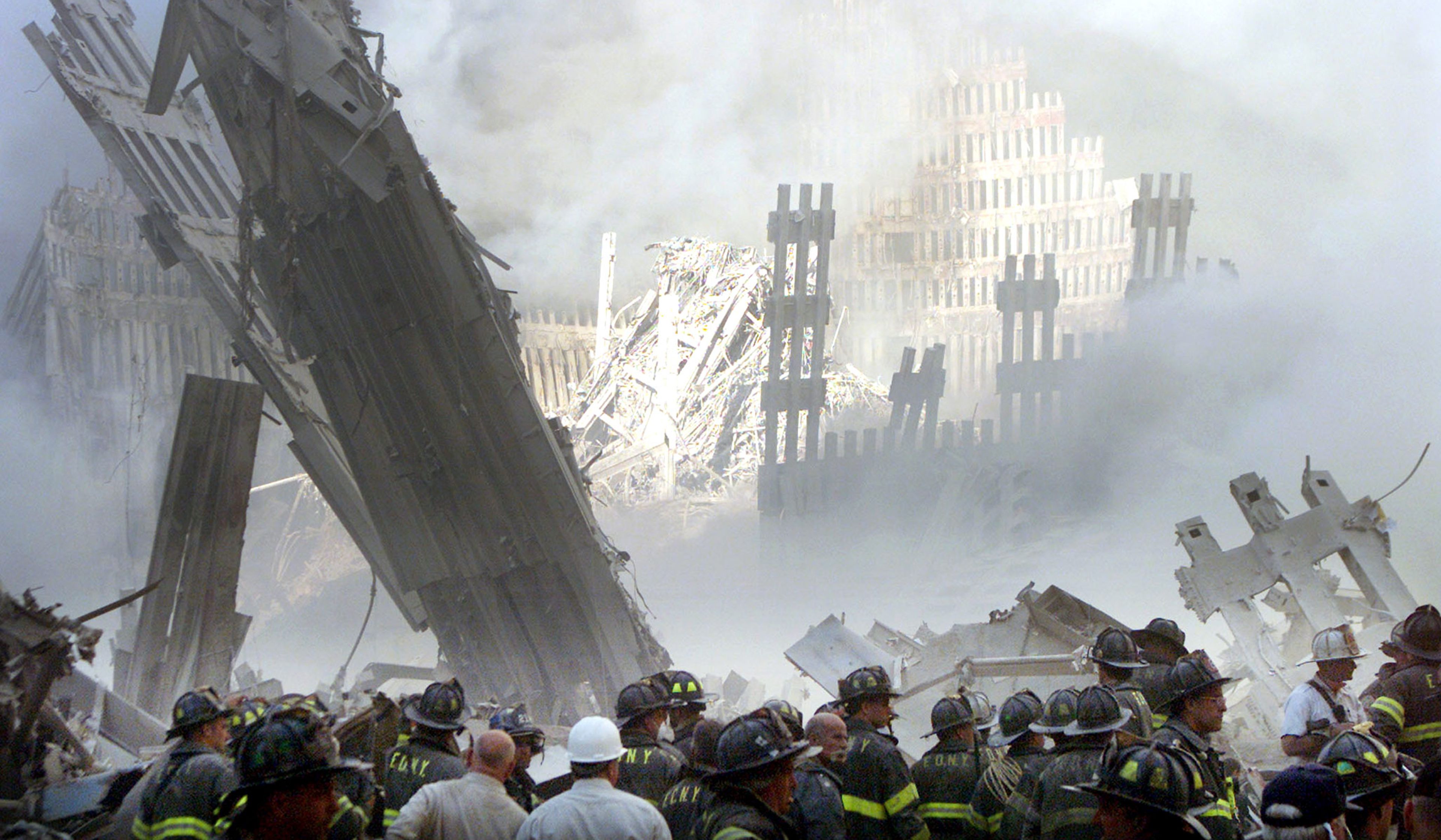
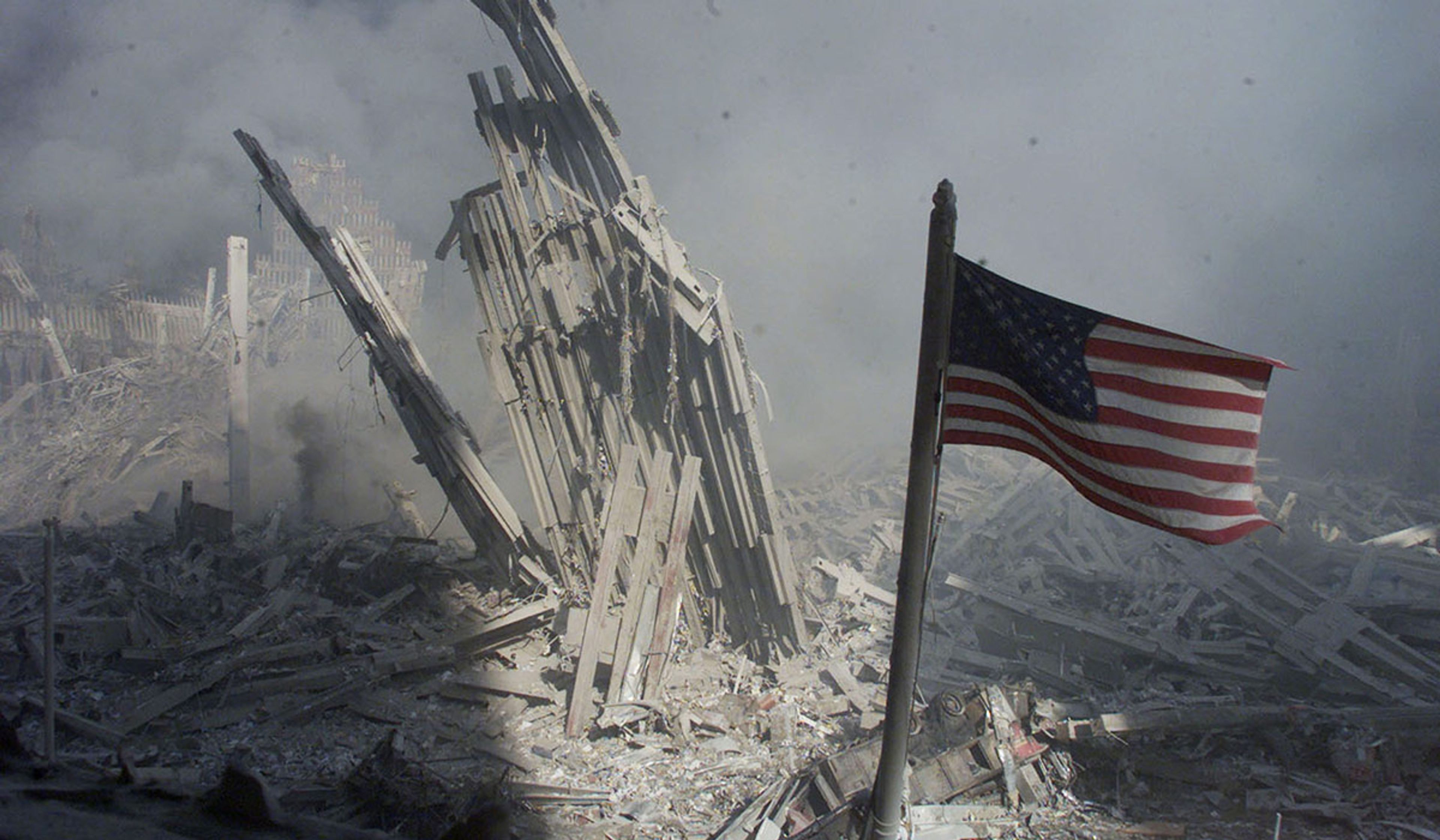
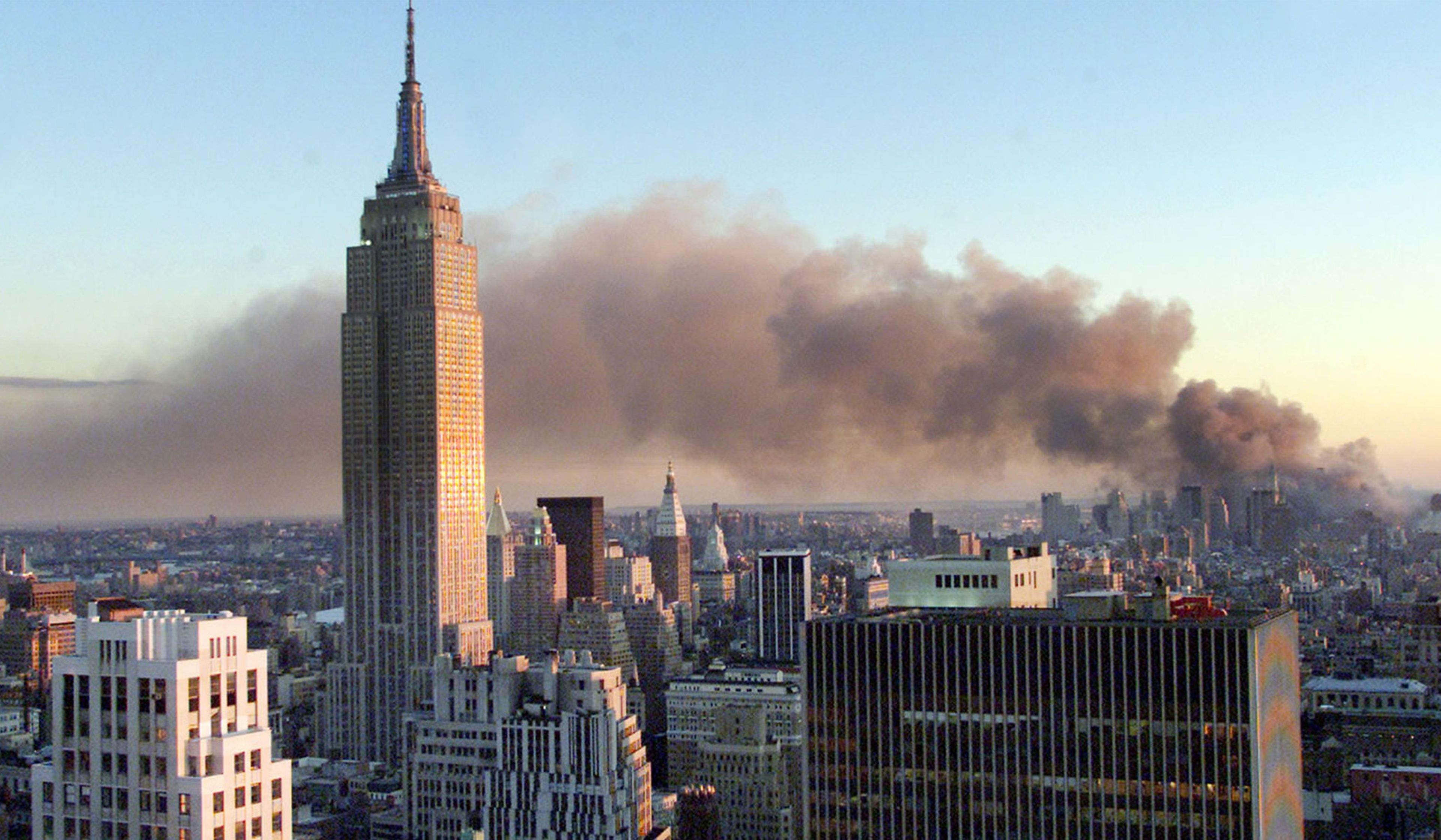
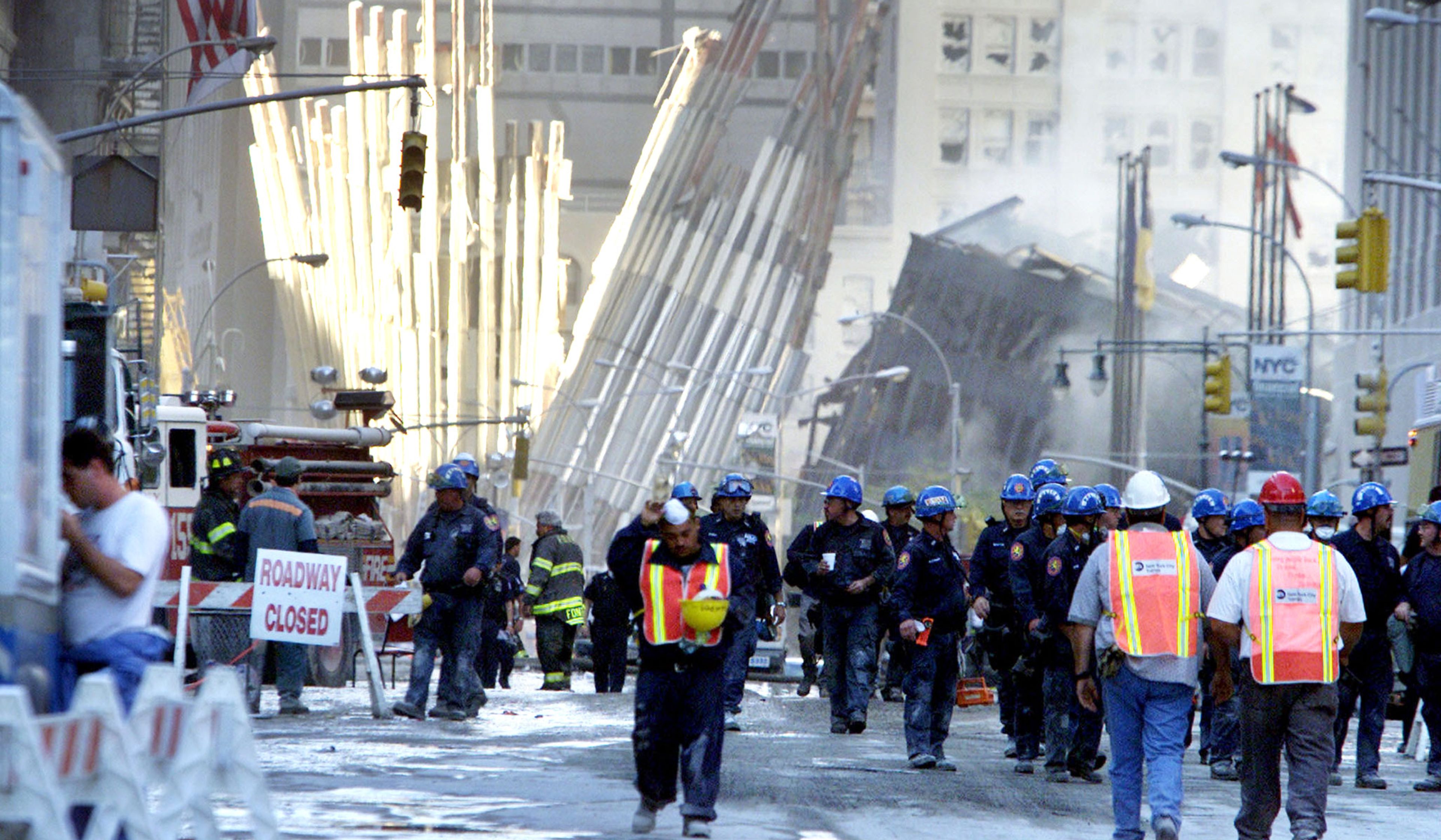
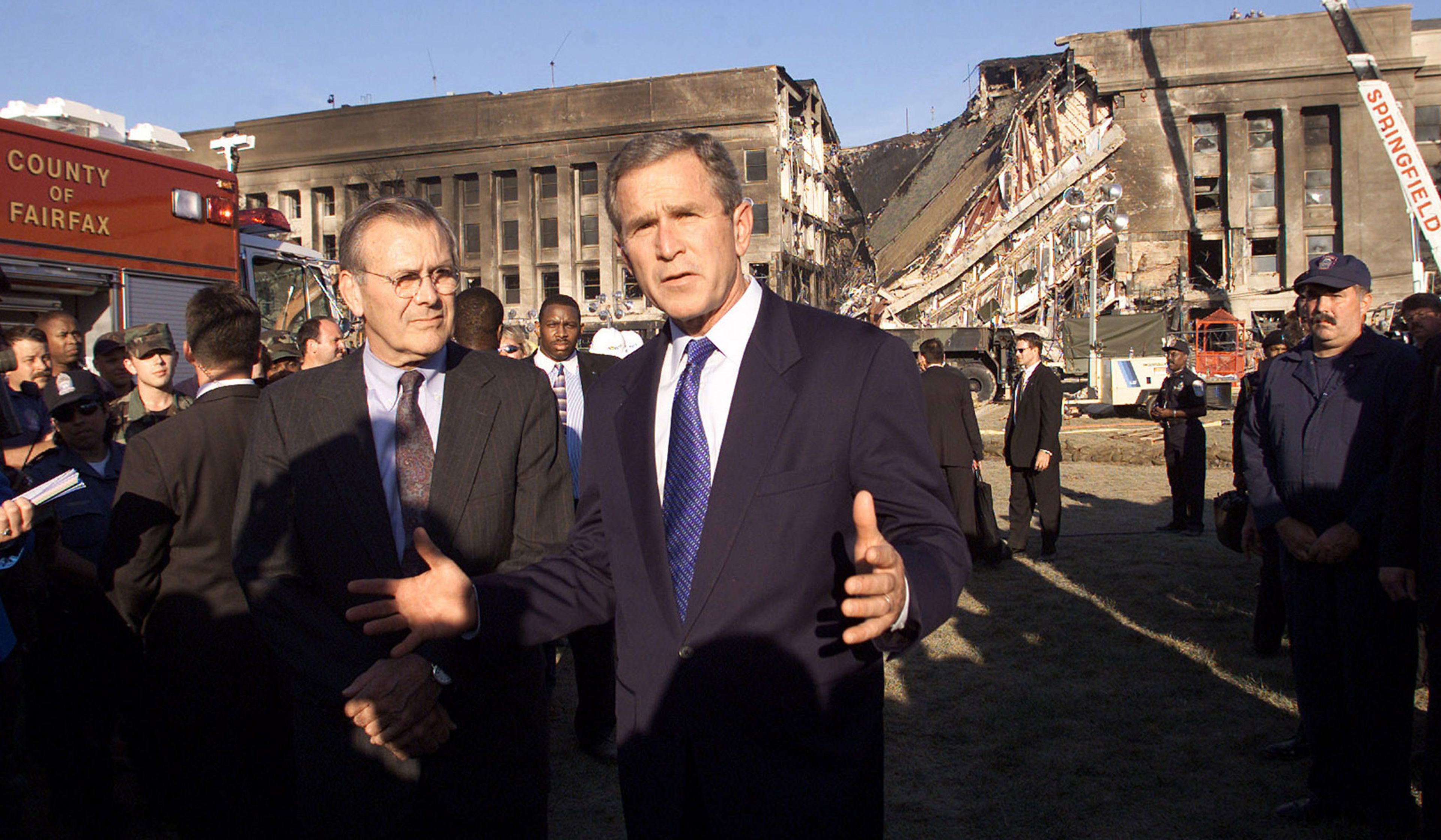
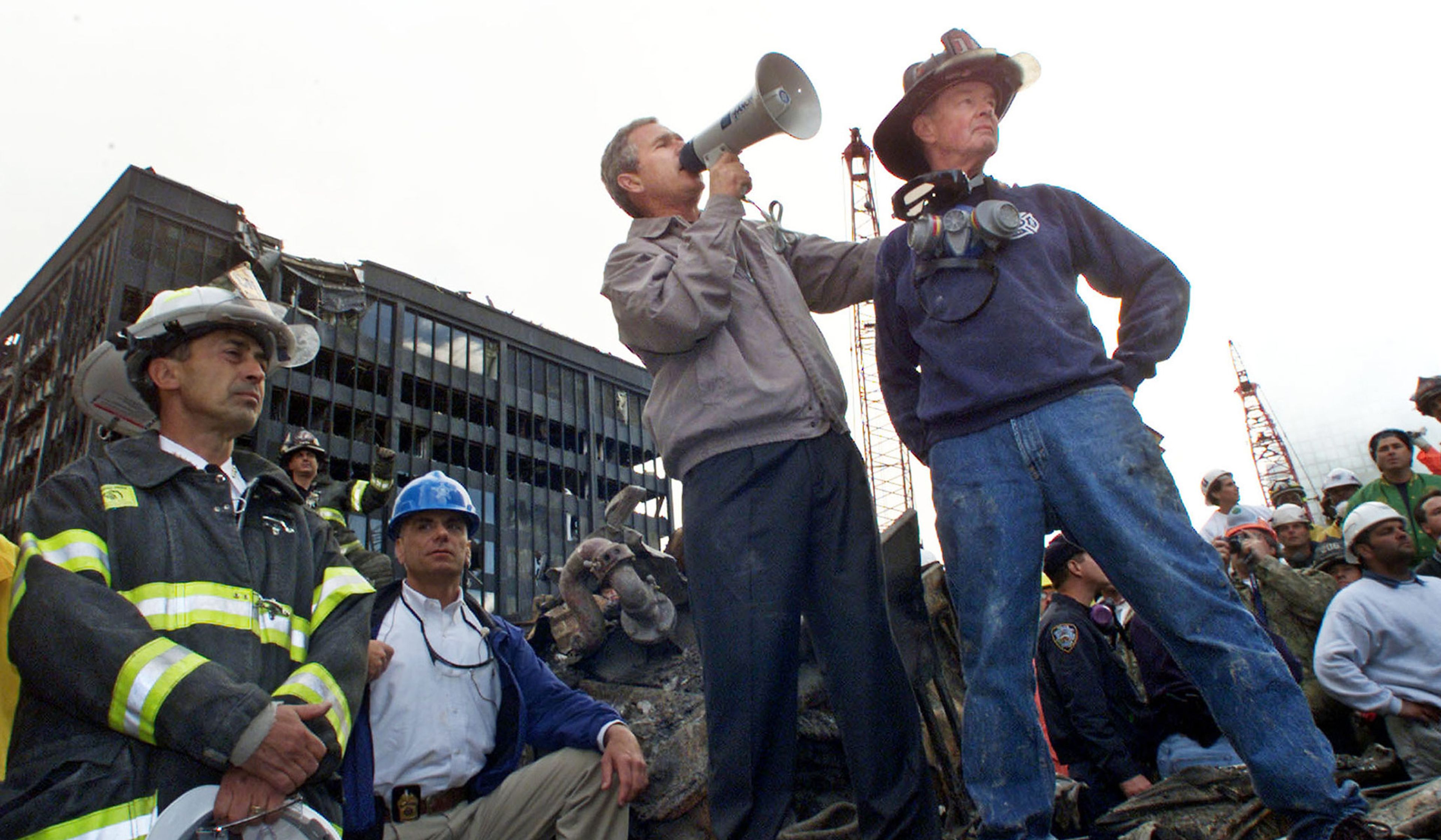
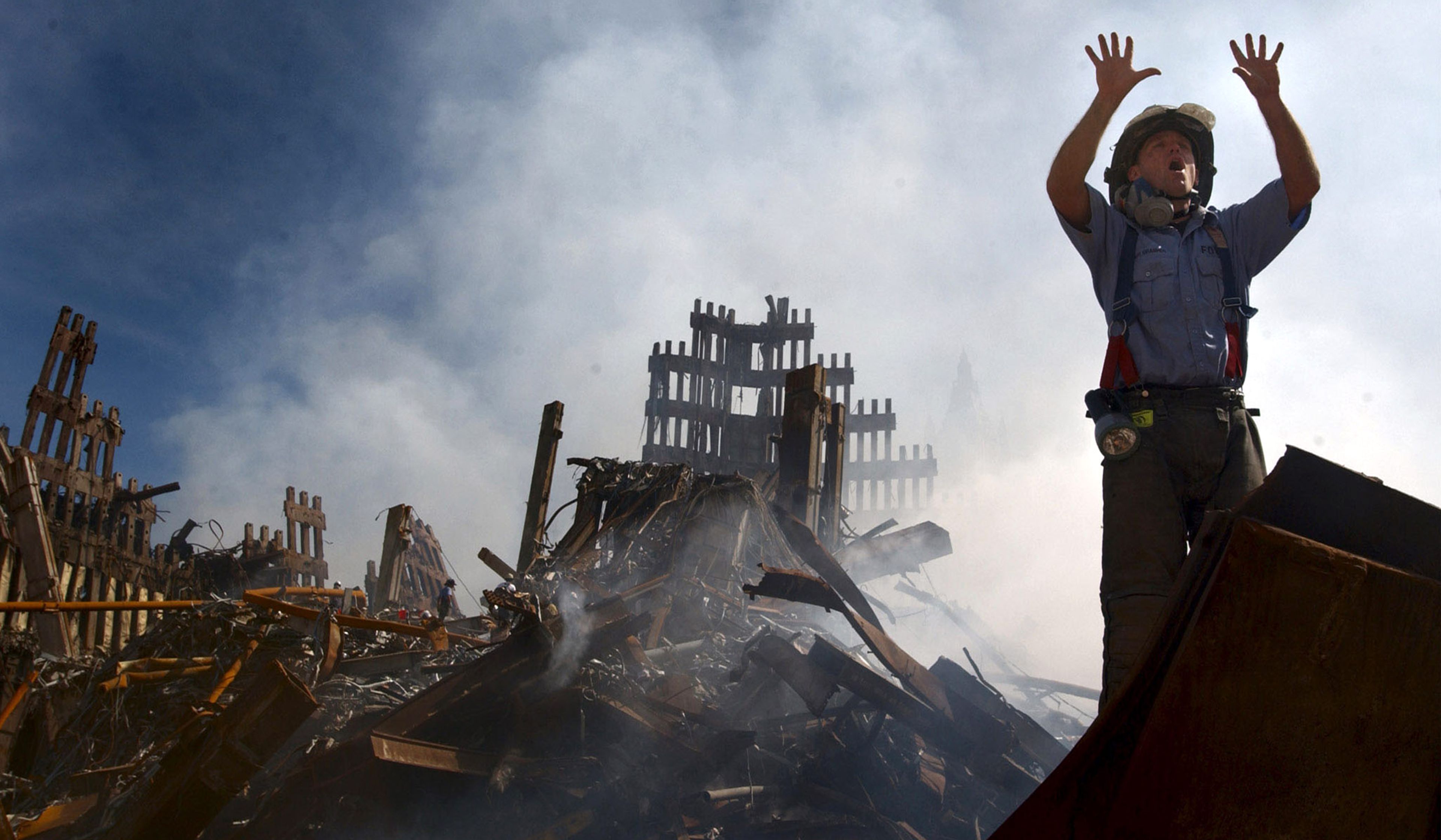
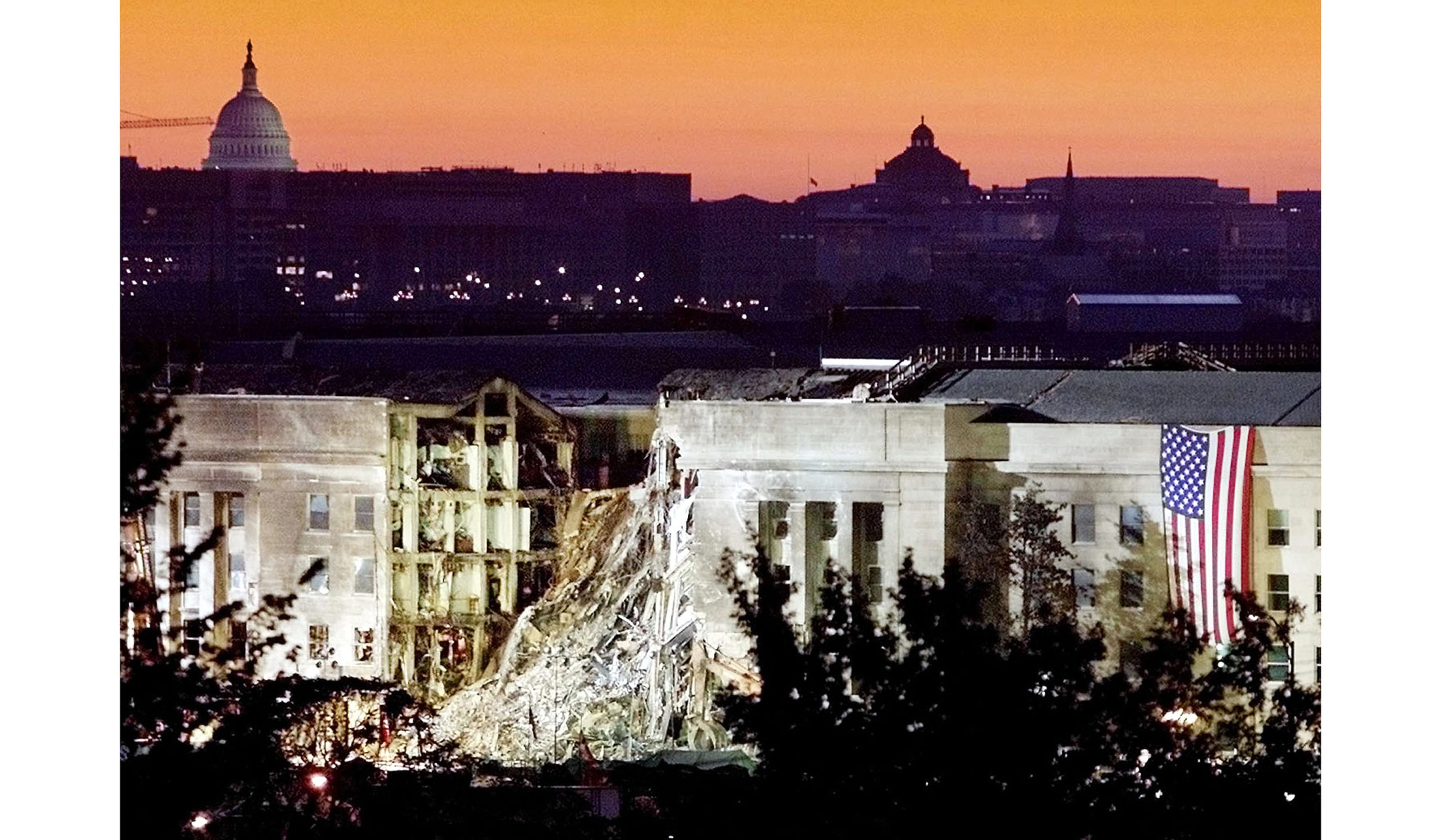
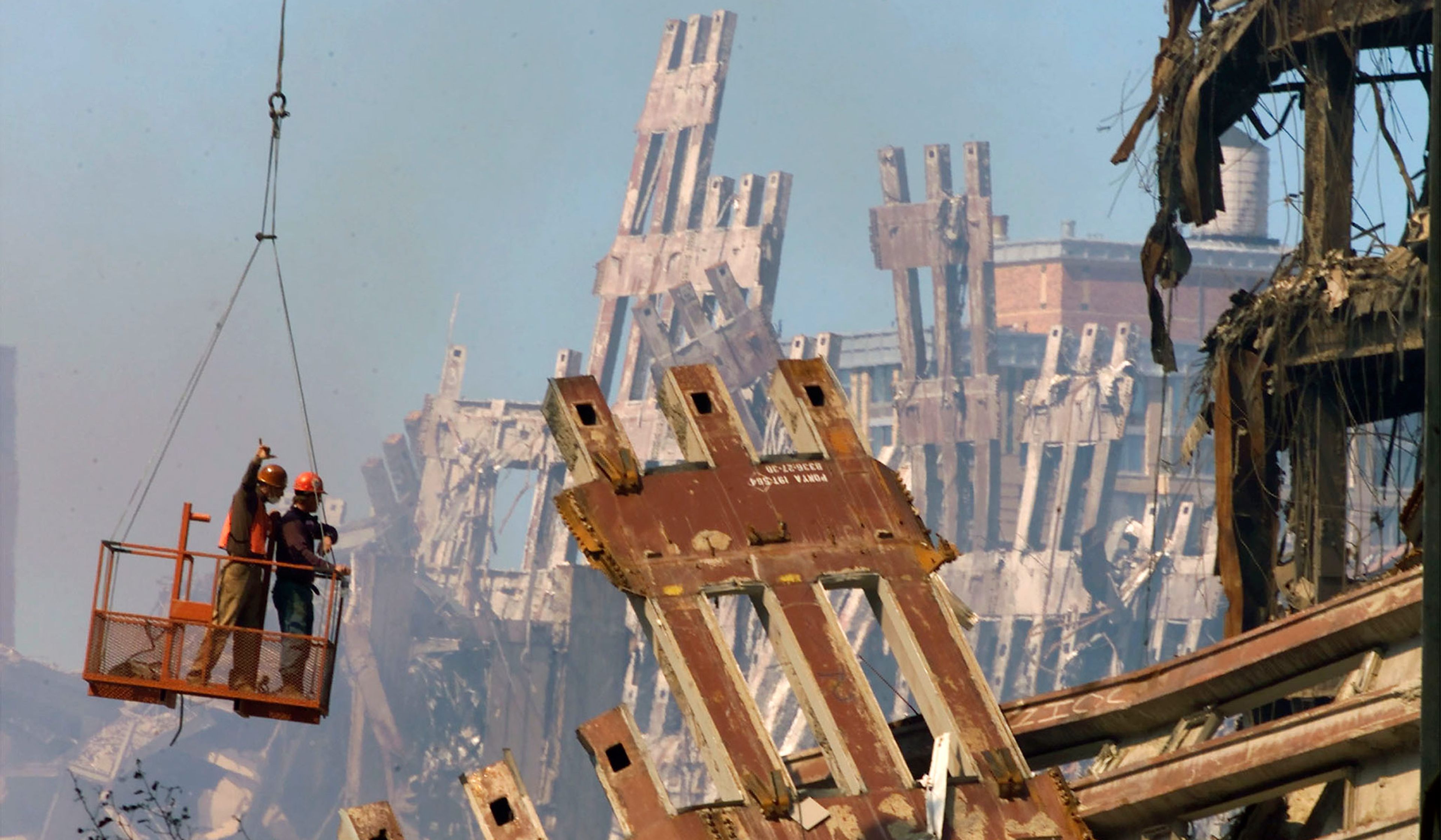
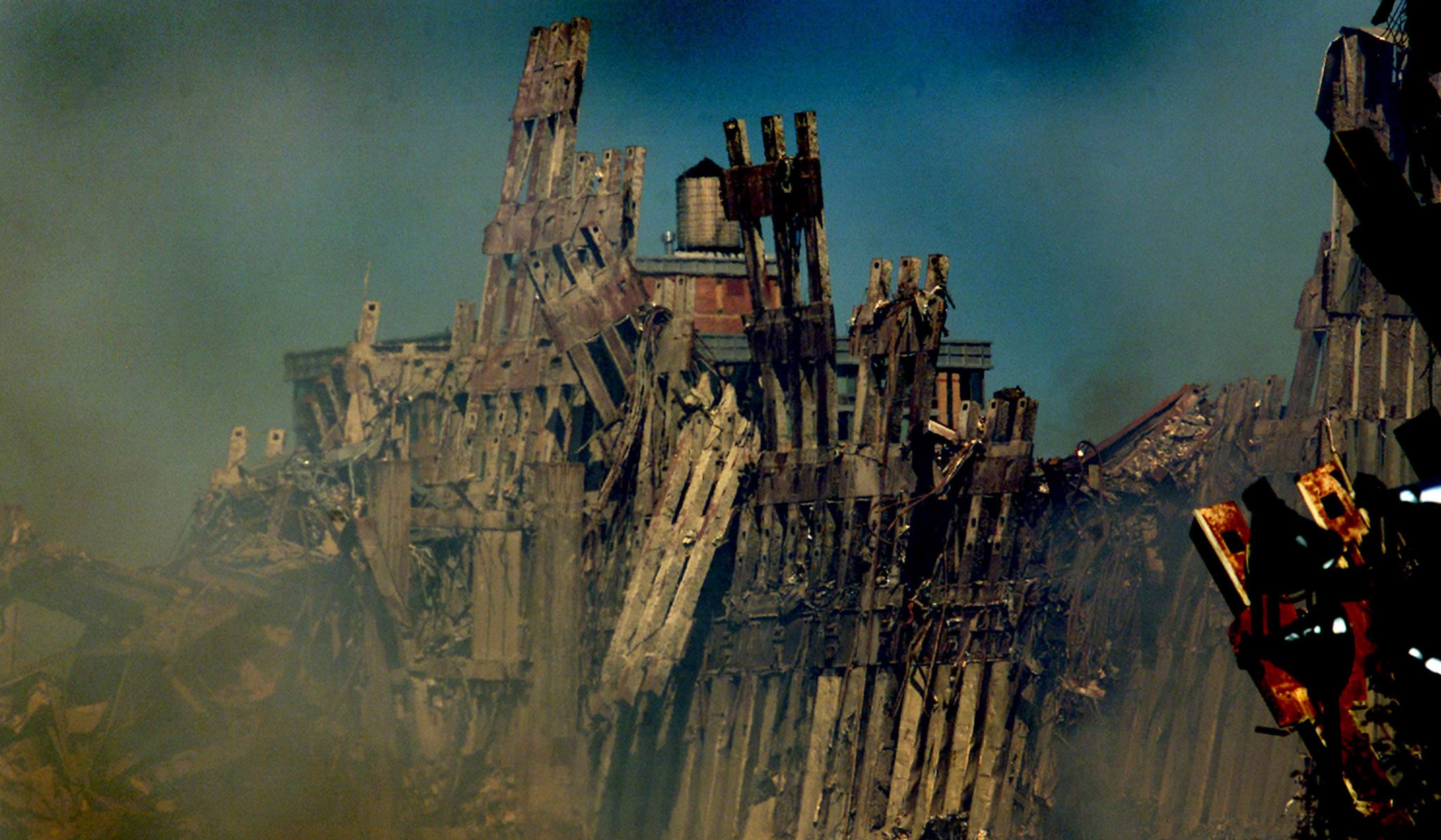
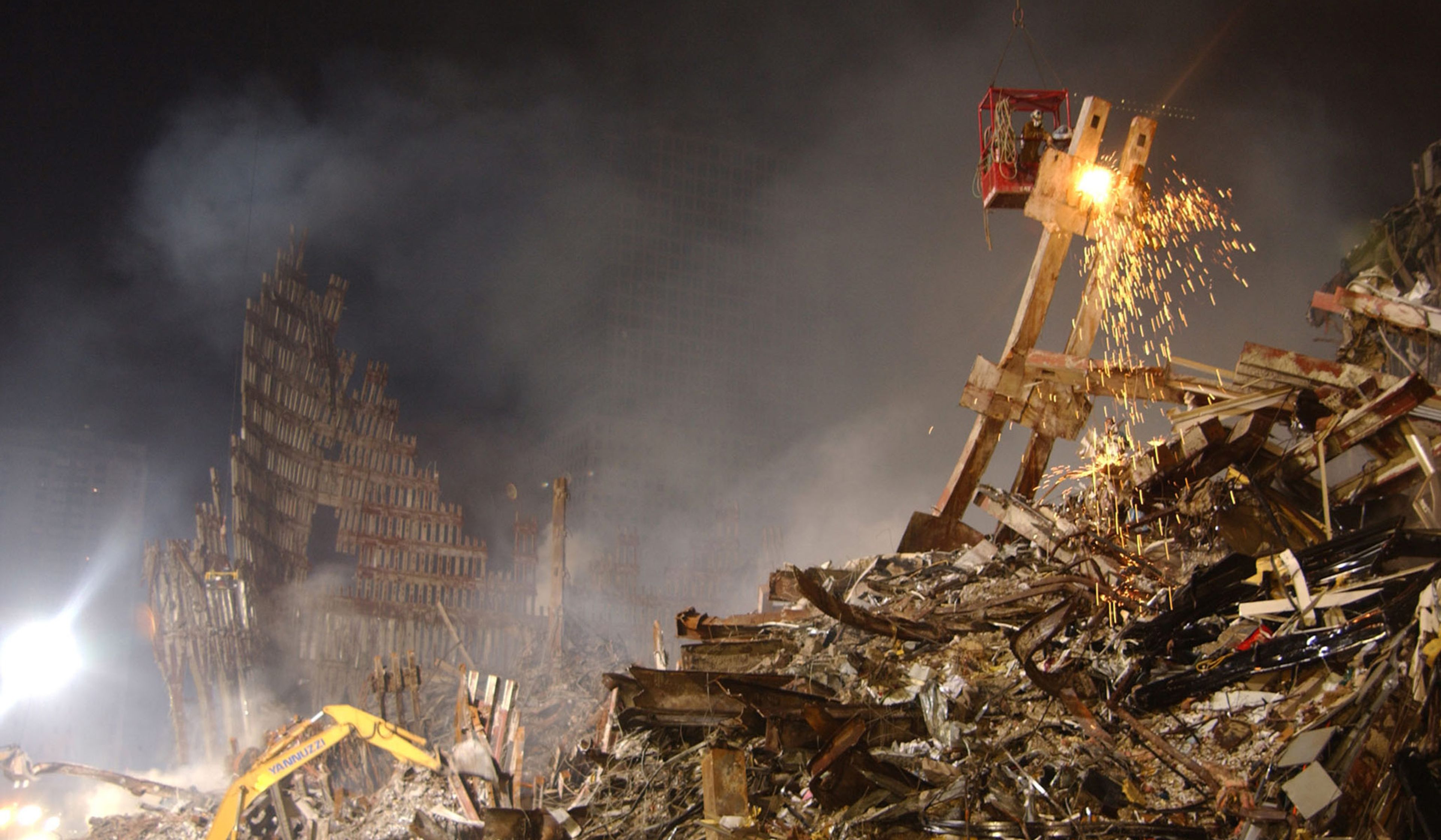
Pedestrians react to the World Trade Center attack, September 11, 2001.
Stringer/Reuters
Equally useful, on 9/11, was the reaction of my friend Carlos Sosa, who walked that night from the Union Square restaurant where he worked as a maître d’ to the tip of Manhattan, three miles, to see if there was some way he could help. There wasn’t. But that selflessness and determination was shown by thousands over the coming weeks.
These recaps are most important for setting up the sequel: The wounded city came back.
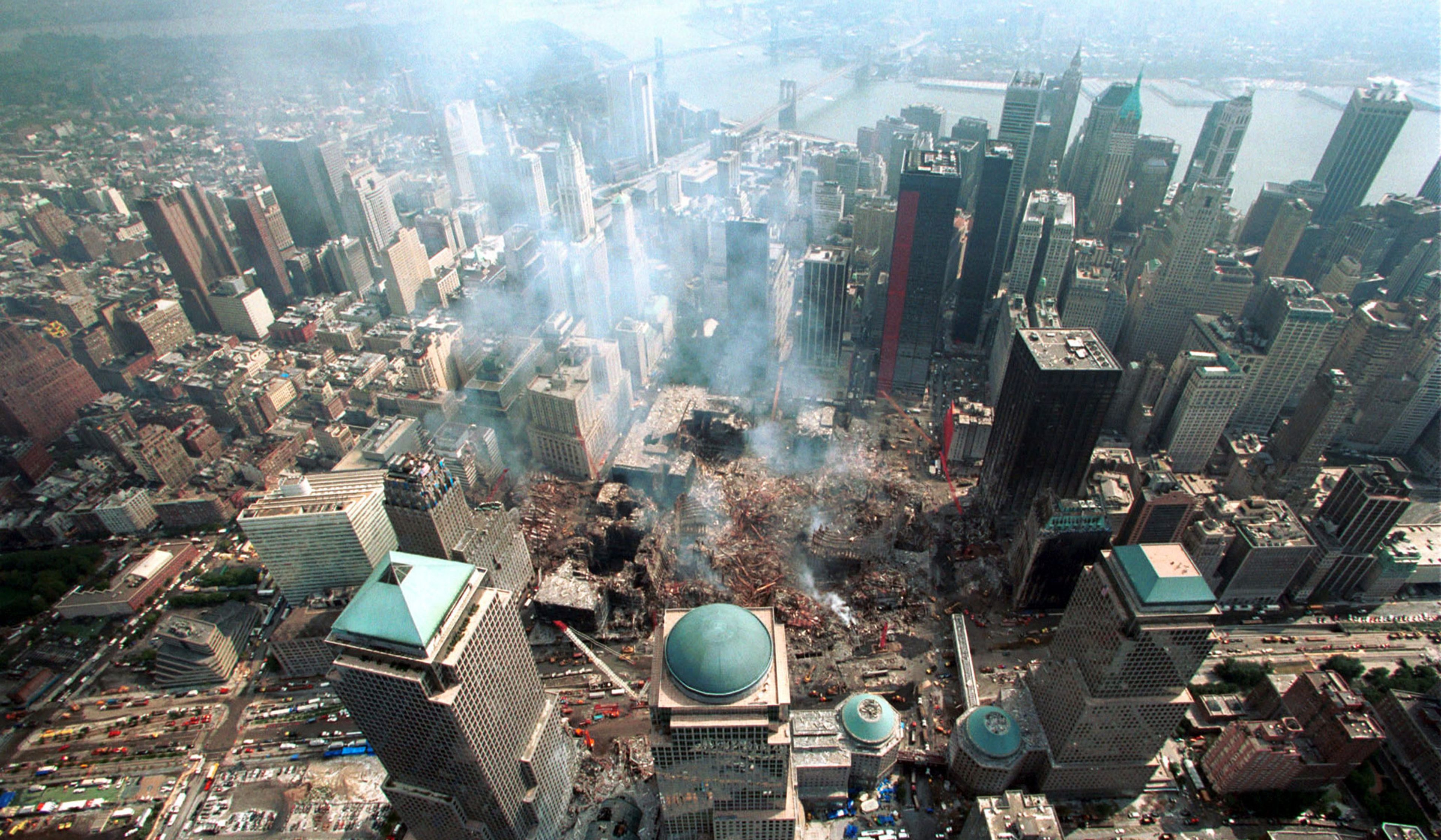
The first 9/11 left the site of its twin targets a glowing hole. Where that was is now a successor skyscraper (more comely than its predecessors, because slightly tapered) and a glittering subway hub. Yes, building them took years longer than was planned, and they were beset with squabbles every step of the way. But look at the result. The new tower, the apex of a cluster of shorter skyscrapers at and around the Financial District, makes a pleasing sight whether from a plane flying up the inner harbor from the south or from a car navigating the helix to the Lincoln Tunnel. It is far superior to the googly buildings that now disfigure the West Side. The subway hub is a fit partner to the transportation monuments of past centuries — Grand Central Terminal, the old TWA terminal at JFK.
Despots can build. They cannot command cities to flourish, as New York spreading away from the attack site on three sides does. 9/11 did not cripple it, nor did later, less dramatic disasters: the financial collapse, the George Floyd riots, the eight-year mayoralty of Bill de Blasio, chronicled in these pages by John Podhoretz. The latest census shows 8.8 million New Yorkers, up 629,000 from ten years ago.
Good (sometimes big) government helped. In one of those flashes of honesty that tempt one not to write him off entirely, Senator Schumer recalled going to the White House after 9/11 to ask for federal assistance. We need $20 billion, he told President Bush, aiming high. You got it, Bush replied, and delivered. The civic heroism I mentioned earlier, that willingness to work for comrades, honor, home, contributed too.
Of greatest effect over the long run were the everyday efforts of everyone, pursuing his or her own interest, ambition, and livelihood. Call it commerce, an ant colony, or liberty. The terrorists, maybe intuiting what is their ultimate enemy, struck the Financial District. The energies that the Financial District translates into points have wiped away the remains of their tantrum like tides sweeping a wreck off a beach.
Now the country from which the terrorists launched their attack is once more in the hands of those who welcomed them the first time around. What next?
Keep taking your shoes off at airports. Our terror-prevention skills have improved dramatically since we learned 20 years ago that it was our problem. The grandest gestures have been forestalled. The terror attacks that have occurred here — the Boston Marathon bombing, the shootings at the Orlando nightclub and Fort Hood, a deadly truck in a Manhattan bike lane — have been the work of freelance volunteers, what adepts of upheaval call “leaderless resistance.” They will have more to inspire them, and the men who guard us while we sleep will have more to do.
The stampede to the exits in Afghanistan is a blot on Biden, and his top advisers, and should be. It will be remembered as the Kabul Derby, if not the Biden Sweepstakes. Forrest McDonald wrote — tongue in cheek? — that the only consistent rule of presidential popularity is that it always goes up after unignorable disasters. So far this episode proves him wrong.
But there are more acts in the drama yet. No wars, not even victorious ones, are without defeats, even debacles. We annihilated our enemies in World War II, which began for us with Pearl Harbor and included Kasserine Pass and Anzio, to say nothing of the mistakes of our allies (Market Garden, the Hitler–Stalin Pact). Lincoln ran through a bevy of blunderers and faint hearts before he found Grant. Washington lost more battles in the Revolution than he won.
America’s worst wartime decision-making by a president was probably James Madison’s handling of the Chesapeake theater in 1814. The British had landed on the western shore and were marching north. At this moment of peril Madison stuck with a secretary of war — John Armstrong — who was no longer consulting him, and a commander in the field — William Winder — whom he had appointed for political reasons (Winder’s uncle was governor of Maryland at the time). Armstrong took no steps to defend Washington, D.C., because he did not believe the enemy intended ever to go there, while the many steps Winder took — “The innumerably multiplied orders, letters, consultations, and demands which crowded upon me,” he wrote, “can more easily be conceived than described” — amounted to nothing because he was in over his head. All the president contributed to the actions and inactions of his subordinates were passive-aggressive suggestions that they do better. As a result of this three-way game of blindman’s bluff an American army, deployed at the last minute, when British intentions became obvious, was routed at Bladensburg, Md.; the Capitol and the White House were torched; and the president sheltered in Brookeville, Md., in the home of Caleb Bentley, a Quaker friend of his wife. (Perhaps Bentley said to his guest, “Thee has shown poor judgment.”) Yet that war ended in a stalemate that was as good as a victory, in part because of other decisions Madison and his rogue secretary had taken (clearing out deadwood in the army, promoting better officers in other theaters). We could not defend the capital, yet we did a good enough job on the Great Lakes, Lake Champlain, and New Orleans.
The terror war seemed like everything 20 years ago. It changed life forever, we all said. Then later events shoved it aside. Now it is back. But it may end up a footnote to, and a distraction from, our dealings with China. The world is of a piece, and China gloats over our disarray in Kabul for propaganda purposes (and its military planners may conclude it is the true measure of our ability). But history may well record that the game was in East, not Southwest, Asia. Obama, Trump, and Biden have all to varying degrees recognized this. This is not to say that they have done enough to act on their insight — enough, say, to defend Taiwan if Beijing decides to move, perhaps as early as next year’s Olympics. But this too will be a long story.
Lick ’em tomorrow, if we can find our Grants.










Comments