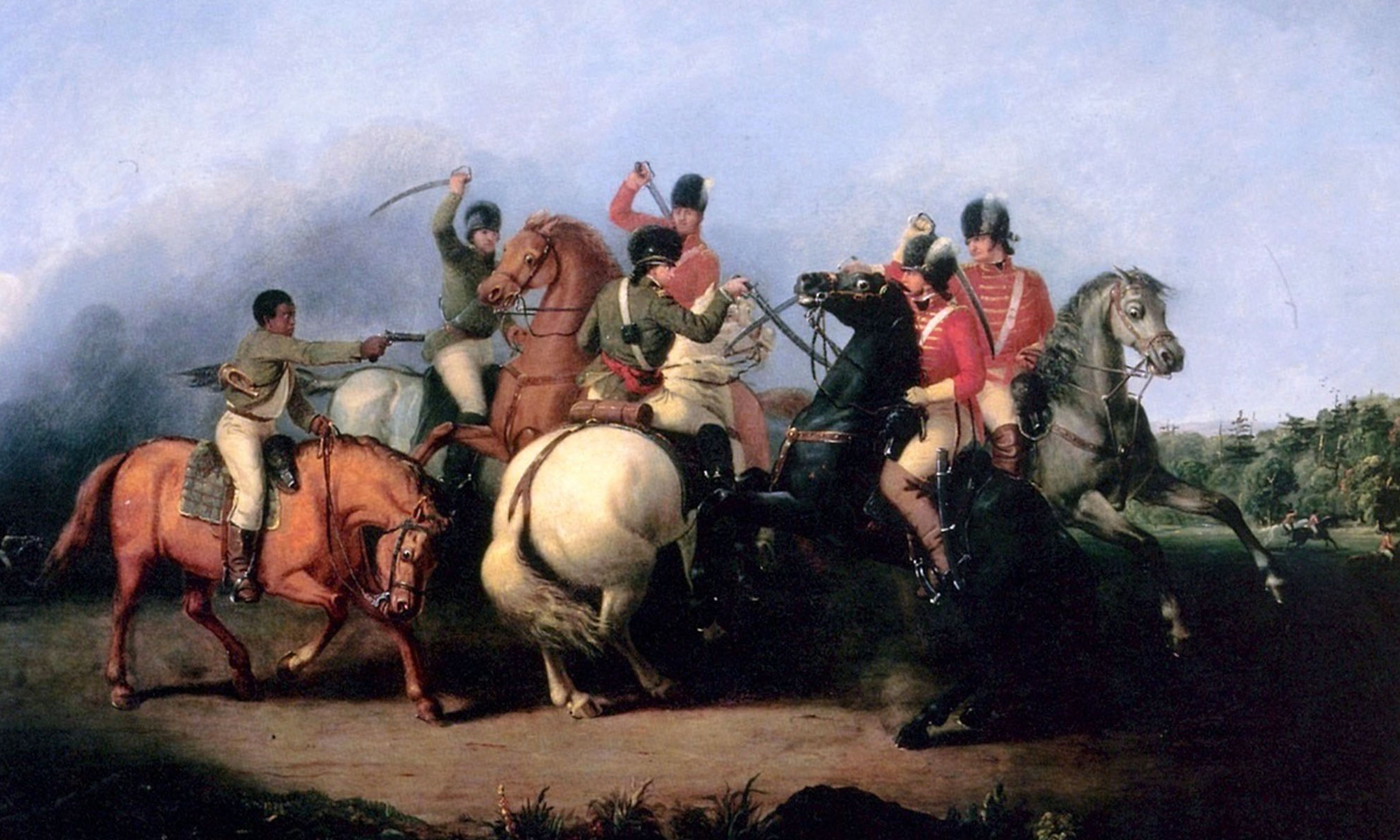
In This Fierce People: The Untold Story of America’s Revolutionary War in the South (Knopf, 400 pp., $32.50), the historian Alan Pell Crawford aims to correct what he calls the “standard narrative” of America’s War of Independence. From their school days, many Americans remember most clearly the war’s beginnings in the North and the battles featuring George Washington as commander. Yet, writes Crawford, by 1778 the war was at a stalemate, and it was the southern campaign that ultimately forced the British surrender at Yorktown. While Crawford’s story — of the battles at Camden, Kings Mountain, and Cowpens, and of the brutal skirmishes between loyalists and rebels in the swamps and forests of the Carolinas — is not quite as unknown as the book’s subtitle suggests, he tells it with uncommon vividness and skill. He notes that part of the reason this theater of the war often receives short shrift in popular histories is that the southern partisans of liberty, commanders and soldiers alike, were also slaveholders. Crawford confronts the contradiction, and the role that slavery played in the Revolution, while also describing the contributions of white southerners to winning the war. The spirit of the southern campaign might be summed up in the battle cry of the Patriot militia at Huck’s Defeat: “Boys take the fence, and every man his own commander!”
Tevi Troy is an accomplished presidential historian with firsthand experience in government, having worked at the White House during the George W. Bush administration. His forthcoming book, The Power and the Money: The Epic Clashes between Commanders in Chief and Titans of Industry (Regnery History, 368 pp., $32.99), follows the dealings of 18 significant CEOs with different presidents over the past 150 years, from J. P. Morgan and John D. Rockefeller to today’s barons of Big Tech. As Troy writes in his introduction, the subject isn’t of only historical interest: We are living through a period of “bipartisan hostility toward corporations,” and it’s useful to take stock of the evolving entanglement of government and business. Some CEOs have been more adept than others in their efforts over the years to influence policy or secure their business interests. (Henry Ford’s attempt to strong-arm President Wilson into endorsing his “Peace Ship,” a quixotic mission in 1915 to send emissaries to talk Europe out of war, is among the more disastrous failures Troy recounts.) If, more often than not, the balance of power in these relationships lay with the president, the CEOs, as Troy notes, usually had the advantage of outlasting them.
Cheryl Mendelson observes in her new book Vows: The Modern Genius of an Ancient Rite (Simon & Schuster, 256 pp., $28.99) that the practice of taking vows in marriage is “actually a historical and anthropological oddity.” Vows, which entail giving consent and making solemn promises in public, arose only in the West and presupposed a measure of freedom to choose a mate. Mendelson traces the history of marriage vows from the feudal oaths on which they were modeled to Thomas Cranmer’s 1549 authorship of the Book of Common Prayer to the skepticism with which lifelong love, fidelity, and monogamy are viewed today. She doesn’t count herself among the skeptics; she sees marriage vows and the institution itself as the “world’s best blueprint for happiness,” and she makes a lively and elegant case. The book is framed by accounts of her own marriages: The first, hastily and unwisely entered into at 22, ended in divorce, and the second, to an English professor, is clearly a happy one. Mendelson notes the importance of social context for a marriage’s success or failure: If the idea of marital love is generally treated with suspicion or contempt, that will “seep into actual marriages.” And in a society that gives little weight to promises, private commitments become more difficult. Still, for those who take vows seriously, the power of pledging your troth remains great.











Comments