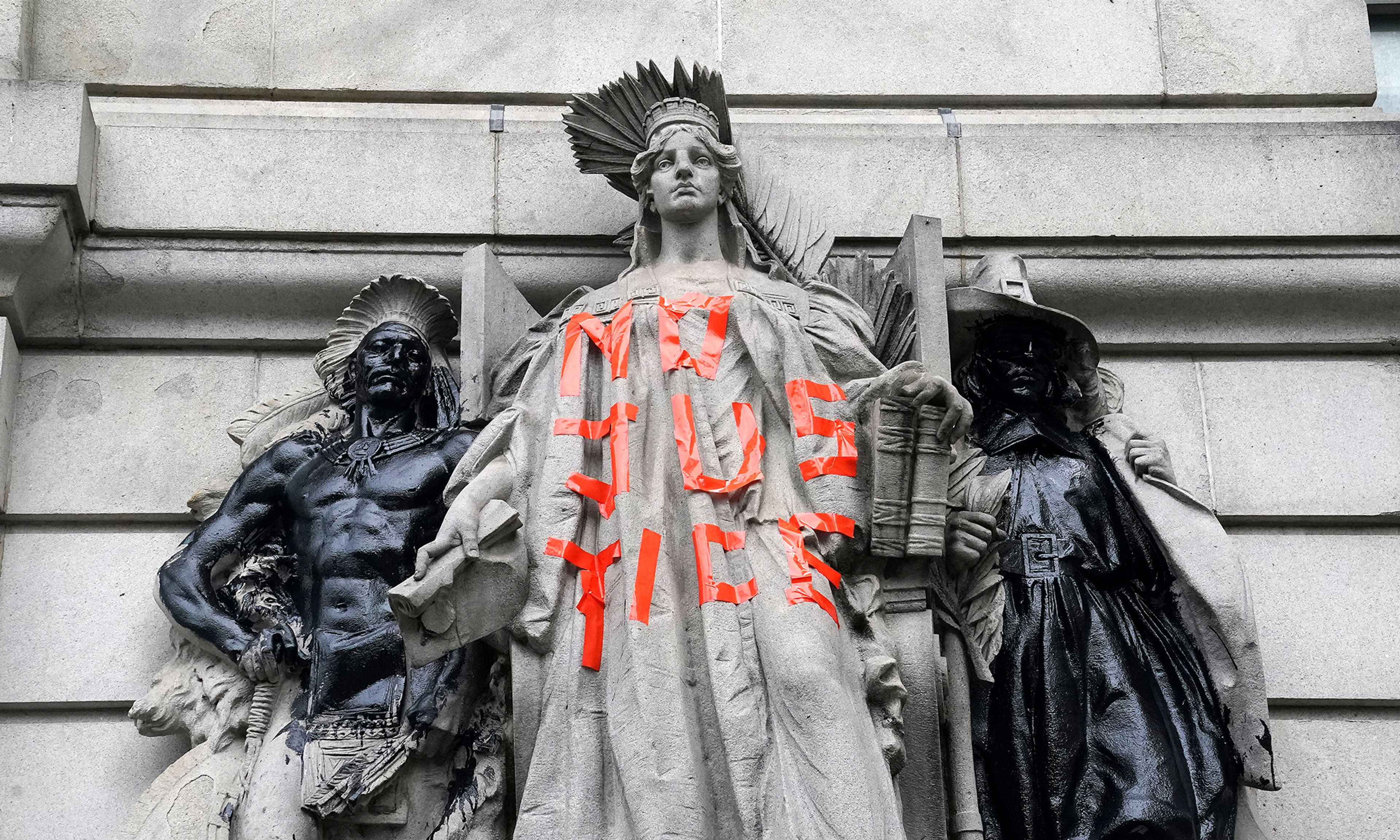
Maybe we’re just getting to the part of the calendar where the election subsumes all of our other collective miseries, but I have to say I’ve grown optimistic in the last few weeks that we’ve turned a corner on the cancel-culture stuff.
Identity-based arguments and assertions of victimhood will continue to be very powerful levers in very powerful institutions, and people will continue to lose their reputations and their livelihoods for holding views that were commonplace 15 years or 15 minutes ago. But the orgiastic, mob-driven phase, the great cleansing, seems to be abating, as a small but influential number of intellectuals, institutions, and even corporations (hello, Trader Joe’s!) have pushed back.
This is good because I’m very worried about norms around free speech — or around what counts as reputable speech, which as Tyler Cowen and others have pointed out is where the real action is. I think that if it isn’t the most immediately pressing issue of the day, it is certainly the one that will most shape the future of the country.
But my worry does not come from a position of certainty that I know the truth and that it needs defending from Jacobin novelties. It comes from a position of doubt. Broad and deep and all-penetrating doubt about the very most important things.
Doubt is the organizing principle of my worldview. The number of things I know for certain to be true is vanishingly small. Like the priest in Rudy, I know that there is a God, and that I’m not Him. Almost every other view I hold, I hold weakly.
Which is not the same as saying I change my mind a lot, or easily. I flatter myself that I’ve reasoned my way into my positions, and that I hold them because I think there’s more evidence that they are true than the contrary. But one can tenaciously defend a position one believes in 51 to 49, and I think I’d probably shock my colleagues by listing some of the things I’ll avow by similarly narrow scores.
And on the most explosive subjects of our age — identity politics, especially as they relate to race and gender — my doubt is plenipotentiary. I’ve been writing about conservative topics for a dozen years or so now. In all that time I can count on one hand, certainly on two, the number of times I’ve pushed these hottest of buttons.
The wisdom of this abstention is borne out every time I encounter one of the few things I have committed to paper on these subjects. Inevitably I see something I would have put differently or not said at all. A blind spot or an unexamined prejudice. Jokes that bring winces, rectitude that makes me squirm.
Is there a certain cowardice in all this? Am I scared of the wrathful exuberance of the people who police these topics from the left? Maybe. I’ve changed my views on trade with China and criminal justice, after all, but I don’t necessarily cringe when I see what I wrote about those topics in 2011.
But I think it’s also that identity is just different. When people argue that identity politics is illiberal, they have in mind that our Lockean inheritance is premised on the irrelevance of personal identity to our status as individuals with rights and equal claims to autonomy. And that’s true. But it’s also the very thing that gives identity-based claims of oppression their force. If we weren’t so thoroughly committed to what John Rawls called the “veil of ignorance” — the idea that our regime should abstract us from the accidents of our birth and circumstances — then a politics built on claims of oppression on the basis of identity would have no power.
And since we cannot in fact govern from behind the veil of ignorance — since we can never treat others as featureless political subjects, but must always encounter them as actual souls — we are obliged, I think, to govern with as much empathy as we can muster on any given day. Empathy is after all an emotion rooted in doubt and uncertainty. It is, “There but for the grace of God . . .”
So when I wrestle with questions of identity I try to draw on my stock of empathy. I think of my personal and professional relationships with people of color, whose self-conceptions are not monolithic, but as starkly varied as Clarence Thomas’s and Kamala Harris’s. On issues of sex and gender identity, I think about the gay friends — some of them conservatives, incidentally — who trusted me enough to “come out” to me as far back as the ’90s, when doing so was by no means free of social risk. I certainly think about my wife, who has dealt directly with both racism and misogyny. And more recently of the first “nonbinary” person I came to know, and how those conversations changed my perceptions.
None of this means I don’t have views about the claims that haunt the more avant-garde corners of Twitter, or that the views I have are the same as the average diversity-and-inclusion coordinator’s. But it means I’m acutely aware that I could be wrong and, for that matter, the diversity coordinator could be wrong, too, and it wouldn’t make them evil.
Plenty has already been written about the more than faint Maoism of the cancelers. All true enough. But it’s also true that building a free and fearless discourse isn’t just about protecting the way of righteous moral minorities who will one day be vindicated by history. No, to defend free exchange is already, intrinsically to defend the right to be wrong. It is about the freedom to persuade — and to be persuaded.











Comments