
If I may, without being indelicate: My wife asked me to scratch her back.
I had difficulty in following her directions to the aggrieved spot, and suggested we use United States geography as a referent.
We know from S. I. Hayakawa (Language in Thought and Action, 1949) that the map is not the territory, but the configuration of the Lower 48 is a pretty good match for the human back. We have Washington State over the left shoulder, Maine over the right, the backbone standing in for the Mississippi, and so on.
The plan was marred in execution by my wife’s complete ignorance of American geography. She was raised in Edinburgh, Scotland.
Her bafflement at the layout here is as charming as everything else she does.
She was singing a gig, on July Fourth some years back, and included her newly learned “Roll On Columbia, Roll On,” by Woody Guthrie. The verse, as sung by her:
Tom Jefferson’s vision would not let him rest.
An Empire he saw in the Pacific Northeast.
Further affiant sayeth not.
To return to the problem of counter-irritation: We repaired to the blackboard, which is the front of our refrigerator, and I sketched out a map of the U.S., while she, enthralled, looked on. Delighted with both my handiwork and my skill as instructor, I was tempted by this pleasure, as teachers have been forever, into elaborating the lesson beyond any immediate usefulness.
It is clear from the map, I said, that the country grew and prospered around the networks of transportation and the sites of commerce. Ships brought trade to and from the East Coast, the Gulf Coast, and San Francisco, and the cities prospered as depots for the products sent from and to the interior.
Canoes, then boats, then steamers worked the Great Lakes, to Rochester, Buffalo, Cleveland, Chicago; the Erie Canal and the Sault Ste. Marie, and, in 1959, the Saint Lawrence Seaway opened the Great Lakes to worldwide trade.
Chicago was connected by canal to the Mississippi, to New Orleans, and so to South America and the Caribbean, in 1848. The Mississippi, the Missouri, and the eastern rivers increased the country’s prosperity and the wealth and power of the seaports.
The railroads supplanted waterborne traffic in the 19th century, forming the Eastern Megalopolis and creating the wealth of Chicago, the rail hub. The Great Cities attracted talent, whether as Culture (supported by philanthropy) or Bohemia (supported by youth and disposable income), and developed through the influx of previously close-held regional achievement — see, particularly, African-American music, which came up the Mississippi to Chicago and evolved from work chanties and laments into blues, jazz, and rock and roll, now the music of the world. See also the creation, by several Jewish huckster immigrants, of the motion-picture business in New York.
The cities were, throughout the 20th century, centers of world commerce and, so, of both the fashion and the arts springing from disposable income and its quest for novelty and status; and, as important, from the cross-pollination of various groups previously divided by both geography and custom: blacks separate from whites, gays from straights, Jews from non-Jews.
After World War II, air travel solidified the position of the cities as the creators and arbiters of cultural life; as did television, for that which was deemed News (that is, newsworthy, that is, capable of selling advertising) was chosen in New York by cosmopolitans; as were the books and periodicals deemed worthy of print, and each newly essential height of skirts.
With the development of the jetliner (Boeing 707, first in service in 1958) and cheap air travel, the cities also became destinations — regular Joes and Joans showing up to see the shows and have a couple of drinks.
The railroads, as passenger carriers, died, killed by the airlines. New York, one of the world’s great seaports since the 17th-century Dutch ruled it, ceased that operation, in the 20th century, as the riverfront land became more valuable as residential real estate than as warehouses, transocean air travel replaced the passenger liners, and the piers became amusement parks.
* * *
I paused in my lecture (you may recall I was explaining this all to my wife), and sat, at the kitchen counter, chalk still in hand.
“What is it?” my wife asked.
And I told her the story of Max the Hamster.
He had been my pet for a few months in the ’50s.
It was my job to change his water and to add to his food every day. I did so. But I noted that he was not eating his food.
I kept adding to the supply, as per my instructions, until I realized, one day, that he was dead.
Some parent upbraided me for not remarking, if not the animal’s inactivity, the increasing amount of food in the cage. I quipped that, yes, I had erred, but, after removing the hamster, we’d have more room in the cage for each day’s new food.
This led me to share with my wife my aperçu about talk radio.
I love am talk radio. After a lifetime of listening to that sad fm voice selling disappointed and enraged concern, and wistful outrage, I’m just that happy to hear good American speech and advertisements for snake oil.
One of my favorite am commentators is immensely and deservedly successful. Advertising on his show is consequently at a premium. But here he is in the position of a cabdriver in the rain. Everyone then wants a cab, but the driver can pick up only one fare at a time, and so he may legitimately be maddened by the waste.
As were, it seems, the producers of this talk show.
For, as with the less productive shows, a certain amount of time was set aside each hour for ads.
I don’t know what this may be, by FCC statutes, but I assume whatever the upper allowed limit, it is being fudged, as it would otherwise be wasteful. And un-American. All right, then, at some point we return, from X minutes of panaceas, Magic Pillows, or dog treats, and so on, to the actual program.
Now, however, the host will introduce a topic similar to that with which he left us before the commercial break.
He may say, for example, that we live in an increasingly insecure world, and the Federal Reserve says this or that. Then we may perceive that this is neither news nor commentary, but the lead-in to an ad for silver, or gold, or wealth-management services.
We eventually return to some content, but the host, again, employs the discussion topic as a springboard for flogging his newest books, podcasts, and so on.
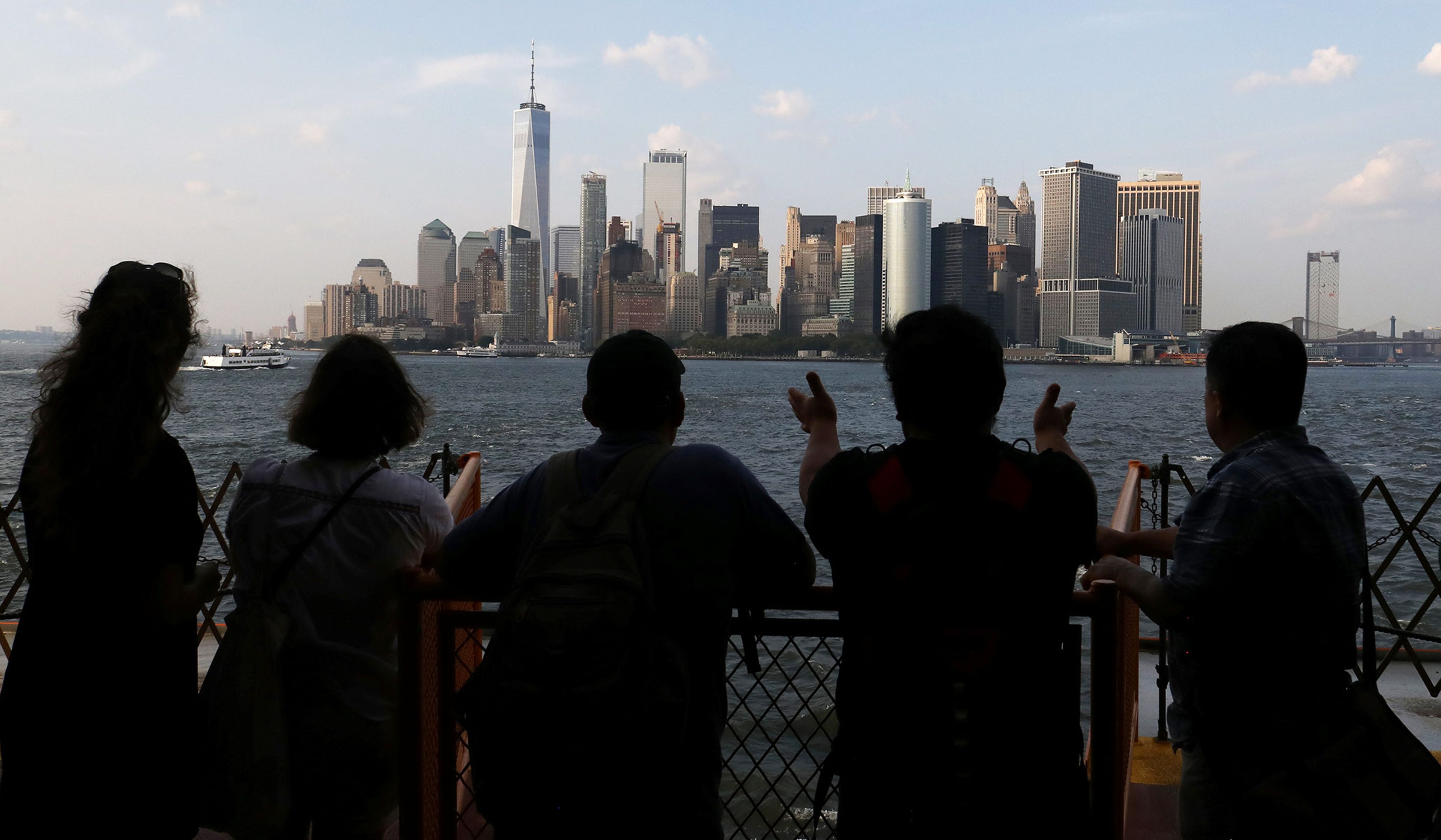
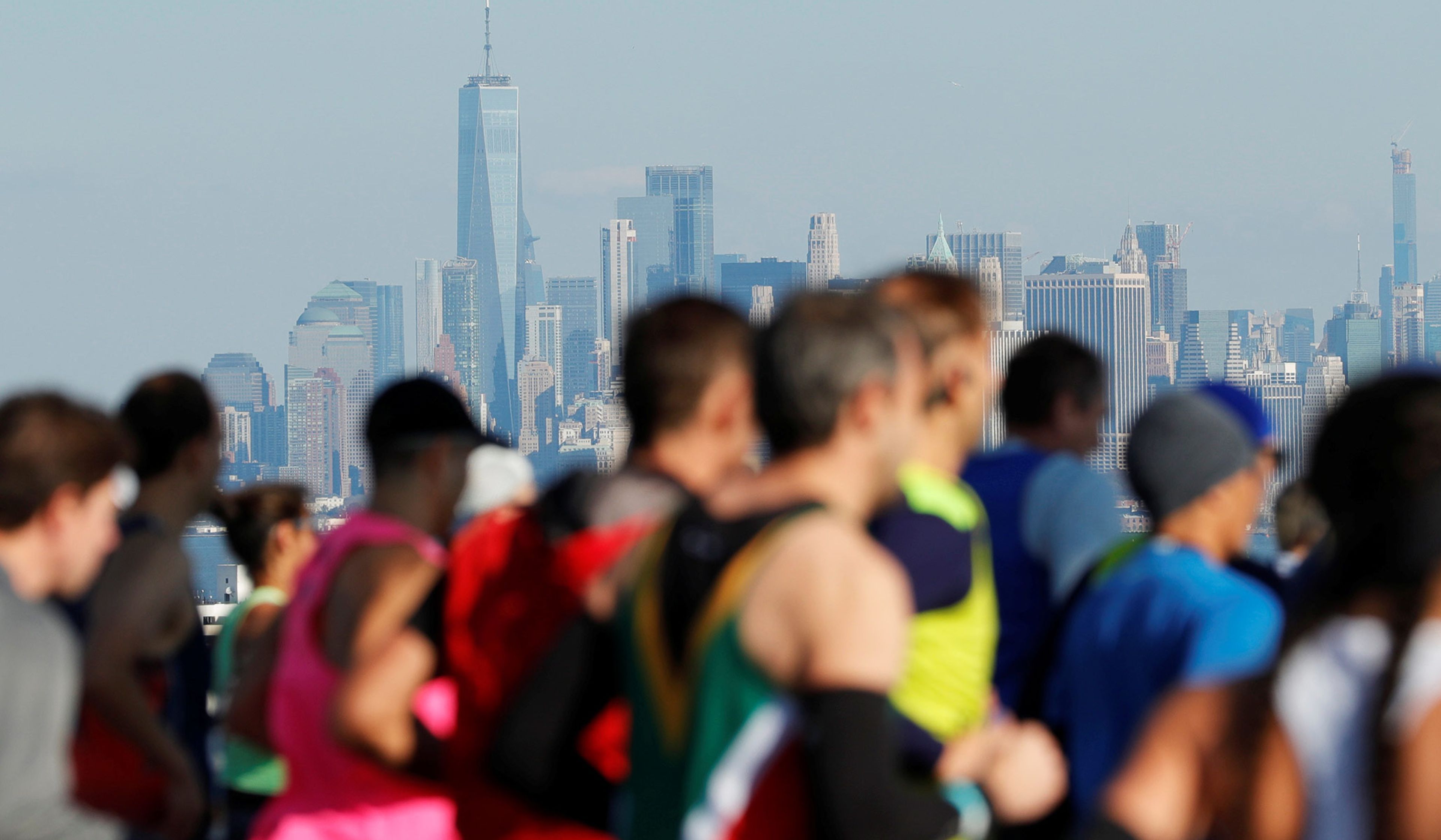
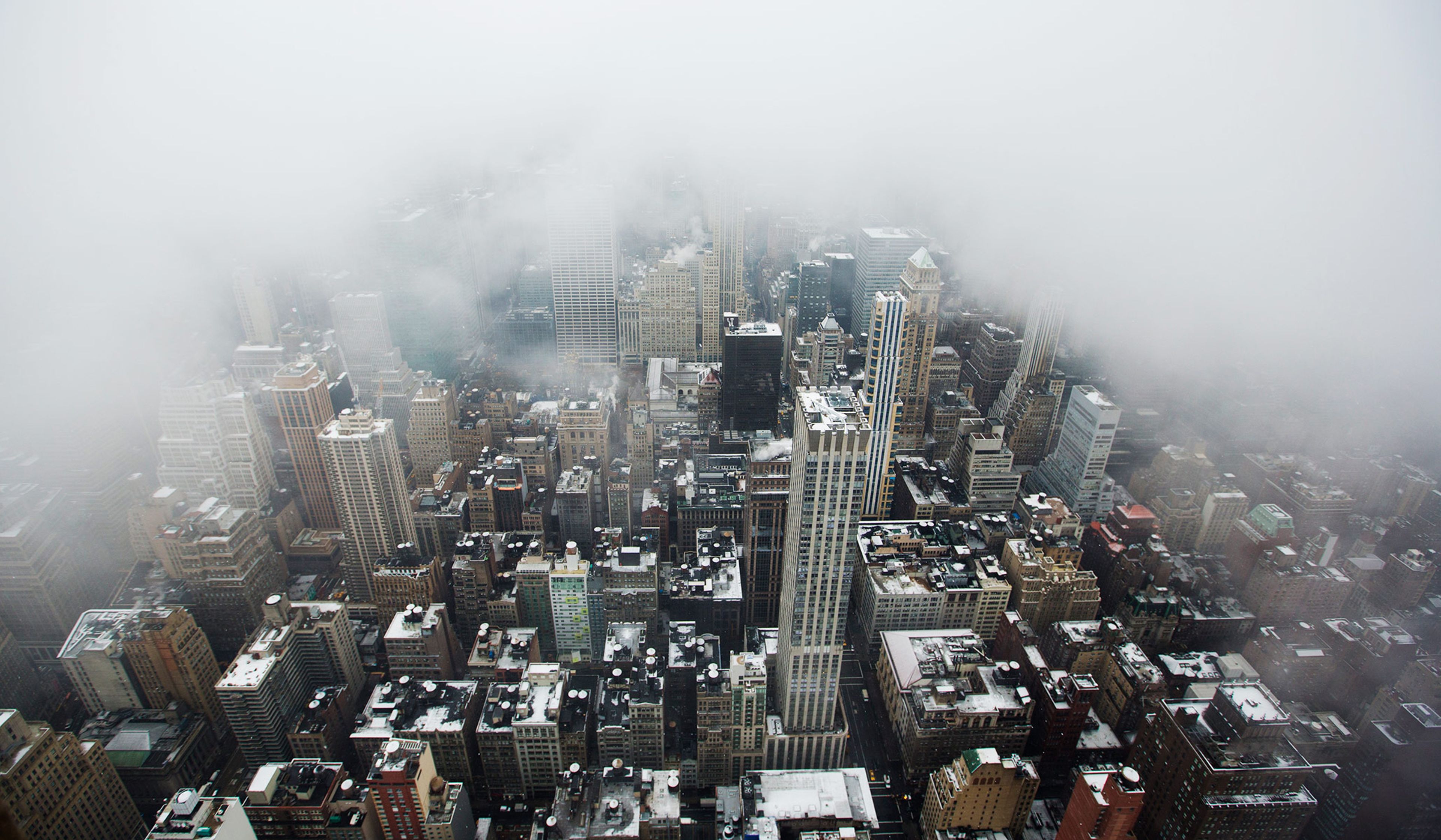
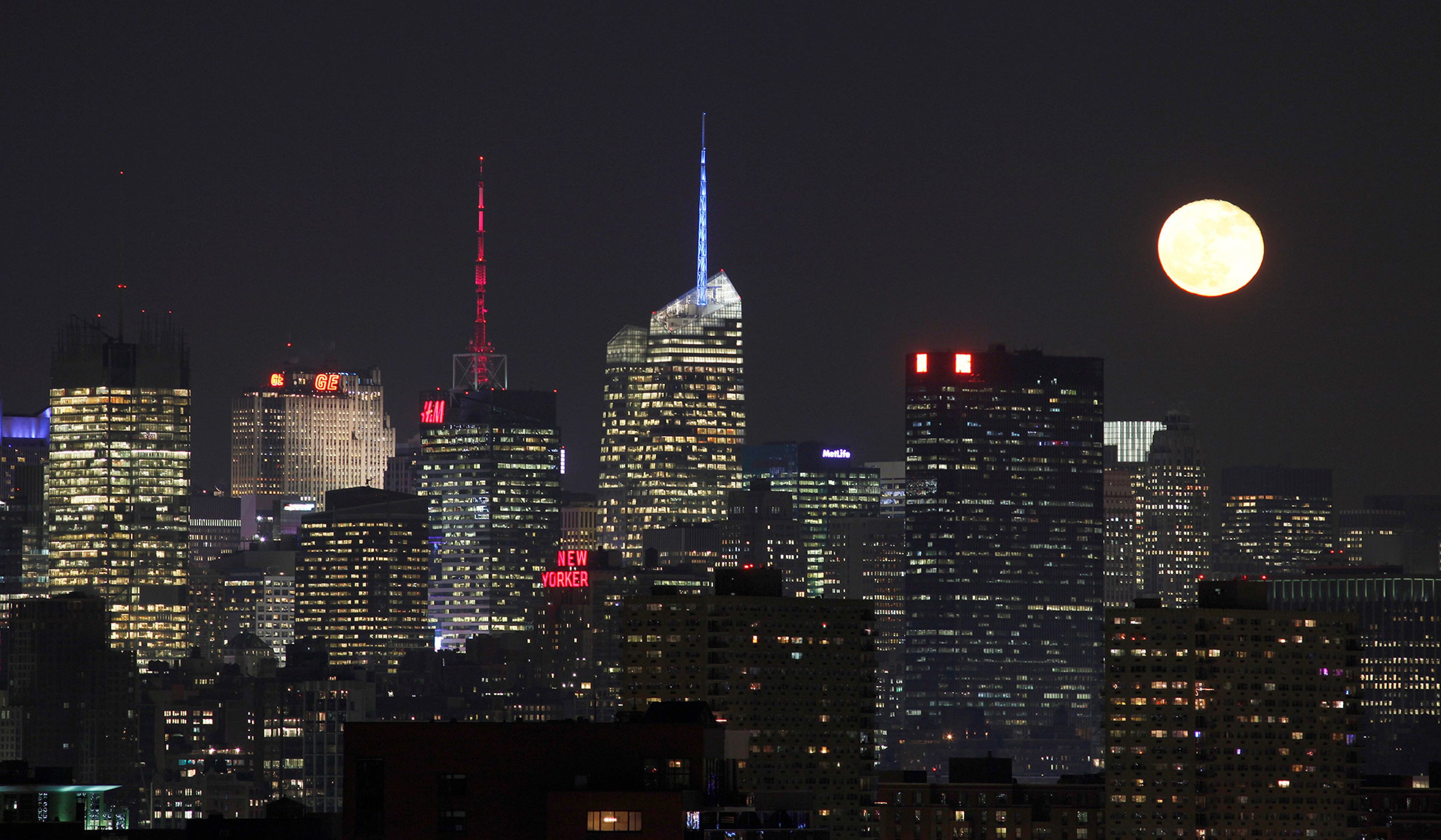
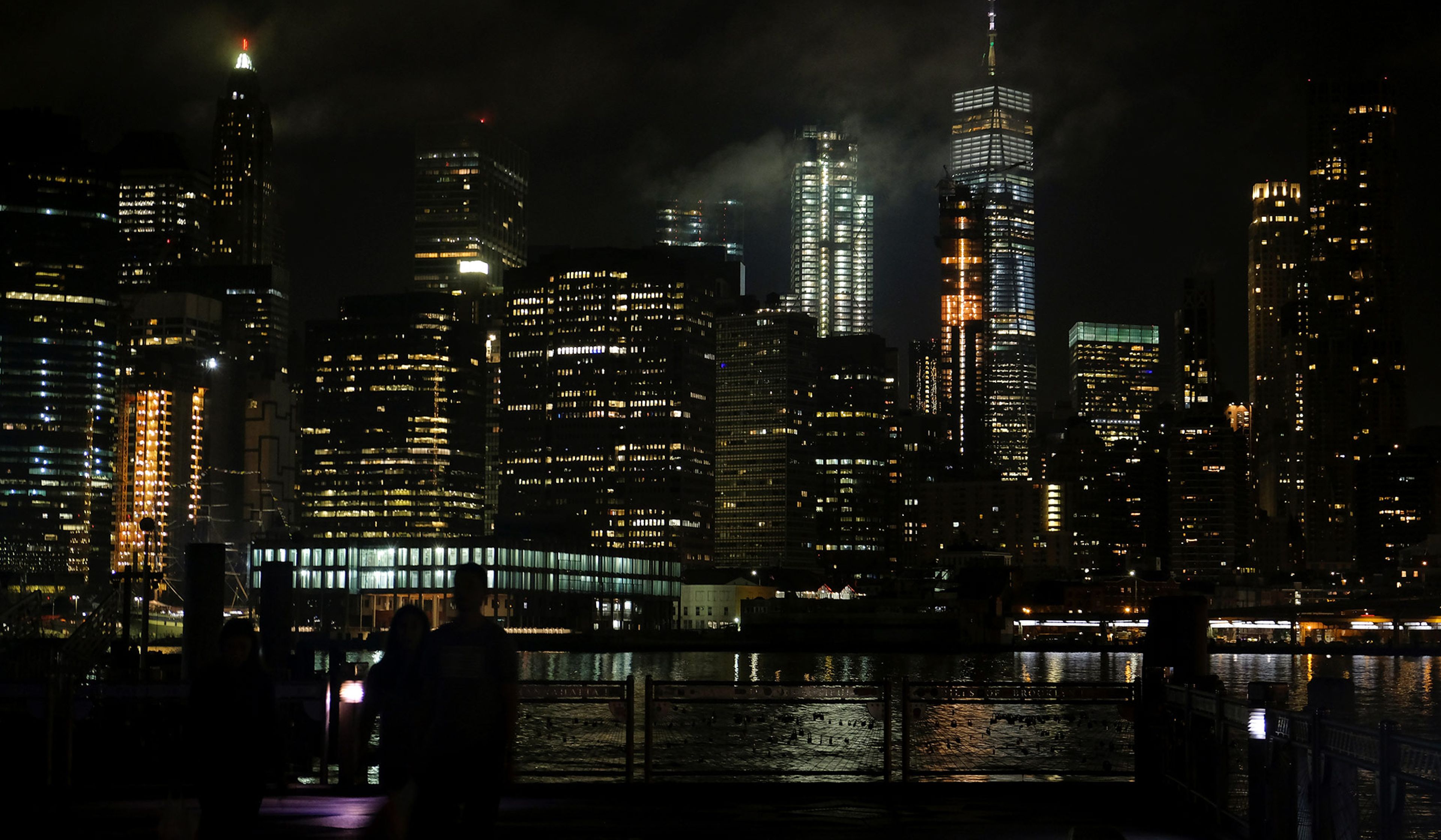
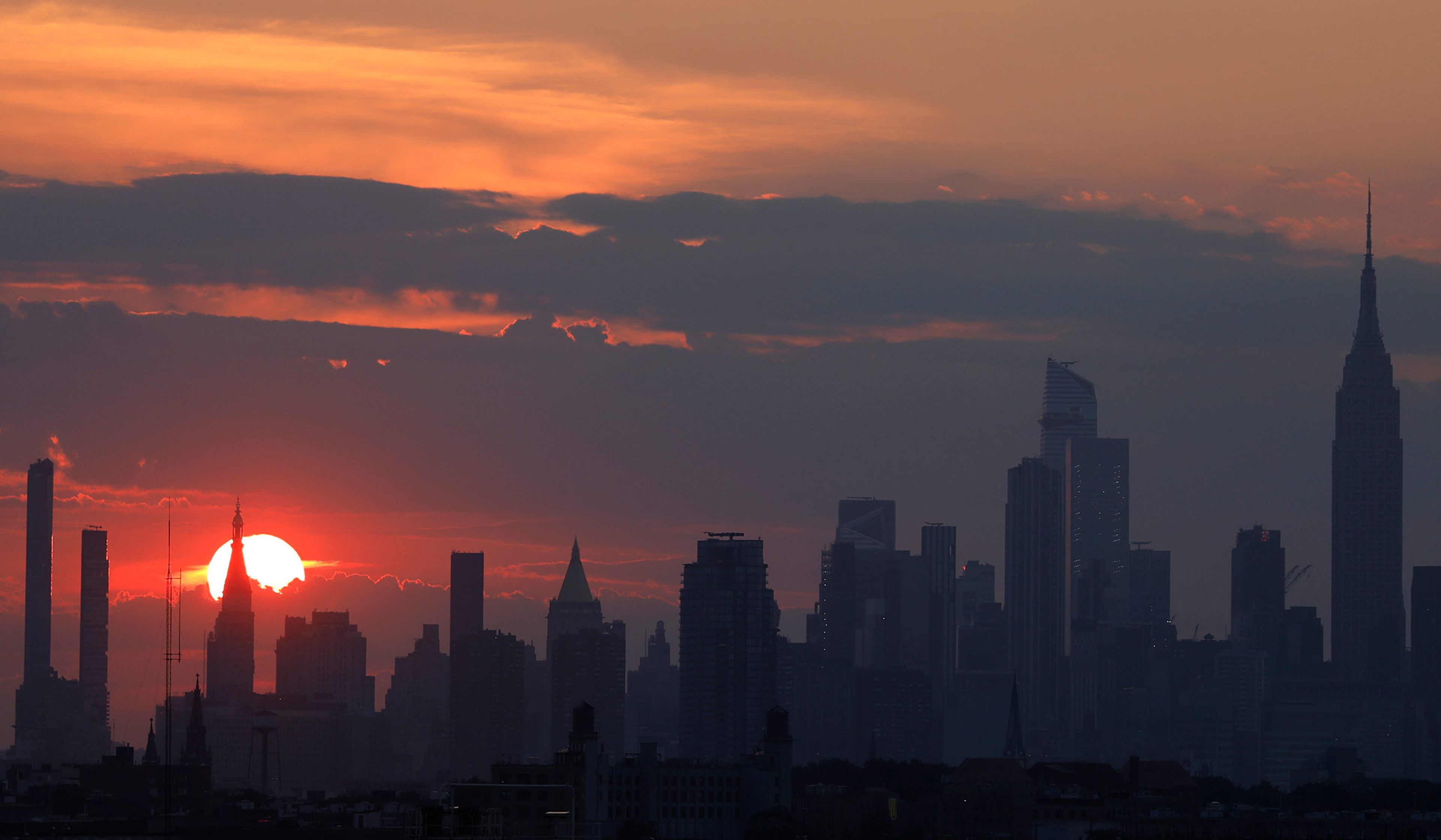
People view the Manhattan skyline from the Staten Island Ferry. August 15, 2018.
Kevin Coombs/Reuters
Like the cabdriver, his time has just become too valuable to squander on its now outdated purpose.
As had the land in the Great Cities.
Rents on Madison Avenue, our Rue de Rivoli, have become too pricey even for the luxury-tourist trade. East Side apartments, which sold for 250 grand in 1970, are now $20 million; but the cost of the shoes in the shops, though they might rise from $200 to $2,000, could not rise to 20 grand; and stand-alone shops could not stand the rent, leaving the street to vacancies interspersed with flagship stores, which existed only as ads.
The cities tried to control this — call it good or bad, it is inevitable — progression away from popular commerce through the Potemkin villages of rent control, which only meant that taxpayers were subsidizing those lucky enough to find or canny enough to bribe their way into a cushy spot and spend the money they were awarded somewhere else. Rent control, as Milton Friedman observed long ago, leads only to housing shortages. Manhattan Island is the prime example of a city whose success led to the banishment of its middle class, and to its inevitable future as an amusement park and/or a slum.
There is no way to reverse the trend of commerce, which is to say self-interest. We must all follow our fortune, and the most committed and liberal member of the California teachers’ union will, on the day of retirement, most likely take the pension to a low-tax red state.
The commerce and wealth of the cities grew with their eminence as aviation hubs, but more air traffic meant bigger airports, farther from city centers, and longer and more arduous commutes. Car travel allowed movement to the suburbs, which meant more cars on the road and unproductive hours (in Los Angeles and San Francisco) on a daily commute.
Los Angeles has the greatest concentration of theatrical talent in the world, but our theaters are mausoleums. Why? After a day in traffic, no one wants to get into the car for another two hours. Finita la commedia.
All organisms evolve, thrive, and die. The great cities, long Democratic strongholds, have approached the problems by taxing away the productive, and, in effect, paying folks to stay there — through welfare — or to come there to: “open cities.”
But this, we see, avails as little as feeding an absent and dead pet.
The hamster here is commerce. The pandemic, the shutdown, and the riots reveal, of the cities, the truth of that ancient bureaucratic adage: Don’t ever take a vacation. They might realize they don’t need you.











Comments