One modest reason to lament the waning of the romantic comedy over the last two decades is that it removes from Hollywood’s repertoire a genre that’s reliably conservative. Even in its gross-out forms, even when some kind of subversion is intended, the requirements of romance involve two human beings putting aside childish things and embracing an ancient institution for the sake of the propagation of the species. In a culture that since the 1970s (at least) has valorized the expressive individual, the quest for the God Within, the rom-com endured as a partial rebuke to the dominant religion, a reminder that human beings can be called to mutual submission and find happiness therein.
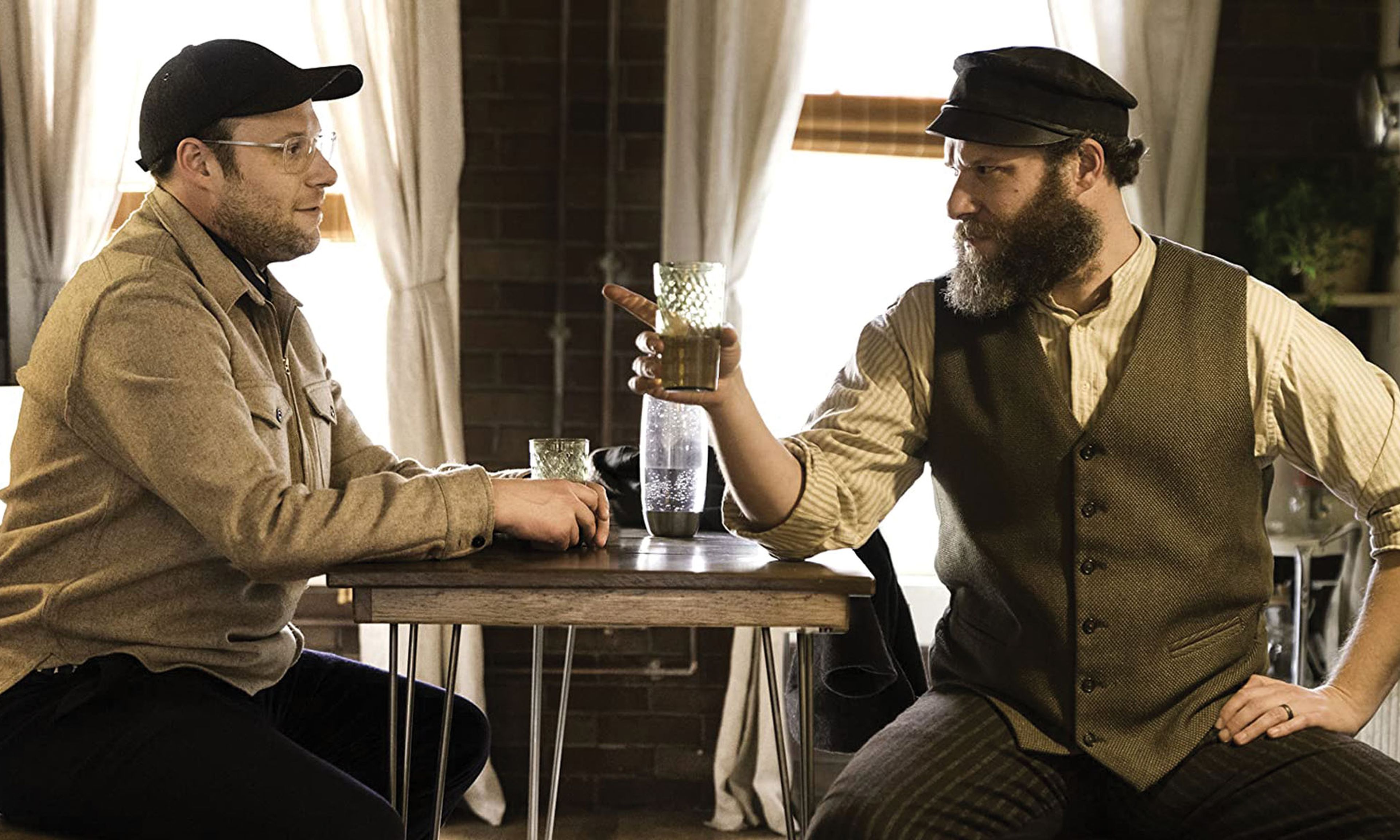
The interesting achievement of the new Seth Rogen comedy, An American Pickle, which just debuted on HBO’s new streaming service, is to distill some of that same conservative energy in a movie where the only important female character is gone after the first ten minutes, and the only major male characters are both played by, well, Seth Rogen.
The first is Herschel Greenbaum, a Jewish immigrant from the old country — here called “Schlupsk,” a land that looks suspiciously like the Russia of Fiddler on the Roof and seems similarly overpopulated with Cossacks — who arrives in America in 1919 with his beloved wife, Sarah (Sarah Snook), determined to make his name and fortune. Soon his wife is pregnant and he’s killing rats at a Brooklyn pickle factory, where a determined cadre of rodents sends him backpedaling off a platform and into a vat of brine . . . in which, according to the scientifically rigorous logic of time-travel movies, he finds himself perfectly preserved until the vat is reopened a century later.
Released into the wilds of 2019, Herschel discovers that he has just one living descendant, a Brooklynite tech guy named “Ben,” who lives alone with his seltzer machine (a revelation to his great-grandfather) and his unfinished app, Boop Bop, which rates corporate responsibility for online consumers hoping to shop ethically.
Ben and Herschel are archetypes but not quite stereotypes. The former is very much a Millennial, at once underachieving, irreligious, and beset by ennui. But he has a better excuse for being adrift — his parents’ car-crash death, unprocessed and (from Herschel’s pious perspective) unmourned — than just youthful entitlement. His great-grandsire is a bearded Yiddish patriarch à la Tevye, except somewhat less likeable and more aggressive: Instead of the wistfulness of “If I Were a Rich Man,” his slogan is closer to “Get Rich or Die Tryin.’”
But get rich for a purpose: The revived Herschel’s aggression is activated only when he finds the Jewish cemetery where his beloved Sarah lies buried disused and decaying, with a billboard for Russian vodka looming belligerently above the graves. This leads to a violent altercation with some construction workers, a falling-out between the Greenbaums, and then Herschel’s reinvention as a maker of artisanal pickles, a bearded Internet phenomenon, and eventually — thanks to his habit of saying the kinds of things a pious Jew from 1919 might say about our society — a polarizing participant in the American culture wars.
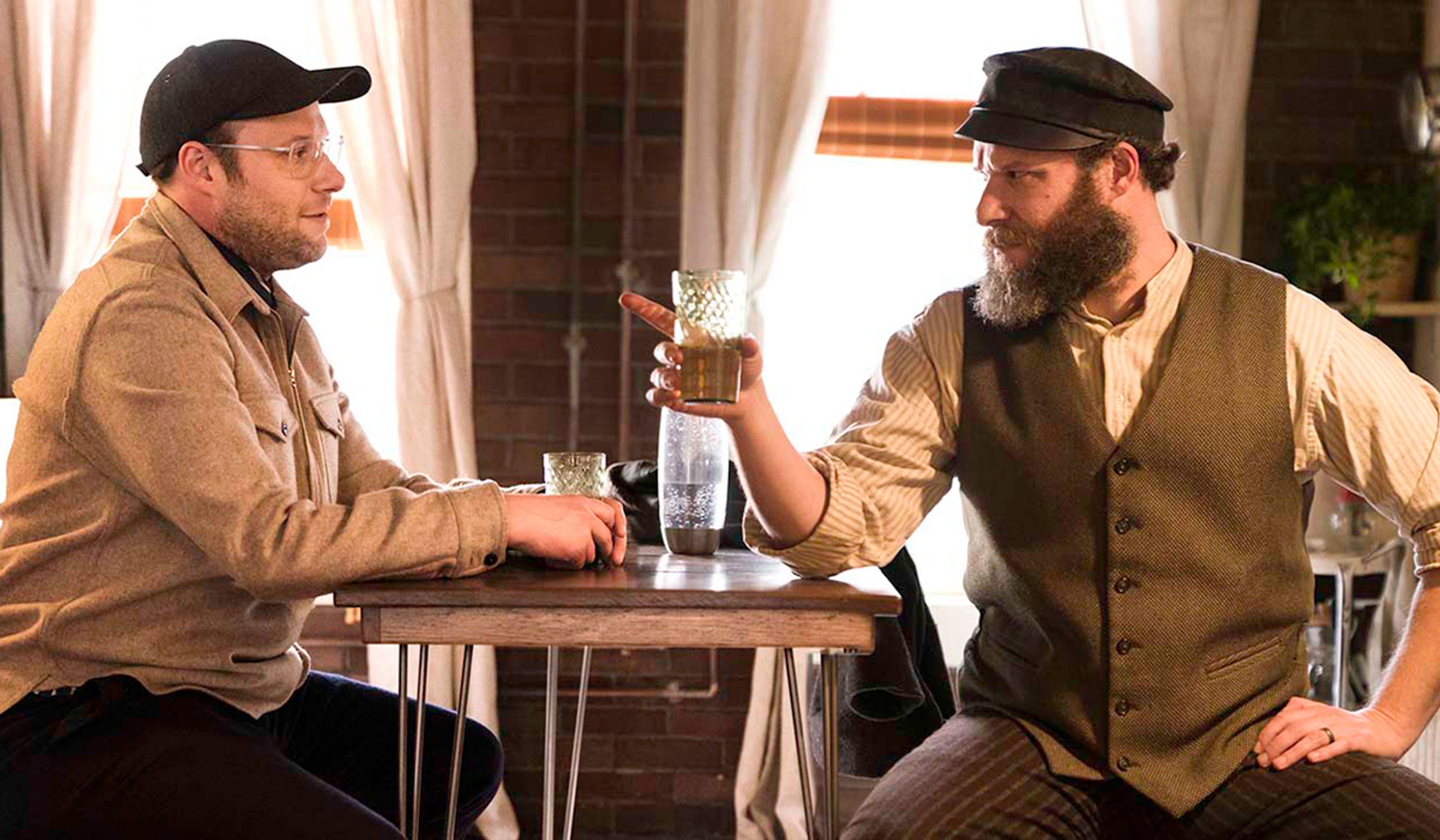
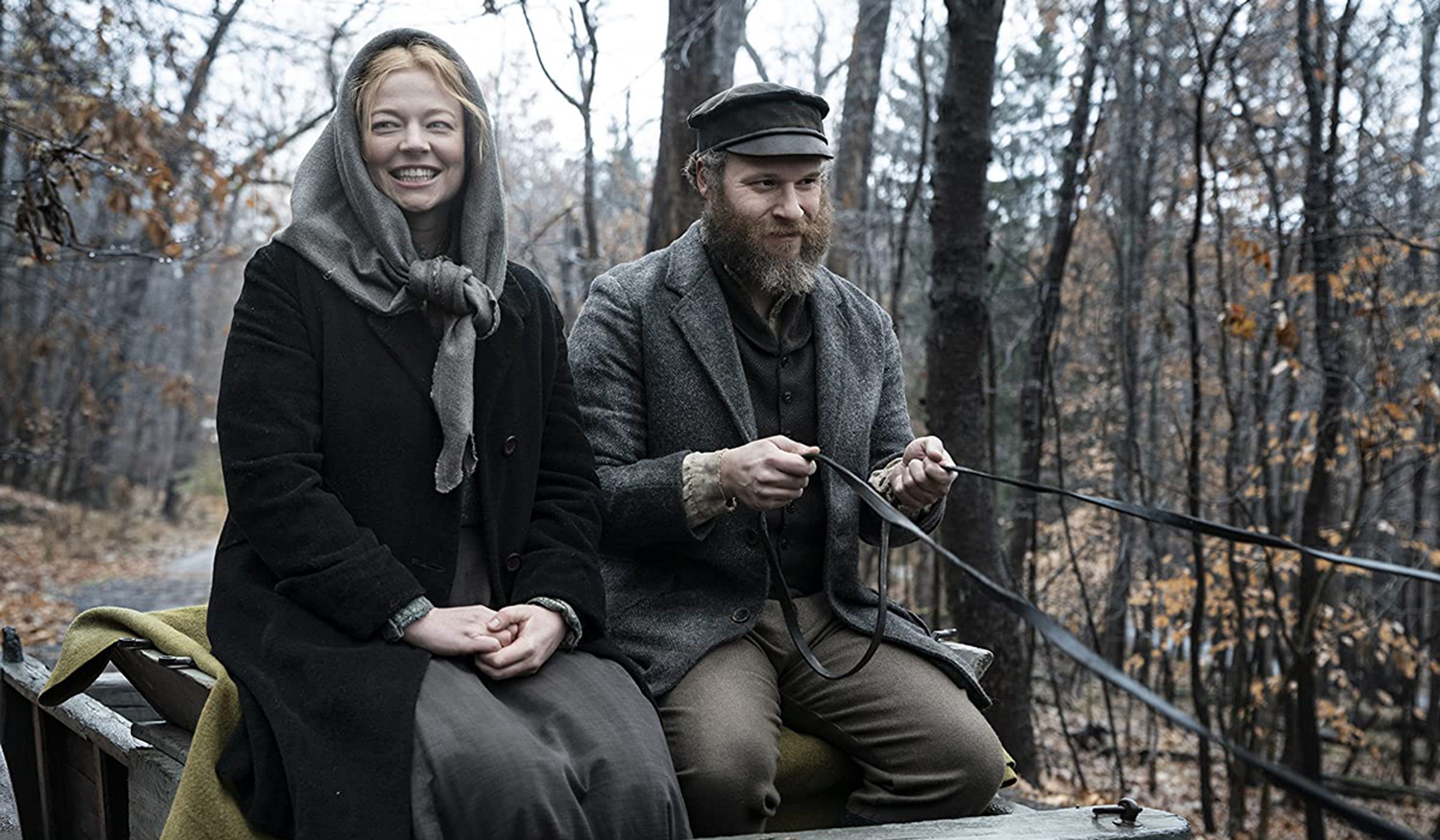
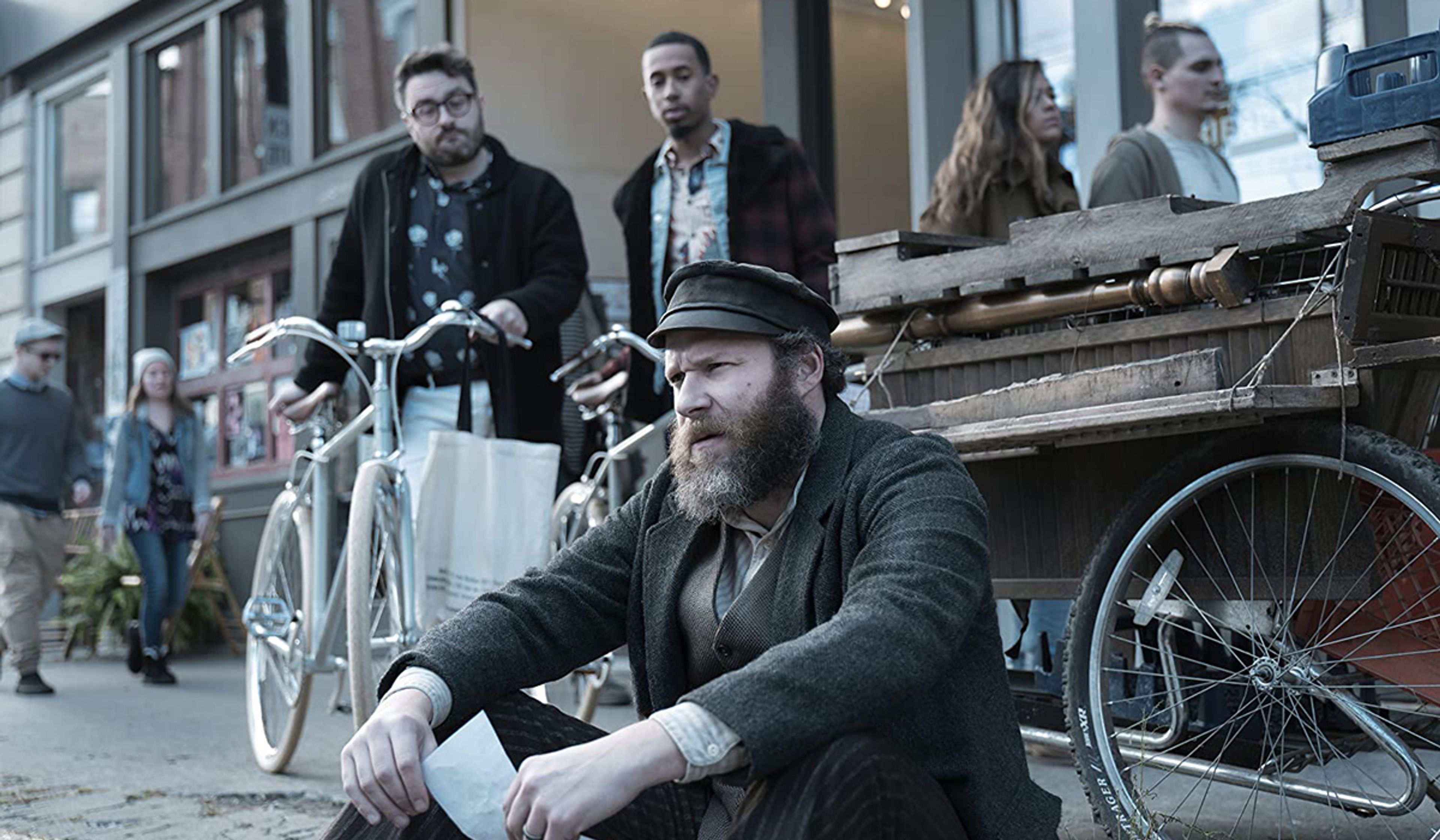
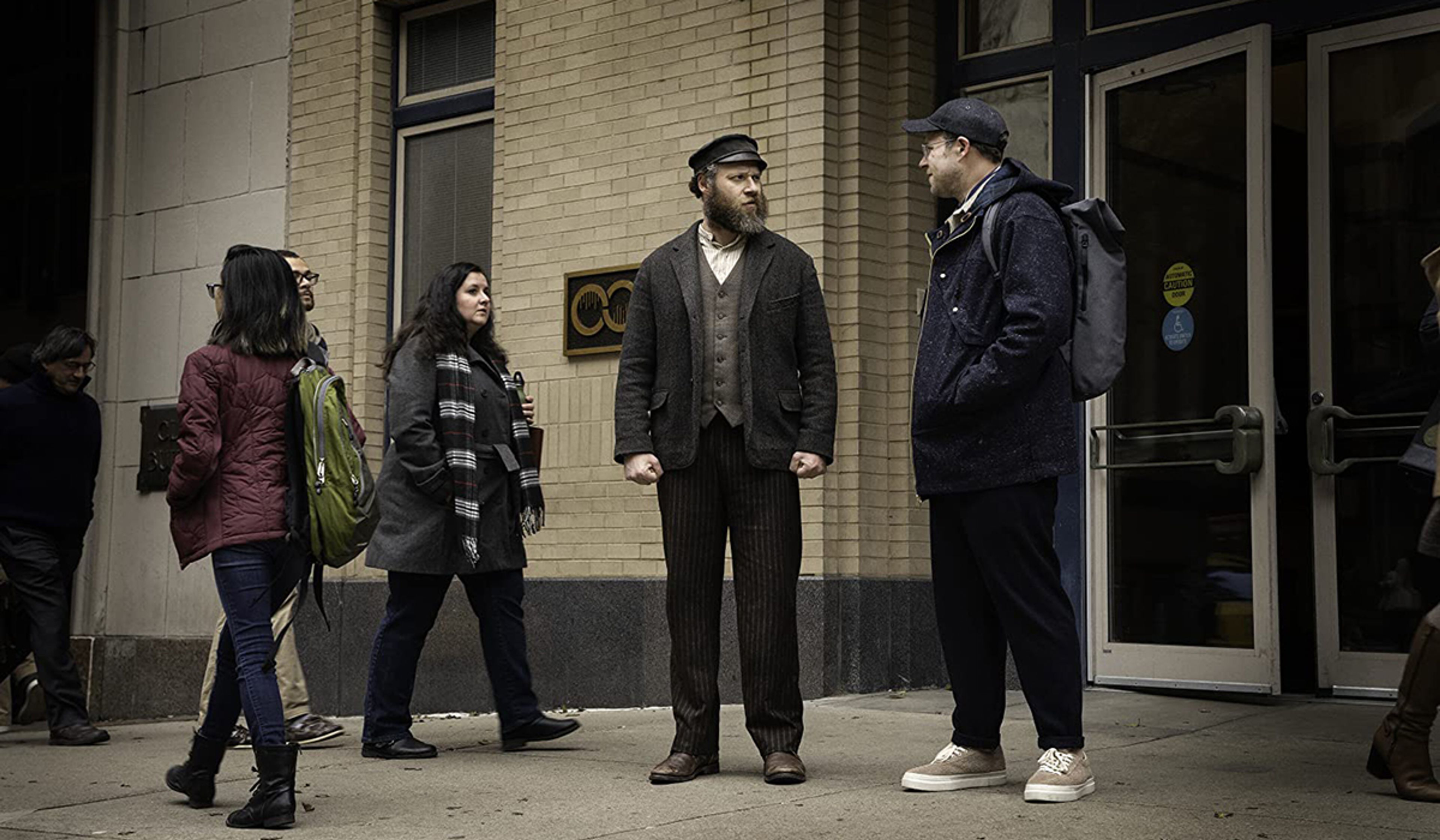
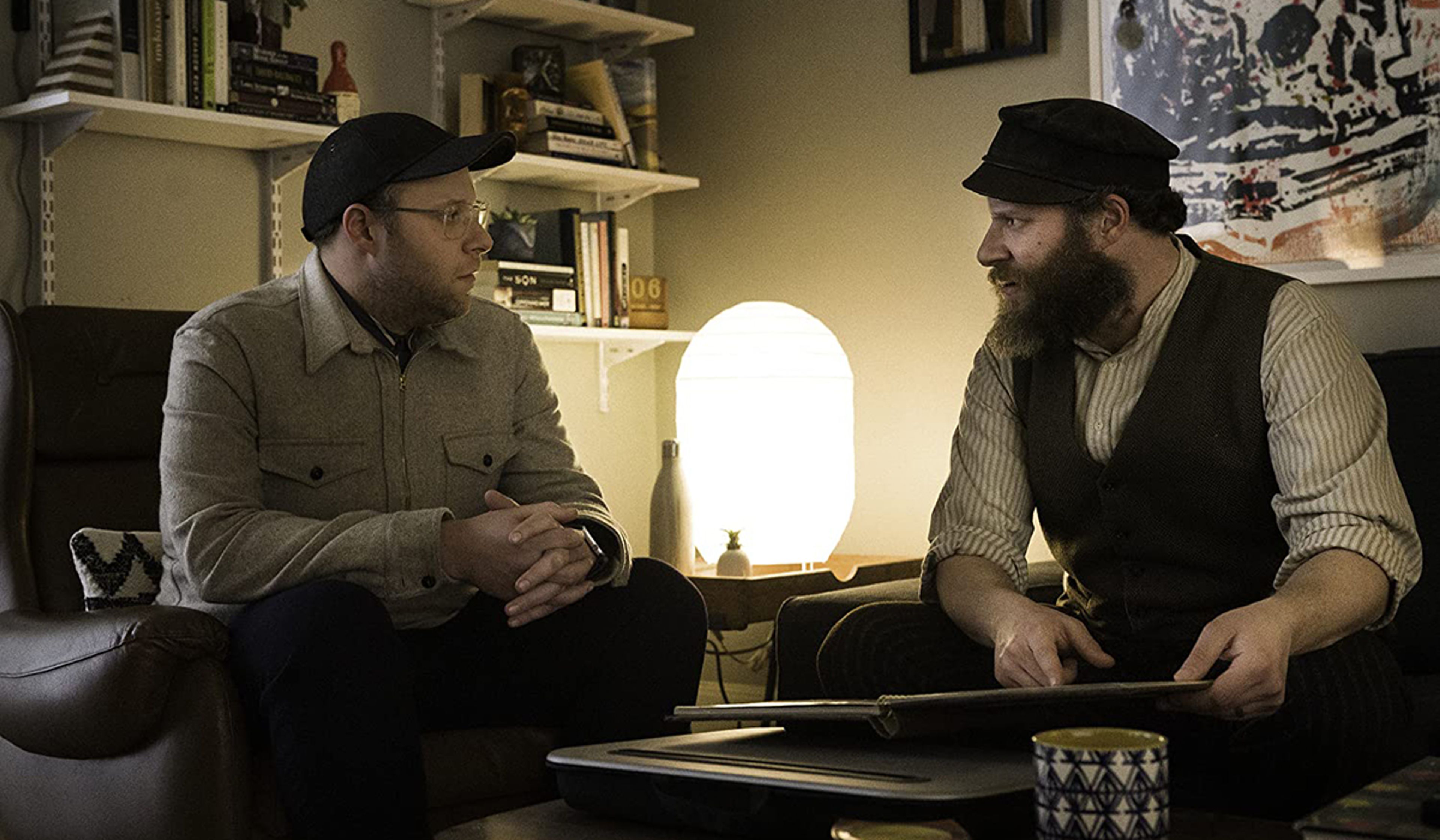
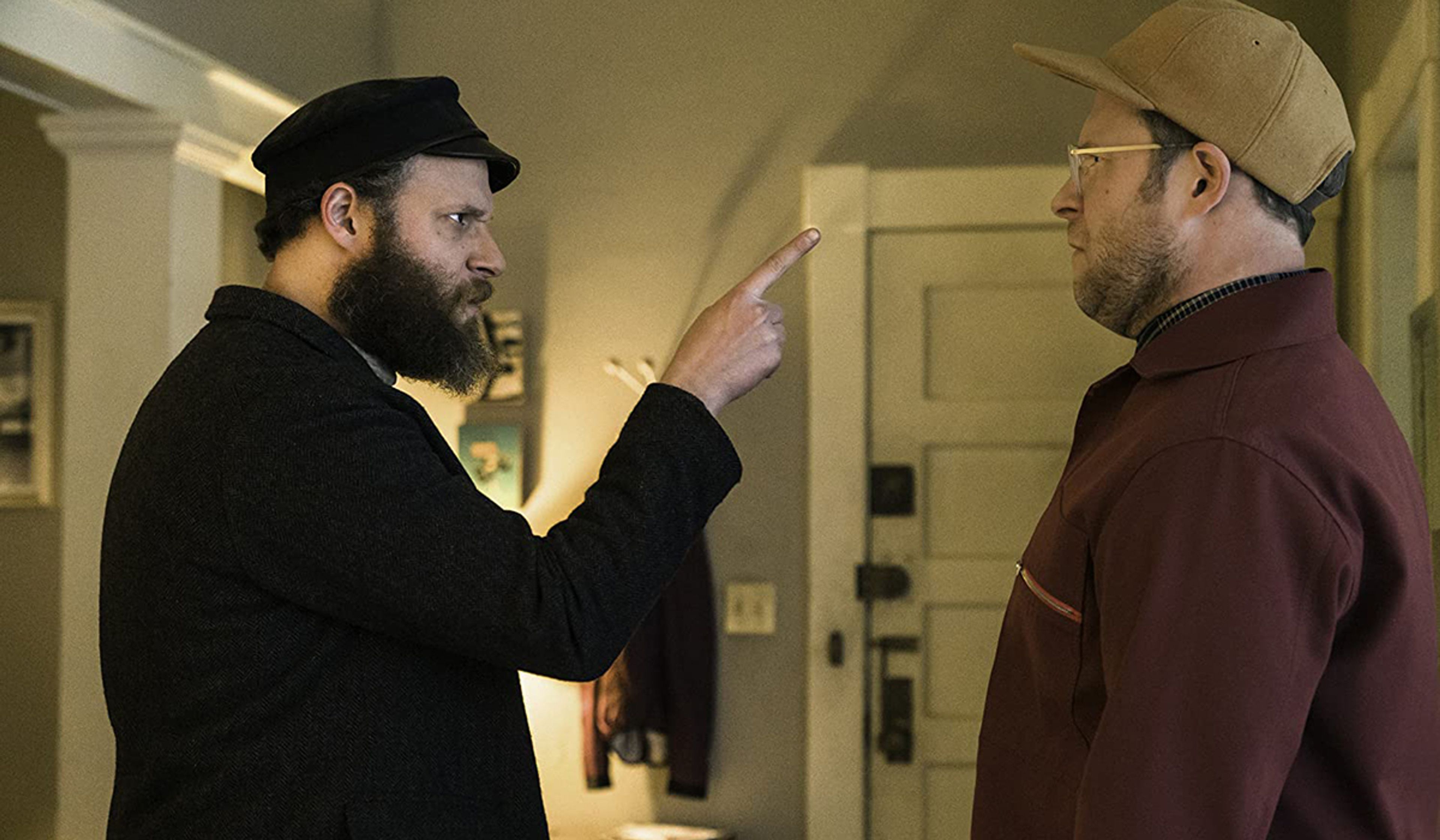
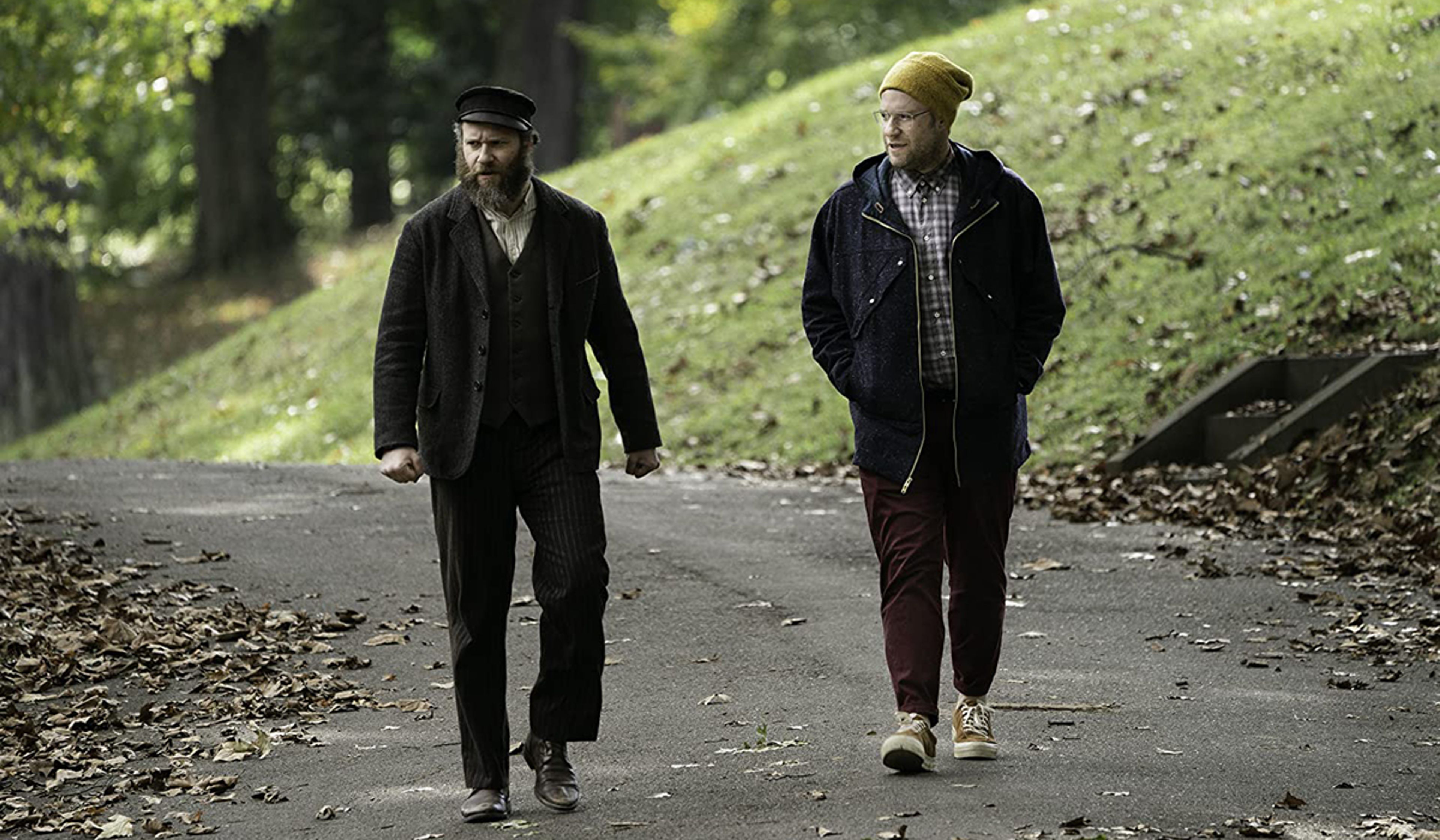
Seth Rogen and Seth Rogen in An American Pickle
Hopper Stone/HBO Max
What’s striking about this arc, though, is that, while it doesn’t stint on showing Herschel’s less-than-congenial attributes, wherever his values conflict with his great-grandson’s, An American Pickle is consistent in suggesting that the old ways are better than the new. Judaism practiced is better than Jewishness attenuated. The Kaddish is better than solitary grief. Ambition and purpose are better than sustainable decadence. Strife and suffering are a refiner’s fire; the pieties of a soft prosperity are callow, empty, thin. The two men, we’re repeatedly told, are the same age. But the great-grandfather seems like a father; his similar-aged great-grandheir is played like a boy.
It’s not that the movie endorses Herschel’s casual references to “sodomites” or the anti-Christian venom that eventually plays a crucial role in his changing fortunes. But it plays that bigotry for laughs in a most unwoke way, while seeming deadly serious about the perils of contemporary anomie. “Sufficient unto the day is the evil thereof” might be its motto: The problems of the past were dreadful in their day, but to correct their own era’s ills, the comfortable man-children of greater Brooklyn should learn from the past rather than condemn it.
The movie pulls off this maneuver with a certain evasion, it must be said: The Holocaust doesn’t feature in the story, despite looming darkly in the century separating the Greenbaums, and neither do the contemporary debates about the state of Israel and American Jewish identity — into which Rogen himself wandered, to backlash and counter-backlash, just before An American Pickle came out. The hardest questions, the deepest conflicts between past and present, identity and universalism, aren’t resolved or even addressed in its 90-minute running time.
But then it is a comedy, after all — light and modest and often silly, but still as effective a tract for traditionalism as you’ll see on any screen this month.












Comments