Earlier this month, Israel achieved a stunning diplomatic breakthrough, agreeing to normalize relations with the United Arab Emirates in exchange for cashiering its plans to extend sovereignty to certain portions of the West Bank, which it conquered in a defensive war 53 years ago. The UAE accord undermined the claims by European Union factotums and Obama-administration foreign-policy veterans alike that Israel could attain regional peace only through territorial sacrifice dictated by the Israeli–Palestinian diplomatic process.
That process, however, has been on life support for more than a decade, and in The War of Return, Einat Wilf’s incisive and bracing revisionist look at the conflict, with journalist Adi Schwartz, the real reason quickly becomes apparent. An ardent exponent of the center-left philosophy of Israel’s Labor Party, and an adviser to former prime minister Shimon Peres before winning election to Israel’s parliament in 2010, the Harvard-educated Wilf reveals a fundamental change of heart, a more-in-sorrow-than-in-anger transition from hopefulness to resignation that largely tracks that of Israeli society as a whole.
The key to understanding the conflict, Schwartz and Wilf argue, lies in the most intractable of disputed issues: the refugees. “The Palestinian conception of themselves as ‘refugees from Palestine,’” they write, “and their demand to exercise a so-called right of return, reflect the Palestinians’ most profound beliefs about their relationship with the land and their willingness or lack thereof to share any part of it with Jews.”
Worse, the international community has exacerbated the crisis, as “UN structural support and Western financial support for these Palestinian beliefs has led to the creation of a permanent and ever-growing population of Palestinian refugees, and what is by now a nearly insurmountable obstacle to peace.” Indeed, allowing the migration into Israel of the millions of people currently defined as Palestinian refugees would overwhelm and ultimately destroy the Jewish state.
Schwartz and Wilf begin by exploring the origins of the Palestinian refugees: Israel’s 1947–49 war of independence. Hundreds of thousands of Arabs fled their homes, either at the urging of invading armies from neighboring Arab countries, in apprehension of what might befall them under Jewish rule, or in general dread at the prospect of a bloody conflict. In addition, thousands of Arabs — the exact numbers are hotly disputed — were indeed forcibly expelled from their homes by Israeli soldiers. But these expulsions resulted more from tactical military decisions than from strategic design.
Such mid-century dislocations were more the norm than the exception. Millions of ethnic Germans were unceremoniously expelled from Central Europe in the wake of World War II. During the partition of India and Pakistan, some 14 million fled and 2 million perished. And nearly 1 million Jews faced expulsion from their homes in Arab countries following the outbreak of Israel’s war of independence, as millennia-old Jewish communities in Egypt, Iraq, Syria, Yemen, and elsewhere were liquidated by vengeful Arab regimes. As Schwartz and Wilf put it, “the Palestinian defeat exacted a human toll, but it was neither necessary nor exceptional.” It could have been avoided, they note, “had the Arabs of Palestine accepted the UN proposal for partition of the land with the Jews of Palestine.”
And yet, in the wake of the 1948 war, all Middle Eastern regimes refused to negotiate resettlement of the refugees with the Jewish state. “As soon as we recognize the existence of Israel,” Azzam Pasha, the head of the Arab League, told Israeli diplomat Abba Eban in 1949, “we shall have admitted by this very act that we are vanquished.”
Others were even less inclined toward a peaceful resolution. “They have turned a matter of jihad into a problem of refugees,” said Emil Ghury, a member of the Arab Higher Committee. “We are concerned to turn the question into a question of jihad, to harvest hatred of the Jews in the heart of every Arab.”
It was the machinations of a Swedish diplomat, though, that vaulted the Palestinian refugees onto the global stage. In September 1948, Count Folke Bernadotte, assigned by the U.N. Security Council to mediate the Arab–Israeli conflict, asserted for the first time “the right of the refugees to return to their homes at the earliest practical date.” This contrived right — never before or since applied to any other refugee population — found its way into U.N. General Assembly Resolution 194, which Arab governments thenceforward wielded as a cudgel against the Jewish state.
Initially, Israel proved receptive to the plan, offering to welcome 100,000 Arab refugees within its borders or to assert sovereignty over the Egyptian-held Gaza Strip and absorb its 170,000-strong population, yet the Arab world roundly rejected both proposals.
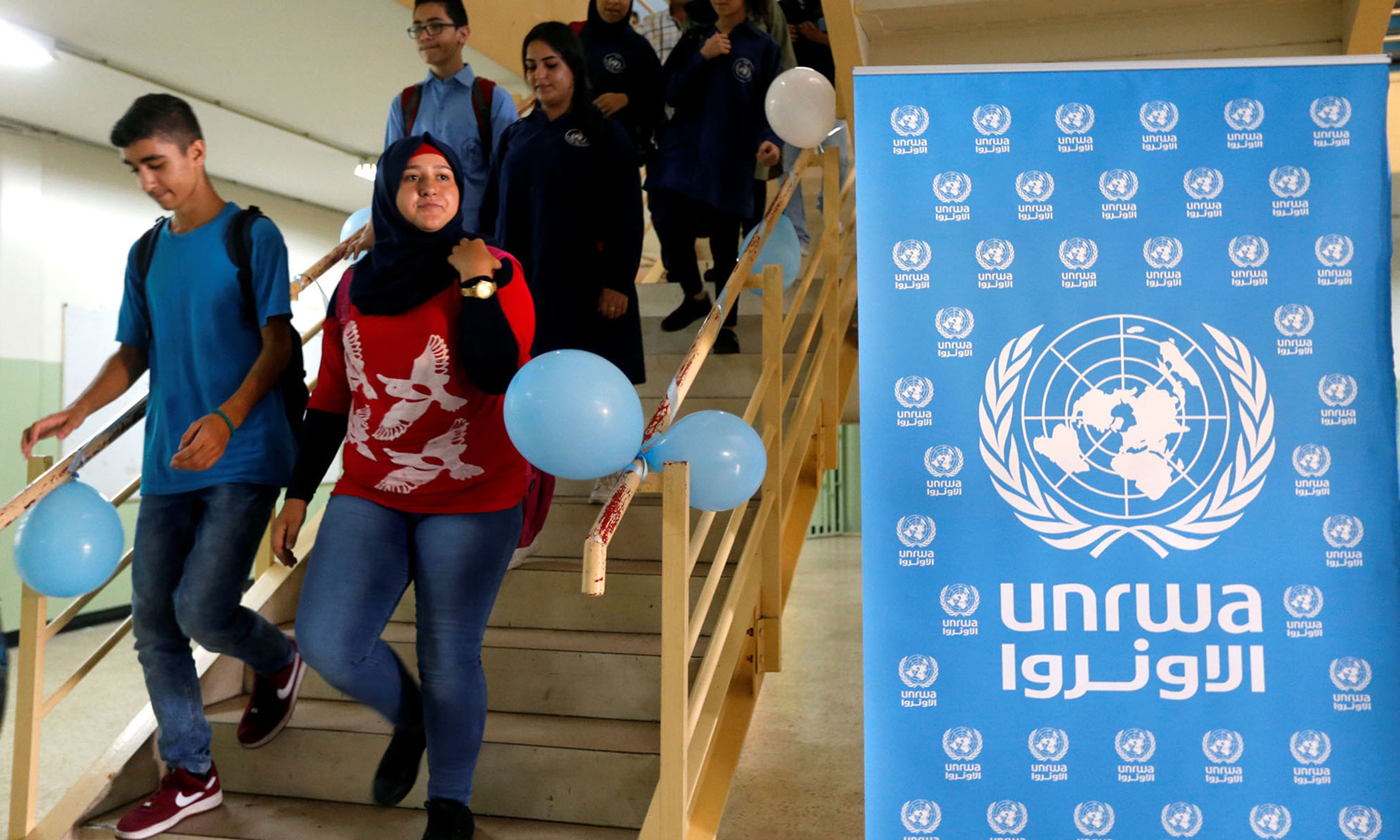
Instead, Arab leaders in the 1950s successfully lobbied the international community to establish the U.N. Relief Works Agency (UNRWA), an entire United Nations agency with a perpetually renewable mandate dedicated singly to the cause of Palestinian refugees. In contrast, the U.N. High Commissioner for Refugees (UNHCR) was charged with assisting and resettling all the other tens of millions of refugees throughout the world. The Arab League deliberately chose to exclude Palestinians from the customary treatment afforded refugees, in order to deploy them as a strategic asset against Israel. The same was true of regimes in Jordan, Lebanon, and Syria, which chose not to integrate their Palestinian refugees into mainstream economic, social, and cultural life and instead to confine them for nearly three-quarters of a century in cramped, squalid refugee camps.
Schwartz and Wilf demonstrate how the Arab world coopted the UNRWA and warped its objectives from resettling and rehabilitating Palestinian refugees to preserving the status quo, thwarting the best efforts of the Eisenhower administration. In turn, the UNRWA developed its own educational and cultural apparatuses, which indoctrinated refugee children against the Jewish state, thereby becoming “one of the most important Palestinian national-consciousness-building instruments.” UNRWA governance simultaneously enfeebled Palestinian sovereignty and emboldened Palestinian extremism. The U.N.’s own oversight committee found that UNRWA textbooks consistently depicted Jews as the “irreconcilable enemy” of Muslims and disparaged them as “liars,” “cheats,” “moneylenders,” and “idiots”; perhaps worse, UNRWA fostered among Palestinian children “an atmosphere of despair, frustration and antagonism.”
This hatred, coupled with an unyielding expectation of return, not only fueled the repeated terror attacks against Israeli civilians emanating from the refugee camps but also helped determine the negotiating positions the Palestinians would adopt when the peace process began in earnest in the 1990s. As Schwartz and Wilf write, “the Israelis were genuinely convinced that the Palestinians were using the right of return as a bargaining chip and would ultimately relinquish this demand.” The conflict, they persuaded themselves, could be reduced to a territorial disagreement that, however prickly, was far from fatal; the refugees and their descendants could easily resettle in a Palestinian state situated on the bulk of the West Bank and the Gaza Strip. Insisting on a right of return couldn’t possibly be worth forgoing a peaceful resolution to the conflict.
But, in fact, for the Palestinians, the right of return was always central. Relinquishing the claim to resettle in Israel proper entailed recognizing Israel as a Jewish state, and no Palestinian leader of any stature has ever been prepared to do so, as Schwartz and Wilf’s survey of a variety of primary sources reveals. For instance, a leaked Palestinian communiqué written shortly after the collapse of the failed Camp David final-status peace talks in 2000 indicated that Palestinian negotiators had no intention of “abandoning their fundamental right to return to their home,” while another memo asserted a right to return to “their chosen destination (Israel, Palestine, third countries).” History would repeat itself on several subsequent occasions, as Palestinian leaders walked away, on right-of-return grounds, from compromises that would have fully satisfied their territorial demands.
This revelation that Palestinian intransigence stems from the right of return greatly displeased supporters of the peace process on the Israeli left such as Schwartz and Wilf, but the sobering truth has clarified the issue for the Israeli public, which in recent years has grown increasingly bearish on the prospect of peace.
What can be done, then, to spur change?
“Effective peacemaking,” they write, “would require a complete reversal of the reigning paradigms that have governed negotiations in past decades.” The international community must end its incessant practice of “West-splaining” — insisting, contrary to all evidence, that all the Palestinians really want is sovereign territory side by side with Israel and an end to Israeli military control over West Bank population centers. Instead, the U.N. Security Council should enact a resolution declaring that Palestinian demands to return to Israel proper have “no legal validity” and are a “flagrant violation under international law.”
Schwartz and Wilf also call for reforming UNRWA’s “inflationary” definition of Palestinian refugees to align with the commonly understood one, which would not include millions of the descendants of refugees, let alone citizens of other states.
Moreover, they urge unwinding the UNRWA’s corrupt mandate altogether by building on former U.N. ambassador Nikki Haley’s 2018 decision to defund the organization. That would entail consolidating its operations in Gaza and the West Bank into those of the Palestinian Authority, dismantling its outposts in Syria, Jordan, and Lebanon, and transferring any remaining responsibilities to the UNHCR.
While forging an international coalition empowered to take such steps would require persistence and imagination, Schwartz and Wilf capably demonstrate its urgent necessity. “The road to peace,” they conclude, “can only be cleared if the Palestinians understand that their claims over the whole of Palestine from the river to the sea have no international support.”












Comments