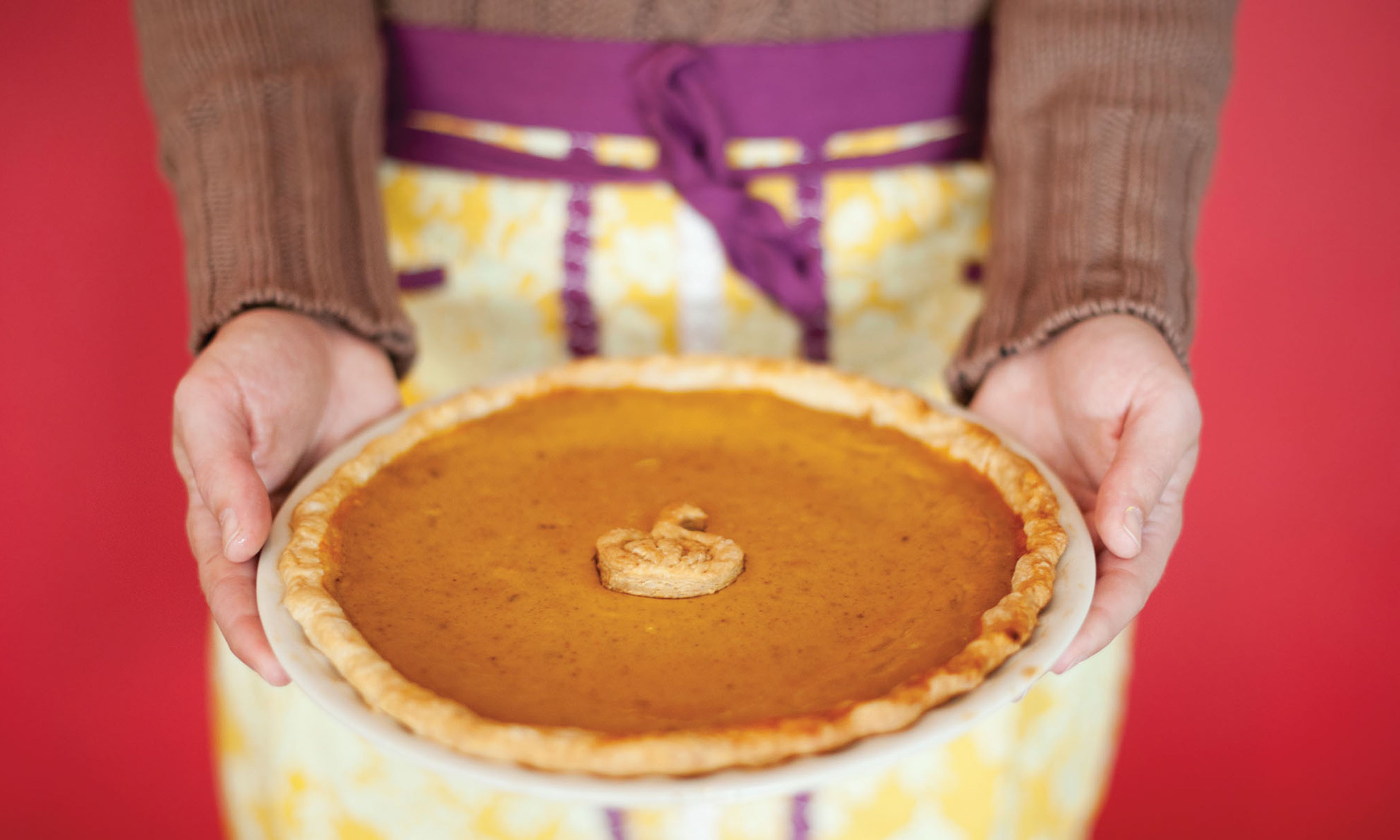
Everyone loves dessert. I refuse to believe those hair-shirted, grim-faced, latter-day stylites who say otherwise — who claim that they sincerely prefer a carrot to a cookie, and a nice long jog to either. They may be fooling themselves; they do not fool me. Everyone loves dessert.
This general acclamation makes dessert one of the best ways to love America. You don’t have to study dessert, salute dessert, solemnize dessert; you just have to eat it.
“Too sweet,” sniff Europeans about our desserts. But what Europeans call “excess,” we call “abundance.”
I don’t mean to slight the many fine European desserts, which I eagerly gobble whenever possible; the best thing about a love of American desserts is that it doesn’t require monogamy. It only requires you to appreciate the particular charms of our own delicacies: the cakes, pies, chocolate-chip cookies, slumps, crisps, cobblers, shortcakes, and brown Bettys, and, of course, the ice-cream cones.
You can learn more about America by eating some of our unique creations than you can in a year of history class. For example, our desserts are sweeter because America was more conveniently located for the historical Caribbean sugar trade, which really kicked off dessert as a mass genre. That sugar allowed us to bind together our European heritage with our fantastic array of local produce, most of which had not been as thoroughly cultivated for sweetness as European fruits had. Thus the American pie, in purely native varieties such as pumpkin, blueberry, cranberry, and purple raspberry. As befits a nation of immigrants and traders, we also incorporated ingredients from every far-flung corner of the earth: sweet potato, rhubarb, chocolate, pineapple, banana.
Like most things American, the sweet surface note of our desserts conceals a far subtler technical ingenuity. The extra sugar doesn’t just make our cakes sweeter. It also makes them moister and more tender, which is why you rarely see American recipes call for the cake to be encased in a protective layer of jam, or doused in syrup, or slathered with whipped cream, or drowned in sweetened condensed milk. The fine-crumbed, mouth-melting two-layer butter cake, clothed only in a simple frosting, is thus a distinctly American specialty.
I challenge anyone to disrespect American desserts after trying one bite of a really well-made American layer cake. You will find that you are too busy eating to manage further disparagement. Nor will you be able to voice your wrongheaded and (if you are American) near-traitorous criticisms of the American pie while facing a perfectly quivering lemon-meringue, a gently oozing sour-cherry, or, best of all, a divinely magenta purple-raspberry pie, which is the closest thing to food perfection this side of the pearly gates.
I concede that there are people who think they do not love American pie, just as there are people who think they do not love America. They are wrong on both counts. People who profess to hate American pie actually hate American canned pie filling and American premade pie crusts, which are indeed horrible; anything made from them would be quite as tasty if baked in the box, without first opening the can. They have never eaten a real American pie, with a delicately crisp and flaky handmade crust melting away on the tongue as the pure flavor of the fruit or custard bursts into flower.
I concede too that Americans did, after all, produce those canned fillings and boxed “crusts,” and so those who say they hate America are not entirely without cause. But they have taken the wrong lesson from the thing. What they should have learned is that America is what you make it, and that if we are willing to hold on to our finest traditions, and put in a little work, we can make something truly great and entirely our own.











Comments