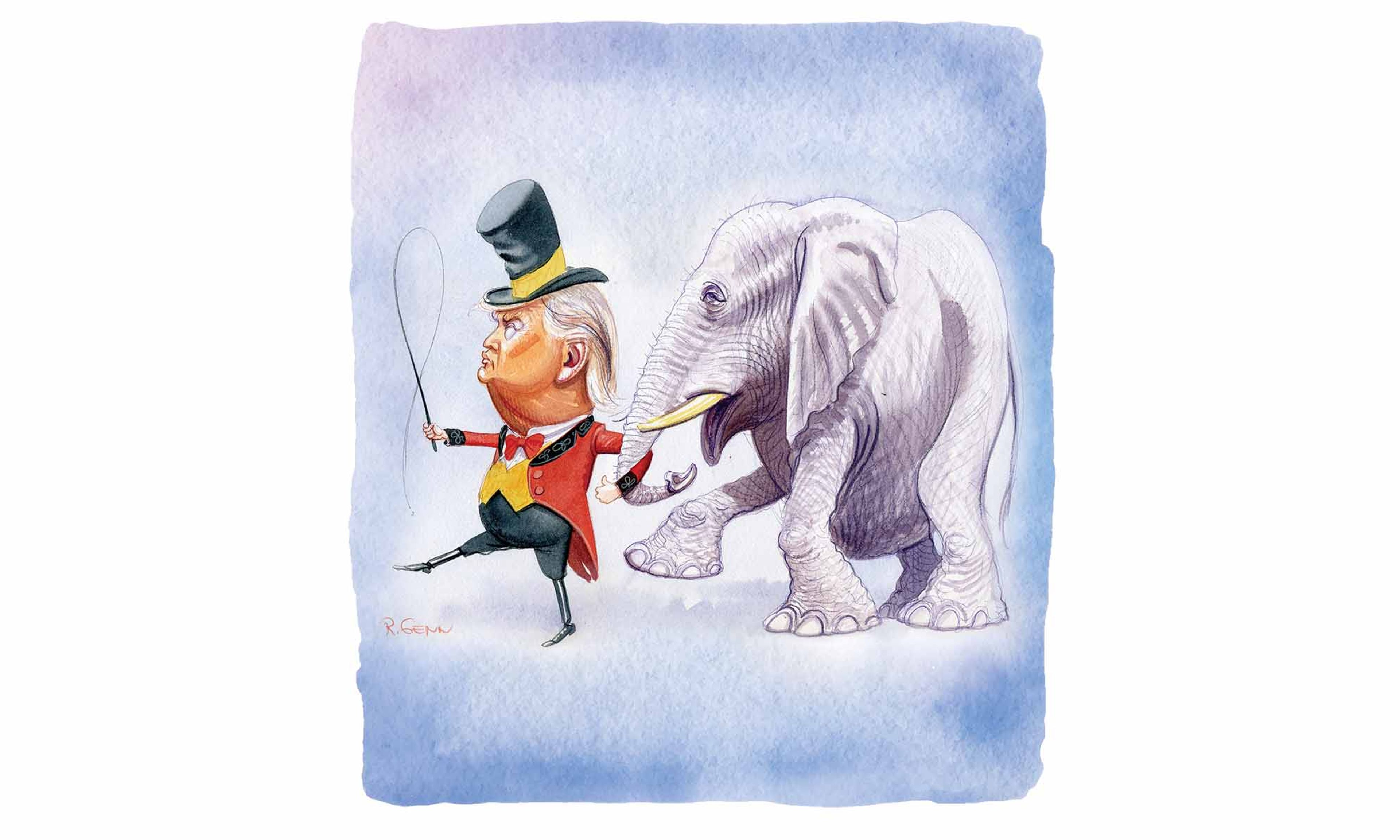
The campaign for the 2024 Republican presidential nomination has not even begun in earnest. And yet to those following it, the state of the race is already quite sour indeed. The GOP seas are angry these days, roiled by the endless unfolding controversies and chaos surrounding former president (and current front-runner) Donald Trump. The mood in conservative circles has curdled since January. Things looked rather different back then and may in fact actually be different a few months from now. But as of this writing in late March, the race is in an unpleasantly familiar place: with Trump solidly in the lead, dominating the race via sheer gravitational force.
The 2024 GOP presidential-primary campaign is and will be all about Donald Trump. Any fantasies entertained by the sane or exhausted that the events of January 6, 2021, would render him a leper to Republican primary voters have been dispelled by now.
Short of Trump’s accidentally falling into an open manhole, he is determined to make this race an elemental test of his strength within the party, the general-election consequences be damned. And he will get his wish. It was clear long before he formally announced his entry into the race that he would run again, and on a revanchist platform, a personally driven relitigation of the “stolen election” of 2020.
Trump’s formal announcement came a week after the November 2022 elections and was unexpectedly sandbagged by them. Trump had timed it in anticipation of the “red wave” predicted by the polls, almost all analysts, and history: one that would wash the Republican Party into power in both the House and the Senate and inundate governors’ mansions in contested states throughout the country. When that wave came, it would largely have been propagated by controversial candidates who owed their nominations to Trump’s endorsement in the primary: a perfect moment to launch his campaign.
That is not what happened.
The November 2022 midterms were an undeniable embarrassment to Trump that he nonetheless denies. Despite a historically favorable national environment, nearly all of Trump’s big-name endorsements ended up losing their races, with the exception of Ohio senator J. D. Vance, who nevertheless ran significantly behind his statewide ticket mate Mike DeWine in a race that was already a layup for the GOP. Everywhere else, Trump’s handpicked candidates, many of whom dogfought their way through divisive primaries on the strength of his endorsement and his voting bloc’s loyalty, either caught fire on the runway before general-election takeoff or flamed out before landing.
The long shots — Don Bolduc in New Hampshire, Tudor Dixon in Michigan, etc. — lost. The solid bets — e.g., Adam Laxalt in Nevada — lost. Dr. Mehmet Oz ran in Pennsylvania against a man whose ability to respond to spoken questions after a debilitating stroke could with maximal charity be described as “aspirant” . . . and lost. Kari Lake, whose candidacy for Arizona governor was practically willed into existence by Donald Trump as if she were his mind-sculpted Tulpa, fumbled a win that most analysts had banked for the GOP at the one-yard line. Her announcement a week before the election that “John McCain Republicans” were unwelcome as supporters — in a state that regularly gave John McCain landslides — was the sort of hubristically self-destructive act one typically sees only in conjunction with the words “Hold my beer.”
The massive disappointment of the 2022 midterms has not been aired as an issue in the primary campaign yet but inevitably will be. One suspects that unresolved frustrations from the Wave That Never Was helped stoke the online rage behind the push to deny Kevin McCarthy the House speakership despite Trump’s backing of him. It seemed to have a dampening effect on Trump’s campaign as well, reflected in a rather clunky announcement event that the man himself would have described as “low energy” in an earlier era. The former president’s subsequent debacle the week of Thanksgiving, when several low-level antisemites in the train of high-level antisemite Kanye West snuck their way into dinner with him on the patio of Mar-a-Lago, felt like a harbinger for his reelection attempt: Trump’s bubble was deflating as a professionally threadbare campaign staffed by a skeleton crew exposed their candidate to inconceivable embarrassment.
But the reality is that, as far as polling is concerned, Trump’s commanding position in the 2024 race has so far never been threatened, not once. The threat to his renomination seems largely imagined and potential, a media creation and a product of wishful thinking. Not only has Trump always led but, aside from a few outlier results, his lead nationwide over his nearest rival has usually been double-digit at worst and more often in the neighborhood of 20 points.
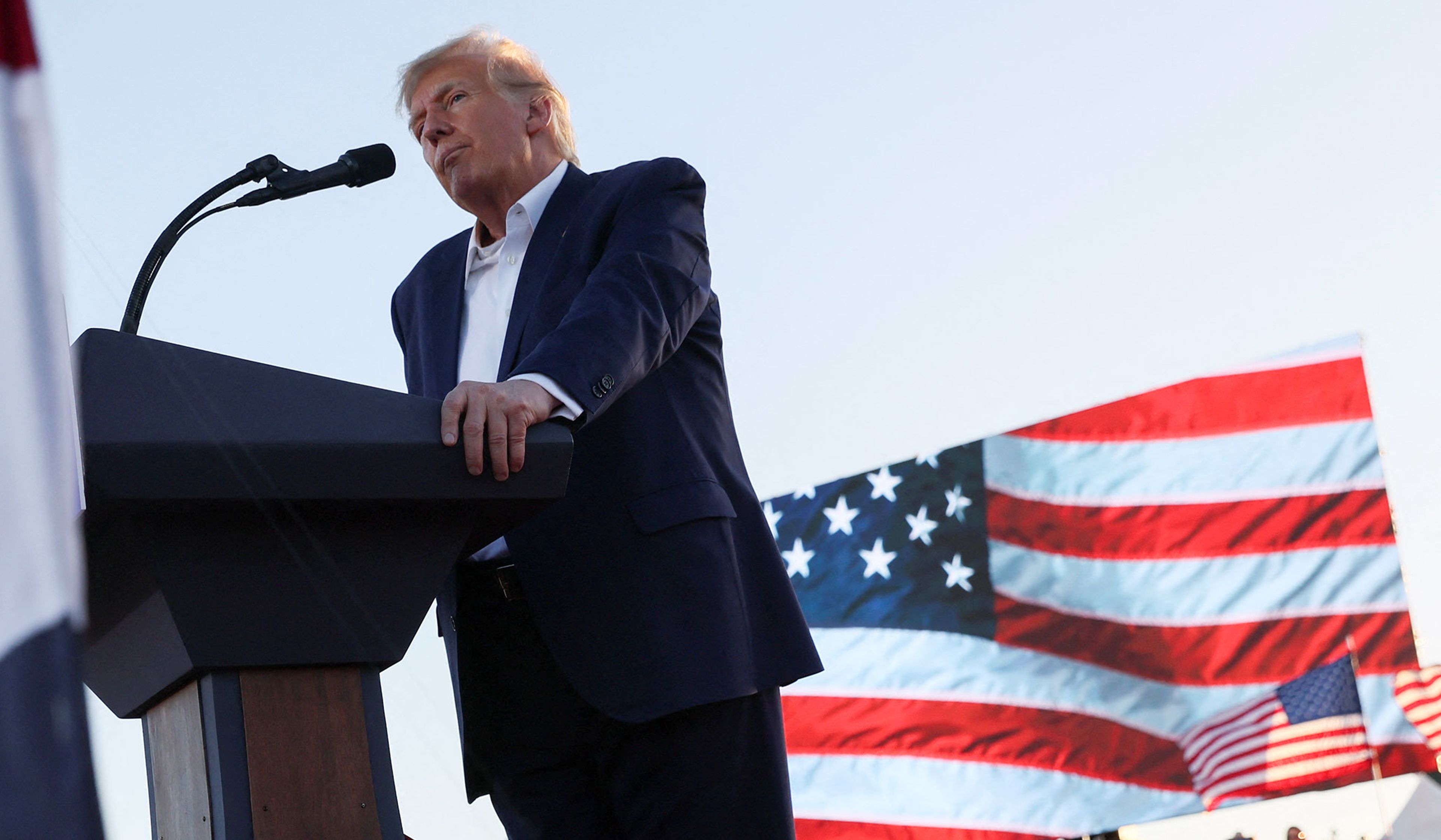
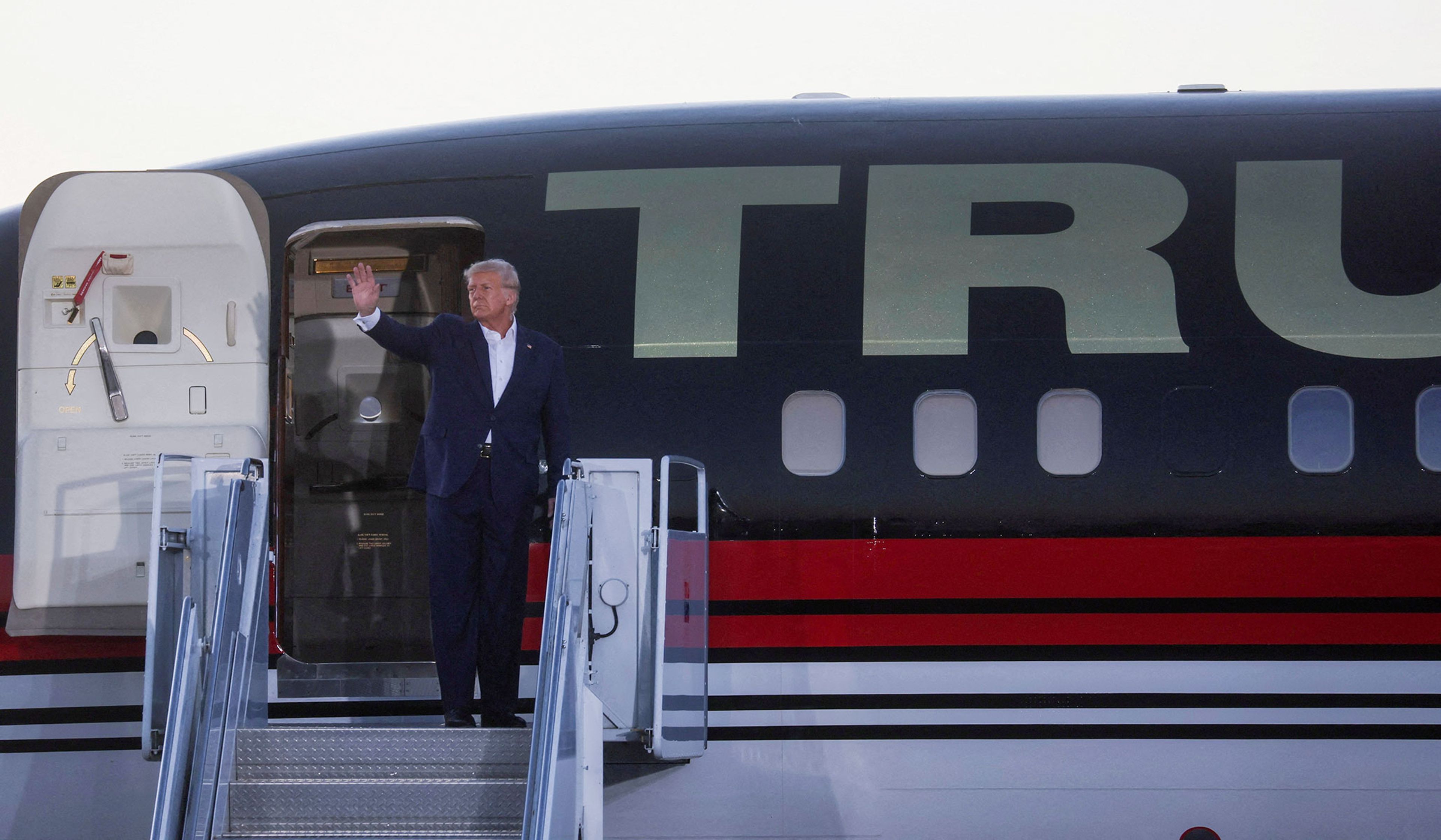
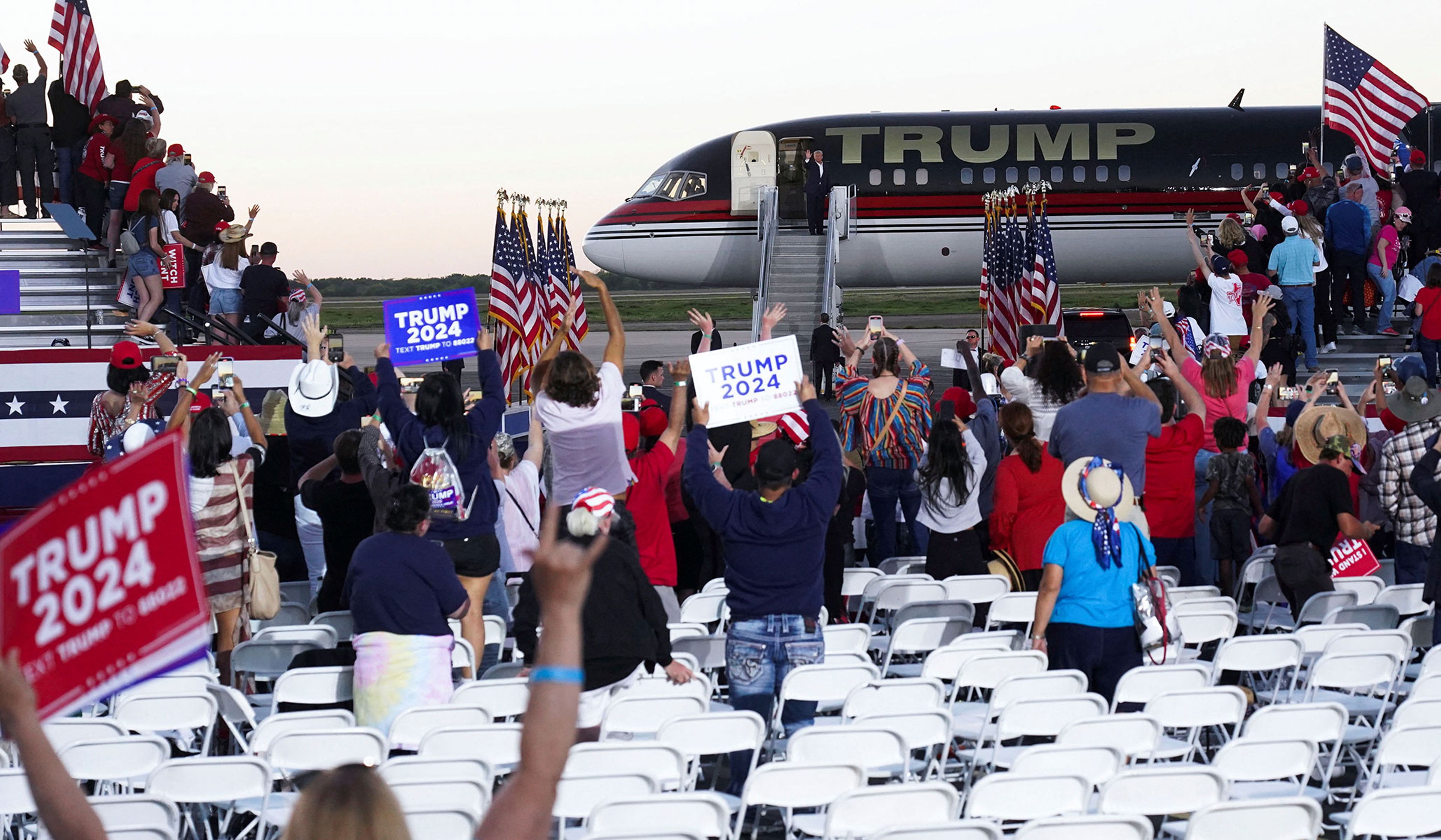
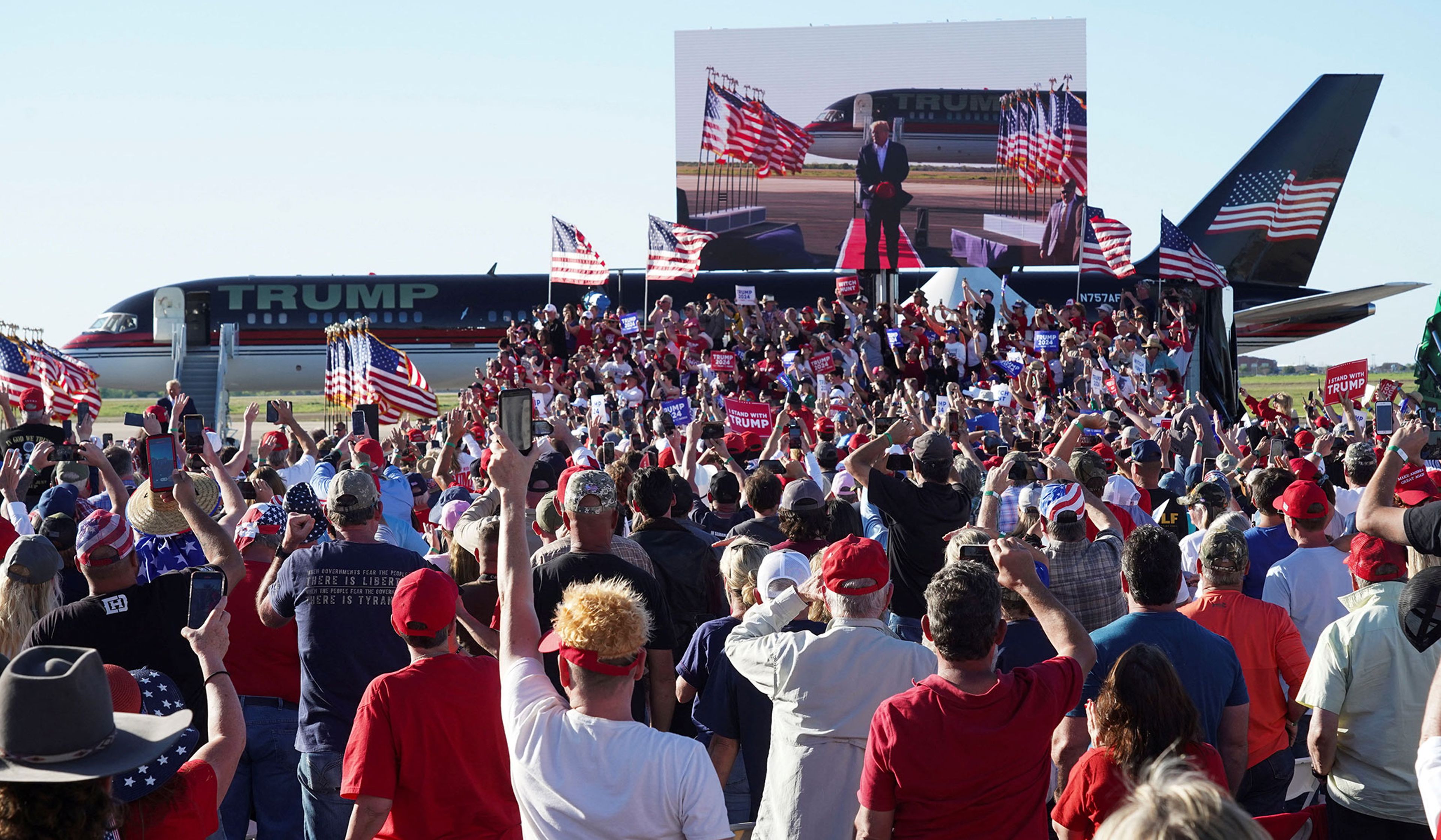
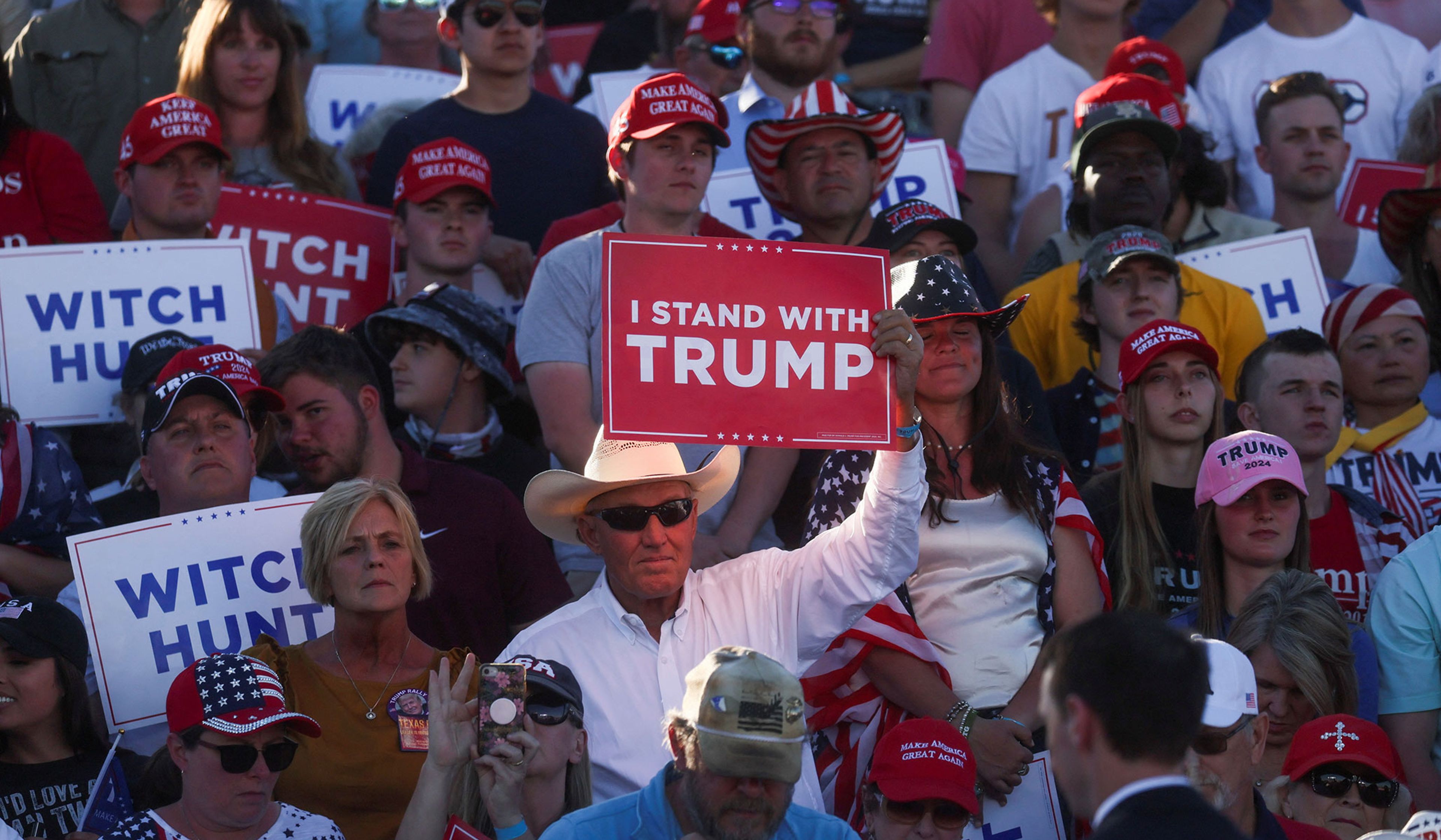
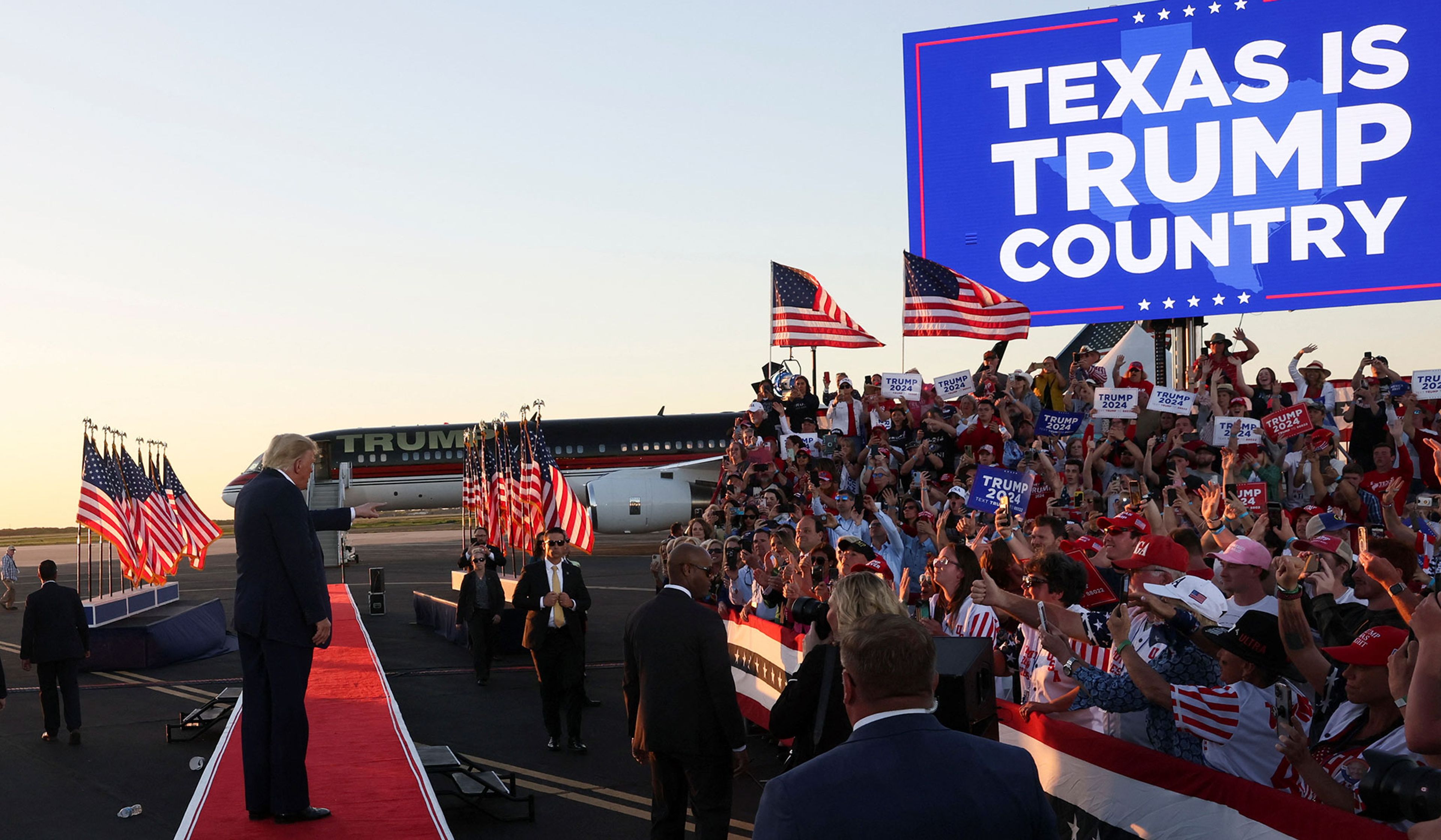
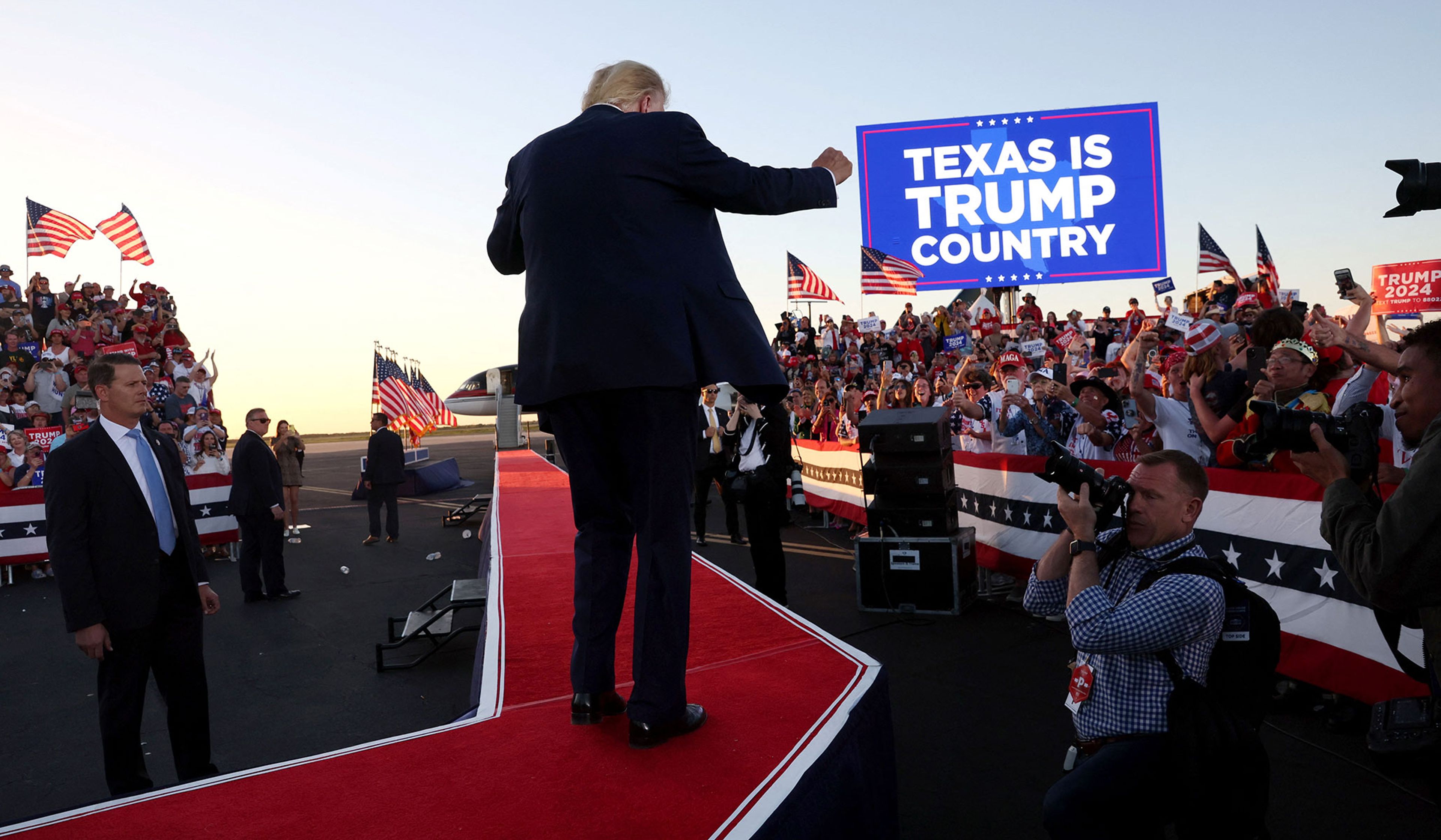
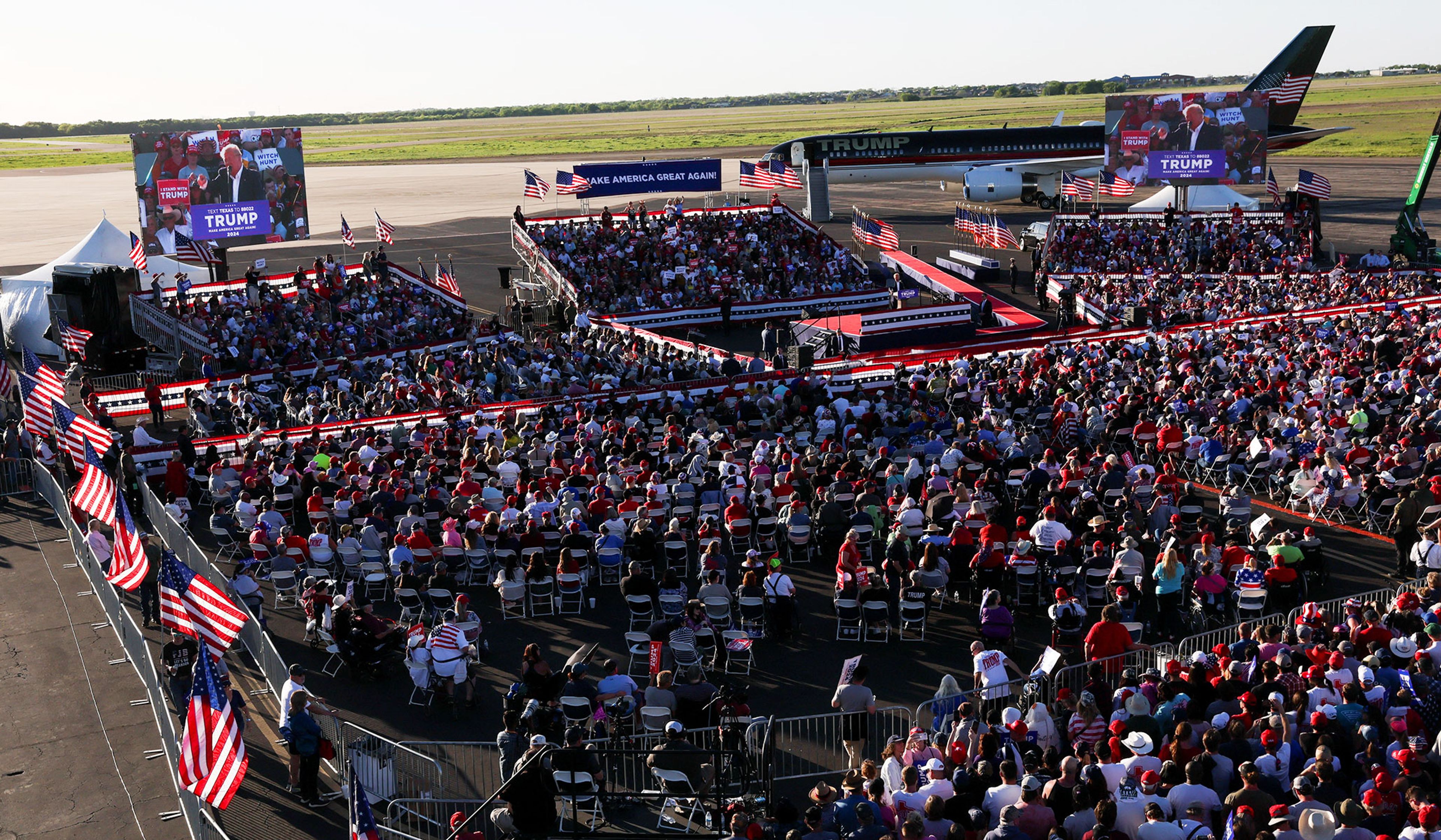
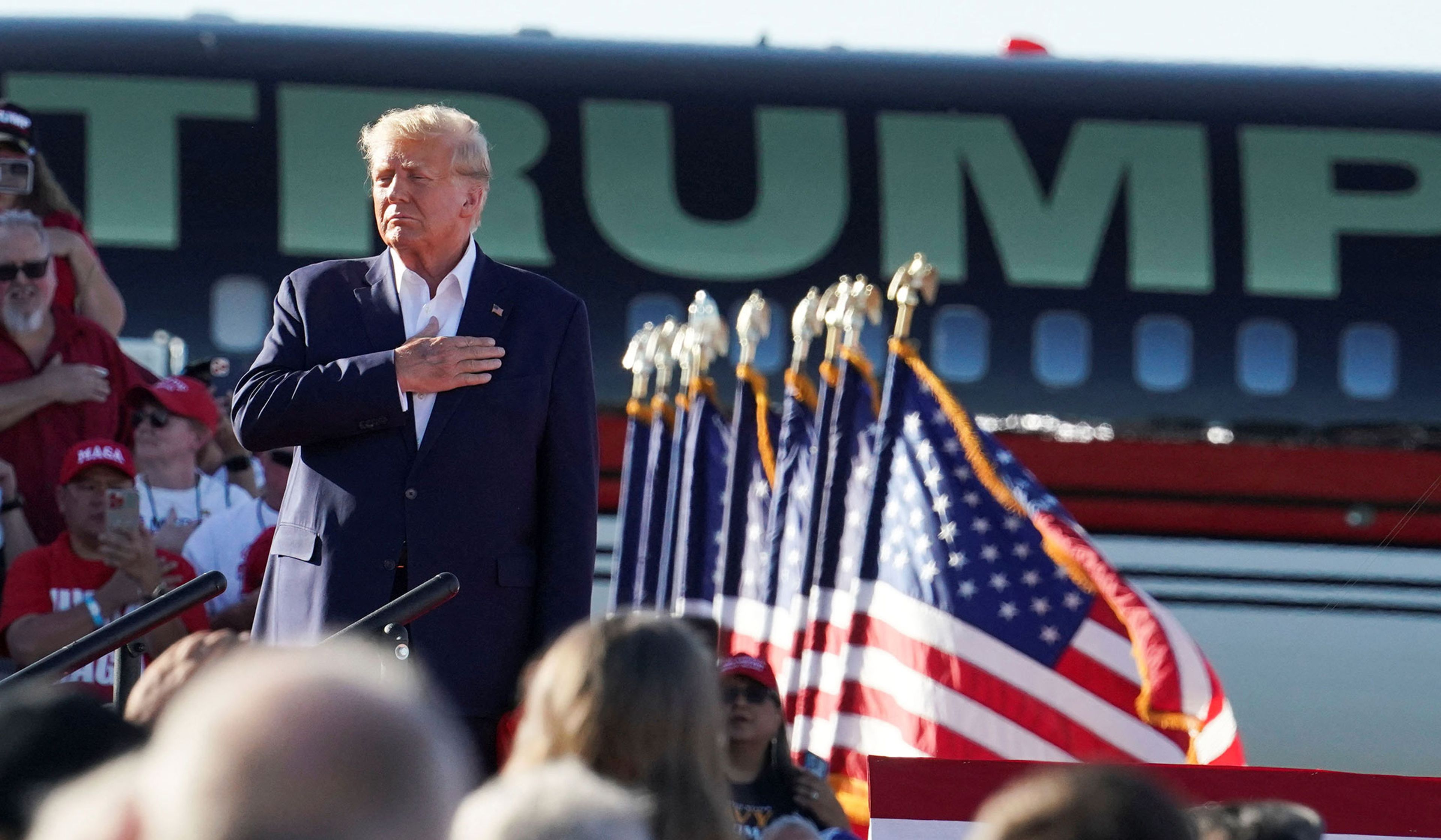
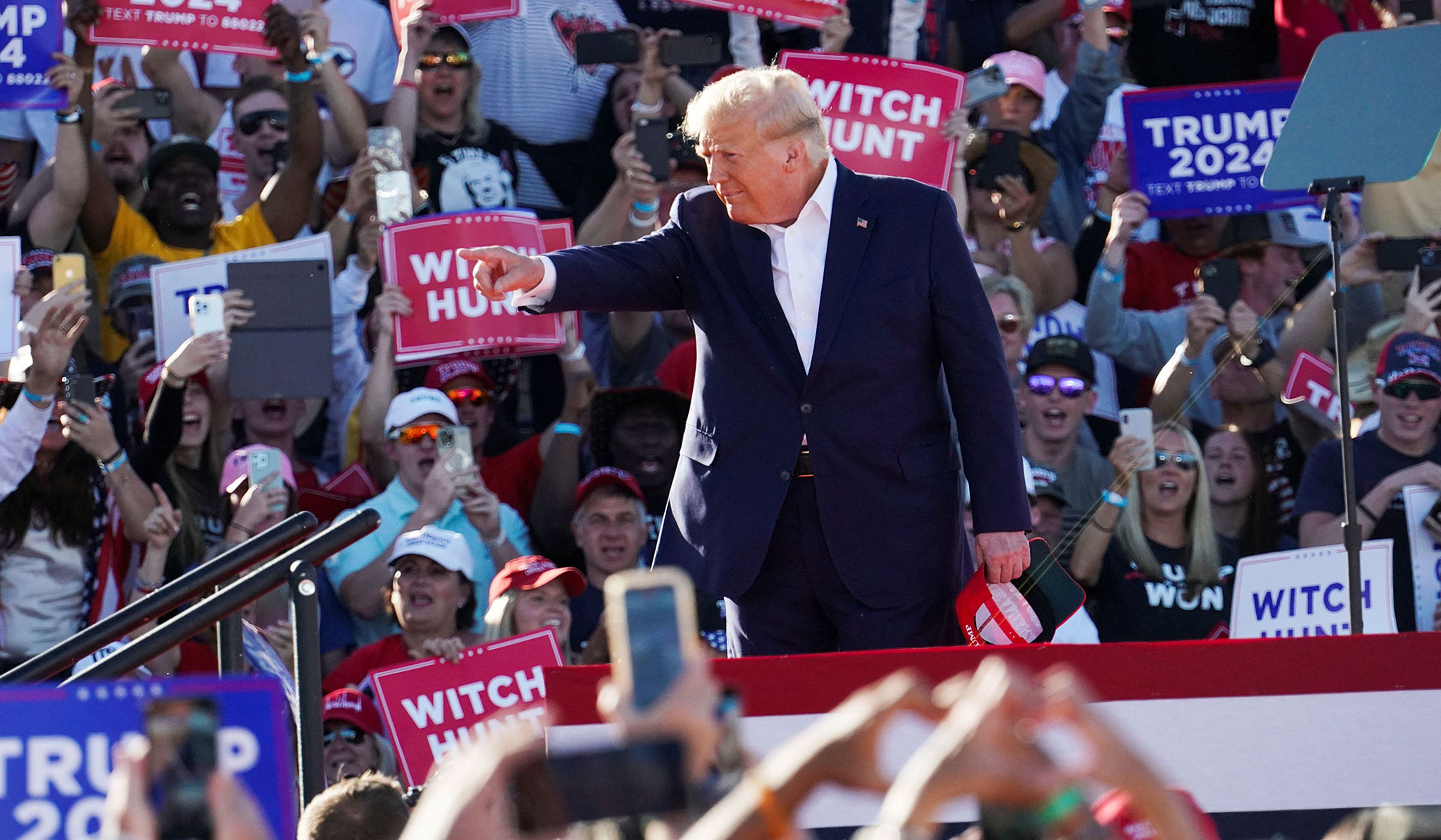
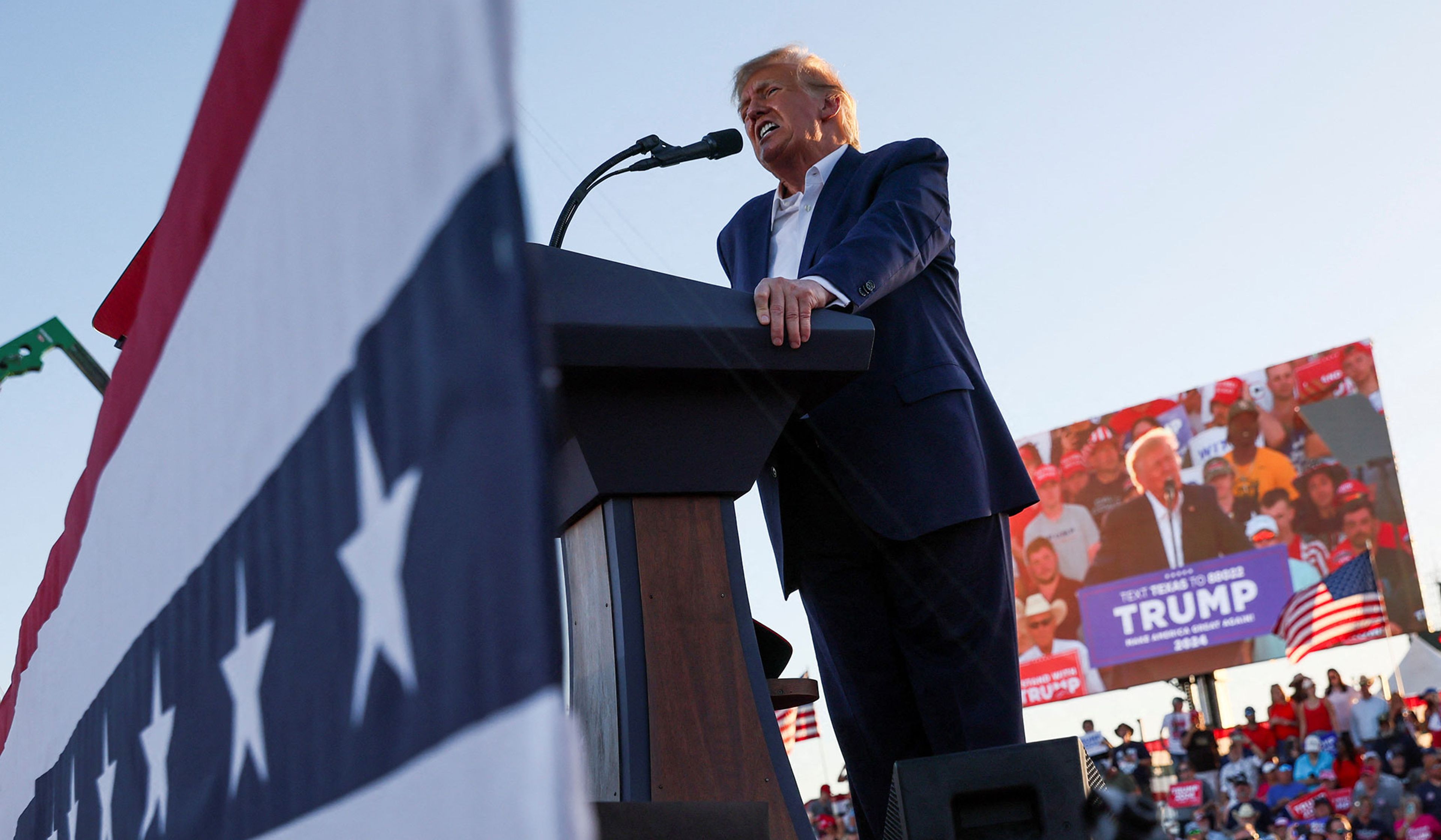
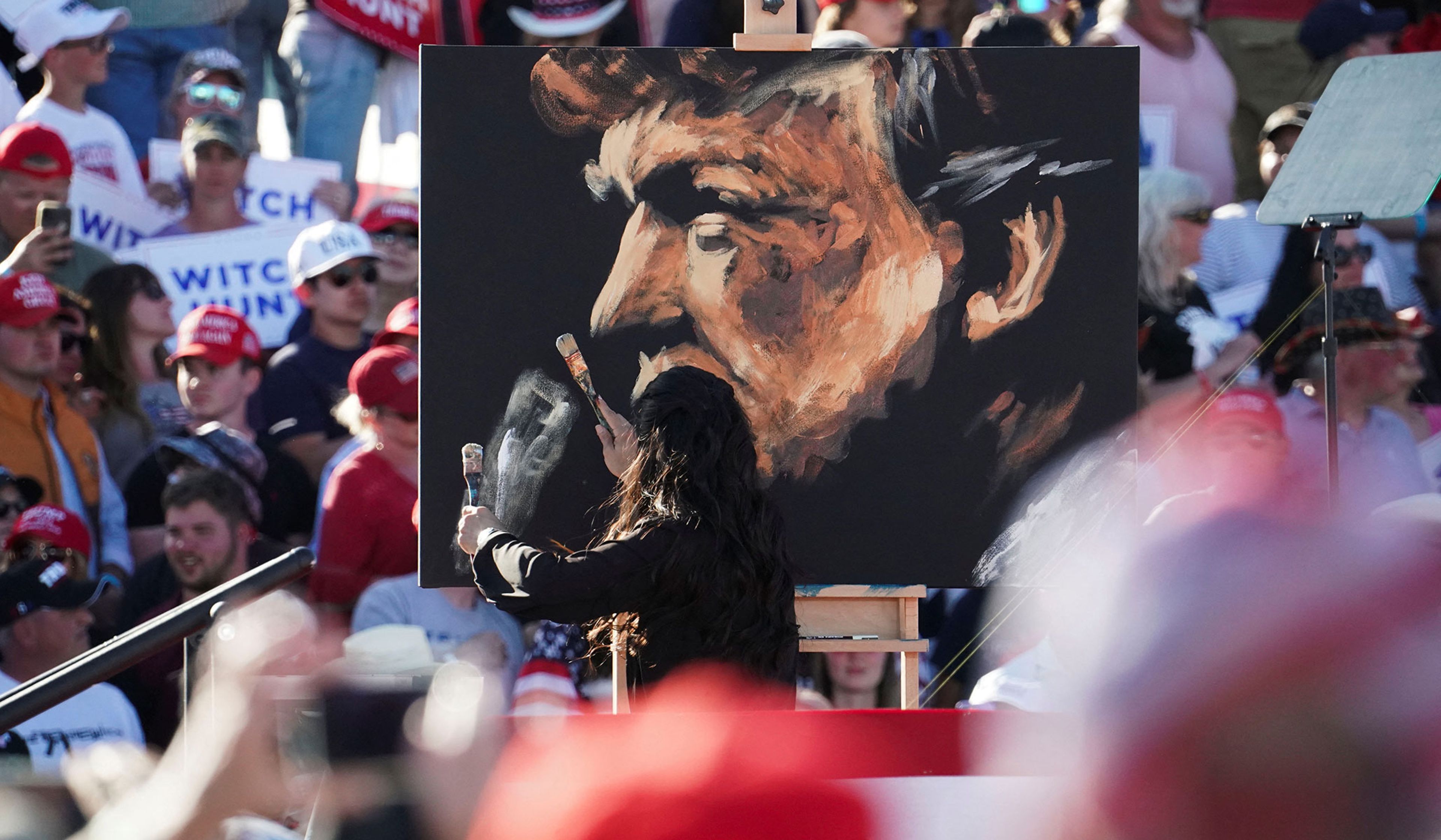
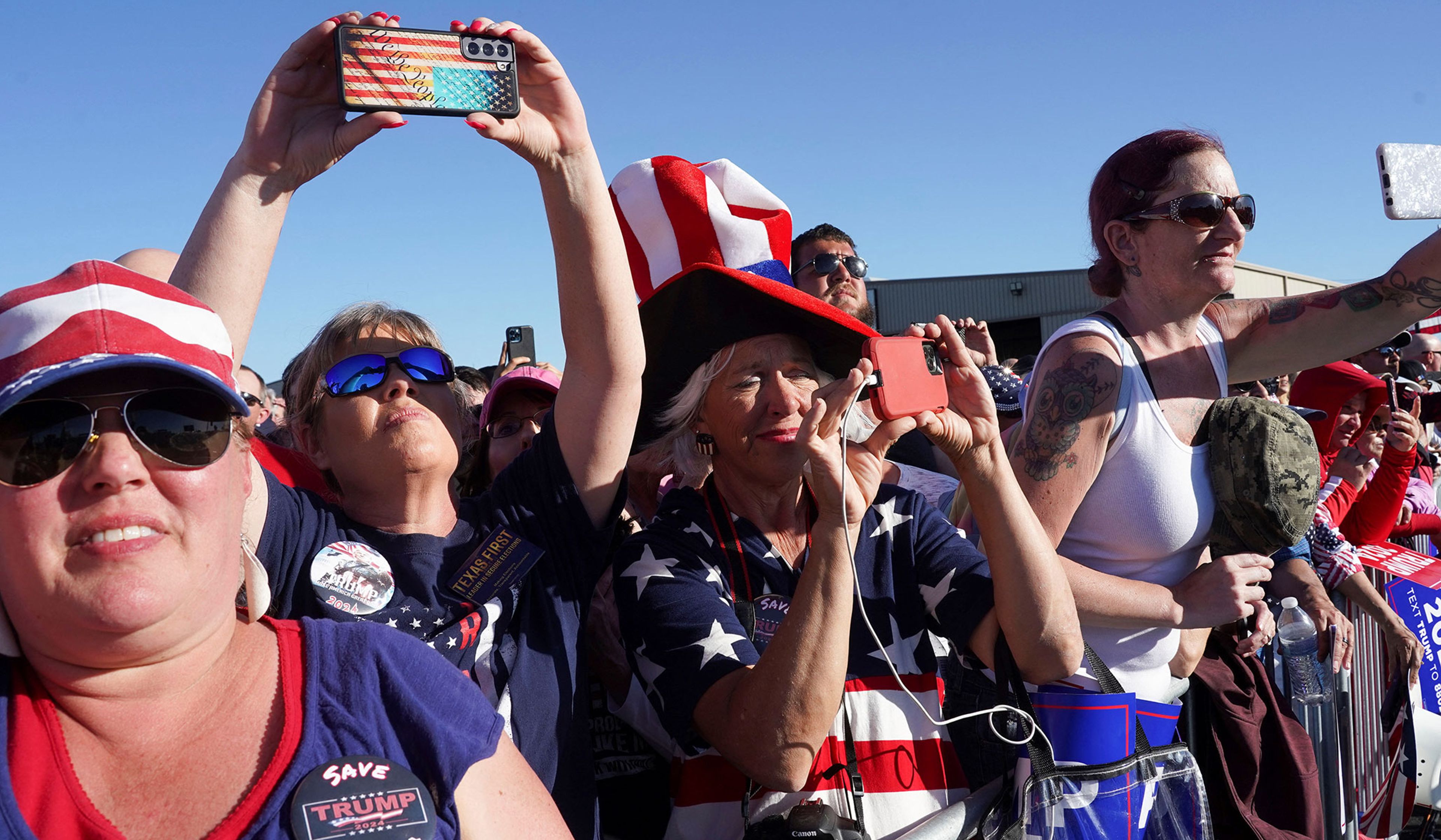
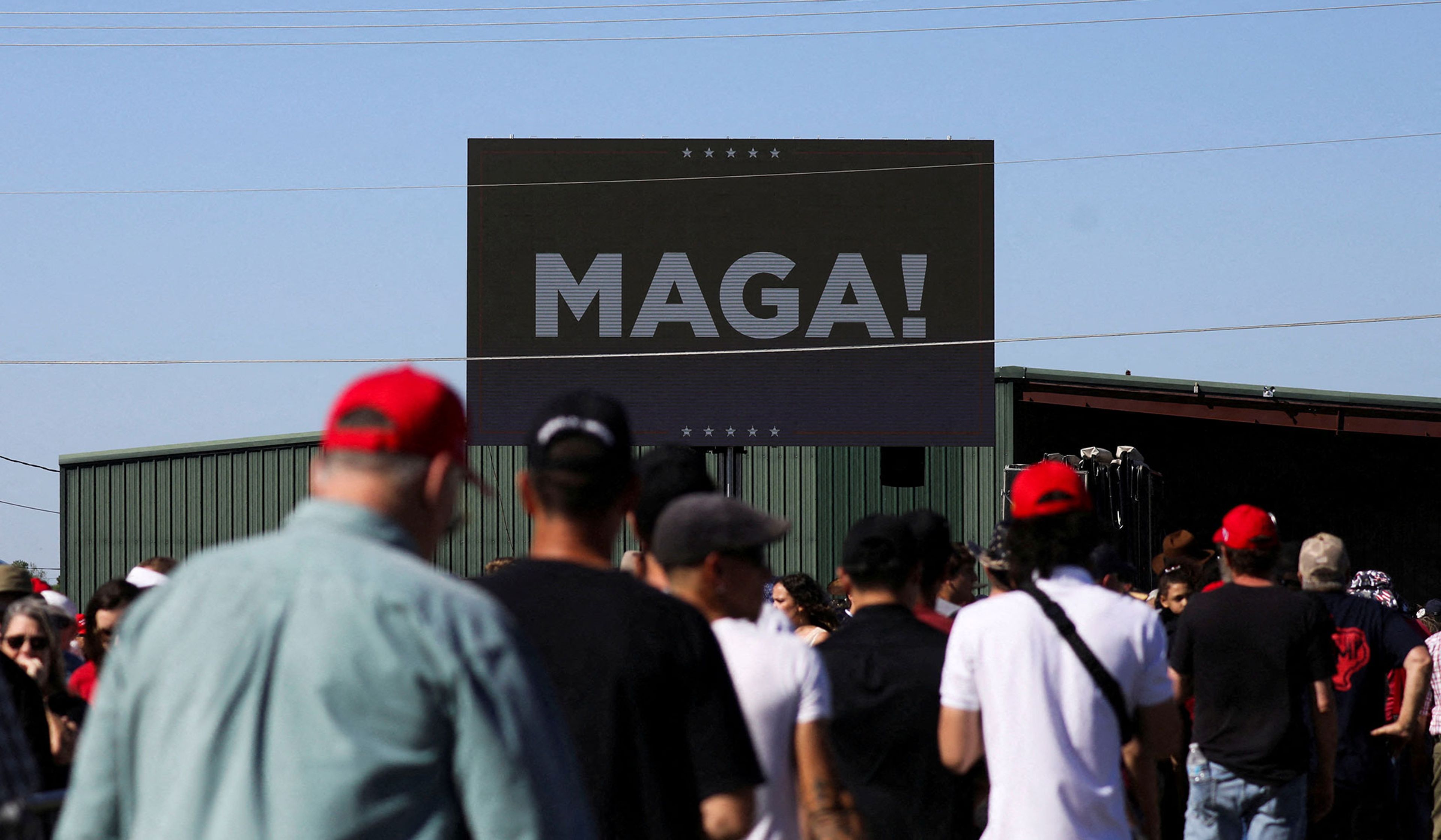
Former president Donald Trump attends his first campaign rally after announcing his candidacy for president in the 2024 election in Waco, Texas, March 25, 2023.
Leah Millis/Reuters
His more distant rivals, declared candidates Nikki Haley and Vivek Ramaswamy, look like little more than curious footnotes so far.
Haley, former two-term governor of South Carolina and Trump’s U.N. ambassador, announced her candidacy for president in early February to universal shrugs. It was eyebrow-raising when Trump welcomed her into the race (“The more the merrier”) instead of blasting her for disloyalty, as one might have expected. Trump will always attack someone the second he perceives a threat to his goals or even an affront to his pride. Haley instead serves his purposes, which are to prevent the field from consolidating into a head-to-head battle of Trump versus non-Trump. Meanwhile, Wall Street venture capitalist Ramaswamy, who first made a name for himself speaking out virally against “woke capital,” comes across as a man in a hurry.
How about that nearest rival, then? After narrowly edging out a win in the otherwise dismal Republican year of 2018, Florida governor Ron DeSantis carved out a nationwide profile by bucking the Trump and Biden administrations’ shared “scientific consensus” on Covid-19 lockdowns and restrictions. He then bolstered his credibility with a series of cannily fought culture-war brawls, whether against critical-race theorists or the Walt Disney Company. On the same November 2022 night that the Republican Party fell short of expectations nationwide, DeSantis destroyed his opponent — former Republican governor Charlie Crist, eager for one final loss — by nearly 20 percentage points while leading the statewide GOP ticket to sweeping gains down-ballot. It is fair to say that, among conservatives, DeSantis is the Great Non-Trump Hope.
Although he has not formally announced his campaign, everyone knows DeSantis is running for president. Donald Trump certainly knows it: After years of praise for the governor, he has begun upending buckets of invective on him on Truth Social. (For some sense of how it’s going: He hinted that DeSantis might be a gay sexual predator.)
It is the unresponsiveness of the DeSantis campaign in the face of this that rankles those who desperately seek an alternative to Trump. Whatever internal strategy considerations there may be, it looks as if he is ceding the field — and any hope of defining the narratives of the race — to Trump by remaining silent. DeSantis has a particularly difficult needle to thread; he must appeal to the political and cultural priors of Trump primary voters without alienating them by attacking Trump in a way seen as “unfair.” The problem is that, of course, there is no “fair” way to attack Donald Trump, certainly in his own mind (he will tell you as much) and also in the minds of many of his supporters.
“Let my record speak for itself” is a dignified, noble strategy; it is also doomed to failure. Trump and his online armies and paid influencers, meanwhile, are launching every conceivable attack on DeSantis, from the scurrilous to the even more scurrilous — throwing it all at the wall and seeing what sticks. Trump has even been praising Charlie Crist, to give you some sense of how wide he’s willing to cast the net while fishing for attack lines.
DeSantis’s refusal to pivot to a more aggressive strategy on the fly reminds one of the French behind their Maginot Line, failing to come to terms with the blitzkrieg. This might not have been the start to the war that DeSantis would have preferred, but the war has begun regardless, and the longer he refuses to acknowledge it and commence taking chunks out of Trump’s hide — if for no other reason than to break out of the self-defeating “deference” paradigm that Trump imposes on his rivals and allies alike — the more likely DeSantis is to lose.
As this goes to press, the most recent batch of nationwide polls shows Trump hovering somewhere between 44 and 50 percent of the GOP primary vote, with DeSantis sitting in the mid–30 percent range. That has cued a spate of pessimistic media think pieces, including this one, concerning DeSantis’s chances. One (usually unstated) premise underlying most of them is that even were DeSantis to wrest the nomination from Trump’s hands, it would come at the cost of fatally alienating Trump’s most dedicated supporters. And a Trump defeated (and thus on the warpath against his own party, railing about a “stolen” primary) would be only slightly less toxic for the party’s general-election fortunes than a Trump victorious.
The worm may yet turn. The shape of the race reflects only Trump’s preemptive and unanswered fusillades against DeSantis. We have not seen the counterattack yet, and if DeSantis comes out swinging intelligently, he has more than a puncher’s chance. He and his team are not known for their unwillingness to brawl with opponents. We are soon to learn an enormous amount about DeSantis’s mettle as a scrapper and the skill of his messaging operation. But one thing remains inescapable: Whether he wins or loses, the 2024 Republican presidential primaries will be almost entirely about Donald Trump, just the way he wants it.











Comments