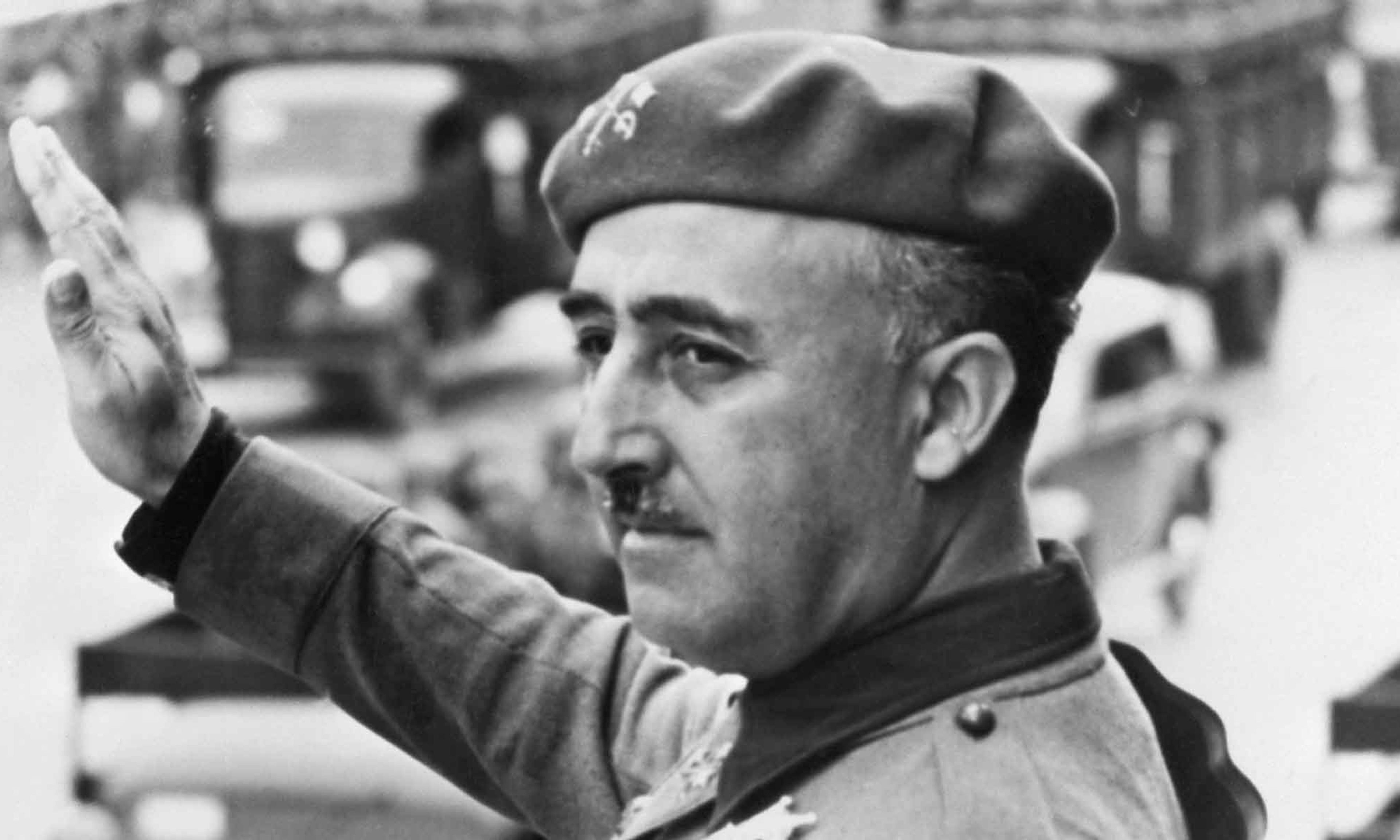
The historian Stanley G. Payne once asked a speculative question of an American who had fought in the Spanish Civil War in the 1930s: What would have happened if the leftists had won? The vet had served with the losers, and he offered a startling reply: “Oh, of course, another socialist disaster.”
Payne found the remark both amusing and perceptive. “Although he still supported his romantic cause, he had no illusions about revolutionary socialist politics,” says Payne. “He had learned some wisdom in his long life.”
At 88, Payne now qualifies as a wise old man himself. He spent decades teaching thousands of students, mostly as a professor at the University of Wisconsin. His curriculum vitae lists him as the author of 27 books plus hundreds of essays, reviews, and encyclopedia entries. A large majority of them involve the tumultuous politics of 20th-century Spain, home to violent struggles between radical factions of anarchists, communists, and fascists as well as the rise and reign of General Francisco Franco. Payne’s association with Spain is so strong, it was even fused into his name — when Wisconsin’s administration in the 1990s created his first email user name by combining his first initial and his last name: “spayne.”
Having taught his last course long ago and insisting that he won’t put out any more books, Payne continues to write essays and deliver online lectures from his retirement home in Madison. “I presume that I am nearing the point at which I really retire,” he jokes. Before that happens, however, America’s greatest historian of Spain wants to make a point: The history of the country he has spent his life studying holds a warning for the United States today.
Stanley George Payne was born in Denton, Texas, in 1934, and received his first lessons in Spanish as a fifth grader. He stuck with the language through high school and minored in it as an undergraduate at Pacific Union College in California, but he never thought he’d use it professionally. He pursued a master’s degree in history at Claremont Graduate School and, because he liked the novels of Dostoevsky and the music of Prokofiev, he wanted to study Russian. “I was saved from that by the U.S. Postal Service,” he says. A fellowship application vanished in the mail, blowing a deadline and giving him extra time to hear a mentor suggest that he focus instead on Spain, a country whose language he already knew. “The idea came suddenly, serendipitously, and late.”
Few historians of any nationality in the 1950s were studying Spain’s recent history. A civil war in the 1930s was as fresh in Spanish memories then as the terrorist attacks of 9/11 are for Americans today. “There were few primary sources available in California, just some newspapers at UCLA,” says Payne. He pursued his Ph.D. at Columbia University and traveled to Spain to interview people who had lived through the war. His first book, based on his dissertation, was a history of Spanish fascism. It met with praise, and Payne began his academic climb.
He published scholarship, won fellowships, and took a post in the celebrated history department at the University of Wisconsin. Spaniards admired him as an objective source of information on matters that continued to divide their country — a man without a personal or political stake in what Payne calls “the only Western European version of a full-scale, revolutionary civil war of the 20th century.”
The Spanish Civil War was almost immediately overshadowed by World War II, but from 1936 to 1939 Franco’s right-wing nationalist revolt against a left-wing regime that had come to power through elections ignited political passions across Europe and in the United States. The clash took on outsized importance as partisans interpreted it as a twilight struggle between authoritarianism and democracy, Christianity and atheism, fascism and communism, and more. It evolved into a proxy war that pitted Nazi Germany against the Soviet Union, with the nationalists prevailing and Franco ruling as a dictator until his death in 1975. But earlier on, the fighting attracted idealistic young people who sympathized with the Republicans, as the Spanish leftists were known. Thousands signed up from Britain, France, and the United States.
One of them was the writer George Orwell, who was badly injured in an experience that became an intellectual turning point for him. Spain showed Orwell that leftist purges could be just as bad and bloodthirsty as right-wing oppression — and by 1945, when his anti-Stalinist novel Animal Farm made him famous while the Allies were still defeating the Nazis, he wrote that “the word Fascism has now no meaning except in so far as it signifies ‘something not desirable.’”
More than 75 years later, the word remains an all-purpose put-down, to Payne’s annoyance. “It has no valid meaning except as a term of abuse,” he says. “It has no coherent content.” It’s also an anachronism. Payne defines “fascism” with precision: “Fascism was a European nationalist mass movement of the early 20th century that wanted to overthrow the liberal system. It cannot be revived in the terms of the cultural, social, and political structures of modern Western countries.” He allows that in the 21st century, there may be such a thing as “neofascism,” but that it’s much less menacing than its etymology suggests: “The basic rule of thumb is that the more ‘neofascism’ achieves any degree of political significance, the more it becomes more moderate and tries to blend in with something else.” He points to last year’s elections in Italy, where a victorious right-of-center coalition includes a party with distant connections to Italian fascism. “It has gone through such a Darwinian species-change metamorphosis that virtually nothing of the original is still present.”
Payne scoffs at the idea of fascism in the United States: “We have many radical forces active, but we have no large violent and revolutionary movements. Black Lives Matter and Antifa don’t measure up.” As for right-wing extremism, he cites the work of Jeffrey M. Bale. “If you put all these militia groups together, they amount to about 20,000 people scattered in a variety of small groups. This is not a paramilitary threat of any kind.” He’s even more dismissive of claims that Donald Trump is an American caudillo in the mold of Franco: “Absolutely comical, ignorant, and uninformed!” he says. “There are all kinds of legitimate criticisms of Trump, who had his stupid way of talking, but he was a federalist who tended to oppose excessively centralized government.”
Last fall, a New York Times podcast mentioned the acrimony of contemporary U.S. politics and asked a provocative question in its title: “Is America Headed for Another Civil War?” Payne thinks this is unlikely and doubts that the Spanish Civil War has much to teach about the future of the United States. That may sound like good news, but Payne is not so sanguine: “What can be illustrative for Americans is not the civil war but the history of the Spanish republic and the process of its breakdown.”
In the early 1930s, says Payne, Spanish leftists learned an important lesson: “They could not overthrow the system from the outside in. They had to capture the system and transform it from the inside out.” In other words, they abandoned a strategy of launching insurrections and replaced it with a strategy of winning elections, which allowed them to achieve their revolutionary aims from positions of public office. Once in power, they pursued their goals with both ruthlessness and a pretense of legality as they seized farms and churches, allowed unions to take control of industry, and arrested thousands of their political foes. In doing so, they created the conditions for Spain’s national conflict.
Payne foresees nothing quite as dramatic for the United States but points to the threat of “soft despotism” as conceived by Alexis de Tocqueville almost two centuries ago. “The great danger for democracies in a certain sense is democracy itself,” says Payne. He means that the urge for equality compels citizens to forfeit their rights and powers to an administrative state that claims to act in their best interests. “It does not tyrannize,” wrote Tocqueville, “but it compresses, enervates, extinguishes, and stupefies a people, till each nation is reduced to nothing better than a flock of timid and industrious animals, of which the government is the shepherd.”
Is this happening in the United States right now? “I would say that beginning with the Obama regime, the United States began to enter a Tocqueville moment,” says Payne.
The retired professor adds that he has witnessed the inside-out strategy at work in the Left’s takeover of higher education. “I had the good fortune to live through the golden age of the American university, which was the half century after World War II,” he says. “Then came the long march through the institutions. By the 1990s, an entire generation of radical leftist growth in the universities had begun to have an effect.”
Payne’s politics took him in the opposite direction. “I was a typical anti-communist liberal, and I was very happy with the anti-communist Democratic Party of the 1950s,” he says. In the 1960s, however, his ideas changed. “I began to see that the cultural revolution was not merely a temporary blip on the radar screen.” In 1968, Payne voted for Richard Nixon, the Republican presidential candidate. He began to think of himself as a conservative as he watched the gradual radicalization of higher education. “No outside force has imposed itself on universities,” he says. “There’s never been any McCarthyism from the outside telling the universities what to do. The universities have succumbed to and joined this trend either because of irresponsibility or their own volition. The two forces work together and have transformed universities from the inside out. No one has coerced universities into anything.”
During his final years at the University of Wisconsin, Payne tried to counter the Left’s inside-out takeover by creating and leading an academic-freedom committee, though it disbanded about a decade after his retirement from teaching, in 2005. He seems to regret that he and his generation of professors did not see what was happening until it was too late. “Being apolitical was totally inadequate to the challenge,” says Payne.
In hindsight, it might even be called another leftist disaster.











Comments