Before 1978, every human being who had ever existed began inside his mother. But with the advance of the first “test tube” baby came new feats in reproductive medicine. Today, mothers can be cut out of the picture as men select egg donors out of online catalogues and, after a surrogate gives birth, pose with the newborn. Bioethicists, meanwhile, grapple with the possibility of another way to make mothers redundant: “artificial wombs,” a process also known as “ectogenesis.” Earlier this year, a video of a concept dubbed “EctoLife” went viral. It imagined in neutral terms “the world’s first artificial-womb facility” — human babies mass-produced in pods. For now, at least, the scientific research in this area looks very different.
In 2017, Alan Flake, a fetal surgeon at Children’s Hospital of Philadelphia, led a study in the journal Nature Communications in which a lamb fetus was successfully transferred from its mother via C-section into a clear plastic bag filled with synthetic amniotic fluid. There, it was connected to a placenta-like supply of nutrients and oxygen. The results seemed promising. According to Flake, this same “extra-uterine” technology could be used for premature babies delivered around the point of viability, at 23 weeks or so, whose needs are not always met by current incubation methods. The team denies most interview requests but, in a rare exception for NPR, Flake emphasized that he and his researchers had “never had any intention with this technology of extending the limits of viability further back,” since this would “open a whole can of worms.”
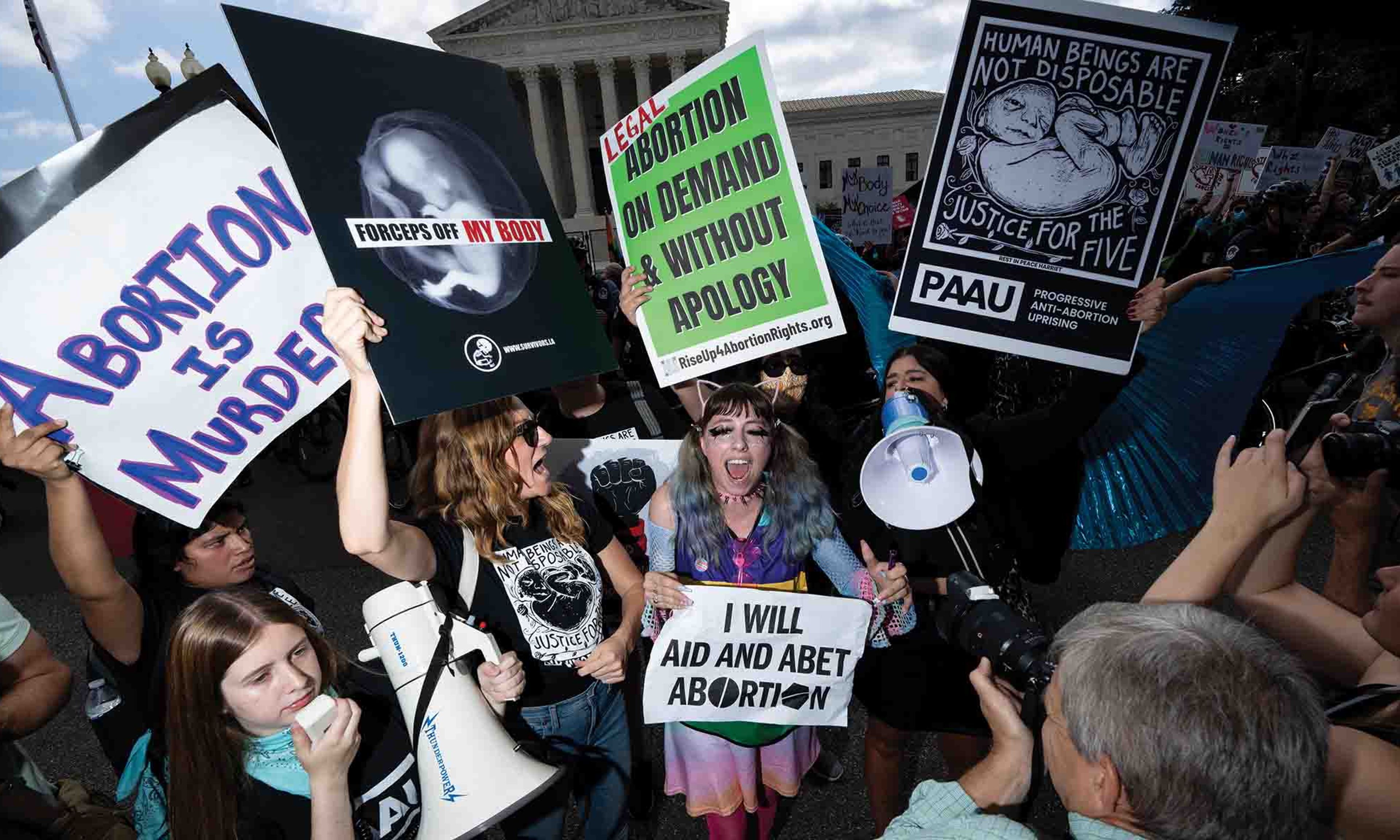
Consider abortion, for instance. As doctors fight to save the life of an infant born at 23 weeks, doctors elsewhere might end the life of a fetus of the same age. The only allegedly relevant difference between the two instances that abortion advocates have been able to point to is the baby’s location. But the viability of artificial wombs would muddy that distinction.
“Up to now, we’ve either been born or not born,” Dena Davis, a bioethicist at Lehigh University, told NPR. “This would be halfway born, or something like that. Think about that in terms of our abortion politics.” Of course, the patients Flake would be treating would have already been born. Hence in 2020, Nick Colgrove, a scholar of philosophy at Wake Forest University, argued in the Journal of Medical Ethics that human subjects in an artificial womb would “share the same moral status as newborns.” But Elizabeth Chloe Romanis, an assistant professor of biolaw at Durham University, disagreed, saying they would be “a unique human entity . . . rather than a fetus or a newborn.”
Since Roe v. Wade, fetal viability — the point at which a baby can survive outside the womb — has been a major part of arguments in abortion law. Historically, abortion advocates favored the viability standard, which guaranteed lawful abortions well into the second trimester: a standard much more permissive than those in many European countries. Flake says his team won’t try to extend the parameters of viability, but it seems likely that others — such as parents of babies delivered early — will. Ectogenesis also offers the possibility of pregnancy without infringing on a woman’s bodily autonomy, thus undermining another pro-abortion argument.
Anticipating some of these challenges, some abortion advocates suggest establishing a parental property right over the fetus, or a right of a parent to have the fetus destroyed and to no longer be a parent. These new arguments are welcome to pro-life advocates as they are easier to defeat and less sympathetic to the public. Much like ultrasound technology, developments in ectogenesis — a womb with a view — could further expose the undeniable humanity of the developing baby. But artificial wombs would also be wide open to misuse. Pro-life advocates, as much as their opponents, will have to make their case in new and unprecedented contexts.
If it were possible to safely transfer a fetus from the mother’s womb to an artificial womb, would you support this as an alternative to legal abortion? This is the question I recently asked my Twitter following in an online poll. I gave four options: “Yes (I’m anti-abortion),” “Yes (I’m pro-abortion),” “No (I’m anti-abortion),” and “No (I’m pro-abortion).” In total, there were 11,597 votes. Obviously I am no professional pollster, and this was by no means a random sample, yet the results were interesting. While the pro-abortion side was evenly split (10 percent supported and 10 percent opposed ectogenesis as an alternative to legal abortion), a majority of anti-abortion voters, 49 percent to 31 percent, said they would support artificial wombs. I am with the minority; I believe this would be unwise.
Granted, the word “safely” in the hypothetical does a lot of work. Still, there is a clear difference between intervening in the case of a medical emergency, as Flake and his team would for premature infants, and resorting to such a drastic medical intervention for moral reasons. When abortion was first legalized, it was framed by many of its supporters as something tragic but necessary, the lesser of two evils; something undesirable but that, given the alternative of backstreet abortions, ought to be “safe, legal, and rare.” Ectogenesis as an alternative to abortion shares the same misguided assumptions and presents a similar slippery slope.
Giving a child up for adoption is naturally unappealing: It is heart-wrenching to do. But ectogenesis, like abortion, promises to make severing this connection easier. From the mass production of commodified infants to the breeding of an army, some of the imagined uses of ectogenesis are dystopian. For more-mundane scenarios, the advertisement for artificial wombs practically writes itself. Want a baby but not ready to take a step back at work? Want a family but not those pregnancy stretch marks?
It doesn’t help that motherhood already has a negative reputation in our culture. Some view it as a social burden, others think that its costs are primarily economic and that “reproductive labor” ought to be more evenly distributed. For example, Vitalik Buterin, founder of the blockchain-based software platform Ethereum, argued that synthetic wombs could eradicate income inequality between men and women. Some Silicon Valley companies offer egg-freezing to their female employees who wish to delay childbearing. In the aftermath of Dobbs, other companies have offered to cover abortion-related travel expenses for employees in states where abortion is illegal. It seems likely that, if the technology of ectogenesis were available, it would be on offer as well. But motherhood itself is not the problem, not least because economic productivity is not the pinnacle of human purpose.
Neither is sexual availability. Already, we’ve seen how the technology of contraception transformed a courtship culture to a hookup one. Before contraception was widely available, sexual responsibility meant acknowledging the consequences of sex and rising to meet them. Afterward, it meant avoiding these consequences entirely.
Contraception was supposed to solve social ills. Really, it obliterated the social standard of lifelong commitment to one’s sexual partner and children, necessitating abortion as a backstop. Pregnancy — a woman’s superpower — came to be seen as a woman’s curse. Societal curses, meanwhile, were shrugged off. Along with sexual activity outside of commitment, the rate of unintended pregnancies increased. Women were often reduced to outlets for male sexual release in popular media, pornography, and dating culture. This does not appear to have made women happier.
Even if we struggle to articulate it, we can all intuit something essential beyond the mechanical about the mother–child gestational bond. Undermining this connection risks hollowing motherhood of its humanity, love, and distinctly female character. We risk aligning ourselves with those who think “people who menstruate” or “cervix-havers” don’t have anything unique to offer their offspring.
Women have the same fundamental purpose as men — to love and to be loved — which is fulfilled through a combination of chosen and unchosen relationships. We choose whom we marry. We do not choose our parents. Yet in both cases, we owe something and are owed something in return. The same is true of pregnancy. Women owe protection to their unborn children just as men owe support to the women they impregnate. There is no technological shortcut to this.
Of course, we don’t live in an ideal world. And there are two stubborn problems associated with fertility. One is ethical and social: Not every couple that conceives a child is willing to parent. The other is biological: Not every couple who wishes to have children is able to do so. But we already have the solution to much of both problems, and it turns out to be the same one. There are around 900,000 abortions every year in the United States and well over a million couples looking to adopt.
Children ought not to be removed from their biological parents’ custody except for very good reason. And in the case of removing babies from their mother’s wombs, that reason can only be medical. For women unwilling to become mothers, ectogenesis may offer a way out of the physical burden of pregnancy and soften the blow of detachment in giving up a child to adoption. But women who get pregnant are mothers, whether they accept this fact or not. And giving up your child for adoption is supposed to be difficult. If it weren’t, the hard work of parenting might be abandoned after one too many sleepless nights or temper tantrums.
Abortion destroys the unborn child. Ectogenesis would alienate him. My NR colleague Michael Brendan Dougherty describes ectogenesis as a kind of “solitary confinement for the unborn.” We don’t need to imagine what happens when we swap the safety of a mother’s womb for a lab. Year after year, in the United States, hundreds of thousands of human embryos lie abandoned in freezers. A small number may be implanted into adoptive parents in a process called “embryonic adoption”; others may be experimented on. But most will stay in an icy limbo or perish.
The real issue is the lack of boundaries in modern medicine in the areas of sex and reproduction. It may be that legislative efforts such as the Born Alive Act could benefit from advancements in medically assisted fetal viability. But pro-lifers should focus on the humanity of the unborn, the dignity of motherhood, and how the two are intrinsically intertwined. They should make a positive, reality-based case for motherhood, even motherhood in nonideal circumstances, while addressing the root cause driving the demand for abortion: society’s unwillingness to accept, and therefore anticipate, the natural consequences of sex.
Modern medicine cannot solve this problem and, without guiding principles, is prone to distraction. Since the advent of in vitro fertilization and surrogacy, the research into assisting natural fertility has been left by the wayside. Couples whose fertility issues may be solvable with treatment are hastily ushered down the industry’s more lucrative paths. Since contraception became widely available, the effort to promote true sexual responsibility has been all but abandoned, and women and men persist in their shocking ignorance of natural fertility. Since abortion became more socially acceptable, the hopes and dreams of many would-be adoptive parents have been dashed. These issues are cycles of destruction whereby the “solutions” do not solve anything but instead create new problems.
We have reached a unique moment in American politics. With Roe v. Wade overturned, we can help rejoin the dots of sex and reproduction, offering a more humane vision of pregnancy and parenthood. Providing a technological escape hatch to fertility has been ruinous. So far, the escape hatch to pregnancy has been lethal. Ectogenesis as an alternative to abortion would only reintroduce the same distorted assumptions in a more insidious form.
Editor’s Note: The online poll results referenced above have been amended since this article was first published.











Comments