Tobias Becker’s Yesterday weighs in at 241 pages of text with 1,243 endnotes, which averages out to slightly more than five endnotes per page. For those among us who feel the need to check foot- and endnotes, that makes for, literally, a real page-turner. Such an abundance of scholarship is in danger of sinking a book, and one often closes Becker’s after a ten-or-so-page session, muttering, “So long, Yesterday, see ya tomorrow.”
Every word has its history, which includes its date of origin, etymology, changes in definition undergone over the decades, sometimes centuries, and its current usage. In Yesterday, Tobias Becker, an independent scholar, tracks that of “nostalgia,” which turns out to be a more heavily freighted word than one might have thought — freighted with multiple meanings, nuances, uses.
Coined in 1688, the word originally had a medical meaning, describing pathological homesickness. Over time its meaning changed, according to the Oxford Concise Dictionary, to “sentimental yearning for (some period of) the past,” and then, in The Oxford English Dictionary, to “a sentimental yearning for or regretful memory of a period of the past.” The word eventually took on a somewhat dark aspect. In the New York Times in 1992, Carolyn G. Heilbrun wrote that “nostalgia is a dangerous emotion, both because it is powerless to act in the real world, and because it glides so easily into hatred and resentment against those who have taken our Eden away from us.” Peter De Vries noted that “nostalgia isn’t what it used to be,” but, then, Yogi Berra claimed that neither was the future.
Yesterday, in the words of its author, “concentrates on what it holds to be the dominant understanding of nostalgia since the middle of the twentieth century — as counterpart or antithesis to progress.” The book “argues that nostalgia cannot be studied divorced from the emotional quality attributed to it because it was this quality that determined so much of how it was understood.” While allowing that no single work can do justice to the complexity of nostalgia, Becker holds that his “Yesterday still paints a broad canvas, encompassing not only the history of ideas, politics, popular culture, and popular history but also how people have tried to make sense of history itself, of time and change, modernity and postmodernity.”
Not all views of nostalgia have been negative. For some, as Becker reports, nostalgia “was progressive inasmuch as it drew attention to the costs of progress.” He quotes the American theologian Ralph Harper prizing nostalgia for allowing us to recognize and recall “what we hold most dear” and thereby emphasize what we feel most important in our lives. Nostalgia can speak to a craving for a lost world, a wish to escape the horrors of the present, a deep desire to return to a simpler life. The danger, of course, is that nostalgia can also lapse into fantasy, glorifying the past and unjustly denigrating the present. Becker quotes the historian Arthur P. Dudden defining nostalgia as “a preference for things as they are believed to have been.” The social scientist Robert Nisbet called nostalgia “the rust of memory.” In Svetlana Boym’s book The Future of Nostalgia (2001), also cited by Becker, nostalgia is described as a “defense mechanism in a time of accelerated rhythms of life and historical upheavals.”
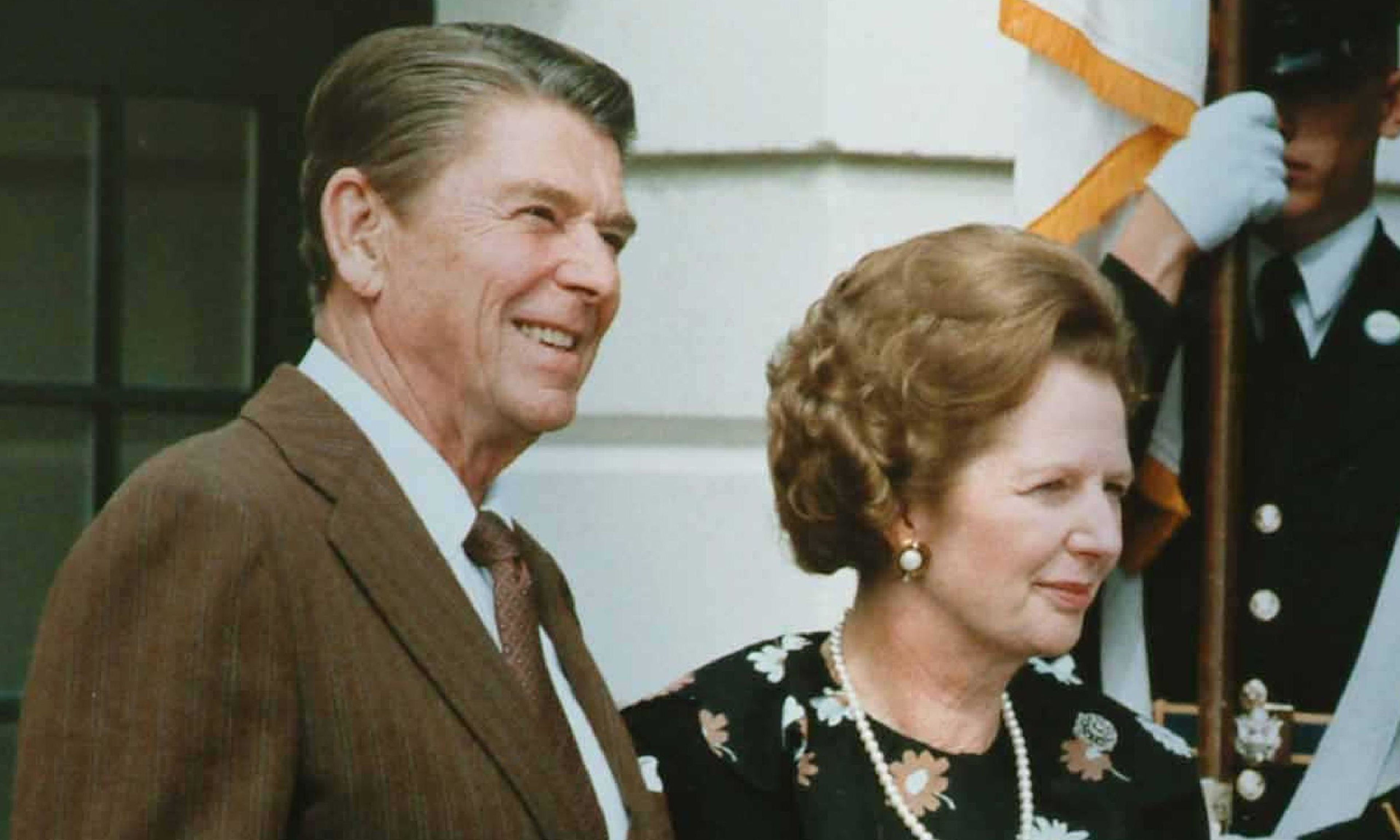
Nostalgia can be collective, taken up by large groups or even the better part of entire nations, or personal, touching only the lives of discrete individuals. Yesterday deals more with the former than the latter. Nostalgia in fashion, popular culture, aesthetics, and above all politics is at the heart of the book. International in scope, it examines nostalgia in England, the United States, West Germany, and (rather less) France. Along with events, it considers the role played by nostalgia in the careers of Barry Goldwater, Margaret Thatcher, Russell Kirk, Ronald Reagan, Ralph Lauren, John Betjeman, Nikolaus Pevsner, and others.
Yesterday is loosely organized by decade. The 1950s turn out to be the decade onto which much nostalgia has fastened, the 1980s are a decade given over to nostalgia for other decades. The 1960s, with their emphatic political character, are the great divider, with many nostalgic about that decade, many others revulsed by it.
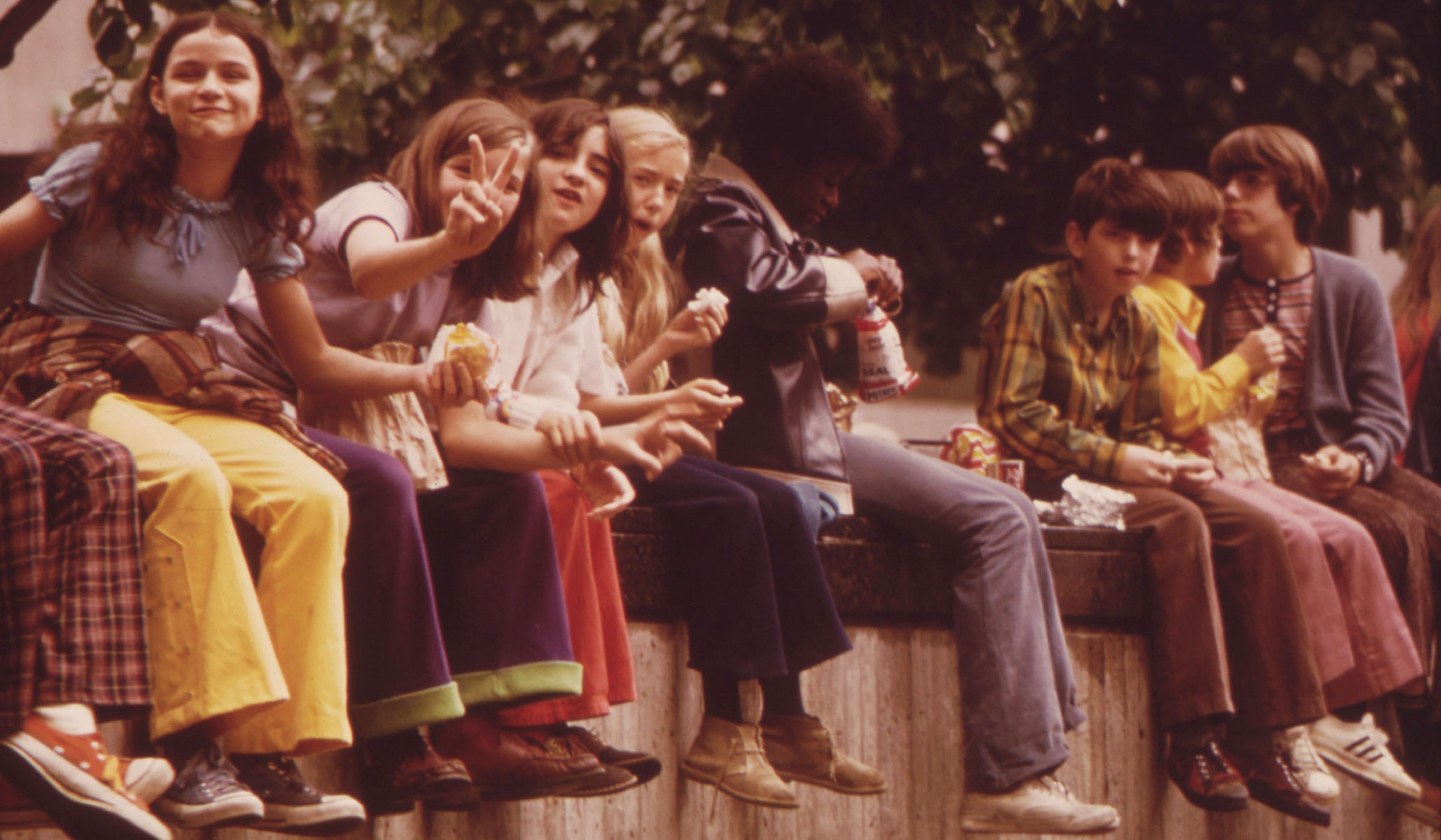
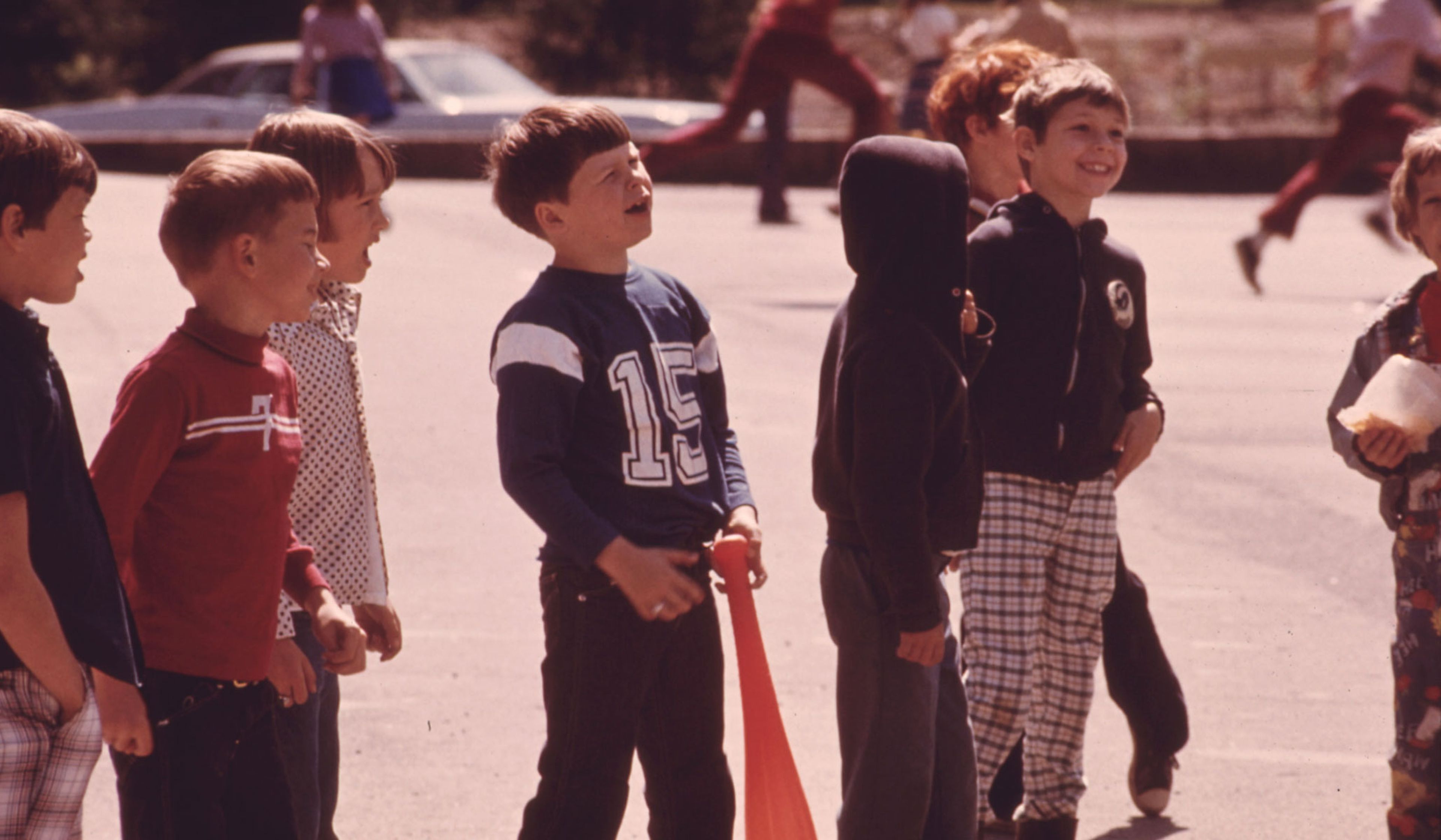



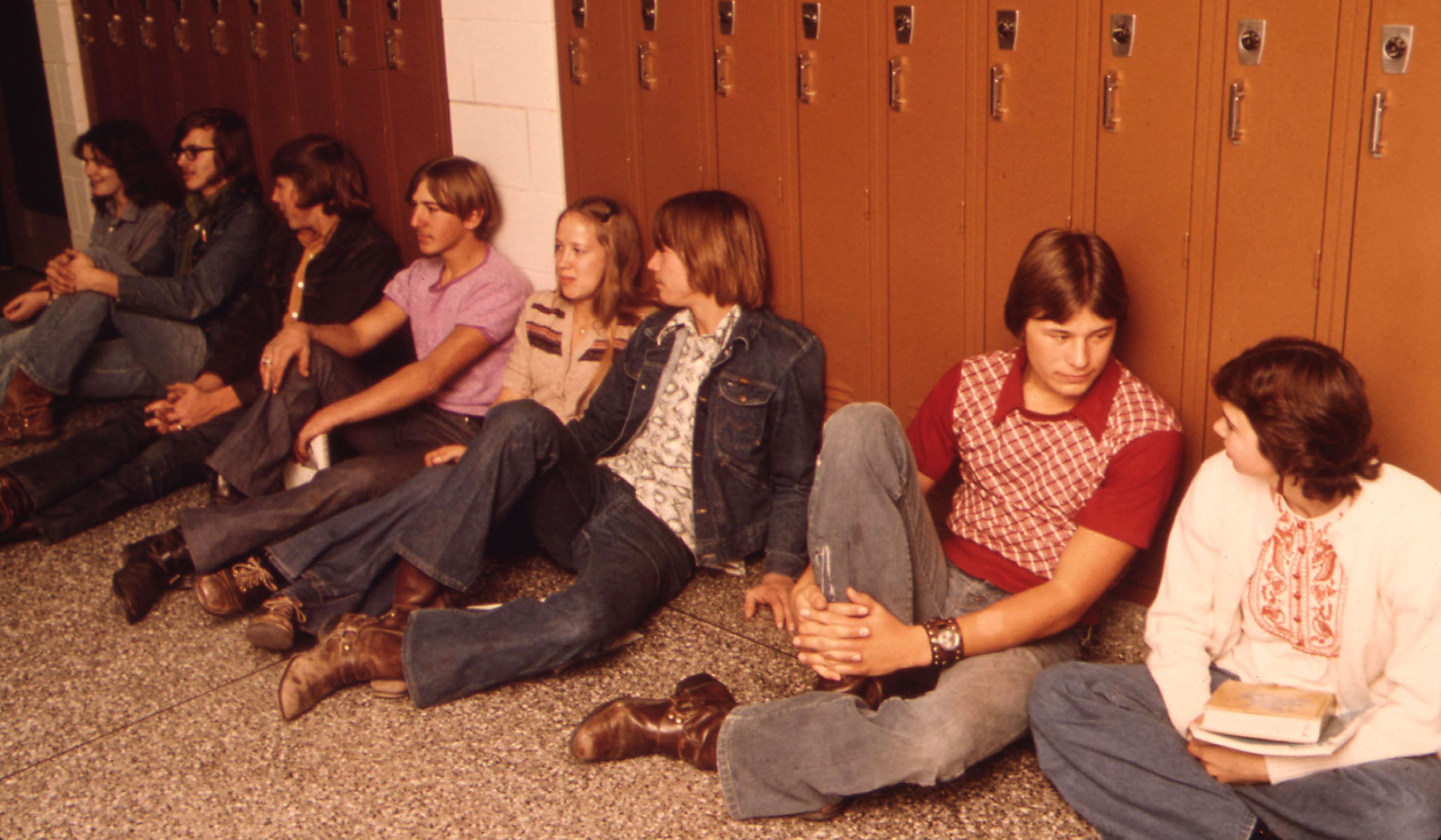
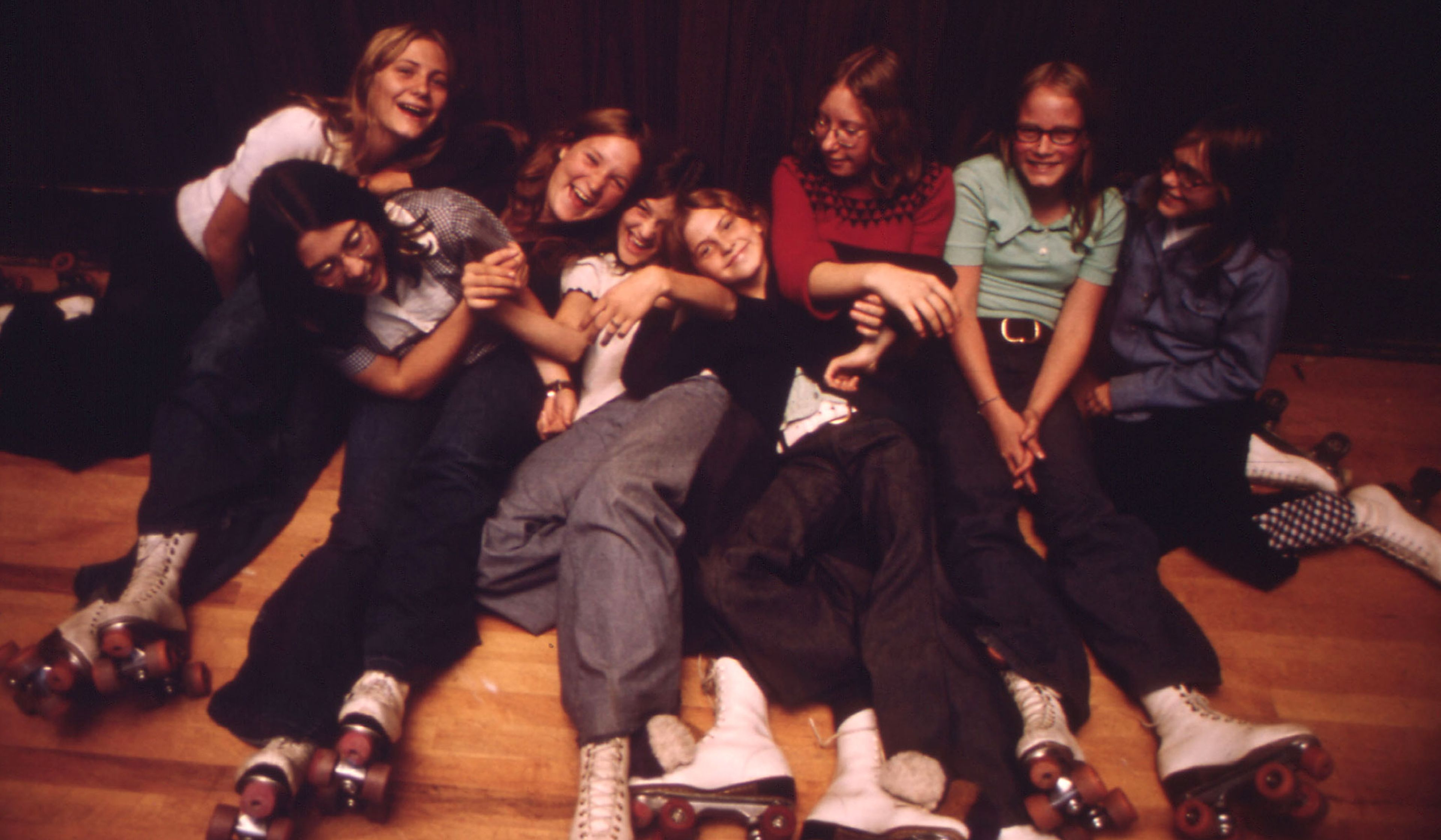
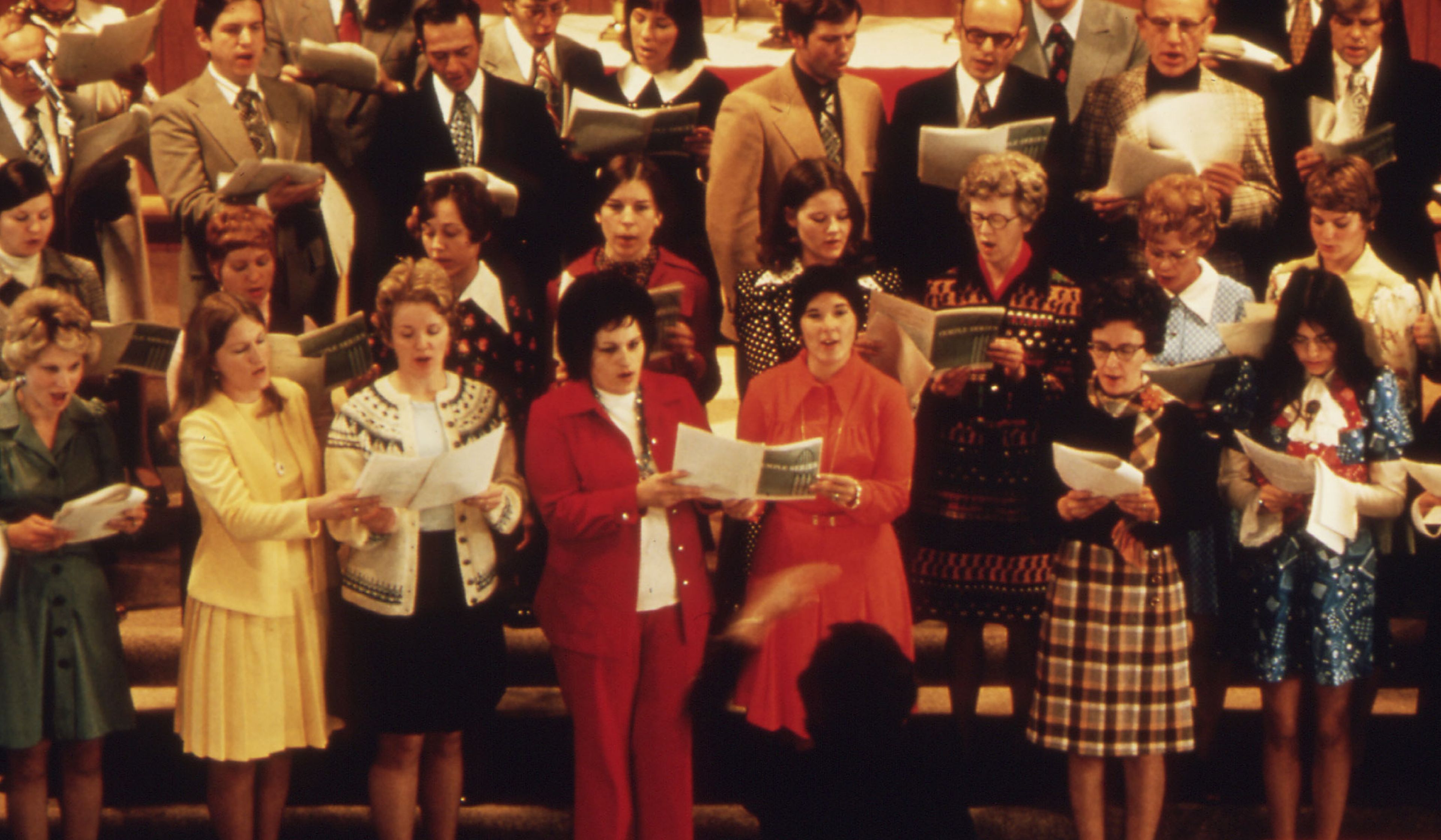
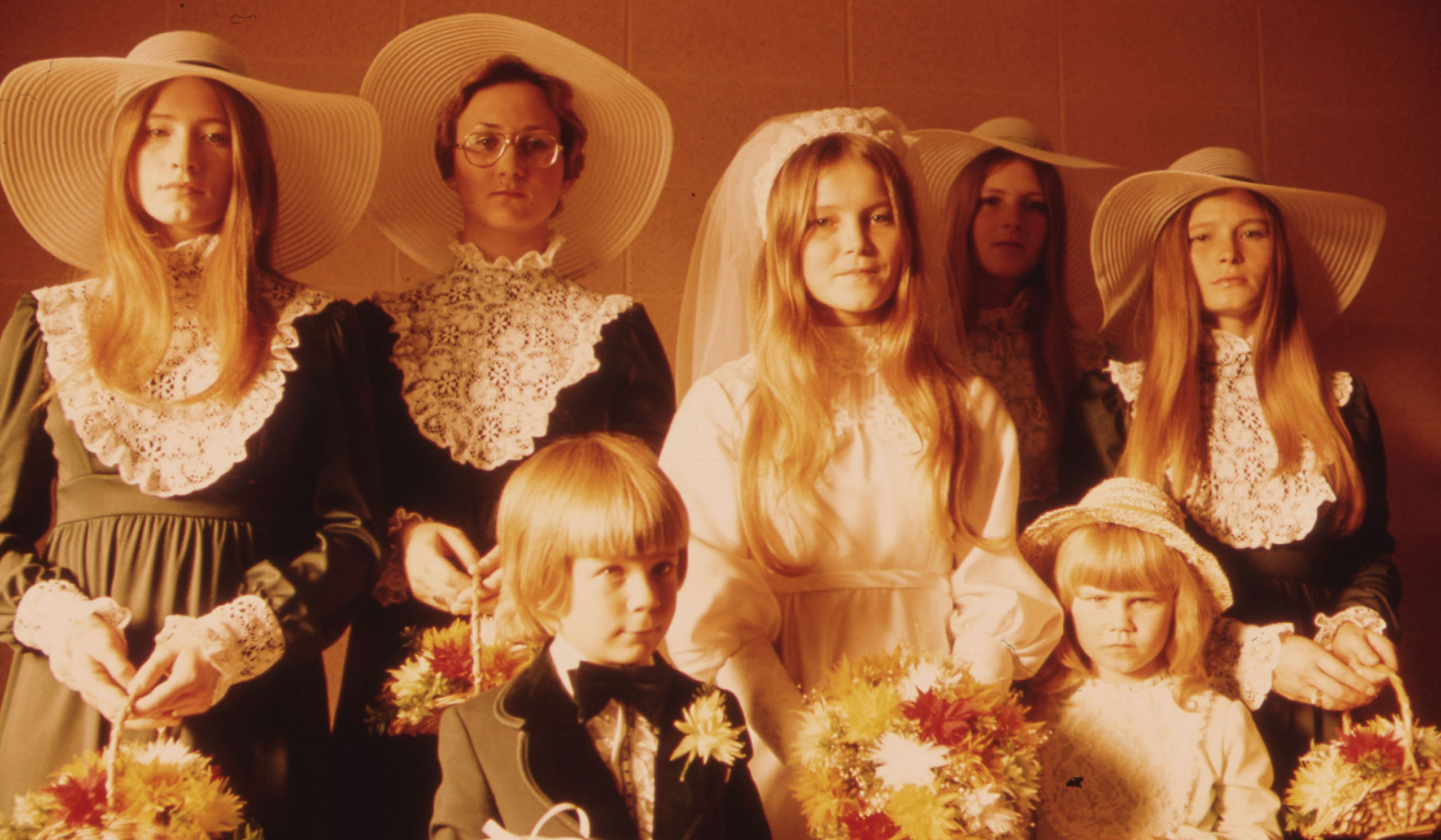
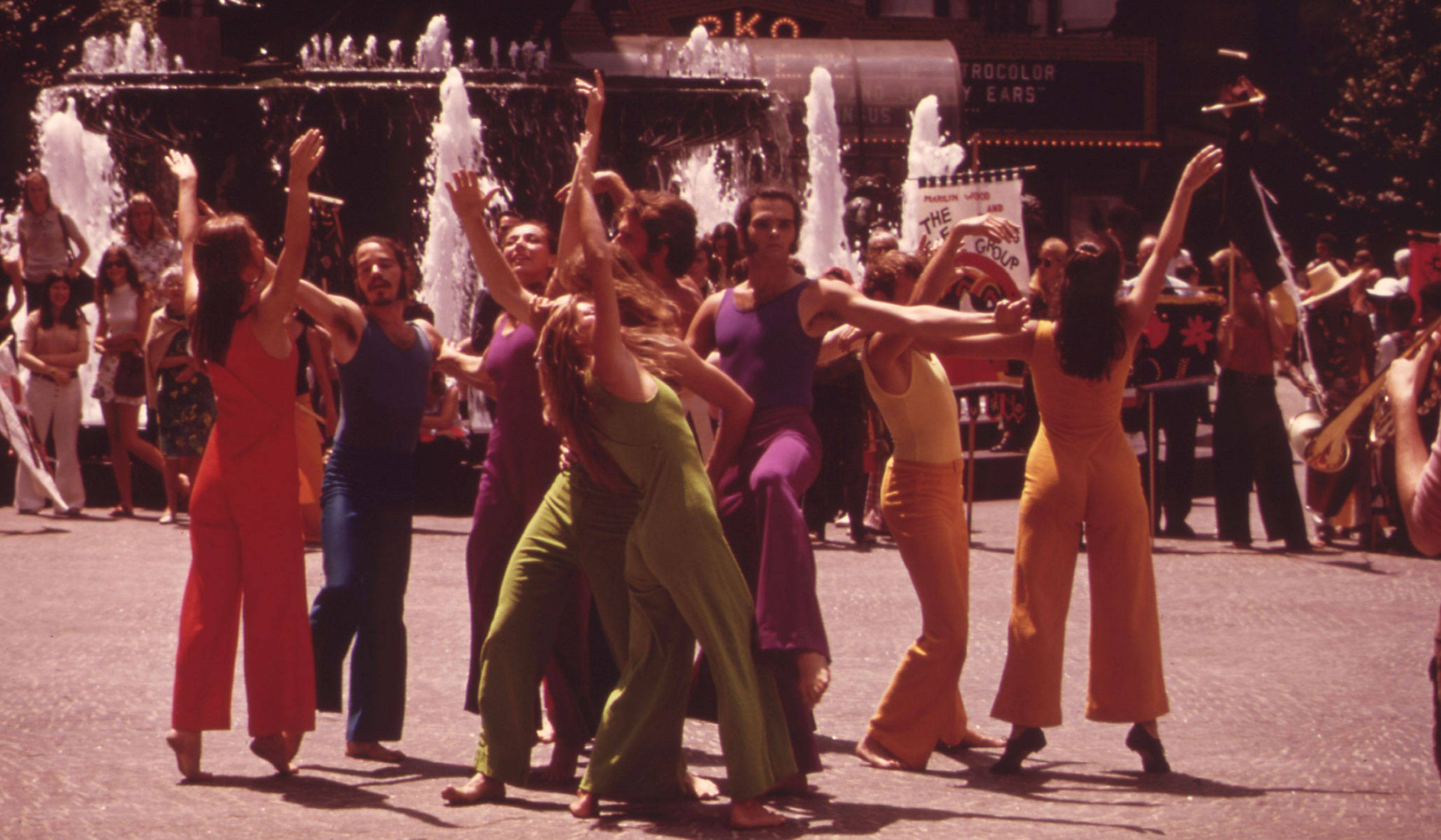
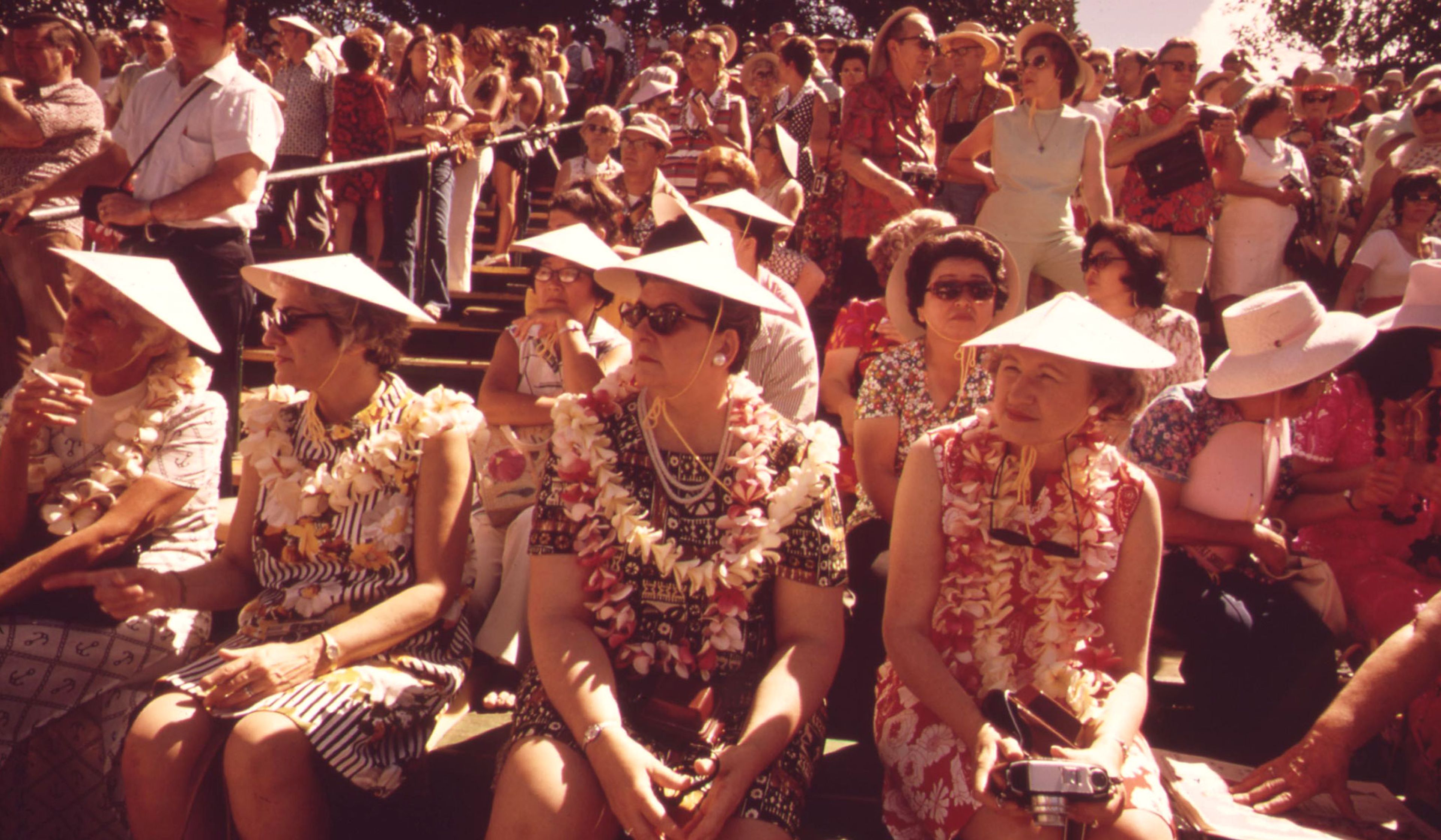

A school class takes a lunch break at Fountain Square in down Cincinnati, Ohio, May 1973.
Tom Hubbard/Project DOCUMERICA/National Archives
But, then, political views tend to condition much nostalgia, and Yesterday is perhaps at its most interesting on the subject of politics. As Becker notes, Arthur Schlesinger, in “The New Conservatism,” a 1955 article in the Reporter, argued for what he thought the strong connection between nostalgia and conservatism, though he believed, mistakenly, that the new strain of conservatism in American politics was not likely to be long-lived. “For the New Conservatism,” he wrote, “is essentially the politics of nostalgia.” Schlesinger would suffer a near-pathological nostalgia for the John F. Kennedy years, when he himself was so close to political power, a nostalgia that came to lessen his authority as a historian.
Conservatives chiefly have been accused of nostalgia, while nostalgia itself has become a slur. Thatcher, who frequently referred to the principles she learned from her grocer father, was often accused of bringing nostalgia into government. So, too, Donald Trump, for what else could Make America Great Again mean but the wish to return to older, better days? The English writer Alan Moore has called Trump’s MAGA slogan “weaponized nostalgia.” The opponents of Brexit in England held that the movement was in its essence nostalgic, while the Brexiters accused the Remainers, as they were called, of themselves being nostalgic. Nostalgia, as Becker writes, “had become a common political insult.”
In time nearly all activities involving the past had to stand the nostalgia test. In Yesterday, the increase in the number of museums is considered as possibly nostalgic. So, too, historical reenactments, such as the restaging of Civil War battles and other past events. Might the same be said about family-genealogy searches? Yesterday takes up the strong nostalgic element in Brideshead Revisited and Bonnie and Clyde and other novels and movies. All have been considered — and thereby criticized as — nostalgic at their core.
Becker writes that “nostalgia had by the 2010s become such a hazy concept that it threatened to lose meaning altogether.” While he holds that the questions brought on by “the new landscape of popular and public history taking shape since the 1960s was far too complex and diverse to be reduced to nostalgia,” he nonetheless concludes that “nostalgia retrospectively makes for a good starting point to pose them.”
Yesterday fails to provide sufficient clarity on the question of whether nostalgia is an idea or an emotion. Tobias Becker would doubtless say it is both, though he concentrates more on the former. Nor does he lavish much attention on nostalgia among older people, in whom it tends to run deep. An older person myself, I find considerable comfort lapsing into nostalgia, especially for my youth, my high-school, college, and peacetime Army years, which were exceedingly pleasant ones. Santayana says that, as we approach death, the world itself begins to look dark to us, because we cannot imagine it being much good without us in it. Perhaps the past looks better the farther one is from it.
I live in Chicago, the city in which I grew up, and have retained friendships with people there whom I have known for decades. As many as eight or ten of us occasionally meet for lunch. We discuss sports, less about politics. But talk invariably turns to the (good) old days: the amusing characters, the beautiful girls with whom we went to high school, the witty remarks and exchanges of our youth. Are these meetings primarily nostalgia fests? Perhaps so.
A friend whom I have known from the age of ten has just died. We met, often with one or two others, for lunch nearly every Friday. He, my now dead friend, and I hadn’t all that much in common. He had no interest in culture, probably never attended a classical-music concert nor read a Russian novel. We rarely spoke of things of the heart: of our worries, of our fears, of our disappointments. What we shared were our memories — these and a common sense of humor. Might this long friendship be chalked up to nostalgia, little more? If so, long live nostalgia.
I do not wish to end without mentioning that Tobias Becker uses two neologisms: the word “musealization” to describe the increase in the number of museums in the past century; and the word “pluritemporality” to describe the many different times that may coalesce in the present. “Musealization” and “pluritemporality” are two words for which, if I never see them again, I shall not feel the least nostalgia.












Comments