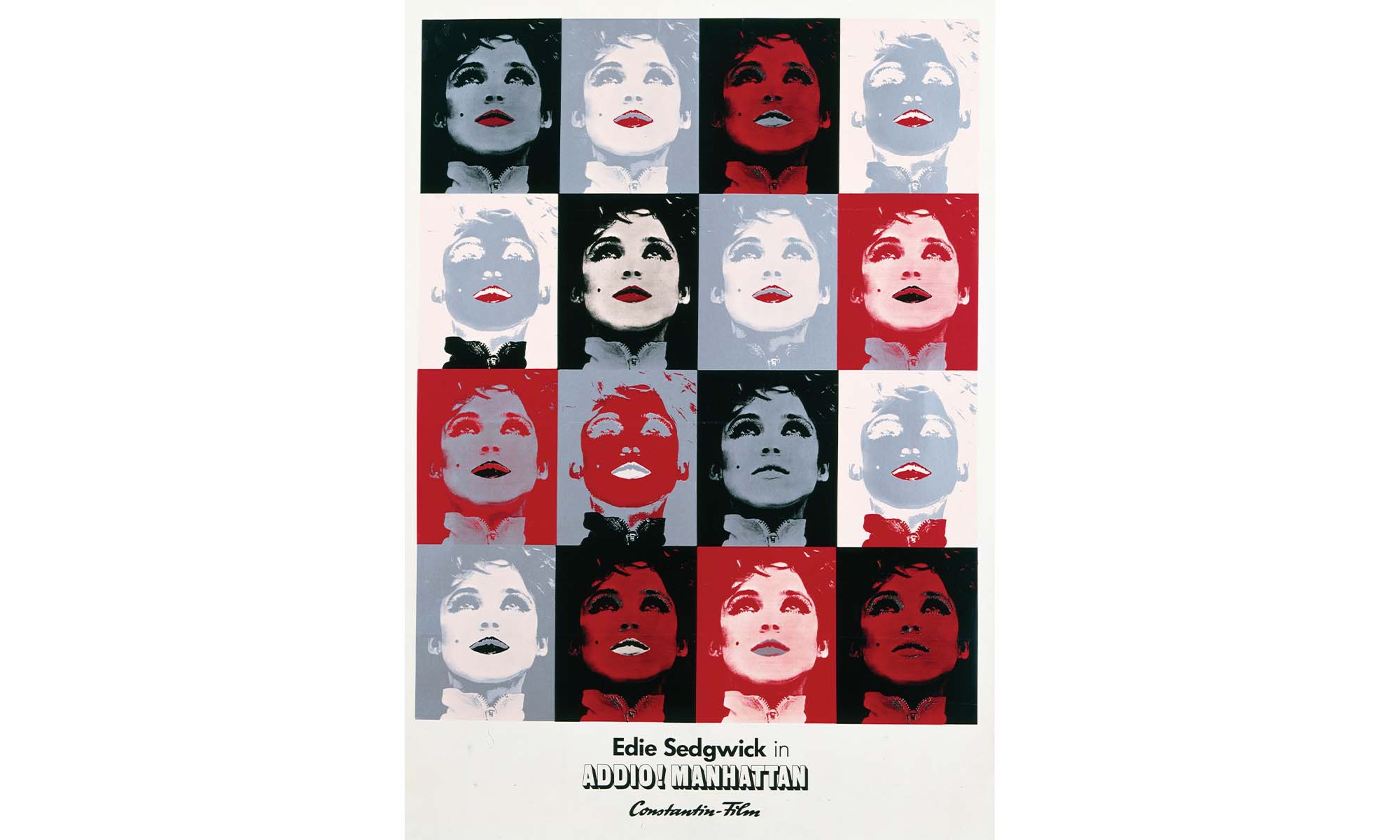
In Stockbridge in rural northwestern Massachusetts, there’s a most unusual piece of real estate. It’s known as the Sedgwick Pie, and it’s the cemetery plot of the Sedgwick family, prominent in town since Revolutionary times. Graves of branches of the family are arranged in concentric pies, feet facing patriarch Theodore Sedgwick, who died in 1813 and was speaker of the House of Representatives when John Adams was president. The design strategy’s simple. On Judgment Day, all the Sedgwicks will rise and face not only the paterfamilias but one another. At end times, will there be a chorus of hallelujahs or a collective “Oh, sh**?” Kisses blown? Or fingers wagged, or birds flipped?
Alice Sedgwick Wohl in her moving family memoir, As It Turns Out, suggests something far more nuanced, a response that’s forgiving, skeptical, puzzled, and as objective as an older sister could be in charting a younger sister’s fall. This very good book focuses on Wohl’s younger sister, Edie Sedgwick, she of Andy Warhol’s Factory, star of Warhol’s films, a mid-’60s New York “It Girl,” and, by 1971, a drug-infused corpse. Wohl, a distinguished translator who made a stable, happy life for herself, is now past 90. Edie, born in 1943, was the seventh of eight children and twelve years younger than Alice. The two sisters weren’t close. Wohl was as far from a Warhol groupie as can be. She’s a naturally curious and perceptive woman, though, and a very good writer. A few years ago, she visited the Addison Gallery, which, coincidentally, I directed for a long time. She was surprised to see two large photographs of Sedgwick. A question gripped her. “Who was Edie, really?”
The answer, inasmuch as Wohl finds one, starts with their parents. The memoir has two parts. The first is about growing up Sedgwick; the second, on her time as a Warhol star and lifestyle celebrity. The Sedgwick parents were rich, starting their married lives on the North Shore of Long Island in the late ’20s. The money and high-society links came from their mother, Alice, though their Sedgwick father, known as Fuzzy, came from ancient New England stock, went to Groton and Harvard, and had Arrow Shirt Man looks. He also had notable emotional problems. Prophetically, a psychiatrist told the couple they shouldn’t have children. Early in their marriage, Alice and Fuzzy bought a 3,000-acre ranch near Santa Barbara, where they multiplied in defiance of his advice. Wohl describes in bracing, matter-of-fact passages a life of outdoor freedom leavened but also soured by arcane rules governing deportment and by a climate of secrecy and enforced ignorance. “Everything came as a bolt from the blue,” Wohl writes. “Nothing was ever explained.” Aside from bits of information conveyed by the housemaid, “nobody else told me much of anything except what I should and shouldn’t do.”
Welcome to the WASP way of child-rearing. Fuzzy, we learn, was a serial philanderer and, possibly, a child molester. He had crackpot moments — for example, sending to all Groton alumni an unsigned memo, on Groton letterhead, announcing that admissions criteria had been adjusted so that henceforth one-third of each class would be black. Fuzzy’s much loved gay brother killed himself as a young man. Another brother died in a motorcycle crash. Drugs, mental hospitals, shock treatments, and abortions widely figure.
Wohl develops her characters with objectivity rather than rancor or even melancholy. She’s a tough old Yankee soul, a type I know well, but her real gifts are perspective and decency. I also keep returning to the word “curiosity.” She wants to get to the bottom of what made these long-dead people tick, but she understands she can get only so far. Some realities are relative, and some go to the grave unplumbed. Edie’s not buried in Stockbridge, so a Judgment Day reckoning might not be possible.
Edie doesn’t really appear until the book is well under way. From childhood, she’s narcissistic, willful, fearless, and covetous. By the time she’s an adult, Wohl is out of the house and a working woman and, insofar as Edie is concerned, more biographer than on-the-ground sister. She’s already had a biography written about her, and her time with Warhol and the Factory has been endlessly examined. Still, her story’s worth revisiting for a few reasons. I wasn’t aware, for instance, of the gay Harvard circle that Edie orbited in the mid ’60s and that populated the Factory. Edie “found her tribe,” Wohl writes, in this gay netherworld. Wohl said Edie knew no limits, craved excitement, and came of age precisely when these traits, at least among privileged young people, found a salubrious climate. “One minute you couldn’t say anything,” Wohl writes, referring to the starchier times in which she grew up. “The next minute you could — and did — say anything.” I’d add “do anything,” though Edie surely liked her gay friends in part because they’d never demand too much intimacy.
She had intimacy issues, to be sure. She claimed, after all, that her father tried to molest her. He later committed her to a psychiatric hospital after she caught him in flagrante. In 1971, Edie married a fellow patient she’d met during another stay in a psychiatric hospital. Within weeks, she was thinking about divorcing him, but then she died. Wohl doesn’t dig into this period of Edie’s life. I think she feels it’s just another celebrity-flameout story.
In writing the book, Wohl watched all the films Edie made with Warhol. She’d never seen them. I think they’re the most boring things in the world. And Wohl last saw Edie in the flesh in late 1964. For the purposes of the book, is that a plus or a minus? It points to Wohl’s total remove from Edie’s milieu. Two sisters more different from each other are hard to imagine. Wohl, her children, and her husband, an art historian, moved to the old Sedgwick stomping grounds in the Berkshires in Massachusetts and were conventional people, very smart ones but very grounded. I think that Wohl’s distance from the Edie of the 1960s is a plus overall since, in crafting her story, she draws mostly from her and Edie’s family dynamics. As It Turns Out is, after all, a family memoir. Wohl examines Edie’s natural charisma and her “search for joy.” She does indeed look good on the screen. Though few saw the movies, people in the mid ’60s knew Edie from fashion and lifestyle magazines, which covered her and Warhol.
Wohl probes the glamour press’s take on Edie as “a beautiful, young, blue-eyed heiress who blew her inheritance,” a Boston Brahmin and a debutante. Youth aside, she was none of these things. The media defined her as part of “the Youthquakers.” These included Peter Serkin, Bob Dylan, Bill Cosby, and Joan Rivers — all were noted for their intelligence, audacity, and connection to the moment.
Edie’s peak moment, Wohl argues, came at the glittery opening of Warhol’s retrospective at Philadelphia’s Institute of Contemporary Art in 1965. She and Warhol arrived together, he the bleeding-edge artist, she the film star. They were mobbed. It was downhill from there. She soon feuded with Warhol, dropped out of his world, and tried but failed to succeed as an actress in mainstream films. Her drug problems intensified. Wohl pairs moments in Edie’s life — her bulimia, drug abuse, rebelliousness, and quest for intense experiences — with national news such as the ’60s race riots and war protests. Our civic world, she suggests, and Edie’s personal world were pressure cookers. I’m not sure this works.
Wohl is more persuasive, and writes with far more authority, in finding the tragedy of Edie’s life in her time growing up on the California ranch. It was a place, she thinks, of extremes. The seductive beauty of the ranch and the ease of her life prepared her for nothing real and, juxtaposed against extreme family tension and deep ambiguity, incapacitated her. Edie knew how to wheedle and cajole, but she knew nothing of work and discipline and, besides, was fundamentally uneducated. Wohl compares her to the Kardashians, who, like Edie, revel in celebrity but, unlike Edie, know how to monetize it. Rather than stress Edie’s roots in New England, Wohl considers her sister purely Californian.
As It Turns Out is good on so many levels. I enjoy family memoirs and believe Tolstoy’s view that all happy families are alike while each unhappy family is wretched in its own way, making these memoirs ever fresh. Wohl at the end is too self-effacing in claiming she knows a lot about her sister but feels she still doesn’t know her. “I’m trying to learn more about Andy’s inner nature,” she writes, and thinks she knows him better. At one point in the book she seemed about to call him a creep, which he was, but she doesn’t, and that’s too kind on her part. I think she nails Edie, who is a social marker for the ’60s. That’s why, more than 50 years after her death, she still matters.












Comments