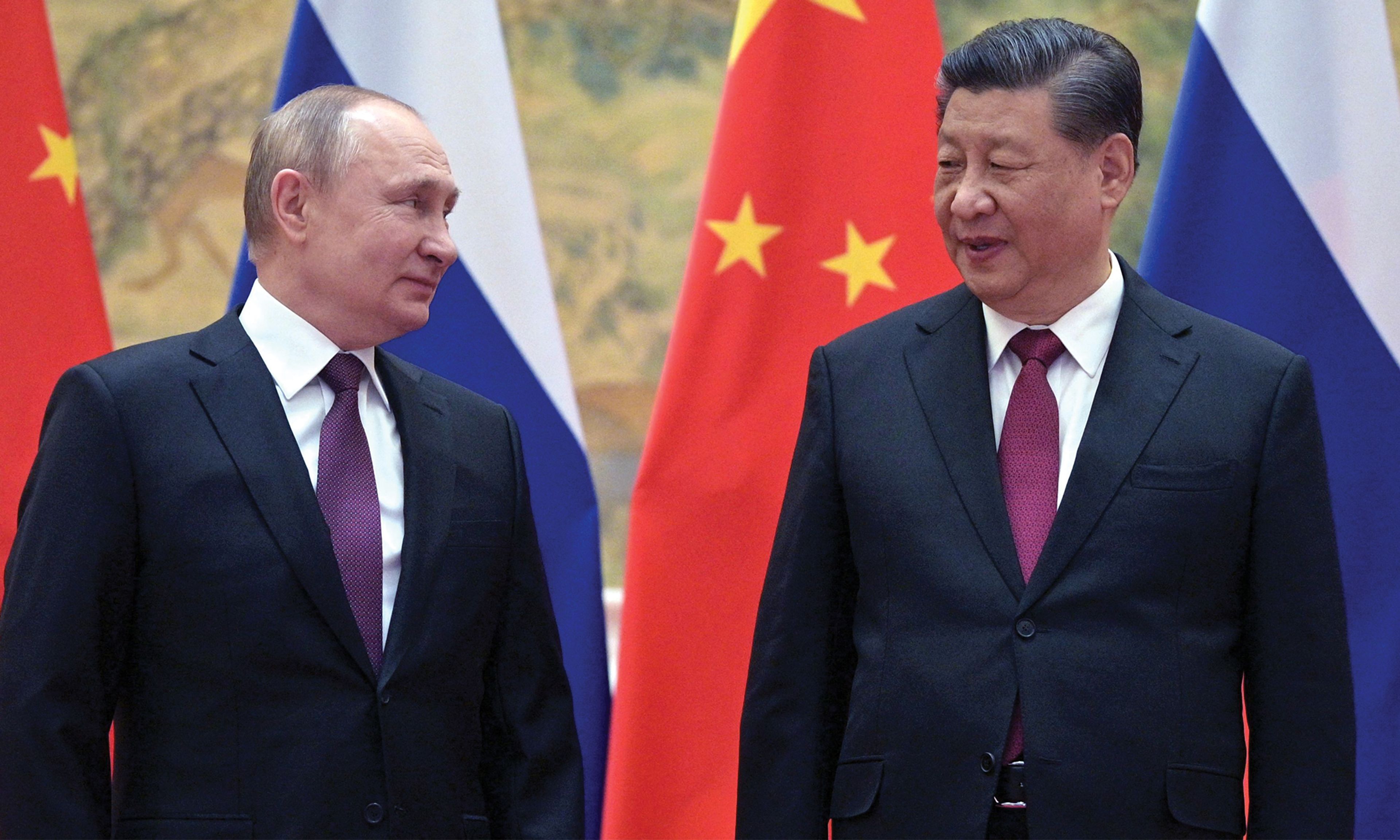
Why Ally? Elliott Abrams (“The New Cold War,” March 21) paints a terrifying picture of what the world could look like in the near future, when U.S. leadership is in decline, U.S. military capabilities are atrophying, and Russia and China have established a firm anti-U.S. alliance.
Fortunately, most of this is hyperbole. We have a terrible habit of underestimating our own power. The United States remains a highly capable superpower that controls the global financial system, boasts a network of alliances in every region of the planet, and possesses a military that can deploy anywhere in the world on a moment’s notice. To the extent that U.S. power has waned, much of the blame can be put on America’s own policy elite, who have often exhibited poor judgment. Mistakes such as a costly occupation in Iraq, a 20-year war in Afghanistan, and an unhealthy tendency to push our adversaries (such as Russia and China) together haven’t done the U.S. any favors.
This doesn’t mean that the world can’t be a scary place. It most certainly can be. But the dynamics of international politics are constantly shifting. The U.S. can either expend precious resources trying to bring the world back to the 1990s, or it can adapt to the world as it currently exists. The latter is the wiser path, but only if U.S. policy-makers set priorities and offload some of the security burden to our allies.
Daniel R. DePetris
Fellow, Defense Priorities
Elliott Abrams responds: The key point in Mr. DePetris’s letter is that the United States must roll with the punches and “adapt to the world as it currently exists.” Yet as he himself notes, “international politics are constantly shifting” so that the world “as it currently exists” may not exist tomorrow. It can get a lot more dangerous — and will, absent American leadership. Mr. DePetris works for an organization called “Defense Priorities,” but it is misnamed: Neither he in his letter nor that organization recognizes the great priority of an increased defense budget. His priority appears instead to be to put an end to American leadership and “offload” some of our security burden. Alliances exist to share burdens, not to “offload” them; his approach would weaken every alliance we have, just when the threat from Russia and China is growing. The United States should not be trying to “bring the world back to the 1990s,” but it should be trying to ensure that our alliances and our military forces are ready for the great challenges that lie ahead.











Comments