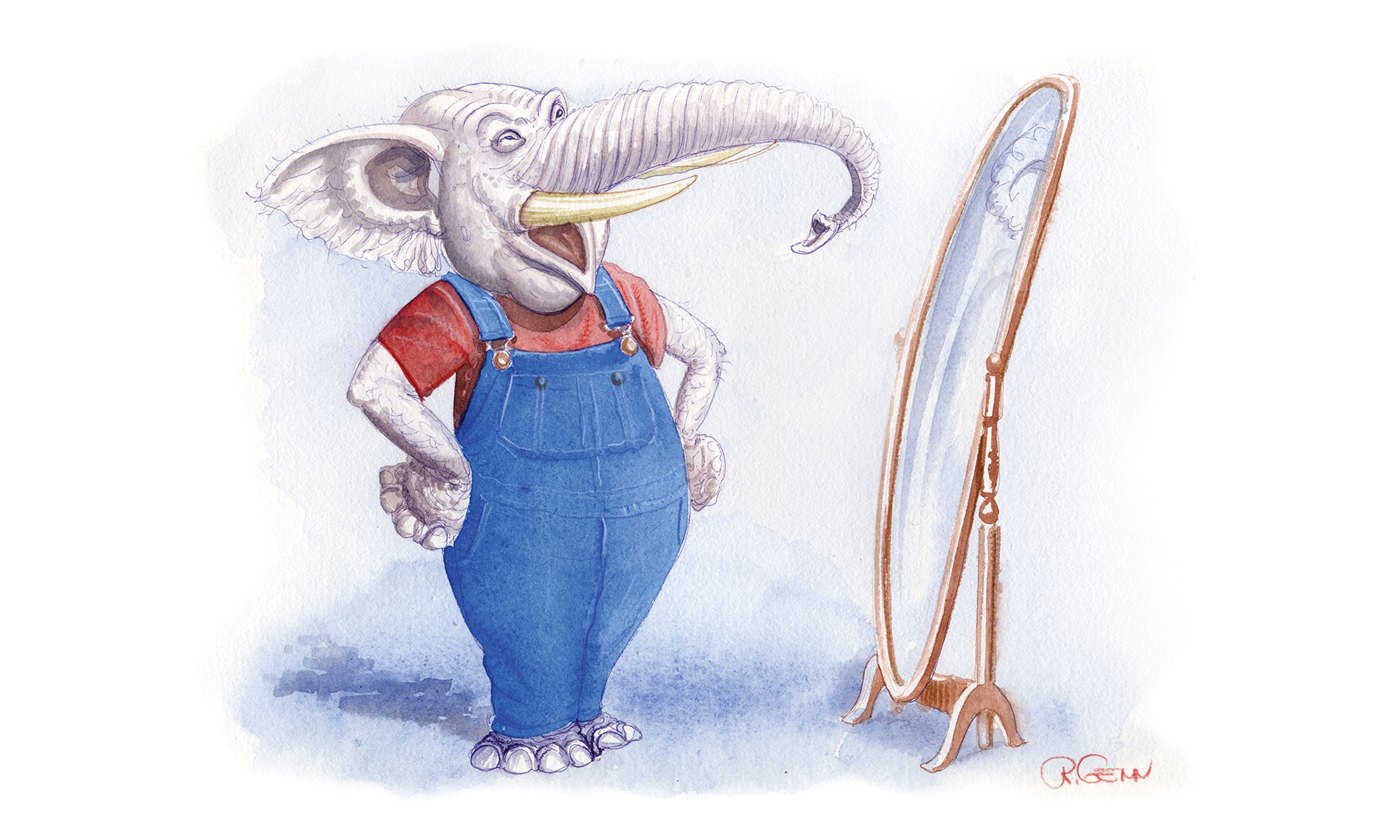
In the course of a few weeks early in the Biden administration, Republicans have been making a rapid shift in their agenda, message, and perhaps philosophy.
Senator Mitt Romney (R., Utah) proposed an ambitious plan to send checks from the federal government to parents. With Senator Tom Cotton (R., Ark.), he sponsored legislation to raise the minimum wage, now $7.25 an hour, to $10, and at the same time to require companies to verify that their employees are legally eligible to work in the United States. Senator Josh Hawley (R., Mo.) came out for a $15 minimum wage for employees of large companies and for a wage subsidy to boost take-home pay for low-income workers throughout the economy. Senator Marco Rubio (R., Fla.) endorsed a unionization drive at Amazon in Alabama because its “leadership has decided to wage culture war against working-class values.”
These four come from different segments of the Republican Party, are in different stages of their careers, and ended up taking different attitudes toward Donald Trump’s presidency. All of them are breaking with what had been conservative orthodoxy — and not getting much blowback for it. In the past, Republicans have courted working-class voters by playing down portions of their economic agenda, such as entitlement reform, or by making cultural appeals. These new initiatives combine economics and culture to attempt a positive pitch.
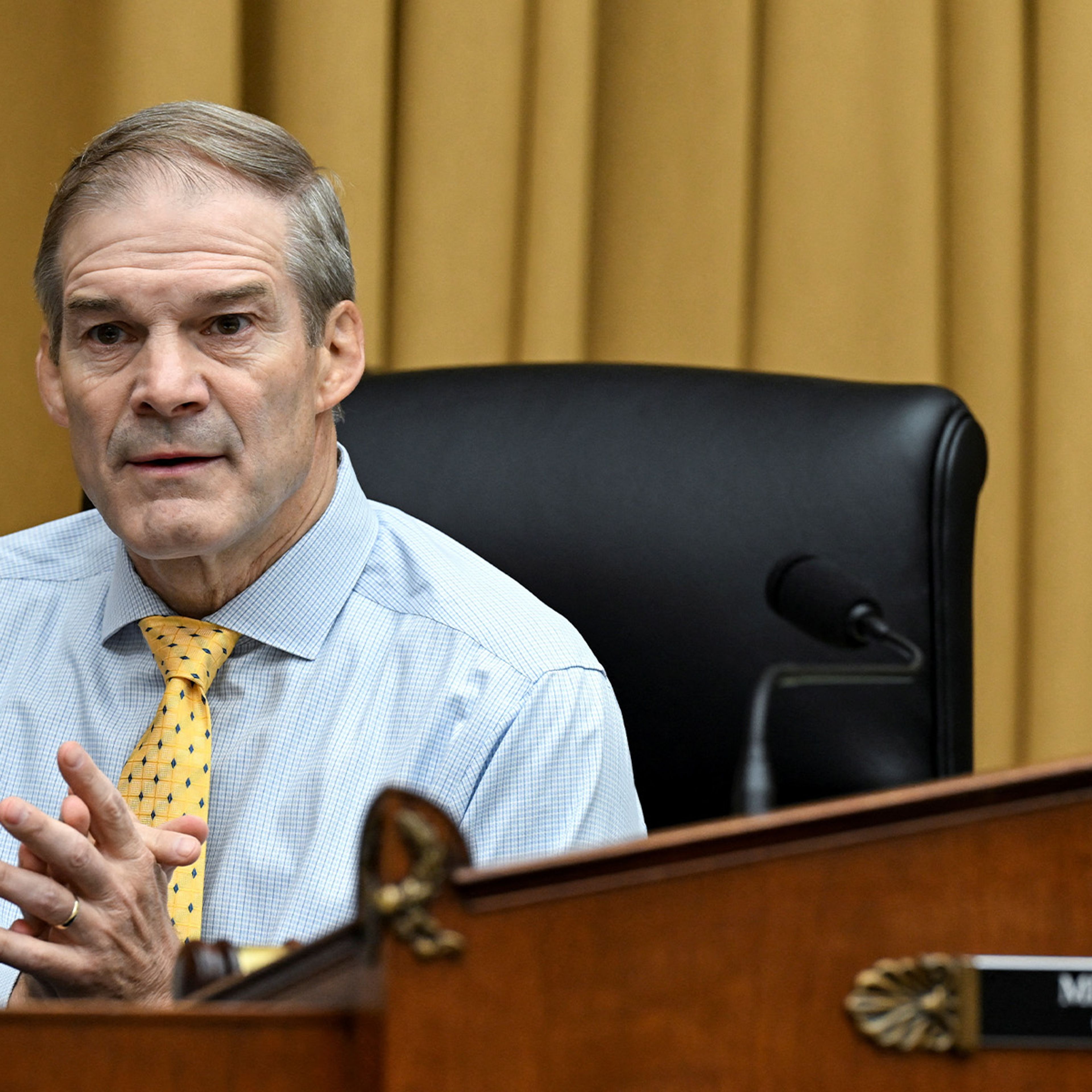
At the same time, Republicans have been declaring a new self-understanding. On Election Night, Hawley tweeted, “We are a working class party now.” A few days later, Rubio was only a little more cautious: “The future of the party is based on a multiethnic, multiracial working-class coalition.” Representative Jim Jordan (R., Ohio) has joined the chorus. The GOP, he said, “is no longer the ‘wine and cheese’ party. It’s the beer and blue jeans party.”
Just what it means to be a working-class party, though — on that there is less clarity and less agreement. Most Republicans haven’t endorsed any legislation to raise the minimum wage or to create a wage subsidy or a child allowance. Rubio criticized Romney’s plan for sending “welfare assistance” to low-income parents.
One reason that consensus on a policy agenda for the working class may be elusive is that the definition of the group itself is ambiguous. Look at the relationship between voting behavior and income, and the notion that the Republicans are becoming a working-class party looks illusory. AP Votecast found that about 40 percent of the 2020 electorate belonged to households making less than $50,000 a year, and Joe Biden got a majority of their votes. Trump did best among voters making between $50,000 and $100,000. One could reasonably consider those voters in the core of the middle class. The Census reports that in 2019, median income was $69,000: Half of households made more, and half less.
Income used to correlate with political behavior much more strongly. In 2000, George W. Bush did 17 points better among the highest-earning households than among the lowest-earning ones. In 2020, the difference for Trump was only five points.
These days, when people talk about how the working class votes, they are generally referring to levels of schooling rather than of income. As recently as 2012, college graduates were a bit more likely to vote Republican than everyone else. In 2020, those with college degrees were significantly more likely than others to vote Democratic. (That excludes voters with postgraduate degrees, who have long given a majority of their votes to Democrats.) This education-based realignment has occurred throughout the developed world and has taken the same basic form, with voters who have college degrees to the left of those without.
The U.S. trends are starker when you divide voters by race, sex, and schooling simultaneously. In 2000, white women with college degrees voted for Al Gore by eight points and white women without degrees voted for Bush by seven. In 2020, these groups were again mirror images, but this time the margins were larger. White women went for Biden by 20 points if they had degrees, for Trump by 21 if they didn’t.
Patrick Ruffini, a Republican pollster, says that income continues to be correlated with partisanship, just within educational groups: High-income people with college degrees are more likely to be Republican than middle-income people with college degrees, and high-income people without them are more Republican than middle-income people without them. It’s the cross-cutting effects of schooling and income — degrees are associated with being Democratic, higher incomes with being Republican, and degrees with having high incomes — that have flattened the overall effect of income.
“It’s a culture-war divide masquerading as an economic divide,” Ruffini says. Other demographic characteristics are stronger determinants, or predictors, of voting status than education is: race, frequency of religious observance, and marital status, especially. But the diploma divide is large and increasingly important. At least, it’s increasingly important among whites, who were 74 percent of the electorate in 2020.
The AP Votecast data do not show political differences between nonwhites with and without college degrees. But there are limits to the precision of those data (only about 9 percent of voters were nonwhites with college degrees). The exit polls in 2016 found that nonwhites without college degrees voted more heavily Democratic than nonwhites with degrees. Taken together, these findings suggest — though that’s all they do — that Republican gains among nonwhites in 2020 were concentrated among those without college diplomas.
Rubio’s remark about the Republican future alluded to those gains. The Republican shares of Hispanic, black, and Asian-American votes all fell between the 2004 and 2012 presidential elections, but they have bounced back since then, with Trump at the top of the ticket. Republicans still seem to be well short of their peak under Bush 43, however, which is a point that optimists about a multiracial, working-class GOP tend to scant. Nevertheless, that rebound is notable, and not just because it defied predictions that Trump would cause Republicans to suffer even worse losses among minorities because they would consider him racist. (Polls on the question during Trump’s presidency generally found a small majority of respondents, and larger majorities of nonwhites, describing him thus.)
The rebound also disproved a previously regnant theory about how Republicans could expand their ranks. Earlier efforts to increase the Republican Party’s support among racial minorities were based on liberalizing its positions on immigration and other controversial issues with a racial dimension, or at least downplaying them, and on softening its image generally. These efforts dovetailed with the conventional wisdom that Republicans should move left on social issues, too, to win over upscale white social liberals — although not every Republican who favored “minority outreach,” as it was usually called, agreed with that strategy, which social conservatives were generally able to keep from being implemented.
Republicans have now shown themselves able to improve among nonwhites while following a different course. Trump took a variety of stances on immigration, including occasional support for raising legal levels and providing legal status to some illegal immigrants. But it is safe to say that the prevailing sense among voters has not been that the party has been moving closer to open borders — nor that it has been shying away from positions on other issues, from Confederate monuments to crime to affirmative action, that get it labeled “racist” by progressives.
Instead the party made tougher attacks on the Left over socialism, “wokeness,” and defunding the police. Observers in both parties have credited these attacks with helping the Republicans make inroads among minority voters, especially Hispanics. Ruy Teixeira, a political scientist whose most recent book title, “The Optimistic Leftist,” doubles as a self-description, says: “Hispanics are a socially moderate, overwhelmingly working-class group mostly concerned with jobs, health care, and so on. In the course of 2020, Democrats evolved a little bit away from them.”
To the extent Republicans have softened or moved left on anything, it has been on economic issues such as entitlements and trade, which previous Republican outreach efforts mostly ignored. The recent policy proposals from Republican senators could be seen as a logical extension of this approach, a way of turning the political impulses behind Trump’s rise into a program. Republican consultant Whit Ayres says these economic proposals “offer far more promise of expanding the Republican coalition than simply beating the cultural-warfare drum even louder.”
Some conservatives have expressed skepticism. Ryan Streeter, the director of domestic-policy studies at the American Enterprise Institute, argues that the prevailing view of working-class voters is mistaken. Far from being angry about globalization and stagnant wages, he says, they are bullish about the economy. Trump supporters with college degrees are more hostile to the media than those without them, more distrustful of experts, more concerned about liberal influence on the culture.
Even allowing for these points, though, it’s possible that Trump’s disavowal of entitlement reform and his openness to government activism (relative to previous Republicans) helped him gain votes from voters without college degrees — and possible, too, that ideas along the lines of what Hawley and the others are advancing would help future Republican candidates. Then again, it could be that Trump’s personality had as much to do with how he won working-class voters as any economic or cultural views.
If it sometimes seems as though labeling itself a “working-class party” is a large component of the GOP’s strategy, that is in part because of confusion about what the rest of it should be. But the choice of label is itself a change. Politicians in the U.S. have typically preferred to speak of the “middle class.”
In that regard, the evidence on how Americans think of themselves is mixed. The General Social Survey has found that when given the choices “upper class,” “middle class,” “working class,” and “lower class,” 47 percent of Americans call themselves “working class” and 41 percent “middle class.” Gallup adds another category, “upper middle class,” and gets different results: 43 percent “middle,” 30 percent “working.” Other polls find much larger percentages in the “middle.” The Harris poll, for example, says 68 percent of respondents feel they belong in it.
All the surveys find that a very large minority of Americans consider themselves “working class”; some of them find that “middle class” has potentially greater reach. They also find that Democrats have a better reputation for caring about the middle class than do Republicans, who are thought to favor the rich. Republicans could, of course, try to address this perception by sprinkling both terms into their rhetoric, or in other ways entirely.
Assuming Republicans can figure out how to build on their recent working-class success, they will have to decide how avidly to court another group: the college-educated white voters who have been dumping them. Some of them found Trump repulsive but will remember what they liked about Republicans if he does not continue to loom so large in the party. In some places, Republican candidates will make winning back these voters a priority. In most places and in the long run, though, Republicans will probably find it more important to court their new working-class constituency.
The new working-class voters are more efficiently distributed for electoral purposes than the old college-educated ones were, which is why Trump was able to win in 2016 with a smaller portion of the vote than Mitt Romney got in 2012. The proportion of the electorate that is white and college-educated is also not growing much.
But what should weigh most heavily on Republican strategists is that the Democratic trend among college-educated white voters was under way well before Trump, which suggests it will not easily be reversed. Ruffini, the Republican strategist, alludes to the suburban-Atlanta congressional district that Newt Gingrich used to represent: “Going back to a time where you automatically win Georgia’s sixth by 23 points does not seem to be on the table right now.” Democrat Lucy McBath has held the seat since 2018, and the district went for Biden in November.
The shift in the Republican Party’s basis of support poses numerous challenges, most of which also look like opportunities. People with college degrees participate in elections more reliably than those without; if Republicans have traded high-propensity voters for low-propensity ones, it implies that they no longer have the interest they once did in turnout being low. It will take time for Republicans to adjust to such new realities.
Henry Olsen, the conservative Washington Post columnist who is also a data cruncher, says that the flux has worked to Republicans’ advantage. An analysis of the AP Votecast and exit-poll data suggests that in swing states, a lot of the voters Trump drew now identify themselves as Republicans, while the ones he alienated don’t identify themselves as Democrats. Republicans now lead Democrats in these states, which means the burden of having to win a majority of independents in order to win elections has shifted from the Republicans to the Democrats.
The reconfigured GOP, in short, has a lot of potential to win elections. Maybe some of blue-collar America’s optimism will rub off on its new party.







Comments