Every now and then, East Africa breaks into world consciousness. It happened in the mid 1980s, when Ethiopia underwent a terrible famine. Teams of pop stars made two hit “charity singles”: “We Are the World” and “Do They Know It’s Christmas?” The world again turned to East Africa in the mid 2000s, when the Sudanese dictatorship committed genocide against people in Darfur, a region in the west of the country. (That genocide has not quite ended.)
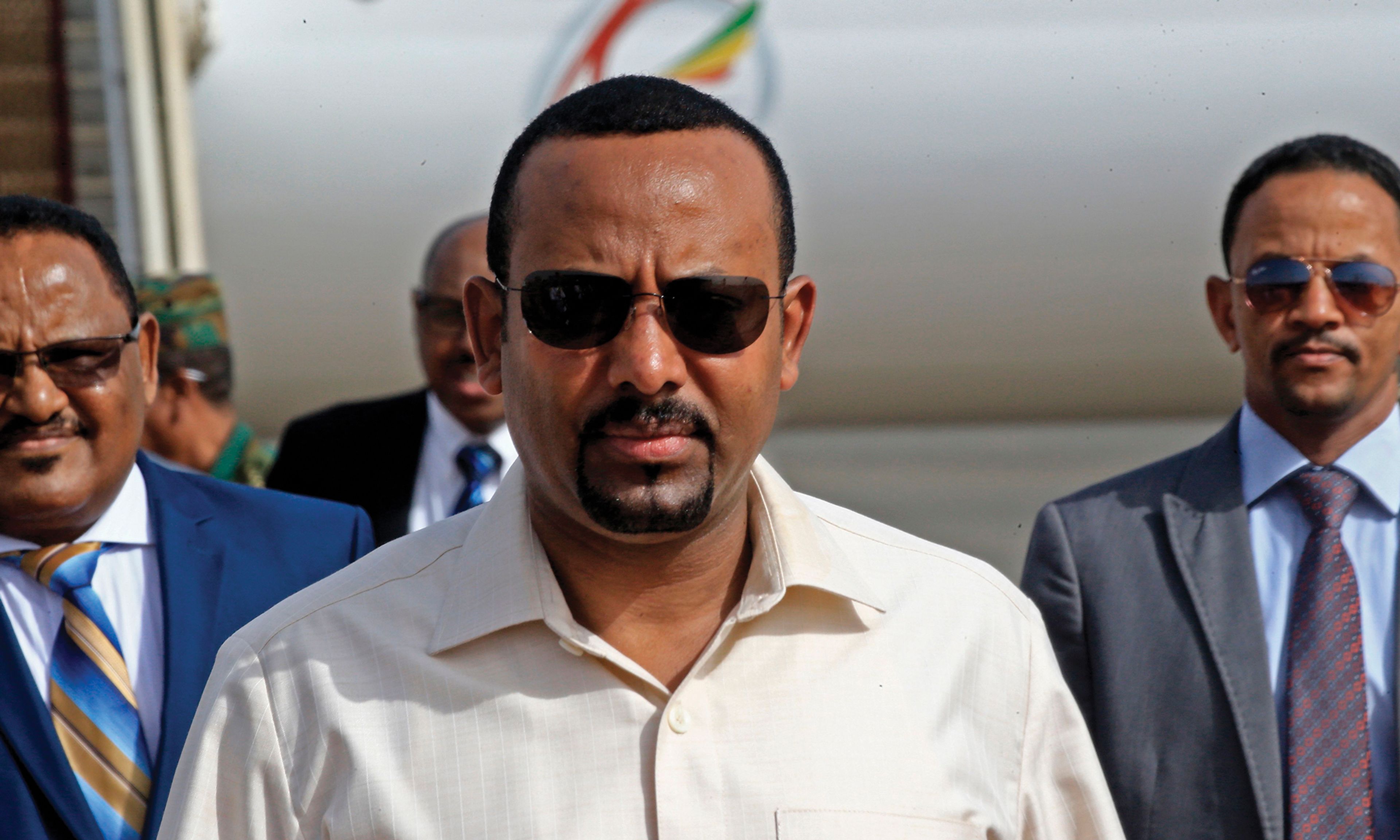
Today, Ethiopia is again in the news, for war in Tigray, a region in the country’s north. What is happening there is worse than war, if such a thing is possible: Tigray is a theater for war crimes and crimes against humanity. To make it all the more interesting — if that is the word — Ethiopia’s head of state is the 2019 Nobel peace laureate: Prime Minister Abiy Ahmed.
Ethiopia is a challenge to govern, no doubt. With 112 million people, it is the second-most populous country in Africa, after Nigeria. There are more than 80 ethnic groups, and as many languages. Abiy Ahmed speaks the handful of major languages in the country. In many ways, he would seem unusually well suited to national leadership.
Born in 1976, he is the son of a Muslim and a Christian. Both of his parents — now deceased — were of the Oromo people. His father, a farmer, spoke only Oromo; his mother spoke both Oromo and Amharic. Abiy himself married an Amhara woman. He is a Pentecostal Christian, said to be devout.
When a teenager, he fought against the regime of Mengistu Haile Mariam, known as “the Stalin of East Africa.” Later, in the Ethiopian military, he fought in the Eritrean–Ethiopian War. He served as a U.N. peacekeeper in Rwanda, after the genocide in that country. Abiy was educated — extensively — in Addis Ababa and London. He rose in the military, and intelligence, and business. In 2010, he was elected to parliament.
After Mengistu was toppled in 1991, Ethiopia was ruled by a coalition called “the Ethiopian People’s Revolutionary Democratic Front” (EPRDF). It was composed of four parties, based on ethnicity. The dominant party was Tigrayan: the Tigray People’s Liberation Front (TPLF). A Tigrayan, Meles Zenawi, was boss of the country from 1991 until his death in 2012.
Though Tigray has just 6 percent of the Ethiopian population, it long had outsize influence in national affairs.
In 2018, after mass popular protests, particularly in the Oromo and Amhara regions, the coalition elected Abiy Ahmed to serve as prime minister. He quickly established himself as a new kind of leader. It is “high time for us to learn from our past mistakes,” he said, “and to make up for all the wrongs that have been done.” He apologized for the brutality and corruption of the EPRDF.
Indeed, he established a new party — the Prosperity Party — to replace the old coalition. Three of the four parties of the EPRDF joined Prosperity; so did a slew of lesser parties. The Tigrayans — the TPLF — declined to join.
Abiy released and pardoned thousands of political prisoners. Many had been labeled “terrorists” simply for opposing the government. He dismissed officials who had been thought “untouchable.” He invited exiled media outlets to return to the country.
What’s more, he at last ended the Eritrean–Ethiopian War. Formally speaking, the war lasted from 1998 to 2000. The two sides signed a peace agreement in December 2000. One of the things they agreed to was that an international commission would decide the boundary between Eritrea and Ethiopia. When the commission drew its boundary, it placed the town of Badme on the Eritrean side. At this, Ethiopia — the EPRDF — balked. The Ethiopians had control of Badme, and they would not let it go.
Badme was important. In fact, another name for the Eritrean–Ethiopian War is “the War of Badme.”
For 18 years, there existed a condition between the two countries known as “no peace, no war.” Then Abiy agreed to hand over Badme. He and his Eritrean counterpart signed a joint declaration, officially ending the war, once and for all. They restored full diplomatic relations between their countries. And they threw open the border. Families, long split by the conflict, were joyously reunited.
Nor was Abiy through with his peace efforts. There are various conflicts in the Horn of Africa, and Abiy offered his services, usefully.
Given all of the above — especially a resolution to the Eritrean–Ethiopian War — it was no surprise that the Norwegian Nobel Committee made Abiy its laureate in 2019. In a press release, the committee said it was doing so “with the provisions of Alfred Nobel’s will firmly in mind.”
What did they mean by those words?
Though few know it, Alfred Nobel directed that his prizes — all of them, not just the peace prize — go to work done “during the preceding year.” The Nobel prizes are not supposed to be lifetime-achievement awards. They are to reward and encourage people relatively early in their labors. Sometimes, Nobel committees have abided by the will, sometimes — often — not.
The principal criterion for the peace prize, by the way, is “fraternity between nations.”
In announcing its selection of Abiy, the Norwegian committee issued a caveat: “No doubt some people will think this year’s prize is being awarded too early. The Norwegian Nobel Committee believes it is now that Abiy Ahmed’s efforts deserve recognition and need encouragement.”
At the prize ceremony on December 10, 2019, Abiy gave one of the most beautiful, poetic, and moving speeches you have ever heard. “War is the epitome of hell for all involved,” he said. “I know because I have been there and back.”
Three months after the ceremony, the pandemic set in. A general election scheduled for August, Abiy postponed till the middle of 2021. Up in Tigray, the TPLF was furious. The Tigrayans thought Abiy was acting dictatorially. In defiance of Addis Ababa, the TPLF held regional elections in September. In retaliation, Abiy redirected federal funds from the TPLF — the regional leadership — to local governments. Tensions between the TPLF and the federal government were boiling. This was a contest of wills.
Be aware that the TPLF is armed. That is, they have some 250,000 men under arms, while the federal government has some 350,000.
The terrible moment came on November 4 when — as far as can be determined — TPLF forces attacked the headquarters of the federal government’s Northern Command. Abiy Ahmed then swept the Ethiopian National Defense Force (ENDF) into Tigray. He and his government have referred to the war in euphemisms: “law-enforcement operations”; “rule-of-law operations.”
Talk about “the epitome of hell”: This war has been a shocking spasm of bombings, massacres, and rape. In one of the massacres, Eritrean forces — newly allied with the ENDF — killed hundreds of Tigrayans in the town of Aksum. Experts speak of “ethnic cleansing,” even “genocide.” One could go into page after page of stomach-turning detail.
Instead, I will ask a question: Is the Nobel peace laureate, the prime minister, to blame?
The assignment of blame would take pages more. We can say this, however: Abiy Ahmed is to blame for a lot, including the cut-off of communication between Tigray and the outside world, and the delay of humanitarian aid — desperately needed — to the region. Many are calling for the revocation of his Nobel Peace Prize.
As it happens, the Nobel Peace Prize is neither revokable nor returnable. I will offer a few snippets of history.
In 1975, after the fall of Saigon, Henry Kissinger tried to return his share of the 1973 prize, which he received with his North Vietnamese counterpart, Le Duc Tho. They were awarded for the Paris Agreement, which they had negotiated. The agreement was signed in January 1973. It was a cease-fire in the Vietnam War. The Nobel committee hoped that the parties would “feel a moral responsibility” to abide by the agreement and, ultimately, end the war. North Vietnam, of course, shot the agreement to hell.
Kissinger said he felt “honor bound” to return his share of the prize. The committee replied that events in the war did not negate his “sincere efforts to get a ceasefire agreement put into force in 1973.”
In 1950, the committee had given its prize to Ralph Bunche, the American diplomat working for the United Nations. The year before, on the isle of Rhodes, Bunche had negotiated a series of armistice agreements between the new state of Israel and four of its enemies. Those enemies, of course, blew the agreements to hell.
Speaking of the Arab–Israeli conflict: The award to Egypt’s Anwar Sadat and Israel’s Menachem Begin was given in 1978, for the Camp David Accords. Those were preliminary accords, not a peace treaty. The treaty was not consummated until March 1979. But the Nobel committee wanted to put the parties on the hook, so to speak.
Sadat did not attend the ceremony in December 1978. His stated reason: A final treaty had yet to be negotiated. The real reason, almost certainly: The Arab world was already inflamed at him, for his peacemaking with Israel; a personal appearance in Oslo, with Begin, would have fanned the flames. Two and a half years after the peace treaty was signed, Sadat was assassinated.
As was Yitzhak Rabin, in 1995, less than a year after he received the prize. The Israeli prime minister received it along with the foreign minister, Shimon Peres, and the Palestinian leader, Yasser Arafat. The three were awarded for the Oslo Accords, which had their origin in the Nobel committee’s hometown. The committee wanted to hold the parties to the accords. Arafat was not to be held.
In recent years, a lot of people have wanted the Nobel prize of Aung San Suu Kyi revoked. She won it in 1991. By 2016, she was the leader — or the civilian leader, sharing power uneasily with the military — of her country, Burma. She seemed shockingly indifferent to the genocide of the Rohingya people. But did she deserve her prize in 1991? Few have deserved the prize more.
Today, the Norwegian Nobel Committee has egg on its face. Aung San Suu Kyi aside, the committee’s 2019 laureate is presiding over this murderous, monstrous mayhem in Tigray. But the 2019 award made sense, on Nobel terms.
The “murderous, monstrous mayhem in Tigray” may go on and on. It may spread, making Ethiopia a failed state. The leader of the Tigray People’s Liberation Front, Debretsion Gebremichael, speaks in clear separatist and secessionist terms: “Give in? You have to understand, we will continue fighting as long as they are in our land.”
Ethiopia is complicated, but I have advice for any Ethiopia-watchers, or watchers in general. It is not my advice, but the advice that Elie Kedourie, the great British historian, born and raised in Baghdad, gave to David Pryce-Jones: “Keep your eye on the corpses.”










Comments