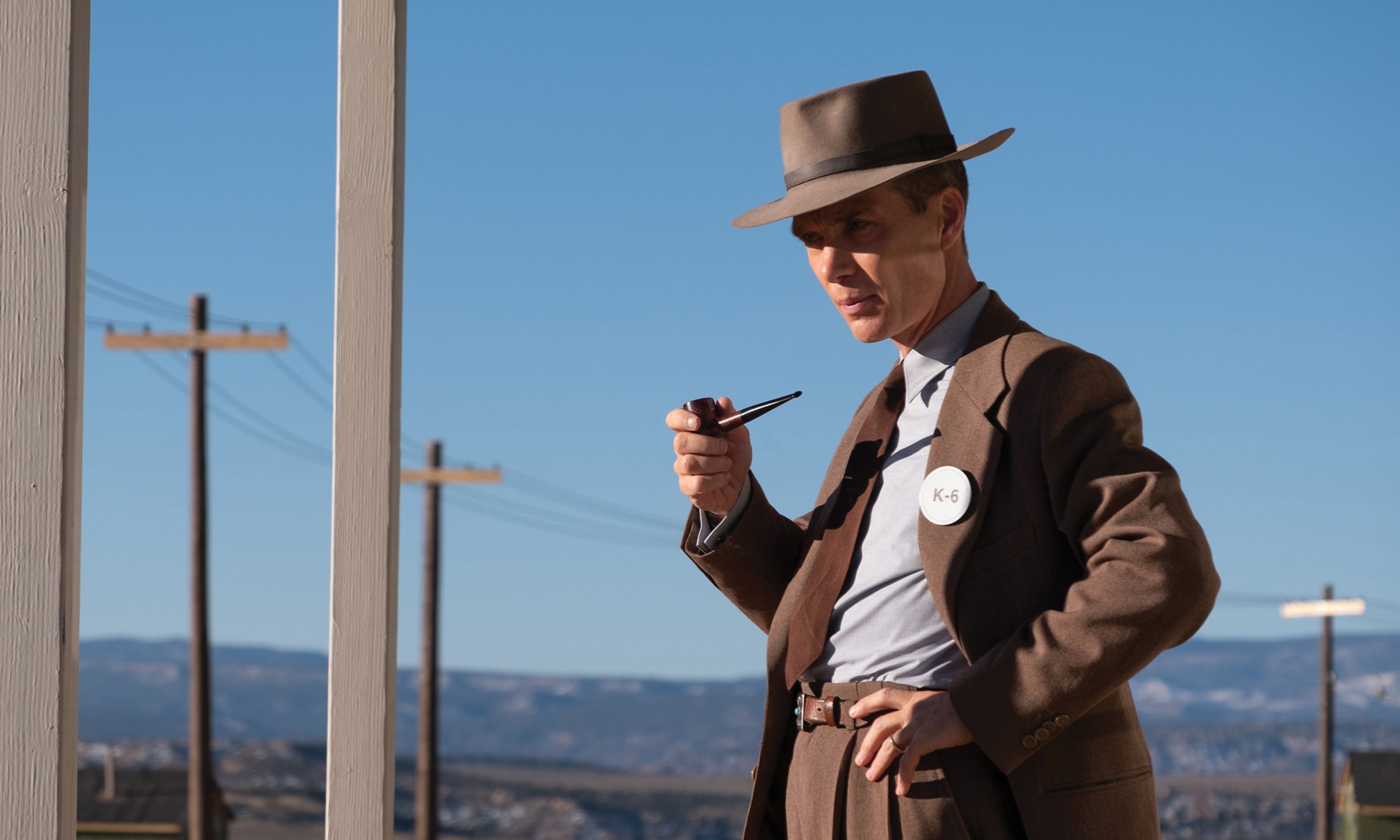
It feels deeply ungrateful, from a filmgoing perspective, to say anything especially negative about Christopher Nolan’s Oppenheimer, which (together with Barbie, of course, about which more in a future column) just made The Movies feel culturally important, as something other than a superhero-and-sequel factory, for the first time in a long time. An intensely acted, beautifully shot, never-boring, designed-for-the-biggest-screen dramatization of the life of a scientific genius and the creation of the atomic bomb, Oppenheimer is exactly the kind of work of art that usually doesn’t get made under current conditions — it wouldn’t work as a Netflix movie, to put it mildly — and definitely doesn’t make $80 million in domestic box office on its opening weekend when it does.
Yet here we are, with proof that, with the right subject matter and a famous director and an effective marketing campaign, audiences will still come out for the old-fashioned kind of theatrical experience that has felt anachronistic in the Age of Marvel. Add in the fact that both Marvel itself and the entire tentpole/sequel industry is sagging a bit lately, and you have the first real sign that a comeback might be possible for the movies as they used to be, that the central art form of the American age in history might have some life in it yet.
So congratulations all around! To Nolan, the auteur of masculine ambition, for putting such an unfashionable project together and making it impossible to look away. To the entire cast, not just Cillian Murphy for his intense embodiment of the Manhattan Project impresario, and Matt Damon and Robert Downey Jr. and Emily Blunt doing strong supporting work, but all the smaller performances by big and middling names alike. And to Ludwig Göransson, the Swedish maestro responsible for the movie’s ruthlessly compelling score.
But is Oppenheimer actually a great film? Do its merits match its potential cultural significance? I’m not so sure. I would say that it has a great film within it: The initial scene-setting has a somewhat rote biopic flavor, but the 90 minutes in the middle, the Manhattan Project story that culminates in Nolan’s re-creation of the atomic-bomb test and then the beginnings of Oppenheimer’s moral crisis, is a brilliant exercise, a filmmaking clinic that begins like a heist movie — with Oppenheimer and Damon’s Leslie Groves putting the team together — and ends with the shadow of apocalypse. The scene at war’s end, when Oppenheimer speaks to a cheering, flag-waving crowd while his mind is assaulted by intimations of Armageddon, could have ended the film as well, and I would have walked away satisfied.
It doesn’t, though; there is an entire act left to play. Following the arc of the Kai Bird and Martin Sherwin biography American Prometheus, Nolan tracks Oppenheimer through the McCarthy era, when his critics and enemies — led by Downey Jr.’s Lewis Strauss, the head of the Atomic Energy Commission — used his various Communist associations to get his security clearance stripped in 1954. And it doesn’t just depict the behind-closed-doors hearings in which that stripping happened; it interweaves them with Strauss’s own public hearings in 1959, when the Senate voted down his nomination to be Eisenhower’s secretary of commerce, in part in reaction to the shabby way he treated Oppenheimer.
There are two problems with this act in the movie. The first is that for much of its running time, Oppenheimer does a good job with the ambiguities of its protagonist’s relationship to the commonplace communism of his intellectual milieu — showing that he was absolutely the right man for the Manhattan Project job but also that he was deeply naïve about the implications of his various friendships and relationships and dismissive about what turned out to be entirely real Soviet infiltration of his project.
But the ending trades away some of this ambiguity for a more conventional anti-McCarthyite narrative, in which Oppenheimer was simply martyred by know-nothings rather than bringing his political troubles on himself. You can rescue a more ambiguous reading from the scenes of Oppenheimer’s security-clearance hearings alone, but the portions showing Strauss’s Senate-hearing comeuppance have the feeling of a dutiful liberal movie about the 1950s — all obvious heroes and right-wing villains, no political complexity allowed.
Then, even if you share this political perspective, the deeper problem is that the drama around Oppenheimer’s own security clearance, to say nothing of another character’s nomination to a second-tier cabinet post, is incommensurate with the existential scale of the atomic bomb itself. So the concluding act’s focus on bureaucratic conflicts can’t help feeling like a dramatic falling-off for a movie that had built so brilliantly to the apocalyptic. I care about the bomb and the atomic age; I don’t really care about Lewis Strauss’s confirmation, and ending a movie about the former with a dramatic reenactment of the latter seems like a pointless detour from what made Oppenheimer worth making in the first place.
No doubt Nolan intends some kind of commentary on the reassertion of the picayune and partisan even under conditions of existential risk; fair enough, point taken. But I suspect there could have been a different way, via a different structure, to develop the same point — one that didn’t leave Oppenheimer grasping greatness two-thirds of the way through its running time, and then limping to the finish line thereafter.












Comments