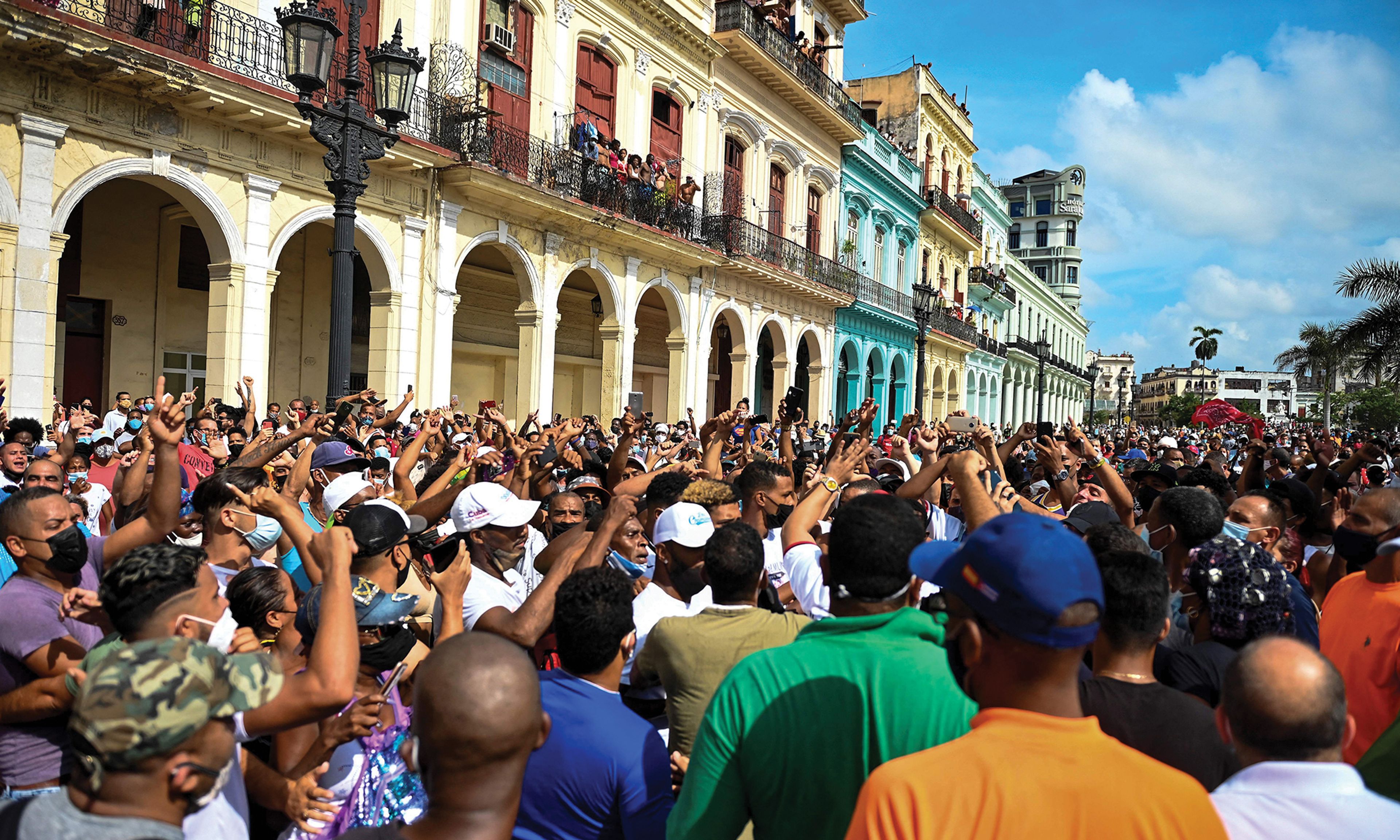
July 11 was an extraordinary day in Cuba. Thousands of people poured into the streets, to protest the dictatorship that rules them. Mass protests are very rare in Cuba. Any kind of protest is dangerous.
In August 1994, there was a significant protest, known as the “Maleconazo uprising.” (The name comes from the Malecón, the seaside thoroughfare in Havana.) In the end, some 35,000 Cubans left on rafts or anything else that might float. They were known as the balseros, or “boat people” (a name we applied to Vietnamese refugees, too).
But Cuba had never seen protests on the scale of those on July 11. Why then? Why now?
Cuba is in miserable condition. Little food, few medicines, little hope. Since June, the pandemic has surged in Cuba. Death and despair is all around.
Yes, but it has long been. Cuba has been a Communist dictatorship since 1959. The economy in 1994 — during the “special period,” following the collapse of the Soviet Union — was even worse. What is different about today? Cubans recently gained greater access to the Internet. And they were able to spread information around. People quickly learned of protests in one town, and started them in another.
“Freedom!” “Enough!” “Unity!” They chanted those words in the streets. Also, “We are not afraid!” When people lose their fear, it is their dictatorship that has to fear.
Cubans also chanted “Patria y Vida.” This means “Homeland and Life.” It comes from a wildly popular hip-hop song, created by Maykel Castillo and Luis Manuel Otero. (Needless to say, they are in prison.) The words are a play on an old Communist slogan: “Patria o Muerte,” “Homeland or Death.”
When the protests began on July 11, Miguel Díaz-Canel, the head of government, issued commands: “Revolutionaries, to the streets! The order for combat has been given.” Díaz-Canel referred to the protesters as “sellouts to the Empire” (meaning, the Americans). “They will have to go over our dead body if they want to overturn the revolution,” he said.
The government organized counter-protests, where people chanted, “These streets belong to Fidel!” But the original protesters? As José de Córdoba reported in the Wall Street Journal, some gathered in front of Communist Party buildings chanting “Cuba isn’t yours!”
In 2011, I spoke with Óscar Biscet, who had just been released from prison, after twelve years’ confinement. “We who live under this dictatorship look to the sea and know that the sea is our prison bars,” he said. “This great, beautiful island of Cuba has been converted by the Castro brothers into their own personal estate.”
After the July 11 protests, Miguel Díaz-Canel shut down the Internet, and phone service, for good measure. State agents arrested unknown hundreds. And the protests were quelled, for the time being.
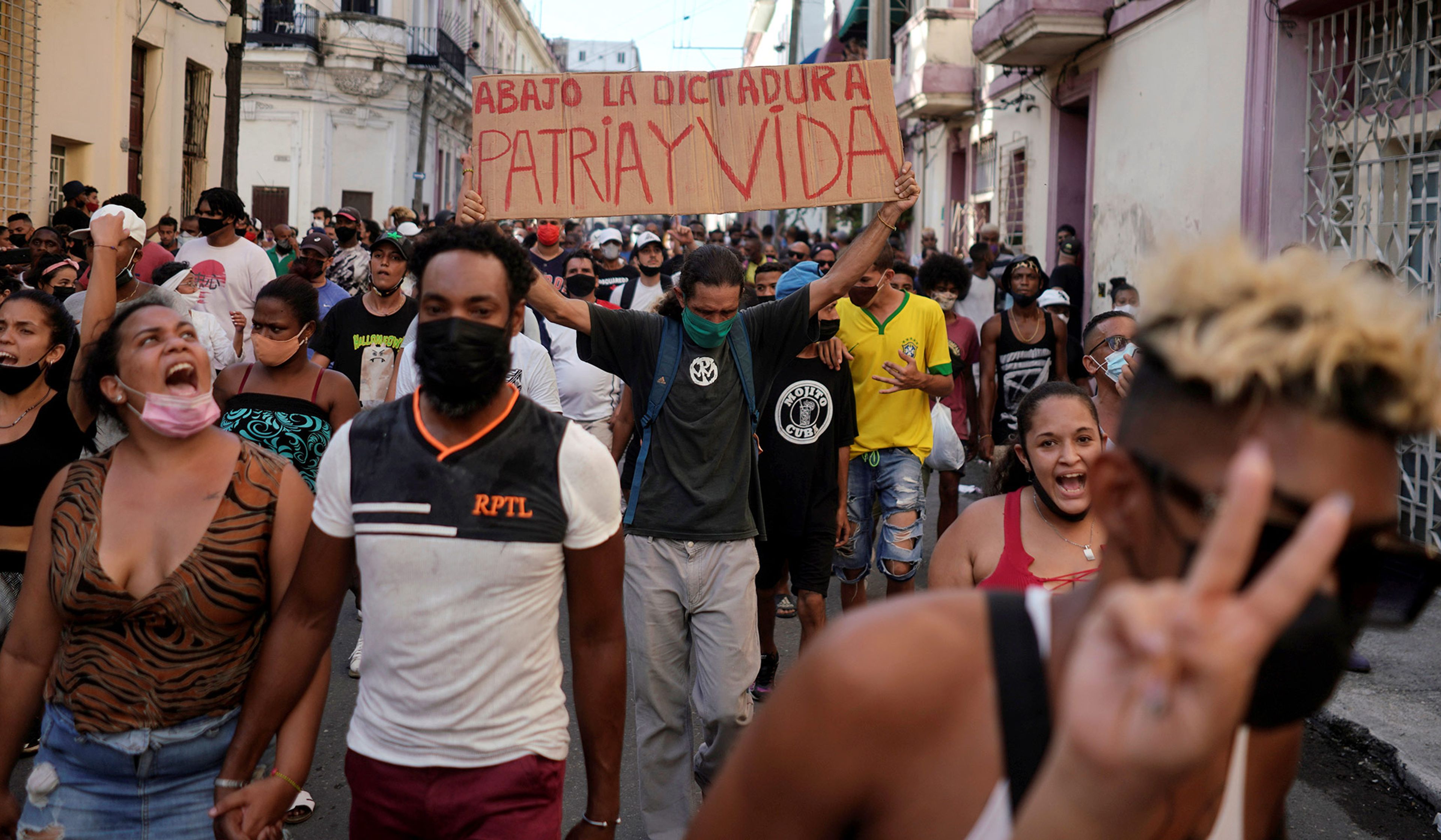
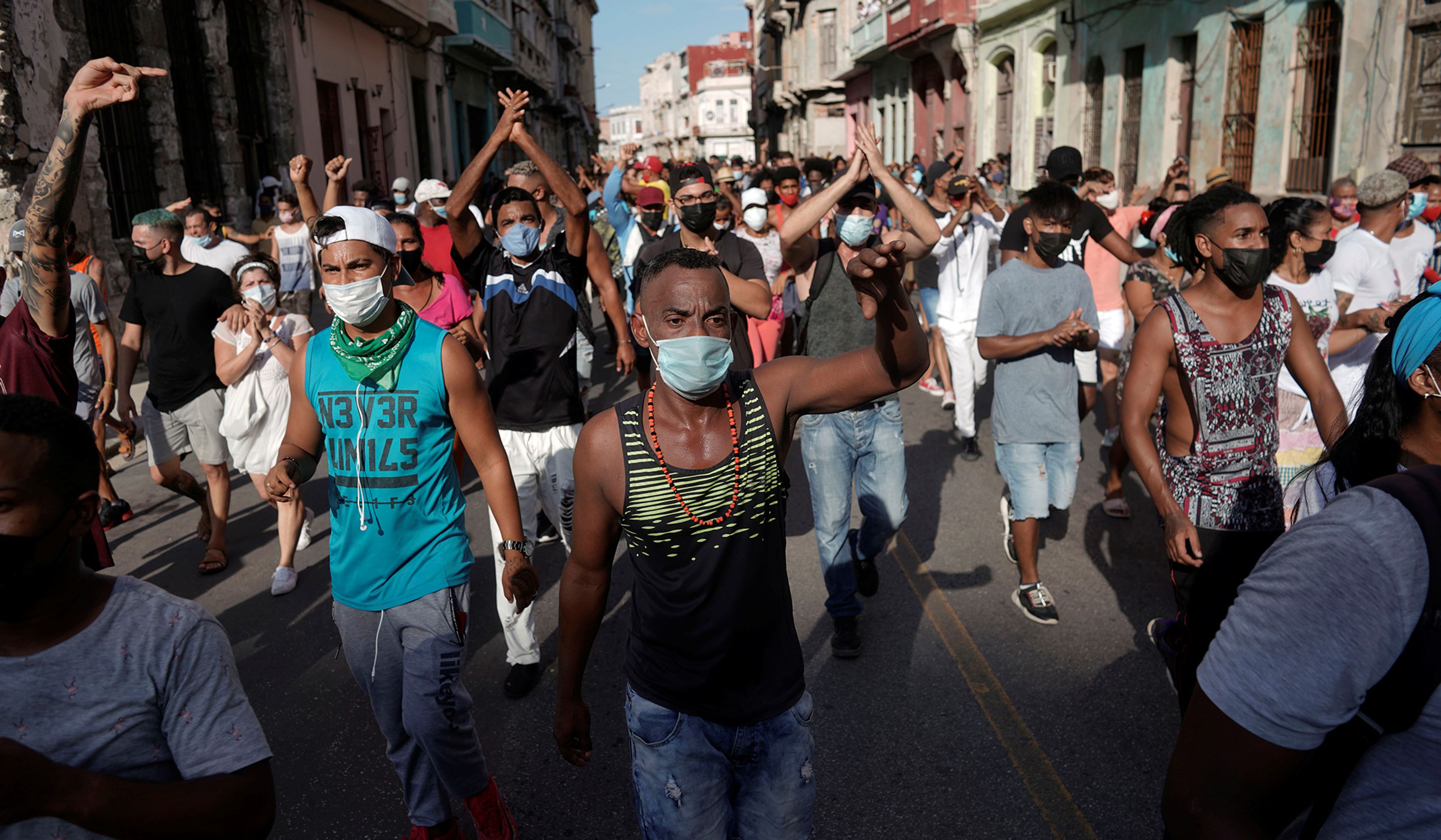
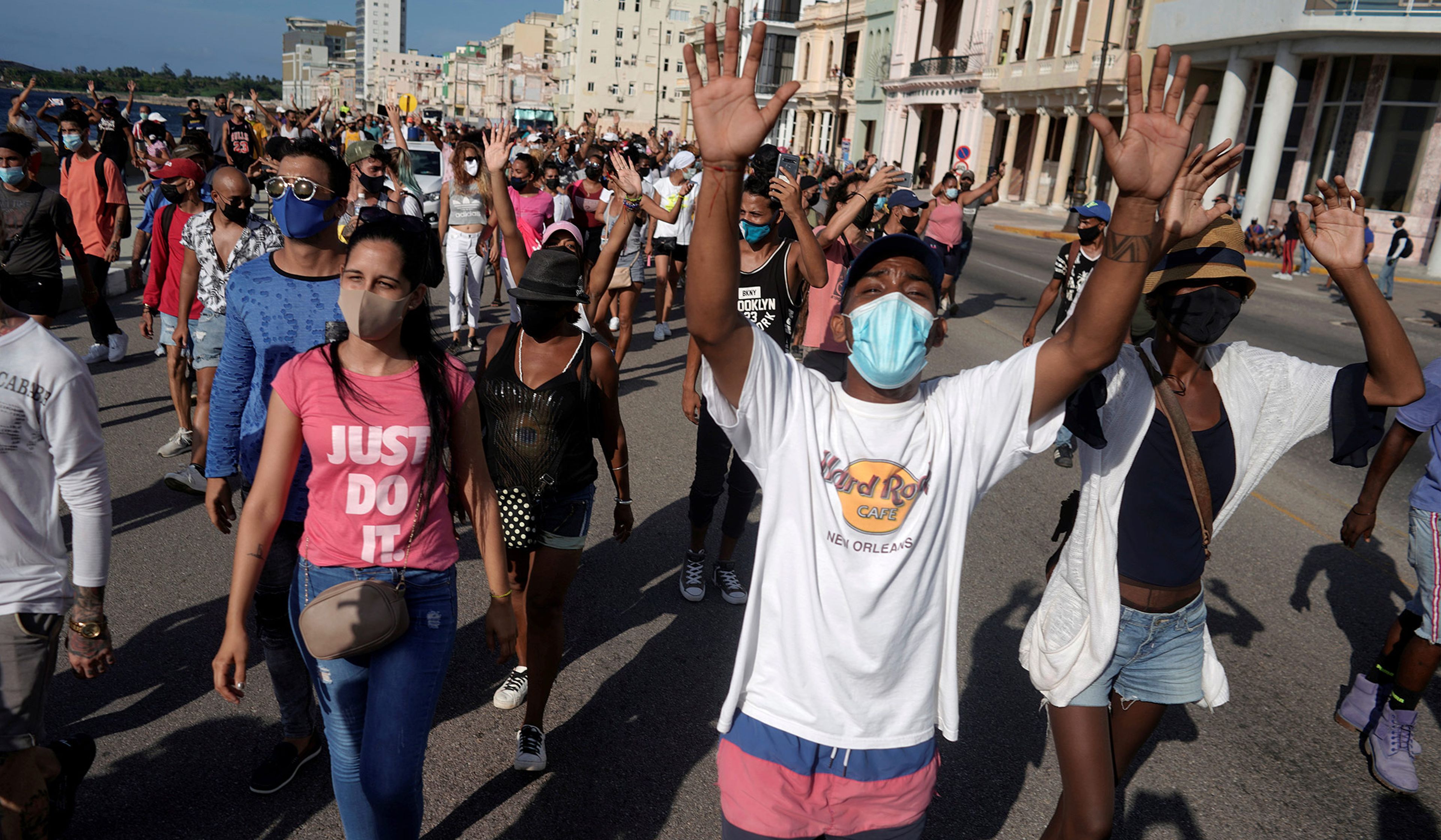
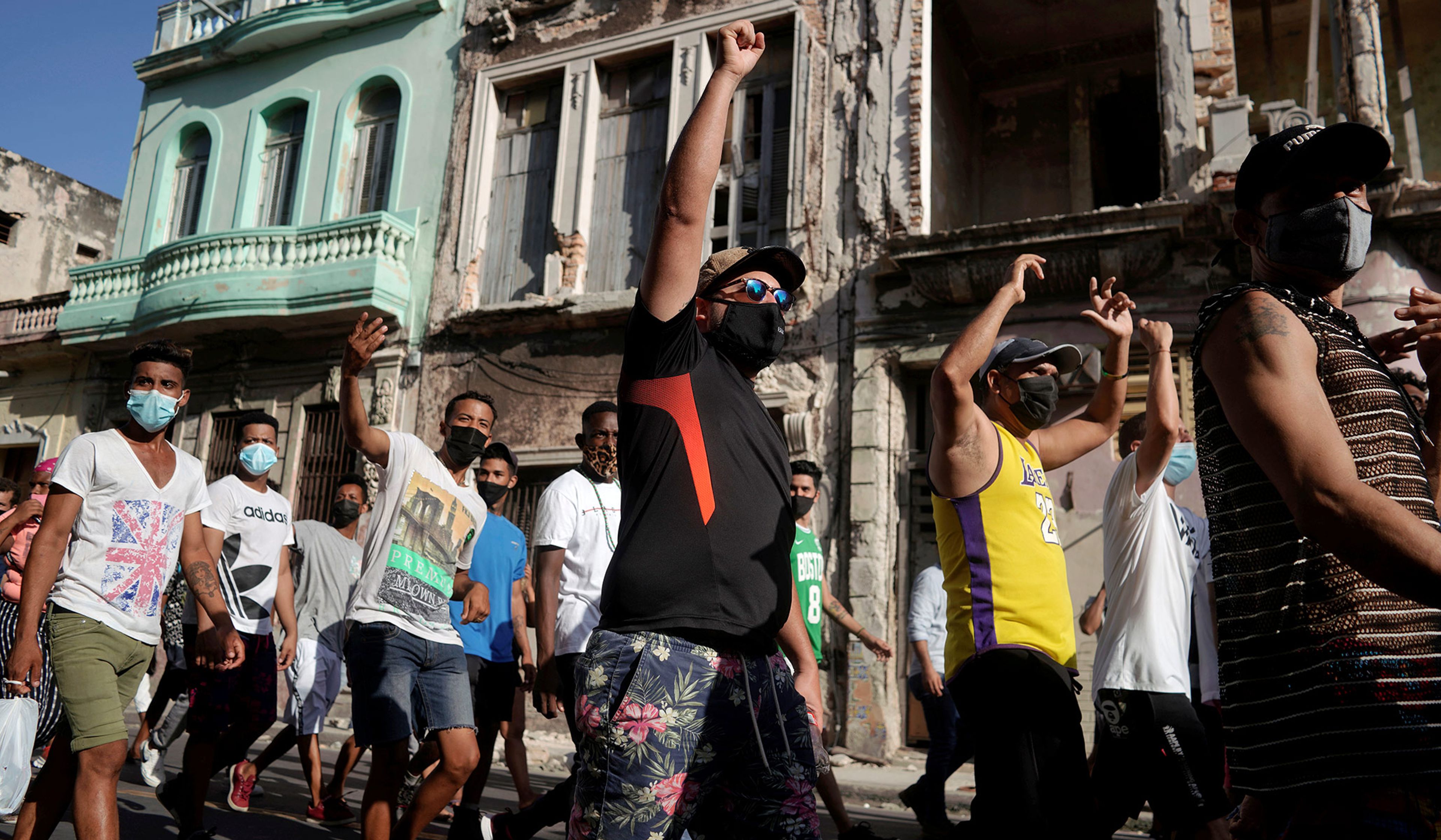
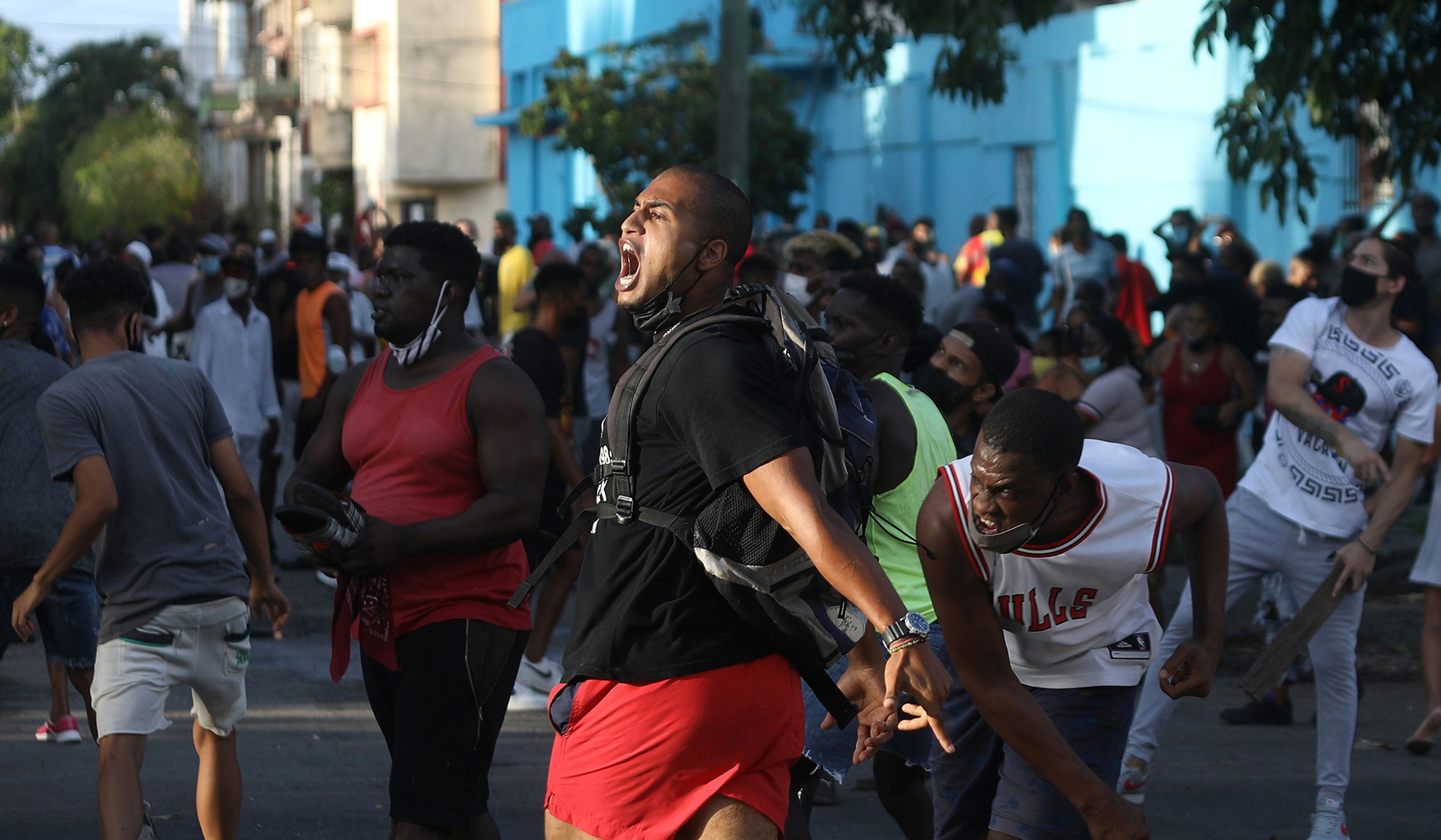
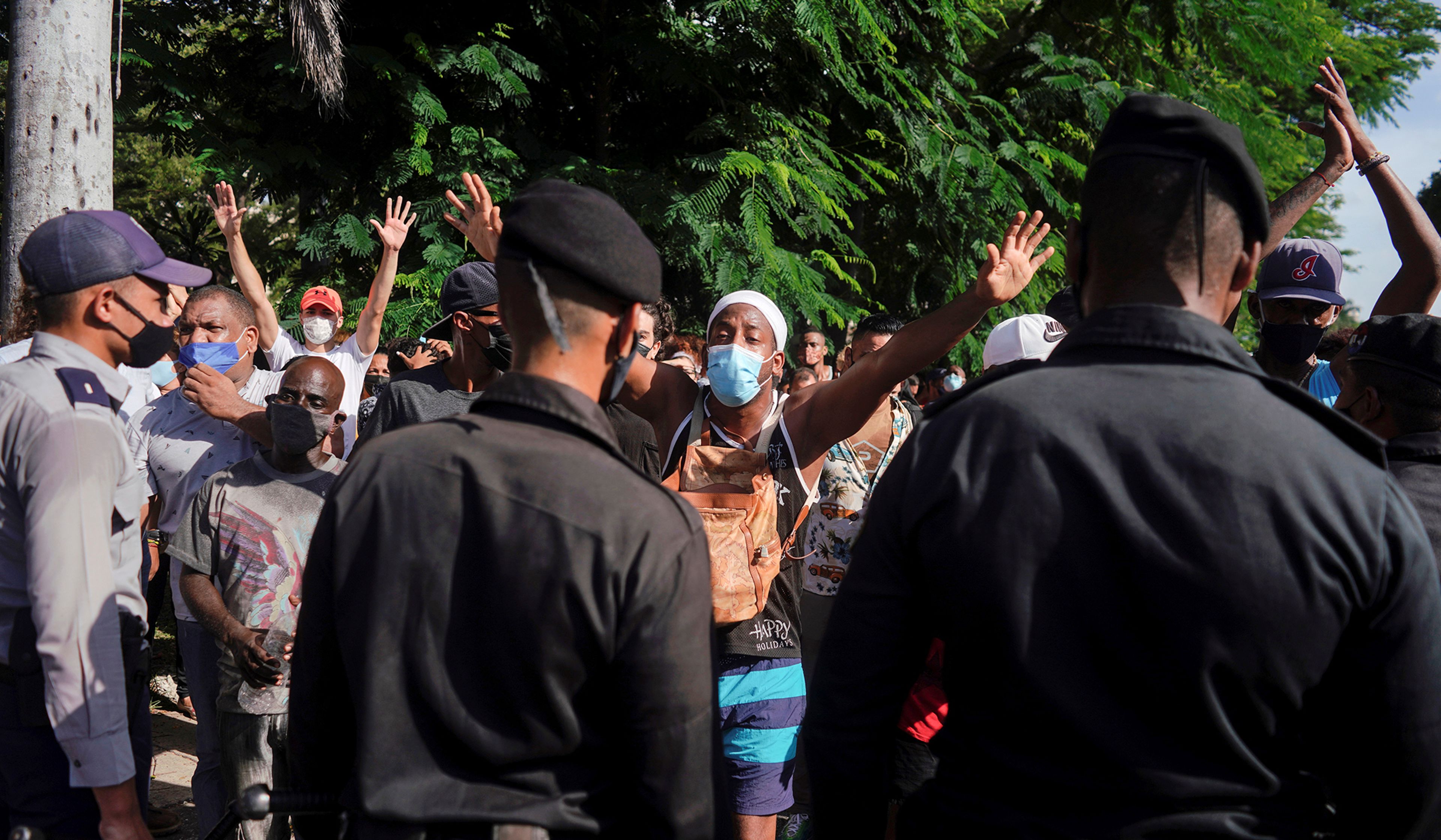
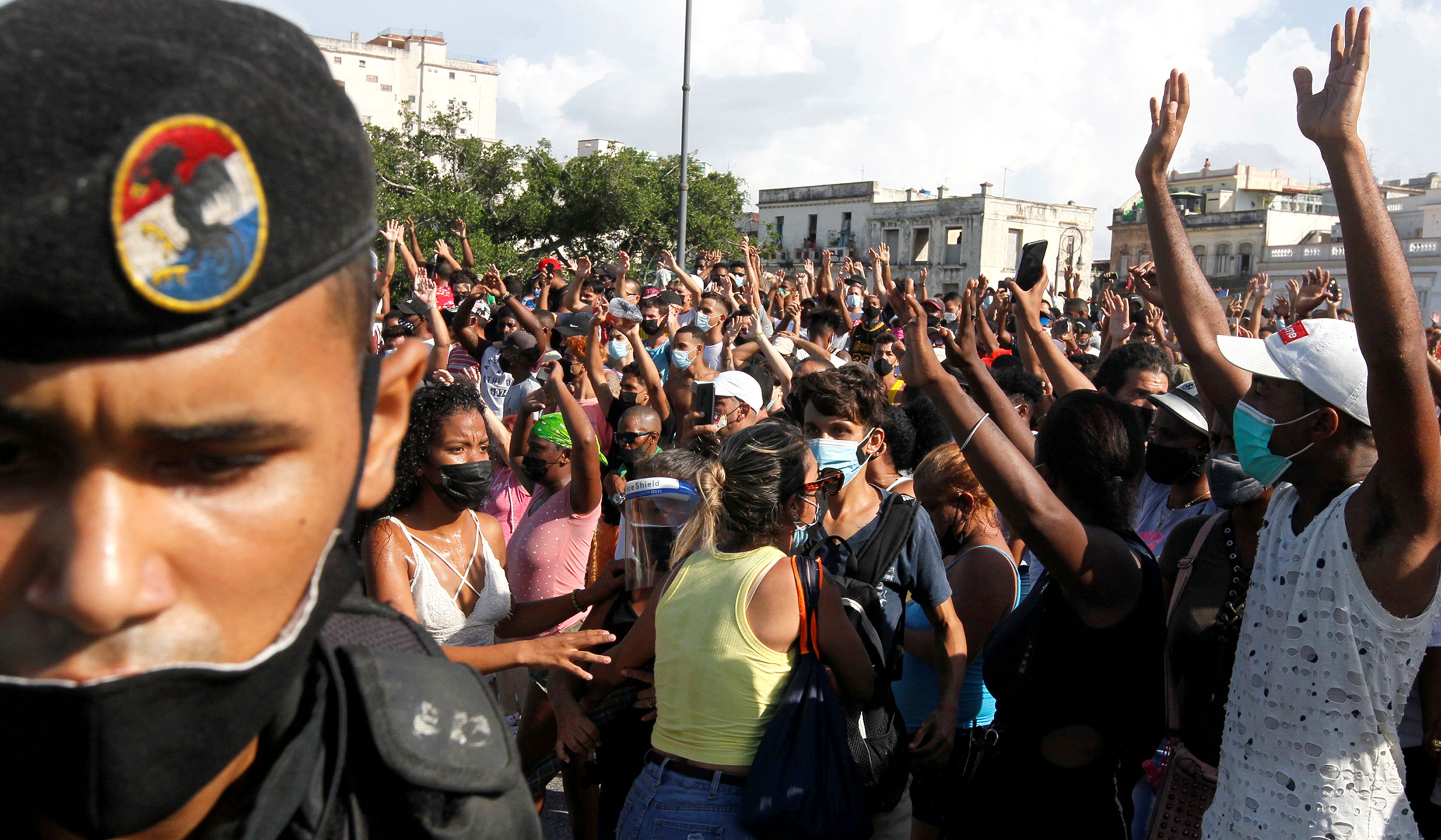
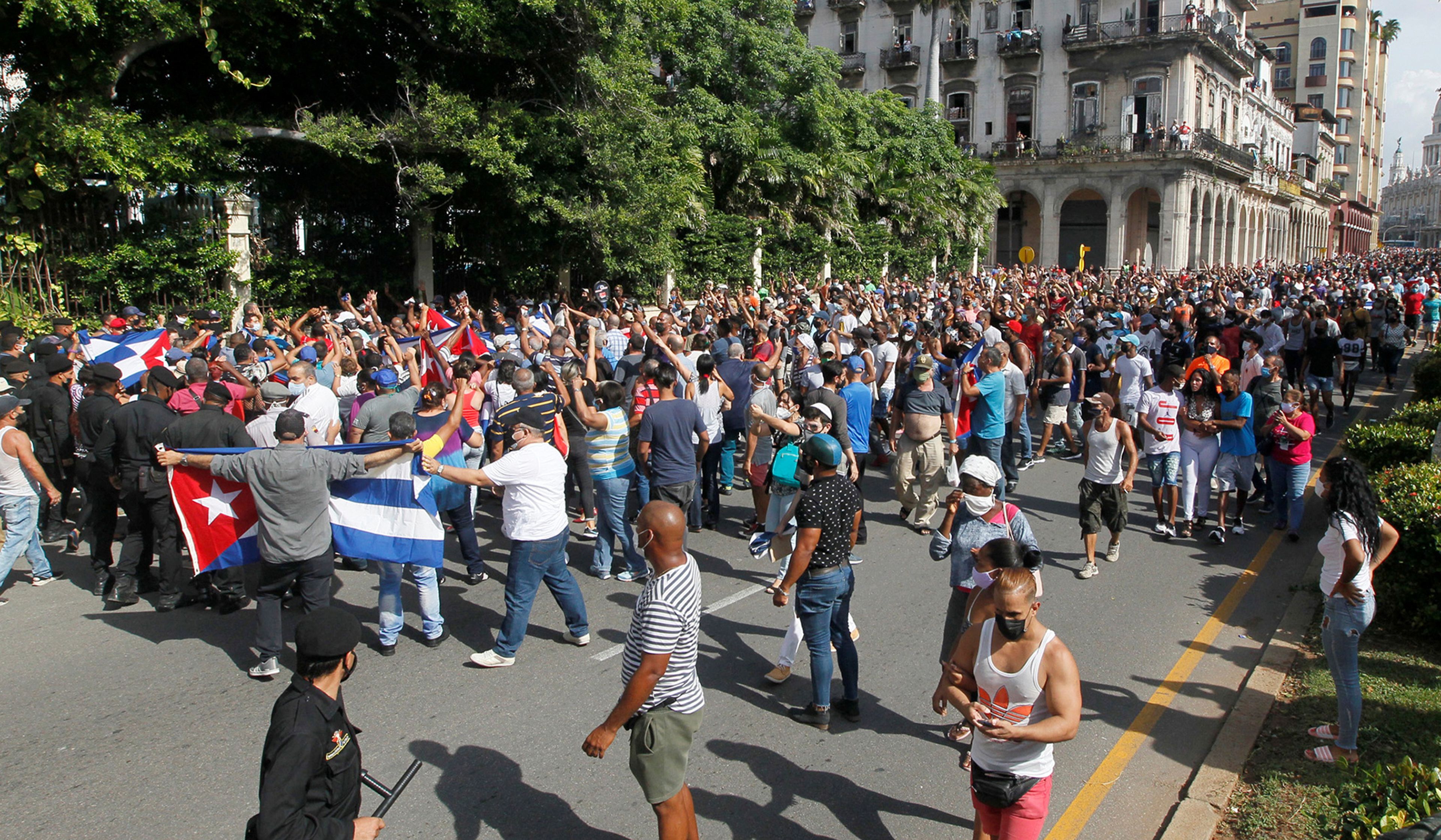
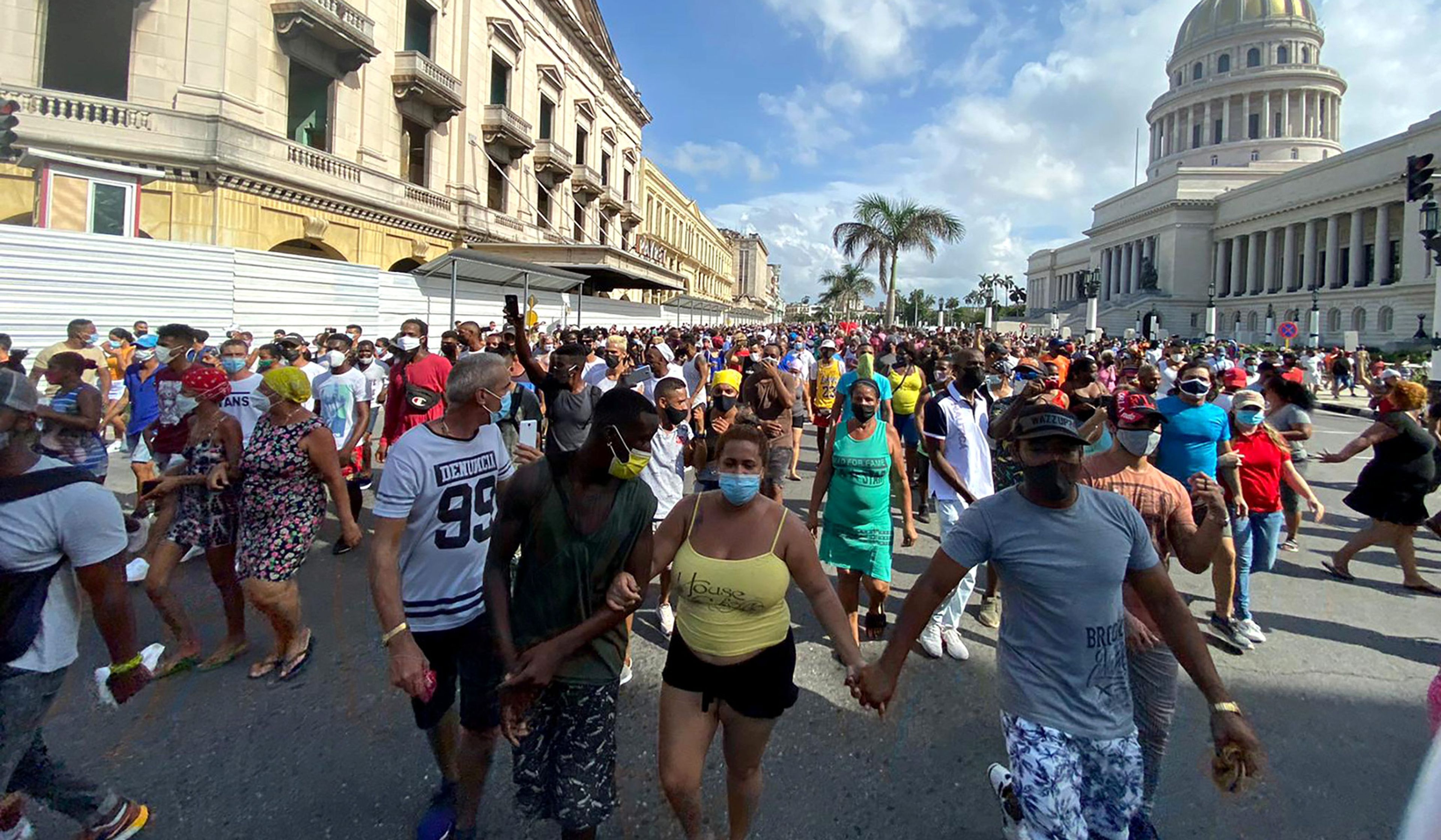
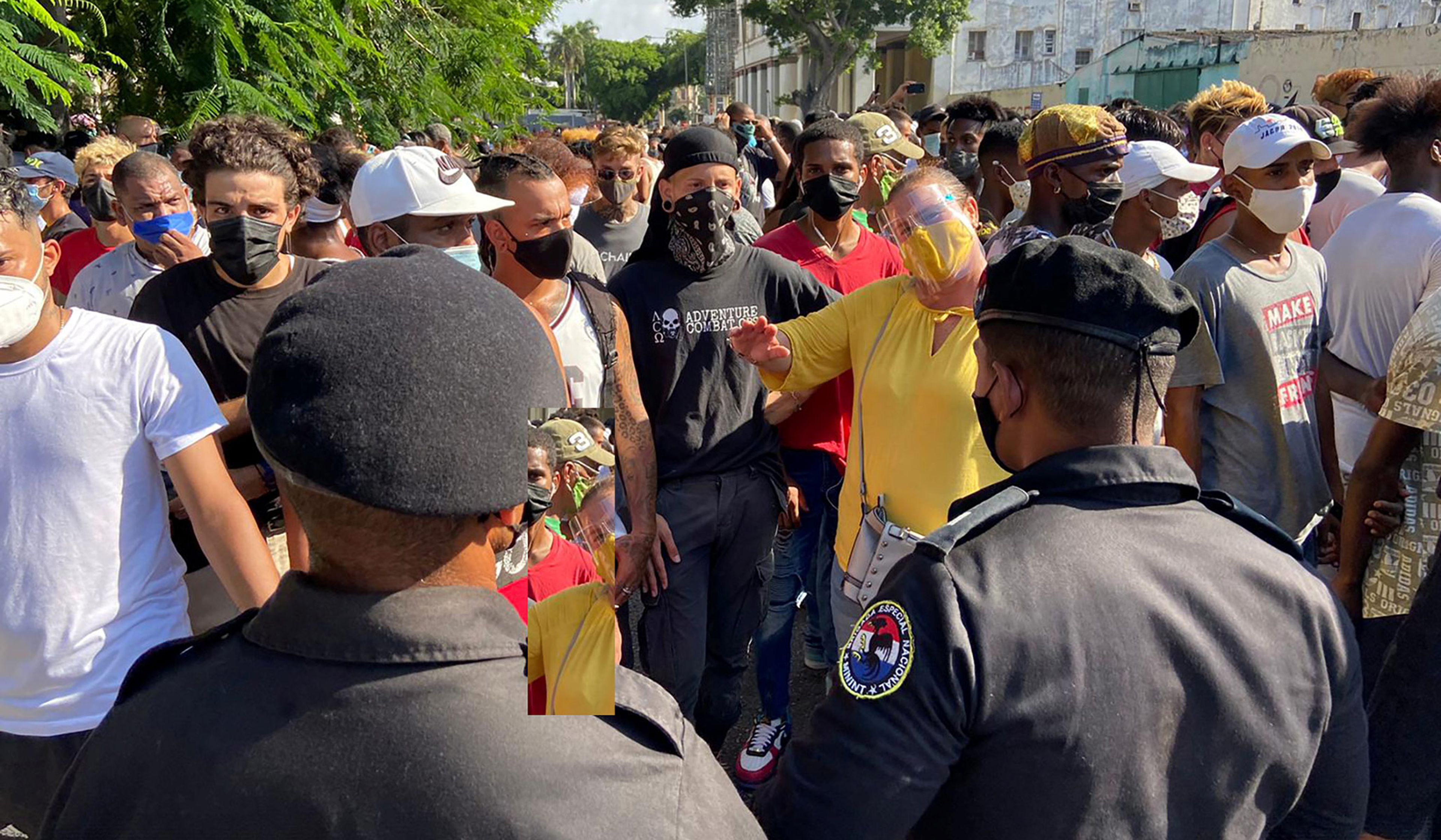
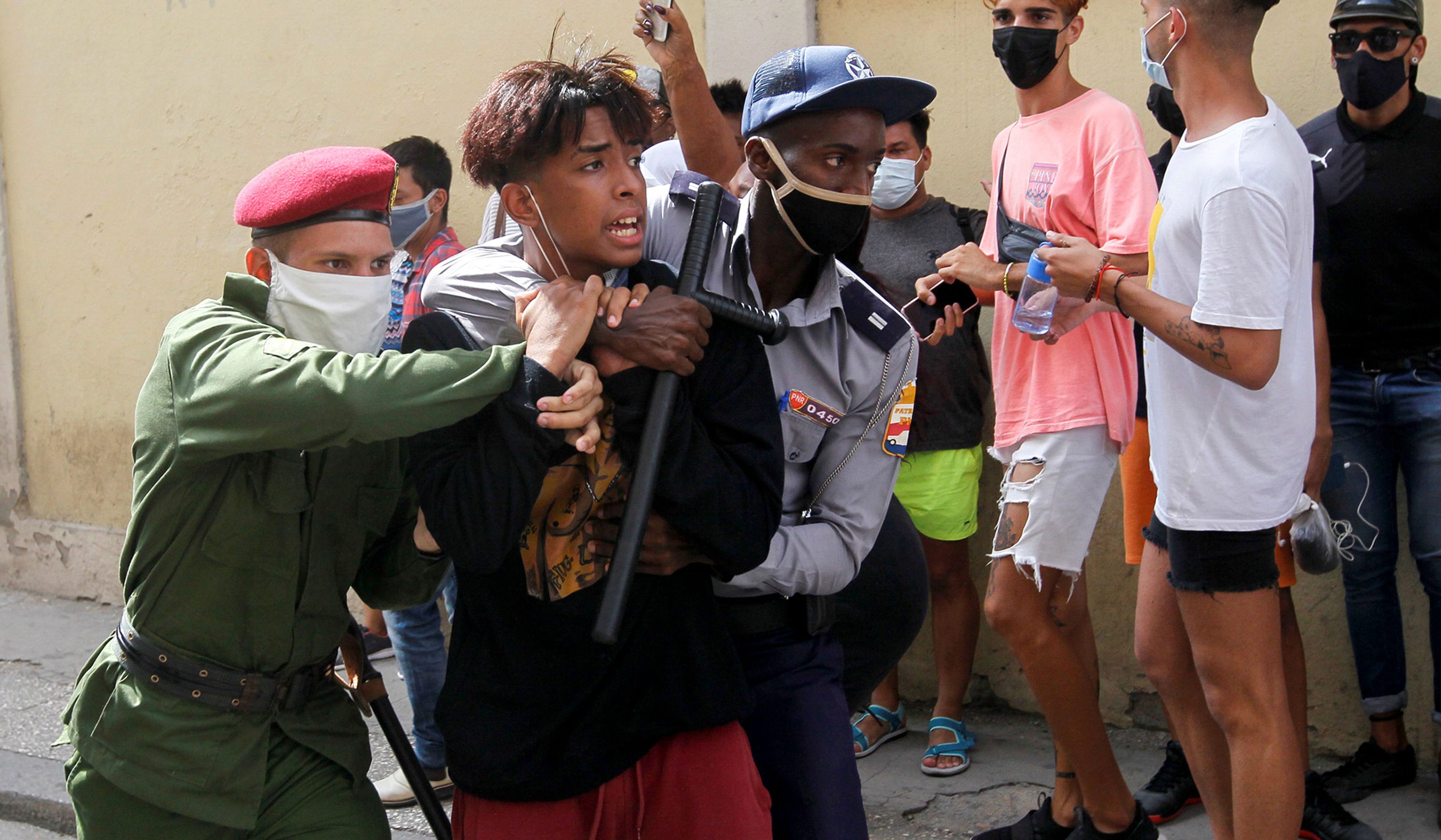
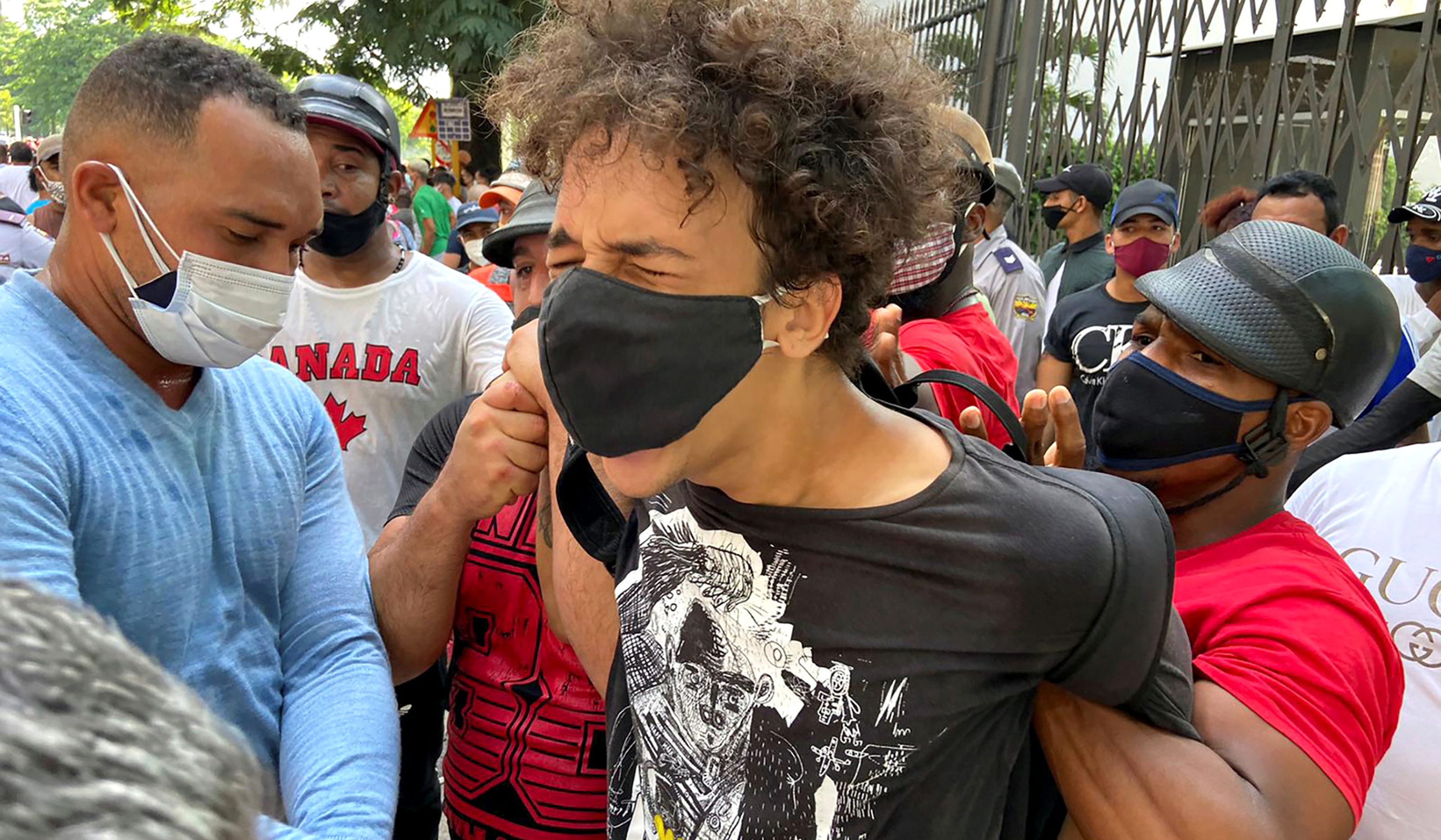
Protesters in Havana, July 11, 2021
Alexandre Meneghini / Reuters
Fidel Castro died in 2016. His brother Raúl is 90. In 2018, he relinquished what the Cuban Communists call the country’s “presidency” to Díaz-Canel. This past April, Castro stepped down as the first secretary of the Communist Party. Díaz-Canel acquired that title, too.
Can the Cuban dictatorship survive the Castros? That is a big question, asked for decades — asked by friend and foe alike. The Soviet dictatorship survived Lenin. It lasted 74 years. The Chinese dictatorship survived Mao. It has lasted for 72 years. In North Korea, three Kims — father, son, and grandson — have ruled for 73 years. Two Assads have been on the throne in Syria for 51 years.
The Castro regime — we can still call it that, given the hovering presence of Raúl — has lasted for 62 years. How? Especially given the hostile superpower next door? This is the subject of books, rather than brief articles, but consider one aspect: exile.
One reason that Maduro and the chavistas have survived in Venezuela is that 6 million Venezuelans are in exile. This relieves pressure on the regime. Vladimir Putin is happy for the talented, energetic, and chafing to leave Russia. And the Cuban regime has benefited from emigration, too.
In 2014, I met one of the great dissidents, Juan Carlos González Leiva, in Washington, D.C. He was there on a visit, staying in the home of supporters. González Leiva is a blind lawyer, beaten and imprisoned many times. “Juan Carlos,” I said, “what are you doing here? Why did they let you out?” He said, in effect, “Are you kidding? If I stayed out permanently, they would declare a national day of celebration.”
Dissidents and critics are more trouble on the inside.
In 2019, it looked like Venezuela might tip. Protesters massed in the streets, and Juan Guaidó, the opposition leader, was recognized as the legitimate president of the country by many foreign governments, including that of the United States. But Maduro & Co. did the necessary: put down the rebellion ruthlessly.
So had the Chinese regime in 1989. Gorbachev was performing differently, in the Soviet Union and its bloc. Which approach will the Cuban regime take? Anyone needing a clue can listen to Miguel Díaz-Canel, again: “They will have to go over our dead body if they want to overturn the revolution.”
From the beginning, there have been dissidents, heroes, in Cuba: starting with the plantados, the planted ones, who refused to cooperate with the regime in order to gain release from prison. Think of Pedro Luis Boitel, the poet, who died during a hunger strike in 1972. Think of his close friend Armando Valladares, another poet, who survived the Cuban gulag — 22 years — and wrote a memoir, Against All Hope.
In the past 25 years, I have interviewed many Cuban dissidents, and I have asked a standard question: “Why do you do what you do? Why do you take the risks and suffer the consequences?” They tend to be at a loss for words. “I can do no other,” they say, in essence. Many bring up religion or faith.
“I can’t just do nothing,” Maritza Lugo said. “I am a Christian. I have a conscience.” González Leiva said, “I have a commitment to my country and to Jesus Christ.” Biscet mentioned the three Hebrew boys, Shadrach, Meshach, and Abednego. “When a king tried to force them to bow down before an idol,” he said, “they refused. They knew that God would help them — and even if He did not, they would never bow down to an idol.”
Berta Soler is the leader of the Ladies in White, one of the most prominent opposition groups in Cuba. Why does she walk into danger, rather than out of it? “For love of life, my family, and my country. And for Christ, who allows us to remain standing.”
By the way, Soler is an Afro-Cuban, as are many of the opposition leaders: Guillermo Fariñas, Jorge Luis García Pérez, and Biscet, to name three more. (Plus Maykel Castillo and Luis Manuel Otero, of “Patria y Vida,” the protest anthem.) I point this out because one of the myths of the Castro dictatorship is that it has been good for Afro-Cubans. I have heard dissidents laugh — literally laugh, as Berta Soler did — at the mention of this myth.
On July 19, the Washington Post published a report headed “‘A powder keg about to explode’: Long marginalized Afro-Cubans at forefront of island’s unrest.”
What can the United States do? This is a natural question for Americans to ask. The U.S. government is supposed to be able to move mountains. We can alter the flights of sparrows. There are moves we can make, of course: Magnitsky sanctions on particular human-rights abusers; statements supporting democratic protesters and admonishing the government; help with Internet service. The Biden administration has already done the first two and is thinking about the third.
The bitter truth, however, is that there are pronounced limits on the ability of Washington to affect the situation in Cuba. Thirteen presidents have dealt with that dictatorship — Eisenhower through Biden. Six of them have dealt with the dictatorship since the end of the Cold War. We have had hawkish policy and dovish policy. We have offered carrots and sticks, sweets and fists. JFK launched an invasion. The dictatorship perdures.
So a sense of realism is advisable. Still, the United States can make a fuss: can make Cuba an issue. George W. Bush liked to do this: He awarded Óscar Biscet the Presidential Medal of Freedom (in absentia, for Biscet was in prison at the time). He paid tribute to Juan Carlos González Leiva at a prayer breakfast. The regime was none too happy about this. González Leiva later told me, “They were always furious when Bush talked about any of us Cubans.”
President Reagan went so far as to make Armando Valladares the U.S. ambassador to the U.N. Human Rights Commission in Geneva.
In general, the Cuban dissidents and political prisoners ought to be famous. Their pictures ought to be on T-shirts. There ought to be songs and movies about them. They ought to have, say, half of Mandela’s fame. But they are almost entirely neglected.
Twenty years ago, I raised this problem with Jeane Kirkpatrick, the political scientist and onetime U.S. ambassador to the United Nations. After some reflecting and sighing, she said, “It is both a puzzling and a profoundly painful phenomenon of our times.”
Many of us believe that the United States should do whatever it can to aid democratic forces in Cuba (and elsewhere, come to that). Whatever can be reasonably and practically done. But won’t these forces get labeled “CIA stooges”? I think of what Ileana Ros-Lehtinen, the former congresswoman from Miami, once told me: “They’re going to get labeled stooges anyway. We might as well help them.”
As the Soviet regime at last fell, so will the Cuban — and so will the Chinese, and the North Korean, and so on. To say when is impossible. And the aftermath in Cuba might be horrible beyond present imagining. Back in 2003, the Latin Americanist Mark Falcoff wrote a whole book about this: Cuba: The Morning After.
But the morning after is pleasant to contemplate, as well as daunting. The Cuban people have suffered under this nasty dictatorship for so long. At the end of my review of Falcoff’s book, I quoted an old spiritual: “In that great gittin’-up morning, fare thee well, fare thee well.”











Comments