Lee Harris always has interesting things to say. He first came to general attention with his 2002 essay in Policy Review titled “Al Qaeda’s Fantasy Ideology: War Without Clausewitz,” in which he compared American difficulties in understanding 9/11 to those of the Aztecs who first confronted Cortez, a being operating so far out of their norms of motivation and behavior as to be utterly alien.
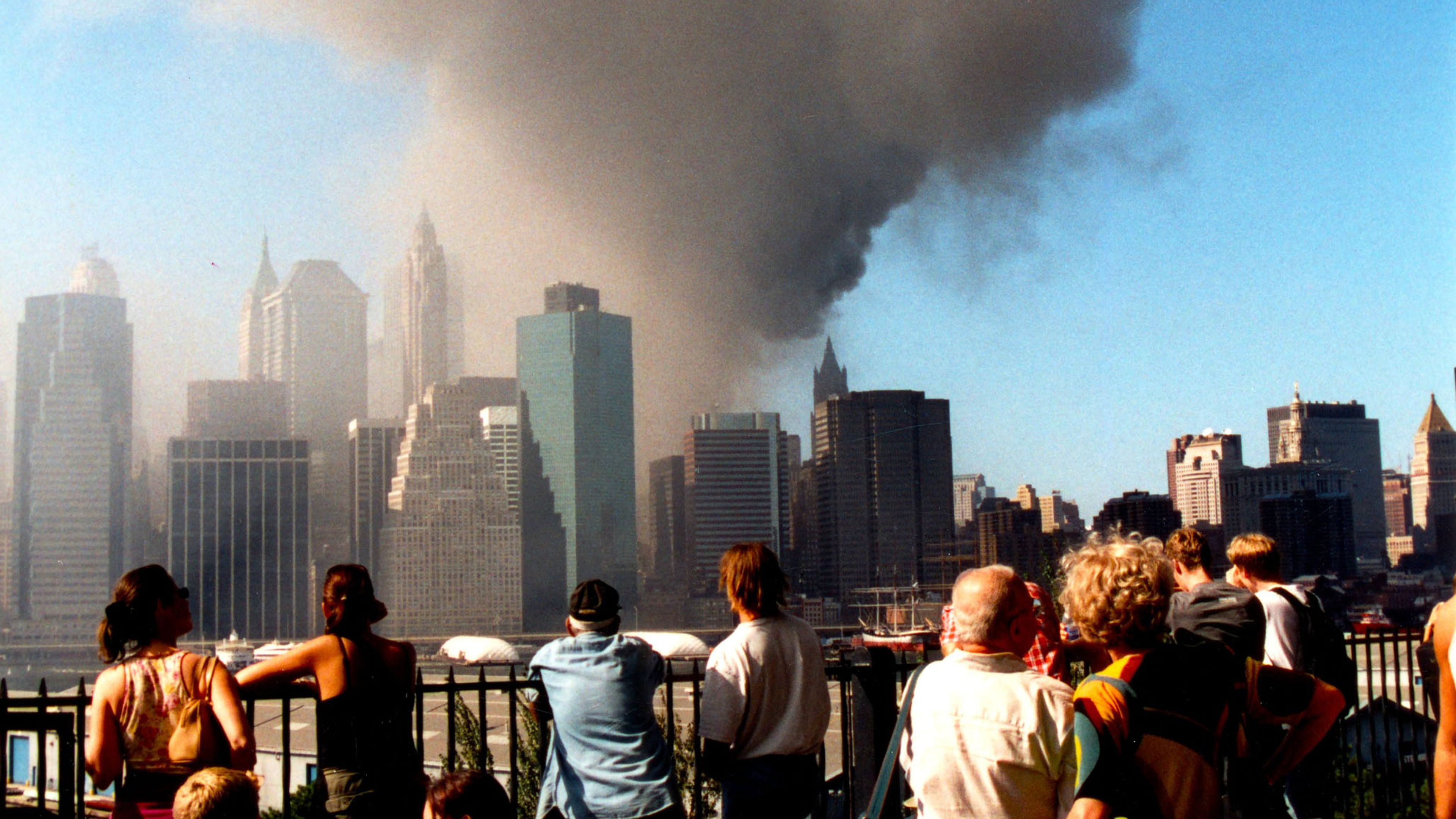
His point, at a time when most of us assumed that al-Qaeda had a Prussian-style general staff hiding away to plot its next campaign, was that 9/11 was not a strategic move akin to Pearl Harbor. The Twin Towers were “gigantic props in a grandiose spectacle in which the collective fantasy of radical Islam was brought vividly to life: A mere handful of Muslims, men whose will was absolutely pure as proven by their martyrdom, brought down the haughty towers erected by the Great Satan. What better proof could there possibly be that God was on the side of radical Islam?” He named the phenomenon the “fantasy ideology” and linked it historically to such events as the Italian conquest of Ethiopia, undertaken not because Ethiopia had any value but because Italy had to conquer somebody to fulfill its fantasy of being the New Rome.
Harris’s powerful essay, which bears annual rereading, provided a useful corrective, and he was described by Daniel Pipes, no slouch himself, as “America’s reigning philosopher of 9/11.”
Harris followed this up with Civilization and Its Enemies: The Next Stage of History (2004), a book incorporating and extending the al-Qaeda essay, and The Suicide of Reason: Radical Islam’s Threat to the West (2007), which continued the consideration of the problems of a civilized society facing fanatic barbarians, and with a series of articles in the journals of intellectual conservatism.
His latest, The Next American Civil War, seems in some ways a drastic departure from the earlier clash-of-civilizations works, linked only by the somewhat apocalyptic title. On the other hand, there is an underlying unity of theme, in that Harris continues to be fascinated by the abrasive interfaces of cultures that have a difficult time understanding each other, a concern that is captured in the subtitle, “The Populist Revolt against the Liberal Elite.” (Ignore the main title, which seems a bit of over-hype; there is no serious foreshadowing of Obama’s calling out the SEIU to put down what Lincoln called “combinations too powerful to be suppressed by the ordinary course of judicial proceedings.”)
But it is an odd book, especially for those who admire Harris’s earlier work. It starts out well enough, with some interesting points about both populists and liberal elites, a.k.a. “meritocrats.” Harris is more aphoristic than systematic, but that is no sin, especially because many of the aphorisms are good. For example: “If religion is the opiate of the people, utopianism is the methamphetamine of the intellectual. . . . It offers . . . a vision of the world in which they are omnipotent.” And: “One can argue that the so-called education gap is really an ‘indoctrination gap.’ The wide consensus among the better educated . . . is not proof that they have been taught to think for themselves, but evidence that they have been programmed to think alike.”
He touches on, but develops only slightly, the fascinating theme that much of the political debate of the last half century and more can be viewed as a debate over the existence and nature of free will. Much liberal theology is premised on the idea that, since people are slaves to one thing or another, there is no moral bar to compelling them to a different course, for the better fulfillment of their true interests. Harris takes up the conflict between the New Deal determination to improve people and the traditional concepts of individual liberty harbored by people who don’t think that banning guns or NASCAR is an improvement. This part of the book demonstrates one of the best characteristics of Harris’s work — he strikes sparks in the reader’s mind, and you wish he were in the room so you could talk to him about the points he is making, ask for some expansions, and quibble here and there.
Then, after laying some interesting groundwork with these ideas, the book ceases to provide any framework, and the second half becomes an “X cities in Y days” tour of concepts of populist liberty through the ages, touching down in America in the Age of Jackson, picking up on social ordering in the ’49er mining camps of California, examining the Sons of Liberty and the Stamp Act rebellion of 1765, joining the barons at Runnymede (1215), and watching Wat Tyler’s head go up on a pike on London Bridge in 1381, where it replaced that of the Archbishop of Canterbury.
Along the way, we learn that the 19th-century populist movement in the U.S. was in many ways a rebellion against the increasing complexity required by industrial civilization, that even the populists would concede that meritocrats are needed to actually run things, but that the quality of being “ornery” in defense of one’s own self can also be a salutary check on the pretensions of power.
After this meandering, Harris’s stance finally becomes a bit clearer. He sees the current populist revolt as the latest in this long line of uprisings in the name of liberty, and as in many ways a fantasy ideology (though he does not use the term here) akin to those he has written about elsewhere. But these uprisings against modernity fail, in the end, because actually
the threat to liberty does not come from the sinister machinations of power-hungry socialists. It comes from the very nature of modern advanced civilization, from impersonal forces operating beyond the control of any individual or set of individuals. . . . The American meritocracy has provided us, in abundance, with so many of the blessings of civilization that we have come to take for granted. This same meritocracy, however, has the potential to create a new ruling elite as indifferent to the needs and anxiety of the average person as the various ruling elites . . . in the past.
The current populist revolt against the meritocracy could well have a healthy effect on our society . . . but this revolt also contains the seeds of potential catastrophe as long as there are populist demagogues.
The last few pages are worthy of Rodney King: Both populists and meritocrats have some good points and are necessary, and we should all try harder to respect one another’s viewpoints and get along. My reaction to this second half of the book is that I want the kidnappers to return the real Lee Harris, because I have some questions for him. For example:
Am I right in my conclusion that he regards the populist rebels as embracing a fantasy ideology of a simpler world, and thus classifies them as akin to other primitives who resist the demands of civilization?
Does he regard the growth of government as irrelevant to his discussion of meritocracy? Governments dispose directly of almost 40 percent of the GDP, and compel or direct, what, 20 to 30 percent more via regulatory activity? Is it possible that the populists see the meritocrats as nest featherers rather than defenders of civilization? And that they are right?
How can he speak of one “meritocracy” and then attribute to it the attainment of civilization? I can think of quite a few different meritocracies — the English Lit majors of Cambridge are a long way from the tech barons of Silicon Valley — and I would give varying amounts of credit to the different classes.
Is this really a revolt against inevitable complexity, or is it a revolt against those who make things overly complex so that they can levy a toll for pretending to solve the problems (climate change comes to mind)?
How would Harris respond to the argument that he has it backward — that we are indeed undergoing an assault on civilization, but that the populists and tea partiers are actually the defenders, and the so-called meritocrats have the role of destructive barbarians? Put us on a platform, and this is the side of the debate that I will defend.
Finally, there is the question of a meritocracy that has separated itself from the people. At Harvard a couple of months ago for an occasion related to one of the two degrees that I hold from that institution (don’t play liberal-elite one-upmanship with me, buddy!), I saw the plaque for Everett Peabody, Class of 1849, one of the 136 Harvard men who died for the Union. After college, he went west, became a railroad builder and engineer by apprenticeship, which was how it was done then, and lived the rough, itinerant life of the railroad man. With war, he became the colonel of a Missouri regiment. At Shiloh, he saved the Union army, and perhaps the war, by preparing for attack when his superiors, including Sherman, said the Rebs were nowhere near, and with his life bought the time for the army to regroup and stand. Now, that is a meritocrat, but his like is not to be found wandering the halls of the influence peddlers of D.C., and the tea partiers know it.
In any case, Harris has maintained his practice of making the reader wish he were in the room so that the argument could be continued. And his point that the conflict grows sharper is valid, so it will be interesting to read what he has to say next time. So someone pay the ransom.











Comments